welcome to Dev Vlog number two I'm Danny we bomb founder of East Shade Studios and technical director among other things of songs of glimmer Wick which is a witch Academy RPG where magic is cast through music we're a small team of three full-timers plus a few contractors dedicated to making games with a focus on setting exploring the oceans and they are oceans I tell you of non-combat game design so in our last video devlog one which I am pleased to report did quite well a bit better than we hoped even I said folks could ask
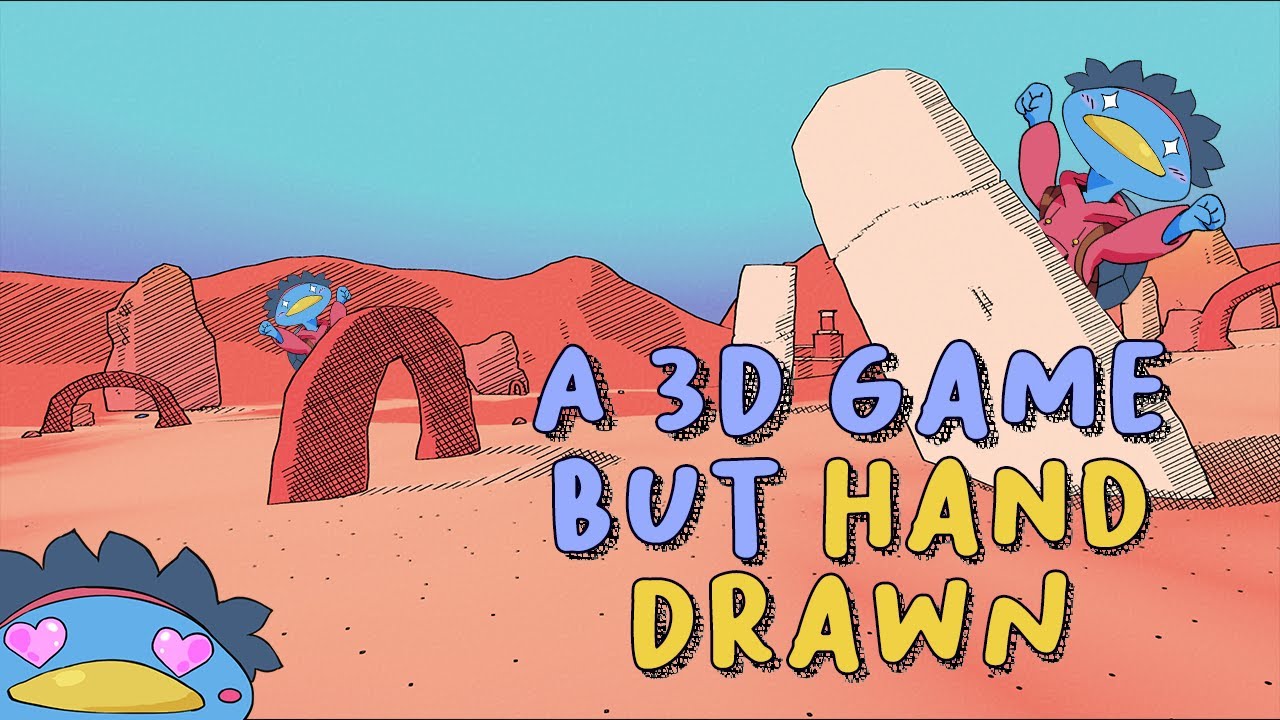
questions in the comments so thank you for the questions and I'm going to get to a few of those today but there was one question I had particularly a lot to say about and covers so much ground I thought it could actually be an entire Dev vog and I think a pretty informative one because it touches a lot of topics about our production pipeline leery asks as someone that is getting into gamedev I was wondering why you chose to do a 2d game but do it in 3D instead of going true 2D what are the
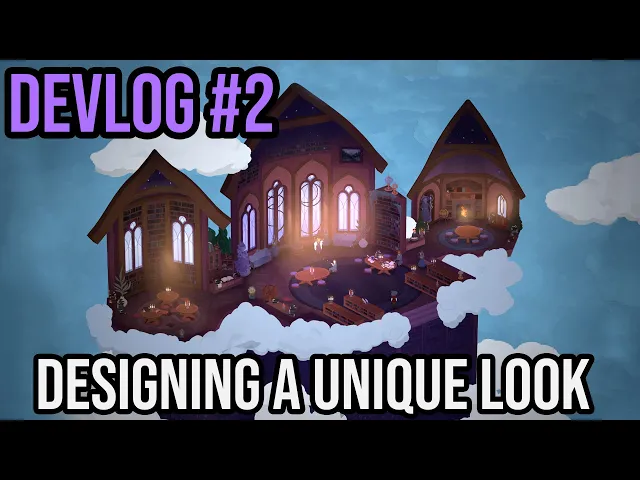
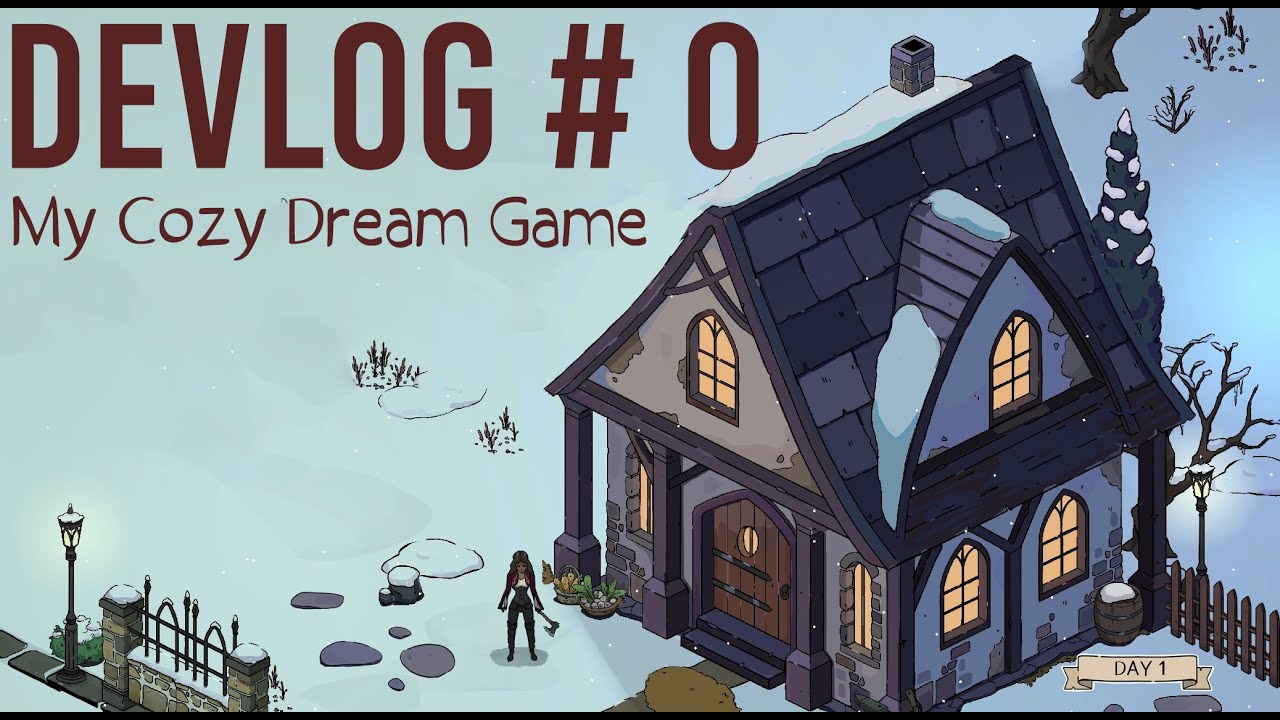
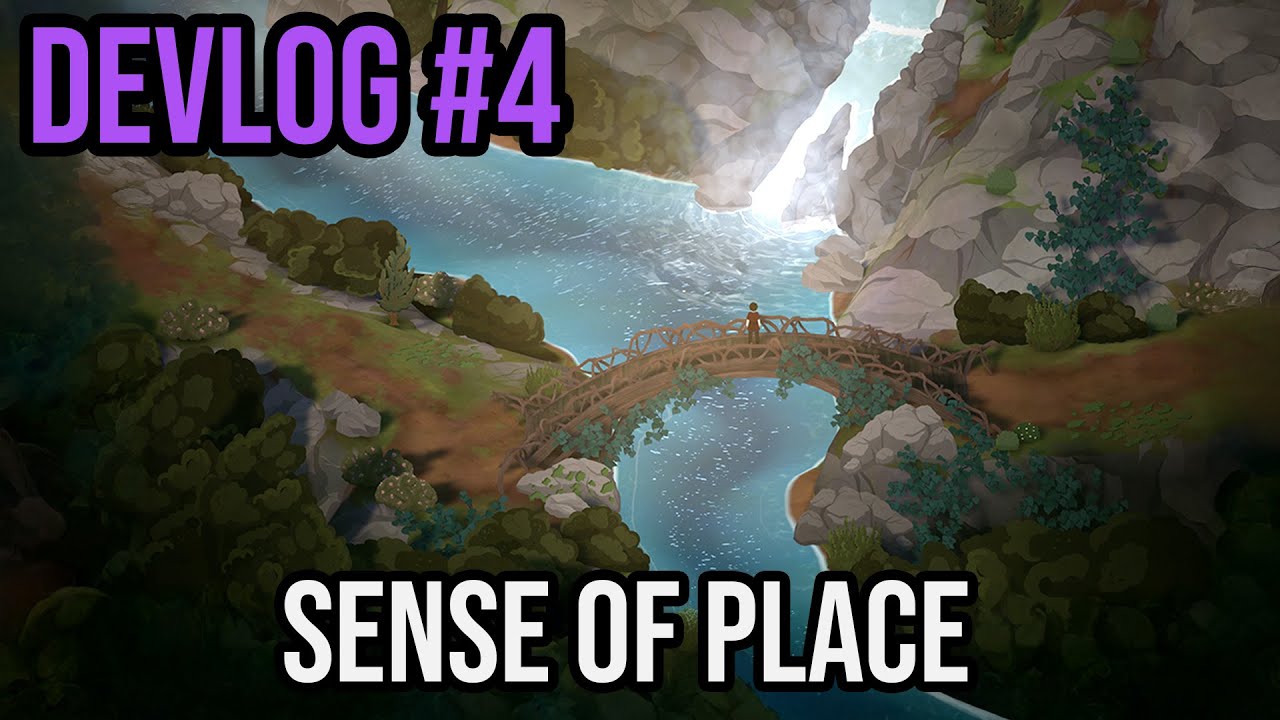
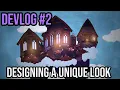
benefits to doing it like that I'm experimenting with both 2D and 3D and trying to figure out what's the best for me but I'm realizing that there is so much that I haven't yet considered and it's a great question so glimmer Wick is a huge visual departure from our previous title e shade and kind of an oddball in its rendering style and art pipeline the game looks like one massive illustration of creative director and lead artist jacn zadlo at least that's the goal but the world borrows a lot of methods from 3D art and how
it's constructed it took over a year of trial and error before we came to this mix of workflows but what we've settled on offers us a really nice mix of benefits from the 3D way of doing things while maintaining the artisanal magic of Jaclyn's illustrations it also happens to yield a unique look and feel to the game so most props in the world are individual illustrations from jacine I suppose they could be called Sprites mapped on to planes or single quads our camera looks down at 30° and the planes are rotated at 30 30° back
so they are perpendicular to the camera in hindsight I kind of wish I'd kept everything upright but uh simply scaled everything vertically to 1.43 so it looked correct from the camera's perspective um but anyway the ship is sailed on that one each prop usually has a plane beneath it floating above the ground to act as a sort of soft contact Shadow the contact Shadow really helps ground the props and it's extremely inexpensive trick here's the fun part so then we have a directional Light sun which casts full realtime Shadows like any 3D game it works
really well it looks really good it adds a lot of depth and drama and it just kind of works because much of the world is Planes the sun has to be situated at a certain angle casting sidelong shadows will not work uh because the planes have no thickness the shaders have no directional shading at all and only respond to the overall color and luminance of the light or a cast Shadow so it's just a binary thing it's either in the light or not in the light there's no directionality or or Lambert or Fel or anything
like that so you might be thinking for the realtime Shadow if you have a night day cycle like we do doesn't it get weird when the sun gets at angles that makes really skinny Shadows on the planes and the answer to that is no because we don't move the Sun in the sky I don't think I'll ever make another game where the sun moves in the sky there's so many weird edge cases to it you get like swimming Shadow sampling and just other kinds of problems for nothing nobody notices nobody has ever noticed that the
sun doesn't move in the sky the color of the sun and the brightness of the Sun change and it eventually turns to like a dark blue for like a moon and nobody bats an eyelash so our workflow for props isn't particularly unusual it's all fairly normal 2D and a 3D engine stuff maybe with the only added trick of Real Time cast Shadows the terrain is where we really start to cross over into 3D workflows so our terrain is a regular full 3d mesh with vertx splatting between textures doing this allows us to build a world
with mountains Canyons Terraces and elevation changes it pushes the feeling of the spaces toward a more natural feeling rather than the gaminess that can sometimes come with fully 2D worlds which some folks dig and that's super cool but we're not really going for that so with respect to terrain this is almost the exact approach we used on E shade except with a simpler Shader with only diffuse and Sands any directional shading even the Shader program for importance and height mixing is the same pulled directly from the terrain Shader I wrote for E shade another advantage
to fully 3D meshes for terrain is that we can do things like the Avatar running into the water and that would be really difficult to do with a more traditional 2D workflow you can see the water line go up on her body as she gets deeper into the water so since we have the 3D meshes it's not that hard to have her be able to just run around at new level like this another one is Shore waves rising and falling on the beach so while props and smaller objects are mostly Sprites on planes the larger
objects use an approach I call projection Jaclyn draws the entire building as one illustration then I model a low poly mesh which is roughly the shape of the building I then project the UVS from the exact angle of the player camera so that Jaclyn's illustration maps onto this low poly mesh as a texture Jaclyn draws her buildings at arbitrary angles usually with irregular shapes and sometimes even with Twisted perspectives shapes that are simply not possible in actual 3D space I tend to just keep looking through the camera modifying by small bits and then reprojecting from
the camera every few seconds as I go it took some time for me to learn Which shapes are better left unrepresented in the mesh and which parts of the building need to be separated out into different islands on the texture because our game camera has such a tight Field View and is so far away from the subjects the the effects of perspective are subtle which makes the projection process extremely forgiving as far as how the texture maps onto the mesh the important part is that the projection meets the ground otherwise the trick will give itself
away when the player runs near the buildings the bottom of the building will be floating higher than it should and it will become apparent when the player stands next to it there's a bunch of advantages to having the buildings projected one players and NPCs can move around the building and all the depth and collision will be correct two there are never any corn that appear to be floating off the ground like I mentioned before when the player gets near them three the real-time cast Shadows are more accurate with the base of the Shadow meeting the
base of the building four there is a subtle Parallax that adds depth especially around the rooftops which tend to reach into the foreground I really love this effect in five managing depth becomes much more straightforward it can get really hairy and true 2D isometric especially when the buildings are large and irregular sometimes we need objects to be fully modeled as 3D meshes so here's a few animations that would be really really hard to do without just plain old 3D meshes so here's a water mill you can see of course the water wheel is turning there
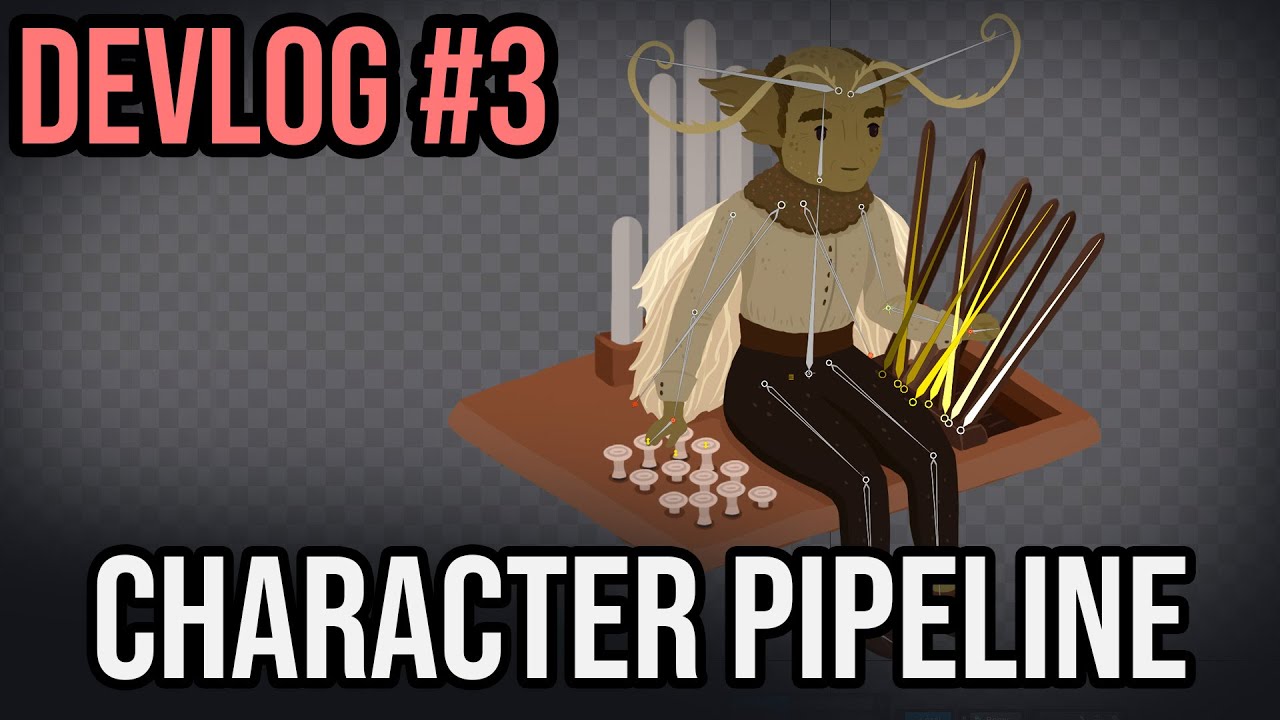
that's just a 3D mesh we got this Windmill and then we've also got this cart that the player can pull around so the cart is fully 3D and it just makes it really easy otherwise we'd have to draw the cart from a bunch of angles and it just would end up looking kind of weird when the player was um running at irregular angles another kind of weird one is the birds we have two kinds of birds fully 2D ones that are animated with skeletal animations like our other Critters but also fully 3D Birds which are
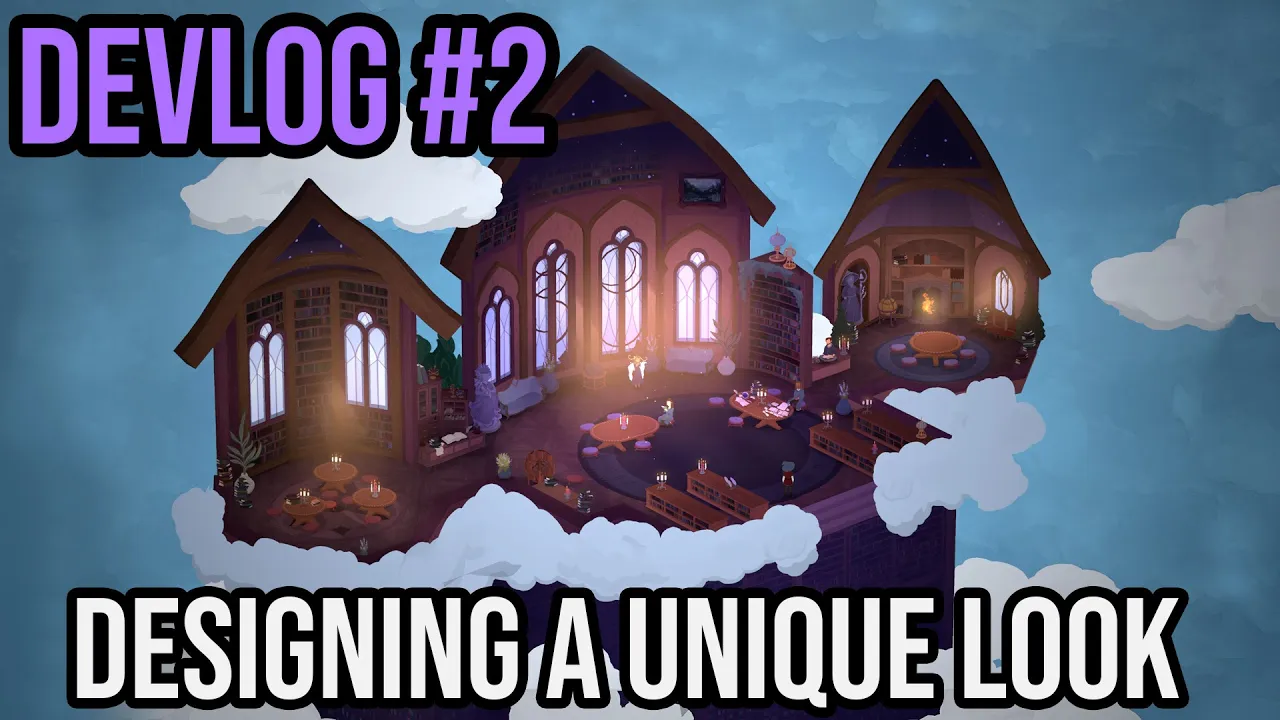
basically used as Silhouettes in the sky it would be really hard to pull off the arbitrary directions of a flock of birds without 3D birds and I found they mixed with the backgrounds really beautifully once I simplify their texture and mesh enough of all the mixed workflows we use our Interiors might be the most mixed for small Interiors our projection process is straight forward jacine draws the room and then I project it onto a low poly 3D mesh just like our building exteriors for larger Interiors however like this Library given that the player can zoom
in whenever they wish the texture resolution required would just be too huge to hold up we could do a massive single texture but then it would be a memory burden or loading and unloading burden or an install size burden or even a repository burden during development it would also be a burden for jacine to detail such a large image by hand this is where tiling textures come in some parts of the Interior are illustrations and some parts are modeled and textured in 3D typically jacine will concept the entire room as one image then I'll go
in and model the parts required with mesh using your concept as a reference this is typically the floors and large walls during this process I break apart her illustration onto a texture Atlas which I then use to project all the different parts of the Interior once I'm done jacn goes into the texture Atlas and does a final pass on detailing all the different parts of her original concept I pulled there are benefits and drawbacks to this process the main drawback is that it is incredibly labor intensive compared to some methods of creating Interiors especially when
compared with 2D tile sets but the benefits are well that our Interiors don't look like they're made with tile sets they look unique and handdrawn and use shapes that simply could never be achieved with a tile set some might say we will be more limited in how many Interiors we can create because of this workflow well that's true we mitigate that particular Pitfall with the genius solution of well spending way more money in production time but it does help our game stand apart all right let's get to some Community questions hmill asks I'm curious about
your thoughts on handling Peril without a combat system do you avoid making the player feel they're in danger at all or are there creative ways you found to provide nonviolent consequences and solutions to perilous situations well thank you for the kind words hmill and thank you for the question as well I don't actually think a game Loop needs Peril not fundamentally anyway it seems like you can make a perfectly Rich Game Loop just out of progress alone when I think of the adventure game genre like uh point-and-click Adventures I don't think danger is really a
factor in those games at all um if there is any danger it's a sort of narrative danger it's never a mechanical danger where the player's going to die or anything like that one might say that challenge is a factor just because it's a sub genre of the puzzle genre but I I don't actually think it's necessary either I mean when I think of the real driving energy in a pointand click adventure I do think it's progress so we just try to make sure that the player has goals and that the systems are rich enough for
the player to make plans to achieve those goals mini Ike says some incredibly kind words which we really appreciate and then goes on to ask well I don't know much about the setting of glimmer Wick one of the things I remember most about eade is the believably kind characters of its society and people part of that believability meant that you could occasionally encounter the unkind or rough edges of both it's not a perfect Utopia but there's a distinctly welcoming and peaceful culture is the setting of glimmer similar or are there any specific considerations you make
for the idealistic parts of the setting in characters and the harsher Parts as well yeah so both Jaclyn and I feel like in a lot of RPGs like Skyrim particularly and and uh maybe the other Elder Scrolls as well people are really mean man if you just like tally up how many characters are kind of rude to you versus how many are actually like nice and welcoming typically it's it's like 90% of characters in RPGs are like hm all right then or no Lolly gagging you know they're just like like very kind of unrealistically rude
so our Games stand apart in that they're generally nice places of course there's some people with problems or there's some people who are a little bit grumpy but generally we just kind of take it by a character by character basis and we try to make just a mix of nice people and mean people but mostly nice people seems like everyone wants to make a cold harsh world and not that many people are interested in making a a nice inviting world and nice characters can be interesting just as easily as mean ones can alien kn X
thank you for the comment and your support and the kind words and then goes on to ask if you'll be able to get to know the NPCs through cutcenes and the answer to that is yes so all the quests and songs of glimmer are hand authored and many of them include what we call setpiece moments or what you might call narrative beats but it's not quite as formulaic as in a lot of other farming Sims it's not like give X character X many gifts and you'll get a cut scene every Quest is very unique and
it's a bit more organic in songs of glimmer Wick but you definitely get to know the NPCs and a lot of them have multi-part character arcs and things like that okay Rob Productions games a longtime supporter of the project really appreciate that thank you very much this is a fellow developer who has published a number of games on Steam which look pretty cool I checked those out great work on those I was basically asking for any tips on marketing an upcoming or existing game on Steam now Rob I'm not going to be answering to you
specifically here so please don't feel like I'm talking directly to you I'm just talking to any aspiring Indie so the absolute most important part about marketing a game and surprisingly underrated I think is that fundamentally it's a product that people desperately want the instant they see it you've got to make something that people really really really want that's I would say if I had to list out the most important part about marketing number 1 2 3 4 5 6 7 and 8 and 9 and 10 and maybe all the way up to like 500 would
be you've got to make a thing that people really want and once you've done that virtually anything you try works that's the crazy part I cannot stress enough how easy marketing becomes when you have a thing that people fundamentally want virtually anything you try Works social media emailing the Press making a YouTube video whatever you do is going to work in varying degrees of kind of worked to wildly successfully worked when you have a thing that it looks just kind of average to people it's basically impossible I mean nothing you try is really going to
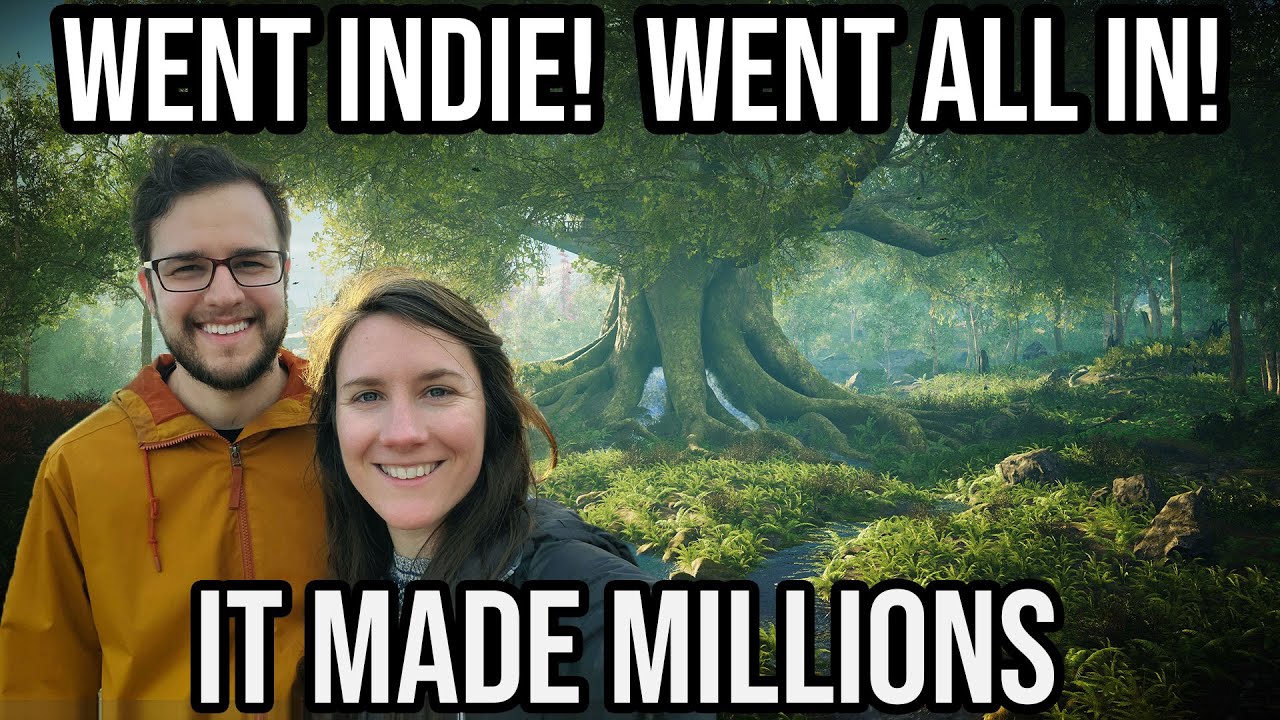
work you could put $50 million into marketing and PR and you still wouldn't be able to get people to buy the game or cover the game okay now that that's out of the way just quickly going over what we did on E shade number one we created very polished marketing assets so that's two trailers over 20 gifts and over 50 screenshots two we hired a PR Company uh called player 2 PR who handled press releases journalist Outreach strategizing on release timing and planning and key distribution during big moments in our campaign number three we picked
our timing for our trailer releases our release date announcement and our actual release the most important one very carefully trying to stay clear of other news and releases I mean that's one thing that sometimes I don't see Indies doing try to make a big deal about your Beats right your three big beats are your your initial announcement uh which is you know your trailer and potentially the name of the game and stuff and then your release date announcement and then your release you know treat them very carefully and plan them very carefully and and try
to put a lot of marketing ammo and energy into them don't just randomly post them on a Saturday morning without any other hoopla even when I released our first Dev Vlog video for glimmer Wick I had about 10 tabs lined up with everything ready to go and everything was really carefully planned the video was done a month in advance even then I I tried to pick a good day to do it I waited until after the winter Steam Sale I just put a lot of effort and thought into it okay number four I was very
active on Twitter and I kind of still am I participated in screenshots Saturday and I interact a lot of course I think Twitter's relevance is sort of dying just seems like the level of interactions and Views um at least I've been getting have just been plummeting ever since Elon Musk took over everything just has sort of changed on that website that's part of the reason why I'm trying to focus more on YouTube now as our main marketing channel okay number five I've written a number of articles that have done well on gamasutra and 80.lv and
other gam Dev sites six I often stream development on Twitch and still do I was doing that pretty religiously during the shade development and I always did like a pitch call to action of like you know hey check out our game on Steam go wish list it and I still do number seven we got into the Indie Mega booth at Pax West and we also showed at GDC in a special Unity Booth we managed to get into which uh the impact is kind of overestimated I think of going to conventions but in our case we
did end up getting some pretty important coverage particularly from GDC we ended up getting a Kotaku preview from that which was really big for us and and bumped our wish list quite a bit and number eight I did a number of interviews with small and medium websites and a few large ones and a lot of those were lined up by our PR firm so there are a lot of different things that work and what works is going to vary a little bit between uh different kinds of games and different people you might be better at
creating one kind of content versus another and of course to just keep trying stuff like right now we're trying the devlog thing on YouTube but most importantly you just have to make a game that people want that's the hardest part by far and it can't just be like oh my friends said it was good you know I think that the standard is a lot higher than people think for being a commercially competitive video game sold on Steam all right thank you everybody for watching and of course if anyone has any questions for me about the
game about game development drop your question in the comments and I might get to it in the next Community questions section and if you like the content please don't forget to like And subscribe and if you like the game please don't forget to pop over to steam and give us a wish list link for that in the description and hopefully see you next Dev vlog