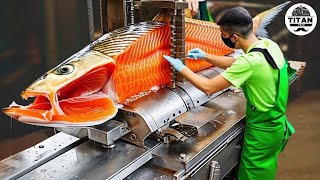
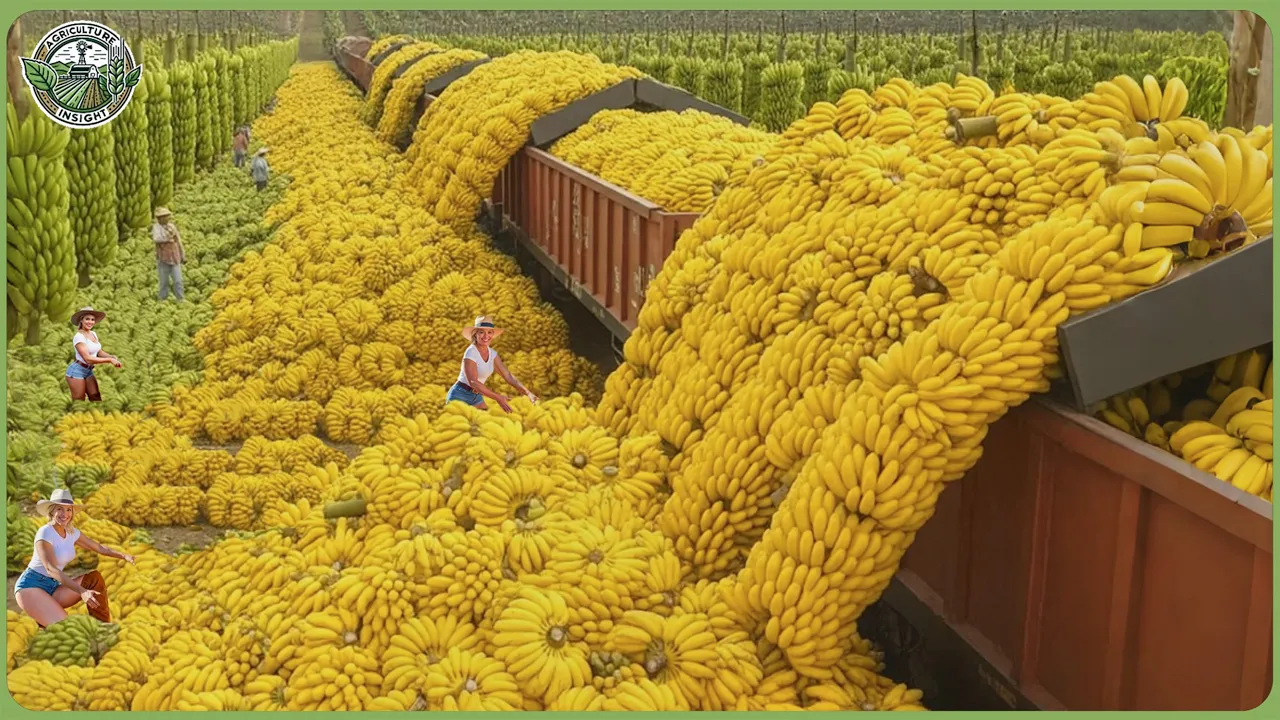
[Music] In the boom of modern agriculture, each harvest is more than just gathering crops. It's a living testament to how technology enables humanity to reap up to 2. 5 billion tons of produce in record time.
Right now, we'll explore how farmers harness modern machinery to race against time and elevate agriculture to an entirely new level. Now, let's set foot in Washington, the apple capital of the United States. In front of you are giant shaker machines weighing up to 10 tons built specifically for harvesting.
There are two common types. The first uses hydraulic arms to grip and shake the tree, making the apples fall to the ground. After the apples are shaken down onto the ground, a windrower moves in, sweeping apples from both sides of the tree row and gathering them into a neat line down the middle.
Next, the apple pickup harvester runs along the row, its conveyor positioned close to the ground with soft rubber fingers rotating like mechanical hands, gently lifts each apple. From there, the fruit moves onto the main conveyor running through the machine, passing under air blowers that remove dry leaves and dirt from the surface before dropping into a large bin or standard wooden pallets ready to be hauled to storage. This method is fast, capable of harvesting up to 10 to 15 tons of apples per day, but the bruising rate is fairly high, so it is mainly used for juice processing.
For this reason, the demand to keep apples intact for premium markets led to the development of an improved shaker machine equipped with a built-in catching frame. As the tree is shaken, the apples fall onto the catch frame and are transferred directly into storage bins, keeping the fruit unbruzed and suitable for fresh export. An apple tree typically takes four to 5 years to produce its first harvest.
And this difference in harvesting technology reflects the diverse demands of the market. Another type of machine was developed to reduce apple bruising, though it is not as widely adopted as the two mentioned above. The over the row apple harvester.
Its mechanism uses soft rotary brushes that sweep along the tree canopies, causing the fruit to fall into collection trays before being transferred onto a conveyor running through the machine. From there, the apples are moved into rear storage bins. This process allows the machine to pass between tree rows and harvest continuously.
What truly marks a new era in apple harvesting is the arrival of intelligent robotic arms. Gone are the days when dozens of workers had to climb ladders to pick each fruit by hand. Equipped with AI powered cameras, these robots can locate ripe apples, extend their grippers with precision, and harvest thousands of fruits per day.
This is the turning point. Technology not only accelerates the harvest of millions of tons of apples, but also determines the economic value of an entire season. [Music] Carrots are typically harvested from September to November when the roots reach peak crispness and their skins shine with freshness.
In major production regions like the Netherlands and Germany, farmers rely not on manual labor, but on specialized harvesters such as the Grim Evo 280. What makes these machines unique is that they not only pull the carrots from the soil, but also integrate systems to shake off dirt, cut the tops, and presort the crop directly in the field. A single grim can replace the work of hundreds of laborers running day and night while keeping the carrots clean and largely unbroken.
From above, thousands of bright orange roots can be seen flowing across the conveyor belts, creating an impressive spectacle of industrial scale harvesting. Thanks to this technology, Europe brings millions of tons of carrots to market each year, supplying both fresh consumption and industrial processing. But before that, in late summer, the onion fields enter a harvest unlike most other crops.
Instead of going straight into bins, a wind grower lifts the bulbs and lays them neatly in long rows across the field. There, the onions are left to cure naturally under the sun for 10 to 14 days, allowing the outer skins to dry and toughen, which greatly improves their shelf life. [Music] After drying under sun and wind, the onions are gathered by a pickup harvester.
Rotating tines gently lift each cured bulb onto the conveyor where soft brushes and air blowers remove soil and loose skins. Market grade onions drop into large bins on a parallel running trailer while off-grade bulbs are separated for processing. [Music] Deep plows churn through layers of soil that human hands could hardly reach, showcasing the raw muscle of modern agriculture.
With massive blades cutting as deep as 60 to 70 cm, they don't just turn over the surface, but also break up the compacted hard pan beneath, the layer that often restricts root growth. Each pass leaves long furrows of loosened airrated soil that absorb rain water more effectively and reduce flooding. In Europe and the US, deep plows are commonly used before planting cereals or oil seeds, preparing hundreds of hectares for the season ahead.
And if you ever let one loose in your backyard, well, forget digging a foundation. It might just plow it for you. And here we have the shallow plow, a machine far more commonly used than the deep plow.
Unlike those massive rigs designed to break into the hard pan, the shallow plow works at depths of just 15 to 25 cm, focusing on loosening the top soil where seeds will be sewn. As it moves, the blades not only till the soil, but also mix in crop residues, dry leaves, and organic matter, turning them into a rich humus layer. At the same time, the process helps suppress weeds and eliminate pests left over from the previous season.
Thanks to its ability to prepare an ideal seedbed, the shallow plow has become an indispensable tool on most farms, especially before planting rice, corn, or vegetable crops. [Applause] Giant seed drills often stretch across the fields with long arms spanning dozens of meters, resembling a massive frame laid over the land. Mounted above is a hopper that can hold several tons of seed, feeding them into small tubes that run along each arm.
As the machine moves, each tube drops seeds precisely into pre-marked spots, followed by a mechanism that closes the soil and gently presses it down to ensure firm contact. Models from brands like John Deere or Vader Stud go even further, integrating GPS and sensors to keep rows perfectly straight, control seating density, and minimize seed loss. This technology not only cuts costs for farmers but also guarantees high and uniform germination rates.
[Music] Few images capture American agriculture as vividly as those perfect green circles carved into the desert. Marks left by center pivot irrigation systems. Their structure is simple yet ingenious.
A pipeline stretching hundreds of meters mounted on wheeled towers rotating around a central hub like the hand of a giant clock. As it moves, sprinklers spray water evenly across the field, creating circular patterns so vast they can be seen from space. One pivot system can cover 50 to 130 hectares with just a single central well.
Newer models even integrate soil moisture sensors, remote control via smartphones, and water flow optimization down to the square meter. Remarkably, this technology has turned the arid lands of Nebraska and Arizona into fertile fields of corn, peanuts, and soybeans, helping secure America's place as an agricultural superpower. [Music] The JTek tree trimmer is a specialized machine designed for pruning industrial orchards from apple and orange groves to pine plantations.
Its long hydraulic arm fitted with high-speed rotating saws can extend over 6 m to handle even thick branches with ease. As it moves along the rows, the machine neatly trims excess branches, ensuring canopies remain open and uniform. The hydraulic system allows flexible angle adjustments, making it adaptable to different tree types.
Instead of dozens of workers climbing ladders with shears and hands saws, a single tree trimmer can prune hectares of orchards in just one day. In Oregon, pine trees are pruned just as efficiently, only with a twist. Instead of cutting individual branches by hand, a circular trimming head moves along the row, enclosing the canopy and shading it evenly like a mold.
This way, every tree takes on the perfect conicle shape, ready for the Christmas season. [Music] Peanut harvesting usually takes place in two stages. The first is the digger shaker, whose underground blades glide just beneath the surface, slicing roots and flipping the whole plant over, almost as if exposing the peanuts that had been hiding underground.
>> Peanuts up. Flip them over in the back. Oh, that one right there just flipped over backwards.
After several days of sun drying, the combine peanut harvester enters for the grand finale. Conveyors gather the plants, pods are separated from the vines, and air blowers clean away every last bit of soil. The firm full peanuts dropped into the storage bin while the vines are returned to the field as green fertilizer.
With the power of mechanization, these machines can handle 5 to six tons of peanuts per hour, a pace unimaginable for manual labor. This unique two-step process makes peanut harvesting one of agricultur's most distinctive performances. [Music] Sweet corn is a crop that lives fast.
Once it reaches the milk stage, it must be harvested immediately. Wait just a single day and half its sweetness is gone. Out in the fields, massive harvesters roll like mobile assembly lines.
Hydraulic arms grip the stalks. Sharp blades slice cleanly and golden ears are lifted onto rotating rollers that shake off excess leaves before laying them neatly on the conveyor belt. Within seconds, the process is complete.
And in just minutes, refrigerated trailers behind the machines are filled with crisp, fresh corn. In the US, nearly 340,000 acres of sweet corn are planted each year. Yet more than 90% never reaches the marketplace.
Within 8 to 12 hours, the harvest goes straight from the field into canning or freezing lines, locking in that original burst of sweetness. [Music] Pistachios, members of the cashew family, can live for over a century, but take about 8 years before producing their first real crop. Around August to September, the harvest begins with pistachio harvesters, hydraulic shakers that clamp the trunk with rubber padded arms and deliver powerful vibrations for a few seconds, shaking thousands of ripe nuts loose.
all at once. Beneath the tree, two giant catch frames unfold like umbrellas, capturing the falling nuts before folding back and feeding them onto a conveyor. From there, the pistachios are lifted into storage bins while fans blow away leaves and dust, protecting the soft outer hull from mold.
While Iran has long held the crown as the world's top producer, in the US market, almost every pistachio consumed comes from California. a region that has turned this nut into a billiondoll industry. Did you know that a single sunflower head can hold 1,00 to,500 seeds?
Even more remarkable, they are arranged in spirals that follow the Fibonacci sequence, one of the most beautiful examples of the golden ratio in nature. But that beauty fades once harvest season arrives. The fields no longer glow yellow, but turn gray brown with drooping heads waiting to be gathered.
The sunflower harvester rolls in. Its sharp prongs guiding the tall stalks into the cutting unit. The dried heads are pulled into the threshing drum where thousands of seeds are separated in an instant.
Leaves and husks scatter in the wind. All glossy black seeds stream down the conveyor, filling the bins behind. In moments, a withered field transforms into a river of living seeds.
The beginning of their journey into cooking oil and countless sunflower-based products. Amid lush green fields shimmering under the morning sun, clusters of ripe red raspberries glisten like hidden jewels. Welcome to Washington, the kingdom of frozen red raspberries, where over 36,000 tons are harvested annually, contributing more than 90% of the United States frozen red raspberry supply and making the state one of the largest production centers in the world.
Have you ever noticed the hollow center of a raspberry? It's not caused by pests or defects, but rather nature's clever design. When ripe, the fruit, made up of dozens of tiny droolets, gently separates from its soft central core, leaving behind an empty cavity.
That core stays on the stem and won't produce another fruit. It's the floral base of a single blossom that has fulfilled its purpose. This unique feature not only distinguishes raspberries from blackberries, but also reveals nature's quiet elegance, a fragrant, juicy beauty with a touch of grace.
But surprisingly, that sweet looking hollow can harbor a hidden mini bacteria hub. A perfect shelter for fruitfly eggs and mold spores lurking in microscopic crevices, waiting for just one misstep in processing. So don't be fooled by its luscious appearance, because one careless moment and this seemingly perfect fruit might just turn on you at the dinner table.
To fully grasp the meticulous journey behind each plump raspberry, we must return to the very beginning when the first berries of the season begin to ripen. The harvest typically takes place in midsummer when raspberries reach peak ripeness. Vibrant red, juicy, and perfectly round.
Depending on the scale and purpose of cultivation, farmers choose between two methods. Handpicking to preserve the quality of each individual berry or using advanced machinery to maximize speed and yield. In large-scale raspberry growing regions like Washington and California, mechanical harvesting is gradually becoming the new standard.
These machines worth over $200,000 operate like a technological orchestra. gently vibrating the canes with fiberglass rods so that only perfectly ripe berries fall. The berries are then directed onto an integrated conveyor system where strong air jets blow away dry leaves and debris.
Above the line, workers sort the fruit on the spot, keeping only the freshest, most evenly colored and flawless raspberries. Thanks to this process, a farm spanning nearly 100 acres can complete its entire harvest within a week quickly and efficiently while maintaining consistent quality, ready for the next stage of the journey. At smaller farms or those serving premium markets, raspberries are typically harvested entirely by hand.
The only method that ensures each berry retains its shape without bruising. With their delicate skin and hollow, airy structure, raspberries are highly susceptible to damage from pressure or impact. Handpicking allows harvesters to select berries at just the right stage of ripeness, avoiding underripe or overripe fruit, an essential factor for successful cold storage and posth harvest transport.
The moment raspberries leave the hands of the picker, trays are immediately loaded onto refrigerated trucks and transported straight to the nearest processing facility. No intermediate storage, no delays, because even the slightest holdup can cost these delicate berries their peak freshness. At the plant, specialized forklifts handle each pallet of raspberries as if they were dealing with glass.
The pallets are moved into the receiving area where automated unloading systems take over. Each tray is gently tilted, allowing the berries to slide onto the conveyor belt. No squeezing, no dropping, no collisions, as if every motion were precisely programmed to preserve the fragile perfection of this precious fruit.
From the receiving area, the raspberries begin their purification journey. On the conveyor belt, they are washed using ultra- low pressure water sprays, just 0. 3 to.
5 bar, less than half the pressure typically used for sturdier fruits like apples or pears. This gentle approach is essential as even slightly excessive force can rupture the delicate skin of the raspberries. The rinse water is continuously filtered and reused, ensuring both hygiene and environmental sustainability.
After washing, the raspberries are moved to the sorting area where workers manually inspect them along a continuously moving conveyor belt. Any berries that are bruised, misshapen, or unevenly colored are removed, leaving only those that meet the highest quality standards. This step is crucial to ensure consistent product excellence.
Next, the raspberries are transferred to the packaging section. Each tray undergoes a final inspection, is sealed in protective packaging, and labeled with detailed information such as origin, harvest date, and quality grade. Finally, the trays are packed into larger boxes ready to be distributed to supermarkets, markets, or exported abroad.
The entire process is tightly controlled to ensure that every raspberry reaching the consumer is fresh, flavorful, and flawless. To extend shelf life and preserve freshness after harvest, a portion of the packaged raspberries doesn't go out for distribution right away. Instead, they continue their journey along a gently vibrating conveyor and are quickly transferred to the deep chilling zone, where temperature is tightly controlled to maintain the fruit's natural quality, color, and delicate flavor.
From there, the berries enter a rapid cooling chamber for immediate preservation. Inside, they are placed in a cold room with precisely regulated temperatures. The gentle vibration continues to prevent the berries from sticking together during freezing, ensuring each one is evenly chilled and retains its fresh appearance and perfect shape.
After a few minutes of quick freezing, the raspberries exit the chamber and move along a conveyor for final inspection. Workers manually check the fruit once more, removing any remaining substandard berries. Meanwhile, the vibrating system continues to operate, allowing the berries to move smoothly without clumping.
This process ensures that only the highest quality raspberries proceed to the next stage of processing. It serves as the final quality control step before packaging or further processing. Finally, the chilled raspberries are automatically packed into cardboard boxes lined with plastic bags to ensure hygiene and protect the fruit during transport.
An integrated weighing system checks each box to guarantee consistent fill levels that meet strict quality standards. Once full, the box flaps are automatically folded and securely sealed with tape to prevent shifting during transit. Each box is then labeled or barcoded with key information, including the packing date, batch number, and product origin.
The finished boxes are neatly stacked onto pallets, ready to be moved into cold storage or shipped to distribution points. Among the frozen ripe raspberries, a select portion of the finest is reserved to create another kind of magic, raspberry jam. The jam making process begins by pureeing the raspberries into a smooth, thick mixture, then blending it with refined sugar at a standard ratio of 55 to 60%.
Significantly higher than that of most other jams. This high sugar content is essential because raspberries have a high water content and a soft fragile structure making them prone to spoilage if not properly preserved. Sugar not only adds sweetness but also acts as a natural preservative helping to control moisture and inhibit microbial growth.
The mixture is then gently cooked in large heated kettles at a controlled temperature of 85 to 90°. Hot enough to slowly concentrate the jam without compromising the fruit's natural aroma and vibrant color. Unlike strawberries, which often lose their color during prolonged cooking and require added coloring for visual appeal, raspberries naturally retain their rich red purple hue thanks to their high anthocyanin content.
Meanwhile, sterilized glass jars are prepared and ready for filling. High precision filling machines ensure that each jar is filled accurately and with minimal air exposure, a small but crucial step in preserving freshness and extending shelf life. The entire process is a seamless blend of technique and control.
Neat, refined, and delicately crafted to capture the pure flavor of every raspberry. Imagine yourself standing in an endless almond orchard where rows of sturdy trees stretch under a clear blue sky. Welcome to California, the kingdom of almonds.
Every year, California produces over 1. 2 2 million tons of almonds, accounting for 80% of the world's supply. Behind the humble exterior of the almond lies a massive industry worth billions of dollars.
Few people know that just over 20 almonds contain up to 160 calories, equivalent to a chicken drumstick. Despite the high calories, almonds are a miracle for dieters thanks to healthy fats that keep you full longer. However, eating too many can backfire.
Eating less but right is the smart choice. But almonds are more than just nutritional value. Beneath the pure white beauty of almond blossoms, producing one ton of almonds requires over 10 million L of water.
While California is suffering from severe drought. Therefore, as sustainable production gains attention, each harvest marks a new beginning where cultivation efforts, technology, and faith in a greener future come together in every ripe almond. The journey of almonds begins in January or February when young almond trees are planted in California's central valley, the almond capital of the world.
With its hot, dry climate and fertile soil, the region offers ideal conditions for these trees to thrive year round. At first, the trees are planted in evenly spaced rows and paired with drip or micro sprinkler irrigation systems, which deliver water and nutrients with precision and efficiency. Modern drip irrigation systems allow water to go directly to the roots, minimizing evaporation and waste.
Meanwhile, micro sprinklers help maintain even soil moisture and deliver fertilizers through the water, supporting healthy growth throughout the treere's life cycle. [Music] What sets almonds apart from many other crops is their deep root system and high water demand. This is largely because their growing season coincides with California's dry months, requiring consistent watering to maintain tree health and productivity.
Although drip irrigation helps conserve water, the fact that almonds bear fruit annually means water consumption remains high to sustain yields throughout the production cycle. In the first 1 to two years, farmers focus on developing strong canopies and healthy root systems. Modern machinery is used to prune dead or overlapping branches, ensuring each tree receives ample sunlight and grows vigorously.
By the third or fourth year, when the trees bloom in vibrant shades of pink and white, the pollination season officially begins. At this time, over 2 million beehives are brought into almond orchards. The bees gently collect pollen from the newly blossoming flowers.
With their busy wings, they transfer pollen from one blossom to another, promoting fruit development in the almond trees. [Music] For years, almond growers have partnered closely with beekeepers to ensure successful harvests, a collaboration that supports healthy trees and high yields for seasons to come. After months of care under the summer sun, by late summer to early fall, the green outer hull of the almond begins to split open like a smile from nature, signaling that harvest time has arrived.
To harvest almonds quickly, a machine called a tree shaker is used. The tree shaker is an agricultural engineering marvel equipped with a mechanical arm and hydraulic drive system that clamp securely onto the tree trunk. When activated, it produces rapid and precise vibrations, almost like dancing with the tree, creating a joyful rain of almonds that fall evenly and efficiently.
Each tree shaker can harvest 10 to 15 almond trees per hour depending on its size and capacity. In the past, farmers had to shake trees manually using long poles which was time-conuming and posed safety risks. The advent of the tree shaker has drastically shortened the harvest period from several weeks to just a few days, reducing labor costs and nut loss while boosting overall production efficiency.
After the almond rain from the tree shaker falls to the ground, a modern device called a sweeper is used to make the harvesting process easier. The sweeper is equipped with rotating brushes that gently sweep the almonds into long straight rows known as wind rows. These rows are neatly arranged between the tree lines, creating tidy strips of nuts ready for collection.
The machine operates smoothly, allowing for quick gathering while minimizing damage to leaves and soil. Organizing the almonds into windowross helps the harvesting equipment work more efficiently, speeds up the collection process, and protects nut quality by reducing breakage. After a few days of sun drying to reduce moisture and improve nut quality, the main harvesting phase begins.
Almond sweepers move along the windowross, collecting the nuts and transferring them into specialized trucks. These machines are often equipped with advanced fans and filtering systems that help remove leaves, twigs, and dust, ensuring that only clean, intact almonds are gathered. As a result, post-h harvest processes like sorting and processing become easier and more efficient.
Finally, the harvester began pushing rows of almonds onto the long conveyor belt. The nuts poured into the truck bed like a small stream, layer upon layer, dusted with soil and kissed by the sun and wind, painting a vivid picture of the harvest season. In just a moment, the truck bed was piled high with mountains of almonds, ready to set off, carrying with them the breath of the earth and the hopes of the farmers for a bountiful season, beginning a new journey from orchard to table.
When almonds are transported to processing facilities, they often still have their green outer holes and hard shells along with some debris such as dry leaves, small twigs, and soil. Before hulling begins, the almonds undergo a thorough cleaning process. First, they pass through a dsticker machine, which removes larger branches without damaging the nuts.
Next, the almonds move to the destoner where a stream of air blows away lighter debris while vibrations help dislodge any hardened soil clinging to the surface of the nuts. [Music] Finally, the almonds pass through a dwigger which completely removes any remaining small twigs and impurities. The next step is hulling.
The process begins by loosening the green outer hull using a gentle rotating or friction mechanism. The loosened holes are then removed by a vacuum or air suction system, ensuring the production line remains free of impurities. After the outer hole is removed, the almonds are transferred to a gravity table to separate any remaining debris.
Nuts that still have their hard shells continue along the main processing line where they pass through a camerabased inspection system that detects and removes any substandard almonds in preparation for the next shelling stage. The shelling process begins by feeding the almonds, still encased in their hard shells, into a specialized shelling machine. This machine uses gentle mechanical force to crack and separate the shells while ensuring the almond kernels inside remain intact and undamaged.
After shelling, the almonds are transferred onto a vibrating conveyor equipped with sorting holes to classify them by size. Smaller kernels fall into separate bins and are typically used for almond butter or baking ingredients. Larger kernels continue down the line to meet the standards of premium markets.
It is common for the upper class to leverage their financial and social power to pay a significant premium for the privilege of securing the highest quality almonds during the very process in which they are being sorted. In a high-tech environment, almonds undergo quality inspection using advanced computer software. Supercomputers operate around the clock to identify almonds that meet strict quality standards.
[Music] Next, highresolution scanning cameras detect tiny cracks or surface scratches on each almond. The system then calculates the exact coordinates and sends the data to robotic arms. These robotic arms swiftly and precisely remove the defective almonds from the processing line.
Finally, human workers perform a final inspection, removing any remaining defective almonds to ensure the highest quality. The almonds are then sorted into bins of different colors based on their quality. Red bins typically hold premium grade almonds, while green and yellow bins contain second grade ones.
This manual sorting process helps detect subtle imperfections and handle special cases, tasks that automated systems may not execute perfectly. Steam pasteurization is the most common method used in the United States in which hot steam is applied for a short duration to eliminate harmful bacteria such as salmonella. This process is highly effective, preserving the natural flavor and texture of the almonds while meeting strict food safety standards.
After pasteurization, the almonds are moved to the packaging stage. Large bins are carefully prepared and securely sealed to preserve freshness and quality during transport. These bins are then delivered to specialized processing facilities.
There the almonds continue their journey being transformed into delicious products such as salted roasted almonds or sweet almond toffee. [Music] To make salted roasted almonds, the nuts are placed in an oven or automatic roaster and roasted at a temperature of 150 to 180° for about 10 to 15 minutes to ensure they are evenly cooked and crispy. While still hot, the almonds are sprayed with or coated in a salt solution for even seasoning.
Finally, the nuts are quickly cooled and sealed in airtight packaging, ready to be delivered to customers. Alongside salted roasted almonds, another irresistibly sweet treat is almond toffee. A crunchy, buttery snack that delights with every bite.
The main ingredients for toffee include sugar, butter, cream, and a pinch of salt. First, the butter and sugar are melted together in a large pan over medium heat, stirring constantly to prevent burning and to create a smooth mixture. Next, heavy cream is added to enhance the texture and balance the sweetness.
The mixture is then cooked to a high temperature around 150 to 155° 302 311 until it reaches a soft pliable consistency. [Music] Once the desired consistency is reached, the butter sugar mixture is poured onto a metal surface to cool before moving on to the next stage. As the mixture cools and solidifies, it is cut into small pieces.
Sharp cutting blades are typically used for this process, ensuring precise cuts so that each toffee piece is uniform in size and shape. Next, the toffee pieces are transported along a conveyor belt where a stream of warm chocolate coats the surface evenly. This chocolate layer creates a smooth outer shell and enhances the toffee's distinctive flavor.
And finally, the most important stage arrives. Just as each chocolatecoated toffee piece sets into a glossy, rich finish, they are then bathed in a golden shower of roasted almond slivers. The fragrant oil-issed almond shards cling tightly to the still warm chocolate, forming a crisp, flavorful armor.
It is this delicate harmony between the nutty, mellow almonds and the rich sweetness of the toffee that gives the candy its soul and iconic character. And so the journey of each almond comes to a close. From sundrenched orchards through modern technology to fragrant roasting ovens, each tiny almond now wears a unique coat, ready to awaken the senses and carry the story of a land's unwavering dedication.
Imagine standing in the middle of endless pineapple fields with rows of spiky green crowns shimmering under the sun. Welcome to Costa Rica, the pineapple paradise of Central America, producing over 3 million tons every year. But when it comes to the pineapple processing industry, the true king is the Philippines.
Home to massive global scale factories that contribute over 40% of the 5 billion cans of pineapple produced annually. [Music] Pineapples have always been called the royalty of fruits with a crown on top and a suit of spiky armor. But beneath that rough exterior lies juicy golden flesh bursting with sweetness and a tropical aroma.
It's not just delicious. Pineapples are also a superfruit packed with vitamin C that boosts immunity, brightens skin, and fights inflammation. [Music] Compared to many other tropical fruits like bananas or papayas, pineapples take much longer to be ready for harvest.
Each one takes around 18 to 24 months to fully mature. That's nearly 2 years for a single fruit. [Music] Every April, when ripe pineapples release their sweet aroma under the morning sun and hide their golden nectar behind spiky armor, harvest season kicks into high gear.
Timing is everything. Pineapples taste their best when they hit peak ripess, but that golden moment is fleeting. Harvest them too early and they won't have developed enough natural sugars.
Wait too long and they become overly soft and too ripe. That's why farmers rely on experience, instinct, and sometimes even a good old-fashioned taste test to pinpoint the perfect time to harvest. [Music] Once all the conditions are just right, the harvesting begins.
But pineapple picking is not for the faint of heart. Each plant is surrounded by long, razor-sharp leaves forming a natural barbed wire fence. To avoid getting cut or scratched, workers must wear full protective gear.
thick gloves, long-sleeved shirts, and in some places even face shields to guard against the leaves. Each pineapple is carefully cut from its stem to avoid damaging the crown or harming the mother plant. Interestingly, the base of the plant is often left intact because it can grow another pineapple in about a year.
A tough little cycle of renewal. These days, advances in technology have completely transformed the way pineapples are harvested. On large farms, specialized harvest vehicles are now equipped with automatic conveyor belts, eliminating the need for workers to haul heavy bags by hand.
Instead, all they need to do is snip the fruit and gently place it on the belt, which then transports the pineapples straight into the storage compartment of the vehicle. This tech not only saves time and reduces manual labor, but also minimizes fruit damage and boosts productivity by 3 to five times compared to traditional harvesting methods. Loaded trucks filled with fresh pineapples begin their journey from the lush green fields, wrapping up another bustling harvest season.
And now comes the most important moment when the pineapple will transform into countless irresistible products ready to conquer all tastes and deliver an unforgettable experience. As soon as the trucks arrive at the factory, they're directed to the receiving area where the first strict inspection begins. Here, pineapples are released into large water tanks for a surprisingly natural quality check.
The ripe sweet ones with just the right sugar content float to the surface. Meanwhile, damaged, underripe, or spoiled fruit sinks to the bottom and is immediately removed. It's a simple yet incredibly effective first step in sorting out the best from the rest.
Next comes the cleaning stage. Pineapples are moved into an automated washing system that includes rotating tanks, high-pressure spray nozzles, and a mild disinfectant solution. The entire process takes just a few minutes.
Yet, each line can handle up to 10,000 pineapples per hour. That's the output of a large farm in just one morning. Pretty impressive, right?
The most beautiful, perfectly round pineapples are carefully selected and sent to the export storage zone. Here, each fruit is coated with a thin layer of edible plant-based wax, which helps retain moisture and gives the pineapple skin a glossy, irresistible shine. Once the wax dries, workers perform a final manual inspection, sorting the fruit by size, weight, color, and ripeness.
Only the perfect candidates are placed into cardboard boxes, each labeled with a QR code for traceability, ready to cross oceans and land in the hands of consumers around the world. [Music] ripe pineapples are carefully peeled, revealing golden flesh, fragrant like morning sunshine. The juicy slices are gently pressed, preserving their natural sweetness, subtle tang, and fresh aroma.
The final juice is poured into clean, clear bottles, ready to deliver a burst of pure freshness in every sip. And if you're someone who prefers the crisp bite of a chilled pineapple slice over sipping a glass of juice, then what comes next is sure to get you on the edge of your seat. The process of making ready to eat pineapple.
After initial preparation, the pineapples are sent into an automatic peeling system equipped with ultrasharp blades and smart sensors. Each fruit is placed into a mold where the blades adjust precisely to its size, stripping away the tough, spiky skin in just a few seconds. If pineapples had feelings, they might scream in despair as their sturdy armor is torn off in the blink of an eye.
At the same time, a hollow drill neatly removes the hard core from the center, leaving behind nothing but the juicy golden goodness. Moving on to the next step, where golden rings are created without a single human touch, perfectly shaped and astonishingly precise. Moments later, they rest neatly inside gleaming cans bathed in a sweet syrup like tropical jewels waiting to be handed over to their lucky recipient.
In a separate process, the golden pineapple rings continue their journey along the conveyor belt where they are neatly cut into uniform triangular pieces. From here, the pineapple is directed into two main processing paths, one for canning, the other for drying. For canned pineapple, each piece is carefully placed into tins filled with syrup or pineapple juice, then sealed and sent through a sterilization process.
Once cooled, the cans are labeled, boxed, and moved to the finished goods warehouse. As for dried pineapple, the pieces are placed into drying chambers until they reach the desired texture. After cooling and sorting, they are packed in specialized packaging to preserve flavor and extend shelf life.
[Music] After witnessing the impressive transformation of pineapples in the factory, you might wonder what did those fruits look like before they hit the conveyor belt. And where does their journey begin? Every journey begins with a solid foundation.
And for pineapples, that foundation is the soil. But not every plot of land is immediately ready to welcome young shoots. First, the soil must be thoroughly loosened.
This step isn't just about turning the top layer. It's a full-scale restoration, a way to awaken the earth after many growing seasons. High-powered tractors are brought in to break up the hardened subs soil, compacted over time by sun, rain, and repeated farming.
Once loosened, air, water, and nutrients can flow deep into the ground, creating a fertile, well-prepared foundation for the next planting season. Once the soil is ready, growers move on to selecting the planting material. Healthy, uniform pineapple suckers free from pests and diseases, typically 2 to 3 months old.
At this stage, the suckers are ideal for quick rooting and stable growth. Planting is done by hand or machine in neat straight rows. Each sucker is placed upright with the base firmly in contact with the soil.
Spacing is carefully calculated to give each plant enough room to spread its leaves, absorb sunlight, and take in nutrients without competing with its neighbors. Though it's just the starting step, improper planting, such as placing the sucker at an angle too shallow or too deep, can hinder root development and slow down growth. Right after planting, the drip irrigation system is activated, delivering water consistently and efficiently.
Some farms even use automated fertigation systems, which send dissolved nutrients straight to the roots, tailored to each stage of growth. [Music] Before the pineapple can grow vigorously, weed removal is an important step to eliminate competition for space and nutrients. Then applying ura provides the necessary nitrogen, helping the pineapple quickly develop lush green leaves and grow strong and healthy.
Once it has accumulated enough nutrients, the pineapple starts to grow vigorously, preparing to bloom and bear fruit, leading to a promising harvest. The pineapple has matured, but the journey of agriculture is full of exciting possibilities. Not just pineapples, but many other crops are changing every day thanks to technological advancements.
How will technology transform the way we farm?