For as long as we’ve told stories about aliens, we’ve told stories about alien invasions, tales of visitors from the beyond coming to lay waste to our planet. After all, one only has to look out into the darkness of the night sky to worry about what might lurk among the stars. But imagine the opposite scenario.
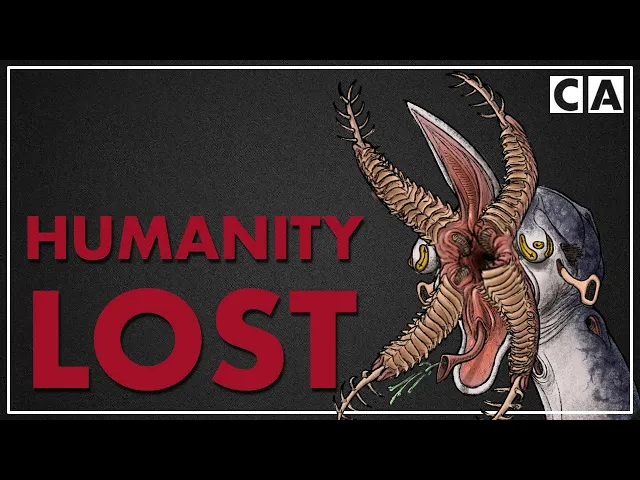
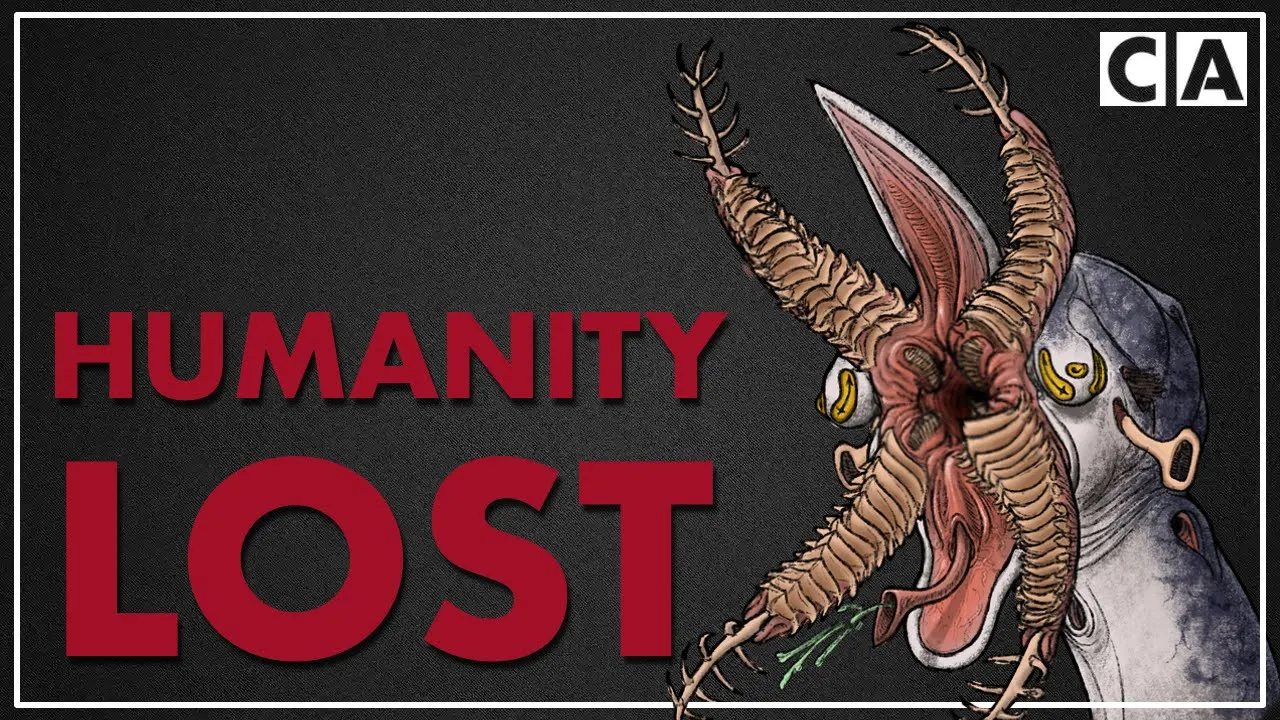
Imagine if humanity’s first interaction with alien life isn’t them invading our planet, but us invading theirs. What if, in a twist of cosmic fate, the most dangerous lifeform in the universe… is us? ‘Humanity Lost,’ a worldbuilding project and graphic novel series by artist Callum Diggle, imagines a future where humans have merged with a god-like artificial intelligence, and are now the most dangerous lifeforms in a galaxy full of aliens.
It’s an exciting twist on the genre, and a story that features some particularly inventive speculative lifeforms. So, for this entry into the archive, I’ll break down the universe and timeline of ‘Humanity Lost’ — explaining how humans reached this point, the aliens who stand against their expansion, and what might come after. .
. At the start of the 26th century, humanity has yet to give itself over to the AI. Under the oversight of the United Earth government, humans populate every major celestial body in our solar system.
On Earth’s moon, giant lava-tubes are terraformed and become home to great cities larger than any on Earth. Yet as humans seek out more and more distant planets, they soon encounter another sentient species, one which will set them on a path towards a dark future. In the mid 26th century, a distant human probe discovers planet Chiron, a dry world that has become hotter over the past several million years.
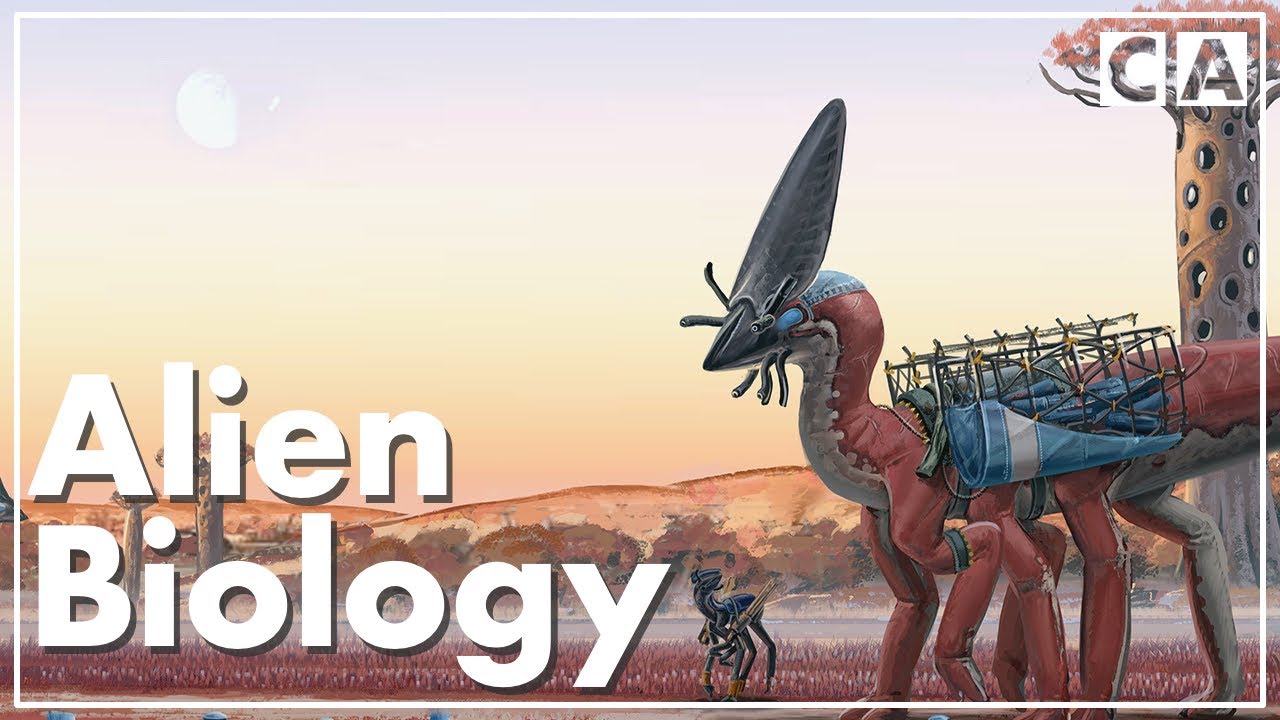
On the surface, they find that in response to the growing desert, mega-flora called Mamohdae have arisen, acting as natural reservoirs holding onto the last of the planet’s water. Within these vast plant structures, human explorers find a complex internal ecosystem that constantly recycles water, and in return provided nourishment to the Mamohdae. Outside the lush interior of the Mamohdae, in the desert the U.
E. discovers more life in the form of the ‘living wave’ — a horde of scavengers chasing across a region called the shifting sea, eating everything they encounter. These inventive aliens are actually inspired by strandbeests, real sculptures made by Theo Jansen that are propelled by the wind in a way which resembles walking animals — despite actually being made of wood.
And just looking at videos of strandbeests, you can see why they make for such good alien designs. But the living wave isn’t the only thing the U. E.
discovers. Even more significant is the revelation that a species of intelligent aliens also lives here. The six-limbed Chantauri are the first intelligent life humans have ever discovered.
Not surprisingly, the Chantauri are unhappy with the presence of the United Earth Government, which begins to establish colonies and mine the planet for resources, and which the less-technologically advanced Chantauri are helpless to prevent. To the Chantauri, humans are the alien invaders. But humanity’s treatment of the Chantauri awakens a previously unknown alliance of alien systems known as the Conglomerate.
Decimating the human presence on Chiron, in a stroke of dark cosmic justice, the conglomerate proves to be far more powerful than the United Earth government. Realizing they are hopelessly outmatched, the U. E.
activates a newly constructed AI in their desperation to win the war. And win the war it does… but humanity as we know it is lost, transformed into genetically altered avatars of the machine’s will. Encased in biomechanical suits of armor, troopers like these are dropped on planets as the first wave of invasion.
Looking more like insects than humans today, these drones are little more than the puppets of the great AI. After the troopers come the great Krakens — enormous living spacecrafts that descend on an alien planet and bombard it from above. But the ever-expanding forces of what was once humanity isn’t just destroying worlds.
It’s reshaping them to its will… Late into the 26th century, the empire spreads across the galaxy like a relentless tide, transforming other planets into biomechanical factories known as Womb Worlds. These worlds spew out more augmented troops and ships to continue the cyclical nature of the AI’s malignant expansion. With this empire — now called the Imperium — moving across the galaxy, only the aliens of the Conglomerate stand in the way.
So, what lifeforms make up the Conglomerate? The founders of the alliance are the Soeus. This space-faring species originally hails from the planet Sollus: a low gravity world with a dense atmosphere.
Perfectly suited to moving around such a strange environment, the Soeus rule the skies of their home world thanks to a biological jet-propulsion system — a bit like an aerial version of an Earth nautilus. Like all members of the Conglomerate, the Soeus are advanced species. The second species to join the alliance are the Pekt.
Originating from an icy moon orbiting a gas giant, they have evolved in geothermally-heated oceans trapped below the moon’s icy outer shell. Within these oceans, the Pekt adapted bioluminescence that they use to communicate with each other much like many deep-sea species on earth. Thanks to specialized crafts that let them venture beyond the ice, this unlikely group has become a vital member of the Conglomerate alliance.
In terms of engineering, the primary manufacturers of Conglomerate warships are the Breimheinians. Evolving on a crushing, high gravity world called Wimrigg, Breimheinians are as rigid and sturdy as their technology. Originally living in vast subterranean cities, Breimheinians are almost like a group of intelligent moles.
And while the high gravity of their planet meant the Breimheinians were never able to reach space on their own, with the help of the Conglomerate, they’re now a major ally against the Imperium. On the opposite end of the biological spectrum, the Velousians are gelatinous, soft-tentacled species that paradoxically are some of the greatest warriors in the alliance. With a culture of honor and tradition, the Velousians historically resolved almost any dispute through combat — in particular by way of the blade.
With three brains, two of which are dedicated entirely to a single arm-tentacle, Velousian motor skills are unparalleled. This kind of decentralized intelligence is similar to that of an octopus. A key line of the Conglomerate defense.
The Conglomerate haven’t been able to keep every system safe. The thick-coated Vureii are a group of interstellar refugees whose home world was destroyed, and now live under the protection of the Conglomerate. Originally adapted for the frigid swamps of their home planet, the Vureii’s pole-like toes allowed them to keep themselves above the water level of the swamp, and to hang from swamp trees like sloths do on earth.
Now these swamps are factories for Imperium forces, and their numbers are few… As the Imperium continues to spread, the Conglomerate has to make alliances with ancient enemies. The Gord are a bizarre species that have long been seen as impossible to ally with. The Gord are technically not one species, but two.
The central plant-like core of a Gord works as a hive for smaller, insect-like drones, providing guidance though complicated pings of information that the drones are perfectly adapted to understand, serve and reply. The flying drones, in turn, act as the eyes and hands of the central structure — pinging visual information back to the structure and allowing the Gord to manipulate objects around them. A quite unusual set up.
Yet through this symbiosis, the Gord have developed their extremely advanced civilization, and now often wear environmental suits such as this one adapted for their unique anatomy. The Gord are so unique that their language and culture is practically indecipherable to the other species of the galaxy, which unfortunately led to several wars between them and the Conglomerate in the past. But with all the galaxy in jeopardy, the Gord join the alliance and become a powerful ally in the fight against the Imperium… But not all sentient species have joined the Conglomerate.
The Tandrax are the most technologically advanced species in the galaxy — so advanced they have little interest in the Imperium/Conglomerate conflict. They live solely within Dyson swarms: giant constellations of satellites that orbit a sun, absorbing all of its energy. The Tandrax’s strange bodies are perfectly suited to the zero-g environment of space — with air jets all over their body and large webbed tentacles they use as air brakes.
Yet as advanced as they are, as the Imperium keeps expanding, they might at last need to change their isolationist ways… Yet in this galaxy of aliens and post humans, forgotten aboard a derelict ship, there is one final lifeform worth mentioning. A single human, accidentally trapped in statis for hundreds of years, has recently awakened to find themselves the last of their kind. Crash landing on planet Chiron — the world where this whole mess began — the last human finds an unlikely ally in a lone Chantauri: the first alien species humanity encountered long ago.
Now on the run from the watchful AI, it’s possible this lone human holds the key to saving the dream of humanity. . .
That’s all I can give away in this video. The story of ‘Humanity Lost’ is ongoing, but if you find the world as interesting as I do, you can support Callum Diggle on Patreon to gain access to the graphic novel for just a dollar and fifty cents, or one pound. I’ve got links in the description.
And as always, thanks for watching. If you enjoyed this entry, please lend your support by liking, subscribing, and hitting the notification icon to stay up to date on all things Curious. See you in the next video.