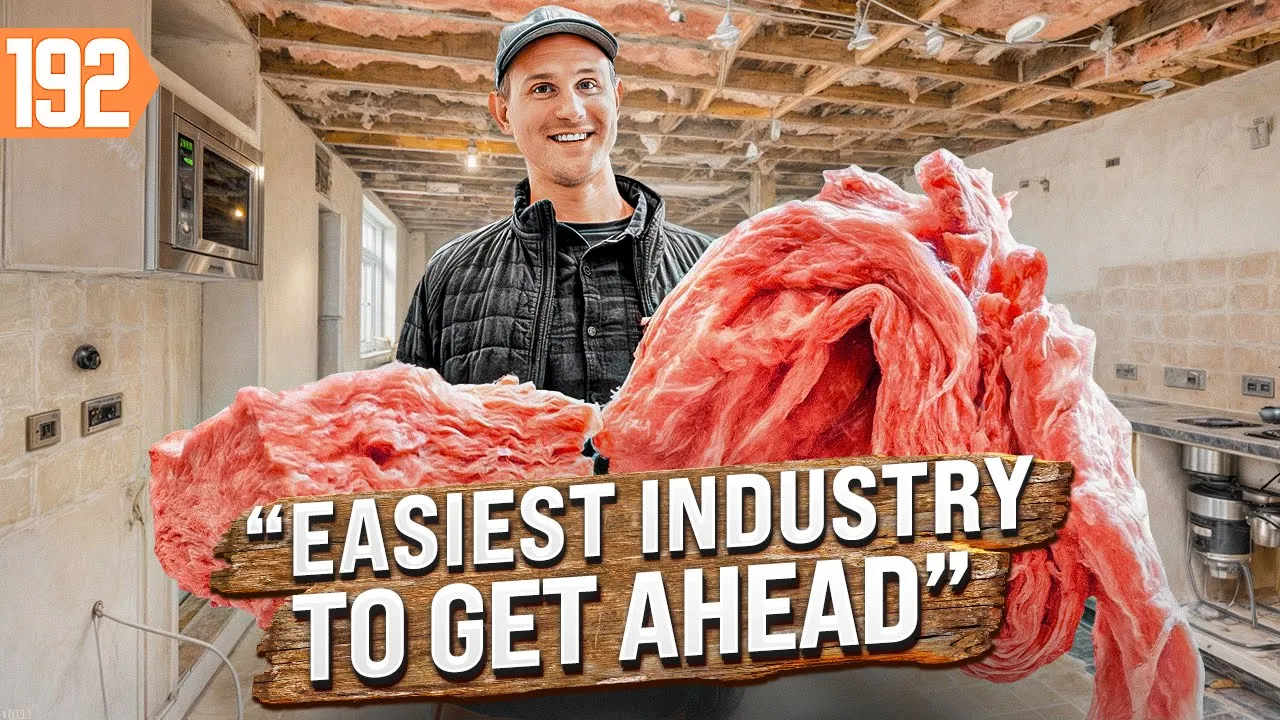
- How does this guy rake in $400,000 a month remodeling homes with only five employees? Kyle started his journey selling remnant countertops on the side until one message changed everything. - I think a lot of contractors are slowly going out of business and don't even really know it. - In this episode, he reveals his exact roadmap to go from no experience to making bank remodeling homes. - How am I getting those margins? - Yeah. How he runs his business without doing any of the remodeling work himself. - A lot of people think that they need
this huge in-house team with a bunch of carpenters and plumbers and all these other people. You don't need that. - And lastly, the trick to a never ending streaming referrals without paying a dime in commissions. - We do what's called a realtor blitz. So there's four levels of value. This is roughly a $700,000 project. - What? That is insane. Kyle, you are the number one remodeler in Tacoma at least voted. What me and the audience wanna know though, is where it all started. Give us a quick backstory. - So in 2016/17, I was working in
the union as a marble mason or a countertop person. And I had basically gotten fired. I wasn't the best employee and so it kind of pushed me. I had my back against the wall and so I had to start my own company. I was the only option that I saw. - Why not just go get another nine to five? I mean, why did you feel like you had to start your own company? - At the time, I was kind of surrounded by a lot of entrepreneurs. I was in that environment and I guess it was
just like my association, and I'd never really saw like a way to get like the financial means or security for my family by working a job. - Where are we going next? You got another project on Proctor? - Yeah, we're gonna go to a historic home that we're in the middle of working on. We just got cabinets in, and I want to catch the countertop guys. - All right. Let's do it; cool. (upbeat music) What can you tell us about this project? - This is a historic home and this job's really important to me because
I actually grew up like right across the street. - [Interviewer] Oh wow. - At my parents' house. And this whole thing is basically was taken down to the studs. - So walk us through the transition of a nine to five to now you're on your own, you started the business. What were some of the challenges you faced? What do you wanna highlight from that period of time? - I think a big part of it was just being able to develop the self-image where you feel like you're worth charging enough money for homeowners. I think that's
like a big journey that took me probably three, four years to really understand. And then also on top of that, you know, there's like the logistics part of business. There's learning marketing, there's project management, there's the actual deliverable in construction, which is the hardest part. - If you could go back now, Kyle, with what you know, what would you do slightly different if you could? - I would focus on marketing and sales in the beginning and get those chops down. And then focus more on like the project management stuff. - If you had the number
one marketing sales guy tell you a piece of advice right when you got started, what would you love to hear? - Focus on networking and making intentional relationships in like all other areas and facets of, not necessarily directly in construction, but like real estate agents, designers, getting around people that are, you know, around your ideal client every day. - How about you guys watching. What do you think when starting a business, is it A, started as a side hustle until it replaces your full income? Or B, just jump into it headfirst hoping that the lack
of plan B makes you successful. What do you guys think? Comment below. All right, well let's go check out the upstairs. I see the guys doing something. What are they doing up there? - Yeah, there's some countertops that are being installed upstairs. They're getting ready for the tile guy to come in. Let's go check it out. - Let's go look. (upbeat music) What was your revenue like first year? What was your take home as well? Profit margins. - It's kind of embarrassing. It was- - That's okay. - 300 grand is what I did my first
year. I barely made $40,000. It was kind of a mess. - Talk to us. Why? What's the takeaway? - I think it ties into developing that self-image and feeling like you deserve to make money. I grew up poor. I'm the oldest of 10 kids and so I had to overcome a lot of like mind stuff, self-image stuff, bad things about money in my life. And so I think that was a really big obstacle for me. - So you were doing jobs, booking jobs, but just not really making a lot on each job, right? I mean,
you were giving a lot of people really good deals essentially. Right? - I was working for free. (laughs) Yeah. - Interesting that you tie it to your self image and what you can or can't ask as far as value. What else as far as takeaways from that period? - Okay, so there's four levels of value, right? And I learned this from somebody by the name of Myron Golden. And when I heard this, it really changed my life 'cause I was working in the field. So there's... The first level of value is implementation. That's when you're
working with your muscles and you're the person who does the thing. That person income is capped. You're not gonna make really more than like a hundred grand by actually physically working with your muscles, right? The second level of value is management. And so the person who manages the person doing the thing. That person's income is gonna be a little bit greater. You notice how people in management make more money than you know, the guy on the ground doing the thing. The third level is where you start actually making money, which is communication. So a person
who's in sales, real estate agent, that kind of thing, they're adding more value because money is spiritual. I know I'm getting weird here, but- - We're with you. - So the higher you climb on that ladder, no matter what industry you're in, you're gonna make more money 'cause you're adding more value. - Well, let's go check out the North Seven project. What's unique about that? - That's a even older historic home and it's kind of almost like a mansion. - Dang. - It has some really cool details that I think you guys are gonna be
really excited about. So okay, let's go check out. - I'll follow you out. - Let's do it. (upbeat music) - Are they updating it to more modern or just- - Some parts, yes, but they really want to pay like a homage and respect to the original finishes to the home. We're really trying to maintain that. That's super important to me as well. - Okay. Well that ties this into the next question, I guess. And I'll start by saying, by asking, what's the ticket price on this project? - This is roughly a $700,000 project. - What.
I'm not used to hearing those kind of numbers. What is your average ticket price across all your projects? What would you say that is? - So we do like two types. We do like whole home remodels. Which, you know, are above usually half a million. Or we do like a kitchen, which is usually about a buck 40. And so between the two of those, it ends up being about three 50 ish. - The profit margins, by the way, for the industry are roughly around 20%. Now you're achieving 40. I'm sure the audience wants to know
how do we increase our profit margins as a contractor, as a remodeler? - The initial is 40 right. After slippage and all that, it goes to about 35 because there is slippage in construction. I think a lot of contractors, like you're saying, 20% are slowly going out of business and don't even really know it because in my opinion, it costs 20% just to run the business. Like in just terms of like overhead. So just because of the state and the way that things are. - Yeah. - How am I getting those margins? - Yeah, I
mean tools you use, maybe systems you have in place. - Yeah, we have a really refined sales process. I think homeowners are willing to pay a little bit more for a better experience. And to know that there's a fixed cost involved rather than, we call it contractor games where they come in at say, you know, a hundred thousand dollars and then it ends up being $200,000. We don't play that game. That's the whole reason why I became a contractor is 'cause my parents got taken advantage of like really badly. And you know, they did a
big addition on their house and it ended up taking like twice the time and triple the amount of money. - Wow. - And so that's kind of our whole vibe is to make sure that doesn't happen. - And so you made it your life mission. - Yeah. - To to get into contractor- - Exactly. - And make sure that that never happens again. - Yep. Pretty much. That's a good goal. (upbeat music) So in terms of marketing, what do you think would be the best ROI for people just starting out in the industry, - Do
everything you can to capitalize on that job. So we do a six pack. We knock the neighborhood and it's not, "Hey, my name's Kyle. Give me work." It's, "Hey, we're gonna be in the neighborhood. And I just wanna let you know like, hey, if any of my guys like park in front of your house or anything like that, here's my card. Gimme a call." It's, you know, you get what I'm saying? I'm a subtle hint. I'm adding value rather than like, hey, gimme work. So also I would recommend to join your local home builders association.
There's probably some bigger fish in there that have some small, you know, kibbles and things that you could chew on as a small contractor. And then just networking. And I know that that's a vague term, but making intentional relationships like we talked about earlier with designers, realtors and other people in your industry. - You're about to open up a showroom as a contractor, which is uncommon, right? For a lot of contractors. - Yeah, I don't think a lot of people get to that point. We've been very blessed to be able to get there and I'm
excited about it. - What state is it in right now? - It's like 27 feet in the air right now. It's kind of crazy. - Yeah. I wanna go check it out. Let's do it. - Yeah, let's go. (upbeat music) - The house is literally floating in the air. - Yeah, so this is gonna be the home of our new showroom. - Wow. - We're in collaboration with a designer on this. So we're kind of like splitting the space because we're both using it for the same things. And in return she gets to do her
designs. We get to bring clients here. It's gonna be a really cool space. - All right. Take us back to the 15 year Kyle. Like what were you, like, what kind of environment were you growing up in? Who had the biggest influence on you that now has an impact? - So I'm the oldest of 10 kids like I mentioned earlier. I grew up in a yeah, in a big family, smaller house. And I grew up like painting graffiti and being kind of like a troublemaker kid. I was kind of in that category. I'd say I
learned a lot of things from that though. Like how to just kind of think outside of the box and be creative and you know, not necessarily follow all of the rules. Some rules are meant to be broken in my opinion, so. - Well I'd love to go check it out down there. Let's go- - Yeah, let's go check it out. - All right; sweet. (upbeat music) So we're at the bottom of your soon to be showroom now. What's the build out cost for this? What are you doing? Just curious for this project. - So we're
gonna get a lot of the stuff donated from like our vendors. We're gonna get a lot of like slabs, cabinets, countertops, you know, hardware, things like that. We're trying to keep it at $60,000, but it's probably gonna be more around the 80 range. - Not bad, but, so the owners doing this whole expensive thing? - Yeah, they're doing the lift. We are just doing the internal build out once this is lifted, We've been facilitating this and making sure that it's going according to plan. But yeah. - Why go with the showroom as a contractor? What's
the thought process behind that? - It's credibility and a place to bring your client. When you bring in your clients to places like floor and decor, you know, CFM, big box stores, things like that, it just isn't the same level of professionalism as like, hey, come into my office, we can do it after hours. I mean, it just gives us that extra touch with where we have a little bit more control over the process. - Gotcha. (upbeat music) Walk us through the year over year revenue and any highlights in that journey as well. - First
year in business I did 270,000 and I only made $30,000 that year. Second year I did about 380 and made about 50 grand that year. The third year was the first year I broke a million dollars. - Wow. - And I made I about $120,000 that year. And then the next year after that, same thing, 1.3, 1.4. I kind of stayed there for a little while until about three years ago. I did 2.7 and that was a crazy year. I was kind of pulling my hair out, and I actually lost half a million dollars that
year. - Dude. What happened? What are some lessons learned from that experience? - So that was a commercial job that I underbid severely and- - Did you do commercial before that or this is- - No. - I was gonna say that was it; you stepped outta your boundary. Okay, well sometimes you gotta tap into that. So your business is making millions. You're on a great trajectory. Are you happy? But before you answer that question, let's hear a quick word from our sponsor who made this video possible. At UpFlip, we encounter tons of different businesses from
seven figure T-shirt companies to pretzel food trucks. These remarkable entrepreneurs share one secret to success, margins. You don't need an MBA to understand that reducing business expenses equals more profit. And as the decision maker, you know that every penny counts. That's why savvy businesses are upgrading to NetSuite by Oracle. With no hardware required and accessible from anywhere, NetSuite's system allows you to instantly reduce IT costs. Cut the costs of maintaining multiple systems by unifying all of your most essential business management tools. It's why over 37,000 companies have unlocked their business potential with NetSuite. More expenses
mean more headaches. Why not cut costs, boost performance and make your life easier at the same time? NetSuite is the number one cloud financial system. Bringing accounting, financial management, inventory, HR into one platform and one source of truth. You improve efficiency by bringing all your major business processes into one platform, slashing manual tasks and errors. That's why by popular demand NetSuite has extended its one of a kind flexible financing program for a few more weeks. Head to netsuite.com/upflip. Netsuite.com/upflip. - I would say that I'm happy; I'm not content though. We're definitely like moving in the
right direction of where we want to be, but there's always room for improvement. - Are you into like materialistic things? - I like to go on vacations. I like to... I'm a muralist and an artist at heart and so I like to do a lot of that stuff. Most of it though has just been reinvesting into the company. Like I'm trying to build this skyscraper, and we've got the foundation kind of, you know, finished off right now. - How many years into it now since day one? - This is my eighth year in business and
like ninth year doing this. - Gotcha. Sweet; blitz time with Kyle. Kyle, first question, how do you guarantee zero change orders? There's almost always some kind of framing, plumbing, HVAC or electrical issues, et cetera. - Definitely through taking your time through the pre-construction process, doing some extensive investigative work, like drilling holes into things and then just making air tight designs that are standardized when it comes to like your deliverables. - Okay, what is the wildest customer request you've ever had? - I had a customer request like a hidden room in the back of a closet
that was kind of crazy. Or a client asked me to caulk baseboards to the floor. Some wild things. - What percentage of revenue do you pay yourself? - Last year I paid myself around 200,000. - Not bad. What's one remodeling myth you'd love to bust? - That contractors are bad people, and that they're shady. - What's the most impactful system you've implemented in your business? - Having an SOP for everything. So rough in, framing, drywall, pre-construction design, everything. Just standardizing it and making sure that it's all, you know, written down and on paper. - Okay,
which historical figures home would you love to remodel and hang out with? Why? - I'd like to work on some of the, who's that really famous architect who did the running water? Frank Lloyd Wright. I'd like to work on some of those. Those are cool. - Nice. If you could remodel one historical landmark, which would it be and what modern twist would you add? - I'd like to remodel maybe like the White House or something, you know. Something really old and cool like that. I have an affinity for all these old houses. So- - They'll
give you a call in exactly a week. - Yeah. - The White House admin. When someone searches kitchen remodel Tacoma, you're the first one that shows up. Talk to us about how that's possible and any other SEO things you can teach us about. - So we do a lot of like cross pollination with our audience, right? So what I mean by that is like what, what we're doing right now, I'm probably gonna get a back link from it, right? So we do that with like designers, we do that with like realtors. Basically we want to
get our name everywhere that we can and also creating manual back links on like really good websites. So like Architectural Digest, joining associations. Like we have Master Builders here in Seattle. Anything like that is gonna give your SEO more juice. And then also Google's the king of SEO, right? And so you want to feed Google's algorithm by playing their game. They own YouTube and a couple other things. I think they own Pinterest now too. They're gonna want to to feature their own things, right? And so doing that stuff and playing their game is gonna kind
of feed that machine. Another good SEO tactic is like, so Home Advisor, House, all of those things like Angie, all those things are a waste of money for leads. But as a marketing move, those companies spend billions of dollars on like advertising dollars and you know, making sure that they're ranking high when it comes like the Google ladder. And so it's good to join those things for the back link, not necessarily for the leads. - Interesting. That's a good tip. Alright, let's talk about networking with realtors. I know you hit on it a couple times,
but I wanna go into specifics, like what does that look like? What are some steps that you take to open up new relationships and so on? - Okay, so we do what's called a realtor blitz where we'll actually physically go to their office and kind of catch 'em lines on and bring 'em like maybe Panera Bread or something like that. And we'll drop like a little card with just like a, "Hey, you know, my name's Kyle. I'd love to sit down, have a cup of coffee with you, see if we'd be a good fit to
see how we could help each other's business." That's usually like game recognizes game, right? So realtors see that and they're like, okay, like maybe I'll sit down and give this guy a shot. It's not like a lot of other people were just like calling and asking for work. That's weird. - So it's not a face to face. - Yeah, right. - So just adding a little bit of value on the front end and you know, it's, what is it, 20 bucks, five bucks for that. It's not that big of a deal. So we do that
and then, you know, we sit down with 'em and explain how we can help their business and make 'em look like rock stars. We're typically looking for real estate agents that are in like the retail sector, you know, that work with affluent homeowners that move more than 10 houses a year. - Gotcha. So you have a criteria. - Yeah, out of the 200 homes that we go to a month, we will ask the homeowners during our sales process if they've ever thought about selling their house. And then if it ever comes up that yes they
have or whatever, then we introduce them to one of our VIP realtors and then organically those things just kind of blend together and we're top of mind when it comes to, you know, a big remodeling project of this caliber. - That's awesome. So is it like a revolving wheel as far as who gets the referral for a listing? - Yeah. - 'Cause you have a number of VIPs on the list, not just one. - It just depends on who's feeding us the work, who's in of a lot of homeowners and that kind of thing. -
Depend on how you feel today too. - Yeah, it depends on who's me pissing me off. - No. (laughs) - Whoever buys you a latte today. - There's a little bit of that. Yeah, yeah, exactly. - Oh, Paul bought me a latte yesterday. I actually. got a lead for him. - Right, it's not a ton of like leads necessarily. Like we're not obviously gonna be like their biggest, you know, but we wanna help out and add value to them. - It's a win-win; reciprocal. - Say they have like a big property and there's like a
space on the property where they could build an ADU. We'll put together like a whole package for 'em. - Nice. - And they'll just leave it at the counter when they do the open house and make 'em look like rock stars. - Great. - Not a lot of contractors are doing stuff like that. - I know. That's why I think it's important that we bring it up to you guys as well. So if you guys have any other ideas as far as networking as a contractor besides realtors, comment below. We'd love to know who you're
reaching out to, what groups of people and what that's doing to your business. How did you differentiate yourself when you got into the industry? Because remodeling is a very competitive business. So talk to us about how you decided to stand out. What made you different? - I think that it's an advantage that the remodeling industry is saturated because so many people are inundated with this old way of thinking. People are very old school. And so we have an opportunity to implement things like technology, checklist. We can be a little bit more scrappy with marketing. It's
kind of like contractors are like dinosaurs and so we can kind of come in there and just have like this new approach and it works. - Any specific steps that you took to stand out? Whether it's maybe a technology piece that you've implemented or a process, a service that nobody else did? - Well this is gonna sound really stupid, but literally just being on Facebook and being on Instagram and having a social media presence is like you're already like nine steps ahead of most contractors. Like most of 'em don't even have a website here. I
also take it a step further. We have videos. We do a lot of video content and so the homeowners almost feel like they know you before you come out to the house. And so somebody moves here from say California or out of state, you know, what are they gonna do? They're gonna go on Google, they're gonna look somebody up, they're gonna see you and they're already gonna know you. Who are they gonna call? - So right. So at what point did you pull back from the day-today of the business and start managing teams? - The
way that I was able to make it outta the field is we run a PD/PM system. So we have one person who manages the client expectation, the client journey, make sure that the customer feels heard and appreciated and that they're being acknowledged in all ways. And then we have a PM so this guy puts his head down and builds things. So we are by the mantra that builders build and talkers talk. And then the other way to get out of the field and not have to be there on the day to day is using subcontractors
and managing them. - Ah, I see. Talk about the subcontractor. How important is it to vet them? What does that process look like? And quality control too? - Yeah, so we have an 18 point checklist for every single trade in phase of construction. And then using them on like a smaller job, making sure that the payment terms are clear, that you're not paying them, you know, 90% up front. Same thing with a retail contractor. And just being able to control like the costs of the project to the homeowner is really important for us and that's
why we use subcontractors. - And so from subs to employees, you have what, total of four, maybe five employees - Yeah, we run a lean shift. We only have five. We don't need more than that. A lot of people think that they need this huge in-house team with a bunch of, you know, carpenters and plumbers and all these other people. You don't need that. The real skill and and thing that we're bringing to the table is project management, not the labor. - Gotcha. For those getting into this industry, Kyle, in a different market, for example,
what would your advice be to stand out besides the things you've mentioned already? - Definitely a lot of networking events, like the old school stuff does work. We kind of mix that with the new school. I think that that's super important. And then also just like having strategic partnerships in other industries. So it could be like real estate agents, mortgage loan officers, anybody who works with the affluent is gonna have kind of that, those like brutes and those branches that are gonna branch out into other industries. - Okay, so as far as real estate agents,
'cause I'm a full-time real estate agent besides YouTube. If you need a good realtor, hit me up. - Okay. - What do you do as far as relationships with realtors and other people to build that network and how does that benefit the business? - So real estate agents typically have a really big pain point when it comes to like getting inspection turnarounds, getting their houses taken care of before they hit the market. Like all those pesky little things that don't fall under the category of like a handyman. But they also don't fall under the category
of say like a big design build company. So we'll come in there, and we'll take care of the real estate agent and roll the red carpet out for them. We'll do like a no pitch walkthrough just to show them what's possible in the house without getting commission breath on them and in return, you know, we expect obviously when there's a big remodel or something like that, we'd be top of mind. - Gotcha. At what point and why did you decide to switch from just countertop installations to like now everything, - There's a lot of competition
when it comes to countertops. And I don't know, I guess I wasn't super good at like marketing that and it just kind of naturally progressed into that. We started getting asked to do bigger and broader scope of work and just naturally blossomed into design build. - So it wasn't like a sit down specific, this is what I'm gonna do. You're saying it just kind of evolved into what you are today now? - A hundred percent. - What do you say to the guys now that are starting out with just maybe one particular niche in the
construction world? - I don't think you should be everything for everybody. We're not necessarily that either. We're definitely in a lane, but at the same time, like getting good at one thing, there's power in that. When it comes to like roofing, siding, whatever, there's so many facets and avenues and construction you can go down. - Earlier you mentioned how you were full of fear when you're meeting homeowners for the first time in this business. How did you overcome that? Talk to us about it. - So yeah, I used to be really scared. I used to
spend every Sunday running sales appointments or I thought they were sales appointments. I didn't know what the heck I was doing. And so I think the biggest thing and the biggest thing that got me over that was just, I invested a lot into a lot of coaching programs, into a lot of sales programs and that got me out of my shell and was able to kind of help me get out. And actually now I teach other contractors how to sell to homeowners. So- - And interact. - Yeah, so what's the biggest takeaway from when you
spent, what, 60k on one coaching program? What's the biggest takeaway from that? What did you learn? - I learned how to knock on a door, how to walk up to the homeowner's door. And I know this sounds stupid, how to walk up to a door and how to approach a homeowner without being intimidating. A lot of homeowners, you know, like single women or whatever, you know what I mean? And so you wanna look less intimidating. You're this big, bad, scary contractor and homeowners have this preconceived notion of what you're gonna be. - Okay, so how
do you do it? Can you, can you tell me, can you walk me through it? - You wanna do it? So you walk a homeowner up to the door, instead of walking up straight and squaring up with you, right, 'cause I'm a male. - This is a $60,000 coaching advice. - Okay; all right. You you want to stand sideways. - Wait, you're not gonna crab walk to the house. - You wanna stand sideways and you don't want to be like too close, right? Like this is weird, right? See, you backed up away from me, right?
- Yes, yeah. - So you want to stand sideways and like this a little bit away from the door. Knock on the door. As soon as they open the door, "Hi, I'm Kyle. We had a 10 o'clock appointment. I'm here to talk about your remodeling project", right? - Yeah. - Then put your head down so they can't give you any objections and start walking. Right, I'm in your bubble. - Wait, wait, wait. You're walking into my house? - Yeah. - Oh you're right. We had an appointment. - Yeah. - You know, what am I talking
about? Come in Kyle. - I put my head down and I start walking into the house. As soon as I get close to you, you're gonna kind of move out of the way a little bit, right? Because I'm in your bubble now. - So you take charge of the appointment you set. - A little bit, but gently. - Gently; gently barge into my house because he did set the appointment, so that's fair. I can't say no now. - Right. - That makes sense, okay. Now we're onto something. - Yeah. - Share with us your relationship
with realtors. It seems like a big part of your business. They're sending you all these clients, you're not paying them really a big commission. Then you mentioned a VIP package. Go into the details if you can. - Yeah, so the VIP program for realtors, this is some secret sauce here. So we offer 24 hour inspection reports on things like that. That was really important when it came to like the competitive atmosphere that we were facing a couple years back with the lower interest rates. We also do with like their construction Wikipedia. So if they have
like a question about like say if something's load bearing, we give them our personal cell phone number, they can FaceTime us and just see like if something's feasible. And then also we make them look like rock stars with like co-branded marketing with like ADUs and proposals and things like that. And then one of our biggest things for our super VIP realtors is we ask every homeowner whose home we're in, if they've ever thought about selling their home. And if the answer is yes, we refer them to one of our VIP partners. Does that make sense?
- Yeah, yeah. As far as real estate agents in that relationship or- - Yeah, I mean it it 80% I don't know the exact statistic, but around 80% of real estate transactions are tied to a big renovation or remodel. And so, you know, people move into this house and they're already going through that psychological change and that ends up, you know, blossoming into a construction project. - What's your advice to other contractors building those relationships and building those connections? What's a good place to some mistakes to avoid? - I mean that's just one of those
intentional relationships that you can build. So real estate agents are pretty much everywhere. So you're gonna want to, you know, when it comes to like going to a networking event, you know, you just stick your hand out, hey, my name's Kyle, you seem important. I'd like love to meet you. I'd love to see how we can, you know, benefit each other's business and just building that relationship and fostering that around that. Sometimes it's a pain in the, you know what and you have to kind of embrace the suck a little bit when it comes to
like, can you come out and change a light bulb for me? But it's just part of the game. - So you have a 42 step sales SOP. - Yep. - Tell us a little bit about that. I want to hear about it. - So that's actually something that I didn't necessarily create, but I paid for. And it is basically from the time a homeowner calls you to the entire time when they sign the contract, they go through the design, all of the milestones during the design, all of the, when we do a trades day, every
single step is written out and then it makes it so that I don't have to be there for everything. - Give us a highlight. Maybe one of the steps that- - So for the design process, we have it's called the peace of mind process. And we have the measure meeting, then we do a red line meeting with the designer, the homeowner, the architect, the structural engineer, and we just basically go over like this is proposed conditions, this is what the house looks like now and this is what it's gonna look like. And then we do
selections. That's where they get to go to the showroom and pick out all the fun stuff and all that. The homeowner's really happy at that point. And then we do a budget check-in. So once we have those things figured out, we get that to that budget check in. That's what most contractors will take to build. But we take it a step further by doing a trades day. So we bring in every single trade to the house so that the trades can actually physically see the job site and they can't come back and go, oh you
know the drywall, I said it was gonna cost 2,000 but now it's gonna cost 10,000. We're not playing that game because we offer fixed price contracts. That kind of goes into your question earlier and then that allows us to go through it. - Suppliers. How do you manage those relationships? How do you build them? I mean you're in Tacoma, plethora of options. - Yeah, so we like to work with local companies because we've positioned ourself as like a green, ecologically friendly company. Right, so it doesn't really make sense that we ship things, you know, from
8,000 miles away, it comes across the sea and it costs less than it being close. That being said, prices, obviously, you know, we're in a price sensitive market, but we try to align with companies that have quick lead times and then the most important thing though is their warranty and their like commitment to making sure that when things go wrong, they take care of it. - They stand behind it - Specifically like cabinet vendors, window vendors, things like that. - So you've had experiences where the relationship started but didn't go far because of- - Massive.
Oh yeah. - That's pretty common, pretty normal. - It can ruin the whole job. Especially during, you know, the pandemic we were having a lot of that, that was a huge issue. - Any key factors as far as strengthening that relationship? Do you ever go out and meet the CEOs, the owners of that kind of close relationship? Or- - Say it like Home Depot. We have a really good relationship. I know it's just Home Depot, but we have a really good relationship with the people behind the counter and it speeds things up for our field
guys. So when they go to get stuff for like punch list or whatever, they don't have to sit there and wait in line. Like they just go, oh, you're with Noble, click, click, click, click, click bring up your stuff, get outta here. So that's pretty cool. We give them like a bottle of tequila or whatever like give, - Give them little gift here and there. - Yeah, just a little bit of good will, just going that extra mile. Not a lot of people are doing that. - Can you describe to our viewers a situation or
a project that didn't go as planned? So how did you handle it? How much money did you lose and so forth? - We did a commercial project. I kind of stepped out of my zone and did a commercial tenant improvement project called a TI. I built a Little Caesars. Long story short, I had bid the project at about 350,000. It ended up costing almost 450 or 650,000. - What? - Sorry, yeah. 450,000 is how much I lost on that project actually. - Dang. How did that happen Kyle? - I didn't know how to estimate at
the time and project manage and it was just kind of a mess, and it was a really expensive but valuable learning lesson. - So the lesson is- - The lesson is- - Let's recap it. In case you missed it. - Make sure you're estimating like to the nail. Make sure your plans are airtight and make sure that you're auditing the plans. You can't just take what an architect gives you and build it. - That brings up a good point 'cause I think as a contractor, especially in your field, like you may come across a project
where you're gonna lose money. So can you elaborate more on where was your mindset for you? Because that's a lot of money to lose, right? I would imagine you wanted to quit. How did you get through it? What helped you get past that and say, you know what? I've learned something, I'm keep keeping moving forward. - Maybe I'm just stupid or stubborn, but I- - Sometimes that's good. - I didn't want to just throw in the towel. I don't think that's the right thing to do. You know, I ended up having to take a merchant
cash advance, and it was a super aggressive interest rate. It took me a long time to pay it back and it was really hard. But at the end of it, I, you know, it forced me once again, having my back against the wall, it forced me to learn how to sell better. It forced me how to, you know, scale and do more projects better because I had to bring in more money to pay off the loan to pay off this, you know, and it just, I don't know. I guess I wouldn't necessarily say that it
was a bad thing. - Gotcha. That's interesting because if you bid at 350 and it cost you 650, doesn't the owner fork out the difference? - Yeah, you would think that. So this was like PPP, I don't know what you call it. It was a PPP money of some sort, right? And so the government had supplemented and so you weren't able to just be like, hey, change order the government, yeah, you could do a certain point. But that was the 350 I'm talking about was a tapped out amount of money and I was unfamiliar with
it at the time. Like I said, I'm young, I'm still learning things. And so I didn't understand really how that works. So a lot of people talk about how important it's to vet your contractor. I have an alternate opinion. I think it's important to vet your homeowner or the person that's paying you and make sure that the money's actually there. - There you go. How would you do that with your knowledge and experience today? - Just having those tougher conversations with them and just, you know, asking the right questions, you know? A lot of it
just boils down to communication, - Right. What's your Coinbase login? What's your pin code, right? Just in case. - You give your Bitcoin wallet. Yeah. - And you never know what the balance is. How do you manage all the jobs that you've got going on? What do you have as of today by the way? - We have 14 jobs. - 14 jobs, right? So what kind of software tools are you using to stay levelheaded, make sure everything's happening and all the proper steps are being followed? - So we have a Kanban board, which is basically
a system that Toyota created for their process. - We're familiar with it. - And then we have that tied into an app called Notion and that is basically just our CRM to show like what design job is at what phase. That way things don't fall through the cracks. Then we have our project management software. We use Buildertrend, but we're about to switch to JobTread and we like that. That's a good way to just keep the clients updated on what's happening for daily logs and that sort of thing. - Gotcha. - That's about it for our
tech package outside of like the sales stuff. - Gotcha. And that board is Kanban? - Kanban. Yeah, it's Kanban board integrated into Notion. - Yep, yep. And the reason I re-asked it is because if you guys haven't seen our videos with Paul Acres, he talks about Kanban, he talks about lean manufacturing. So make sure you check 'em out. We'll put them somewhere out here. So you mentioned that a lot of the contractors in business today, sort of like old age dinosaurs, right? So in a way that's a great opportunity for those getting into the industry
to stand out and get ahead of them, right? - Yep. - Can you highlight a list of things that you should be doing today to get ahead of some of these dinosaurs and really do a good job in all ways? - Yeah, so basically taking everything that the older guys are doing and putting it out there into the world for people to consume, having just an online footprint is gonna set you apart a ton. Most of that stuff is done like organically or behind the scenes with these older guys in this last generation. And so
I think us as this new generation have a really cool opportunity to kind of publicize that and bring that to the forefront. - Since we're on that note, Kyle, is there anything else about marketing, about print advertising, community outreach that you're doing that you haven't shared yet with our audience that we can learn from? - We have some other special secret sauce. It's called the brand ambassador program. And I'm not gonna get like super specific into it, but basically it's a way for us to guarantee that we're gonna get like a review at the end
of the video. We do like an exit interview via video, kind of like this. - Is it wrong that we're gonna miss you? And I think that's a testament to what a wonderful experience. When you miss the team after they've tore up your house for six months. - Because the homeowners get fatigued during long remodeling projects. - For sure. - And there's this like emotional rollercoaster that they go through, and so we want to alleviate that by investing marketing dollars into their project. And that's as far as I'll go. - Okay, well if you guys
wanna know more details, reach out directly to Kyle, right? - Yep. - What are some common mistakes entrepreneurs make in your field? Give us a few. - The biggest one I see is not having an airtight set of construction documents and rushing things into build and not taking your time to do it. On top of that, obviously it would be like undervaluing yourself and under, you know, not charging the right amount that you need to charge to stay in business and provide a good service to your clients. - Give me two practical solutions for each
of those problems. How would you solve that problem for someone today? - If I was like just starting and needed to figure out what my plans needed to have on them, I would do an internal check on the plans, pretend, visualize that I'm taking it through build and then just write down and physically mark the plans of what needs to be done. We call it a red line meeting and then send it back to the designer or draftsman or architect because they don't build things so they don't actually know what needs to be on those
set of plans most of the time. The undervaluing thing, I would read some books and I would just remember that, I mean part of that just goes to experience, you know, like it goes to like throughout the timeline of owning a business, you realize what it costs to, you know, to run that business. But I would definitely like read some books and build your like self-image when it comes to, you know, what you need to charge and what you need to stay in business. And maybe ask someone who's a little bit further along the line
than you. - What's one book that fundamentally changed how you approach and do business? And if so, how? - If I had to pick one, it would be the Eisenhower Matrix from the Seven Habits of Highly Effective People and like converting things into like that power list where you have like urgent, not urgent. You know, delegate that whole system for the time. And if anybody's listening, I would definitely check that out because when you're in business you get all these things thrown at you and you have so many things to do and just putting 'em
into a list, it doesn't actually work. To have them into those four quadrants and organize 'em, like that's super helpful. - Alright, just curious. If you had to sell your business today, Kyle, what would that number be for you to accept it? And I guess it ties into do you have an exit strategy? - I do have an exit strategy. If I had to think about like a number right now, it'd be north of 10 million. - Take my checkout. 10 mil? - Yeah. - Okay. - Yeah, I know that seems a little rich, but
yeah, I say north of 10. The exit strategy. So with our partnership with Remodel Commanders, what we're planning on doing is creating the first publicly traded remodeling company throughout America. So we have this training platform that everybody's gonna be running the same ecosystem, same operating system on all these different remodels. We want to get like 200 of them together and then do what Waste Management did, which is to roll them all up, put them inside of one big company and then take it public. - Wow. How long do you think that's gonna take? - That's
probably a five to 10 year rule, realistically. - Wow. Sounds amazing. - Yeah, but I'm 29, so I got time. - You got time. Okay. Now that we're on the topic of building, what if I told you that Mark started his $80 million a year building business with no money to his name? Seriously, check it out for yourself. Thank you for watching. Like and subscribe. We'll see you next time.