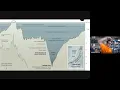
all right welcome to unit 4 notes Oceanic Oceanic oceanic continental convergence so once again the oo means Oceanic Oceanic and the OC members of oceanic continental convergence and we're going to be talking about this in this video trenches so specifically why does it why is it trenched formed okay so um as the denser plate um the older oceanic plate in Oceanic Oceanic or the oceanic plate and oceanic continental so remember the denser plate is going to subduct an oceanic Oceanic it's the older denser plate that subducts and oceanic continental it's just the oceanic plate because
oceanic crust is denser than continental crust subducts it gets bent and pushed down this creates a low spot um this low spot is a linear pattern parallel to the plate boundary and perpendicular to the uh plate movement it's often referred to as an ocean trench because it's never found on land so Oceanic trenches is the same thing as a trench uh because they're never found in land in general the the trench is always found on the denser plate it's the denser plate that bends and goes under the less dense plate and in either Oceanic Oceanic
or oceanic continental it is oceanic crust that is subducting and so these are found in the ocean um so the image I like to provide for this is let's say I have a a piece of content or let's let's say I have a piece of continental crust and this is a piece of my oceanic crust and it's coming up to my continental crust the oceanic crust thinner than the continental crust when it reaches here it's not going to make 290 degree Bend it's not going to come like this it's about 90 degrees and then bend
90 degrees and keep going this way as is oceanic crust approaches the continental crust it has to bend see if I can get this to bend to be able to go down underneath that other plate so it has to bend curve to go down underneath that other plate in that curvature in that curvature okay in that curvature is that trench so you create a low spot in that trench Okay now what's cool is if I imagine this as my curved plate this trench here this low spot here along this line is I get a line
like this which is what would be like in and out of the camera that is per that is parallel to my plate boundary so my plate boundaries here so the boundary between here and here are in and out of the camera and that trench is essentially marking the plate boundaries and running along the supply boundary what's cool and if I view this from above if I do this from above is the so in this case now the plate boundary and the trench where my nose is the trench where my nose is the pipe boundary in
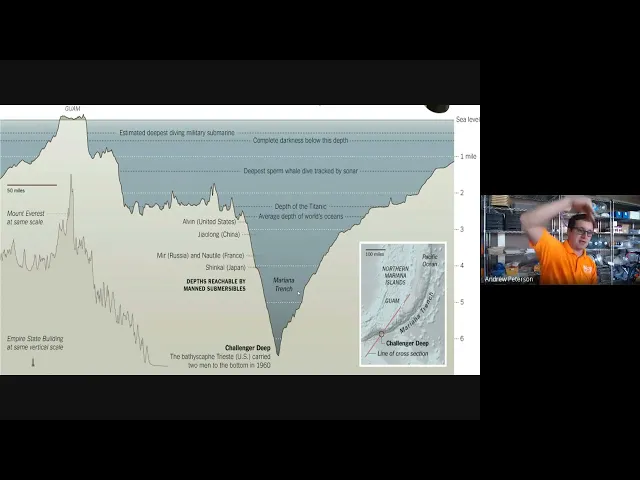
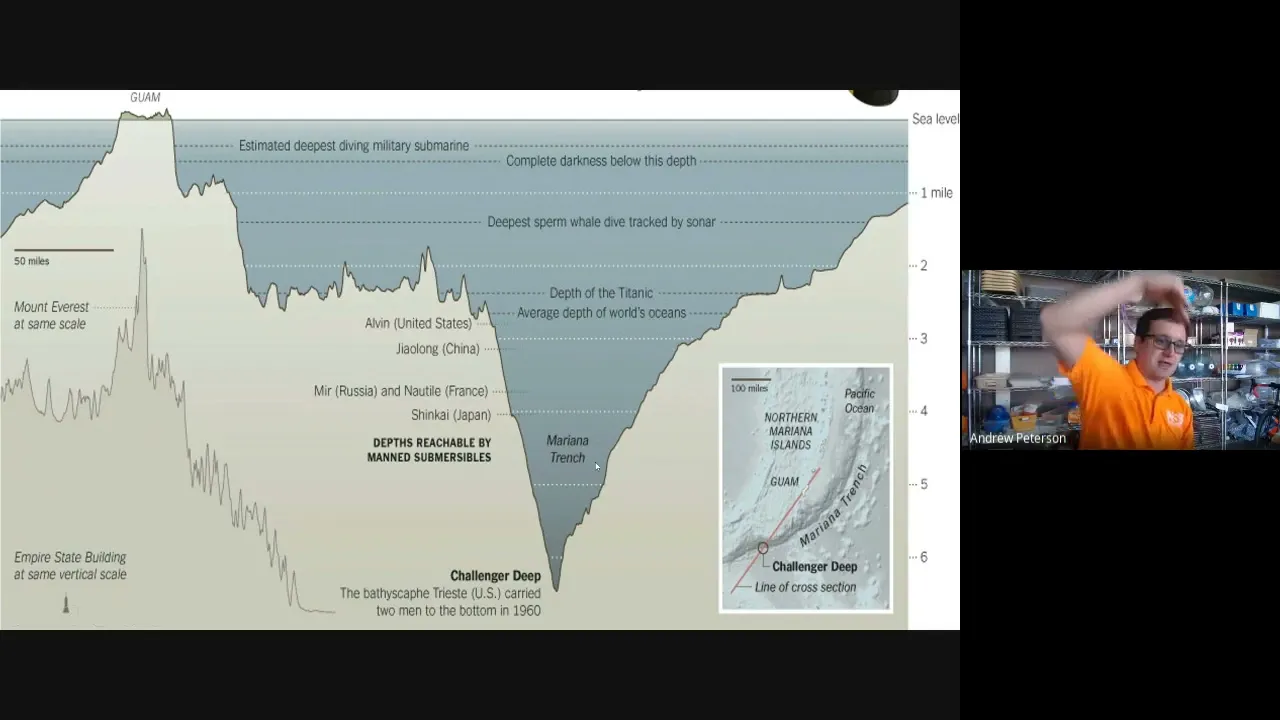
the trench is are parallel to each other but they are perpendicular to my plate movement so in this case my plate movement would be uh from the right and the left or you can imagine like east and west and then my plate boundary and the trench is along this line perpendicular to it um so uh here is a image of the Marianas Trench um so this is one of the most famous trenches this is an example of oceanic Oceanic convergence so here I have I believe it's the Eurasian plate I on the right I have
the Pacific Plate and you can literally see this curvature here this curvature here where the plate literally has to bend and go down because once again it's not going to go Boop and then down and then Boop it has to curve it has to bend in order to get under the um it has to bend in order to be able to get underneath the other piece of crust because the other piece of crust doesn't just like end here there's more crust below that it has to see the the oceanic the denser oceanic crust has to
go Bend to get under that you can literally see that curvature so uh which is kind of cool side note here I just we'll talk about this later please note here I have Guam which is a volcanic island so what ends up happening is this plate subducts underneath causes flux melting in that flux melting bubbles up to make that Island okay so in this diagram the plates are coming in from the right and the left the plates are coming in from the right and left the trench and the plate boundary are what would be essentially
be in and out of the screen so like if you were to like stay in the trench you could travel in the screen or away from you could travel in towards the screen or away from the screen and you would be traveling along the trench and the plate boundary so once again that is perpendicular to that plate movement I could see that in this this sub this side image here so here I have the Marianas Trench along here so the line this red line represents this line by the way this is called a cross-section line
cross-section line not that that matters for this unit um we see that the plate boundary here the trench is running roughly North uh north east south west so the plate boundaries like North East Southwest the trench is running NorthEast Southwest and so we can include that the plates are kind of moving from the southeast and Northwest towards each other so the plate boundary and the trench are like this so the plate movement would be perpendicular to that coming l L okay so um here is a look at uh two trench systems uh Japan is actually
a really interesting we'll come back to talk about Japan later Japan actually has three plates meeting so I here I have the Pacific Plate here I have the um Pacific Plate here I have the Philippine plate and here I have the Eurasian plate so the Pacific Plate if I imagine this line this trench running north south so this dark blue area is a trench it's running roughly North and South the Pacific Plate uh is coming from the East and subducting under both the Philippine plate and the Eurasian plate at this point side note the Eurasian
plate is continental crust not oceanic crust um so the Pacific Plate and the Eurasian plate are coming in from the East and West and that produces a trench and a plate boundary that runs north south over here I have the Philippine plate uh so sorry the Pacific Plate subducted under Eurasian plate and the Philippine plate and here the Philippine plate is sort of subducting under the Eurasian plate once again at this point the Eurasian plate is made out of Continental oceanic crust so here's the trench it runs north east south west NorthEast Southwest so we
kind of assume that the Philippine plate is moving Northwest and the Eurasian plate is moving Southeast perpendicular either way please note that I have a line of I have a trench line here and then I get a line of volcanic islands that are roughly parallel to that uh line side note it's not perfectly parallel because the Earth is curved and also rocks don't just break off in perfectly straight lines same thing is happening here where the Philippine plate is subducting under the Eurasian plate I get a line of volcanic islands that mirrors the line of
the trench foreign