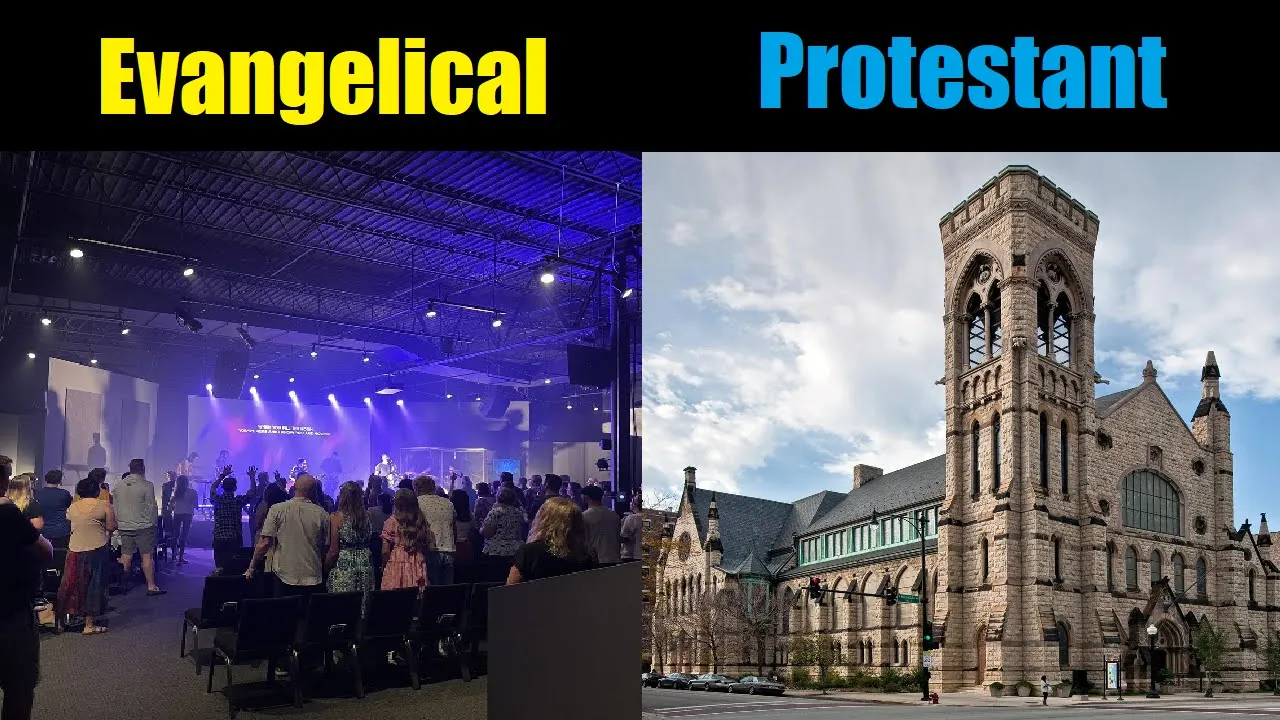
most people these days who are leaving protestantism are not actually leaving [Music] protestantism hey guys welcome back to kingdomcraft where I build this big church in Minecraft while talking about Christianity this church is St athanasius Presbyterian church but here I'm working on this Tower so I'm going to call this John Williamson Nan Tower because John Williamson Nan is my favorite American Theologian but today I'm going to talk about how to define protestantism a lot of people are talking about protestantism these days because a lot of people are uh exploring more traditional Christianity a lot of
young men especially are leaving this non-denominational evangelicalism that a lot of them were raised in and converting to like Catholicism and Eastern Orthodoxy and I've known about this for years I've observed this trend for years but most like Evangelical pastors haven't listened to me until like last week when they first realized this was happening and now they're all panicking on Twitter saying that these young men are just converting for the Aesthetics they just like the smells and bells um I saw one Pastor even saying oh it's just the Harry Potter wands and robes it's like
guys those are not arguments um if you want to engage the intellectual claims of Catholicism and Eastern Orthodoxy then engage in a debate or at least some form of discussion simply uh throwing out names and accusations is is not helping anyone it's not going to prevent anyone from converting that's for sure and I'm not here to defend proest protestantism I'm not a Protestant apologist anymore I'm not here to say why protestantism is right and why your denomination is wrong what I am here to do is to make sure we're defining our terms correctly I don't
care what denomination you end up as long as you end up Christian because that's what's really important but I do want people to understand the categories that we're talking about here because protestantism gets wrongly defined by all sides Protestants Define it wrongly Catholics Define it wrongly Eastern Orthodox Define it wrongly what do I mean according to a lot of people today Protestant is just a miscellaneous term for any Christian Church that calls itself Christian that is not Catholic or Eastern Orthodox or Oriental Orthodox or something like that it it it becomes like a miscellaneous religious
junk drawer category and if that's how we're defining Protestant then the label makes no sense at all if uh category is just totally miscellaneous then it's basically meaningless you might as well just call it you know miscellaneous Christianity um and lot of protestantism or at least a lot of what people call protestantism really is miscellaneous Christianity but I'm here to say that a lot of what people think of as protestantism is not actually protestantism a big share of people that are called Protestants in America today are actually non-denominational and non-denominational is not Protestant how do
I know that it's in the name non-denominational that's how I know defining protestantism as just any Christianity that's not Catholic or one of the the Orthodox Churches as meaningless uh because that means if I start my own cult in my basement and I call it a Christian group then it would technically classify as Protestant even though it has zero connection to the Protestant Reformation so yeah if a name can mean anything then the name means nothing that's what I always say to leftists when a leftists say oh you can define a woman as whatever you
want then I say okay then the word woman is meaningless if it can be defined as anything if there's nothing that can be excluded by a label then it's basically meaningless so how do we Define Protestant what defines a Protestant Church well it's not that complicated a Protestant church is a church that comes from the Protestant Reformation it's it's a very simple concept it should not be too difficult to understand the Protestant Reformation was a historical movement where a bunch of Roman Catholics in the Roman Catholic Church tried to reform the Roman Catholic church and
got excommunicated by the authorities of the Roman Catholic church and were forcibly separated from the Roman Catholic church and there was a lot of politics a lot of agreements being broken and not being upheld and the Catholic Church failed to uphold one of their peace agreements so a lot of other Catholics who were kicked out of the Catholic Church were protesting that and that's how they got the name Protestant my point in saying this is Protestant isn't just this nebulous idea that you can apply to any church that adheres to Sola or Solas scriptor a
lot of people think that a Protestant church is a church that adheres to the five Solas well the five Solas are all you know true and they're all biblical the five Solas were not used as a definition of protestant until the 20th century the five Solas like in that order in that listing was invented as a 20th century Sunday school memorization tactic same with the Five Points of Calvinism by the way uh in the 20th century a lot of people tried to reduce these religious Traditions to like five different bullet points and if you with
those five different points congrats you're a Protestant congrats you're a calvinist although historically it wasn't seen that way um Protestants were historically defined as churches that actually come from the Protestant Reformation and Calvinists were historically defined as churches that come from the calvinist branch of the Protestant Reformation so that would exclude reformed Baptists as far as Calvinists are concerned and that would exclude random non-denominational mega churches that pop up right and left for how the definition of protestant is concerned so then which groups are Protestant if I am the super pope of protestantism who gets
to gatekeep the the label Protestant some people might say I'm committing a no true Scotsman fallacy but a no true Scotsman fallacy is not when you define a term a no true Scotsman fallacy is when you think of an ad hoc definition to win the argument like hypothetically let's say I said all Protestants are nice people and then somebody pointed out hey I know a Protestant who is not a nice person I would say okay well if he's not a nice person then he's not a real Protestant now that is an example of a no
true Scotsman fallacy because I have a an ad hoc definition of a term that just best suits my argument um but this is the historic definition it is not uh no true Scotsman fallacy to define a term if there's actually good reasoning for defining it that way it's circular to define a Protestant as oh someone who is nice I mean I guess it's not circular but you know that that is a no true Scotsman fallacy but if I Define a Protestant as people who come from the Protestant Reformation that is just the historical definition of
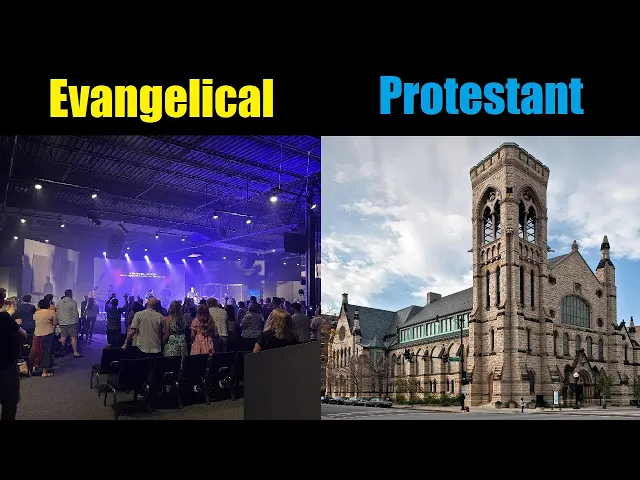
protestant and yes words do change over time an example of this is the word Evangelical used to be synonymous with Protestant but due to various historical movements all claiming the name name Evangelical now evangelicalism tends to return to tends to refer to like this non-denominational mega church Christianity or this broadly anti- institutional conservative Christianity that has actually opposed protestantism for most of its history so I personally like to use Evangelical to describe all these non-denominational churches or Calvary Chapel these other recent Church movements that are specifically not Protestant that are specifically move away from protestantism
so I tend to think of protestantism and evangelicalism as two completely separate things so yeah Which churches are Protestant well there are three main classical Protestant Traditions I think you could say there's seven total Protestant denominations people say there's 40,000 denominations there's seven total Protestant denominations I I guess it's a bit debatable how you count them but a lot of these groups are in communion with each other so it doesn't matter that's like saying how many Orthodox churches are there technically there's about 17 different churches that are all classified under Eastern Orthodoxy but it's okay
to refer to Eastern Orthodoxy as a unified whole because all these churches are in communion with each other and that's the way it is with a lot of protestantism like the 40,000 denominations statistic for protestantism that statistic comes from Gordon Conwell Seminary and that same statistic says that there's about 200 Catholic denominations because it counts the church like the Catholic church in each country as its own denomination so it considers like the Roman Catholic Church in America and in Canada and in Mexico and in kyrgistan each as their own independent denomination so that statistic is
the most inflated possible denominational statistic you could imagine that statistic also considers every single non-denominational church as its own Protestant church so yeah and it considers denominations that are in full communion with each other like the Lutheran Church Missouri Senate and the American Association of Lutheran Churches as separate denomination so yeah that statistic is bogus so I think that per country and in different countries these churches are in communion with each other so it doesn't matter there's basically seven Protestant denominations there's the episcopalians there's the Presbyterians there's the methodists there's the lutherans there's the Baptists
there's the reformed churches and reformed in this context means Continental reformed as opposed to Presbyterian and there's the congregationalist so yeah those are seven Protestant traditions because all seven of those Traditions are either are directly or indirectly descended from the Reformation but they all have Heritage in the Reformation so let's go over them one by one Episcopalian is just the American term for Anglican and most of the world they're called anglicans in America we call them episcopalians because they wanted a new name during the American Revolution so they wouldn't have the same label as the
Church of the King that they were at war with but yeah Episcopalian means Anglican and Anglican means Episcopalian Anglican refers to the um their theological tradition and Heritage because they're from the church of England and Episcopalian refers to their Church government structure but episcop Episcopal is Anglican and Anglican is Episcopal I use the term Episcopalian because the Anglican Church in America is called the Episcopal church if I was in Canada I just call it the Anglican Church of of Canada but I'm in America so I call it the Episcopal Church um as We Know um
the Anglican Reformation was part of the overall Protestant Reformation now people think King King Henry VII started the Anglican Church that's not exactly accurate King Henry VII did cut ties with Rome but he was still fully a Catholic theologically after King Henry VII England came back into communion with Rome and then when Queen Elizabeth took over after that then Thomas cranmer was sort of the head of the Anglican Reformation so it's not really King Henry VII that started the Anglican Church um it was was I mean the Anglican Church was there before and after the
Reformation like we said Protestants are Catholics who ended up being kicked out of the Catholic church and forced to sort of do their own thing but like the same Cathedrals and universities in England uh were there before and after the Reformation so people say oh the Protestant churches started in in 1500 no they were kicked out of the Catholic church in the 1500s but they were there before that and they were there after that Martin Luther was preaching in the same church before and after the Reformation so it wasn't like these modern evangelicals who just
split from a church institution and start a brand new church institution from scratch in their backyard which evangelicals basically do every generation it wasn't like that at all Protestants like we said are Catholics who protested the pope and that's why I say to be called a Protestant you need to have some Heritage in the Roman Catholic church because if you don't then what are you even protesting like some random non-denominational could say oh I'm protesting the Catholic church but I don't know I could say I'm I'm protesting the dolly Lama I'm protesting the seek gurus
because I don't agree with them theologically but if you have no Heritage in the Catholic church then it makes no sense to say that you're protesting the magisterium of the Catholic church so that's why only the seven Protestant denominations that actually have some direct or indirect Heritage in the Roman Catholic Church can be called Protestant other otherwise the name Protestant makes absolutely no sense so we talked about the episcop aliens um the Lutheran it's a similar deal now people say Oh Martin Luther left the church and no it's he didn't leave the church voluntarily it's
not like the church was just minding its own business and then Martin Luther comes along and says I got a different personal interpretation of the Bible so I'm walking out the door no um Martin Luther wanted to reform the Catholic church he did not want to leave the Catholic church he tried to fix the Catholic Church uh but he got excommunicated so yeah he left the Catholic church but it wasn't voluntarily he was forced out of the Catholic church and then a lot of the churches in Germany thanks to an alliance he made with some
princes they sided with him over the pope so that's how the Lutheran Church got started they were Catholics who got kicked out of the Catholic Church they sided with Luther that's how that's how Lutheranism came about now what about uh the reform Tradition now at first the reformed had a sort of loose alliance with Lutheran but it was actually Martin Luther who sort of ruined this because the reformed accidentally sent their absolute worst possible representative to a meeting with Luther it was called the marberg colloquy where Luther met with zwingley who was head of the
Swiss reformation and zwingley just basically made it sound like communion is just a symbol it's not clear what zwingley himself believed but what zwingley said to Luther really made it sound like he believed communion was was just a symbol and Luther rightly said that that is not what we believe that is not um traditional Christianity and Luther refused to unite with him over that and then after zwingley uh later reformed theologians like John Calvin were like yeah don't listen to swingly we actually do believe Christ is really present in the Lord's Supper spiritually present but
really present but after that the damage had been done and that that's why it's important that Protestant churches don't claim to be infallible like yeah we screw up things we mess up things all the time but God's grace still shines through human weakness so that's why the reformed churches are distinct from the Lutheran Churches even though they both have a common Protestant Heritage and what about Presbyterian churches Presbyterian churches are just reformed churches but from Britain Presbyterian and reformed basically mean the same thing it's only geography and history that separates or distinguishes them but the
Presbyterian churches and the reformed churches have all been in communion with each other since day one so that does not matter at all it's like if someone no nobody leaves the Presbyterian Church to join the Reformed Church like some people say oh why are you Presbyterian and not Dutch reformed there's basically no reason other than that Presbyterian churches are just a lot more abundant than Continental reformed churches in America so if I moved to the Netherlands I wouldn't like try and seek out a distinctively Scottish Presbyterian Church no I joined the local Dutch reform church
it'd be no problem at all so yeah um reformed is what the calvinist churches in Continental Europe are called and Presbyterians are British Calvinists basically mainly from Scotland because it was only the Church of Scotland that ended up accepting presbyterianism long term so yeah Presbyterians are British Calvinists now there is another type of British calvinist that refus to conform to either the Presbyterian or the Episcopalian system of church government and they were called the independence or the non-conformists or as they're most commonly known today they're called the congregationalists so that is basically the third option
for British Calvinism some episcopalians were Calvinists but the episcopalians were always uh unsure of whether they wanted to embrace all or most of the Calvin's Doctrine all or most of the reformed Doctrine so there's also the congregationalists and they were the British non-conformists they refused to conform to the hierarchies of the uh Anglican Church of the Church of England or the Church of Scotland they didn't want to be Episcopal or Presbyterian basically the Episcopal system is where there's a hierarchy of Bishops that run the church just like in the Catholic church and the Eastern Orthodox
church and the Presbyterian government is a lot more egalitarian the Presbyterian government runs less like a monarchy and more like a republic but there still is an authority over the local church it's just that no Bishop can uh claim authority over the presbyter the presbyter is like a council that all the churches send representatives to so uh the Episcopal system that government runs more like the government of the British Monarchy at the time and the Presbyterian system runs a lot more similarly to the government of America and that's why the Brits called the American Revolution
the Presbyterian Revolt a lot of Presbyterian ideas ended up inspiring America but the congregationalists didn't want either of those they didn't want any authority over the local congregation that's why they're called the congregationalists so the split between congregationalists Presbyterians and episcopalians is not really one of theology I mean there are some theological differences but it's mostly one of church polity I mean that didn't stop them from killing each other killing each other over it but we're Sinners humans are sinners and humans have always found reasons to fight over things especially Christians often times the church
is even more uh sinful in certain ways than the rest of the world I I read scripture and I read how like a lot of God's people like Abraham and Isaac and Jacob sometimes act more sinful than like the pagans that are surrounding them H Paul writes to the First Corinthians I mean Paul writes to the Corinthians in First Corinthians that they're acting more degenerate than the pagans that are living around them so Christians sometimes do a very bad job representing Christ but that doesn't mean Christ gives up on us because if he did then
he would have given up on us really really quickly because we are totally depraved only a Protestant worldview can really make sense of church history with all its messiness and human sin that's what I think at least but yeah so the congregationalists are mainly separate from the Presbyterians because they didn't want to submit to any presbyter and lastly we have the Baptists basically the Baptists are the most radical of the Protestant groups they are influenced by some of the radical Reformation ideas the anabaptists are from from the radical reformation and the anabaptists are not Protestant
at all but the Baptists like the mainstream Baptists are basically British congregationalists who adopted some anabaptist ideas now I used to say like oh Baptists are directly descended from the anabaptists that's not exactly historically true but they did adopt a lot of anabaptist ideas so that's why I would say Baptists are technically Protestant but they're not classical Protestants because they did move away from a lot of the ideas of the reformation and I forgot methodists basic basically methodists start out as anglicans who were just trying to cause revivals like John Wesley and George Whitfield but
eventually the Church of England didn't like them so there was a split and the methodists uh sort of got squeezed out of the Church of England because they didn't like John Wesley's Revival tactics basically methodists are like new light anglicans and anglicans are like old light methodists but you can see all of them having either either a direct or an indirect Heritage in the Protestant Reformation none of them none of those seven Protestant churches were started by some random dudes saying hey I feel like doing Christianity this way so I'm starting my own brand new
church there's a lot of churches that were started like that uh not just non-denominational churches the vast majority of non-denominational churches started like that and non-denominational churches really weren't a thing until the second grade awakening which had a lot of Suspicion of religious institutions that's why I classify non-denominational churches as Evangelical and the same can be said of some small denominations I mean it's not that small anymore but some non-historic denominations like calary Chapel Calvary Chapel was specifically created in the 1960s to be a type of church that doesn't feel like church it was meant
to appeal to hippies from California it's like guys please don't invent new denominations to appeal to people you know it's one thing to become all things to all people to like reach out to different environments but you don't need to invent a new denomination out of thin air to appeal to different people so Protestant denominations they don't form exilio they form out of existing matter which is usually the Catholic Church whereas these Evangelical churches whether they're part of a denomination like Calvary Chapel or there's the Christian Missionary Alliance which is started by a random dude
who had a dream about not baptizing babies uh whether they're Calvary Chapel or Christian Missionary Alliance or one of those many Pentecostal groups Evangelical churches always basically start out of thin air they start exilio because one random dude decided to do Christianity this way or that way but Protestant churches are Catholic churches that were reformed by the Bible they were catholic churches that went through the Protestant Reformation but they still existed in form in matter before that I'm sorry not not in form but in matter uh they were reformed the word Reformation the word Reformation
implies that there was already something existing there that got m modified in some way so yes Protestant churches did change but they didn't just start out of nowhere so that's the way to correctly Define Protestant so I think you can group all Christians into like three categories there's the apostolic churches or the ecclesial churches Apostolic is what they like to call themselves ecclesial is what some Protestant apologists like to call them because they don't want to admit that they are not Apostolic the I'll just call them the apostolic denominations cuz I I want to be
nice so the apostolic denominations they have this idea that we are the one true church and if they are the one true church then obviously denominations matter because there's only one correct denomination and each of them will say oh we are not a denomination we are just the the one true church everyone else split off from us so if you think we are the one true church everyone else split off from us we are the only true church we are the ones with perfect continuity from Jesus and the apostles and everyone else is uh not
continuous from the early church but we are then you're in a ecclesial or one of the apostolic denominations and the denominations that would fall under this category are the Roman Catholic Church the Eastern Orthodox Churches the Oriental Orthodox churches and the Assyrian Church of the East and there are churches that are like schismatic from them like the old Catholic church and the S of aontus churches split off from the Catholic church and the true Orthodox churches and the old Believers split off from the mainstream Eastern Orthodox church but they all fall under the broader umbrella
of apostolic churches or ecclesial churches right and then you have Protestant churches Protestant churches um protestantism really is the idea that denominations are not infallible we are not an infallible denomination our denomination isn't the one true church it can change it can get things wrong it can be reformed but denominations still matter so Protestant churches still see themselves as institutions they still see themselves as denominations they still strive for a United organization that is the church they still see the church as a collection of United organizations right I mean there is the invisible church doctrine
which sees the church as the set of all believers but there also is a visible Church which is a an institution it might not be a perfectly United institution but the disunity is just the fault of human sin just the way Israel split into the northern and southern kingdoms due to human sin so that's protestantism then I would say evangelicalism fundamentally is the idea that denominations don't matter and a lot of people have this idea today and I would say even the majority of people today who are considered Protestant have a fundamentally Evangelical mindset they
think denominations don't matter even people who sometimes go to uh Mainline Protestant churches they tend to choose their churches based on how the individual congregation is based on what church is most convenient for them what church has the nicest uh coffee bar or something what church has the best preaching what church has the best Sunday school program that is a an Evangelical mindset that is not the historic Protestant mindset a Protestant from the 1800s would say I am a Methodist and that doesn't just mean I agree with Methodist theology I am a member of the
Methodist Church or I am a Lutheran and that means I am a member of the Lutheran Church um nowadays it's like I'm just a Bible believing Christian and I whatever church I go to is the church that I subjectively feel best preaches the Bible according to my personal subjective tastes so viously a lot of young people are leaving this because we are seeing why subjectivism and contemporary Christianity is not doing so well it really does not have any answers to the problems of modernity but that is not protestantism that is evangelicalism and this evangelicalism uh
developed as a rebellion against protestantism for most of American History the mainstream church was the mainline Protestant churches America was built on Mainline protestantism but this evangelicalism was a profound Rebellion against this so for those who are leaving evangelicalism and going to Catholicism or ran Orthodoxy I sympathize with that and in some ways I encourage that in some ways I think Catholicism and Eastern Orthodoxy despite me not agreeing with them are preferable to this Evangelical non-denominational chaos but I would say maybe investigate real protestantism maybe investigate actual historic protestantism which does have beautiful cathedrals which
does have beautiful liturgy and hymns in fact most famous hymns are written by by Protestants it's not this like Hill song worship where it's just like uh very effeminate overly emotional uh three chord contemporary worship music which also like I said comes from Calvary Chapel which was a specific type of church that was specifically designed to not feel like church in order to appeal to hippies from California so I have a map of traditional Protestant churches and I don't even want to say that I have a map of Protestant churches in the descript description of
this video now that map only includes classical Protestant churches so it doesn't include Baptists methodists or congregationalists actually no it does include congregationalists it doesn't include Baptists and methodists because they didn't really come from the Reformation they came from movements after the Reformation I would still say Baptist and methodists are Protestant I just this map specifically promotes classical Protestant churches because classical Protestant churches are the ones that people forget exist but check those out if you want to find a good church to attend thank you guys for watching and I will see you all later
e e e for