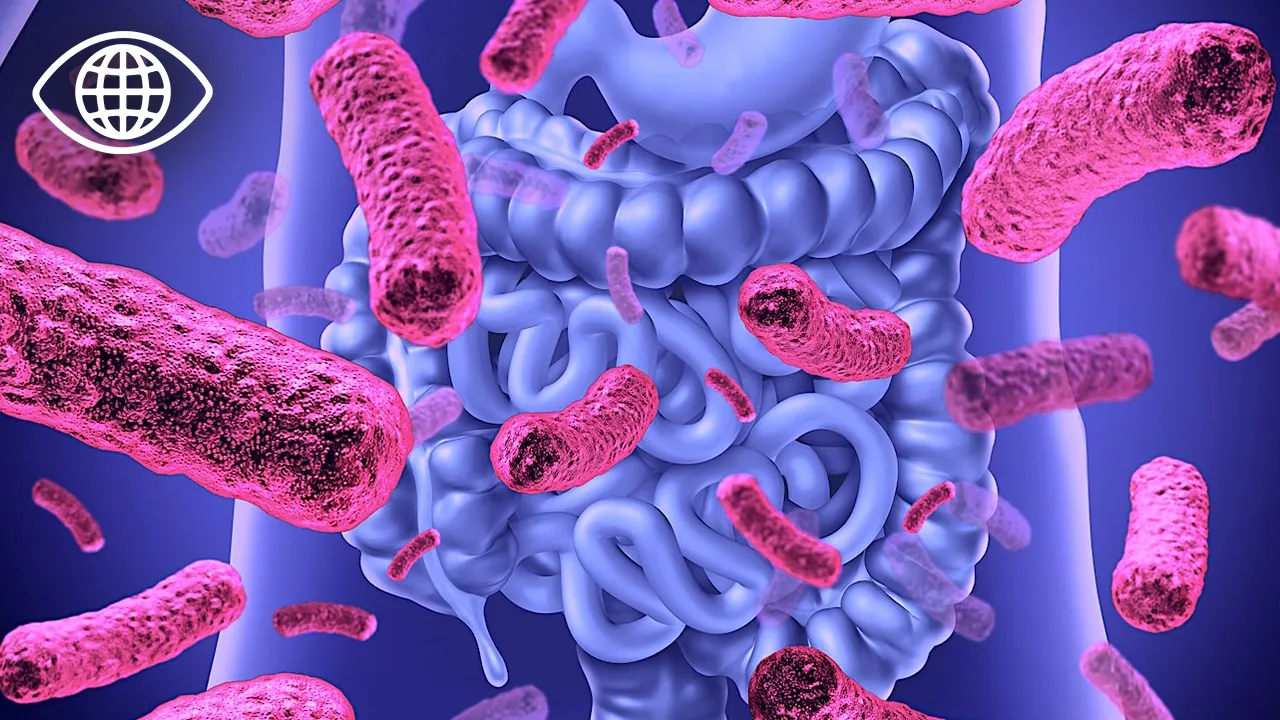
What if our intestines held the key to our health? This is the bet made by a handful of daring researchers. They devote their lives to studying these tubes that transform our food into fecal matter.
And their findings are astounding. Inside our belly lies a microscopic, teeming world, of which we knew almost nothing. A world that constantly affects our health and well-being.
This almost unknown world is called the microbiota. Understanding this could potentially cure millions of suffering patients. It is about establishing a concrete link between our stomach and our brain and using it to soothe or eliminate chronic or dangerous illnesses.
The land is fallow, but the stakes are high. Science is still in its infancy in the microbiota , but it is making progress. These men and women are challenging our preconceived ideas, revolutionizing medicine and even proving that our excrement can become medicine.
What if it was time to discover these healing scouts? I like making bread because it involves the use of living organisms. The rising of the dough, which is quite magical in itself, is done by microbial activity.
These microorganisms, which are essential for the production of bread, wine or wine, are also in our bodies. It's called the microbiota. That's about two kilos of intestinal content, full of microbes that are essential to protect us and also to help us digest.
Overall, the human body is made up of approximately 50,000 billion human cells and 50,000 billion bacteria. So, ultimately, we are really equal, microbes and men. Joëlle Doré is Mr Microbiote, the researcher who helped discover its potential.
To decipher the secrets of our intestines, Professor Doré had to think outside the box. It was therefore quite naturally in the middle of the fields that this adventure began. My story with the microbiota began with cows.
I had acquired a reputation as a cow fart specialist. Initially, the cow gets 95 percent of its energy and 80 percent of its protein from the microbiota it harbors, in fact. So, it's really the microbiota that gives it pretty much everything, which then allows it to produce milk or meat, in fact.
A few years later, I requested a transfer to Paris to work on the human intestinal microbiota. To understand the role of the microbiota on our health, we first had to identify one by one the microorganisms that populate our stomachs. And to get there, there is only one way.
Being interested in the intestinal microbiota necessarily means working on samples that are. . .
Well, that are shit, in fact, that are human stools. Christian? We have an envelope.
Alright. A sample. Alright.
I'll go with you, we'll go to the lab. Perfect. Alright.
Perfect, it is compliant. It's still very risky. But now I can separate it into two small tubes.
If only our volunteers knew everything that was going on with their catamaran. And that's just the beginning, actually. I feel that behind this, we will extract the DNA, we will sequence it to try to create a profile of the intestinal microbiota.
Absolutely. Perfect. It is in fact in our excrement that the bacteria in our intestines hide.
These living organisms have long remained unknown and invisible. We talked about intestinal flora without knowing in detail what this term encompassed. Today, thanks in particular to Professor Joël Doré, we know.
A whole world of microbes and bacteria, with strange names, has opened up to science. It is the evolution of technology that allows us to access, with an unparalleled level of resolution, a very fine characterization of the intestinal ecosystem, with sophisticated tools, sequencers that do the same thing as what we do when we sequence the human genome, in fact. And so that was a real technological revolution.
Hi Joel. Hello Joel. Hello.
We received your sample. Yeah, okay, we have the data? We started to bring him in.
Tell me everything then. This is the sample. That's it.
We have a lot of wealth here, eh? We have a huge number of species. Two hundred and fifty-six species, otherwise it's true.
Two hundred and fifty-six, OK. Two hundred and fifty-six. Mostly bacteria, as you can see.
Okay, okay. So, well tell me a little bit more, actually, what kind of creature is there? I see that there are indeed several fecalis bacterium.
Yeah. There is one species that I really like, that I know well. It's Astreptococcus salivarius, as you can see here.
It is known that bacteria are sometimes named after researchers. And I'm lucky enough to have two bacteria names. We can see a golden eagle, in particular.
A genre I know well. In honor of the French microbiologist, Joëlle Doré. It's incredible.
When we think microbe, we think aggressor. And the best thing we can do is eliminate it. So what we discovered is that we essentially have beneficial interactions.
Our microbes provide us with a huge number of functions, such as participating in digestion and constantly training our natural defenses. And then, there are also a whole bunch of signals that the microbiota produces and which are active throughout the body. There are indeed signals from the microbiota that go to the brain and that can condition the perception of well-being or the perception of satiety.
We were able to highlight, of course, bacteria, some known, but many never observed before. Yeasts, fungi and viruses have been identified. And so the message we took away from that was this incredible richness.
But is there a link between the richness of the microbiota and the health of patients? This is what science has recently discovered. Like here, for example, where we compare the microbiota of a healthy person to that of an obese patient.
So here we have our sample with this great microbial diversity. And here, in comparison, we have a sample of a young obese person. Yes, here we can clearly see, in fact, that there are certain majority genera which take up all the space, whereas here we have a multitude of species which share the ecosystem.
And suddenly, we really have an ecosystem that is much richer. And so in the sample of the obese young person, we only have 125 bacterial species. All right.
This is half the amount of the sample we just analyzed. We clearly see the impoverishment associated with obesity. We realized quite quickly that there was significant variability between individuals and that, in particular, there was a loss of wealth, an impoverishment in illnesses, in chronic illnesses, in particular.
Patients are poorer in their microbiota than healthy subjects and poorer also depending on the severity of the disease. Significantly degraded in people suffering from intestinal pathologies or diabetes, the microbiota is also altered in patients with neurological diseases. Researchers are trying to understand the role of the microbiota in the onset of these diseases.
One of the ways we have today is to take the microbiota of a patient or that of a healthy control, and then transfer the microbiota into an animal. The best model is the animal raised in a sterile bubble. It is a germ-free animal and we can transfer the microbiota of a human to it.
Their experiment today seeks to establish a link between autism and microbiota. The microbiota of autistic children is transferred to germ-free animals. What we expect from these mice that have had the microbiota transferred from autistic children is that there will be a disruption in social behavior.
We will introduce an unknown mouse into the empty cylinder and we will begin to measure the number of contacts with the mouse compared to the number of contacts with the object. It's gone for five minutes. There, for example, there was contact.
If the microbiota plays a role in autism, the mouse inoculated with the microbiota of autistic children is expected to go and see the object or the mouse indifferently. We study behaviors with different standardized methods of behavioral analysis to see if, indeed, when we make this transfer of microbiota, we highlight an alteration in animal behavior. We are starting to see some initial results and that is indeed what we are seeing.
Microbiota imbalance is thought to be involved not only in autism, but also in Parkinson's disease, Alzheimer's disease, and even in some cases of depression. Fundamental discoveries that open up new therapeutic avenues for the medicine of tomorrow. It is an awareness that concerns us all.
Our bacterial wealth is essential to our physiological, psychological and emotional health. This is enough to encourage us to take care of it. Our microbiota is a bit like an ecosystem, like a forest.
We have all this diversity, we have all this richness and we have all these interactions which are really essential. The particularity, ultimately, of the microbiota compared to our human cells is that it is malleable despite everything. This will be partly conditioned by our lifestyle habits, diet, and particularly in food, the compounds that we don't really digest, such as dietary fibers which will be beneficial for the intestinal microbiota.
Unsurprisingly, eating a variety of fruits and vegetables is the best way to maintain a healthy microbiota. But other factors will, on the contrary, weaken it. All the compounds of additives, in fact, which we find a lot in processed or ultra-processed foods and which, in fact, will have a harmful effect.
There are medications, of course, especially antibiotics. It's a bit like an atomic bomb for the intestinal microbiota. But we do think that compounds that are also used in crop treatment, things like that, can have an impact on the gut microbiota.
We now know that we are in what is called the Anthropocene era, where humans are responsible for a major erosion of biodiversity. What the average person doesn't see is that the same thing is happening today in their intestines, at the level of their intestinal microbiota, where over time, over generations, what we observe is a loss, and potentially definitive, for certain species, of richness and diversity of the intestinal microbiota. With major consequences for the robustness of our human ecosystem, ultimately, and in particular a greater sensitivity to taking risks, in terms of the development of diseases, particularly chronic diseases.
Quite simply, this realization that we are microbial and therefore that we are ultimately dependent on a whole bunch of living things around us and within us, ultimately brings us to a little humility. We are not superior beings on the planet and in the living world. We are part of the living world and we interact with a huge number of other organisms.
And that's what life is all about, really. My son, Michael, once said to me: I feel like this has affected your ikigai. Ikigai is a Japanese term that means that we have combined the possibility of contributing skills, serving society and being in a universe that suits us completely, where we have fun.
This is an incredible opportunity. It's not something I sought out as such. But on the other hand, you have to know how to fully appreciate when you have this planetary alignment.
We are entering an era where doctors will be able to use microbes as tools and medicines, and see the microbial ecosystem as a tool. Research has not yet revealed all the secrets of the microbiota, but some doctors are already using it to treat diseases with spectacular results. Harry Soccol is one of the pioneers of these new therapies.
I started medicine to do research. It was really something I was passionate about. And I was lucky that one of my mentors put me in touch with Joëlle Doré.
It was clearly alongside him that I began to work on the microbiota. And it was an absolutely fantastic discovery for me . Professor Harry Socol is a doctor at Saint-Antoine Hospital in Paris.
It was here that he wanted to put his discoveries into practice to cure the sick. When I started working on the intestinal microbiota, I would never have imagined that in such a short time, ultimately, in the space of ten years, we would already have arrived at microbiota-based therapies that transform people's lives. In the gastroenterology department, patients suffer from diseases of the digestive system.
Good day sir. Good evening. How are you tonight?
How are you. How are you ? Yes, yes, yes.
And how is your transit going too? Uh, yeah. A little irregular?
Yes yes. Intestinal diseases, in general, are diseases that are quite difficult to talk about, since it is not easy to approach this type of subject with family or friends. So, we may ultimately have the impression that these are very rare diseases that exist anecdotally.
But actually, that's not it at all. There are more than 200,000 patients who have had inflammatory bowel disease in France. Among these little-known diseases, one of them directly concerns the microbiota.
Its name: Clostridioides difficile infection. This bacteria invades our intestine when the microbiota is altered and is extremely difficult to dislodge. It is often resistant to antibiotics.
The consequences will be diarrhea, very loose stools, stomach pain and then, potentially, fever. And it can even develop into serious forms that can lead patients to intensive care, or even, if we don't do what is necessary, it can lead to death. This is a real public health problem.
There are several thousand deaths each year from this infection. We found ourselves faced with patients who were at a dead end. There was no way to treat them.
In 2012, there was a technique that was starting to spread. There was growing evidence that it might be effective in recurrent forms of Clostridium difficile infections. I thought we should try to make it available to patients.
This technique is called fecal microbiota transplantation. The concept is very simple: it is ultimately to bring a breast microbiota into the patient's intestine and this breast microbiota will prevent the proliferation of this bacteria. It will act as a barrier to the proliferation of this bacteria.
She did stop her antibiotics yesterday. Yes, she did take her PPIs. Great.
Isn't she too anxious? A little. A little ?
I'll let you discover it. Hello Mr. Hello Mr.
Good morning. Are you doing well ? It's okay, it's okay.
How are you ? How are you. How are you ?
Not too much. The famous pills. That's it, they're there.
I'm in the hospital today because I have a clostridium infection, which is a pretty dangerous, pretty deadly bacteria, and I've had this bacteria for two months. I have cramps every 20 minutes with enormous pain and diarrhea. Non-stop, non-stop, non-stop.
So, I don't need to tell you that this is very painful for me. It's painful for my loved ones, for my family, since they see me bedridden and writhing in pain, and without there really being a solution, in fact. So you're here to do a fecal transplant.
Exactly. This is the last alternative. It's the last alternative, indeed, but it's an alternative that works very, very well.
So, let's get down to business. Yes, it works. I'm showing them to you anyway to make sure you're able to take them.
Alright. They are all white. It looks like my vitamin tablets.
Wait, I can hold it for you, please. It's precious. Come on, I have my little bottle of water.
When we talk about fecal transplantation or fecal transplant, we sometimes expect an operating room, etc. In fact, obviously, that's not the case at all. The procedure itself is very simple.
Here, it's a procedure using capsules, but sometimes it's done with a probe, a small tube that goes through the nose and down to the stomach. Or it can be done from below, by colonoscopy or by an enema. And it works just as well.
These capsules simply contain human feces from a healthy donor. It's extremely simple. For me, it's going to help me heal, to have a good life, so whatever's in it.
After that, it's over. Okay, that'll be it. So.
I hope to work again, to complain again, to have to complain about having this job, about running around like I did before, about doing my shopping, about living. These patients perceive an effect within 24 to 48 hours. It is absolutely spectacularly effective.
It works in more than 80% of cases. It took persistence to withstand the criticism. We were made fun of a little.
Let's be clear, the microbiota, well, for everyone, including doctors and scientists, it's just poop, it's waste. At least, at the time, that was very clearly how it was perceived. To prepare this new type of medicine, it is first necessary to collect the raw material from healthy volunteers.
Go ahead, come in, sit down. When we talk about salt, people are a little, even very reluctant, and they even laugh. Since the last time we saw each other.
Yes. Do you feel healthy today? Yes.
Yes. Donors must be between the ages of 18 and 60. And we do regular blood and salt checks to make sure that no diseases are transmitted during the transplant.
So, I'm going to give you the pot. You have the instructions on it if you need them. And here I'll show you the toilets.
So. THANKS. So you just have to put the pot on the workbench and I'll wait for you outside afterwards.
Hello Sandrine. Go ahead, go back. We're going to close the door.
Did it go well? There's the schedule, on it, there's everything. Great.
Thank you so much. All hot. We will prepare 120 ml.
Fecal transplants are now performed every week at Saint-Antoine Hospital. Pharmacists prepare transplants from precious excrement. Today, we are lucky to have this area of the pharmacy in operation, which is dedicated to stool preparation and storage.
But that wasn't always the case. When we started in 2012, I basically did everything on my own. I spoke to the donors, I collected the donors' stools, I did the preparation in a fairly artisanal way.
We had to make do with what we had. And so, for example, to homogenize the stools, we used a kitchen blender, a giraffe blender. You know, the stuff you usually throw in the soup.
So, we dived into the stools for homogenization. And I was going to administer the transplant to the patient myself. There really was no way.
I am really very proud of the progress I have made, having fought with the hospital administration to convince them of the value of this method, and having convinced my colleagues to join me in this adventure to arrive at this current situation where we have a real team. Hello madam, come on. I had a transplant on January 5th at Saint-Antoine Hospital, following a horrible bacteria called Clostridium difficile.
It's like having a lump in your stomach that gets bigger as time goes by. And it's abominable. The transplant is a miracle.
We are here to do the consultation six months after the transplant, to see how you feel since this operation. It's amazing because I'm. .
. First of all, I'm here. I live a completely normal life, I feel good.
I have returned to a normal life, I can work normally again. It's incredible. Thank you, you saved my life.
Thank you, that's amazing. It's extremely moving, it's touching, you feel useful. It also motivates us because it takes effort to put this kind of treatment in place.
This pushes us to continue, to develop things even further to make this treatment accessible to as many patients as possible. I simply love to eat. I like good food.
I learned a lot about cooking from my mother. It's an activity that we do as a family quite frequently. In your opinion, what is best for the microbiota in everything we prepare?
Fiber. Yeah, there's fiber in all fruits and vegetables. I think onion is pretty good.
Well yeah, beans, onion too, it's excellent. And then, then all the cabbages. Brussels sprout type.
Yeah, absolutely. Brussels sprouts, they are excellent. Red cabbage, is it good or not?
Yeah sure. Very often, I tell my children: Eat this, it's good for your microbiota. It's really something that runs in the family, ultimately.
Yes, we talk a lot about microbiota, but it's natural. It's his passion. When someone is interested in something, they talk about it.
So I think he's interested. When he's not working at the hospital, Harry Soccol is in his research lab. He co-founded a startup to develop a drug from the microbiota.
This new treatment could change the lives of patients with Crohn's disease. An inflammatory bowel disease that can be extremely disabling and affects more than 100,000 people in France. Hello everyone.
Hello Harry. Are you doing well ? How are you?
It's okay, it's okay. Here we can see a sample of what is being produced. This is the last production, actually?
That's it, exactly. This bacteria that we are observing under the microscope is called Fecalibacterium prosniti. She's my best friend throughout my career.
The story goes back to 2007, when this bacterium was identified as not only a major bacterium in the normal human microbiota, but it was also observed that it was reduced in patients with Crohn's disease. Crohn's disease is an inappropriate inflammation in our intestine, meaning our immune system becomes overactive. We thought that perhaps this bacteria had anti-inflammatory effects .
And indeed, that's what we demonstrated and published in 2008. And at the time, it was something revolutionary, you could say, because it was a new concept to start with a bacterium from the intestine and use it as a medicine. There, we can clearly see, it is the neophilized form of the bacteria.
So it's still viable. She's just simply frozen. The idea will be to encapsulate this powder in a special capsule, which we have here.
And so, the capsules, hop, you see, they are really adapted for the patient. All right. And so here, we are getting closer to the clinical trial.
This will mark a bit of a stumbling block for the entire project, a project that you have been carrying out for 15, 20 years. And bringing this bacteria back to patients who are lacking it, that's going to be a pretty magical moment. The hope is obviously that we will improve care for patients with Crohn's disease.
What is very important is to understand the weight of the microbiota in different diseases. The real objective today is to identify the diseases where we can really take action and then to start taking action with the huge number of therapeutic trials that are underway. Okay, kids, Nathan, Léa and Charles.
We need a patient, a nurse and then a doctor who looks like me. Try to find that for me, there. No, I'll nurse him.
Okay. I think I've really found perfection for you. That is to say, there is the beard, the glasses, the doctor's outfit.
Well done Charles. Alright. Plus, we can see that his stomach hurts a bit because he's grimacing.
That's exactly it. Take it one step at a time, very slowly. Okay, photo.
I'm lucky enough to be really passionate about my work, actually. Evenings, weekends, during holidays. I continue to work and that's really what drives me every day, it's Wait, what did you do there?
Is this the video? This is the stop motion we made with the kids. To explain the trans.
. . On fecal transplantation?
I am Professor Harry Socol. I am a gastroenterologist at Saint-Antoine Hospital in Paris. It looks so similar, it's awesome.
He has more hair than me though. It all starts with a donor who is seen in consultation. For me, transmission is key.
With my children, it's important, but with patients, explaining things to them has always been something fundamental for me, especially so that patients ultimately adhere to the treatment. Otherwise, if they don't adhere, they can't heal properly. And there, we explain, you see, in the video.
So here we are in the intestine. And there, hop, transplant. Actually, you didn't really play, you did work a little.
No, it was work. We now realize that the intestine and the microbiota are connected to our entire body and to the brain. In the future, we will have to take this into account, take the whole picture into account, ultimately.
In fact, the microbiota is in constant dialogue with the brain by exchanging signals via nerve and blood pathways. It's the discovery of the decade. And Dr Kirsten Thielish, a researcher at the University of California, has become an expert on this dialogue.
In 2013, his team demonstrated that the microbiota can modify brain activity in humans. Seven years later, she demonstrates that it works the other way around too. For some pathologies, the brain can calm the stomach.
Since then, Kirsten Thielish has used practices that directly address the brain, such as yoga, hypnosis and meditation, to treat her patients. I was trained in a fairly traditional way as a gastroenterologist. Over the years, I have specialized in what are called functional digestive disorders.
This is when everything seems fine in the stomach, according to tests, but something is wrong with the functioning of the digestive system, causing many symptoms. And so, I studied the causes. I was born in New York.
My father studied medicine at Columbia. And when I was a baby, he did his internship at UCLA and moved to California. I grew up in this neighborhood where I live today.
Slow motion. What a beautiful slow motion. Okay, speed up.
My great-grandfather was a doctor. My grandfather too. My father is a cardiologist.
I grew up surrounded by medical discussions, on the phone, doctors often ate at home. I am the fourth generation of doctors, the first woman. In gastroenterology consultation, one in four patients suffers from functional digestive disorders.
Chronic stomach aches with no known cause that ruin the lives of millions of people. I have seen many different patients. But today, I mostly see people suffering from heartburn, abdominal pain, irritable bowel syndrome, constipation, diarrhea.
What was happening was that I was afraid to eat anything. I was like paranoid. I thought I wouldn't be able to digest the food or enjoy the moment.
I was thinking about that all the time . Sometimes I didn't want to go out or if I wanted to see friends, I would arrange things to avoid eating. Eventually, it definitely impacted my life in a negative way.
So, we diagnosed irritable bowel syndrome. A study on mindfulness meditation was then launched. And you've never done meditation before.
And that was something we wanted, that the patients who entered the study knew nothing about meditation. Working with Dr Tillish was great because she made me feel very comfortable. And then she told me about this study on stress reduction through meditation, which is linked to intestinal disorders.
And she asked me if I wanted to participate. You were extremely skeptical about this intervention. And one of the keys to meditation is that.
Let go of expectations. This is what we say on the first day of training. And I think you really succeeded in doing that.
So, to begin, bring your attention back to your body. Note which part of the body is in contact with the surface. And then notice the breath that passes through your body.
The brain is not just an observer. The brain is connected to the belly. It controls how it functions, how it secretes fluids, how it feels pain.
It also controls the immune system which regulates it and makes it more or less sensitive to foods. The brain does all these things. And so, meditation is one of the practices that allows us to calm down, to stop projecting our attention onto what might happen.
If I eat this, I will feel this way. It was a huge shift for me in how I felt about myself when I had these kinds of issues. A few weeks later, I had a sushi dinner with a friend , which I knew would be risky for me because it had spicy tuna that upset my stomach.
And I thought, You know what? I'm going to eat it and it's going to be fine. I just changed the way I experienced it.
Does meditation work? Yes, but how? The UCLA team is beginning to scientifically understand the mechanism of these effects.
We need the science because people need to understand why you are suggesting this to them as meditation. What is the evidence of its usefulness? So we need science to show that the very basic things that have been suggested for millennia are useful.
Since 2011, she has used MRI to explore the brains of hundreds of patients. We decided to do an imaging study to see which parts of the brain would be most important in irritable bowel syndrome. People are typically placed in the scanner for 12 minutes with their eyes closed and asked to do nothing without falling asleep.
And we measure what happens during these 12 minutes. How brain areas activate together in coherence. According to their study, the brains of patients suffering from irritable bowel syndrome excessively activate a network in two key regions of the cortex.
It is called the default mode network. An overactivation found in other chronic disorders. In eating disorders, irritable bowel syndrome, depression, chronic pain, the default mode network has a particular aspect, more connected, more active.
It acts differently in people who suffer from these syndromes. And so it's like the brain is stuck in a rut in this default mode network with no way to turn off. And we have to get him out of there.
Meditation is the simplest and safest way to do this. We saw in our study that people are getting better. And after three months, they continue to improve or at least stabilize.
Their bowel symptoms improve. We are close to understanding what is happening and therefore close to designing treatments. This discovery is a considerable step forward in gaining acceptance for these new practices.
Kirsten Thielish has taken on the challenge of treating these patients, even the most complex ones like US Army veterans. My career is divided between two institutions that work together. The academic institution at UCLA, and the Veterans Affairs hospital, where I see Army veterans.
I see people there who generally have chronic pain, because it's a huge problem in this population. I'm Ryan Camhon. I am an army veteran.
I was homeless in 2016. I slept on people's couches. Then I met a social worker.
He knew I was a veteran and sent me here. And within hours, I had a bed to myself. How did you come to consider your irritable bowel syndrome and its impact on you?
I didn't know what caused it, but I found a way to stop it with marijuana and other drugs. It worked in the short term, but it became chronic and I had to take more and more of it. Working with Dr Tillish, she really explained to me what was wrong, which was my instant evacuation problem.
If I eat something, it goes in and within minutes I have to find a bathroom. And I was like, 'Is this how I'm going to live the rest of my life? ' And she taught me why this happened.
My brain had a bad reflex. As soon as something enters my body, it has to be expelled. You and your team taught me how to take care of my own health to treat my irritable bowel syndrome , as I didn't really know how to handle these very stressful situations.
When I came here to do this kind of work, one of my colleagues who works there said to me: Oh, you're doing this research on meditation. You tell people to do all these things. But when you get to the VA hospital, they're not going to do that.
They won't want it. And you were ready to do anything. Anything you could to improve your life.
And you did it. And it's awesome. And that really made me smile.
Now I'm ready to find a student job at university. Fantastic. Thanks for that.
She helped me get my life back. I think it's very important to have people involved, both clinically and scientifically, because we're constantly going back and forth. And the ideas I develop in science guide me in my patient care.
According to science, the stomach, like the brain, has billions of neurons that respond to stress by causing intestinal symptoms. Yoga, hypnosis or meditation seem to calm this second brain. These practices, combined with classical medicine, form what is called integrative medicine.
I believe very strongly in Western medicine and the technological advances that allow us to transplant organs and treat diseases. We need this Western medicine, but we can improve it by integrating other things in the areas of pain, mood, trauma, and we are having more success than the technological route. In her approach to integrative medicine, Kirsten Tillich also explores the possibilities of acupuncture and its beneficial effects.
Today we are going to do a treatment called Earth School. Li Dong Yuan was a very famous Chinese physician who believed that our digestive system was the key to the health of the whole body. We start with the most powerful point of the digestive system on the entire body, on the stomach canal.
Another very powerful digestive point. Take a deep breath. I had never had acupuncture before in my life.
I never thought I'd need it. I trained in medical acupuncture and when I did that training, I was fascinated by the answers we got. Some people today believe that acupuncture takes place at the level of the fascia, the contact tissues between the muscles.
Some interactions between fascia would change when needles are placed. Another theory is the local release of neurotransmitters. These changes are transmitted to the nerves that arrive in the spinal cord, which affects the central nervous system.
When you place the needles on very specific points of the body, you see the brain activate. The body is fully connected. Yes, it is a quick tool that has such a profound impact on symptoms in a short period of time.
Yes. And if you can relieve the pain during the time, even a short time, when the needles are in place, it opens the brain to the idea that pain is not inevitable. It's really like an infusion of hope.
It's part of the treatment. In integrative medicine, we really look at the person as a whole. The things we do with our bodies, like yoga, tae chi, change the way our unconscious brain communicates with our conscious brain.
How do we feel? How do we live in this world? Looking back, I think what we managed to do, a bit of a pioneer in the field, is quite magical.
And I think what's going to happen in the next five years is really significant changes in nutrition and medicine. It changed my life, it changed my outlook on things. When we look back on the path we have taken, it is an extremely complex path, fraught with pitfalls.
You have to have a will and you have to believe in it all the time. Otherwise, there are plenty of reasons to give up along the way.