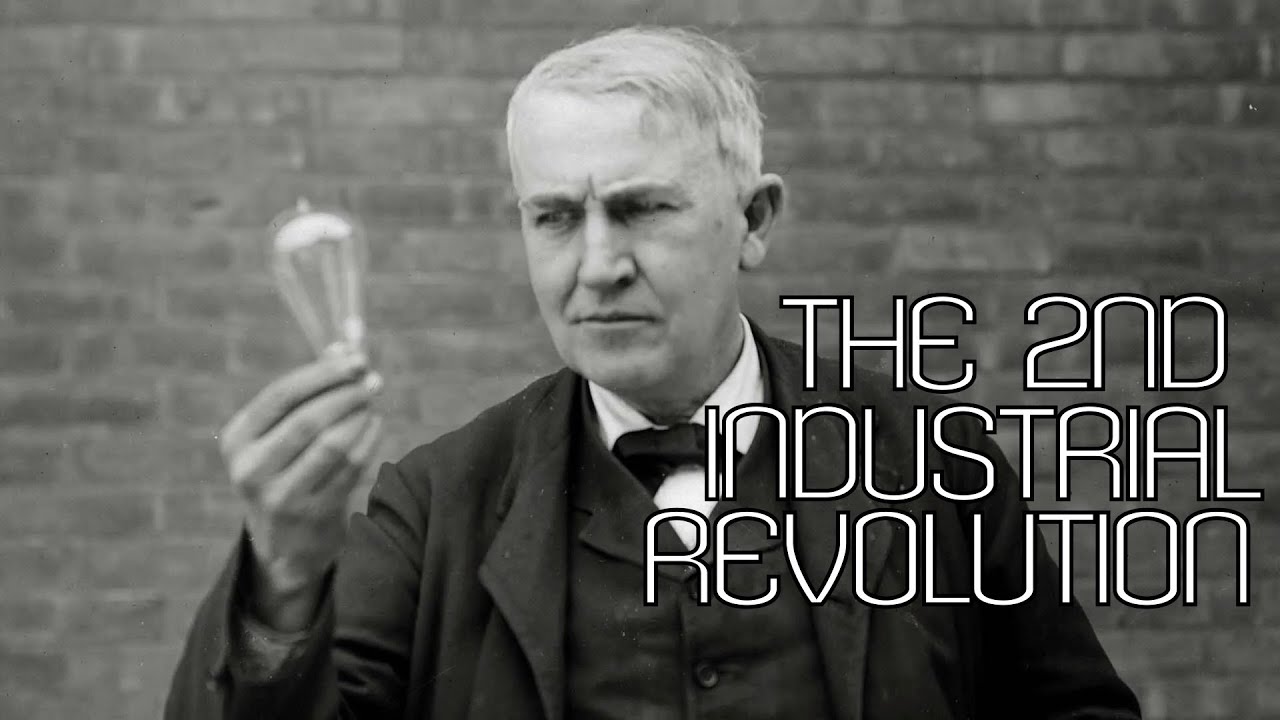
hey there students going to talk to you a little bit about the Second Industrial Revolution this goes out to Maddie and Nick on Instagram I don't think they even know each other but they both know me so cheers now what is the Second Industrial Revolution that I'm talking about a lot of times we talk about the Industrial Revolution as if it's just one thing but keep in mind that the Industrial Revolution goes on for a very long time and is really divided into to a lot of distinct phases in fact there are people that still
say the Industrial Revolution is going on today that maybe we're in the midst of a fourth Industrial Revolution or something like that but for the purpose of studying the Industrial Revolution we're really going to focus on two phases now exactly what was the Second Industrial Revolution and what differentiated it from the first Industrial Revolution I think that this question encompasses most of what you're going to need know in whatever course you're taking whether that be European history Western Civilization or world history or anything like that so what I've done is I've put together a little
graphic organizer for you now this is available on my website you can either look up the slides or you can go to my apuro review guide and you can find a copy of this on my website tom.net now I'm going to go over just a little bit of review with you first and we're going to take a look at the first Industrial Revolution tion which happened from about 1760 to 1830 the methods of production here you're moving from hand production to machine powerered production and as far as what's being mass produced we're talking textiles our
power sources are water coal and steam in fact we see in the first Industrial Revolution the invention of the steam engine by James Watt now note that all of these sources of power and these engines will continue to be used during the Second Industrial Revolution but new sources of power will be introduced as well so there is continuity here between the two industrial revolutions the Second Industrial Revolution just builds upon the first and adds things to it inventions of the first Industrial Revolution the spinning jenny the water frame the spinning mule the cotton Jin lots
of great stuff there and a video by my buddy Mr beat is great if you would just click there and go to Mr beat's inventions the Industrial Revolution you will not regret it now the standard of living for the working class was just downright awful during this time if you think about Alexis dville visit to the city of Manchester where he referred to it as a sewer he also said something about the river in Manchester comparing it to the river sticks almost like a sort of Hell on Earth and this place was just really really
nasty now let's go on to the Second Industrial Revolution and the Second Industrial Revolution after taking a little break bounces back about 1850 and goes on until 1914 1914 being the year that World War I started and as far as the methods of production we are dealing with increased automation that instead of going from just hand to machine power we're dealing with less and less human effort required to produce goods and to produce power what's being mass-produced during this time steel now this is through the besser process which I'm no scientist or whoever would do
the whole besser process thing maybe an engineer something like that I can't really tell you how this works but it is a process that makes the mass production of Steel possible steel had been produced ever since the Middle Ages as far as swords and stuff like that you could have yourself a nice steel sword or something of that variety but as far as mass producing steel to where you can lay miles and miles of railroad track that's going to be something that is unique to the Second Industrial Revolution what begins there of course in the
United States Andrew Carnegie associated with the mass production of Steel more than anyone else and as far as new power sources we see petroleum and electricity really a lot of the stuff that we've got today we see that most of the things we use are powered either by some sort of gasoline or natural gas or something like that a petroleum fossil fuel or electricity so we see that the Second Industrial Revolution is really bringing us into the Modern Age and as far as the new engine of the Second Industrial Revolution would be the internal combustion
engine which is pretty much the type of engine that you've got well in your car or any other kind of vehicle that goes somewhere inventions of the Second Industrial Revolution include automobiles chemicals railroads Telegraph telephone and radio all of these things coming about which notice there are a lot of these things that are still familiar to us today when we think about the spinning jenny the water frame the spinning mule the cotton genen they don't really exist anymore in the sense that they did back then cotton Jens nowadays is they're like much more automated than
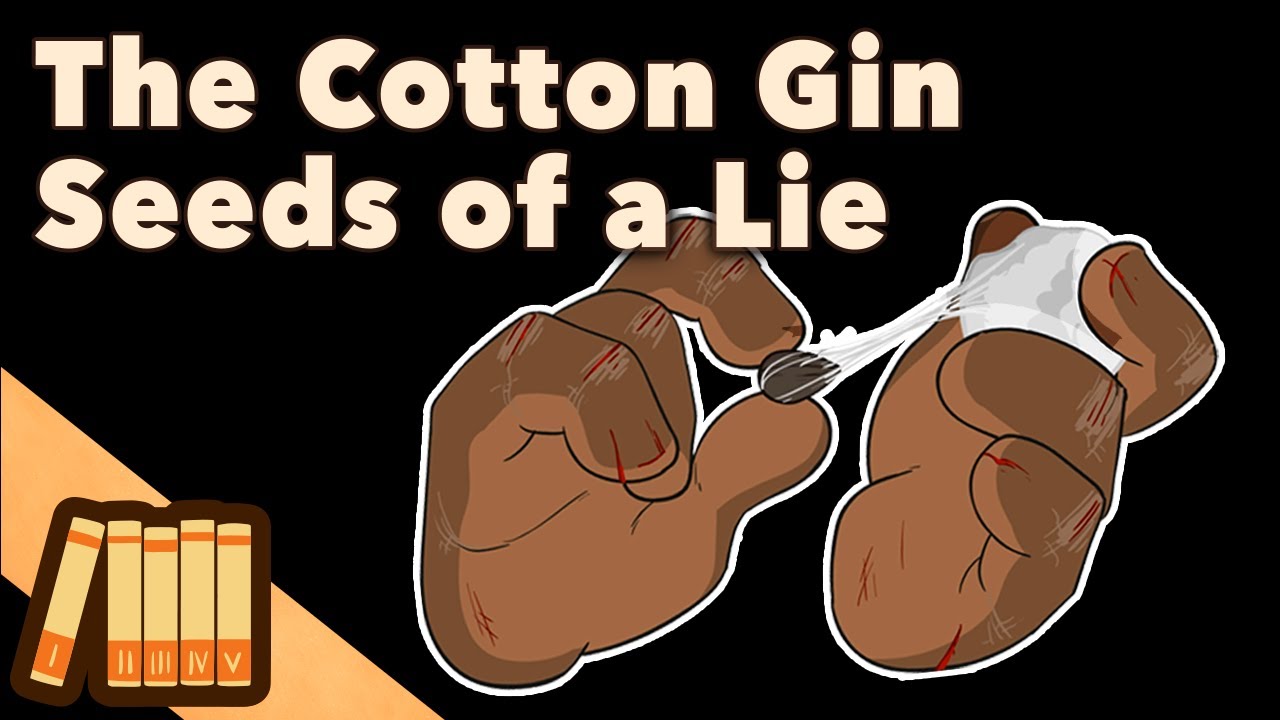
anything that Eli Whitney would have thought of I mean if you think about it Eli Whitney's cotton genen it was typical of a first Industrial Revolution type of machine because it needed hand power in order to operate the machine cotton Jens today you just flip it on push the button all that kind of stuff fully automated so just keep that in mind as far as the difference between the first and the Second Industrial Revolution is this full Automation and another thing to not note here that in the second half of the 19th century and moving
into the early 20th century the standard of living for the working class is still bad by a lot of Standards but it is improving a lot of cities are adopting sewers sanitation purified water and that sort of thing public health and you see an expansion of the middle class it's still a pretty bad time to be poor but at the same time there are more people that enjoying the prosperity during the Second Industrial Revolution than the first and one of the things that we see come about during the Second Industrial Revolution is really the promotion
of Technology through World expositions which we also call the World's Fair and this started in 1851 and this still happens every few years in places around the world a city will say that we are having a World Expo or World's Fair and people from all over the world will converge upon that place to see the latest technology now this started in 1851 with the Crystal Palace exhibition and this was in England and the queen Queen Victoria showed up to start the whole thing and people were coming from all over the world to see this Crystal
Palace exhibition now in 1893 you've got the Colombian Exposition which happened in Chicago and this is where America is is saying that look we are ready to take our place among industrialized countries the 400th anniversary of Columbus's Voyage just passed and so let's call it the Colombian Exposition and this is where you've got you're celebrating the Advent of electricity that once it got dark well sun went down at night and all that kind of stuff boom electric light and all of that stuff people like wow electric light and now we're just kind of Jaded by
the whole thing but this really this was a novel idea at some point the whole electric light thing so keep that in mind also the first ferris wheel at this Colombian Exposition which is a pretty big technological achievement that we take for granted today once again if you think about it so that's another of the great uh Expos at that time now then you go all the way to 2005 you've got the Toyota violin playing robot it's kind of kind of creepy looking but that's kind of cool to have like automated violin playing or something
like that I mean it's a pretty good achievement I guess you figure you've made a car and it's like well what are we going to do now we made a car and okay violin playing robot [Music]
![The SECOND Industrial Revolution & Its EFFECTS [AP Euro Review, Unit 6 Topic 3]](https://img.youtube.com/vi/vAuUabx-NQs/maxresdefault.jpg)
![REACTIONS to the Industrial Revolution [AP World History Review—Unit 5 Topic 8]](https://img.youtube.com/vi/9-uuyd2MFF0/maxresdefault.jpg)

![How the INDUSTRIAL REVOLUTION Began [AP World History Review—Unit 5 Topic 3]](https://img.youtube.com/vi/qMQvfN0psQA/maxresdefault.jpg)

![Chris Langan - The Interview THEY Didn't Want You To See - CTMU [Full Version; Timestamps]](https://img.youtube.com/vi/9miVG2xT5jY/maxresdefault.jpg)
![The Economics of the Industrial Revolution [AP World History Review—Unit 5 Topic 7]](https://img.youtube.com/vi/U42LG2ex3Bc/maxresdefault.jpg)