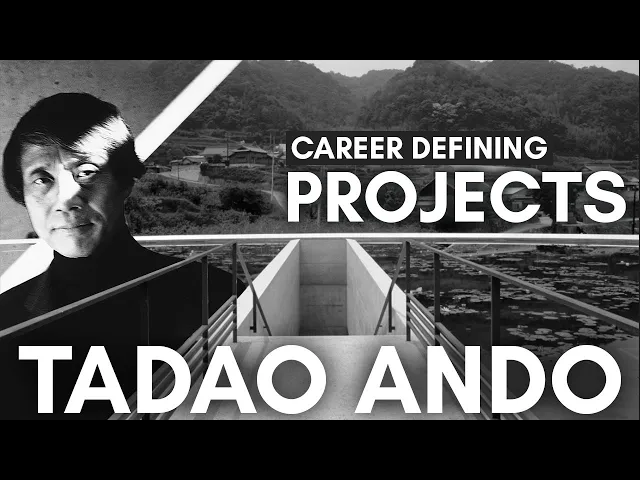
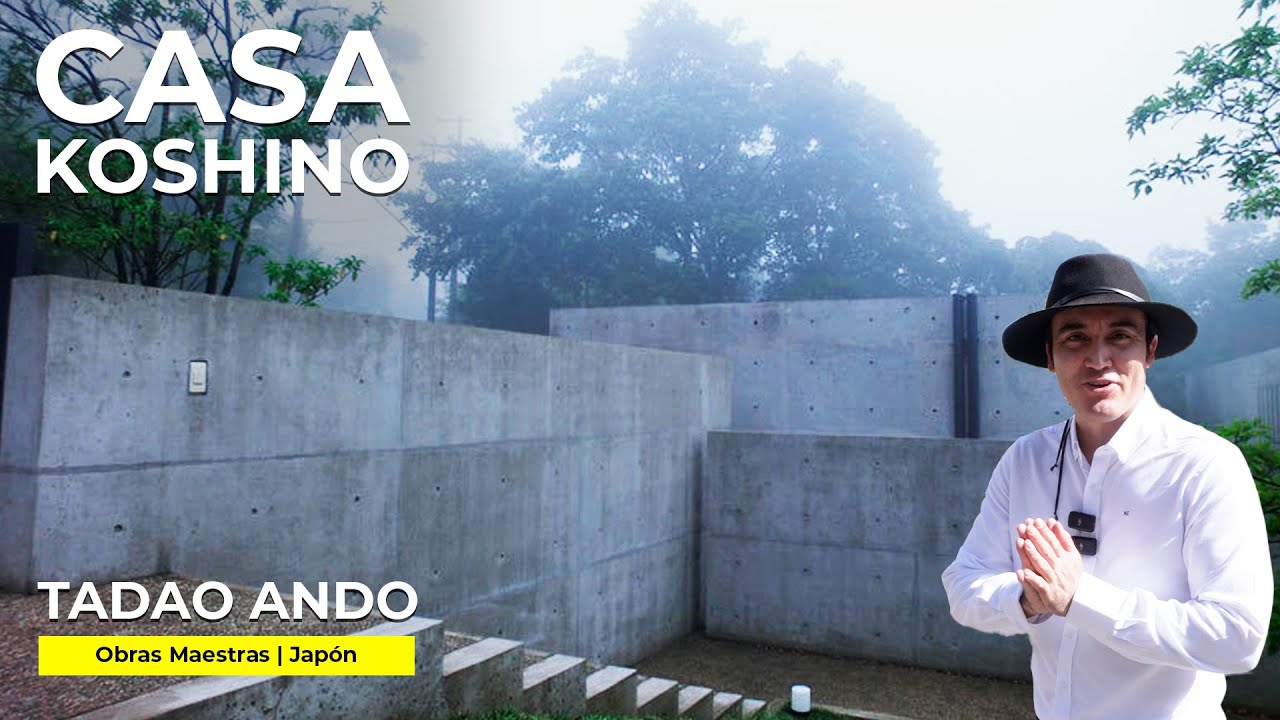
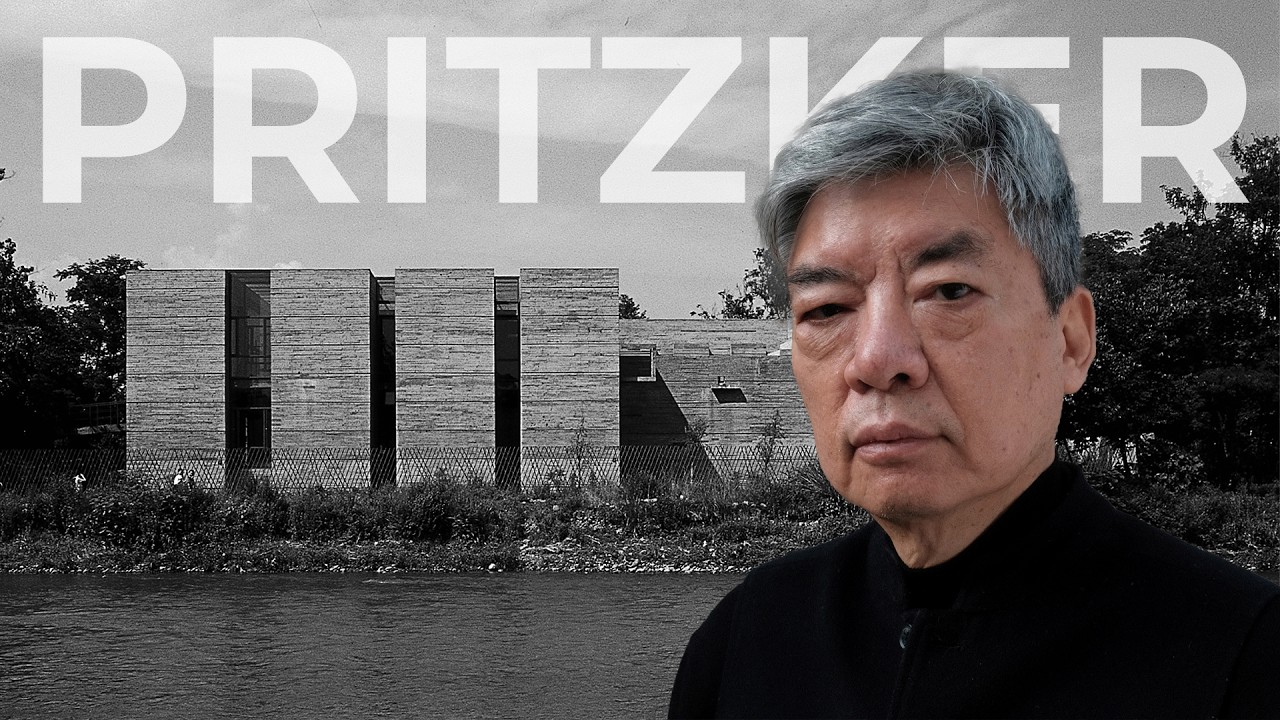
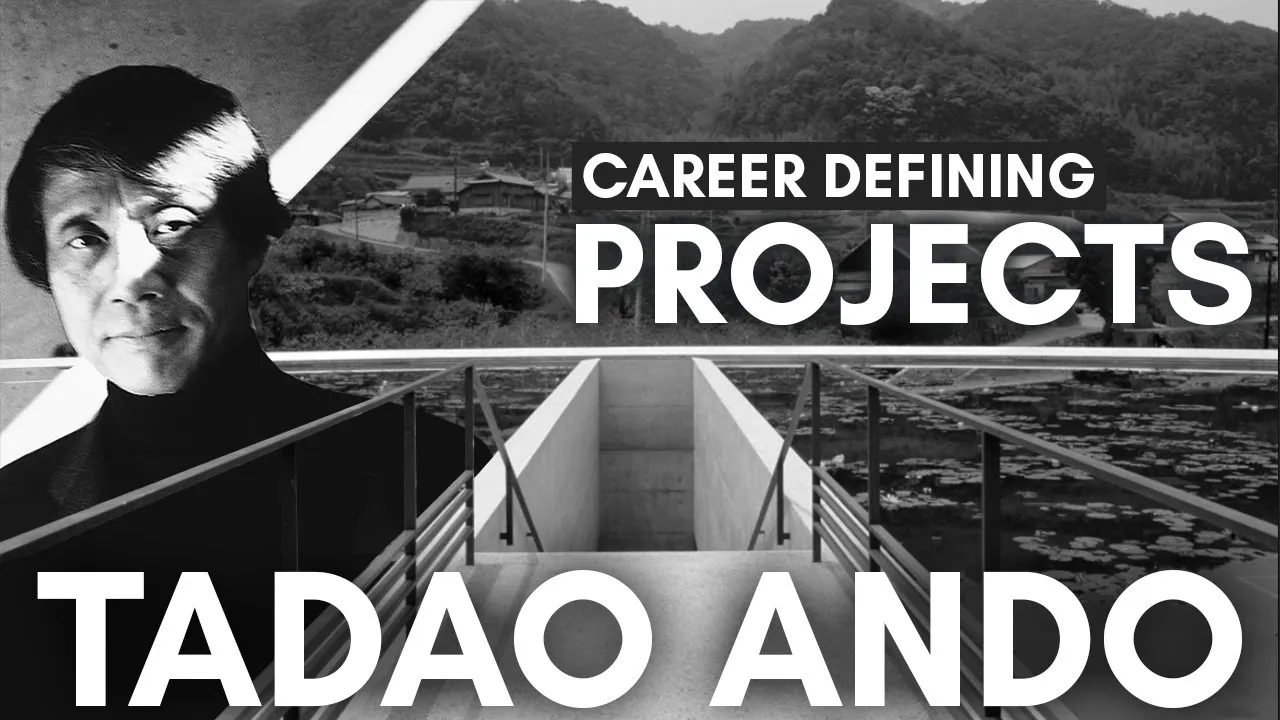
Tadao Ando is one of the master architects of this time. His designs, simplistic in form but complex in their circulation, are admired by people around the world. In one of my earlier videos, I explored the life and designs of Tadao Ando.
Now every project he builds, he adds something new, something unseen for the visitors to experience. But even though every project is unique, there have been some important ones throughout his career. Welcome to Blessedarch and today on this channel we are looking at 10 projects that have defined Tadao Ando’s career and his design style.
Number one is Azuma House This structure also known as Row House is one his earliest works. From the outside, it looks like a concrete box, but on the inside the house is divided into three sections. Two volumes on opposing sides, divided by a void open to the sky.
This house was designed in a way so that it can give you privacy from the outside world and give you access to an open and quiet space of your own. This early project not only showcased the philosophies of Ando but was an important one because he received an award for this project from the Japan Association of Architecture in 1976, and it also got him international acclaim. Number two is Rokko Housing Located at the edge of the Rokko mountains in Kobe, this is a design where Tadao worked with the natural topography of the site.
He created a contoured housing that gives each dwelling unit, contact with nature and landscape around it. The houses were built with strong relationships between public and private spaces. It is a delicate balance he achieved in maintaining privacy yet promoting communion and access to public spaces.
But one important thing to note in this project was Ando's noteworthy engineering achievement as these structures survived undamaged after the Great Hanshin earthquake of 1995. Number 3 is the Church of Light The project is one of Ando’s most recognizable and famous ones and perhaps most clearly represents what defines his architectural style. One major theme found throughout his career is the use of natural elements.
In this project, sunlight certainly plays an important role. Ando splits a large concrete wall to allow intense beams of light to pierce the interior. Instead of adding a cross to a room, he subtracts its from the wall and allows it to exist as a void.
The beauty of this project lies in its simplicity. Number 4 The Water Temple The water Temple is perhaps the best contributions of Tadao Ando to Japanese culture. The project is defined by a monumental staircase that cuts through a body of water.
The stairs are narrow, creating an even more dramatic procession through the water and downward. When visitors arrive at the end of the staircase, they enter a circular shrine with accents of red color. While the exterior of the project is grand and serene, the interior is a peaceful and intimate place of worship.
This project definitely marks one of the high points in the career and design style of tadao Ando. Number 5 The Church on the Water This church in Tomamu, Japan is not only one of the most beautiful churches you might visit, it has also become one of the most desired wedding destinations in Japan for its picturesque design. As is implied by the name, Church on the Water does not direct focus inward—as in a typical church—but outward towards the water.
This is symbolic of Ando’s philosophy of celebrating nature, but more importantly, it makes visitors experience and worship God through an emphasis on the natural world. Number 6 is The Japanese Pavilion for Expo 92 This Pavilion representing Japan that was made for the 92 Expo in Spain, was one of the most important works of Tadao Ando because this was his first major commission outside of Japan. The aim of the pavilion was to acquaint people in the rest of the world with the traditional aesthetic of Japan, an aesthetic based on unadorned simplicity.
One of the major things that differentiated this pavilion from the rest of his works was the fact that this project was entirely devoid of reinforced concrete, which as we know is the signature style and the go to material for him. Nevertheless this project was one of the first one that people all over the world got easy access to bringing more eyes upon his work. Number 7 is the Vitra Conference Pavilion The vitra campus in Germany is filled with structures by architects like Frank Gehry, Zaha Hadid, Alvaro Siza, Renzo Piano and many more.
In 1993, a Tadao Ando design also became a part of this campus with the opening of the Vitra Conference Pavilion. It is a two level pavilion in which lower level is imbedded into the ground. Now The vitra campus is filled with cherry blossom trees and Tadao wanted to keep all existing trees unharmed but three of them had to be cut down for this design.
To remember the fallen trees 3 leaves were imprinted into the “bare concrete façade” of the building. And that is why this building it one of the most important works of Tadao, because leave aside the amazing and brilliant design, it shows us the care Tadao has for nature and how important he holds its relationship to the spaces that he builds. Number 8 is the Meditation Space for UNESCO Undoubtedly one of the most serene spaces built by him, the meditation space was commissioned to symbolize peace and commemorate the 50th anniversary of the adoption of the UNESCO's Constitution.
Tadao had won the competition amongst hundreds of entries. Beyond the simplicity and refinement characteristic of his architecture, Tadao here creates a symbolic work by using granite from Hiroshima after decontaminating ofcourse. Through this, he invites the visitor to reflect on the horror of Hiroshima and hence to meditate upon the destructive power of human kind.
Number 9 is the Pulitzer Arts Foundation This art museum in St. Louis, Missouri is the first project made by Tadao Ando in the United States. Originally this project was completed in 2001, and then in 2014 it got renovated and extended, again under the supervision of Tadao.
Since it opened this building has been introverted, ideal for the quiet contemplation of art in the city's Grand Center arts district. It is built in Tadao’s signature Style with exposed concrete. And finally number 10 is the Chichu Art Museum This museum was constructed in 2004 as a site rethinking the relationship between nature and people.
It was built mostly underground to avoid affecting the beautiful natural scenery of the Seto Inland sea. Despite being primarily subterranean, the museum lets in an abundance of natural light that changes the appearance of the artworks and the ambience of the space itself with the passage of time. The reason I have put this on the list is because from all of his projects, this one personifies nothingness the most.
The structure is hidden, the spaces blend into nature. I feel this is one of the best expression of his philosophies. And there we have it.
The 10 career defining projects by Tadao Ando. Now ofcourse there are many more projects which are brilliant spaces like Giorgio Armani Theatre , the Modern Art Museum of Fort Worth and The Hill of Buddha, but I felt that these 10 buildings helped define Tadao’s career and his design aesthetic. But I also want to know your thoughts, would you include any other projects on this list.
Let me know in the comments below. If you like the content I create on this channel and wish to support it, you can do so via patreon or by becoming a channel member, you can find the list for both of them in the description below and you can also click the join button below to become a channel member. As always don’t forget to hit that like button, to share this video and to subscribe to blessedarch.
And that was it, I will see you guys soon with more such content.