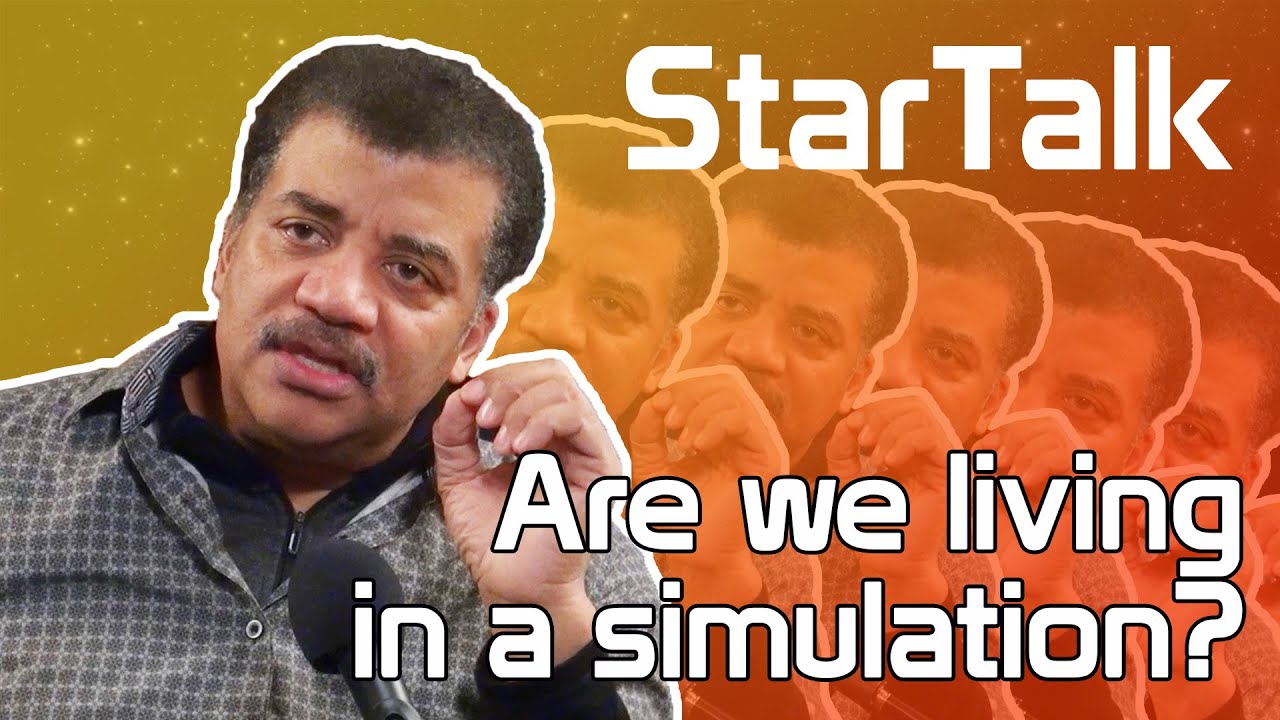
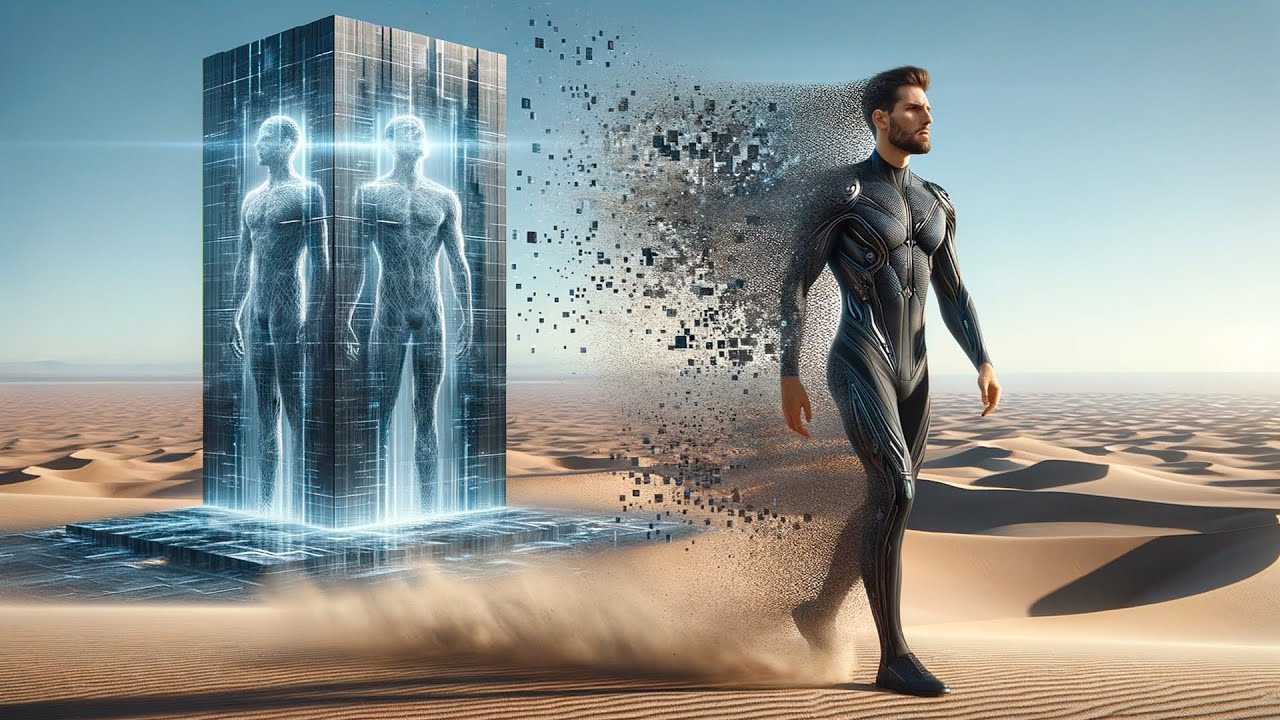
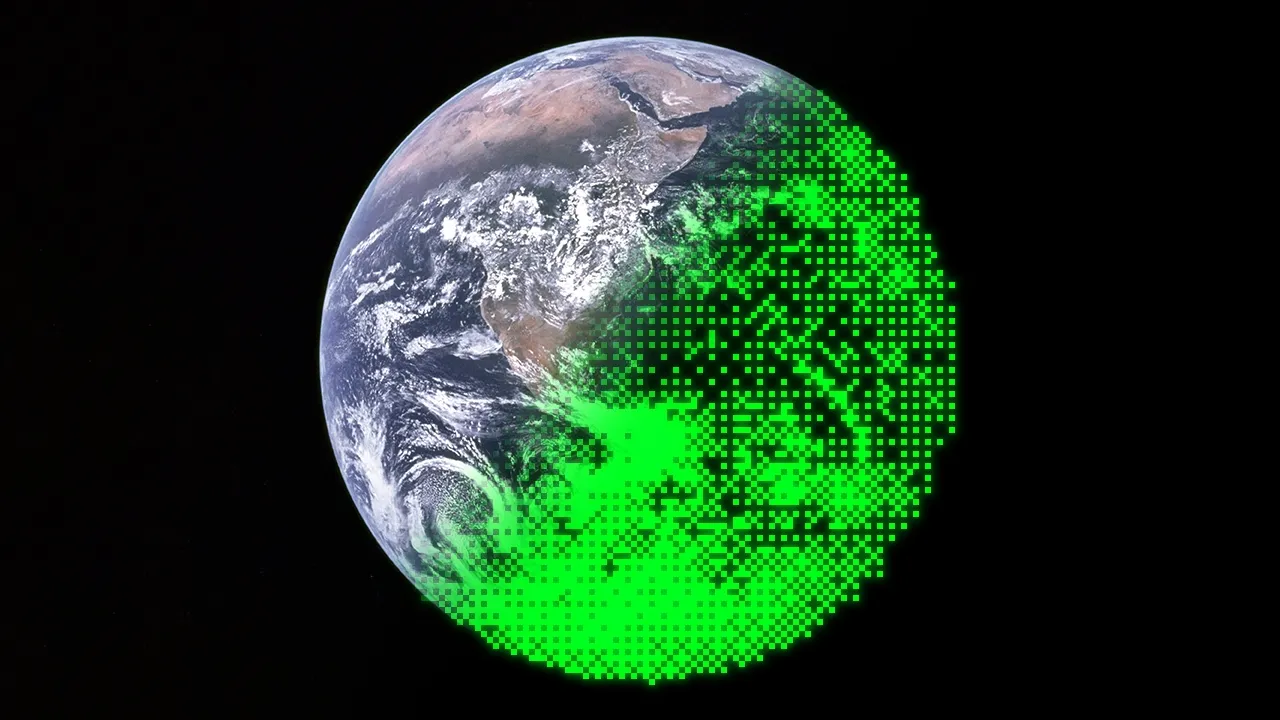
the simulation theory or more accurately the simulation hypothesis is pretty much a new religion at this point this hypothesis is the idea that our entire universe all the natural laws and processes including our own conscious experience is a computer simulation being run by some beings who exist in some higher level of reality and this idea is often expressed in scientific sounding terminology and proponents of this idea claim that it is highly probable that this is the case for instance elon muskrat himself has claimed that it's most likely we're living in a simulation and neil degrasse
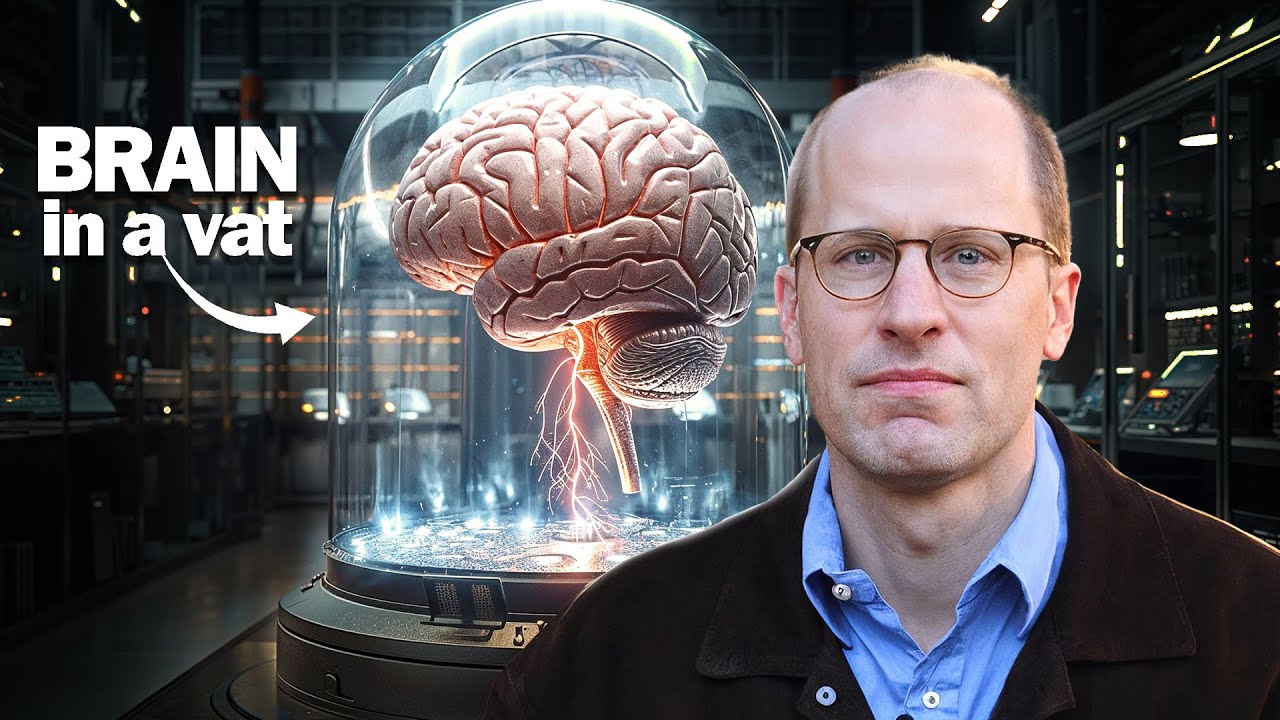
tyson has claimed that this idea is better than 50 50 odds this whole hypothesis has its roots in nick bostrom's 2003 essay are you living in a computer simulation his argument is formulated as a trilemma but for the purposes of this video it has been summarized into a simpler inductive argument which is more or less equivalent and his argument basically goes as follows premise one there are many civilizations premise two these civilizations build computers that can simulate conscious beings and conclusion there are many more simulated conscious beings than real ones so you are likely to
live in a simulation now here if you're joe rogan brain or if you're an elon musk worshiper you hear that and you think that seems pretty straightforward i guess we probably do live in a simulation but as it turns out there are some pretty big issues with this argument first i'm going to critique this argument and poke some holes in it and later i'll be arguing for why i believe this position has become so mainstream and widely held even outside of philosophical and scientific spaces so some preliminary issues with bostrom's argument is related to the
fact that all of his premises have assumptions that might seem straightforward at first but are actually pretty indefensible through pure reason the first issue is with the claim that there are many civilizations it's entirely possible that the life here on earth is the only instance of intelligent life i personally believe that there is very good chance intelligent life exists elsewhere due to the immense vastness of space but there's currently no concrete evidence for this so as a premise we might not want to simply accept it at face value the second issue is that it assumes
these other intelligent civilizations are interested in creating simulations and it's also entirely possible that these civilizations aren't interested in this at all they might be like yeah simulations whatever dude we got other stuff going on that's way more interesting these beings might have goals or desires that we couldn't possibly understand and it's pretty anthropocentric to impose our own human desires and goals onto them and bostrom's premises also assume that the natural laws of physics like general relativity can be simulated computationally which also isn't exactly straightforward scientists have looked for evidence that these natural laws proceed
procedurally like a computer code but there's absolutely no evidence for this okay so those are some minor objections to the premises in boston's argument but the most significant issue has to do with the assumptions that we can simulate conscious experience computationally this idea assumes substrate independence which is the notion that consciousness and the mind are not constrained by their physical substrate or in other words that minds can exist in biological systems as well as computational systems and this idea too effectively assumes the philosophical view known as the computational theory of mind and this is basically
the idea that consciousness is reducible to information processing and therefore that the mind is a kind of computation and there are some significant issues with this position and first i'll go over some of the two major historic objections to it the first of these was put forward by john searle and is known as the chinese room argument soro proposes a thought experiment which involves a man in a room with no way of communicating with anyone outside the room except for a piece of paper with symbols written on it that's passed under the door the man
uses a series of rules provided to him in a rule book to write symbols back on the paper and pass it back under the door this man doesn't know it but these symbols are chinese characters and this process of passing the papers back and forth generates a conversation that's understood by a chinese person outside the room and the point of this argument is to illustrate that despite the outside appearance that the man inside the room can understand chinese and is carrying on a perfectly normal conversation the man inside the room has no true understanding of
chinese he's unaware that he's even part of a conversation and all he's doing is just following prescribed rules from the books the man in the room following the rule books is meant to represent a computer system in the thought experiment argues that computers can never express intentionality or understanding in the same way that conscious biological systems can okay one more thought experiment this one is called the knowledge argument or mary's room and this was proposed by philosopher frank jackson in 1982 the experiment describes mary a scientist who exists in a black and white world where
she has extensive access to physical descriptions of color but she has no actual human perceptual experience of color the central question of this thought experiment is whether mary will gain any new knowledge when she goes outside the black and white world and experiences seeing in color the intuition that this thought experiment generates reveals the importance of what philosophers call qualia in conscious experience qualia refers to the subjective qualitative properties of experiences the redness of a rose the bitter taste of black coffee the richness and texture of the sick baseline on tamim paula's apocalypse dreams these
vivid appearances and experience express what it is like to experience the reality around you and this concept of qualia is a hot topic in philosophy of mind with some contrarians even claiming that qualia do not exist so that they can justify a purely physicalist ontology but the consensus in many circles is that this qualia and what it is likeness of conscious experience is of great importance without this qualia what would conscious experience even be we would basically be autonomous automatic systems of information processing that mindlessly seek food water and reproduction without experiencing any of it
we would be npcs or in other words computer robots so from these thought experiments i think it becomes clear that simulating conscious agents is not a straightforward task i personally believe this prospect is ridiculous and impossible but for the purpose of this video the main point is that it's not something that can be tacitly accepted as something we can achieve once technology becomes sufficiently sophisticated okay so what i've done here is show that the simulation hypothesis is not the purely logical and rational take that its proponents claim it is rather than being based on scientific
or philosophical rigor this position is pretty much entirely based on faith there are also pretty significant similarities you could draw between the faith contained in this position and the faith involved in monotheistic religions like christianity and judaism they both involve some being or in this case beings who we cannot perceive but generated and control our reality in deep ways the simulators who supposedly exist on some higher level of reality are essentially equivalent with a god figure it's clear that this pattern of belief is deeply comforting and existentially useful to us in some ways evidenced by
the fact that religions like this have been extraordinary forces in human culture for thousands of years and the more general new scientism of figures like elon musk have deep parallels with religious tendencies even outside of the weird deification and almost religious reverence that elon musk's fanboys seem to have towards him these people subscribe to views like the simulation hypothesis which gives them hope that there is something on the other side so to speak after our death people in these circles are often also deeply interested in ideas about eventually uploading one's consciousness onto a sophisticated computer
system in the future and this consciousness uploading falls into similar traps as the simulation hypothesis that is they assume that consciousness with all its intentionality understandings and qualia can be transferred to a computer system which will ultimately serve the same purpose as the neurons in our brain but once again this belief is faith-based not evidence-based and there's little evidence that such a thing is possible this all ties in with the human condition and the prevalent fear of death that everyone's intimately familiar with we're all extremely protective of our ego and self and its annihilation through
death is deeply troubling and terrifying to us if we can simply wake up in a higher level of reality or upload our minds to eternally run on some sophisticated computer system this comforts us and gives us hope that death might not be the end but once again these beliefs are pretty much equivalent with religious faith-based beliefs in an afterlife the biggest problem i have with the simulation hypothesis or this mind uploading nonsense is that it shrouds these faith-based opinions under the guise that it is logical rational or scientific but unfortunately it's just not i have
absolutely no problem with religious people who take comfort and ideas about the afterlife on faith and i also have no problem with the people that do the same with the simulation hypothesis but the problem is that the latter group deludes themselves into thinking it's somehow objective or scientific the simulation hypothesis is the type of thing you talk about with your friends over a joint like whoa dude what if like reality is just a video game me and and there's absolutely nothing wrong with this those types of ideas and conversations can be really fun but it's
just not scientific so in this video i put forward some arguments to show that the simulation hypothesis is not as scientific and rational as its proponents make it out to be i do think this new wave of scientism and technological optimism is an interesting phenomenon though it's strange how the authority of science and reason can be co-opted in order to make wild philosophical positions more palatable and popular among regular people this video was pretty different from my last two so let me know what you guys think about it i don't really have any unifying topic
that i'm making videos about i'm just kind of going with it so i'm trying to make videos about stuff i find interesting and i hope you guys find it interesting too if you want to see more stuff i make you can subscribe to the channel there will be more stuff on the way and you can click the like button if you want as well which helps me with the algorithm thanks for watching