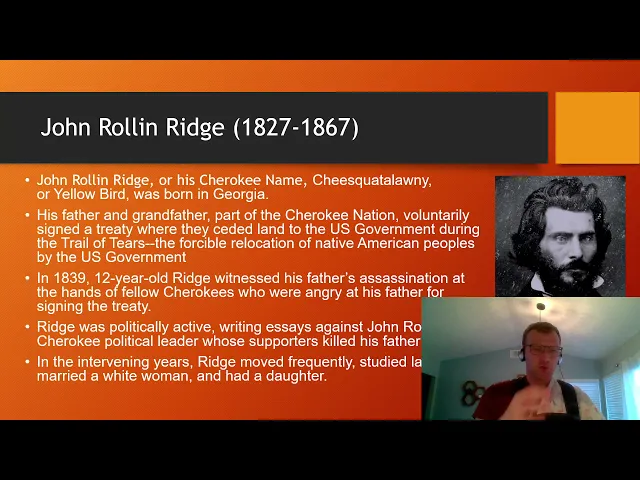
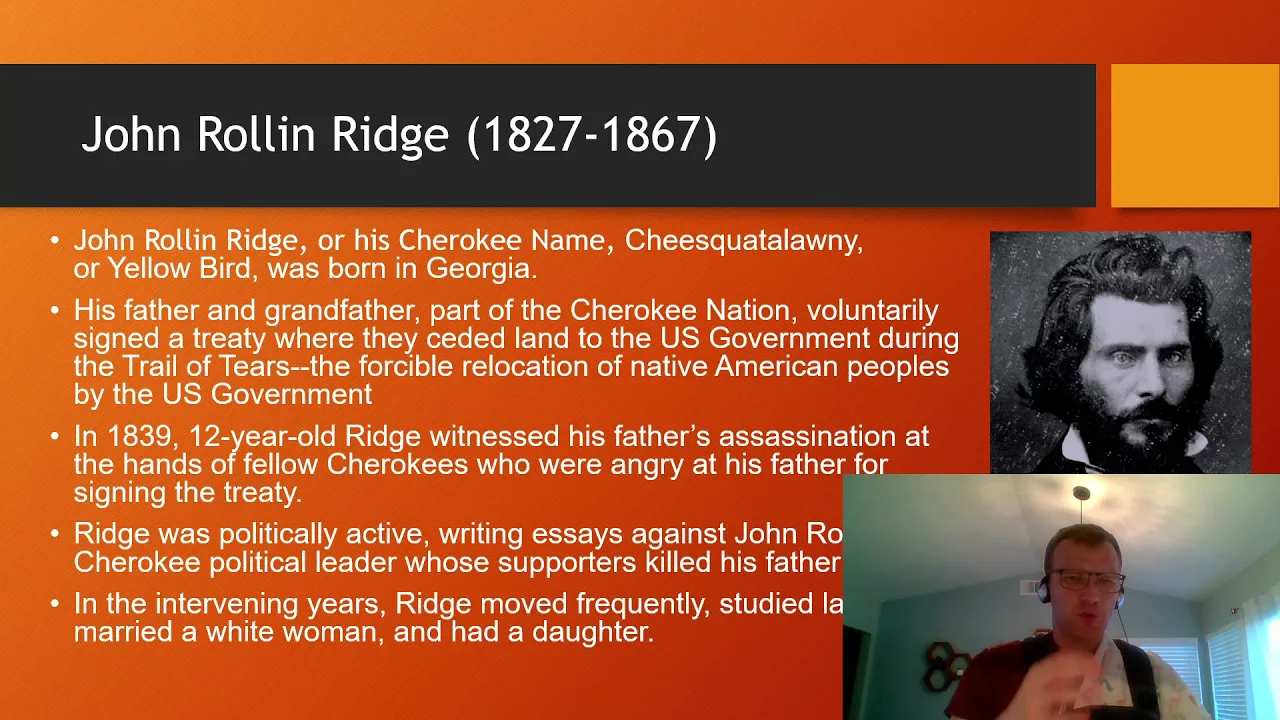
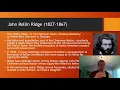
hello friends and uh welcome back to the channel so in this video what i'm hoping to do is to go over some literary uh back and historical background for joaquin marietta so we've discussed in class concepts related to the death of the author and that knowing information about an author is of limited value however there are other schools of thought that talk about how understanding history is vital to understanding a text that understanding history is essential to understanding a literary text especially because you really can't separate the historical from the literary uh the you can't separate the story from the time period that produced it so we're going to take a look at this um hopefully this will be enlightening to you um hopefully you learned something i know that in putting together this lecture i learned something i learned several somethings um it's not an exhaustive compendium but it's a series of helpful information that might change the way that we think of the text so let's begin so important to understanding joaquin rietta is understanding california history uh and so i'm gonna try to go through at least 20 000 years of california history in about four slides so here we go so uh human occupation of california dates to around 20 000 years ago so people have been in california for a long time over 500 different tribes and groups of people lived in california before any contact with the europeans so you know it sort of depends on how you sort the tribes whether it's linguistically or whatnot but there's about 500 different people groups that can that can sort of trace their lineage back to california population density of california this was something that i learned has always been relatively high it's estimated that as many as one-third of all native americans in north america lived in california during the pre-columbian periods meaning that there were a lot of people here even though it population was a lot lower just in general you know because there wasn't cities and mass agriculture and all that stuff comparatively a lot of native americans lived in california compared to other parts of the country pre-columbian native life was largely hunter-gatherers with limited agriculture you know there were some processes basically kind of sustainable agriculture they call it like forest gardening also sustainable fire practices like forest management practices and stuff like that kind of yuri nomadic your hunter-gatherer limited agriculture limited uh civilization you know there weren't cities but there were villages and there were groups of people times of slave trading and war alternated with times of relative peace amongst tribes this is important to remember the united states engaging in slavery and war are horrible horrifying things and they're the worst things the united states has ever done however slave trading and war are part of basically every people group for as long as you can drive as you can record history and in native american history in california native american history slave trading and war were parts of life different groups enslaved one another different groups uh engaged in warfare with one another so it's not while the united states engaging in slavery and war is bad and inexcusable it's also not something that's unique or new to the human condition first europeans made contact in california around 1530 and european contact with california especially the coast lasted 100 years hundreds of years without permanent settlements simply put the colonial powers that be were focusing their attention elsewhere not in california for several hundred years so settlements in baja california existed in the late 17th century permanent spanish settlements were not sought until the late 18th century in alta california or you know baja california currently legally as part of mexico whereas alta california is the california that we know so beginning in 1769 in san diego junipero serra founded began founding missions in alta california under spanish direction so many people who've lived in california a long time have heard about the california missions and especially in grade school it's a common thing to teach children about um the missions are complicated but the and the teaching of the missions are complicated but essentially what you had is the spanish military and the spanish religious leaders often serving cross purposes the spanish military wanted uh settlements and colonies in california for their military and political purposes the spanish religious leaders wanted it for their religious purposes um it's kind of interesting the way i think of it because like a lot of times there's sort of two different ways that the missions are talked about one way is sort of like oh well then these wonderful friars told all the native americans about jesus isn't that wonderful and then there's the other way of teaching it where it's these horrible war criminals destroyed the native american population by uh sort of selfishly trying to indoctrinate the native americans into christianity i think the truth is probably somewhere in between there uh and there's a lot of moral shades of grey the a lot of the franciscan uh religious leaders a lot of the priests they died horrible deaths doing what they were doing some of the they died of disease they died of starvation they died being killed by native americans so it's not necessarily that they were you know engaging in the mission process to be get rich and famous you know there's a lot better things they could have done with their lives that would have been more beneficial to them at the same time the mission life was brutal missions introduced european style agriculture religion architecture and livestock the indigenous populations and it was brutal the missions were never self-sustaining food was always scarce disease was rampant sometimes up to 50 percent of the indigenous mission residents died due to disease and hard labor so i think and maybe this is my own biases seeping through i tend to think of the mission system as a good example of the road to hell being paved with good intentions i think that the franciscan religious leaders i think they really did care about the souls of the native americans and doing the work of god whether they intended it or not many native americans were decimated and destroyed because of the mission system through imposing european style practices on people groups that you know we're not used to them we're not ready for them did not want them should not have had them not only that but then all of the agriculture the livestock the you know moving a bunch of people inside and like having them live you know stacked on top of each other a lot of this uh resulted in a lot of the disease that ended up killing most native americans it's estimated that 90 of the native americans throughout the entire country that died at the hands of europeans died because of disease uh and so it's just it's the horrifying reality of you know the the kind of the mixing of people groups and the horrifying realities of colonialism uh so that's a bummer so uh from from the beginning of california there then we moved to sort of the spanish period to the mexican period to the united states states period and we're going to fast forward a little bit so in the early 19th century the napoleonic wars and other global conflicts led to the weakening of the spanish empire in the americas including california so spain was this huge empire for a long time but then after 1800 you know you can only be at war with so many people uh and spain's grasp of its empire began to fade got too big and it started failing after more than 10 years of civil war the mexican empire defeated the spanish in 1821 after which they took control of california so in this case the mexican empire mexico achieved its own independence from spain in 1821 wow like i said the spanish empire was crumbling and spain was otherwise preoccupied in 1845 you know and this gets really complicated it sort of depends on which historian you read and it depends on whether you're reading a mexican historian or an american historian or a texan or a californian or a so in 1845 texas joined the united states uh despite the fact that texas and mexico disputed control of the territory so texas at that time was sort of de facto its own country um if you've read the story of the alamo and that kind of thing you kind of understand sort of that history but so texas says all right well we're going to join the united states and mexico is like oh no you ain't you're still part of mexico and this among other conflicts that don't have time to get into led to the mexican-american war from 1846 to 1848. with the defeat of the mexican army the united states gained control of what is now known as california and other territories in the treaty of guadalupe hidalgo we could spend an entire hour talking about that um i've read whole books on it uh but the long and the short of it is the united states won the war and so mexico arizona new mexico or sorry texas new mexico arizona california basically the united states expanded its territory to the west coast shortly after the start of the california gold rush um you know gold was discovered in california and again if you've ever taken a california history you've heard about the gold rush that gold was discovered and then a lot of people fled to california seeking the economic opportunities associated with the gold business and the gold rush california officially became the 31st state of the union in 1850 so it was around this same time and it's also around the same time that joaquin marietta was published race relations during early statehood this is really important because it's also important to understanding joaquin maria in early california statehood coinciding with gold rush race relations became increasingly tense california was always a racially diverse state and even in 1850 you had all of these different people groups seeking their economic prosperity uh surrounding the gold business and other sort of gold adjacent businesses so you have cultural stereotypes that are abounding as all these groups are mixing together so we have tension between the mexicans the native californians the chinese the irish the jews the french the i uh the i said the irish twice for some reason probably because i'm irish and then sort of the american yankees sort of the the sort of the homegrown americans versus immigrants xenophobic disputes over land and gold increased especially from english-speaking white californians and non-white or non-english-speaking californians including the french for instance with resentment that foreigners were claiming american gold so you have this issue where the the dividing line frequently ended up falling over people who spoke english and people who didn't speak english people who were american and people who were perceived as not being american however there's also a lot of intergroup uh distrust and cruelty as well as evidence um by for instance the chinese who seemed foreign and exotic to many americans you know the the the chinese seemed foreign and exotic not only to the to the white americans but also to the mexicans because they're sort of the biggest cultural and linguistic gulf uh between those races and they were um treated particularly harshly um you know it's sort of like the it was there's a certain element of you know the white people hated the mexicans the mexicans hated the white people and both of them hated the chinese legislature like the foreign miners tax of 1850 ended up so the white legislatures would pass legislation that would target or sort of cir sort of circuitously target um non-white people uh when it comes to the gold business so for instance a series of there was a series of tax laws that were passed but one of them was the foreign miners tax that ended up targeting thousands of mexican laborers and excluding them from the from the the gold business and then also other tax taxes and laws excluded the chinese from the mines and and other groups the idea was the the the white americans were using the legislative process to again keep the gold for themselves rather than the foreigners uh i mentioned the the the mexicans and the chinese and the white but also the native peoples were perhaps the worst treated they were harshly discriminated against and forcibly driven out of their land and killed with frequency there was frequency uh frequently sort of bands of marauders and bands of militias who would form who would go out on hunting parties to drive out the native americans um and granted the native americans uh i wanna i want to make sure that this is that that i'm being honest about history in there native americans also engaged in acts of violence and barbarism the white people also engaged in acts of violence and barbarism so there's a lot of violence and barbarism to go around but um some historians have described the treatment of indigenous californians especially the result of it all as nothing short of a genocide that the native population during the gold rush the native population of california was decimated so in addition all that though there's incredible resentment amongst spanish-speaking peoples uh that was pronounced despite their presence in california for decades and sometimes centuries they were treated as foreigners they were a conquered people by the americans so in you know 1840 i could be a mexican uh in california and by 1850 i was a foreigner who spoke a different language in american territory and i was you know trying to steal american gold even though i was like bro this was mexico 10 years ago um so that was there was a lot of resentment there because you know what was happening is the concord were discriminating against the conquered sorry the conquerors were discriminating against the conquered um the real and this is where the real life joaquin marietta shows up um he was one of thousands of disaffected mexicans many of whom were dispossessed minors so for instance when they were passing that legislation that that kicked all the mexicans out of the gold mines where do you think the mexicans went they didn't just go away a lot of them turned to organized crime including robbery cattle running horse thieving and murder and often under this sort of noble retaliation against discrimination received from white americans now as ridge points out there's a lot of barbarism to go around um and so sort of there's this this idea of well you know i was wrong and so i'm going to take it out on everybody else sometimes there's the idea you know sort of depends on how you see them sometimes you see them as well they're righteously uh freedom fighters sort of trying to get even and sometimes you look at them and it's like are you just killing people that's part of the moral gray area of the novel and history so while ridge's joaquin is highly fictional uh the real joaquin and others like him were the source of serious conflict with white and mexican relations you know the american government got involved and really had to deal with the outlaws so on one hand if you were mexican frequently you could see them as patriots heroes and freedom fighters if you're white you're looking at this these are outlaws murderers cattle thieves so this is uh this is the conflict here you know one man's freedom fighter is another man's outlaw so this brings us to john rollin ridge so ridge or his cherokee name i'm going to try this cheese cheese i'm going to do my best there or which means yellow bird he was born in georgia so he's not a native californian he was a cherokee who was born in the georgia territories his father and grandfather were part of the cherokee nation and during the trail of tears when the united states was trying to forcibly evacuate the uh the native americans as uh the united states pushed west which is horrifying and it's another story entirely um the his father and grandfather were part of the group of cherokees who sort of saw fighting with the us government as pointless and assimilation as inevitable and so they signed a treaty where they seeded land of the us government um willingly so instead of by by by the sword and by the bullet they were like look you're gonna have the land let's sign this treaty you're gonna take it anyway so i might as well do that um ridge and his father and grandfather were much more assimilationist in the sense that they sort of kind of figured that trying to keep separate from the united states was a losing battle and that you kind of they had to sort of if you can't beat them join them kind of attitude toward the us government but the problem is there are there were a number of cherokee uh leaders who did not subscribe to that and thought they were much more uh proponents of violent resistance to the us government so there was this really big rift between in the cherokee nation between folks like ridge's father and grandfather and a guy named uh ross ross was a um was a cherokee leader who was much more in support of violent resistance to the us government so in 1839 the 12 year old ridge witnessed his father's assassination at the hands of fellow cherokees who were angry at his father for signing the treaty so these were followers of ross so ross's people came and they killed ridge's father in front of him when he was 12. um so uh in in the intervening years ridge was very politically active writing essays against john ross that cherokee leader whose supporters killed his father in the intervening years uh ridge moved frequently he studied law he eventually married um he was married to a white woman they had a daughter in 1849 one ross supporter david kell allegedly stole and gelded a horse belonging to ridge this seems kind of weird that it's like he stole a horse like but keep in mind horses back then would be like okay he stole his car uh you know back then that horses were incredibly valuable commodities because there were no cars that was transportation ridge subsequently confronted kell and killed him so sort of depends we weren't there you could argue okay was did bridge murder kell did they get in a fight was this self-defense either way ridge killed kell violently and so he had to go on the lamb he fled to california in 1850 during the gold rush he went a couple other places before that but by 1850 he ended up in california and his wife and child soon joined him ridge worked briefly as a gold miner but he soon found success with writing he became a journalist a poet he wrote essays and articles in and then in 1854 he wrote the life and adventures of joaquin marietta this is the first california novel the first novel written by an american indian um it was not particularly financially successful for him during ridge's lifetime it's become more popular and famous since then it was also frequently plagiarized so like a lot of times people would take parts of it and they would make money off of it and ridge would never see the money for it so ridge used his skills as a journalist to gather materials and he claims to interview eyewitnesses in the production of the novel so ridge was aware of the outlaw situation he was aware of the sort of the conflicts between mexican outlaws and organized crime and the u.
s government he was aware of the real joaquin but despite claims to the contrary most scholars believe the vast majority of what ridge wrote about joaquin is fictional um ridge ridge wrote a you know a bloodthirsty gangster novel that has a handful of pieces of truth in there but it's it's mostly fictional and what there's not a whole lot we know about the real joaquin marietta even though he's technically a real person it's kind of like it's kind of like half the movies and stories and stuff like that that are written about al capone is just a bunch of crap that people made up um yes there's a real person but a lot of it is sensationalized so um also not worth noting about ridge he had really complicated views on american race relations so you know joaquin marietta is all about how uh the mexicans are discriminated against the white people and a lot of times people see joaquin marietta as kind of an allegory that ridge was writing about how white america treated the cherokee there's some interesting ways of reading it that way but also ridge had complicated views on race relations so he advocated for american indians to assimilate the greater america the white culture that was that wasn't exactly popular his dad literally got killed for that position and so he even within the cherokee nation he didn't agree with all that with all the american indians he also had really disparaging comments against california indians who he believed were inferior to indians from the southeast and the northeast you know because he was he was from the southeast he was from georgia you know he was thinking all right well the native americans over in georgia we're way better than these california native americans so that's also something that that that influences writing and you can see sort of the way he that he talks about native americans in california is not exactly flattering uh and that compare also uh combined with a lot of his other writings you know you can see that there's there's prejudice that he has even against other native americans because keep in mind native american is considered this one big monolithic group but actually there's hundreds of tribes here and so there's discrimination between the tribes this was also a very interesting one to me despite his condemnation of the american racism in joaquin marietta during the civil war ridge openly sympathized with the south he blamed abraham lincoln and especially abolitionists for the war and he advocated against the abolition of slavery so there's debate whether this was because of his belief in the inferiority of black people or whether this was simply his res his sort of anger at the war in general saying like look if these abolitionists wouldn't would just shut up for a little bit maybe we wouldn't have the civil war that's destroying the country literally um but again that's another area of this is complicated he's a complicated guy here after the war ridge was the leader of a delegation of southern cherokee who advocated for they were invited to washington dc and they appointed ridges ahead of us and while they were there he advocated that he wanted the cherokee nation to achieve statehood that that the cherokee nation would be become a state of the union failed in this attempt but it was interesting that this was sort of a big part of of his career in even into you know the later parts of his life um in 1867 at the age of 40 ridge fell ill with what is described as brain fever so this could have been a stroke or a brain hemorrhage we don't really know um but he was dead at 40. he was buried in grass valley california which is was his adopted home so there's ridge now literary background there's some things that are important to understand that because joaquin marietta was not written in a vacuum so uh one of the most important things is historical fiction that walking or ridge did not invent historical fiction with joaquin marietta in fact it was really popular when he was alive so regis book belongs to literary tradition of historical fiction popularized by sir walter scott in the early 19th century so in the 19th century walter scott wrote ivanhoe and a bunch of other books but ivanhoe probably is most famous featuring both historical and fictional characters so he brought he was writing about king richard the lionhearted who is a real king and also robin hood who's a legendary figure and this book was sort of this swashbuckling medieval romance that kind of got people more interested in history and you know because even though it was 200 years ago ivanhoe you know he was he in 1819 he was writing about 12 19. so he was writing about history and he was fictionalizing it and sort of mixing the facts with fact with fiction another writer who was really popular at the time uh was james fenimore cooper whose most famous novel was the last the mohicans in 1826.
he wrote the novel in 1826 though it took place in the 1750s uh during the um sort of the french and indian wars and uh those kinds of military conflicts between the french and the united states and or sort of the sorry they weren't in the united states yet the french the british and native american tribes and this was a very romanticized adventure story about the frontier with uh you know people who you know you had a bunch of native americans and you had a white guy who was raised by native americans and they were all running through the woods with guns and having swashbuckling adventures and this sort of had this there there is a tone of sort of the death and the eradication of the nodal noble native americans sort of that they were these noble savages and they were sort of destined to be um to either be either killed or die off uh in the their conflict with the united states uh last weekend is a great book it's it's worth reading uh but it's that's sort of that was kind of in the water when ridge was writing joaquin marietta um these kinds of books were really popular next is just adventure fiction um joaquin marietta is an action adventure story you know there are other kinds of stories you know that were popular at the time uh you know in in the 19th century there were you know books like like jane austen was writing in the 19th century so it's you know she's writing about a bunch of uh a bunch of sort of middle class or lower upper class women and their sisters you know trying to find dates and marriage and laughing at each other and pointing poking fun at you know the problems with society that's one type of fiction but then there's adventure fiction and joaquin marietta is very much an adventure fiction um some of the oldest known to humans tales of heroes accomplishing great feats of great danger it's as old as storytelling itself including famous examples like the epic of gilgamesh uh from mesopotamia or the old greco-roman trails or the the arthurian legends from medieval europe you know you have these ideas of these adventure stories that are you know there's a reason that it it uh has proliferated as long as it has so similar to historical fiction um ivanhoe and lassen hikins they were also adventure stories like i said they were sort of squash buckling with daring escapes and uh violence and excitement and revenge and romance and heightened romanticized storytelling so not romance in terms of you know kissing but romance in the sense that it's like these noble larger-than-life kinds of characters that were everything's dialed up to 11.