Here is the kitchen, here’s the fridge, the cabinets, where I keep my dishes, in this other part I keep the cutlery and other things, here is my portable radio which I like to listen, here’s a little mess left from the construction that I was doing this week so it’s a little crowded, and when we don`t have any money, then you know, we do everything by steps, a little bit today, a little bit tomorrow. . .
so here`s some leftover blocks, leftover cement. . .
Here’s my Garden. Here is the cassava, do you know? Cassava.
. . here we have strawberries!
Look at my planted beans, come see! Here, look, my planted beans. .
. here I planted cilantro, “maxixe-gringo". .
. The strawberries here grow so much you can’t even imagine. .
. Here we have my Pomba Gira, my Exu, and here are the saints: Oxum, Iemanjá, Xangô, Iansã. .
. every week I clean this place a little, change the leaves, dust the place. .
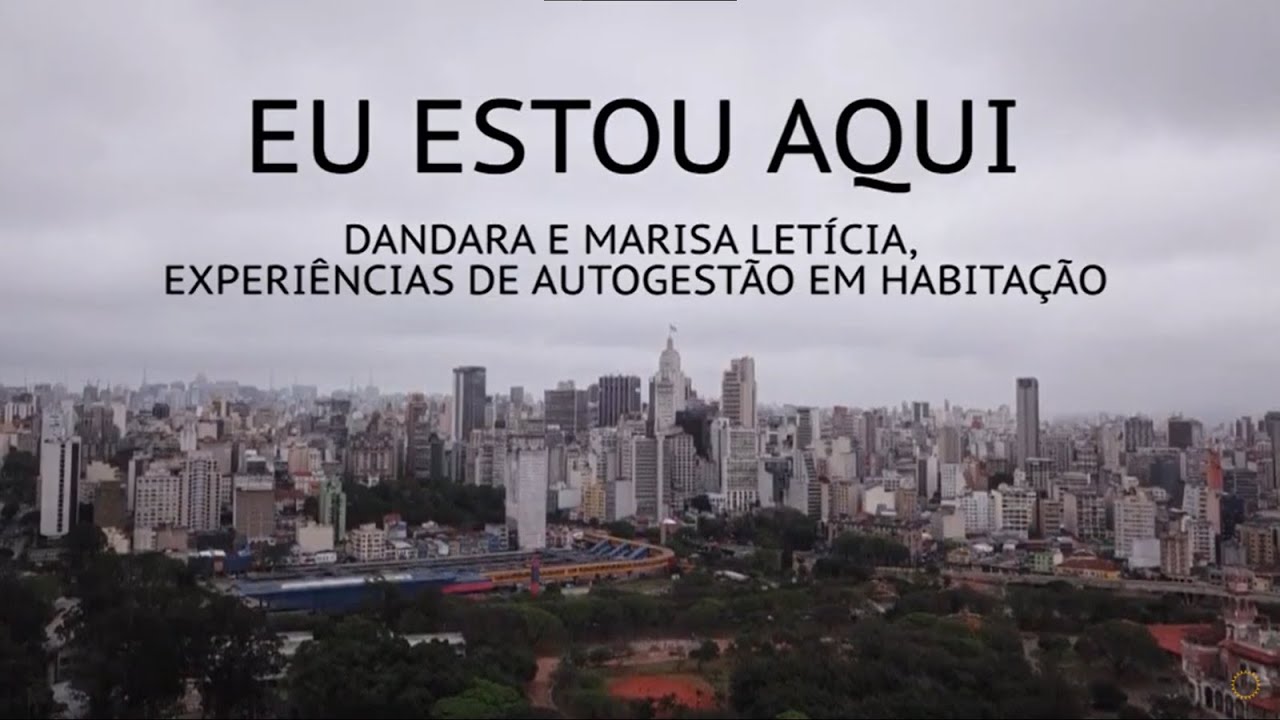
. the saints are my refuge. ♪♪♪ The Occupation Jardim da União exists since 2013, in Grajaú, in the Southern region of São Paulo city.
The land, which belongs to CDHU, a government entity that provides housing, is destined to social housing and is home to about 600 families. The residents have been through several repossession suits. Jardim da União the right to be Regarding the beginning of this occupation’s history, it was a group of people that resided in the Itajaí region, that is really close from here, and it was also an occupied land, but it wasn`t promoted by an organized movement, a party, nothing like that, it was a spontaneous occupation, so people just called their relatives, their cousins, got together and started building, building and thus initiated the Itajaí occupation, that was not organized.
From there, they were evicted violently, with shock troops and everything to get people out of there, they were forced out, because that place was private property. That’s what happened in Pinheirinho, that’s what happened in Itajaí, right, when they got together, we were attacked from one second to the next, and we found help with who? With the people, that have a good heart and opened their hands and their hearts and said, we’re here to help.
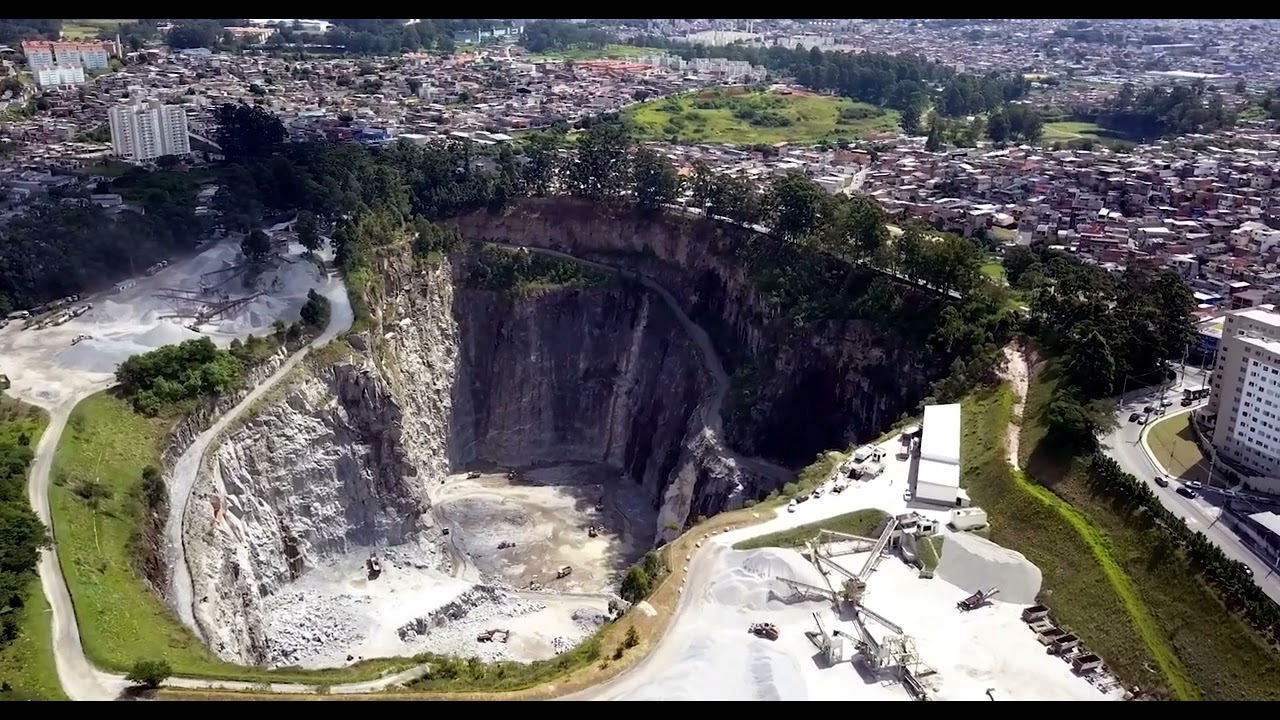
In this period, the guys got in touch with resident’s associations from the region, and that’s where the Rede Extremo Sul comes in, that is an organized social movement that doesn’t exist anymore. That’s when they started looking for another land in the same place, not necessarily in Itajaí, but in the nearby area, because most of the residents from Itajaí already lived in this region, and then this place was found. This land was an empty pasture, there was nothing, and there was a wall that went around the whole plot.
Then the occupation happened, in 2013. On October 12, 2013, we left Itajaí at dawn, and came to this land here. We got here and there was no water, no power, we fetched a hose that the cattle used to drink from a tank and we got the water to make food, take a shower, bathe the kids, and we got a wire to light a lamp for the kitchen, we had a communal kitchen, where some women made food for everybody.
We had a whole team for that, right, when we were tired we switched places, we made breakfast, lunch, dinner. . .
Because in the beginning this was a hard place, very bad indeed, it was all tarp tents. . .
Some people slept in the kitchen to guard the food and we kept doing the rounds around the land while people made their tents, and then we started to expand. We were like this for about two months, in the tarp tents, then I started to make icicles so I could stay more time in here. We went to several occupations to help, here in Grajaú, fighting for our housing, It was very hard, they came and said, ‘we’re going to take this down’, and we fought it, and we kept going, always insisting, insisting, insisting, because I think the right thing to do is to insist, not give up.
We had the recycling, no one had the guts to go to the street, they said it was shameful to pick up garbage, I said no, I am not ashamed, let`s go, so I set up the recycling crew, went to the street with the girls, then we brought in more men to help with the recycling, we set up a daycare, and we maintained the daycare ourselves, it was like this, we each gave a little rice, some beans. . .
This daycare we set up had up to fifty children there. We had everything here, everything, we had the co-op, the daycare, the library, the recycling crew, the girls from the sewing group, we had all that. I`m going to tell you something about an occupation, it has three stages: first, the child stage, is the beginning of the occupation, in which the tarp tents are done; the adolescent phase is a more troublesome one, where people start to build their houses in wood; and there is the adult phase, in which we are already building with masonry, everything is more consolidated.
. . In 2015, around the time that Rede Extremo Sul fell apart, we got into an intense judicial process in which there was a very big chance that we would be evicted, and some tough people said, ‘no, let`s take charge of this, let`s make this happen!
’ We got an invitation to participate in a convention from Conlutas which was an opportunity to find someone to support us, be it a social movement, a lawyer, someone to enlighten us and show us a direction: let`s do this, let`s do that, and from that the Movimento Luta Popular comes to the Picture, they are who give us all the support, along with the Resident’s Association. Then, the eviction fell through. Then things started to follow a rhythm again, you know?
We had two choices: we could either fight to go to a housing complex from Minha Casa Minha Vida, or fight to stay here. It was one or the other, sink or swim, stay forever in a queue to get an apartment, or make things happen and stay here. And we obviously discussed this between us and then brought the discussion to the resident`s assembly.
It was unanimous: let`s stay here! The only way for us to remain here was to consolidate the neighborhood even further – or rather, transform this into a neighborhood. We still call this an occupation, but it already looks and works like a neighborhood.
Everybody always supported this idea, because no one could stand to live in a wooden shack anymore. And then Peabiru came to the picture [Peabiru TCA is an NGO that provides technical assistance to social movements] Before going to Peabiru, we had to do a re-registration of all the residents, to understand our own situation. Where were we?
We had an eviction order, some people left, some people stayed, how is our registry, our data? We started to organize bureaucratically, so that if some day we were asked: How many are you? Where do you come from?
What do you eat? We had everything, all the information, and coincidentally it was what Peabiru needed, the social data, statistics, accounting of all the residents. Now for the physical portion of the Project, deciding where the streets would be, where the entrance would be, what we would do, this was discussed with all the residents.
Imagine the whole occupation, everybody giving opinions on what was good and what wasn’t, what they wanted and didn’t want to keep. . .
Man! Imagine if all the neighborhoods were done like this, conceived by the people that actually live there? Everything that is done on the outskirts of the town is decided by people that don`t live here, don`t understand what happens.
. . The public transport works with terrible logistics, because it was done by someone that has no idea what happens here, you know?
The Project was presented, just like it was created by the residents. When we saw it on paper it was an incredible thing, amazing. The popular urban plan was contracted by the resident’s association to be developed by Peabiru, in 2017 Then began the process of figuring out what we had to do, because we only had the plans in our hand, but to execute it we would need a contractor, and there was no way we could do that.
So, with the plans on our hands, we started to do research. First, the topography. To take the exact measurements and make the division of the streets we would need a topographer.
How much would this cost? A fortune! We couldn`t afford that, no way.
We started to talk to people, one neighbor asks another, and we found out. . .
isn`t this amazing? We found out that one of the residents, Thiago, had done a topography course! He assembled a team to start the Project, look at the responsibility in his hands!
And then we began. We started with this block here and went around the occupation, did the whole external path, to understand how the space was. It was like this: he took the measures and took notes, the other guy put in the stakes to mark the lots, painted and took notes.
So that`s how they divided the work. And we were with them, under a sun so hot it made our skin burn, with our clipboards taking notes of the numbers of the houses. .
. The topography team measured the lots, so each lot needed to be vacated, in this one there were six houses that needed to be moved. They gave us the lots and people moved their houses, and now each person has their own lot.
When Sandra told me, Dona Maria, your house is moving and your lot is this one, she gave me my lot, the next day I started to take it down to move here. It was still a wooden house, because I didn`t have the money to buy bricks then, so I did it in wood and little by little I bought the bricks to build the house. .
. I built the room that we are in right now, also the house next to it, I think I built about six houses in the whole occupation. Everything here was shacks, one on top of the other, alleys, it was really ugly, now this place is beautiful, it’s a neighborhood, you know?
Today I say, I am rich because I live in front of a street, I have food to eat and work. . .
[Do you open the bar every day? ] [The Jardim da União occupation harbors 37 commercial establishments] Yes, every day, even when I am doing construction, I close this door here, people call me and I come, serve them and go back to the construction. The rent today for a single mother with three, four children, no one wants to rent houses for us, and the rent is from 800 to one thousand Reais!
Half of the families in Jardim da União live with less than the minimum wage (about R$1000/month in 2019) ♪Stand up, people, the captivity is over♪ ♪Stand up, people, the captivity is over♪ ♪If the people knew the strength that they have♪ ♪They wouldn`t put up with insults from anyone♪ Let`s go, Jardim da União! The people are strong and we will prevail! From Itajaí we suffered an absurd, violent eviction, and for all that happened there, we ended up here.
And we are in this until this day, and that's the fight, right? And I intend to stay in in until the end! I don't intend to leave here.
We are in the fight for decent housing, because it is hard to live in a slum, people say, thank god, but it is so bad to wake up in the morning not being able to breathe from the mold, sometimes the water entering your house because you are in front of an alley, without a sewage system, among other things… So that`s why I came here and will keep fighting, not only for me but for all the people. And today the fear that we have is that these people, these white-collared men, these big presidents, that only know how to take from us, they attack us like a snake. We’ve always been fighting, and we told them, we don’t want any handouts from you, what we want is for this land to be legalized, and they say it can’t be done, that there is already a project for this area, but what is this project that we`ve never seen?
They can’t justify it, what are they going to say? This is an area intended for housing, for social use! Since 2013 that we’ve been here, we’ve been using the land for its exact documented purpose, it is destined for housing so let`s use it for housing!
In this journey, from 2013 until today, we’ve met amazing partners, without whom I believe we wouldn’t be able to reach as far as we have. Maybe we would have, but we wouldn’t find people to think about certain problems with us. .
. So, the guys from USP (University of São Paulo) came here to help us to deal with these issues, for example, what do we do with all the water that flows on the streets? How do we fix this?
[Activities from the Professional Practices in Technical Assistance course, from FAU-USP] I am like this, I like to pass on everything that I learn to the people that work with me, everybody deserves to learn. And they who know, I think it is their obligation to pass this knowledge on. Some people say, ‘oh, I want to be rich’, I don`t want that.
I`ve always dreamed of having my own house, having housing is all that matters. And work, right? Paying rent is no good.
We give all our money to the owner and are never free of debt. Pay today, and tomorrow we owe more! That`s why my dream is to have my own house.
If everything here works out, I want to build a slab and have my house on the second floor, and below I would have a yard, that`s why I am building the back room in wood, because I will build with bricks from the bathroom to here, and my house will be on top and here I would have the bar and the (religious) center here. I’m going to have three rooms here: my bedroom, my mother-in-law’s bedroom and the kitchen. And here in front will be the garage to keep my son’s motorcycle.
And here, my son’s room. And an area for washing. Simple, but with heart.
We already have defined the streets that we will put the signs so that everyone has an address, their housing, their streets with names, to receive a letter, apply for a loan somewhere, this way we won`t be abandoned, we can`t be abandoned, right? I love here, Jardim da União. I adore, love Jardim da União.
If we leave this place, It will be so sad for all of us, in here we have everybody, we are friends with everyone. . .
Because here is our home, I consider here my home, I go out to the city and I can’t wait to come back here, because here is where I belong. Today I am proud to live here, I am, I’m very happy here, and I don’t intend to leave, I will fight for this place. Something happened recently this year, there was a windstorm in the region, and my house lost its roof.
The audio message I got from Rosana - she’s great, right, guys? Was like this: ‘Suelen, your house has no roof, everything inside is wet! ’ Wow, the tears started going down my face at the same time.
Then she sent another message saying, ‘Don’t worry, we were able to cover it! ’ Wow. .
. I give such value to this kind of thing, and not because they covered my house, you know? It’s because I know that in no other place I would find this.
This collectivity, this sense of fraternity in which you have a problem and a crowd gathers to say, ‘let’s fix this, don’t leave it for later, let’s do it now’, you know? My Family lives in Paraná, I don’t have any relatives here, I go there and my mother says, ‘Oh, Bete, aren’t you afraid? Why don’t you move back here?
’ and I say no, because in here we are a family, and we must stay together. I thank god every day, every day, even if I live in a wooden shack, even if I was to live my whole life in a wooden shack and day by day I fix something, I would feel very happy. I think everyone should experience this at least once in their lives.
You know, to understand what it means to care for another that is not your relative. I want us to remain here, must of all I want us to have the right to be here. We have this right because we said we did.
The Constitution also says that, right? I will only leave here when god takes me. As long as I am strong and healthy, I will be here, in Jardim da União.
On October 12, 2019, the occupation Jardim da União turned six years old. Their inhabitants resist to guarantee the right to adequate housing. The people, united, will never be defeated!
It's over!