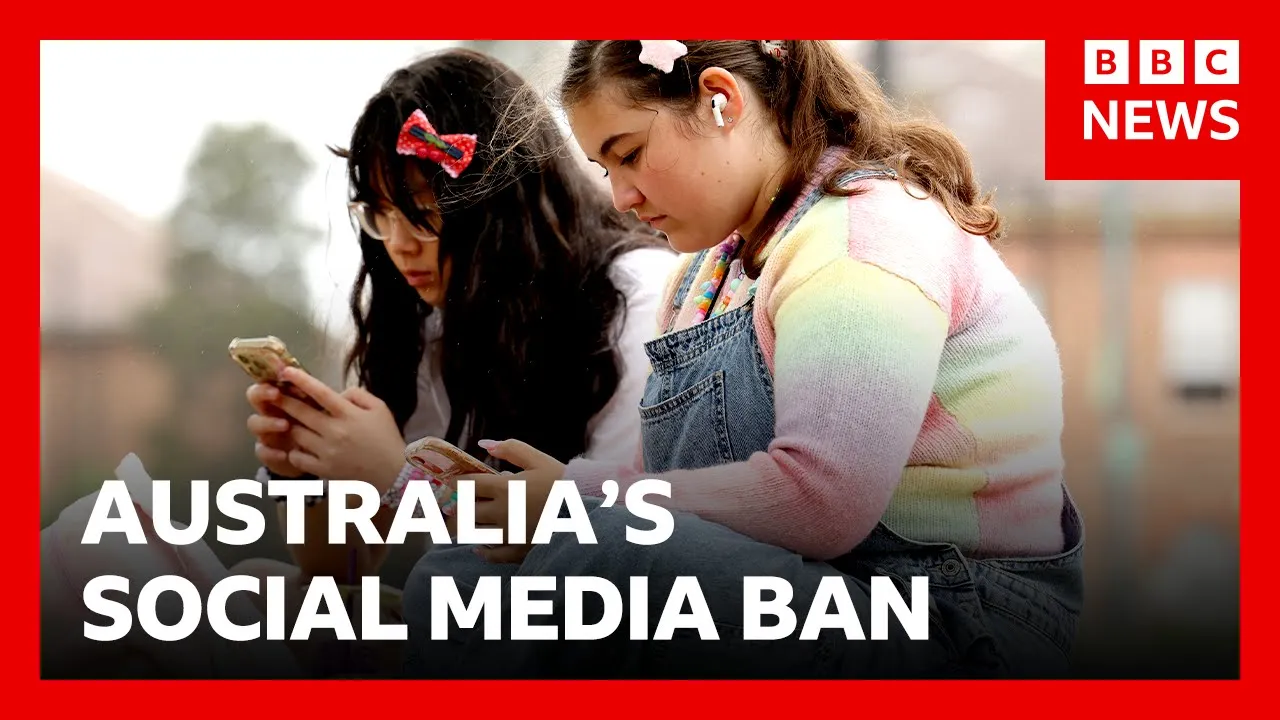
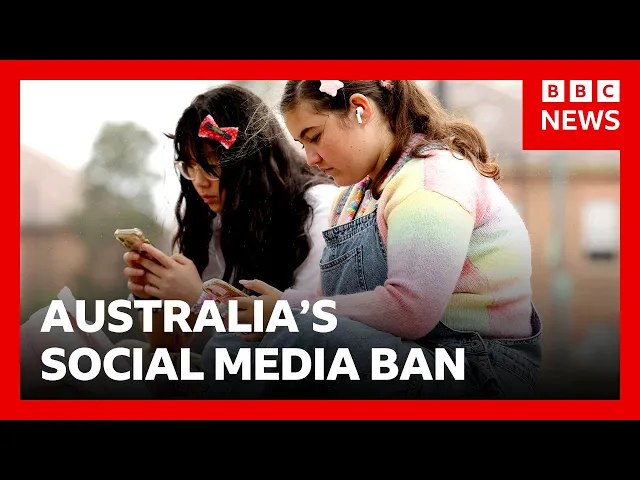
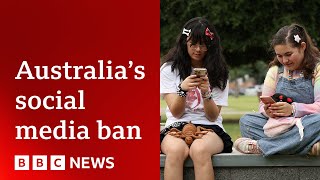
Hello. We start in Australia because in a few hours time, the social media ban for children under the age of 16 will come into effect. The legislation's aimed at protecting children from cyber bullying, online predators, and harmful content.
It's been a heated debate worldwide. The tech giant Reddit is the latest to say it will comply with the new law, but has described it as arbitrary. Instagram and Facebook have already started shutting down accounts of people under 16.
Some popular apps and websites including WhatsApp are exempt. Our Australia correspondent Katie Watson reports. >> For the good of Kirsty, for the good of Lucy and Anna.
>> Australia is about to try an ambitious experiment to be the first country in the world to boot young teens off social media. The message from the government is clear. for the good of their well-being.
The law means a return to the good life and an end to the angst felt by parents watching their kids' lives online. With the ban coming in just as the summer holidays begin, kids here all have an opinion on what the government's doing. They see social media as a place kind of like a cesspool of the internet where all kinds of debauchery happens and just general nonsense influencing their children which is true but that could be bettered with like regulation over complete banning.
>> I feel like it would be good for people to know there's life outside of social media. Like everything on social media isn't real. Kids are going to find a way to get around it and are going to still access social media even with a ban in place.
>> I just want to say it and I'm going to delete it. >> Tilly Roseworn was a keen dancer and loved her social media. But cyber bullying pulled her life apart.
Nearly four years ago, Tilly killed herself. She was just 15. And it began as things like messaging, text messages, but then moved on to things like Tik Tok and um Snapchat and Instagram.
You've been campaigning, you've been alongside the prime minister speaking at, you know, in New York >> about the importance. Why do you think this ban is so important? >> Because children across our world are enduring this because these are methods of harm.
These are agents of harm that are unregulated. And I think our children have been the social experiment. We have just said, "Here's a phone as I did when Tilly was 12.
" And not knowing that that would be part of her demise. That really um her connection to an unfettered, unregulated world would mean that she was exposed to all sorts of harm. That as a parent, if it was in front of you, you wouldn't allow it.
And that it's not that her life mattered, but that her pain mattered. that no one should have to go through what Tilly did. >> For many experts though, this law isn't the answer.
>> The ban does not address the the qualitative problems that young people experience online. What it does is put a giant gate in front of those problems and says you can't open it for an extra 3 years. The world's watching Australia closely right now, but for every fan of the law and for all of its critics, it's the lives of Australia's teenagers that matter the most.
Katie Watson, BBC News in Sydney. >> Dr Katherine Archer is communication researcher and senior lecturer at Edith Cowan University in Perth and gave us her analysis of the upcoming ban. >> Kids, you know, the older teens who've got social media accounts are downloading their data.
That's been sort of suggested that they do that. But I do know anecdotally that um also they are migrating to other platforms that are aren't as yet covered under the band. I've heard uh of the new of the platform Yope, which is sort of got similar facilities to Snapchat and also that potentially some of the age verification software may not be working because 14 and 15 year olds are still able to to use their photo and it seems to be be working for them to to bypass around the laws with parental permission of course because some parents are saying look my my son or daughter is 14 or 15.
That's their connection. That's that's the way they communicate with their friends. It's like, you know, 40 years ago, if our parents said to us, you're not allowed on the on to use the phone anymore, it would have been um it would have been quite a shock for for teens at that stage.
So, it is the way kids communicate. So, it is going to be quite a a difficult transition, I would suggest.











![9 Science-based Life Hacks to Improve your English Learning Potential PART 1 🧠 [970]](https://img.youtube.com/vi/tOqHQCp8puc/mqdefault.jpg)