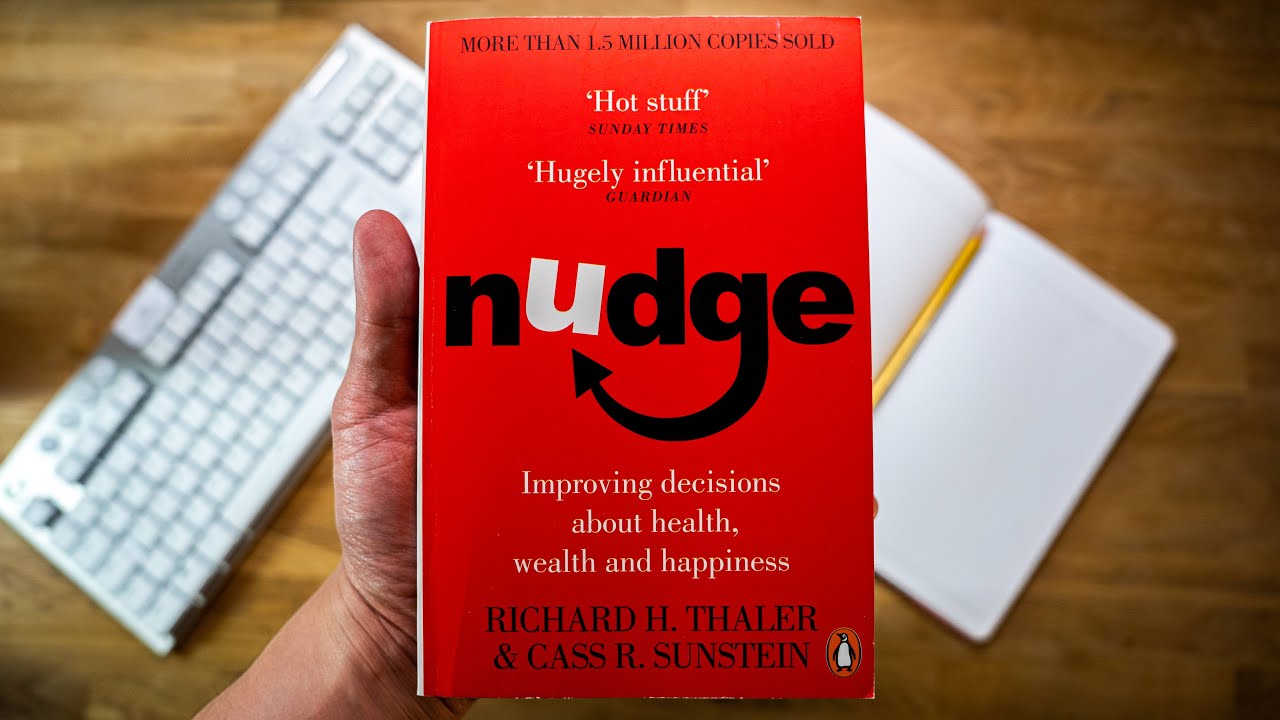
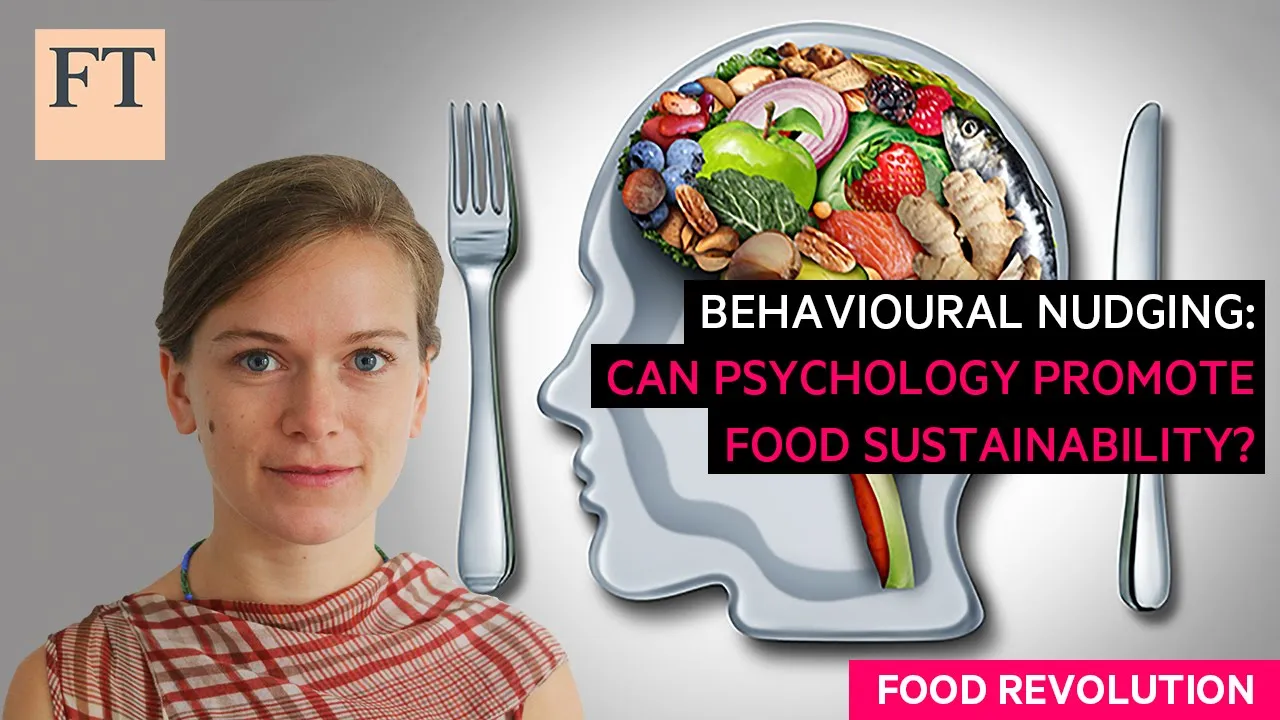
[Music] 226 that's the number of decisions we make about food every day according to a 2007 cornell university study the physical and symbolic environment in which we make these decisions is called choice architecture a phrase coined in 2008 by behavioural economists richard thaler and cass sunstein adjustments to choice architecture encourage people towards certain behaviors that's nudge theory the smell of baking in a supermarket and sweets by the checkout these are nudges but can nudging be harnessed to promote food sustainability in 2012 a study at indiana university showed that by removing trays from a student canteen
and reducing the surface area for diners to fill 18 less food was wasted language can have an impact for plant-based meals the words meat-free and vegan may signal a social identity that many don't aspire to recent trials conducted by the world resources institute found that when sainsbury's meat-free sausage and mash was renamed cumberland spiced veggie sausages and mash sales increased by 76 but critics of consumer nudging say it avoids tackling the whole food chain the uk's behavioural insights team a government-backed company that uses psychology to try to change public behavior is looking at double nudges
to be introduced through policy these would be aimed at consumers yet also encourage businesses to change an example of this is the uk's 2018 sugar tax on soft drinks customers had to pay the tax but as a result companies dropped the sugar content of their drinks by almost 30 per 100 ml to keep prices down a supermarket sustainability rating system could function in a similar way and is being considered by behavioral insights it would give food retailers a clear overall sustainability score so consumers would only need to make one sustainability decision over where to shop
instead of considering each individual product subconsciously people are more receptive to habit alterations in times of upheaval as the world is experiencing right now due to the coronavirus for that reason behavioral scientists see this moment as a potentially exciting window for change