As the weapons of war become more advanced, so does their capacity for destruction – not just of military targets, but also of non-military infrastructure and the civilians that get caught in the middle of the warzone. This is where actions cross the line into war crimes. The concept of war crimes has been around for over 100 years, and early definitions come from treaties like the Hague Conventions of 1899 and 1907 and the Geneva Conventions of 1949.
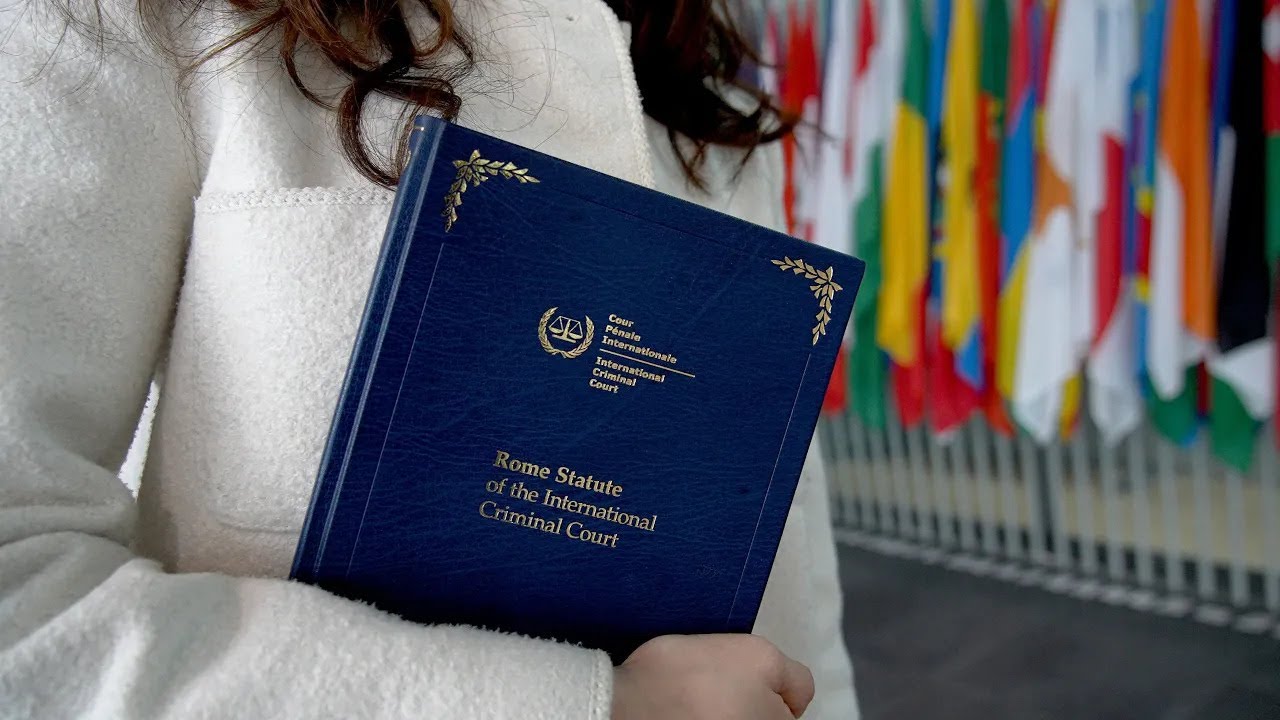
Our current definition of war crimes comes from the 1998 Rome Statute of the International Criminal Court. The ICC prosecutes people accused of not just war crimes, but also other international crimes like Aggression, Crimes Against Humanity, and Genocide. War crimes are explained in article 8 of the Rome Statute.
I’ll go over a few key aspects of war crimes, but I’ve also linked the document in the video description below, and I encourage you to have a closer look there at all of the different categories of war crimes. One of the key war crimes is the purposeful targeting of civilians, as seen in article 8(b)(i). Now the key here is the intent to kill civilians – and those not directly taking part in hostilities.
As you can imagine, that intent can be difficult to prove, as the perpetrating military forces will find excuses about who might have been occupying buildings that were targeted for destruction. Another, related type of war crime, is the targeting of hospitals and buildings that hold cultural or religious significance that are not of military importance. Too often in war, historically significant structures are destroyed and lost to us forever, and in part, that’s a reasoning for their destruction as a war crime.
Also on the list of war crimes is using weaponry that would create large-scale collateral damage disproportional to any targeted military objective. This article explains that damage on this scale is not only related to loss of life, but also long-term harm to the environment. I can certainly think of a kind of weapon that this article was designed to address.
The next war crime worth mentioning is the use of chemical and biological weapons. Perhaps the most well known use of poison gas was during the first world war in trench warfare, and again, as technology related to these weapons grows, so does the destructive nature of chemical weapons. Finally, also considered a war crime is the use of child soldiers, with the Rome Statute preventing children under the age of 15 to be allowed to enlist in the armed forces of their country.
Right, and the list goes on. In total, there are 36 different actions that the Rome Statue outlines as war crimes under international law… and you might be thinking to yourself. Don’t these happen all the time?
Unfortunately, yes, they do, as increasingly belligerents in war use any means necessary to try and secure victory – even if those actions are war crimes. Of course – there are also challenges here in proving war crimes happened. Often, the perpetrators will excuse their actions by claiming that they’re not targeting civilians, but that the targeted military is hiding their soldiers or munitions in civilian areas which means that there is a military necessity to their destruction – in effect the perpetrators of these war crimes will claim things like the opposing military is using civilians as human shields.
That said, even if soldiers are using buildings in residential areas – does that justify levelling a whole city block, killing many civilians in the pursuit of potentially a few military targets? A challenge the International Criminal Court deals with is that its jurisdiction is limited to the countries that have ratified the Rome Statute…. So only actions taken on the territory of parties to the treaty can be tried… and if we take a look at the map, well, there’s definitely a few countries here that have done questionable things in war and are not parties to the treaty.
Another issue is that ICC cases are often carried out in the absence of the person accused of committing war crimes. The court often indicts perpetrators while they’re still free. One example, and one of the early convictions of the ICC, is Joseph Kony, the Leader of the Lord’s Resistance Army in Uganda and other bordering states.
You might remember him from the viral video from 2012. He was indicted by the court on 21 charges of war crimes and 12 charges of crimes against humanity… and is still a fugitive. To show just how hard it can be to bring these war criminals to justice – one plot to catch Kony.
. . and I kid you not with how surreal it is… it involved using actors Brad Pitt and Angelina Jolie as bait to draw him out to dinner with the power couple where he would be arrested.
They were pretty much ready to go, too. In an email to ICC Chief Prosecutor Luis Moreno Ocampo, Angelina Jolie wrote “"Brad is being supportive. Let's discuss logistics.
Much love Xxx,"I had to double check this story to make sure it wasn’t the plot of a movie, but it’s totally real. Crazy stuff. Of course, war crimes are serious, and innocent civilians that are caught in the wrong place at the wrong time should be protected and the perpetrators of their killing should be brought to justice.
The International Criminal Court does attempt to do this work, but needs cooperation of the states involved to fully be able to carry it out. If those accused are running the country in question, well, you can probably imagine how much they’re going to cooperate. What it does allow, however, is other forms of international action, for example, sanctions or increased justification of military aid to those defending themselves against an aggressor engaging in criminal military behaviour.
Another major question, especially in light of recent events in Ukraine, is how much responsibility should fall on international intervention to stop potential war crimes from happening, but in turn possibly escalating the crisis. It’s a fine line. One of the concepts that helps address this is the responsibility to protect.
You can check out my video on it here. If you learned something today, you can give this video a like. Subscribe so you don’t miss anything, and we’ll see you again next time.