over the last few years of teaching medicine i've always heard students complain that biochemistry is hard and it is because there's just too much things to know in a short amount of time and usually at the start things don't always make sense when the teacher explains them to you or when you read it from your textbook so in this episode of study club our ongoing series where we discuss the tips and tricks of how to study basic medical sciences subjects in medical school we're gonna go over my top three tips of how to study biochemistry
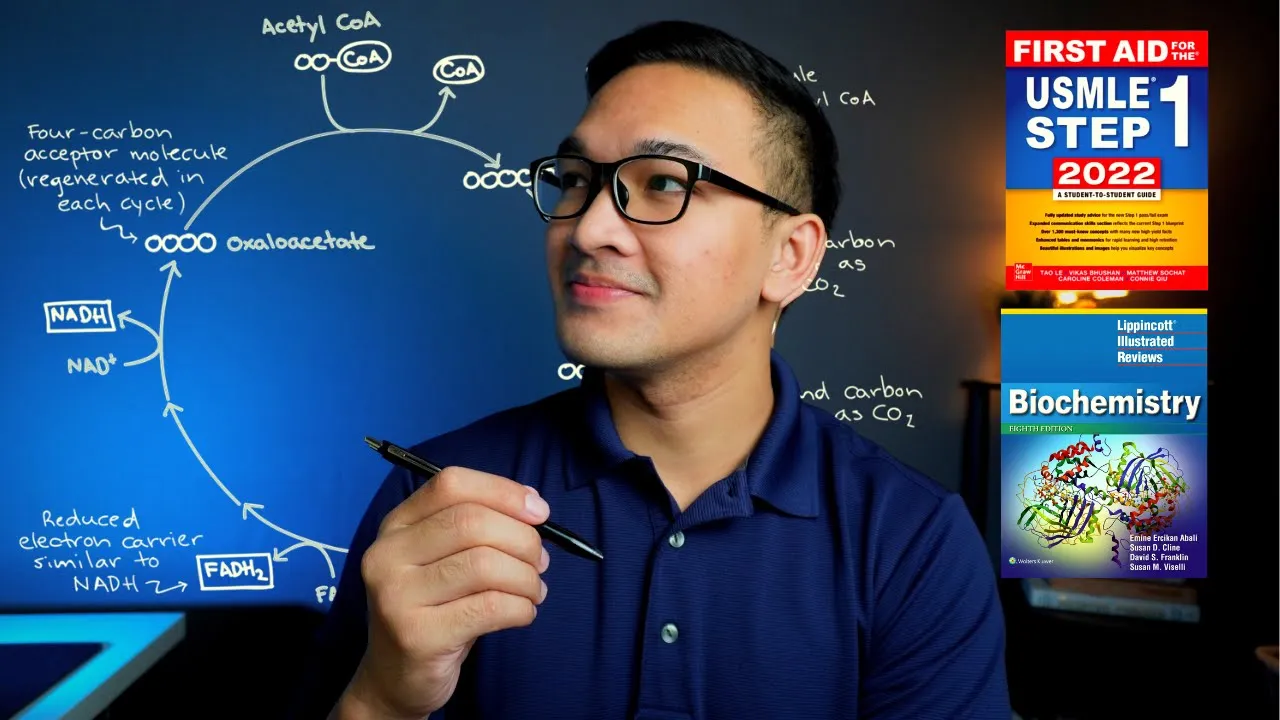
in medical school let's get into it now tip number one is to use first aid now first aid by far is one of the most valuable resource for you for biochemistry when i was in medical school for almost all the subjects i usually use first aid after i have read the textbook on a particular subject consolidate all the concepts i have just learned because i think the book first aid would sort of tell you how all the things would tie up together into one cohesive general idea but for biochemistry what i did was the other
way around which is i would first read on the biochemistry part of first aid before i even go to the main textbooks because when you read the textbooks like for example harper's biochemistry you might get lost and may tend to obsess over the details that you most likely will not get tested on but when you study first aid beforehand you will then get a sense of which pathways or enzymes are important and how they relate to each other because first it has some of the best illustrations or diagrams like this one which shows the summary
of the most important pathways like for example how glycolysis is related to the krebs cycle to lipid metabolism or the urea cycle and it somehow makes it a little easier to then go through the thick pages of your textbook now another bonus is that first aid provides you with pre-made mnemonics so that you would not have to spend time doing it on your own so use first aid as a guideline for what you need to know and remember when studying tip number two is to search for it on youtube now don't get me wrong it's
not to say that you should abandon reading your textbooks such as harpers and lippincotts or even your lecture notes and transcripts but when you're studying and you somehow got stuck understanding a particular topic now instead of forcing yourself to read the page multiple times you can search for it on youtube there's a bunch of very good youtube channels that explain complex biochemistry topics like ninja nerd and ak lectures and i gotta be honest i wish i had discovered it when i was in medical school because these resources will really help you understand biochemistry a bit
better without all the costs associated with the other paid review or tutorial programs now tip number three is to use active recall once you get a grasp of the material the next step is to commit them to memory and you gotta master or at least have a working knowledge of biochemistry early because it will allow you to focus more on the systems chapters later on and one way to do active recall is to answer a lot of review questions or your past exams or sample exams you can find end of chapter questions in lipid cod
biochemistry so you can find out whether you really understood what you just read and also those questions are structured to include a clinical context of a topic now for some students it might be a little bit overwhelming to have to know early on the clinical implications of biochemistry so they just tend to study the basics of biochemistry first and do away with learning the clinical stuff and its applications but personally i found it more interesting and easier to grasp the information when the book tells me how or why some seemingly random information will be useful
for me to know so that i can better understand disease processes and the drug mechanisms used to treat them don't be afraid with biochemistry because you can totally get good at it even without a background in biochemistry or even without a knowledge of biochemistry for that matter because actually the stuff that's covered in at least the level of a medical student is not that deep compared to that of a molecular biologist for example now i can speak for myself on this matter because during my pre-med days in nursing school our lectures and discussions on biochemistry
were just at surface level so i really did not get any substantial knowledge from it that i can say helped me with biochemistry in medical school if you like this video and you want to know more tips about studying in medical school check out this one right here which is about how to study physiology in medical school thank you so much for watching and do hit the subscribe button if you haven't already and see you in the next video bye