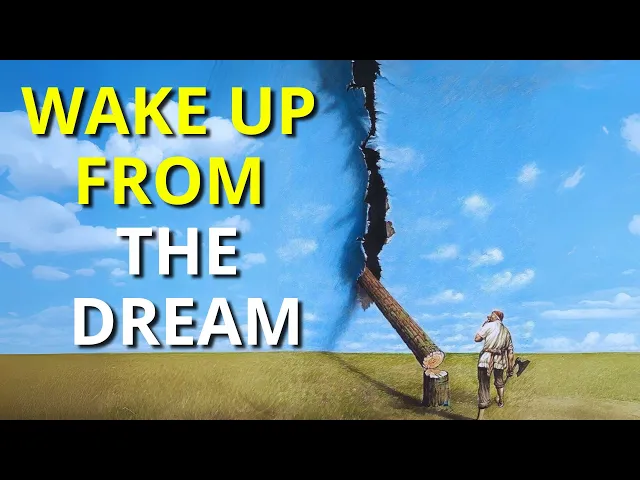
Something feels off, doesn't it? No matter what you do, you keep getting pulled back into the same patterns. That's not an accident; your mind is keeping you trapped, feeding you distractions, looping the same thoughts, convincing you this is just how life is.
But it's not, because the second you start questioning it, everything changes. And that's exactly why your mind fights so hard to keep you blind. But you're here now, so the real question is: will you finally break free?
Stay with me, because what you're about to hear will change the way you see your mind forever. One: The hidden barrier—why you can't see the truth. There's a reason life feels like a never-ending loop.
You wake up, do the same things, have the same thoughts, chase the same desires, and deal with the same struggles. But have you ever asked yourself why? Why does everything feel so predictable?
Why does it seem like you're living in a script you never wrote? Why does every attempt to change feel like a battle against an invisible force? That invisible force is your mind.
Your mind is the most powerful tool you have, but it's also your greatest limitation. It filters everything you experience and decides what is real and what is not. But here's the scary part: that filter wasn't created by you; it was built by everything you've been told, everything you've been through, and everything you've absorbed from the world around you.
And because of that, your perception of reality is not your own; it's a reflection of what you've been programmed to believe. Your mind isn't interested in the truth; it's interested in keeping you comfortable, keeping you safe, and most of all, keeping things the way they've always been. It doesn't want you to question deeply; it doesn't want you to wake up, because if you did, everything would change.
Two: The invisible program—how your mind keeps you trapped. Imagine waking up in a massive, endless maze. You don't know how you got there; you don't remember choosing to be there.
You just know that you've been inside it for as long as you can remember. Now here's the catch: every time you get close to an exit, something distracts you—a flashing light, a loud noise, a sudden thought about what you should be doing instead. You turn away for just a second, and suddenly you forget where you were going.
That's what your mind does every single day. It doesn't want you to find the exit. It fills your head with noise, distractions, fears, and desires, keeping you busy so that you never have time to ask, "Wait, is this all there is?
" You are trapped in mental patterns that repeat over and over like an algorithm running in the background of your brain—your fears, conditioned responses, your desires programmed into you, your reaction predetermined by experiences you don't even remember. The real you is buried beneath all of it. Until you start questioning the maze, you will never leave it.
Three: The illusion of free will. Do you really control your mind? You probably believe that you're in full control of your decisions.
You choose what to do, what to think, how to feel, right? But take a second to really analyze this. Have you ever tried to stop thinking?
Have you ever attempted to silence your mind, only to realize that thoughts keep coming on their own? That's because your mind is not under your control. Thoughts appear out of nowhere; they come in patterns shaped by your past, your experiences, your subconscious fears, and without realizing it, you spend most of your life simply reacting to whatever thought your mind throws at you.
You don't choose your emotions; you don't choose your reactions—they just happen. And you assume that because they're happening in your head, they must be you. But here's the truth: the real you is not the one thinking; the real you is the one watching those thoughts.
And the moment you see that clearly, the illusion of control shatters. Four: Why the truth is hidden in plain sight. If the truth is so powerful, why don't more people see it?
Why don't more people wake up? Because the mind is a master of distraction. It keeps you focused on the past—things you regret or wish you could change; the future—things you fear or hope for; other people—comparing, judging, worrying; endless distractions—social media, entertainment, meaningless goals.
It does this because it knows one thing: the truth can only be found in the present moment, and as long as it keeps you focused everywhere else, you'll never stop long enough to see what's right in front of you. It's like sitting in a dark room searching for the light switch, but instead of looking at the walls, your mind keeps telling you to stare at the floor. The truth is simple; your mind makes it complicated.
But what happens when you finally stop listening? What happens when you just exist without reacting, without chasing, without resisting? You begin to see, and the illusion starts to break.
Five: The first step to seeing through the illusion. So, how do you break free? It's not about fighting thoughts; it's not about resisting emotions; it's not even about changing anything.
It's about stepping back. Right now, your mind wants to control the narrative. It wants to distract you, engage you, pull you into another thought loop.
But instead of following the script, try something different: stop, observe, notice, realize that every thought, every emotion, every impulse is just another trick. They are not you. The moment you truly realize this, something shifts.
You stop feeling trapped inside your mind; you stop reacting automatically; you stop being controlled by invisible forces. And for the first time, you wake up. Six: The thought loop—how your mind keeps you stuck.
Have you. . .
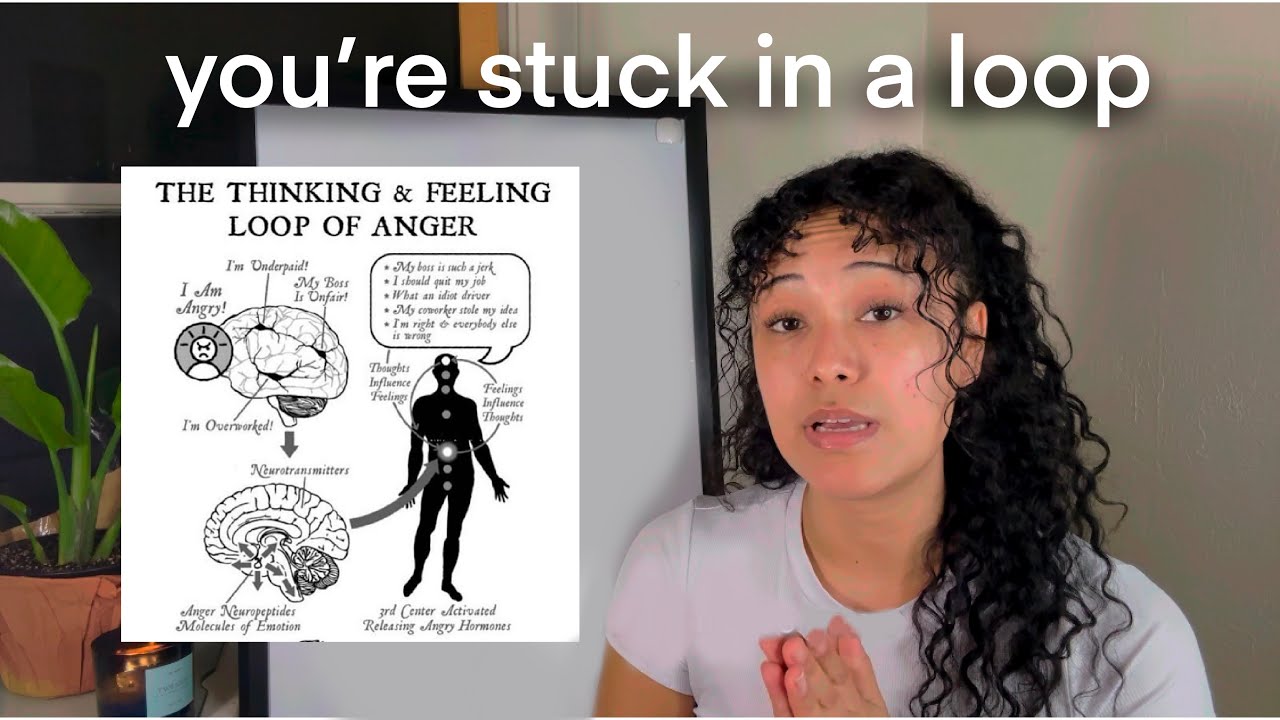
Ever noticed how certain thoughts keep coming back no matter what you do? The same worries, the same doubts, the same internal conflicts. It's like a record playing on repeat.
Even when you try to move on, your mind drags you back in. But why? Because your brain is wired to keep you inside familiar patterns.
It doesn't care about truth, and it doesn't care about growth; it only cares about one thing: predictability. And predictability means survival to your mind. Stepping outside of these thought loops feels dangerous, so instead of allowing you to break free, it feeds you the same thoughts over and over.
It's not that you want to keep thinking about your past mistakes; it's not that you want to overanalyze every decision. It's that your mind has trained itself to keep playing those thoughts because they feel safe, even if they're painful, even if they hold you back. So what's the way out?
You have to interrupt the loop, and the best way to do that is to become aware of it. The next time a familiar thought pattern arises, don't follow it. Just watch it; see it for what it is: a loop your mind is running, not because it's true, but because it's familiar.
And when you stop engaging with it, something unexpected happens: the loop begins to lose its power. The ego's defense mechanism: why your mind resists change. The moment you start waking up, something strange happens: your mind starts fighting back.
Suddenly, doubts creep in. "This is nonsense. This isn't real.
I already know this. I don't need to change. " This is not a coincidence.
Your mind has a built-in defense system designed to protect its control over you. And when you start questioning the illusion, that system goes into full alert mode. It will try to distract you, it will make you overthink everything, it will create excuses to pull you back into your old patterns.
Why? Because the ego—the mental construct of who you think you are—depends on your belief in the illusion. The moment you step outside of it, it starts to lose power.
This is why waking up isn't comfortable; it's unsettling, it's disorienting, because for the first time, you're stepping outside of the reality your mind has spent years constructing. And when you do that, everything you once believed starts to feel fragile. That's when you know you're getting close to the truth, because the truth is never complicated.
It's the mind that makes everything complex. The fear of letting go: why you cling to the illusion. Here's something most people don't realize: even when they see the illusion, they're afraid to let go of it.
Why? Because letting go means stepping into the unknown, and the unknown is terrifying. Your mind would rather keep you trapped in a familiar lie than allow you to explore an unfamiliar truth.
This is why so many people get stuck at this stage. They start to see through the illusion; they realize their thoughts aren't real, they understand that their emotions are just passing waves. But they hesitate.
They start thinking, "What happens if I stop believing in my thoughts? Who am I without my opinions, my beliefs, my identity? What if there's nothing on the other side?
" This fear keeps people asleep because the mind convinces them that stepping into the unknown is dangerous. But here's the truth: the unknown is the only place where real freedom exists. Everything you think you are—the ideas, the emotions, the beliefs—are just layers, and beneath all of it is the real you.
But you'll never find it unless you're willing to let go. The awakening: what happens when you finally see the truth. So what happens when you truly wake up?
At first, it feels like everything is falling apart—the way you saw the world, the way you saw yourself, the things you thought were important—they all start to crumble, and that can feel terrifying. But if you stay with it, if you don't run back to the comfort of the illusion, you start to notice something—something deeply freeing. You realize that you were never your thoughts, you were never your emotions, you were never even your personality.
Those were just temporary experiences passing through awareness. The real you—the real you—is not bound by any of it. The real you is simply awareness itself, and when you realize that, the illusion loses its power.
The chains of thought, emotion, and identity fall away, and for the first time, you see life exactly as it is—not through a filter, not through conditioning, not through the lens of the mind, but purely, directly, and without distortion. That's when you know you've woken up. Living beyond the illusion: what comes next.
Now comes the real question: once you wake up, then what? Most people assume enlightenment means you become some emotionless monk sitting in a cave. That's just another illusion.
The real goal is not to escape life; it's to finally live it fully—without fear, without illusion, without being controlled by an endless cycle of thoughts. You still experience life, but you experience it without attachment. Pain comes and goes, but it doesn't define you.
Thoughts appear and disappear, but you don't chase them. Emotions rise and fall, but they don't control you. You don't lose your identity; you don't stop existing; you don't become some blank, emotionless being.
You simply become free—free from mental prisons, free from false narratives, free from the chains of unconscious thought. And that is true liberation. The world doesn't change; you do.
And once that happens, you can never go back, because the moment you take control of what your brain focuses on, you take control of your reality. And when that happens, the illusion breaks. The silent observer—the part of you that never changes.
There's. . .
Something about you that has never changed—not since you were a child, not since yesterday, not since a few moments ago. Think about it: when you were 5 years old, you had thoughts; when you were 15, you had different thoughts. Today, you have even more thoughts, but the awareness behind them—the part of you that sees, hears, and experiences—has always been the same.
That's the real you. It's not your personality, and it's not your opinions; it's not even your memories, because all of those things change over time. But the silent observer within you, the awareness that notices everything, remains unchanged.
And the moment you recognize this, something incredible happens: you stop identifying with your thoughts. You start seeing them as passing clouds instead of absolute truths, and that realization alone is the beginning of true freedom. 12.
The Distraction Trap: How Your Mind Keeps You from Seeing This If the truth is so simple, then why don't more people wake up? The answer is distraction. Your mind is constantly feeding you things to focus on so that you never stop and question the illusion.
It does this by keeping you busy with unimportant tasks, flooding your mind with constant worries, and giving you a never-ending stream of new desires. Think about it: how many times have you told yourself, “I'll focus on my inner self later, but right now I just need to fix this one problem? ” And then, when that problem is solved, a new problem appears.
It's like a magician using sleight of hand; every time you get close to the truth, your mind distracts you with something new. It's not an accident. The mind's survival depends on keeping you asleep, and the only way to break free is to see the distraction for what it is, because the moment you do, it loses its grip on you.
13. The Illusion of Time: Why the Present Moment Is All That Exists Your mind has convinced you that life happens in the past and future, but have you ever actually experienced either? Think about it: you've never been in the past; you've never been in the future.
You have only ever been here, in this moment. Everything else is just a mental projection. But your mind keeps pulling you back into thoughts like, “I should have done this differently,” “What if things don't go the way I want?
” and “I need to plan every step ahead. ” So instead of living in reality, you live inside your thoughts about reality. But here's the key: the only thing that truly exists is now.
Right now, there is no past; right now, there is no future. Right now, there is only this moment. And when you fully realize this, the illusion shatters, 'cause you see that life is not something happening later—it's happening right now.
If this made you see things differently, there's something even deeper waiting for you. Click the video on your screen now before your mind convinces you to look away.