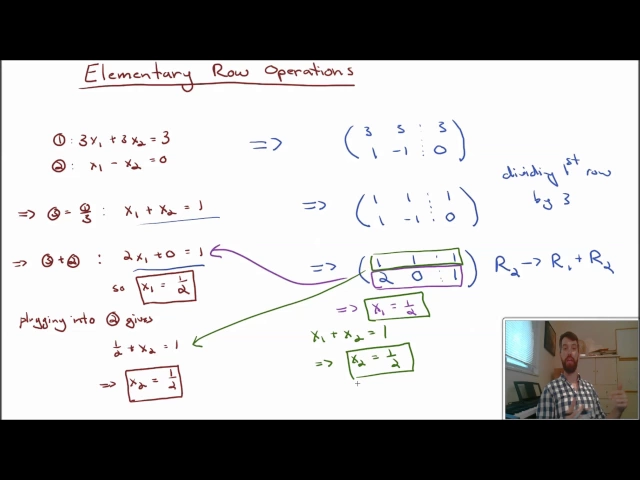
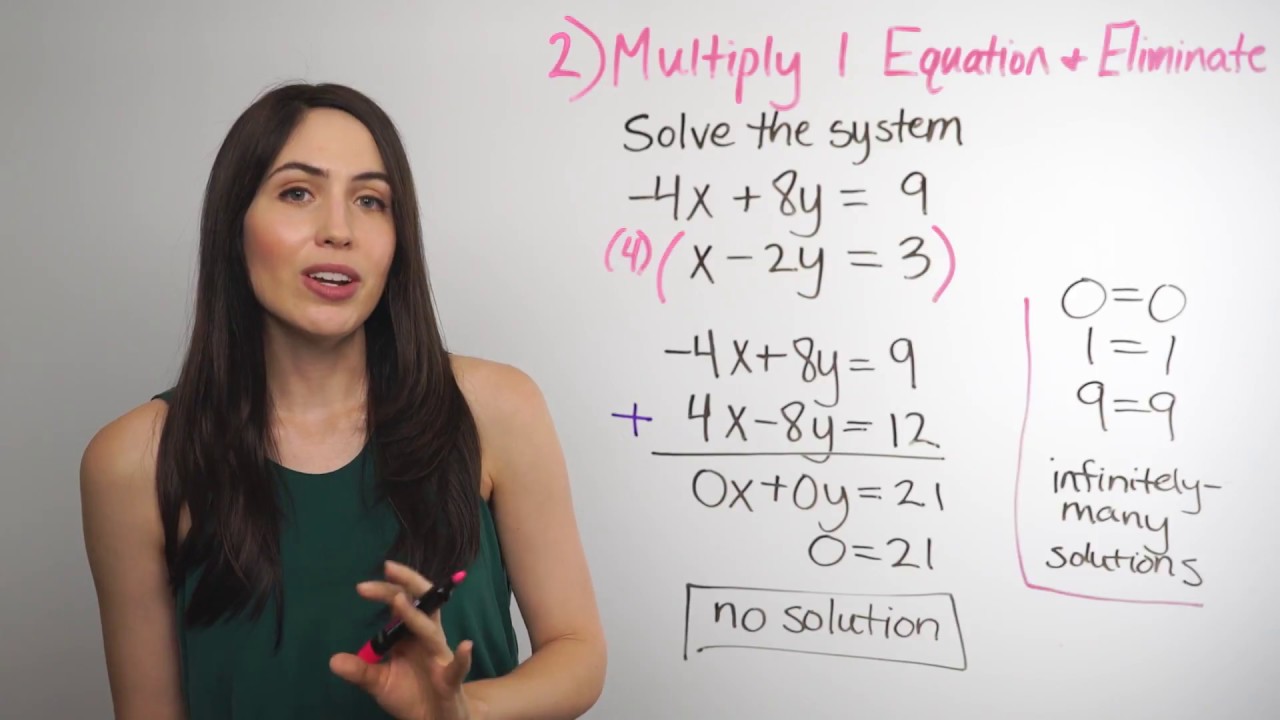
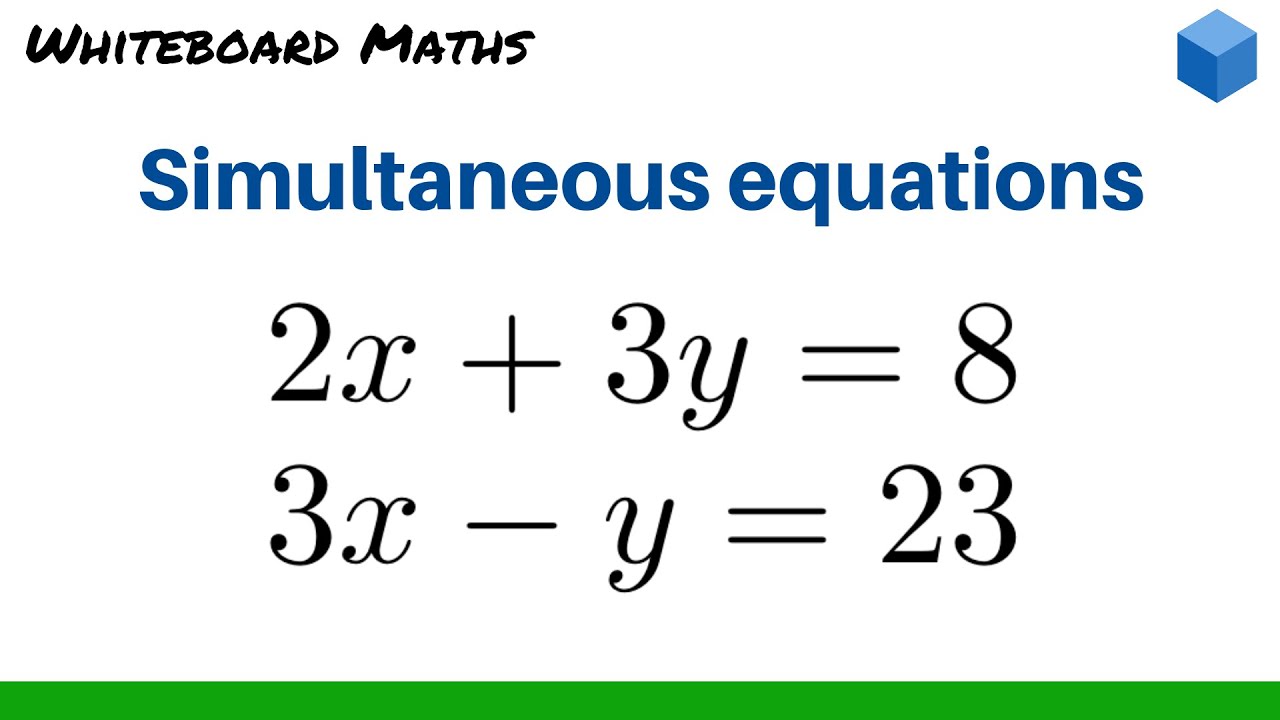
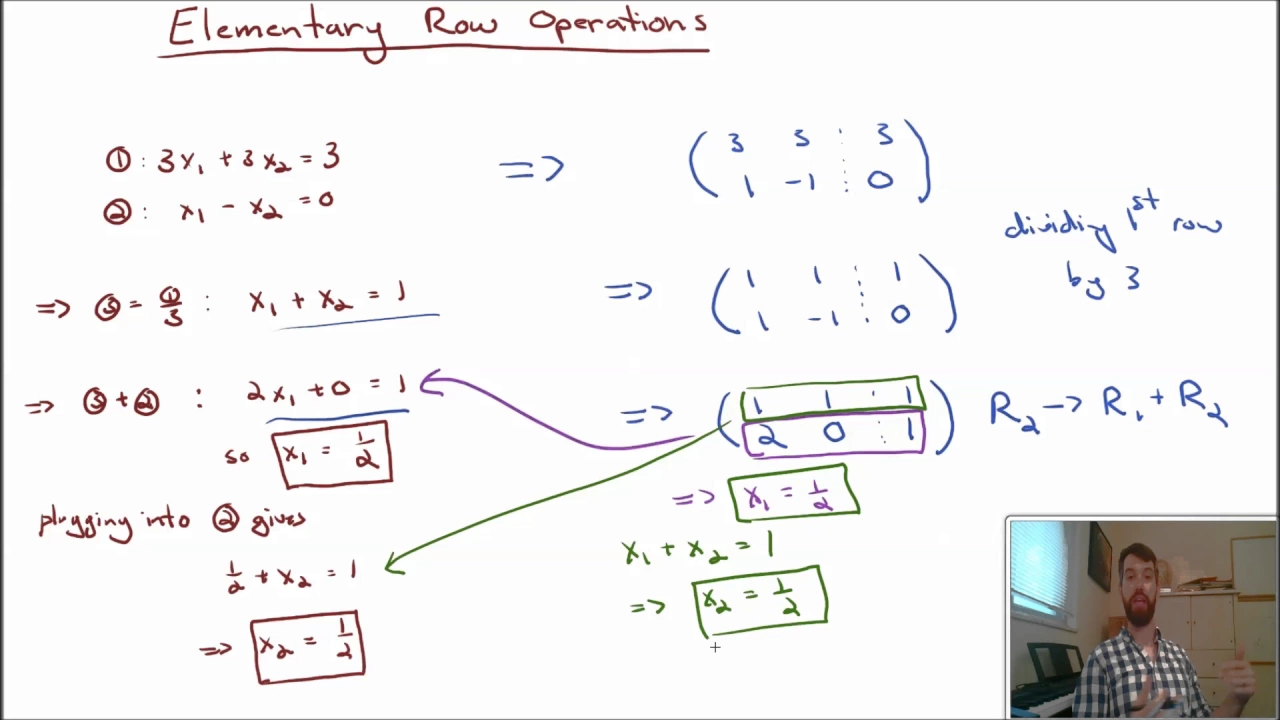
our big goal is to solve a linear system that is to to find values for the variables such that if you substitute those values in then every single one of the equations is going to be simultaneously true now if I have a relatively simple one like what I have here only two different equations and two different variables we've probably seen in the past an ad hoc way to solve that and I'm going to sort of quickly go through one of those now so what I did here was first to note that I had a bunch
of Threes in the first equation so I just divided them out and created this new equation here and then notice if I if I added that new equation to this equation two that the x2s were going to cancel out and I would get this equation here and then I can figure out the two values from that now this was fine in the 2x two case however what happens if it was three variables in three equations or 100 variables and 200 equations at some point this ad hoc method is going to be too combersome for us
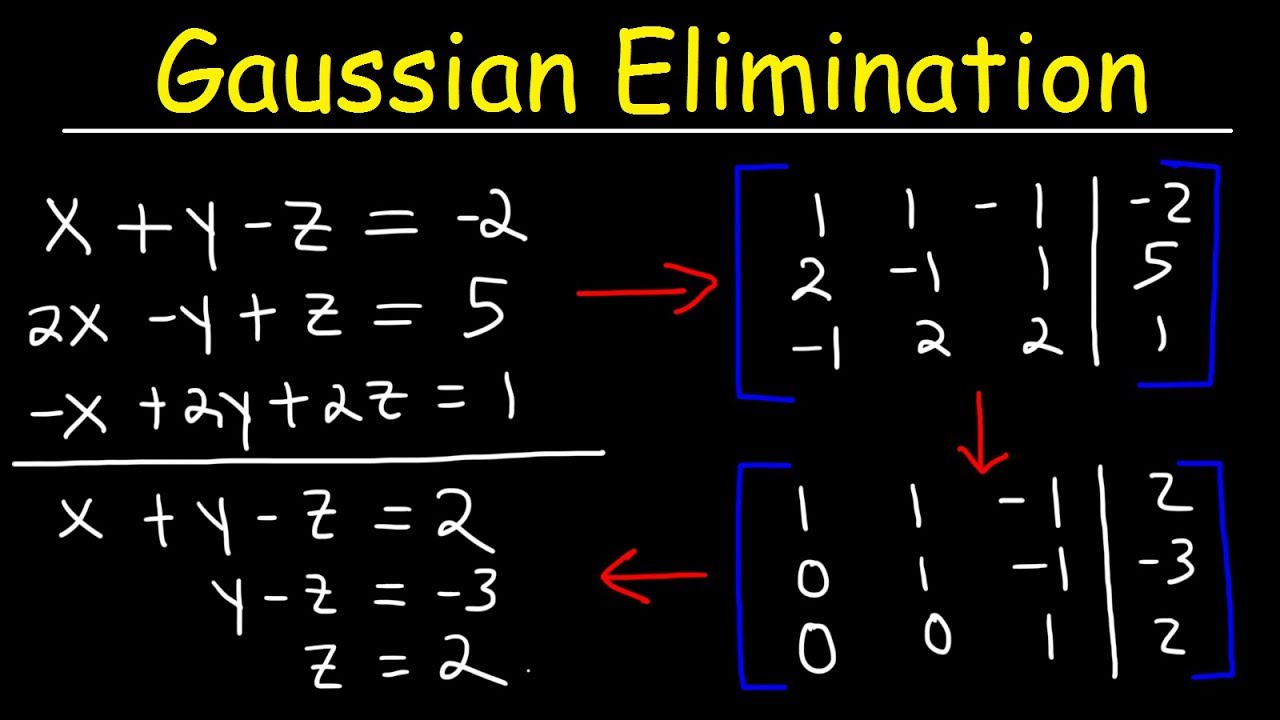
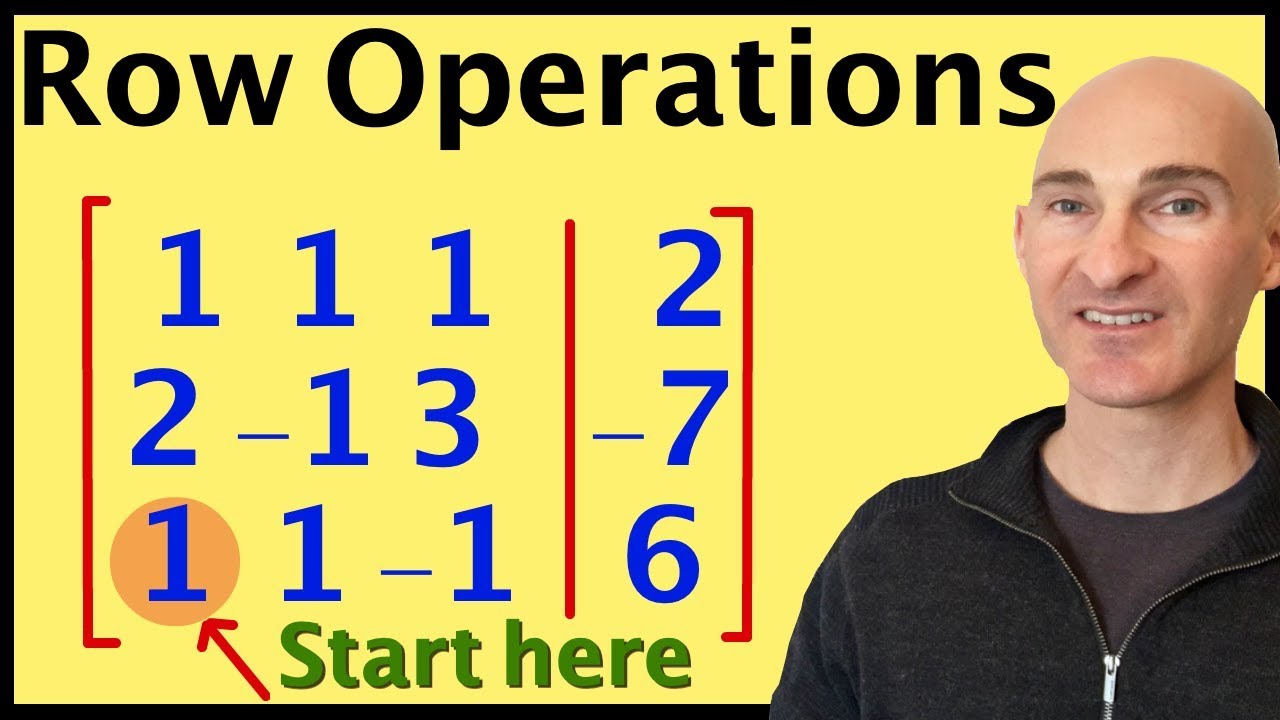
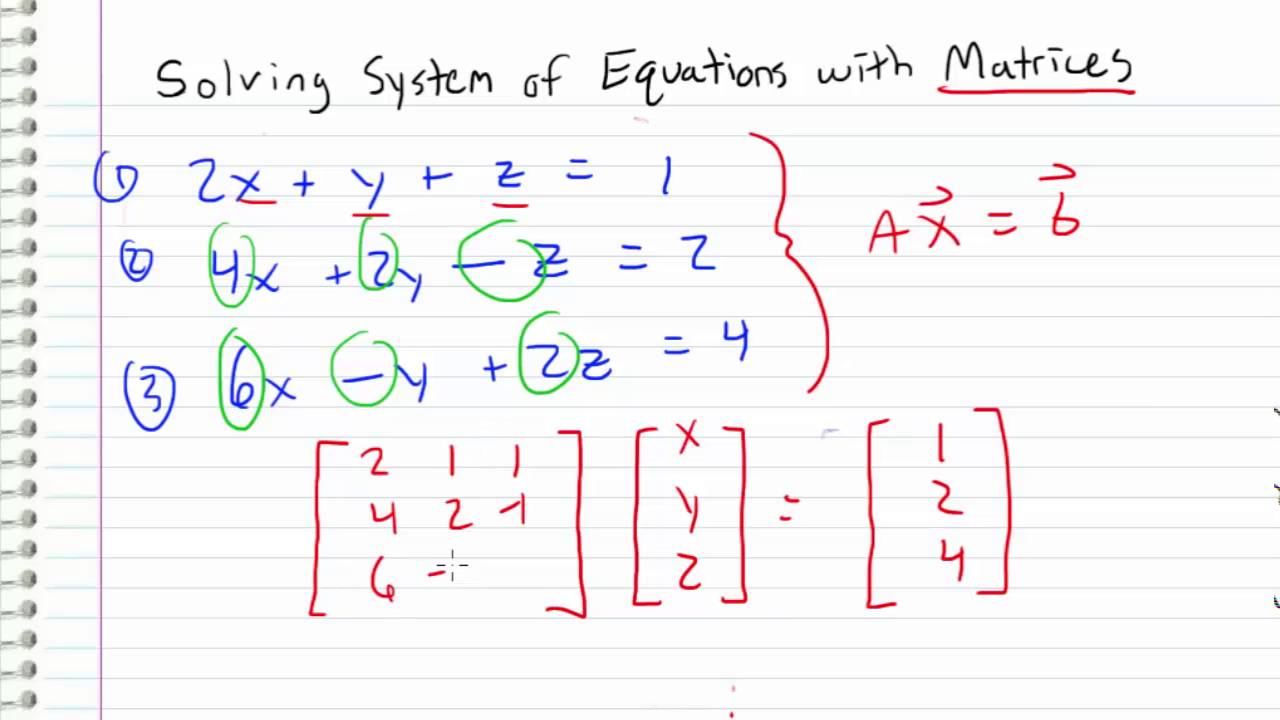
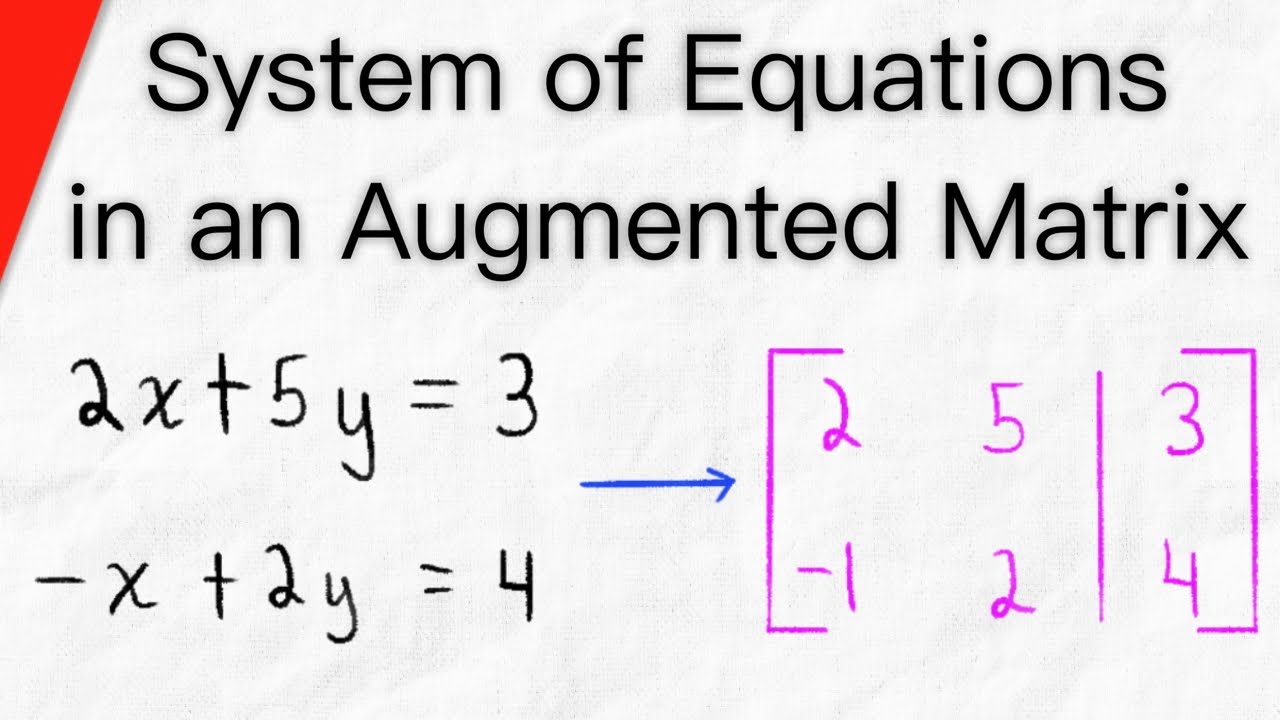
so our goal is to take what we just did translate it into a matrix form and then do things to The Matrix to get the same values so what we've seen previously is that I can translate this system into this augmented Matrix 3 3 3 1 - 1 0 and I'm going to put the dots to separate the coefficients on the left from from the constant on the right so now let me look at the step which was dividing the first row by three so if I'm going to divide the first row by three I
just well do that every time that there's a three it goes down to a one so 1 1 1 1 - 1 0er this step here is dividing my first row by three then in my ad hoc approach my my next one was to to add this new thing that I just created this this new first row and add that to the second row so in other words what I'm going to get is I don't change my first row at All That Remains 11 one one I'm not changing that what I'm doing is I'm adding
the first row to the second row so my second row is changing in other words 1 + 1 is 2 1 + - 1 is 0 and 1 + 0 is equal to 1 and I'm going to adopt a little bit of a shorthand for what happened here I'm gonna say that row number two that's the one that changed it went to whatever the value of Row one plus row two is so that's going to be sort of my short hand so I can keep track of what was going on here so then what I
did on the left was I used the second of these equation that's corresponding to our second row to evaluate that X1 had to be a half but if I look down here at this bottom row th this series of numbers 2011 is precisely ly corresponding to this equation this linear equation 2 * X1 + 0 is equal to 1 and so from this I can get the same value that X1 is equal to a half so that tells me the the first variable here and then if I want to figure out the second well I
can look at this top equation here and this is going to be doing sort of basically what I have down here this this top equation reads X1 + X2 is equal to 1 but if if I know that my X1 is equal to a half that's going to imply that my X2 must also be equal to the value of a half and and so I indeed get the same values that I had before now this might not actually seem like I'm doing much it it it it's really the exact same thing but just a notation
it's going to be the efficiency when these get really large and cumbersome that's going to give us the benefit and indeed we're going to come up with a systematic method of how we do these manipulations on the right hand side that's going to allow us to find these solutions to these systems if they exist now as I was doing this I did a bunch of different manipulations but I can't just do any manipulation I can't just sort of like say alternate the X1 or the X2 I can't just Square stuff I can't just do whatever
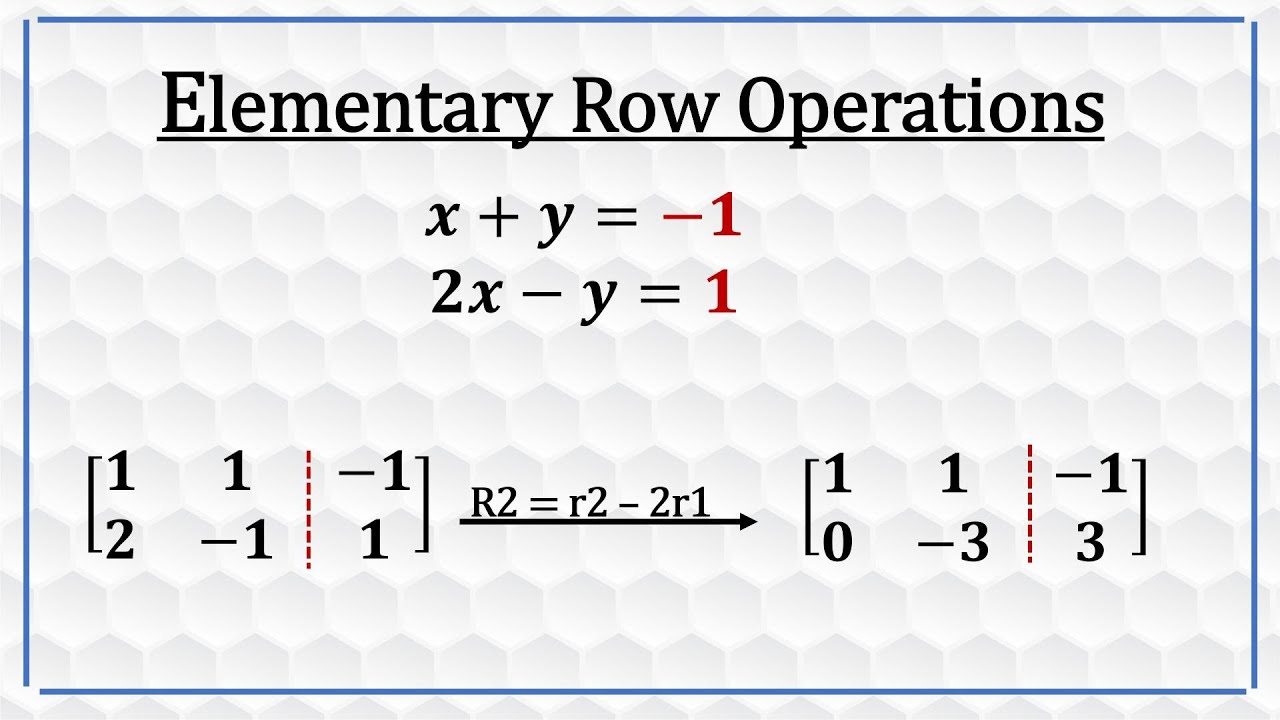
I feel like there's a couple different manipulations that I'm allowed to do that do not change the solutions so to figure out and I want to explicitly codify what am I allowed to do algebraically here what manipulations am I allowed to make to my matrices that do not change the solutions it's going to turn out that we have three of these so-called e o these three Elementary row operations and the first of them was the first step that we just saw namely I had my top row was an equation that had three different threes in
it and my first step was just to get rid of the threes to divide the entire top row by three so dividing is the same thing as multiplying by 1/3 I can say that I can multiply a row by any value of K but I have to be a little bit careful here any value of K that's not equal to zero if you think if I was allowed to just always multiply every row by zero it would just reduce every single system to the to the zero system but as long as I'm not doing that
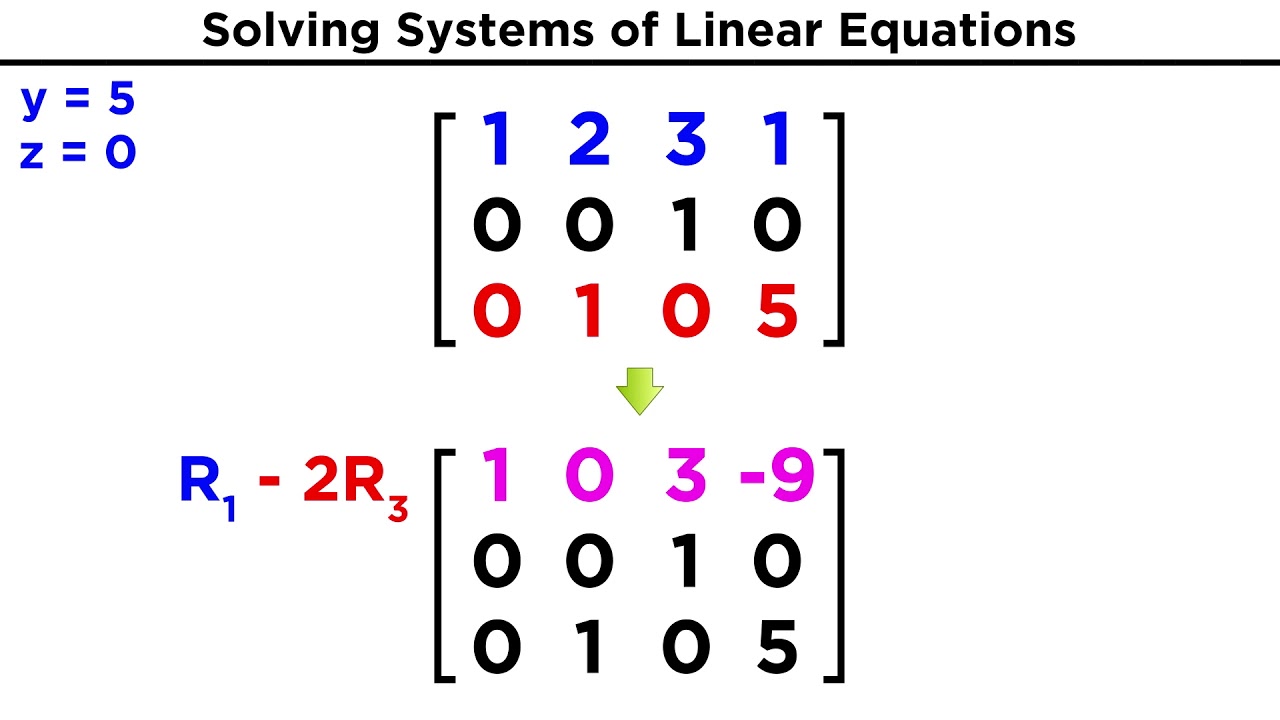
I'm still keeping the structure of this particular equation in place by multiplying by some scaler that's not zero then I do not change my Solutions so the next rule that we used is that in my bottom row I replace that bottom row with the sum of the first row and the second row I had divided over by my three and then I added two things together and wrote that in the place of my second row so that's what I'm allowed to do I can replace a row by the sum of it and another row so
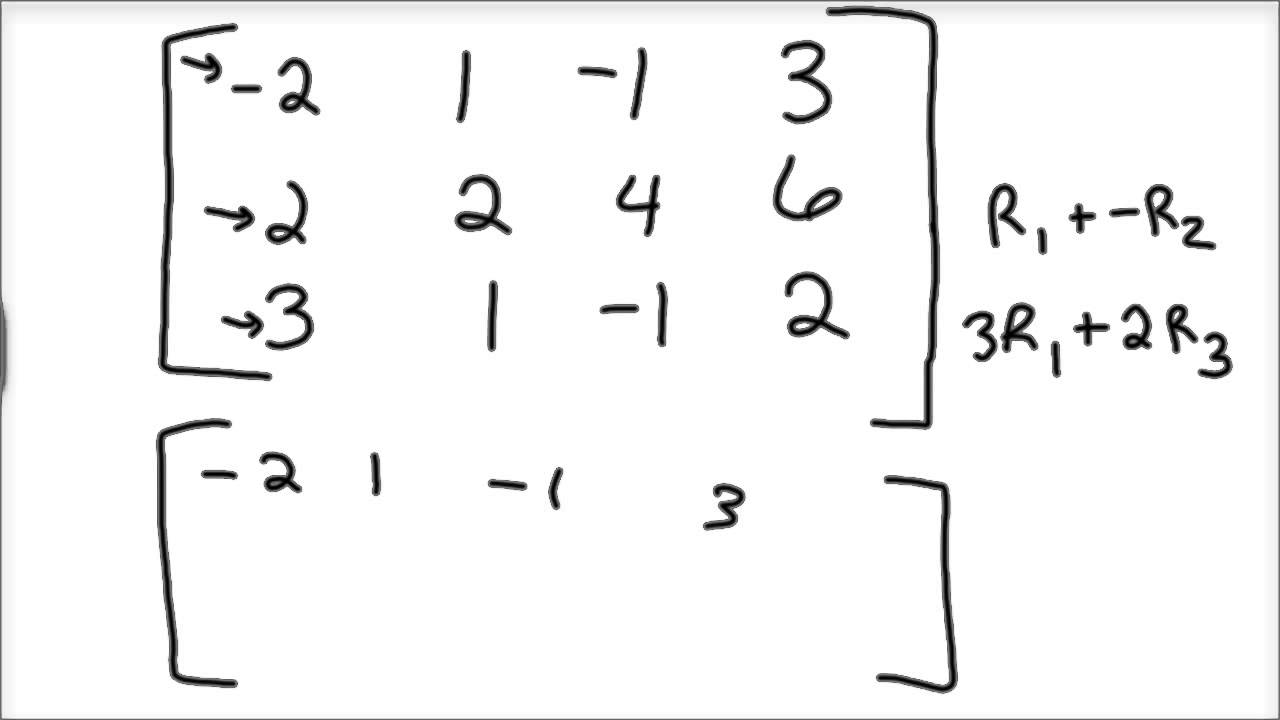
that is also something that does not change the solutions I can add my two different rows together and I can put that in place of one of them and that's going to be perfectly fine and it's if you combine one and two I could also replace a particular row with a multiple of one row added to a multiple of another row I've left them as two separate different things but I combine these it's not just simply adding them I could also add a multiple of them the third one we didn't use but it's perfectly fine
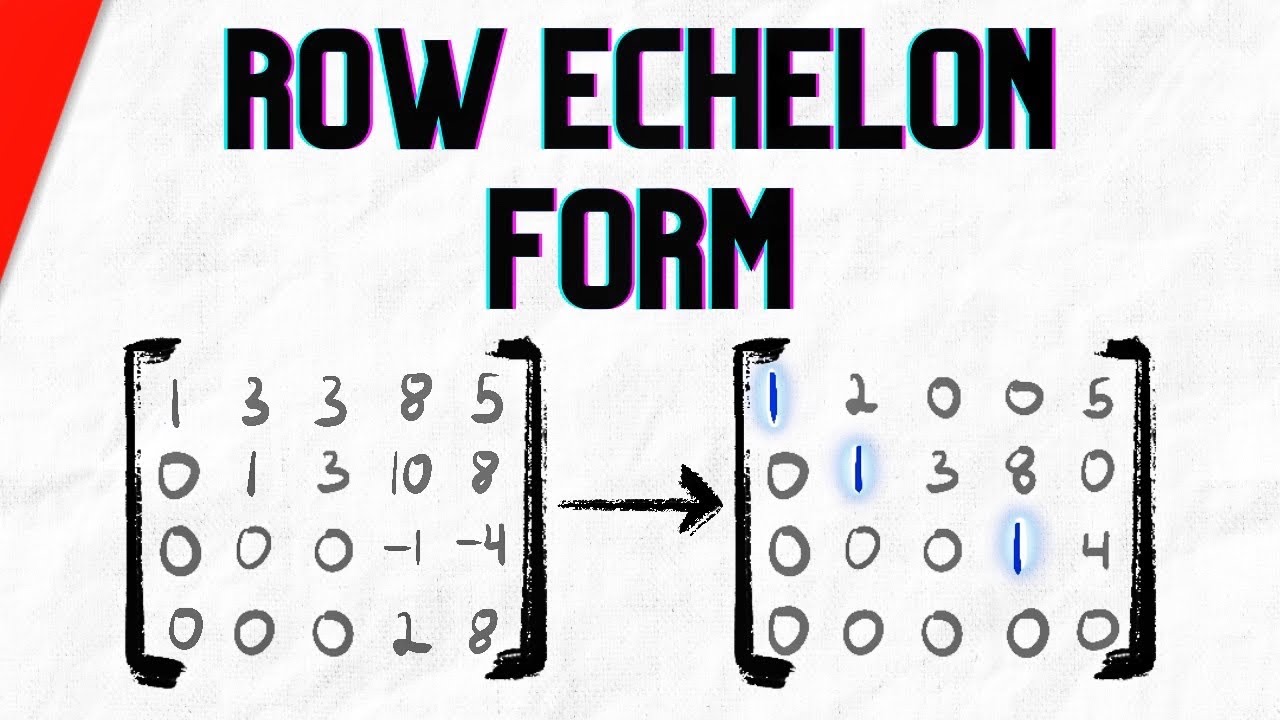
I could interchange two different rows it doesn't matter the order I put them in so I can interchange them interchange two different rows and this is going to be it these are the three different rules that do not change your solution sets anything that doesn't change your solution set can be some combination of these three different rules and things that aren't a combination of these three different rules are going to result in different types of solutions so these are your three things that you're allowed to do that are safe bets that you can manipulate a
system whether you write it in Matrix notation or not those are the same Three Steps either way and we're going to use those to try to find out the solutions to linear systems