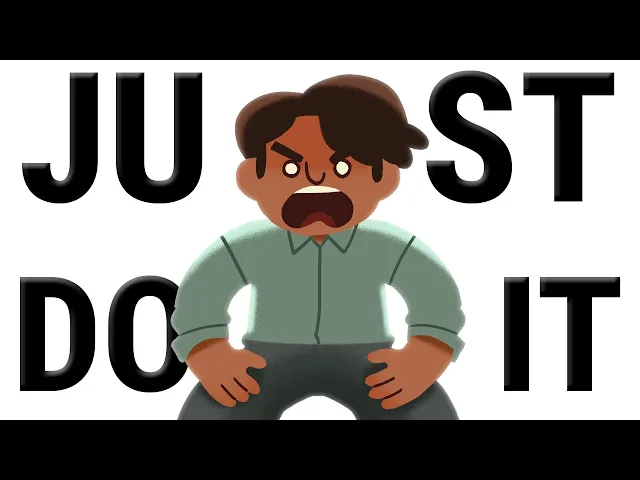
Oh yeah, the reason that I procrastinate is because I'm not good enough. I don't have enough willpower. I don't know if I have enough discipline.
The mind is going to be like, "Oh, bro, like you just need more discipline. Like, yeah, it's okay to like lose today. Like, we're going to level up your discipline.
We're going to level up your willpower. We're going to build good habits. We're going to do all these things tomorrow.
So, the mind works outside of you. It actually manipulates you constantly because here you are with all these hopes, all these dreams, all these aspirations, watching some guy instead of doing your actual work. " We're going to be talking about procrastination today.
And I got to be honest with y'all. I saw this and my first thought is I'm tired of talking about procrastination. I've been talking about procrastination on this channel for years.
And so today, what I'm going to do is I'm going to teach you all how to stop procrastinating cuz I'm I'm tired. I I never want to talk about procrastination again. This may sound kind of confusing because if I could teach you how to stop procrastinating, why haven't I done it already?
We have a great video on the channel about the three types of procrastination. There are lots of people who are neuroscientists and psychologists and people like myself who will make procrastination a complicated topic. And I didn't quite realize how bad this was until I started learning more about AI.
And I realized that what you know what AI basically does is the way it generates responses is based on what you find acceptable. That's why everyone thinks that AI is so great. It learns very much what you want to hear.
We did a a video recently about AI induced psychosis and how AI is very sickopantic. And I realized also in the self-help space of YouTube and podcasters and whatever, people like myself are very good at crafting answers that people want to hear. So when you have a problem like procrastination, we develop all of these complicated mechanisms which are true.
It's not like we're lying to you. So I had talked in the past about how procrastination has an emotional side, right? So we're the reason we procrastinate is because there's certain emotions we're trying to avoid.
Procrastination also has there's an operational type of procrastination. This is all evidence-based stuff, right? Lots of studies about how the reason we don't get started is because our mind cannot figure out what all the steps are.
And if someone breaks down the task for us, I recently went through this when I was helping my daughter pack and she doesn't know how to pack. So, I have to break it down for her and then she can do the individual things. And all of these are reasons that we get started.
But today, when I looked at this and I was like, "Okay, I'm going to just tell y'all how to resolve procrastination once and for all. " And the reason that we don't say this stuff is because it's hard, right? Not that it's complicated.
In fact, it's really simple, but it's hard. And the answer is not willpower. First thing to understand, if you want to never procrastinate again, I'm not really sure if that'll work.
Your mileage may vary, etc. various disclaimers but the first thing to understand is when people try to procrastinate or when people are struggling with procrastination it's I want to do this work but I also want to do this so there's some internal conflict so if we want to deal with procrastination once and for all the first thing we need to understand is that your mind is not a part of you that your mind is outside of you this is step number one the reason we really struggle with this is because we don't really understand how this thing functions. So I want you all to think about this.
If you were conflicted, there must be at least two things, right? Number one, so we view the mind as monolithic. We view the mind as us.
I do this analysis in in our meditation guide where I try to explain to people that the more that you think your mind is you, the more mentally ill you get. So simple example, most severe mental illness, hallucinations and delusions, right? So when we look at psychotic disorders, psychotic disorders are some of the worst on the planet in terms of prognosis.
People get worse. People have die 10, 20 years earlier than they normally would. Really bad.
And what happens in psychotic disorders? In psychotic disorders, the mind produces a thought and we are not able to recognize that that thought could be false. The thought becomes reality.
Right? So you know when people say your thoughts are not facts like absolutely right. If I think I'm a millionaire, every time I imagine being a millionaire or I imagine that clever comeback for when that dude made fun of me and oh yeah, if I had said this, I would totally own them.
Ah, they'd learned their lesson. That's not reality. Our thoughts are not reality.
When we believe our thoughts are reality, we become mentally ill. That's what we call psychosis. That was that's what we call delusions.
A little bit healthier than that is something like panic attacks where your mind is really telling you, "Oh my god, I'm going to die. I'm going to die. I'm going to die.
I'm going to die. I'm going to die. " But then there's a party that's like, "Wait a second.
I'm not really going to die, but it really feels like I'm going to die. I'm really going to die. I'm really going to die.
I know I'm not going to die, but really I'm going to die. " Right? So, there's a little bit of doubt in the mind.
Then we get to things like an anxiety disorder, which is arguably less severe. And that's when, okay, I'm worried about this. I know it's kind of not true, but I'm really worried and it's hard.
How do I deal? How do I get rid of this anxiety? See, the person who's delusional doesn't try to get rid of the delusion because they think it's true.
The person with anxiety at least knows, hey, this is anxiety. This is not real. So there's separation between you and your mind.
And then we get to the normal human being. And the normal human being has some thoughts, you know, that they think are correct and some thoughts that they don't think are correct. Oh, this is my imagination.
This is in my head. It's not really that big of a deal. We are able to reflect on our thought process.
Then we get onto the healthier side, right? So when I do psychiatry and coaching, I start off with people who are anxious, panic attacks, delusional, and then we eventually move them over to coaching where now we're using some of these techniques to not just fix the pathology but to improve their life. Things like cognitive flexibility.
What is cognitive flexibility? Cognitive flexibility is when your mind believes one thing, comes to a particular answer and you are able to shift your mind. So the first thing you need to understand if you want to be done with procrastination is that your mind is outside of you.
And the problem is that most of the time when we go through our life, we listen to our mind. We fuse with our mind, right? The mind says I want to do this.
The mind also says I should do this. And we see a conflict within the mind. Which is exactly what the mind wants to do.
So I don't know if you guys can feel this. The reason that this is hard and it's hard to answer the question in this way is because I'm going to talk about subjective experience which cannot be transmitted. You'll ever know that feeling of false procrastination.
It's not the procrastination that's false. It's like there's a falsity to it. So, it's not really the best word, but you know how you've already made up your mind.
You're just pretending to be conflicted. There's a part of you in the back of your mind. Your mind has already decided we're not going to do this today.
And then for the sake of form, right, for the sake of decency, for the sake of saving face, your mind is like, "Oh my god, we should do it today. No, I don't want to do it today. Oh my god, let me just" and then you start arguing with yourself.
You start pleading with yourself, right? It's the stages of grief. You start bargaining.
Okay? Like, let me take a break for 1 hour and then I'll do the work. Your mind goes through all of these things, all of these cycles.
And why does it do that? To satisfy you, right? to throw in the towel the moment you start trying to work.
That's like kind of pathetic. But instead, what we're going to do is we're going to pretend to struggle. We're going to pretend to fight.
Because if we can pretend to struggle and we can pretend to fight, then we can get better at it. We can get better at struggling. Oh yeah, the reason that I procrastinate is because I'm not good enough.
I don't have enough willpower. I don't know if I have enough discipline. The mind is going to be like, "Oh, bro, like you just need more discipline.
Like, yeah, it's okay to like lose today. Like, we're going to level up your discipline. We're going to level up your willpower.
We're going to build good habits. We're going to do all these things tomorrow. " And then once you do all of these things tomorrow, you're going to beat me and you'll never procrastinate.
You're going to be so great. You're going to be full of willpower, full of habits, full of discipline, and then procrastination will be solved. Trust me, bro.
I got you. Let's order atomic habits on Amazon today. Let's do it.
I I got you, fam. So, the mind works outside of you. It actually manipulates you constantly because the mind has certain things that it wants.
The mind is primitive. It's an organ just like your tongue, just like your stomach. Your stomach doesn't know what is good for you.
Your tongue doesn't know what is good for you. It just knows what it wants. So our biggest mistake, the reason everyone struggles with procrastination is because no one knows what the mind actually is.
The mind is an organ that exists outside of you. In the moment that you understand that it exists outside of you, then you can change the way that you manage it. Then we can start training the mind.
The reason that you procrastinate is because your mind is untrained. The reason that it's untrained is because you don't realize it can be trained. Training happens when I'm training a dog.
I'm over here. The dog is over here. And once the dog becomes trained, then it obeys me.
What's the difference between the average person sitting at home and a yogi in the Himalayas? The difference is one has a trained mind, the other does not have a trained mind. And the simplest way that we fail to train our mind is not even understanding that it is outside of us.
Hey y'all. If you're interested in applying some of the principles that we share to actually create change in your life, check out Dr K's Guide to Mental Health. And if you kind of tunnel down, okay, why aren't you motivated?
And they're like, well, there's no point. And if you get underneath there's no point, what you ultimately find is hopelessness. So what the yogis discovered is that what we call motivation, they actually called a concentrated mind.
What's the difference between someone who actually does stuff and someone who just tries to do stuff? So, check out the link in the bio and start your journey today. Second thing to understand is that the mind is not really an organ per se.
It is a set of activity. Mind is not really a a noun. It's really an action that is outside of you.
Mind is minding. It's not really it's not an object. Right?
So if you look at the nature of the mind, what you will notice is that it fluctuates. That's the nature of the mind. You have a thought, it disappears.
Right? When you have an object like an organ, your kidney doesn't like disappear and reappear. Your liver doesn't disappear and reappear.
Mind is actually activity. It's not a thing. Thought comes, thought goes, another thought comes, another thought goes.
Another thought comes, another thought goes. Emotion comes, emotion goes. Emotion goes away, emotion comes back.
So if we look at our mind really what it is is it's kind of like a pool of water and what we experience as mind is the ripples in the water right the mind doesn't have like substance it's activity actually so it is a series of activities that we then localize to a particular thing so now once we understand these two things there are a couple of important things that we can understand about dealing with procrastination okay so if you want to deal with procrastination or really anything else for that matter the most important thing to understand is the way that you deal with your mind. Okay? And by deal with, I mean literally respond to.
Hear me out. Mind has a thought. I should work.
Right? This is a thought that exists in your head. Now, when this thought happens, what you'll notice is that you respond to the thought.
Maybe you'll say something like, I can start tomorrow or I don't want to. And then the mind will respond back, but I really need to. And then you'll say, okay, after 1 hour.
So the first thing to understand the mind can't exist without input. So one of the simplest ways that we get input is through our sensory organs. Right?
So if my mind sees an advertisement, it will want that thing. But I want you all to notice how the mind communicates. There's back and forth between two things.
And then you may start to wonder, well, hold on a second. If I'm not my mind and my mind is outside of me, who's the other voice? Right?
Because isn't my mind telling me I don't want to? Is this my mind or is this my mind? like I'm a bit confused.
Good. That's how you learn. See, once you start getting confused, this is what a lot of people don't understand.
This is what neuroplasticity feels like. So, everyone talks about, "Oh, enhanced neuroplasticity. Enhance I will take this supplement.
It will make my brain plastic and then I will be able to learn better. " What is the subjective feeling of neuroplasticity? It is confusion.
And this is why there are a lot of brilliant people. Ancient Japan, Korea, China, Zen masters. And Zen masters realized that as long as the mind thinks it knows what's going on, there's going to be no neuroplasticity.
Your brain won't change, right? And I don't know if you guys have ever talked to someone who has made up their mind. And once they've made up their mind, they don't change their mind.
The ability to think differently, the ability for cognitive flexibility, all of that goes out the window. They're not capable of doing that. And the one thing that you can be sure of is the more that they've made up their mind, the less confused they are.
We want you to be confused because when you are confused, you will look at things and you will try to understand them. You cannot try to understand what you already understand. The problem is your mind has tricked you.
Because you don't understand, it understands. And because it understands so well, you keep procrastinating because it knows. Oh my god, I have a great idea.
This person, I want y'all to think about this for a second. How messed up this is. Someone instead of doing some work made this.
Someone, maybe this person, this is this person's work. Maybe they make money off of Twitter. Who knows?
Someone instead of doing the work that they need to do decided to tweet about this. And 320,000 people instead of doing the work that they need to do liked this. We're so busy.
liking posts, gifts about procrastination that we're not even working. You guys, this is the ultimate scop. Everyone's like conspiracy theory this and scop that.
This is the ultimate the ultimate scop is your mind and what it does to you, right? Like tell me I'm wrong because here you are with all these hopes, all these dreams, all these aspirations, not doing [ __ ] watching some guy on the internet instead of doing your actual work. And what has your mind told you?
It has told you, "Oh my god, if I watch this guy, it'll fix my procrastination. " And in so doing, you actually avoid doing the work that you're doing. You see how it twists and how it turns.
There's no way to win within the mind, which is how it's designed. The mind is like a carne game where you show up, you pay five bucks, they're like, "Yeah, it's really easy to win. Pay me $5.
Here's three rings. If you get the ring over a single bottle, you get a million dollars. And so like all right, you see how it works.
No way to win. If you are operating inside it, if there is not distance between you and your mind. So the first thing that I want you all to understand is that the mind will have thought number one and then it'll have thought number two and then it'll have thought number three and then it'll have thought number four.
But this is the beautiful thing. As long as you are like existing within this pipeline, right? You're arguing, should I do this?
Should I not do this? Should I do this? Should I not do this?
I want to do this. I don't want to do this. But this is where I was saying if you really pay attention subtly out here, the mind is already decided.
It already knows where you're going to end up, right? It it knows we're not going to when you start procrastinating, you're done. You're done.
You're done doing your work. It's already happened. It's already decided.
The mind just has to do something that keeps you asleep. So once we understand that our mind is outside of us, once we understand that the mind has its own goals, right? This is where people talk about things like dopamine and stuff like that.
We have addictions. I think addictions I learned half of this stuff in the mountains in India sometimes mostly out of Bangalore actually, not in the mountains, small part in the mountains. And I learned a lot of this stuff doing addiction psychiatry because I I don't know if you guys know this.
You know when you have an addict, the addict only pretends to resist the addiction. They're not actually resisting. They're just pretending to resist.
And so, how do you conquer this? How do you conquer an addiction? Right?
Cuz that's my job. People come to my office and they're like, "Dr K, I'm addicted. Can you help me?
" And I'm like, "Sure, bro. " So, what do we teach them to do? We teach them to disbelieve their mind.
We teach them to run away from whatever the mind says. And that's why something that really confuses people who are not like alcoholics. Hi, my name is Alo.
I had my last drink in 1977 and I'm an alcoholic. They're like, "How can you be an alcoholic if you had your last drink 48 years ago? How is that even possible?
You're not an alcoholic now. " The reason that people do this in AA is they must train themselves to disbelieve their mind. What we think is actually a hallucination, a delusion is actually healthy.
To disbelieve your mind is the healthiest thing that you can do. So, whatever your mind tells you, it'll give you all kinds of good reasons. And what we're going to do is the thing, that's what we're going to do.
We're going to do the thing. We're going to do it. We're going to do it now.
Now, notice what happens when you say that to your mind. It's not going to listen. Why?
Because it's been untrained for so many years. Imagine you have a feral animal and then you have a feral cat and you put a leash on it. What is the the cat going to do?
It's going to resist. It's not going to work. And then it jabbates you.
Dr K, this doesn't work. It's not working. Oh my god.
This aspect of disbelieving the mind and giving it commands is not effective. We better stop. Ineffective.
Bro told me to do this doesn't [ __ ] work. Let me watch another video about procrastination. Well done.
You just got played. The greatest trick the devil ever pulled was convincing the world he doesn't exist. The greatest trick your mind pulls is convincing you that the things that are working don't work.
So what does this practically look like? Two very simple steps. We start with step number two.
The first is do the actions that your mind tell you are insufficient. You need to be stupid, not smart. Because anytime you're smart, the mind will win.
Oh, you don't need to do it today. You can do it tomorrow. We'll figure it out.
I see this all the time with addictions. Oh, yeah. Like, I know that this addiction causes a problem, but if we get better at handling it, then it's going to be fine, right?
We need to be smarter. We need to be smarter than the the addiction. We need to be more disciplined.
We need to plan a little bit better. We need to protect ourselves from the bottom end and then we can do the top end without a problem. We need to be smarter.
We need to be better. We need to biohack. We need to neurohack.
We need to neuroplasticity. We need to listen to all this podcast stuff. We'll figure it out eventually.
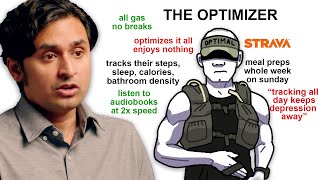
Like if we get enough knowledge and we get enough information. If we do all of the things except for doing the thing, it'll work eventually, right? Take this supplement.
Watch this video. Figure out how to optimize. Figure out how to do this without paying a cost.
This is too this this hurts too much. This is too difficult. It's too many hours of work and I don't even know if it's going to work.
Let me use AI. Let me figure out how to use AI. Let me figure out how to do AI programming.
Let me try to do prompt engineering. Let me try to do all of this stuff except for doing the thing. And this is smart.
This is stupid. This is dumb. It's so dumb.
It's such a waste. What's the point of working really hard right now if it's not going to work? How about I figure out how to be more efficient and then I'll do the work.
So, two steps. Number one, do things that are foolish. Not like actually foolish and things that are damaging to you.
look for a particular thought which is this is not enough. It's inefficient. Right?
It's it's it's subtle. It's going to be something about quantification. We can do it later.
It's going to have it it's going to have the dimension of amount time. It's there's going to be a number involved. Always some kind of number.
It won't be explicitly a number, but it'll have some amount of quantity to it. Inefficiency, not enough. Those are like number one and number two.
And this is what training your mind is like, right? It is going to rebel against it as much as it can. Now, you may say, "But Dr K, I tried this before.
" There's a really great great question. So, is it that you shouldn't interact with your mind? Basically, yes.
Do not engage with it. Command it. Now, this becomes difficult because we think we're commanding it.
And that's the subtlety. This is why this is like this is why people don't explain it this way because this is hard to do. It's hard to do because it requires a level of perception and awareness.
You have to be able to detect things and when people are not able to detect it, they think it's impossible, right? So like I had a friend who was teaching one of my daughters to fish when she was three. So we went out on a boat and my friend was trying to teach her and she's like, "No, no, like it's like I put you put the bob in, I put the bob in, you catch a fish, I don't catch a fish.
there's nothing I can do. There's a certain finesse. There's a certain perception.
And right now, I have to do the c. I'm modeling catching your mind and y'all are caught. You feel caught.
And so, what's really interesting is half the people will have stopped paying attention and on purpose. There are some people who will have clicked off to something else because the mind is like, "Oh [ __ ] this guy's going to figure it out. Can't have that.
Let's get bored. " That's the other thing. Mine uses this beautiful trick called boredom.
biggest [ __ ] scam, dude. It's like you want to do something, mind's like, "Ah, I'm bored. " And then you're like, "Oh shit.
" Well, if I'm bored, I better stop doing it cuz I can't handle boredom. Oh my god. Boredom.
Death. Ah, death. Ah, boredom.
Oh my god. I can't do that, Dr It's boring. So, oh yeah, that's right.
It's not, bro. Not so. No, man.
It's dopamine, man. My dopamine systems are all messed up. So therefore, I can't do it.
You don't understand, man. It's not just boredom. It's dopamine, bro.
My dopamine. I heard it on a neuroscience podcast, bro. Dopamine.
I can't control it. Oh, wow. You can't control it because of dopamine.
Oh, [ __ ] My bad. Better watch another episode of the podcast. Better order this person's supplement.
Only $9. 99 per day and it'll fix your problems. Oh, great, man.
Yeah, awesome. So, notice the activity of the mind, right? So, step number one, look out for not enough.
Here's the key thing to understand. When your mind tells you not enough, when your mind quantifies you that's exactly what you should be doing to engage in futile action, foolish action, what the mind tells you is futile, something beautiful will happen. It's not what the mind wants to do.
And if you do it anyway, eventually the mind will stop resisting. It'll realize that you're the one who's in charge. And then you tell your mind to jump.
And like a dog that is trained, it will jump. When you tell your mind to heal, it will heal. It will come.
it will sit. The more effortful and futile the action is, the more your mind will obey you. Now, here's what's really cool.
Recently, Gen Z and and Gen Alpha have been sort of discovering sensory deprivation all on their own. They call it raw dogging IRL. Raw dogging without an iPad, without headphones, just raw dogging.
I'm going to sit there and I'm not going to do anything. So, here's the cool thing. What is the most useless action you can take that requires the most effort and yields you absolutely nothing?
What do y'all think? Yeah, effortful stuff is kind of like picking stuff up and putting it down over and over and over again. Very good.
Very good. Not doing stuffs, not scrolling. Scrolling is not effortful.
It is effortless. Meditation. Very good.
See, with all of these mindfulness apps and all this mindfulness everywhere, people call it raw dogging IRL. And what they're doing is just not stimulating themselves for like 15 minutes. I'm raw dogging IRL for 1 hour.
This is what meditation is. Meditation is simple. And see, this is where like this is why mindfulness is such a scam because at some point mindfulness became about stuff, right?
It's like, oh, if you do mindfulness, it'll lower your stress levels. If you do mindfulness, it'll do this. It'll do this.
It'll do this. And yeah, it'll actually do all of those things. Everyone's like, "Oh, yeah, like I do mindfulness as the from the tradition of Buddhism.
I'm not like a Buddhist, but I'm like I'm a secular Buddhist. I do the practices. " What was the Buddha actually teaching?
He was not teaching stress reduction. He was not teaching conquering your anxiety. He was not teaching improving your gut health.
That was not the point. You know what's really insane? No one actually teaches the teachings of the Buddha anymore.
Have you all noticed that? You have a bunch of rim pushets, which are great. nothing against them.
You have all these monks, all these modern teachers, which are fantastic teachers. Teachers like myself who have our own version of things. I'm not a fantastic teacher, [ __ ] teacher, as evidenced by this lecture.
But we don't actually teach what the Buddha taught. You know why? Because what the Buddha taught would never exist in chatt would never exist in AI.
Because what the Buddha taught, people would rebel against. Everyone's like, "Oh my god, I want to conquer anxiety. " Buddha was like, "Bro, that's a terrible idea.
What you need to be conquering is joy. What you need to be conquering is curiosity. What you need to be conquering is love.
Don't get rid of the bad stuff. Get rid of it all. Don't be happy.
Try really hard. Get rid of happiness. Get rid of joy.
Get rid of curiosity. Get rid of it all. He says, "Even happiness will bring you suffering.
" Cuz the moment that you have happiness, you will crave more happiness. In that craving is suffering. No way to win.
Get rid of all the positivity. Right? Imagine if I showed up on Oprah and I was like, "Hi, my name is Dr Okay.
And today I'm going to teach you how to get rid of your joy, your curiosity, your passion for life, your love. That's what actually what the Buddha taught. And what the Buddha wasn't trying to solve stress.
He was trying to help people become enlightened, attain moka. That's what he was actually teaching. Most people don't even know what that is.
The concept of it, it's like I've never seen a meditation app that's like, yeah, 15 minutes a day, visualizations about nature, and enlightenment at the end. So, we've lost some really fundamental stuff. And the most important thing here.
So step number one is watch out for the quantification of mind. Step number two is really simple. Watch the mind.
People are saying should I not interact with it? Absolutely don't interact with it. Just watch it.
Watch it spin and squirm and do absolutely nothing. And when it is ready to you're going to do two things. You're e either going to do the thing that you need to be doing or you're going to do nothing.
See procrastination is delaying what you need to do in favor of something else. And people think it's I'm doing nothing. You're not doing nothing.
You're actually doing a lot of something. You're spending a lot of time playing video games, spending a lot of time scrolling. Those are things.
Those are actions that you're taking. You're not just sitting on your ass doing absolutely nothing. Sit on your ass or do the thing.
It's that simple. Not easy. Simple.
Awareness. Number one. Watch out for the quantification of the mind.
Number two. Now, there's one last thing that we have to address. Like I've said, one of the most frustrating things about OCD is how often it gets misdiagnosed.
People can spend years trying to manage anxiety, depression, or even something else entirely without realizing that underneath it all, it might actually be OCD. And because it's so misunderstood, it gets missed. Another study showed something like 50% of people with OCD get misdiagnosed at first, which means they don't get the right kind of support early on.
And even when it is diagnosed, not every therapist is trained in the specific treatment that is effective for OCD, like exposure and response prevention or ERP. But here's the real challenge. There's a shortage of OCD specialists out there.
That's where our sponsor NOCD comes in. It's a telealth platform that connects you with licensed therapists who are trained specifically in ERP. Our scientific advisory board spent some time digging into NOCD's clinical approach and how they handle things like safety and escalation and they were genuinely impressed by the level of rigor and understanding there.
So if you're dealing with intrusive thoughts or you find yourself stuck in loops of obsessive thinking or repetitive behaviors, it might be worth talking to someone who really knows what to look for. 155 million Americans have insurance that covers the cost of their sessions, making it an affordable option for therapy. They even offer in-app support when you need help between sessions, so you're never alone.
You can schedule a free 15-minute call with NOCD using the link in the description below. If you guys are paying attention to this, you're going to get confused because the system that I'm describing is not complete. But then hold on a second.
Who is it that does the wanting? Right? So, I should be studying, but my mind wants to play video games.
So, which of these things comes from where? Because if I should be doing this, is that my mind? Isn't that part of my mind?
Isn't that all for my benefit anyway? Is that social conditioning? Is that living up to expectations?
Where does the stuff come from? So, this is why it's like hard to explain. But it all comes from the mind.
And all of it is bad. Even the stuff that you you should be doing that you're procrastinating against is a scam of the mind. But then how do I know which part to listen to?
Should I listen to this or should I not listen to this? And here's the cool thing. The mind wants both.
But the thing that judges what the mind wants knows what's good and knows what's bad. The judging capacity, the mind wants both things. But there is something else that is judging the mind.
That is outside of the mind. That is really what you are. You are the capacity for awareness and judgment, not the activity of the mind itself.
And then something strange may happen. But hold on a second. If all of the wants and the shoulds are in the mind, what does the thing outside of you want?
The part that observes as y'all are listening to me, you have may have noticed the activity of your mind. And if you notice the activity of your mind, the part that does the noticing, what does it want? I'm actually asking y'all, what does the part that observes the mind, what does it want?
And you may say, but that part wants the mind to be under my control. No, it doesn't. The mind wants your mind to be under control.
Right? Because let's understand this. If the mind is under control, then the mind gets what it wants.
I want all these things. I want love. I want marriage.
I want kids. I don't want kids. I want to be a double income, no kids household.
I want to have $100,000. I want to have a million dollars. And if I could just [ __ ] study for my test instead of spending time on the internet, I would have all of these things that I No, no.
The mind is what wants it. The mind is what wants to study. It also wants this.
And this is why we can never this will never work if we listen to the mind. Because if we're going to listen to the mind then we are going to listen to the mind. And on one day the mind wants to study and on the other day the mind doesn't want to study and we have gotten into the habit of listening to the mind.
We've been not been training the mind. The mind tells us what it wants. That's what we do.
So it never works. So what about that part outside of you? What does that want?
And the answer is very good. That part wants nothing. the capacity, the capability of want does not exist in that other thing.
And now a lot of people think that this is a problem because if I don't want things, how am I ever going to motivate myself? Here's the cool thing. When you are free from all of your wants, your life will be exactly what you want it to be.
See, when you don't want anything, how can I say this? I have two cups here. If someone tells me, hey, you need to use this cup, not this cup.
That's not a problem for me because I don't actually want either one. I can do whatever I'm supposed to do. It becomes easy.
Sure, I can use that cup. Ain't no thing. Sure.
People recently have been worried about me, which I appreciate and I wanted to say thank you for. I want to show you all this. So, someone So, someone was like, "Anyone else feel like Dr K is absurdly overworked?
" And it's nice. Like, this is really nice and compassionate, right? Cuz I'm overworked apparently.
And like I I I I appreciate it. And it's like, "Oh my god, Dr K's overworked. " Overworked isn't a problem if you don't want anything.
Does that kind of make sense? It's like you look at it, you say, "Oh, this guy's overworked. " Like, I'm not overworked.
Doesn't feel like overworked because I don't want anything. It makes no difference to me. I mean, it's not that I don't want anything.
It's that wanting to work and wanting to play video games is not the same, but it's like the gap between those two things is pretty small. And so, I want you all to think about what really restricts you. What restricts you?
It's not motivation, it's restriction. That's what really a want is. We call it a motivation, but if we are motivated in this direction, we are restricted from everything else.
Ego, Dr K, be careful. Oh my goodness. Look at this enlightened human being who says he doesn't want anything.
Oh my god. Ego, Dr K, y'all caught me. Secretly, I do want something.
And I guess I am tortured. influencer cries about how his life is so hard because he works so hard. Oh my god, this Justin influencer complains about his [ __ ] life.
Come on, guys. I'm not saying I'm special. The whole point of this is that it's not special.
It's simple. We just don't understand it. Like, the reason I do this is because I'm pretty [ __ ] sure I'm not special.
The reason I can say this stuff is because this is what my we're no different. This is how procrastination works. And here's the cool thing, right?
So once you stop overworked implies that work has a certain tax and we talk about this like I talk about this where the main thing that I try to do is live in such a way where when I wake up in the morning I'm as refreshed as I started the previous day. I just don't want to get into debt. Does that kind of make sense?
Like the real problem that people have, the reason that people get overworked is because they work and they're not recovered the next day. And this is what's really weird if you really think about it. Are you overworked by Tuesday?
Are you overworked by Wednesday? Are you overworked by Thursday? The only way you can be overworked is if you're building up some kind of debt and then you need the weekend to recover.
So the right way is to work in such a way where you recover the next day. It's about recovery, not about the quantity of work. And actually, it's the relationship between the two.
So if you're overworked and you can't recover, then you're going to be overworked. And one of the key things about that is how much you want, right? So the more neutral you are, the more neutral you are, the easier your life will be.
You will discover that motivation is a terrible way to work. Worst thing you can do because fundamentally you are not in control. Everyone wants to cultivate motivation because once you start being motivated, then you can be a lazy [ __ ] Think, I know it sounds crazy.
It's not. Maybe it is. Who the [ __ ] knows?
Maybe I'm an idiot. But why does everybody want to be motivated? So that they don't have to do it.
It's not hard to do. I want to wake up with that passion and that drive and that I can just surrender the controls of this organism and it's going to just do whatever it feels like doing. I just want it to do the right thing, right?
I want to cultivate the right desires. I want to be sexy. I want to be ripped.
I want to be millionaire. I want to do this. I want to do this.
I want to cultivate all of these motivations so that I can sit back and be a lazy [ __ ] in the back and it doesn't have to be hard for me. I want to program myself so that I can be on autopilot. Try wanting nothing.
Try operating from the place outside of mind and let me know how it goes. Yeah. See, it's about mental effort.
Very good. We don't want to exert effort. And when I stop exerting effort, what happens to the body?
What happens to the mind? Right? When I develop an anti-gravity floating device so that I no longer have to carry my weight, what will happen to my body?
As I use more and more AI to solve problems for me, what happens to my critical thinking? Gets worse. And something really cool happens.
The more effort we engage in, the easier things get. If you want to have an effortless life, you should exert a lot of effort. This is not a paradox.
Sounds like a paradox. It's not. It's reality, right?
The more I work out my muscles, the stronger it the easier it gets to use my muscles. This is what's really cool about being human. We level up.
Hey y'all, hope you enjoyed today's video. We talk about a bunch of topics like this on the channel, so be sure to subscribe for more. If you're already subscribed, GG.
And we'll see you in chat.