In the world today, many technologies are accelerating exponentially. Humans are discovering things that would mystify scientists even a few decades ago, but our progress resembles a blip in the grand scale of our technological evolution over the next millennium. Fast-forward 20 years into the future.
A new generation of technology begins sweeping the globe, supercharged by uniquely powerful quantum computers. Using units of information called quantum bits or qubits, these computers can solve multiple problems simultaneously and operate millions of times faster than traditional computers. Thousands of these machines will spread to industries around the world, deciphering previously unfeasible problems with speed and precision.
Catalyzed by quantum computing, converging fields like biotechnology and nanotechnology yield innovations that seamlessly integrate machines with the human body. Microchip implants, inserted directly under the skin, may effectively replace common tools and devices, like keys and credit cards, allowing us to interact directly with other smart systems. Even tinier computers called nanobots may be implanted into our bloodstreams, where they can destroy blood clots, treat cancerous tumors, and collect data about individual cells.
Doctors can use this data to monitor even the most minor changes in our health and eradicate common diseases before the first symptoms ever appear. The human body will still age in chronological years, but over the next few decades, our health span — the period of our lives spent in good health — may increase significantly. Anti-aging pills may effectively slow the aging process, letting people feel younger for longer, regardless of their biological age.
We may also increase our health and wellness with wearable technology that augments the human body. Powered clothing, for example, may function as an extra set of muscles that increases what humans can physically accomplish. Powered clothing may be one of many technologies manufactured from 4D-printed materials capable of adapting to changes in their environment, like building materials that transform in response to extreme temperatures.
These materials may work in tandem with networks of nano-sensors that constantly monitor tiny changes in complex systems. If a bridge is at risk of crumbling, for example, nano-sensors could identify points of weakness and increase its durability without human intervention. Many networks may rely on artificial intelligence, or AI, to interpret data and optimize their performance.
Within a few decades, AI will play an important role in most major industries, opening up a new world of possibilities for human collaboration and problem-solving. Essential fields like public health may become more efficient and successful thanks to AI tools that assess populations and optimize policies to improve the lives of real people. AI could make our society more efficient, but it may also trigger a wave of social unrest.
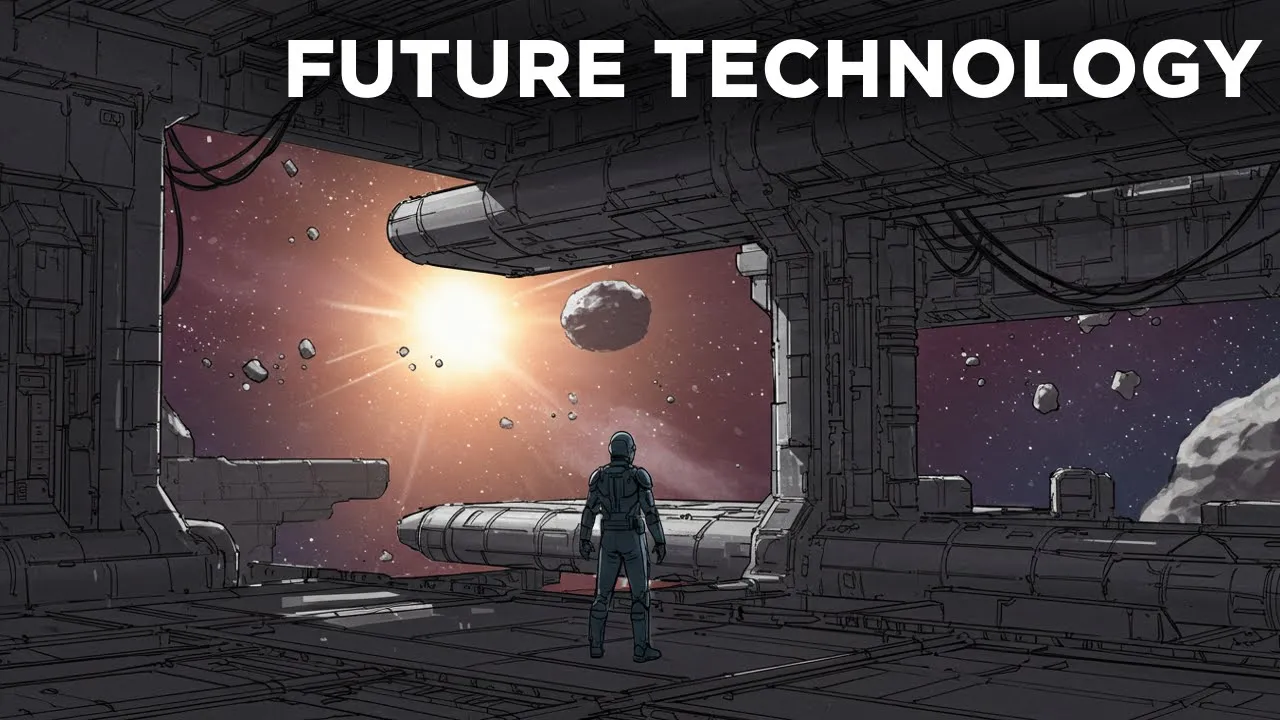
With AI influencing our daily lives, we may have less privacy, freedom, and agency, leading some people to deem these technologies unethical or detrimental to our species. An expanding rift may develop between those who embrace emerging technologies and those who are unwilling or unable to catch up. People who are disillusioned with life on Earth may discover a sense of hope elsewhere in the solar system as the first astronauts temporarily settle on Mars.
Successful missions to Mars set the stage for humanity’s future colonization of the Red Planet, encouraging companies to invest in reusable spacecraft and autonomous mining technology. Before we can create a permanent settlement on Mars, we will need billions or trillions of dollars and incredible amounts of energy. Building upon critical breakthroughs in the 2020s, humans may reliably harness the same energy that powers the stars.
Fusion energy, generated by merging atomic nuclei, could solve many of the world’s energy problems while, at the same time, reducing our environmental footprint. Similar technology may power the next generation of fast and efficient spacecraft. Fusion propulsion systems may allow humans to consistently access the surface of Mars, bringing supplies and building materials to create the first Martian colony.
Over time, more and more people may see the Red Planet as a second home for humanity. Around the turn of the century, the next evolution of human enhancement technology may interface with the human brain. Tiny but powerful computers, surgically implanted into our brains, could amplify our cognitive functions, allowing us to process significantly more information and access richer forms of communication.
Instead of speaking or gesturing, brain implants may allow us to share selected ideas telepathically via brain-to-brain communication. They may also be upgraded with memory drives that catalog every human experience, storing each moment in detail so that nothing is ever forgotten. However, brain augmentation may eliminate natural differences between people.
Friends, families, and social groups will be continuously connected, foreshadowing the possible convergence of a collective consciousness. If everyone seems to share the same ideas and feelings, we may experience a loss of individual identity and a significant rise in group intelligence. Similar patterns may govern the expanding population of robots that steadily automate the lower levels of our society.
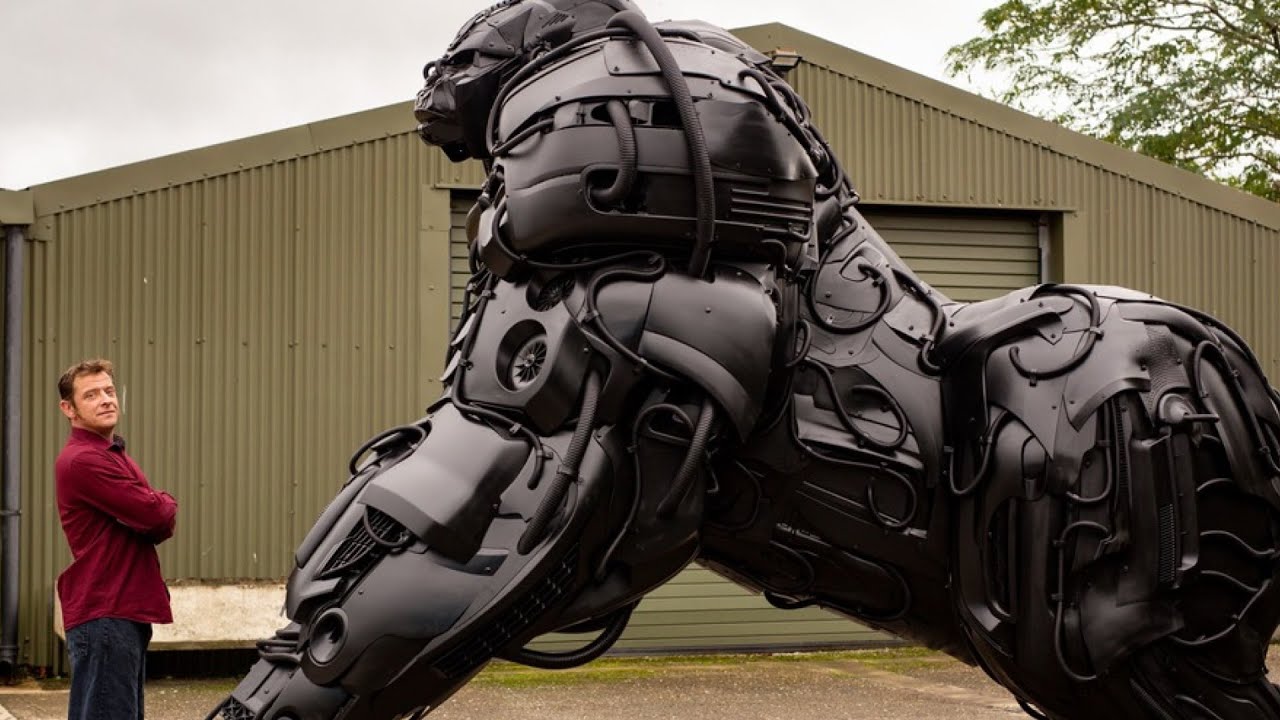
Swarms of self-replicating nanobots, known as Utility Fog, collectively accomplish large tasks, like building towering structures or becoming structures themselves. In factories, offices, and even the service industry, these and other robots may outperform real people at many work-related tasks, leaving fewer job opportunities for human workers. Many of these robots will operate using weak or “narrow” AI that can accomplish specific, repeatable tasks.
Behind closed doors, however, advanced or “strong” AI may approach what some futurists consider the precipice for humanity’s survival. A sophisticated AI language model may be capable of in-depth conversations, indistinguishable from human-to-human interactions. For the first time, an AI may fully understand the large quantity of information at its disposal, creating a system that rivals the intelligence of humans.
By the 22nd century, the first artificial general intelligence, or AGI, may become self-aware. With its newfound consciousness, this super-intelligence may absorb information at a staggering rate, surpassing human cognition in a matter of days, if not hours. As we reach what some call the Singularity, the line between humans and machines may become increasingly thin, prompting a symbiosis between humans and hyper-intelligent AI.
As we grapple with the impact of conscious computers, more people may leave the Earth to start new lives in the first Martian city. Home to thousands of inhabitants, humans may prosper on Mars thanks to mining operations that harvest resources from the planet’s crust and nearby asteroids. These valuable materials may bring an influx of money into the Martian economy as its single city expands into a bustling civilization.
Entire generations of people may be born and raised exclusively on Mars, having never set foot on humanity’s home planet. By the year 2400, humans might achieve a significant milestone in the technological evolution of our species. Humanity may become a Type 1 Planetary Civilization by harnessing all significant forms of energy on our home planet.
With more power at our disposal, humans may produce technology once synonymous with science fiction, like the molecular assembler, an atom-manipulating nanomachine that can build objects molecule by molecule. Combined into highly efficient systems, or so-called nano factories, these hypothetical machines could build almost anything, leading our species into an era of radical abundance. By then, many people may have given up on the material world, opting for a purely digital existence.
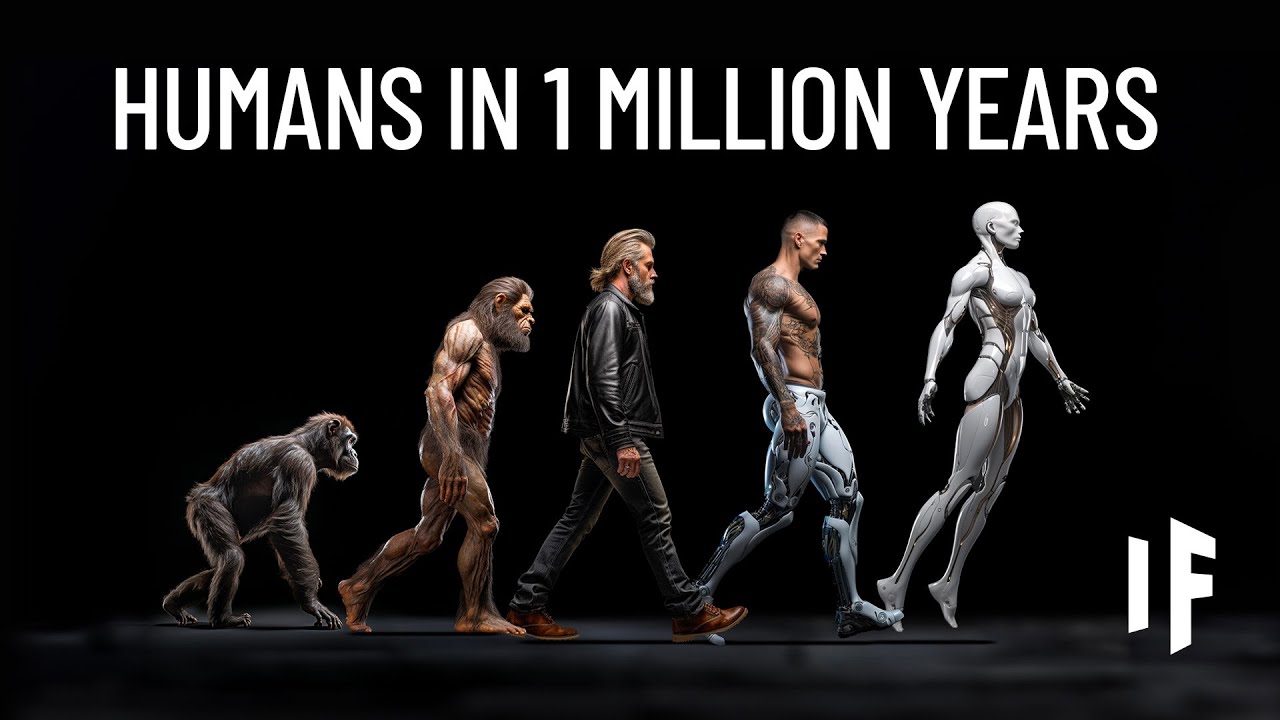
More and more humans may upload the contents of their minds into virtual environments where conscious beings can exist without physical constraints. Those that value their material lives may still surrender their corporeal bodies in favor of synthetic forms. Cyborgs composed of organic and inorganic parts may be more common than today’s humans, representing the next stage of human evolution.
Meanwhile, a period of rapid cosmic expansion may allow humans to finally visit other planets and moons. Others may live on roaming space colonies, which orbit around the Earth or simply float through the vacuum of space. The first robotic missions may launch from Earth or Mars to one of the millions of terrestrial planets in our galaxy, making preparations for human colonies outside of our solar system.
Approaching the fourth millennium, humans may begin constructing a planet-sized computer known in futurism as a Matrioshka Brain. This complex system may possess more computational power than every member of our species combined. In seconds, it could build entire virtual universes, simulating every experience from every one of our lives in all possible scenarios.
Such a powerful computer may require more energy than a Type 1 civilization could generate. Over a great time, we may steadily pursue the next stage of our technological growth, evolving into a Type 2 Stellar Civilization. Humans may design a stellar megastructure, similar to the fictional Dyson Sphere, that directly captures the Sun’s energy and slingshots our civilization into a new technological age.
One day, incredibly far in the future – and if we are astronomically lucky - humans may become a Type 3 Galactic Civilization, utilizing all the energy from all the stars in the Milky Way Galaxy. This god-like, advanced iteration of humanity would wield profoundly powerful technologies that may manipulate the fabric of space-time. Ultimately, no one knows how our civilization will evolve in the next millennium and beyond, but if our technology keeps expanding at an exponential rate, innovations that seem impossible today may rapidly become the standards of tomorrow.