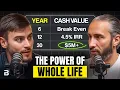
So overfunding is essentially where you are putting as much cash in as possible and getting as little insurance as possible if something happened to me I want my family to live the same lifestyle if not better sometimes that might be like you lose flexibility being just minimum funded and that's that's a risk hey guys [Music] [Music] Which insurance should you buy I'm talking life insurance and there's so many videos and philosophies from variable life to Universal Life to index universal life to whole life to term and invest the difference some gurus and people on TV
you should never buy anything but term insurance other people think there's no reason to have insurance at all who's right who's wrong why don't we actually dive in and look at some of the numbers that I brought a Youngster with me that somehow grew a beard wrote the book The and asset speaking this event coming up and I just thought hey let's pull up your computer look at some of these numbers and check this out like the first argument is a lot of people I think misclassify life insurance certainly they think they're comparing it to
investing totally and I don't look at like my allocation towards my life insurance as an investment yet At most I might consider it an asset allocation decision where I would put money there versus a bond right in some situations but ultimately I look at that as like my short to medium term storage of my cash that's available when I have opportunity totally and if there is an opportunity because I'm focused on other things it's doing better and giving me more benefits than if I would allocate that to other places where people have liquidity and safety
and some of those Factors right so like some people like well I don't want to pay tax so they use municipal bonds but in today's interest rate environments where they're increasing that lowers the value of your municipal bonds if you're already holding it so that creates what's called Capital depreciation risk as you know um other places people put money as a CD but that's taxable yeah um so I'm not a huge fan of that and it's at Banks I'm here to tell you like I feel much more comfortable right with Mutual Life Insurance companies right
than I feel with a bank right now in a higher interest rate environment so let's just take a look at like this is a savings vehicle and the multitude of benefits that come along with it so I see you have it well and I I'll first of all just want to take a step back and and you you set the stage really well in saying what asset class are we talking about the biggest Critical criticism that people give life insurance is it's a bad investment it's a horrible investment and so what they're saying is they're
comparing it to other Investments and they're have making the or conversation they're saying this or we're real estate this or the market and I think oh you even talked about municipal bonds we have to look at the utility and the results that come from having one asset versus the other and so I think the biggest biggest Epiphany that I had was life insurance as a paper asset is not an investment when I realized that it can either be a foundational asset for entrepreneurs and people that want to invest or it could literally be a part
of someone's portfolio and it could be a multi-use asset that they could have as a part of their portfolio it kind of takes the step back and we're not saying like we're not bad-mouthing any other asset class let's talk about just people that Are Savers right right so people just like to save money right but they're scared because of the risk of all the different things they're afraid of crypto they're afraid of the market they're afraid of real estate whatever it might be like if you're just going to save money this is not a bad
place at all to save money right from a stability standpoint an availability standpoint and a tax advantage standpoint like I think the majority of people that go Through their lifetime investing and there's ups and downs and they let that you know impact their emotions and then they cash out at the wrong time so they need that money so they go and have to you know because it's usually when the markets are down that people need the money because that's when the economy is starting to have restriction and problems and then all of a sudden when
we look at it by the time we account for inflation and fees and taxes and Volatility they're just not getting as far ahead as they hoped and they would be better off in a lot of situations just saving it not going through the emotional turmoil of this right and having it available I think two two things when we actually had we were talking yesterday and we were going through all kinds of crazy content of what people are telling about retirement for the people that subscribe to the whole retirement long for the long haul All that
stuff they should look at life insurance and they should literally take out bonds and use life insurance and and I could I could I'll say very confidently into the camera that a equities life insurance combo will be at an equities Bond combination from a stand-up standpoint of short-term and long term you and I both don't like the whole put money in and just let's see what happens for the future if you're an entrepreneur or an investor you need to Look at this as like a safe place like you said short term and long medium terms
so much risk in their business yes calculated risk often and risk that they can actually mitigate and manage because they're involved in in it and this is what's an insane Philosophy for a lot of business owners all right I just don't have time to deal with my finances so I have a financial planner I just give my money they invest in something they know nothing about they go oh this is a Diversified portfolio I like to use ETFs and index funds and I'm in it for the long haul and they just ride that volatility right
and I'm like but how much frustration does that cause when that's down when you've worked hard and how is that performing versus improving cash flow in your business or focusing on being more efficient so you're saving tax and having the right tax team or you're saving on you know interest rates because a lot of times if you have this Like if I have a cash value I could save on interest rates I've done that multiple times during different industry environments or reducing your insurance costs in other areas like long-term care insurance there's ways to reduce
that cost or there's ways to reduce your term insurance costs because term insurance is one of those things that rarely pays out we pay money into it it may be low premium now it gets to be high premium at the time that you might use it in Older age and so it gets phased out and then people have their assets having to become their insurance which means they can only live off their interest yeah they're now subject to the volatility of interest rates subject to the the insecurity that comes with inflationary periods and they're subject
to tax hikes that can start to confiscate their their fixed income and so this notion of you're going to have this dream life at Retirement if you just save enough and sacrifice enough and then finally you can enjoy life people haven't had that enjoyment often because of markets because of economies because they're now going well this isn't what I expected it it didn't perform how I wanted it to and as they find out it's not performing that well they don't have to add more money to something underperforming to try to get there and they lose
that time value of money I think that we discount Stability right and certainty and ultimately if we have more risk-free Capital outside of our business and then take the calculated risks in there I think that's that's a different opportunity and then even if there are great opportunities which I think everybody has great opportunities that come their way yep just really great opportunities they're often not liquid enough to do anything about it often don't have the right mindset to even be Able to be prepared because all their money's tied up and their condition and how to
think right like I think here we are in 2023 and interest rates have increased substantially and people buy property often on payment not on on purchase price in the in general maybe not investors but it's just someone that's looking to buy a home we're gonna watch a pretty big dip in real estate in several ways and those People with cash or access to cash are going to be able to do something about it and and and get those distressed assets before they have to short sell or go bankrupt and can help bail people out without
the government having to get involved therefore both parties win versus you know all of a sudden taxpayers have to lose in order to solve this problem so there's there's a win-win in this as well so I I think what we could do is almost walk through What is life insurance because the other big problem that a lot of people have is life insurance is a horrible place to put your money you have no cash value in the first couple years High commissions we're a couple all of that including showing numbers because I think if people
understood okay the bad side of the life insurance industry they would have more empathy for why you and I are up here saying like you got to be very careful people are using yearbooks They're using my books all day long to push their agenda and unfortunately um they're using what would the Rockville do and then selling a product that's actually not what the Rockefeller should do which is very uh frustrating to see but that's why these videos are really key because you probably know more about that yeah yeah sometimes ignorance is bliss but so the
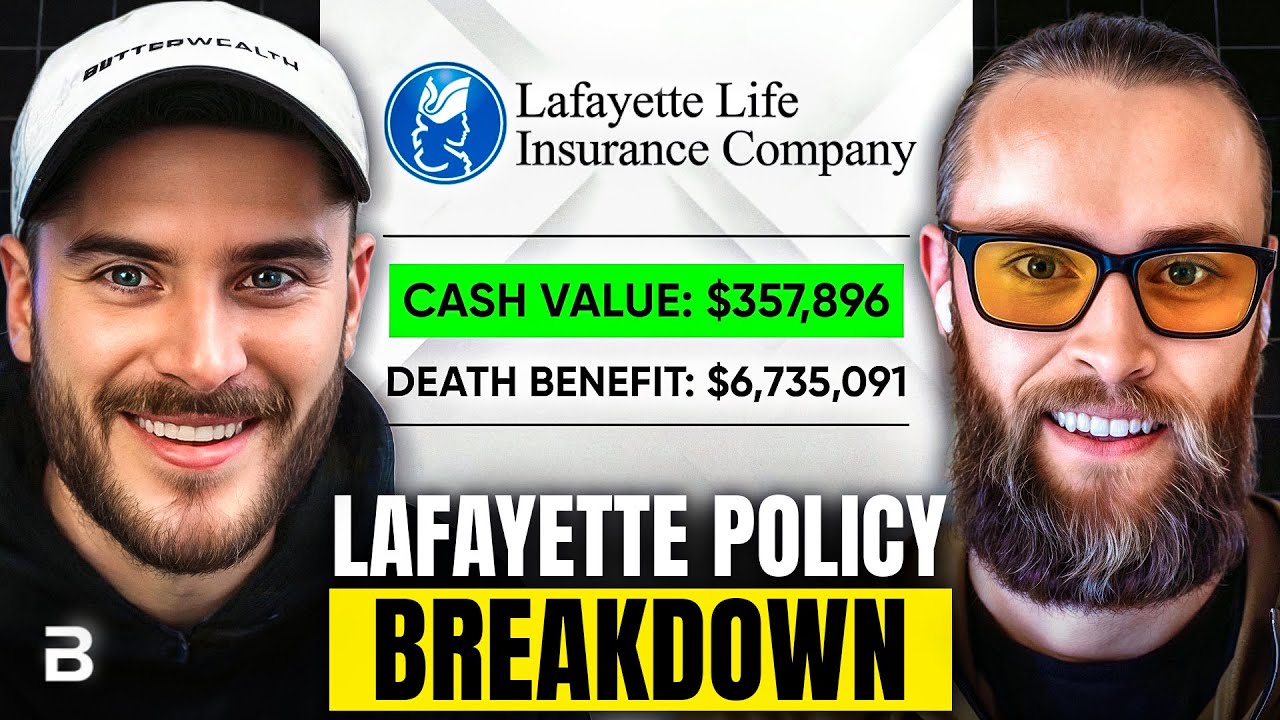
the this and you know I'm sharing my computer here the the slide is essentially Showing a person a contract and a company because all life insurance is at the end of the day it's it's a unilateral contract between you and the insurance company pretty much which means if you keep up at your end of the bargain the insurance company from day one is on the hook to provide those promises not just now but in the future and so not all contracts are created equal and not all companies are created equal Yeah that's I mean a
lot like where Insurance gets a bad reputation is first off health insurance is awful it sucks like you know second is disability insurance has has been this contract where a lot of people thought they had something it turned out they really didn't and the key is when we're talking about a life insurance contract what contract you sign is what you have it's unilateral right they can't just go make changes later on and That kind of stuff right and what company you work with is important so there's a majority of insurance companies out there stock which
means the Paul the owners of the company are not necessarily the people that have policy right and and the stockholders take the priority to generate value for that stockholder over the policyholder right that's just the way that we've watched in the stock market for how long how many reports and quarters have we Heard about companies giving you know false reports or inflating their numbers or making short-term decisions to keep up their stock price and so if they have a dividend that they're gonna give and that would go to a policyholder and a stockholder we're now
splitting that dividend yep so that's part of the problem or what's going to happen to that dividend in a situation where you know we gotta do something for stockholders and if we want the best Thing for money wouldn't we want all the financial benefits like we don't want there to be a conflict of interest between one party or the other right we want there to be um we want there to be all the interest on us so you're about Mutual companies Mutual companies you should have ownership and there should be no you know other Alternatives
there the ratings have to be good and they you want to work with companies that have Been around for a while if if it starts up an insurance company be careful you know they got to be around for over 100 years and that's that's like the minimum and and the rating I mean the problem with the rating is if you ever saw The Big Short where they were basically outing the rating companies for not giving true ratings because they were getting profits by giving higher ratings like if they're not in the A's for you know
A's a double A A like it's like Like you can find some term insurance companies or gonna be right that you would never want to own a permanent policy with that kind of company a common question I will get is how safe you know at the time of this recording banks are you know teetering and here's the deal Banks and we could have a whole video let's go back to oh wait let's look at what happened in 08 yeah right banking crisis 5.5 trillion dollars to bail out all the banks right how much Money went
to life insurance companies Mutual insurance companies not a single Mutual insurance carrier that we're you know that are in our world ever was even close to failing right because they're not they're not fractionalizing at the same level right because banks are getting money from the Federal Reserve right and they have these reserve requirements and they're lending out dollars more than once I mean it's kind of a complex thing I've written Articles about it and stuff but like that's part of the the concern we also have those Rising interest rates so they have these portfolios of
treasuries with low interest rates and when interest rates rise if there's a bank run or people want their money for their Bank like we saw a Silicon Valley Bank yep they now have to sell those bonds at a loss therefore putting them in an illiquid situation and high interest rates are putting rate they're putting Banks at risk so banks have less than 10 percent of Reserve meaning if there's a bank run they're they only can that's the reason you know insurance companies have over a hundred percent of the money like if everyone went to the
insurance company and wanted their money out insurance the insurance company would have enough to pay everyone out and have a and let's talk about how they create that profitability that's an important notion right first thing is they're very Profitable in their term insurance portfolio correct so people that are buying insurance that they're never going to use second people buy permanent policies and then cancel them early which creates an Arbitrage for long-term policyholders because there's higher expense in those first years there's reserve requirements there's commissions to agents there's you know underwriting costs and all that Kind
of stuff so the fact is you know insurance companies didn't love it when all of a sudden there was stranger on life insurance investor own life insurance because they saw hey we're going to make a profit upon the you know when people die this money's going to come in it's going to be more than what was spent so that's another fact yeah and also in our world if you're accredited investor you might get access to better deals than the you know Ordinary right so what what these insurance companies can buy oh because yeah they don't
they can hold a longer term bond then they don't have to liquidate a bond Silicon Valley Bank liquidated when you have billions and billions and billions of dollars you get deals that you and I don't even know exists right they're not public deals right right so you have that they're also mortality so the all the insurance products are profitable hence why you Want to be a mutual owner and participate in those profits and yeah I mean insurance companies are also playing the long game they're also the only institution that's hedging both interest rate and mortality
interest rate and mortality that's why that's why they can you know play the long game they're essentially they're they're you know pretty much a business around your death you dying so they they're hedging that risk and they're also getting Benefit of interest rates and so when we say later when we show you that like you can borrow against your insurance policy and not have to pay that back there's no other institution that allow allow you to do that because they're only in one element they're playing the interest rate game so they need your cash flow
to come back the insurance company is going to get your money when when you die because that's something that will happen so they can play it will pay off That low right so it's just one of those like insurance companies are positioned for hard times and they're also they're also not over promising and it's just like during 9 11 when there was you know people that died in New York City insurance companies set up table tables where people could go and start the process expedited for death claims they were in a strong enough position because
if you remember 2000 was a really rough year for the stock market I think you Were two years old that year um you know they were it was a really rough year for the stock market 2001 was already a rough year for the stock market we had two Right double double digit losing years and they were still you know fine handing handing out that money and making those claims so like this is this is a a different modality like could insurance companies go under absolutely there are guarantee associations in each state that that Basically protect
a certain amount of cash in some that's more than the FDIC is protecting yeah um and other things like the states that I'm in right now they've never tapped into a single dollar not one dollar in that guarantee Association when I think back to 2008 I was like the FDIC isn't going to have enough money to handle Indie Mac go another Countrywide going under all these major institutions are going under I was like I was like what are they Going to do I guess they're just going to tax and raise funds for it and that's
what they did they they basically borrowed and bailed out these institutions where these insurance companies didn't need to be bailed out they've been stable for much longer they're not you know so so that's an important consideration too so back to the person contract company obviously the company needs to be important there's probably only about 15 companies That we would work with that do this special cash flow Banking and asset style so if you look at the thousands of insurance companies out there you can see why many gurus are like just I'm not going to get
into the weeds life insurance is a bad thing you shouldn't over fund it because it's just it's just let me look beautiful rules I have yeah I would never have a life insurance policy with a company that did Property and Casualty Insurance there you go so let's let's just talk for example even if there's different divisions yep that's really good let's just think okay Florida has floods they have hurricanes they have all these issues and that's tapping into all state that's tapping into State Farm we had a massive winner in Utah yeah like so many
claims or like that is a problem that you're creating additional risk right so that's that that that's one of my rules I would never own and Second like we're talking stock companies yeah a lot of those and I also get suspect if there's massive amounts of advertising now yeah I own policies with at least three life insurance companies I see ads for yeah but they're like here and there not like State Farm which is an every single hour block of every child but they're also doing PNC this is not a hit on State Farm State
Farm's a wonderful company for PNC but they're like they don't they can't Design permanent life insurance like I would never own a State Farm for myself because I'm with I go with companies that don't advertise that have yeah much like but not everybody has access to those companies but like I know that if I have a claim yeah like my wife got in a car accident and we had to make a claim and you know the first talking and then when I said the company I thought oh they'll pay your full claim like they thought
I was just one of those other Companies that knew that they were going to try to like talk their way down so like that's the problem so they're better commercials than they are claims yeah that's that's good that might need to be uh we might need to go into that more so when you talk about a contract not all contracts are created equal there's term contracts and there's permanent contracts and there's very like there's there's some people that believe they have a permanent contract That's built upon a term chassis which means the cost of insurance
goes up year by year yeah um and unfortunately when there's cash value associated with the term chassis the term is usually I found 20 more expensive than just a normal term here's what I'll say because it's hidden here's what I'll say Garen and I do not believe life insurance is an investment we don't believe that that your end-all be-all is to park your money and so the people that are selling These term chassis index universal life universal life they they like to sell you the dream and here's what I'll say is it may or may
not work all I'm saying is I want a place to store my Capital with as little levers as possible and so I don't want to I don't want to roll the dice with something that should be so safe and no brainer that's my that's my two cents on index universal life if you're gonna invest go invest don't use the insurance insurance rapper to try to Efficient because yeah the way that those like Universal Life policies work whether it's indexed Universal or variable universal life they're all just like the difference between the three is variables sub
accounts that act like mutual funds right universal life is fixed interest you know year by year and then index universal life is basically accrediting process that works based upon some Corridor what the market performs as but it's not a direct index That goes exactly what happens like there's some Provisions in there as you read them by Insurance the rules anytime but all of three of those what the issue is as you have more cash value in relationship to your death benefit if you use a fixed level death benefit your cost of insurance can decrease based
upon the net amount at risk but they're also looking at your mortality experience for the people in your group that's called your bundle and that Bundle has to do with similar age similar Health but as that group gets older what will happen is the healthiest people often jump ship to new policies the least healthy people end up staying in that group we're talking 20 30 years down the road which increases the mortality experience which then increases your cost of insurance combined with your increased age so you have the mortality experience and just the fact that
you're older those two Factors are working against you for your cost of insurance which often is more expensive than a Term Policy so I you know in in those cases you have to look at those policies and say am I using this as a as a place to use cash along the way or am I using as a death benefit it's hard to have that be an and asset because you start to jeopardize your guarantees now I'll get agents that will get really frustrated with me on this point because they're like no no you can
Have those guarantees I'm like but what if you miss a payment what does the contract say and and how much is that Rider to give you that guarantee and once you pull money out is it considered changing your net amount at risk or is it considered a loan that doesn't change it like these are the questions that have to be asked and in the 80s a company that I have a whole life policy with had Universal Life policies that they started coming out with new ones All the time because the 80s was very new to
the Universal Life game that what happened was everybody did jump ship to the ones with new bells and whistles and that were better over time and those people that hold the held the policy 30 years ago yeah 40 years ago you know what happened to them the cost of insurance went to the guaranteed cost not the current cost and so that's one thing you can see on the illustration there's the current cost versus the Guaranteed cost now the guaranteed cost is never going to be happening in the early years that would be like act of
God crazy things are going on everybody's in trouble but that can slowly creep in and now at the point where it's most critical and and one of the psychological things that happened Caleb is people have a really hard time under standing who they're going to be 30 years from now correct and they have a hard time having that kind of Compassion and that connection to themselves we almost see ourselves as like more immortal when we're young and then we get older we're like oh crap I didn't think through these things yeah because I looked at
a piece of paper that seemed like it Illustrated better without knowing the levers that could be pulled for cost of insurance or for you know whatever the the big I think the big frustration thing that I have is when people sell iul they're selling it For income they're selling index universal life in next universal life say they almost sell it for income because they're looking at Arbitrage and all these things and so on an illustration 20 or 30 years from when you're actually going to quote unquote utilize it they're showing Amazing numbers and you and
I both know that's not gonna happen it's not it's not going to be a fraction of what you think is going to happen and that's the problem With iuls and certain variable universal lives is they can make something variables worse yeah they can make something look incredible but they're not factoring in caps coming down like are you not hitting it like they're all like we're gonna be conservative and only show six percent but then they're they're it's like six percent every single year and then they're showing Arbitrage what happens when we have down year and
then you're getting nothing and Then the up year that's higher that you're not getting that full upside and then you're getting the year where it was six percent like they're missing those right corridors because of what's called caps but variable universal life has another unique problem so it's still the same net amount at risk but now let's say the stock market does a major dip twenty percent down it's never happened recently um let's say it goes down 20 yeah that Means your cost of insurance is going to increase during that downturn because you've changed in
that amount at risk which now you're pulling from the cash value at a time where it's decreasing which accelerates the dip it's a double dip essentially and so look man I I was 18 years old and I bought a variable universal life 50 bucks a month minimum funded like they tell me oh you don't have to pay a lot of tax at 18 but this will be good for you if you just saved Sorry it was 70 bucks a month 70 a month um yeah 40 years from today which at that time I was 18
and now I'm 44 so you know more than halfway that they're like you're gonna have millions of dollars and I showed an 18 return which is illegal you're not allowed to show an 18 return 12 is your cap but even showing 12 a year is statistically impossible for an investment to do 12 a year over a 40-year period of time it's just never Happened you're gonna have down years and you're gonna have bigger like yeah so so this is this is important to understand not all contracts are credited equal right not all policies are the
same metal companies are the same not all companies are the same so this is why people are pissed off this is why it's frustrating yeah because like how am I supposed to know all this and I'm telling you Garrett we're gonna have people comments we're gonna have People that are very very frustrated with what I are saying here's here's what I'm saying here's what I'm saying I believe I bet you Gary and I probably missed something there's probably a new shiny objects product out there that does something melon whistle that makes it is what I'll
say if you are getting life insurance for an investment I do not endorse that I do not endorse you putting money into something for 30 Years for your income like I do not think that's going to serve you well if you want to do life insurance for cash flow banking or the and asset you want to use and store your money have as little leverage as possible and do something that's been around for over 100 years that's all I'm saying like imagine like when I write well the rock what would the Rockefellers do imagine someone
on the Rockefeller family and saying we got this great thing called The next universal life and you know like you're going to be able to participate in a crediting system as the market goes up but you don't have losses on the down and they're like What's the cap use that in the next universal life I mean it's it's decreasing right like 10 so like you yeah so if there's a year where the market does 30 percent you're getting 10. right and so it's like that's why just invest and make investments and like the Rockefeller Family
knows how to make money they know how to they have investors they have access to why would you so that's why they're using permanent policies that are guaranteed to be around a day longer than them so it will help replenish their trust right and why would they take risk with that right that's what and look man I had a really really good friend that like bought Whole Life by someone I recommended to him and then this other advisor who you know Um let's say JD is his name sold them on canceling that and buying iul
and I was like dude I just like and and he's he was brainwashed I couldn't get through Tim yeah you know and now I think he's frustrated with that policy which was inevitable yeah so let's talk let's talk about over funding because in all types of life insurance you can over fund and this is where the magic happens and and so overfunding is essentially where you are putting as much cash in as possible And getting as little insurance as possible and and when you do that you're able to have a ton of cash a lot
of benefits When you but that also reduces the commission you have a lot more flexibility in a lot of cases we're able to show 85 to 92 percent cash value in the first year so a lot of people that say life insurance is a horrible place to put your money like yes but if you over fund can we even call it like can we even put in the same camp as Traditional and look man my first my first policy was Baseline minimum funded and here I am you know that was at 19 my first whole
life because I bought the UL when I was 18. so I still have that policy 19 years old I'm 44 today you know what that thing is performed well like yeah it took a long time to break even yeah there wasn't a lot of cash in there but that still is a place for me to park my Money and not have to buy term insurance yeah was great that's not how I've designed my other policies later on I just converted some term on my wife into whole life we just max funded right from you know
like how much could we put in from day one I'm just in a different financial position than I was when I was 19 years old for example yeah and I think that one risk like I'm glad we're going to show these numbers but one risk is people could Fall in love with cash value and utilizing cash value and neglect to indemnify their economic value if something happens to them and if you leave your family in a position like this is the conversation I'll have back when I was selling this stuff uh would be like hey
you know and this is a long time ago does a million dollars sound like a lot of money I mean I was talking to Young yeah I was like if you could never earn Another dollar does a million dollars sound like a lot of money they're like nah not at all I'm like so stop thinking of the death benefit as a one like big number think of it as like how much cash flow would that create right if I wasn't around so it's okay then like I I want to have life insurance effectively be life
insurance where if something happens to me that I am creating a family like Perpetual system that my family can Utilize rather than have to go to regular Banks and you know they I don't want them just if I die I don't want them to just get money I want him to have access to money they could borrow and pay my this trust interest rather than pay interest to an institution that they can jump through less hoops and you know fund their their things versus like I don't know I just don't love the way the banking
system is so but if something happened to me I want my Family to live the same lifestyle if not better um I mean sure I don't want my wife to just remarry and someone to come and get the money that's why I have a trust you know uh but but at the same time like if someone went and they're like I'm just gonna Max Fund I get 95 of my cashier one and they got this massive exposure where if something happens they only indemnified two-thirds so they only have two-thirds of the death benefit that Would
have been required to replace their income yeah that's a problem yeah and and here's the deal efficiencies removing any friction to get to where you want to go and what you're talking about is this concept of human life value and you're saying a million dollars doesn't seem like that much money because it's not so if you're someone that's like hey what's the value of you producing for the next 20 30 years it might be five million dollars What I'm saying is those are two separate policies what the problem is what a lot of people do
is they try to put everything into one policy and you know know this very well it's hard to be efficient with money and death benefit so what we do is we just say how much money do you want to save and let's make it efficient from cash we call life insurance because it is insurance but I would never say this is all you need from an insurance standpoint then the Next question is how much money do we like how much Insurance do we actually want and if it's more and most of the time it is
more than what that's this over funded policy is going to get we do a second policy and it could be a term insurance policy that's convertible so it gives you optionality in the future but It ultimately it covers your greatest asset which is yourself and so I'm a big big fan of human value lots of death benefit I just want it to be so I Totally understand that design and I've done that to a degree like why where but I've done times where I've done minimum P layer or over funded so I have the provision
and taken two or three years before I start over funding it with base premium now that's you know the thing is I knew what was going to come in and what was going on right um sometimes that might be like you lose flexibility being just minimum funded and that's that's a risk so having a Term Policy that you can convert can reduce that risk overall right and with what we know about front loading policies and we'll show that in a second like you could easily Say by term and wait till you have that money in
front load it efficiently there's a lot of different ways to do it but the concept is and what I'm excited about is I'm going to show you one company same company we're going to structure it differently and we can we can look at Pros and cons by each contract all right so looking at my screen and I'm gonna have another another screen that shows us even more detail because the numbers are kind of small but just look at um just look at this policy number one this is a same company on one side you have
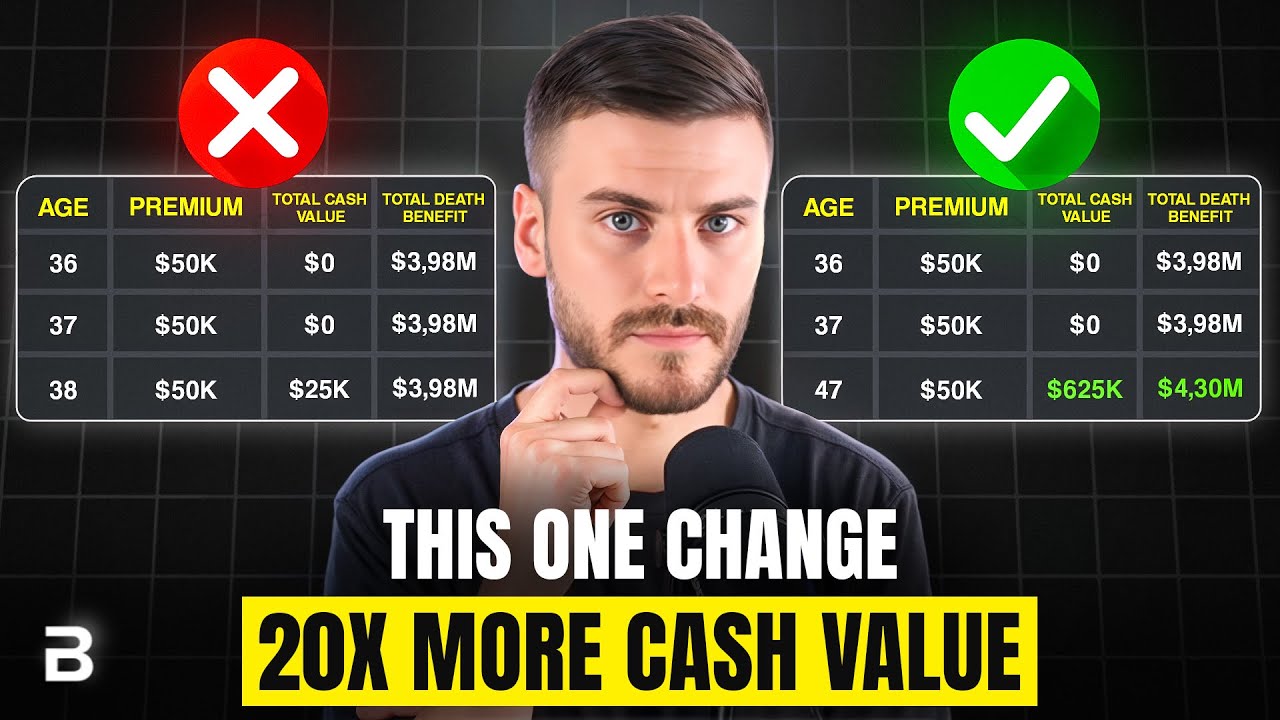
a typical policy and on the other side you have a maximunded policy so let's first talk about typical policy typical policy means you have high base meaning there's Um there's there's different types of in a policy and I'll explain this for a second High base is also High death benefit High base High death benefit High commission low low flexibility it's their required premium that you need and so it's high base little to no cash value in the first couple years not flexible and it takes 10 plus years to break even but on this yeah more
death benefit needs to be one of those bullet points I get these are the negatives but Like totally positive is you have more death benefit correct and which is a huge asset in the future just not today right and and uh you know I'll illustrate this you have you put fifty thousand dollars in the first year how much cash value do you have in for in year one no fun zero zero and two but you also have a permanent death benefit of 3.9 million meaning if you died tomorrow that is an asset that's a liability
that the insurance company is Entering into and it's continuing to grow and by the way this is where you're gonna find Dave Ramsey say can you Matt like you know you could just buy this 3.9 million dollar term insurance policy for what yeah pennies five thousand four thousand a year two three thousand twenty around three or four right so much less so they're like why wouldn't you think about you just recovered 46 47 000 like that's their narrative and they're right In the microcosm of one year yep but then the next year it's a little
different in the next 10 years from now it's a lot different 20 years from now it's completely a different narrative you know it's kind of like yeah well even in this typical policy you're recapturing all the money that you've put in in 12 years which again it's not the most ideal from the cash cash value perspective but after 12 years you have more money than what you Put in and a permanent death benefit that's continuing to grow that's over 4.2 million dollars right so for people that are selling your 12 Break Even is not the
worst situation it's not amazing yeah but it's you know not the worst situation and and this is one of those things where imagine if this was a bond portfolio it would continue it would be an amazing thing that you could tap into and we were talking in a different video you have almost 80 some thousand dollars Between year 12 and 13 right um you know you're putting 50 of that in but now here's now at the end of 30 years you've you know you have 2.7 million dollars in cash value and 5.8 million in death
benefit so you watching this just put that in the back of your head because we're going to look at especially design policy right same company same company we're going to add a Pua Rider it's called a paid up Edition so it's over funding we're also going to add a term Rider which just just makes it where we can more efficiently stuff cash in without it becoming a Mac which means it's a taxable contract yeah so it keeps your tax benefits and then and and especially design policy gives you a lot of early cash value more
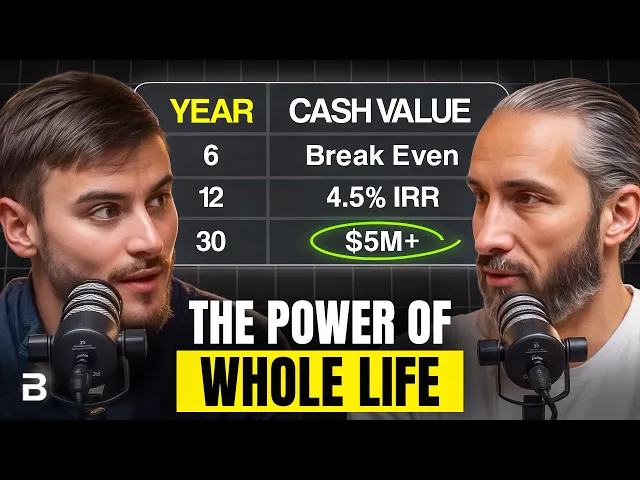
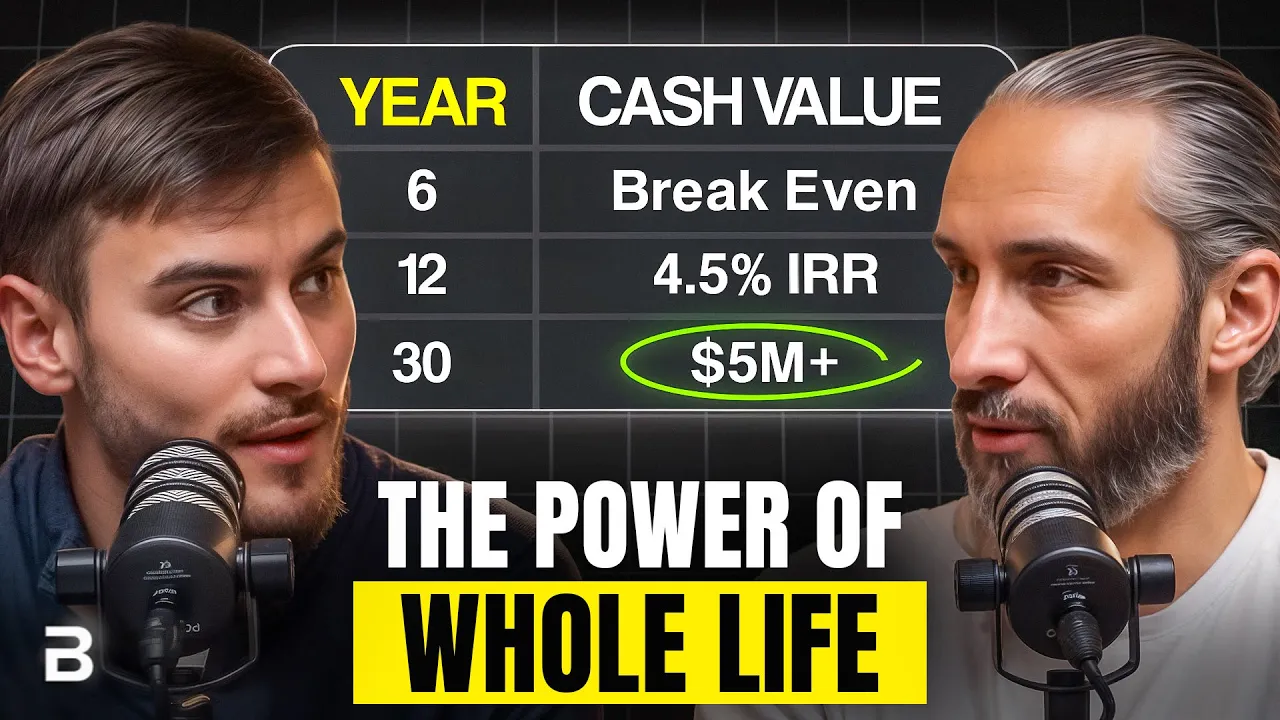
flexibility better long-term growth and it and it pays about one tenth of the commission the downside is as you'll see is the death benefit early on is a fraction of what it is and that's that's not always A positive but you can see boom instead of having a goose egg in year one and year two you're putting fifty thousand dollars in you only have 1.3 million of death benefit but you have almost forty thousand dollars of cash value available um and this is a break even of year six meaning you have more money than what
you've put in and instead of a 2.7 million dollars of cash value you have 3.2 million which is almost um benefits of 5.8 and it's 5.8 so my point is Uh the death benefit on the other one was 5.8 over 30 years so here's my whole point what if you what if you took a term insurance policy subsidized the death benefit early on knowing that the death benefit long term is going to be it's going to surpass a typical policy and you have over four hundred thousand dollars more G just in how you design a
policy so I'm not I'm not even saying this is the most efficient way to uh design a policy all I'm saying is the Way the way you over fund a policy not all contracts are created equal and so it's hard when someone you know on the radio saying life insurance is bad because you can see where they could come up with that concept and you also if we were told okay I want you to just beat this policy up here and say all things wrong let's be easy to debate and say what's wrong with it
yeah no cash first year no cash second you're only 25 000 you're 75 000 or you're 150 000 you Put in you have twenty five thousand dollars to show for it you know and you're still alive like you could yeah so it yeah it's it's not hard to kind of beat up and if we go to stock companies and then we go to you know it's actually a very good company that I'm sure that's the thing we go to we go to other companies and it look even worse right so if that's what some of
these gurus that hate this stuff we're talking about well yeah I understand what the Narrative is and and remember they're not they're thinking about this as an investment and this is going to be really important as we look at the compounded rate because I think life insurance has a phenomenal rate of return because I'm not comparing it to an investment if I was comparing it to an investment I would not be a fan of life insurance yeah um you know part of what an investment considerations need to be though is how Much time you have
to take how much mental energy you put into it um what's the volatility impact you know there's there's things that people aren't considering where if this is on autopilot but again we're going to show kind of a different system here all right I'm curious I want you to I want to talk through this because you might actually disagree with me on this all right that's cool so I I looked at a 401K Roth Roth IRA savings account and Then I also I this is life insurance it really should be over funded Max funded life insurance
okay so when it comes to safety I savings account right I think it's safe I mean you could put a savings account in a in a Roth or or a 401k that could be the fuel behind it but you still have restrictions and you also have potential changes because they can change the laws very easily right but like those are all type of private contract overall though we you could say That a savings account is safe yeah you know obviously but I I think it's mostly safe but a 401k and Ira and a Roth IRA
it's not safe like your money you're putting money in in the underlying it's just that people are mostly putting the in the market easily accessible I probably to be fair should make this orange because I think life insurance is you can access it but there is clause in an insurance policy that says worst case scenario it could take us up to six Months to get your money so you know but but Stills could do the same thing in worst case scenario um competitive growth rate I I think a savings account this is where the savings
account gives you a hit um I do I'm gonna give the benefit of Doubt for the 401K and Ira and like I will give the benefit of the doubt to the market and say the reason people put their money in is yeah I I will stand by the statement that I believe life Insurance is a great way to return and we'll we'll show that in a second leverageable I guess you can leverage against your 401k and yeah you can borrow to with restrictions but it's not it's not as a force payback that's right using post
tax dollars to put back into a pre-tax plan which is problematic life insurance CR is built into the contract gives you really areas to leverage there's guarantees in life and savings accounts there's also guarantees in life Insurance for uh you know no no percentage-based fees like there's no percentage-based fees in a savings account and life insurance there is a Mission but that's not it's not taxing you every time your account's growing free of Regulation life insurance has some of the best creditor regular regulation privacy um yeah I mean like liability protection right and that kind
of stuff yeah um you know no contribution limits like There are contra the other is because of Max and because of how much you can get yes so so maybe orange like yeah orange like but because you can get policies on other people and stuff like that what I'm saying is in a Roth IRA you have very strict regulations or even a 40K so you can even contribute to it right and so again let's talk about that in a second you have to go to a SEP IRA so Insurance can't let you be incentivized to
kill yourself right okay so if Someone is not worth a ton of money and they're trying to buy they're trying to put a massive amount of money in life insurance the insurance company is going to say number one how do you get some money number two is we can't create any incentive for you to be worth more dead than alive so there is contribution limits not based on some government agency right not based on even what the insurance company says well you can only put this amount of money into this it's Based on how much
they're willing to insure on your life and if we reverse engineer it we we can't overpay for that so yes there is contribution limits but it's it's a liberal technicality gotcha um credit section 401ks have credited protection Roth IRAs have creditor protection savings accounts don't know life insurance do deductible contributions this is the one thing that life insurance um although I wouldn't do it right I Know restricted Property Trust well I didn't deduct part of it yes right you could be like part of it there's also corporate corporations that can use life insurance but here's
the deal if you get a deduction on the front end you're you lose your tax benefit on the back end yeah I've heard of other ways I just haven't adopted them or believed that they're going to work out long term yes I yes yeah more more to come um and then when you look at tax free Growth tax-free use and then tax free passing it on obviously this is where life insurance is is Superior in my humble opinion okay so is your opinion humble though that's the real question it seems pretty strong it seems like
very convicted I am very convicted maybe you're confused on the word humble okay all right well wait um so here's this is how I am I I love this um so this and this is another I'm very proud of this so don't try to pee In my parade here this is a picture that I believe represents when I talk about life insurance being a multi-dimensional asset it's when set up and used properly will allow your money to grow to the day that you die you can control and use your money while it continues to grow
it gives you future optionality and control in the future it protects you let's talk about that future cash flow for just a minute because people will say sometimes oh well why would you ever want to Borrow to have to use your own money well you can take dividends yeah you get to take dividends out you could take withdrawals like those are all possibilities because I just know a few people with the future cash flow might say I have a whole section on life insurance and retirement if we want to go down that road it's like
you will have more cash flow if you have life insurance as a part of your portfolio versus not right there's a lot of Science Financial science that can back that up and then also it gives you I believe when life insurance is set up and used properly it gives people like you and I the ability to save more because we're not having to choose between 30 years from now and now so we are actually able to save more the compounding machine and so I like to show this one sure give me more because if if
I have to choose to put money in a 401k I'm now saying okay I want control Of my money so I'm gonna hedge I'm gonna have some money in my savings account somebody in my 401k so I'm almost diversifying my ability to compound but I can save a lot more money into life insurance because I don't have to choose I can borrow against that but I now have a greater comp money compounding now in the culture okay so lifetime in in like lifetime growth so we're going to talk about you know in section 7702 it
pretty much says when set up and used properly Life insurance is a contract that allow your money to grow tax-free can be used tax-free and passed on tax-free and because people used to call these plans section 770 like yeah it's just in the tax code yep you know like so you're already a youngster with a curse of knowledge just assuming everybody knows what you're talking about here my job is to be the viewer I love it I love it give me what those numbers mean and why it's essentially what it what it means Is if
you borrow against a a loan is not considered income and what they what they looked at is in on an insurance policy if you borrow against that is not considered income it's considered cash flow so even so that's why when you take a get a mortgage from from for a house purchase you don't have to pay income tax on on that mortgage the same thing applies to life insurance as a financial product so we're essentially able to use money it's not our money it's considered A loan and as a result we don't have to pay
taxes as we utilize Capital throughout our life all while our money and the insurance policies growing tax deferred and when we die the insurance will get paid income tax free and you you still may have that you're this passionate about life insurance maybe I don't know I get excited mainly because I believe this is the key that can unlock things for so many people if they understand how this asset can work You know getting that message out there yeah on its own I don't know it just keeps moving along yeah it's so here's here's where
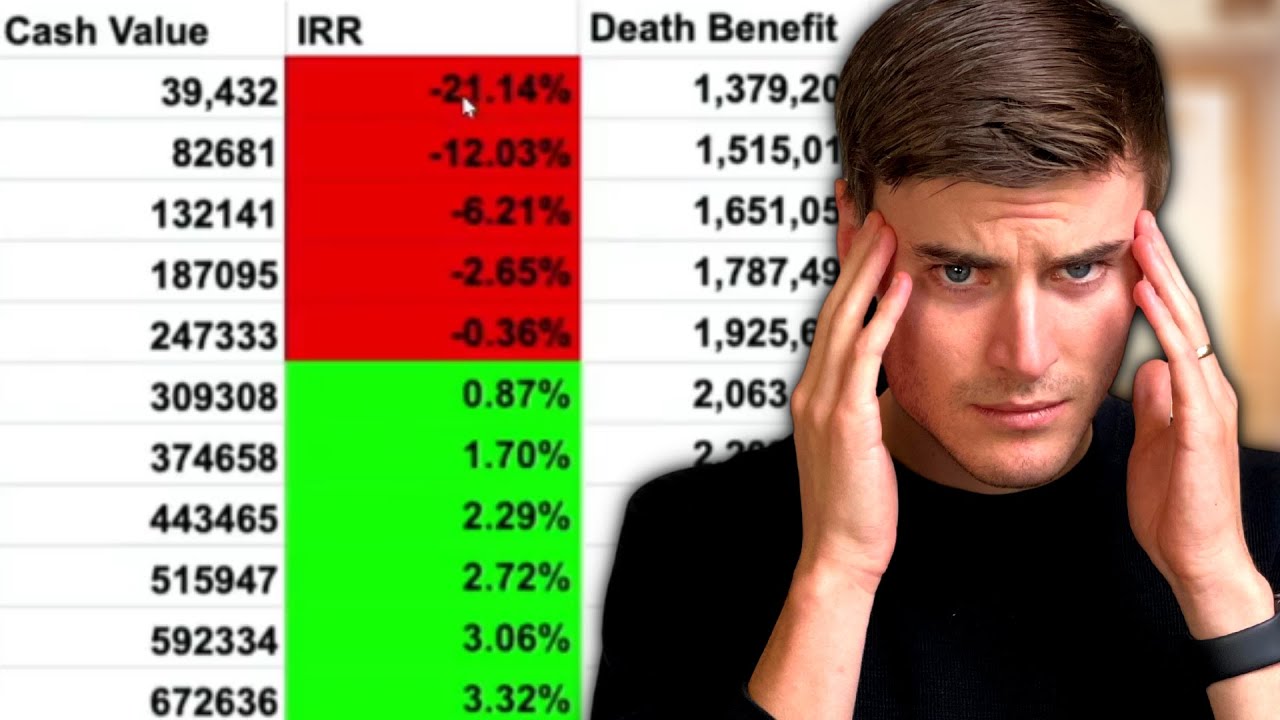
we're really gonna nerd out right is this is showing what's called The Intern rate return so Garrett how would you explain irr for the viewers it's what you actually have after expenses yes it's the actual rate of return this is like after we can say all day long commissions all these things these are actually the growth rate and If we're going to compare a investment to Insurance like and all we care about is a rate of return this is the column that we care about cool okay so this is the 50 000 policy that I
was showing you in over 30 years the internal rate return is four point five eight percent and you're being conservative with that right not giving the full or was that normal this is 4.5 is is a good rate that's over a 30-year period of time this is over 30 the last 30 years have been low interest rate environment yes and uh today I did this illustration over a year ago which tells you before the insurance Rose before the insurance rates Rose so yes this is a very conservative Outlook if you're 70 years old it's you're
not going to get these numbers so it's just all um you know relative so it's amazing that like you'll get so little debt benefit but you can fund policies I know older to perform pretty well you're just Gonna get such little it's amazing because people are like I'm too old to do this like no my my grandparents started their first policy at 70. I mean actually with the required minimum distribution they had to take from their retirement plan they filtered it over here because if they didn't take that out of their 401K they were going
to get penalized my grandma was pissed I mean did we have we have people on 75 80 years old Single pay Mac policies that are breaking even in year two I'm opening up a whole screen single paid Mac it's just basically above the corridor what the government would allow to still have full tax benefit with this right so modified endowment contract is above that you know they had to create that because of universal life you know they were buying these policies with almost no death benefit and just stuffing a bunch of money right the point
I'm Making is that's a whole can of worms but for a certain person we call it the CD alternative it can be a phenomenal CDL and what are these what CD alternative instead of CDs it's a benefit like certificate of deposit yeah alternative like CD like s-e-d-y like there's a it's a like a sketchy alternative no no no CD certainly deposit all right young man just articulate and slow down you should remind me of me when I was your age I Love this stuff um so the ideas and this is one thing that's really important
when people look at a 4.5 internal rate of return they're what they're thinking is I'm finally earning four and a half percent but you and I both know that this is representing every single year right and so let's look at what happens with the other benefits that they get right it's so the the big question is and Todd Langford who's a friend of both of ours Is has this question called compared to what and this is where we can talk about bi-term and invest the difference is when someone says I'm just going to be super
conservative 3.5 yeah because I don't want people to say well this doesn't that's what your cash value ends up at right after expenses let's assume for the moment that the next 30 Years your cash value only grows at three and a half percent remember right let's compare this to like the last 30 years Of savings accounts which weren't even earning a percent exactly like so right now we can look at the same it's kind of like oh there are four percent savings accounts and so we're comparing apples to oranges here we're talking about a time
period where interest rates are exceedingly low for an extended period it was almost zero yeah and and I'm being conservative with a year and a half ago okay so when we look at a three and a half percent and You just add taxes because in a savings account which people will understand yeah so 30 is a good tax rate it's not it's not 37 and a half is that we're not California the highest tax yeah we're not looking at all that but but it's still you know we're essentially saying in and over you got to
be making decent money yeah in an alternative account you would have to earn five percent tax or after attacks you'd get three and a half yes just to keep up with the life Insurance and if you add a fee which could represent a lots of things yeah earn six percent a lot of funds you know some people do index funds but those even have a little bit of fees but like manage funds you're at least a percent at least these fee only advisors at least a percent and you're gonna like this I I looked at
the death benefit prints of that fifty thousand dollar policy and to get a debt if we just wanted to buy a 30-year term insurance Policy it would cost almost five thousand dollars a year so if you factor that in the equation now you have to earn almost seven percent every single year without a down year life insurance in the scenario is Right life insurance is not getting you seven percent what I'm saying is in an alternative that's where you'd have to earn to end up with the same amount of money now right and you can
even see if we just stopped there People are like my investments will get more than that but we're now going to show you how you can use your money while you get this right and 6.9 year in and year out look at the dial bar I mean the what the Dow bar is this about yeah no there's essentially a research that showed what people are actually earning it's nowhere near six point you know nine percent but I've done articles and Forbes about all that it has a lot more to do with Emotion and all that
stuff but the point is you do like is there anything that else needs to be said because I am getting excited well let's go against this let's go um so the idea is when we talk about compounding a lot of people are killing the goose to slaying the golden egg right they're starting to take the interest so the levels out at age 65 at the time it's going to get the most return if you're gonna commit to a Compounding strategy which I know Garrett he just loves compound interest um it's a great selling point so
now we're going to talk about controlling use and this is where it really became alive for me because I realized I don't have to compound I don't have to choose between compounding and controlling I can have both because of how life insurance is set up and used and so I kind of think of this as like a credit card like Anyone that is Savvy with money will use a credit card not a debit card because of all the benefits you get well a because of fraud fraud B yeah you get some points and stuff yeah
yeah I mean yeah so it's it's a it's a really powerful thing and so hey look at that um so all that to say this is my wonderful beautiful drawing when it comes to it teaching people about how you borrow from a life insurance policy or how you borrow against your life Insurance policy so you have your your policy that's giving you all the benefits all the check marks that we showed earlier um you're now you're borrowing against meaning you're the insurance company will give you a loan and use your cash value as collateral and
then you can buy whatever you want I suggest buying why would I ever want to maybe interested insurance company right because your the life insurance is compounding and it's Going to give you a far greater benefit than the cost you're not interrupting that yes and it's not just the internal rate of return it's talking about all the benefits right so all that to say this is kind of a drawing that I I share of like you look at think of a human build up your emergency fund we both believe six months is a minimum build
up a six month year reserve and then everything above that is what you you can think about it as an opportunity Fund and that can be invested in investing your cash value above that amount of money is opportunity when it's there when it's not it's cruise control you're not worrying about it that's right um and so the the you know the question a lot of people ask is when does it make sense to borrow because there's a lot of people out there that are like you borrow to buy cars and you're going to be wealthy
and they're talking about Your money's com compounding in your policy then I'm saying your money's going to compound I'll say that I have borrowed to buy cars a couple times yep but the two vehicles I have now I just paid cash for them and here's why when I went to buy my first car was an Acura and I was telling you this the other day like I was able to just take the lease rate which was 262 dollars less than the Buy rate right put it in the cash value you know overfunded As much as
I could and then 39 months later bought out the car which then I took all of the payment yeah which was the 522 plus the 262 to pay back the cash value so after the normal five years I was already close to like you know I was like in a great place of almost paying a lot of that back yeah and you're gonna like this because the answer is whenever your activity is greater than the cost of borrowing you should do it so you did with risk with Risk considerations and that's what most people don't
consider yes you want to unpack that a little bit more because like to me it's got to be above 10 even if even if this number says 6.9 what is the amount of time I have to allocate towards that investment right that's that's part of my consideration what is the risk that's involved with that because I'm now taking fairly risk-free capital and allocating to something that has potential risk so This that we're in right now I used cash value to buy this yeah if I didn't I wouldn't have gotten it because I did a I
think it was like a I had five days to get all inspections done in nine days to close and you're talking about your yes and everything and so like there were other people that were wanting to have this property yeah right so so I was able to move quick and someone had fallen out of their contract and decided to opt out before their Their earnest money went hard and so I was like the woman was already frustrated because she's like I don't wanna yeah you know so I just like hey I can close quick can't
and I did now that came because I was able to just utilize my cash value to grab this place yeah and then I bought a place just up the road using my cash value I love it so it was just and that one closed even faster because the guy's amazing he's he's could you make the argument that you got Better terms you got a better value because you were able to move quick on that one it didn't make a difference but on this one it was the difference between getting the deal and not getting the
deal and even though there were two other people that were in the process of making offers and and that and one of them has offered to buy this for a lot more than I paid for it even though it's not on on the market um I still negotiated the price down a Little bit I I every it was like fifty thousand dollars less which for the the grand scheme what I paid wasn't a ton of money but that fifty thousand dollars only existed because I could move quickly if I was getting normal financing there was
no way they were going to budget and they probably wouldn't have gone with me they would have gone with someone who could pay cash and how much has this cabin and wealth Labs made you like from a Standpoint of fulfillment look man we we do immersions here yeah people are paying twenty five thousand dollars per immersion I don't I don't know if I would do immersions if I didn't have this place like I had done emergence at offices this is not the same thing um you know the family memories that we have yeah I don't
know what the real estate market having some volatility but I know that this was up this was up um like 67 percent in the first three years I owned it in value I mean because I bought it in 2018 and by 2020 I had an offer it was three quarters of a million more than I paid for it so you know I mean so what other paper asset can you own in your portfolio that's continuing to get you all the benefits and give you the ability to do this like there's not a lot there's a
there's like some that have elements of it right like you can have a brokerage account yeah And you can get a line of credit against that brokerage account and preferred interest rate but you could also have a margin issue where if your if the market goes down and you have that loan out you have to then pay back part of that loan so that you're back in Balance so that's that's a concern and there's no death benefit that comes with it and those brokerage accounts are not tax advantage right unless they're in Beauty bonds so
this This chart from a fi from a financial perspective is something for you to look at but going back to what you're talking about I wouldn't use my policy to buy a 12 investment because I value control more than what I could make so explain what you mean by control cost too okay so when I talk about control costs it's the cost it's the borrowing it's the cost of you're usually controlling by people's money yeah so if I in this case scenario we're using a five percent loan Cost if it's only two percent you're at
a loss yeah you're financially five percent Break Even but you're still spending time yeah seven percent yes you have a honest if you can get if you're paying five and you get seven it's like buying something for five bucks and selling it for seven bucks that's a forty percent markup yes that's the number you're using yes um and then you know a five percent control costs to earn twelve percent yes on paper yeah That's like buying a five dollar Hammer selling it for twelve dollars it's 140 because your Paul your money is growing in your
policy and so that's that's the concept of like a lot of people use this in option trading and other things you're using leverage and so trades you're not doing any good for society you should just you should literally just stop doing it it's stupid and so this is uh and then this is this is the picture That a lot resonates with a lot of people it's it's the you know it's my version of the cycle of creation is you know you have you have money that needs to be created build up an emergency fund have
an opportunity fund and the emergency department opportunity funds all your cash value is just Which percentage right all right to summarize here this is what it looks like you want a company that is a mutual company Been around for over a hundred years worth multi-multi-multi multi multi billions of dollars if not a trillion there's one that have a policy with it's worth a trillion um you want to over fund so you're putting a base premium with puas so you have more cash value you want to make sure you have the right amount of death benefit
that could either be in one policy depending on your cash value or a Term writer or an additional Term Policy in addition to this over funded policy um as that builds up and you have at least your your you know six months liquid everything above that when the right opportunities come for investing you can utilize this cash to capitalize on that and then you know like I remember I bought this real estate where it was in bankruptcy they hadn't it was land and I bought out from bankruptcy and then I developed the the two four
Plexes and then I use my cash value for that development and then I used the rental income to pay back the policy over time so I was getting the real estate it was paid off other than the loan I had against at the insurance company then those renters paid back that over time so that's that's one of the strategies so we looked at what happens when you don't over fund versus when you do over fund we've looked at the numbers what happens when you get The benefit of not having to pay for term insurance and
you don't have to pay for the taxes and what starts to look at we compared this to savings accounts or Roth IRAs or 401ks and you know where's the green light versus the red light and I think Caleb's going to add some orange lights to this after uh you know I give him a hard time but ultimately hopefully this gives you a more comprehensive vision and view of how Insurance could work for you and you can then have a Death benefit that we haven't even got like I you know I recommend picking up what would
the Rockefellers do the and asset like I would go to the chapter where I talk about buy net worth build cash flow because that's going to unlock the value of this debt benefit when you're older and how that could increase your cash flow twenty percent thirty percent forty percent in in extreme situations up to 50 percent and for those people who plan on being Successful rather than buying term investing the difference and then all of a sudden not having insurance and having an estate planning attorney go you're having a state tax problem you need to
buy insurance and now you're you're in your 70s and you might not have the health for it like let's just plan properly now and have it be a turn or a cycle of your money so that cash flow that goes through this and funnels through this brings that death benefit Along for the ride so it feels like it's no additional outlay and it doesn't harm or diminish your overall assets it actually becomes a tool that enhances it how do I do on my summary I think you did amazing um thanks for showing us some numbers
here man instead of uh you know giving them plenty of thinking thanks for interrupting me when I'm in my flow well if you're gonna have me here that's the I used to get comments all the time like Garen doesn't listen it's like it was very true I felt like I've gotten better at listening yeah yes yes you know I mean there was nowhere other to go then to get better but yeah there you go bars you said somewhere thank you guys