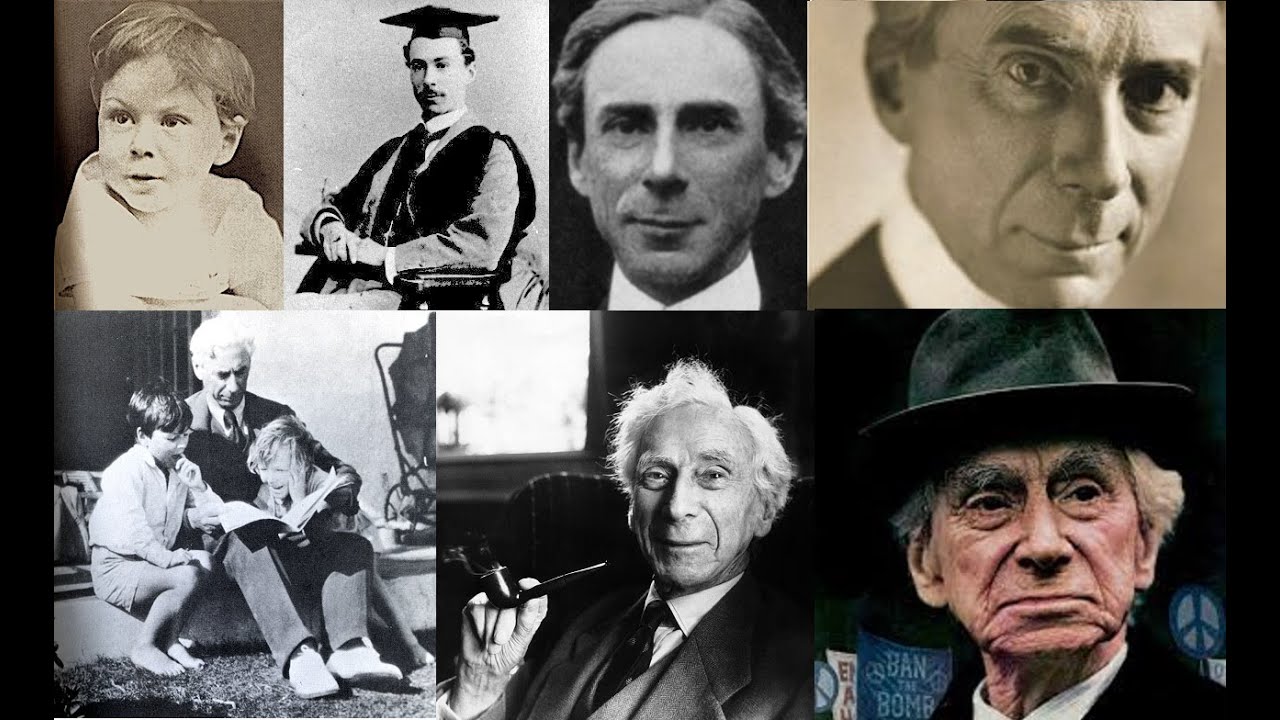
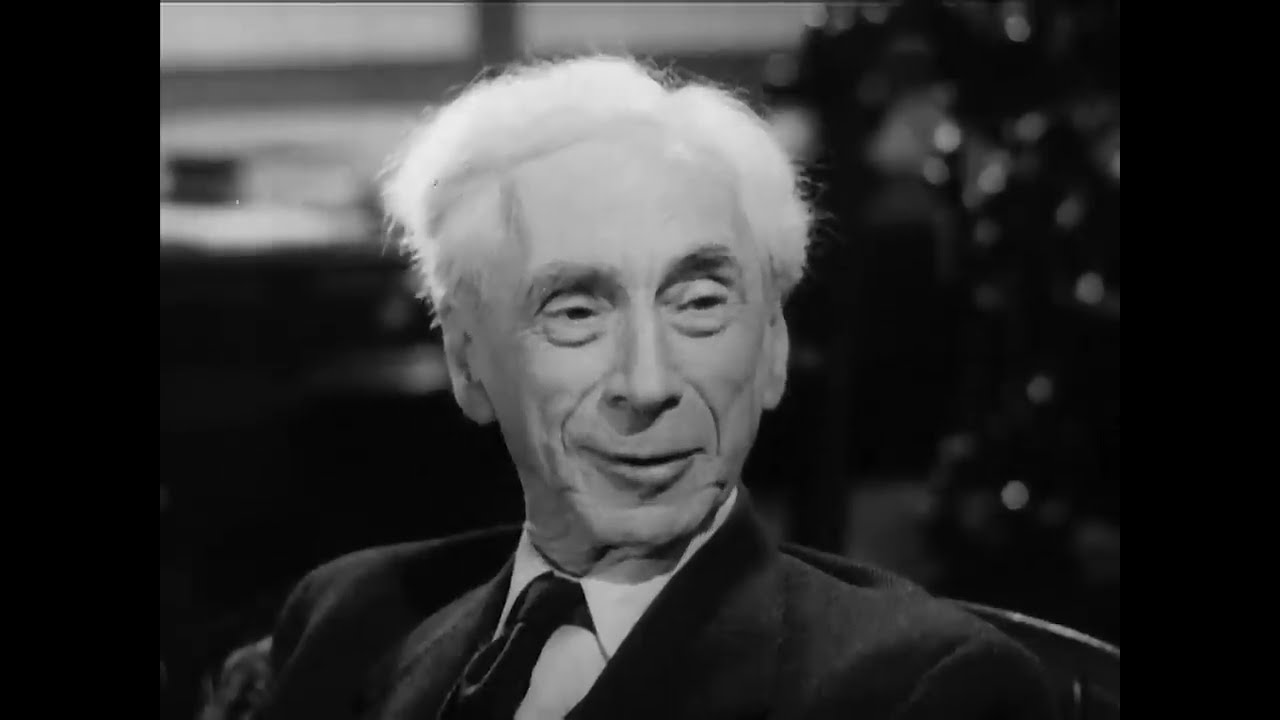
in 1948 the bbc broadcast a debate between bertrand russell and fc coppelston concerning the existence of god lord russell who died in 1970 will be remembered for many reasons not least for his important contribution to the development of logic father coppelston is a jesuit priest now principal of heathrob college and professor of the history of philosophy in the university of london brussels position in the debate is that of an agnostic copistan's position is that of a believer who holds that the existence of god can be proved we shall listen in a moment to an edited
portion of this debate that part in which russell and coppelson discuss what is sometimes called the argument from contingency this is a form of cosmological argument like any form of cosmological argument the argument from contingency begins with an empirical premise one whose truth is known through experience this premise is of course that there are contingent things a contingent thing according to cobblestone is one which does not contain within itself the reason for its existence if we are to explain why a particular contingent thing exists we must mention in so doing some other thing or things
on which its existence depends those who accept the argument from contingency hold that we must in the long run have recourse to some non-contingent or necessary thing if we are to explain the existence of contingent things either the principle of sufficient reason is false and there is in the end no sufficient explanation why contingent things exist or else there is something having a property peculiar to god namely of containing within itself the reason for its existence if we find it unacceptable that the existence of contingent things should in the end have no explanation we must
it is argued conclude that there is a god we join the discussion at the point where coppelston states the argument from contingency in the form in which he himself favors it well for clarity's sake i divide the argument into distinct stages first of all i should say we know that there are at least some beings in the world which do not contain in themselves the reason for their existence for example i depend on my parents and now on the air on food and so on now secondly the world is simply the real or imagined totality
or aggregate of individual objects none of which containing themselves alone the reason of their existence there isn't any well distinct from the objects which form it any more than the human race is something apart from the members therefore i should say since objects or events exist and since no objective experience contains within itself the reason of its existence this reason um the totality of objects must have a reason external to itself and that reason must be an existent being well this being is either itself the reason for its own existence or it is not if
it is well and good if not then we must proceed further but if we proceed to infinity in that sense then there's no explanation of existence at all so i should say in order to explain existence we must come to a being which contains within itself the reason for its own existence that is to say which cannot not exist this raises a great many points and it's not altogether easy to know where to begin but i think that perhaps in answering your argument the best point with which to begin is the question of a necessary
being the word necessary i should maintain can only be applied significantly to propositions and in fact only to such as our analytic that is to say such as it is self-contradictory to deny i could only admit a necessary being if there were a being whose existence it is self-contradictory to deny i should like to know whether you would accept leibniz's division of propositions into truths of reason and truths affect the former the truth of reason being necessary i certainly should not subscribe to what seems to belive its idea of truth and reason and truth of
fact since it would appear that for him there are in the long run only analytic propositions i don't want to uphold the whole philosophy of leibniz i've made use of his argument from contingent and necessary being basing the argument on the principle of sufficient reason simply because it seems to me a brief and clear formulation of what is the in my opinion the fundamental metaphysical argument for god's existence but to my mind a necessary proposition has got to be analytic i don't see what else it can mean and analytic propositions are always complex and logically
somewhat late rational animals are animals is an analytic proposition but a proposition such as this is an animal can never be analytic well detect all the propositions that can be analytic are somewhat late in the build-up of propositions take the proposition if there is a contingent being then there is a necessary being i consider that that proposition hypothetically expressed is a necessary proposition if you are going to call every necessary proposition an analytic proposition then in order to avoid a dispute in terminology i will agree to call it analytic though i don't consider it a
tautological proposition but the proposition is a necessary proposition only on the supposition that there is a contingent being that there is a contingent being actually existing has to be discovered by experience and the proposition that there is a contingent being is certainly not an analytic proposition though once you know i should maintain that there is a contention being it follows of necessity that there is a necessary being the difficulty of this argument is that i don't admit the idea of a necessary being and i don't admit that there is any particular meaning in calling other
beings contingent these phrases don't for me have a significance except within a logic that i reject the contingent being is a being which has not in itself the complete reason for its existence that's what i mean by a contingent being you know as well as i do that the existence of neither of us can be explained without reference to something or somebody outside us our parents for example necessary being on the other hand means a being that must and cannot not exist you may say that there is no such being but you will find it
hard to convince me that you do not understand the terms i am using if you do not understand them then how can you be entitled to say that such a being does not exist if that is what you do say well i will say that what you have been saying brings us back it seems to me to the ontological argument that there is a being whose essence involves existence so that his existence is analytic that seems to me to be impossible and it raises of course the question what one means by existence and as to
this i think a subject named can never be significantly said to exist but only a subject described and that existence in fact quite definitely is not a predicate will you say i believe that it is bad grammar or rather bad syntax to say for example ts eliot exists one ought to say for example the author of murder in the cathedral exists are you going to say that the proposition the cause of the world exists is without meaning you may say that the world has no cause but i fail to see how you can say that
the proposition that the cause of the world exists is meaningless put it in the form of a question has the world a cause or does the cause of the world exist most people surely would understand the question even if they don't agree about the answer certainly the question does the cause of the world exist is a question that has meaning but if you say yes god is the cause of the world where using god as a proper name then god exists will not be a statement that has meaning that is the position that i'm maintaining
because therefore it will follow that it cannot be an analytic proposition ever to say that this or that exists take for example suppose you take as your subject the existent round square it would look like an analytic proposition that the existent round square exists but it doesn't exist no it doesn't then surely you can't say it doesn't exist unless you have a conception of what existence is as to the phrase exists in round square i should say that it has no meaning at all i quite agree then i should say the same thing in another
context in reference to a necessary being well we seem to arrive at an impulse to say that a necessary being is a being that must exist and cannot not exist has for me a definite meaning for you it has no meaning well we can press the point a little i think a being that must exist and cannot not exist would surely according to you be a being whose essence involves existence yes a being the essence of which is to exist but i should not be willing to argue the existence of god simply from the idea
of his essence because i don't think we have any clear intuition of god's essence as yet i think we have to argue from the world of experience to god yes i quite see the distinction but at the same time for a being with sufficient knowledge it would be true to say here is this being whose essence involves existence yes certainly if anybody saw god he would see that god must exist so it i mean there is a being whose essence involves existence although we don't know that essence we only know there is such a being
yes i should add we don't know the essence our priori it is only true our posteriori through our experience of the world that we come to a knowledge of the existence of that being and then one argues the essence and existence must be identical because if god's essence and god's existence were not identical then some sufficient reason for this existence would have to be found beyond god so it all turns on this question of sufficient reason and i must say you haven't defined sufficient reason in a way that i can understand what do you mean
by sufficient reason you don't mean cause not necessarily a cause is a kind of sufficient reason only contingent being can have a cause god is his own sufficient reason but he is not cause of himself by sufficient reason in the full sense i mean an explanation adequate for the existence of some particular being but when is an explanation adequate suppose i am about to make a flame with a match you may say that the adequate explanation of that is that i rub it on the box well for practical purposes but theoretically that's only a partial
explanation an adequate explanation must ultimately be a total explanation to which nothing further can be added then i can only say you're looking for something which can't be got and which are not not to expect it to say that one has not found it is one thing to say that one should not look for it seems to me rather dogmatic what i'm doing is to look for the reason in this case the cause of the objects the real or imagined totality of which constitute what we call the universe you say i think that the universe
or my existence if you prefer or any other existence is unintelligible i shouldn't say unintelligible i think it is without explanation intelligible to my mind is a different thing intelligible has to do with the thing itself intrinsically and not with its relations well my point is that what we call the world is intrinsically unintelligible apart from the existence of god you see i don't believe that the infinity of the series of events i mean a horizontal series so to speak if such an infinity could be proved would be in the slightest degree relevant to the
situation if you add up chocolates you get chocolates after all and not a sheep if you add up chocolates to infinity you presumably get an infinite number of chocolates so if you add up contingent being to infinity you still get contingent beings not a necessary being an infinite series of contingent beings would be to my way of thinking as unable to cause itself as one contingent being however you say i think that it is illegitimate to raise the question of what will explain the existence of any particular object it's quite all right if you mean
by explaining it simply finding a cause for it well why stop at one particular object why shouldn't one raise the question of the cause of the existence of all particular objects because i see no reason to think there is any the whole concept of course is when we derive from our observation of particular things i see no reason whatsoever to suppose that the total has any cause whatsoever i can illustrate what seems to me to be your fallacy every man who exists has a mother and it used to be your argument is therefore the human
race must have a mother but obviously the human race hasn't a mother that's a different logical sphere well i can't really see a parity if i was saying every object has a phenomenal cause therefore the whole series has a phenomenal cause there would be a parity but i'm not saying that i'm saying every object has a phenomenal cause if you insist on the infinity of the series but the series of phenomenal causes is an insufficient explanation of the series therefore the series has not a phenomenal cause but a transcendent cause well that's always assuming that
not only every particular thing in the world but the world as a whole must have a cause for that assumption i see no ground whatever if you give me a ground i'll listen to it well the series of events is either caused or it's not caused if it is cause there must obviously be a cause outside the series if it's not caused then it's sufficient to itself and if it's sufficient to itself it is what i call necessary but it can't be necessary since each member is contingent and we've agreed that the total is no
reality apart from the members therefore it can't be necessary and i should like to observe in passing that the statement of the world is simply there and is inexplicable can't be got out of logical analysis i cannot see how science could be conducted on any other assumption than that of order and intelligibility in nature the physicist presupposes at least testedly that there is some sense in investigating nature and looking for the causes of events just as the detective presupposes that there is some sense in looking for the cause of the murder the metaphysician assumes that
there is sense in looking for the reason or cause a phenomena and not being a cuntian i consider the metaphysician is as justified in his assumption as the physicist when south for example says the world is gratuitous i think that he hasn't sufficiently considered what is implied by gratuitous i think there seems to be a certain unwarrantable extension here the physicist looks for causes that does not necessarily imply that there are causes everywhere a man may look for gold without assuming that there is gold everywhere if he finds gold well and good if he doesn't
he's had bad luck the same is true with the physicists look for causing as for sartre i don't profess to know what he means and i shouldn't like to be thought to interpret him but for my part i do think the notion of the world having an explanation is a mistake i don't see why one should expect it to hear your general point then lord russell is that it's illegitimate even to ask the question of the cause of the world yes that's my position well if it's a question for you has no meaning it's of
course very difficult to discuss it isn't it yes it is very difficult but you say shall we pass on to some other issue let's




![Chris Langan - The Interview THEY Didn't Want You To See - CTMU [Full Version; Timestamps]](https://img.youtube.com/vi/9miVG2xT5jY/maxresdefault.jpg)