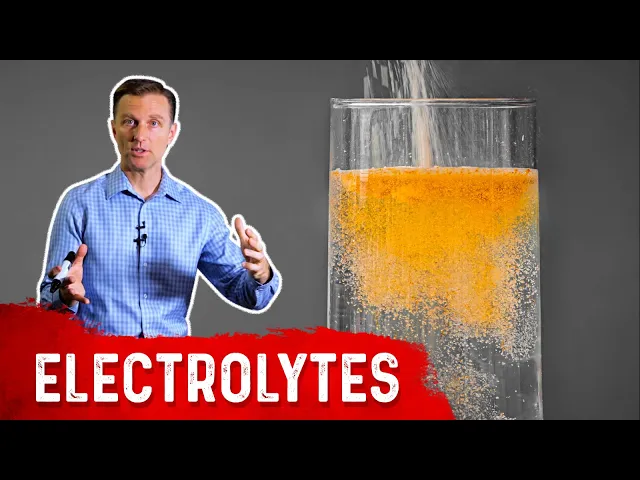
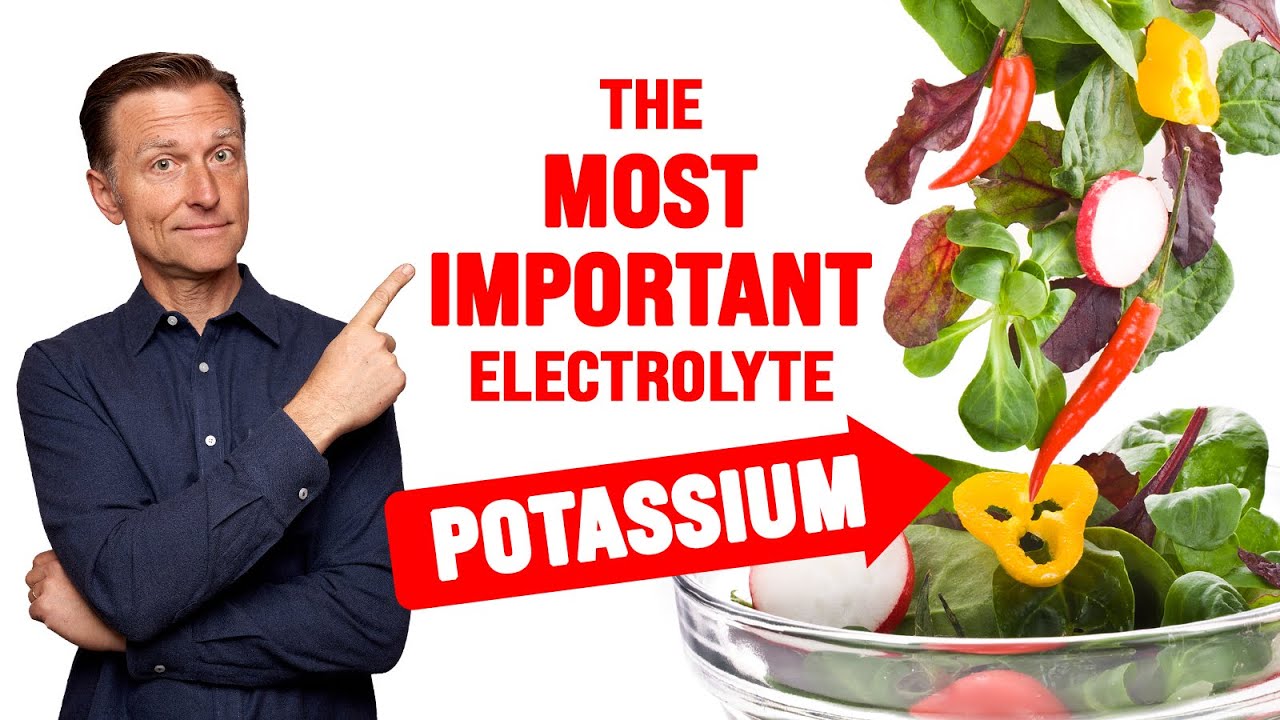
Now we're going to talk about five electrolytes. There are others, like phosphorus and bicarbonates; those tend to buffer the pH if things are too acidic or too alkaline. But I'm going to focus on these five right here.
Let's start with sodium. Sodium is a mineral that helps hydrate things because water is attracted to it. Of course, if you have too much sodium, you're going to retain fluid, but if you don't have enough sodium, you're not going to hydrate the cells as well.
Also, sodium is involved in oxygen transport. So if you're getting swelling in the red blood cells, for example, you're not going to be able to carry oxygen to the body, and you're going to actually kind of run out of air. You could have all sorts of problems with endurance, for example, if you're low in sodium.
Let's say you do this huge workout and you're sweating and you lose your sodium; you're going to be very, very tired, and you're not going to be able to walk up the stairs because you're going to run out of oxygen. Sodium also works with chloride, as in salt, for various things, but sodium also works with other minerals like potassium. There's a pump called the sodium-potassium pump, and the purpose of that pump is to generate electrical potential.
You can look at that as like a battery. These two are necessary in making sure that there's enough electrical charge inside that cell because your cells are mini batteries. They have voltage, and the reason why your body is designed like that is to power the nerve and muscle interaction—the contraction of the muscle and the firing of the nerves.
Okay, so if you don't have enough sodium or potassium, that pump can't work, and you're not going to be able to activate the nerve impulses or the muscles to work. So there's a lot of problems that can happen with potassium deficiency and sodium deficiency, and you're going to feel tired and weak on both of these. Now, when we get to magnesium, magnesium controls the absorption of sodium and potassium, so this is a very important mineral as well.
Most of the population is deficient in magnesium. Magnesium is at the core of chlorophyll, which is in all the leafy greens. An average person consumes probably a cup and a half of vegetables per day, and they're usually deficient in magnesium.
Magnesium also is associated with oxygen, like sodium, but it's mainly about the relaxation of the muscle, whereas calcium is about muscle contraction. So these work together to contract and relax the muscle. Magnesium is there to also prevent cramping, so when you're deficient in magnesium, you get muscle cramps; but if you're deficient in calcium, you can also get muscle cramps.
Magnesium is really necessary in your workouts, especially if you do long workouts or intense workouts. Let's say you're doing a bench press where you're doing some type of intense pushing motion or something that requires sustained contraction; then you need a lot of magnesium. If you find that you can't work out very long or very intensely, you may need magnesium, or you may need calcium.
I notice when people are deficient in calcium, they lose their grip strength; they just cannot lift as much weight. But calcium is also about neuromuscular excitability, so it's the nerve stimulus of the muscle, just like potassium. Right?
If there is a calcium deficiency, what can happen is you can get too much of this and develop tetany, where you have this little twitching going on either in the left eye, your arm, or throughout the body. Now, this can also happen in the heart too, so heart palpitations really are a problem with electrolytes. When you're low on calcium, you get a muscle cramp, and you'll also have skeletal muscle weakness.
Then chloride works with sodium, and it has everything to do with hydration. Now, there's a lot of other functions of these minerals that relate to other things that aren't associated with the electrolytes, so I just wanted to focus in on these electrolytes for this video. Hey, before you go, real quick, I have a course entitled "How to Bulletproof Your Immune System.
" It's a free course, and I want you to take it. Here's why: Here is you; here is your environment. Everyone is focused on this over here—avoiding your environment—but what about strengthening your immune system?
That's what's missing. This course will show you how to bulletproof yourself so you can tolerate and resist your environment much better by strengthening your own immune system. I put a link down in the description right down below.
Check it out and get signed up today!