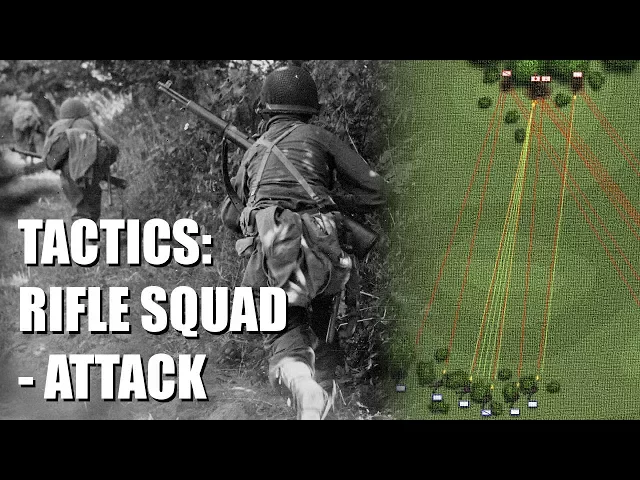
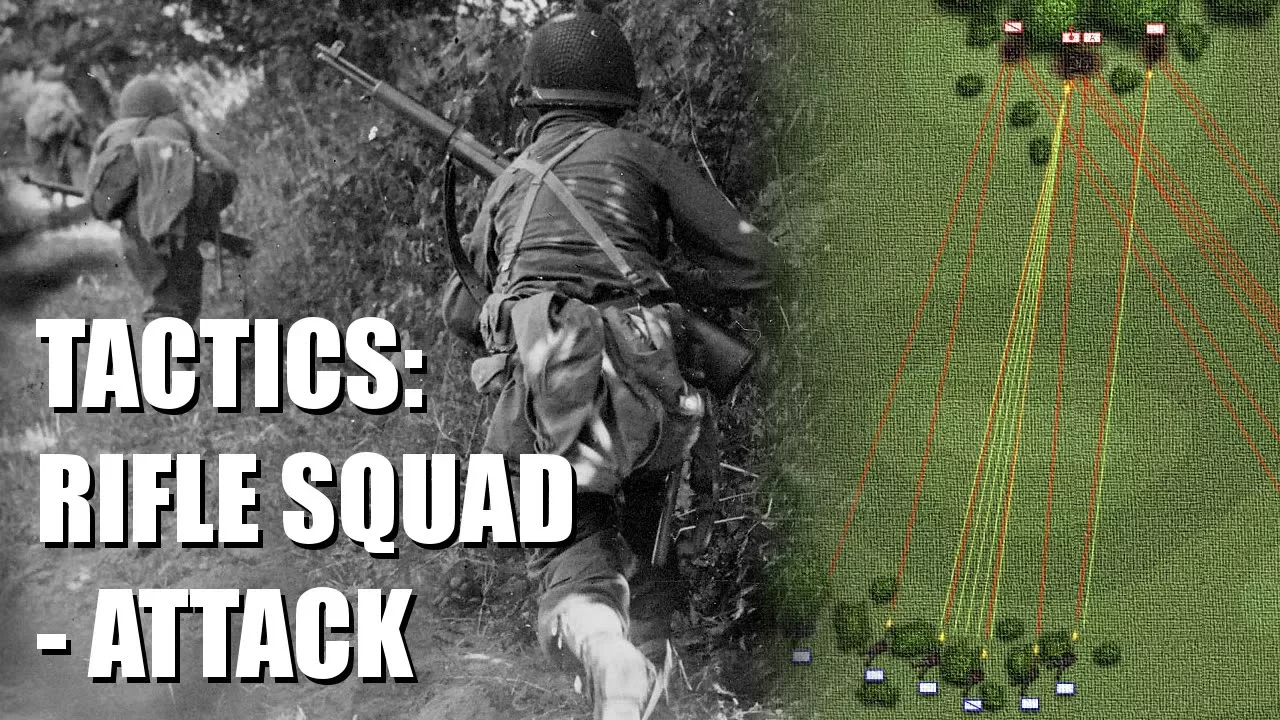
Simple fire-and-movement tactics win the fight. This principle cannot be stressed too much. It is the one thing that will break a stalemate in battle.
Whenever a unit is stopped by fire, some part of it must promptly return the fire while some part initiates movement. I think you'll find that many fundamentals of modern small unit tactics are both universal and relatively timeless, as there are only so many ways to go about it. But, each nation, and each time period, will have its own idiosyncrasies.
With that in mind, this video will cover one specific nation's army at one specific time in history, and the terminology herein will appropriately reflect that focus. For the sake of simplicity, this video will feature a squad operating by itself, while, ordinarily, squads attacked as part of the platoon effort, and the platoon as part of the company, and so on. We'll start with our demonstration squad here leaving its forward "assembly area" during a phase of the attack known as the "approach march.
" While battle may have been chaos, there were defined steps to offensive action. The attack transitioned between various set stages, and progress was marked by reaching successive "phase lines. " The squad's attack began when it crossed the "line of departure," commonly abbreviated "LD.
" during a coordinated attack the squad might first occupy an "attack position," the last covered and concealed position before reaching the LD. For those wandering, "cover" provided protection from enemy fire, whereas "concealment" provided protection from enemy observation. So a hill provides both cover and concealment, whereas a smoke screen provides concealment but no cover.
I suppose bulletproof glass is one of the few things that could provide cover but not concealment. Anyway an attack position was the last place to finish checks, finalize orders, and designate rallying points before all hell broke loose. "Rallying points," also confusingly referred to in some manuals as "assembly points," Were defined as a: A rallying point could be to the rear of the squad, such as a location where patrol could regroup if it was ambushed, or it could be to the squad's front where its members could regroup, if for example, they were scattered during a river crossing.
From the assembly area or attack position, a squad passed through the line of departure at their assigned "point of departure," employing one of the tactical formations I discussed in my previous video; ordinarily a column or diamond. If the location of the enemy was not known, scouts tried to discover them without being discovered first themselves. Upon spotting the enemy, a scout signaled, "enemy in sight," from some type of concealed position.
(It would have been unhealthy to stand up and hold a rifle over your head in full view of enemy personnel. ) If the scouts were detected first, things happen quickly. According to doctrine, when scouts were fired upon the squad immediately took cover and the scouts returned fire with tracer ammunition to point out the enemy positions.
There was a practiced manner for G. I. s to hit the ground and, once there, roll over sideways into a firing position.
Training film narration: "Taking cover. Rolling to escape gunfire because the enemy aims where you drop. " The squad leader made a quick "estimate of the situation.
" He had to decide whether or not the enemy position could be reduced by his squad alone. Generally, a single squad would not attack an entrenched enemy squad, unless complete surprise was assured as it was about the only advantage they had. A similar sized defending force enjoyed several advantages of cover, concealment, firepower, and pre-selected and cleared fields of fire.
An attacker, on the other hand, had to advance exposed above the ground and couldn't bring all of his weapons to bear while he was moving. Fortunately, this video can continue because our intrepid squad leader has decided he can take the enemy MG with his squad alone. He has what was called an "adequate superiority of force.
" Thus begins a new phase of the attack: the "fire fight. " The squad leader needed to bring his squad up where it could most effectively engage the enemy. This may or may not have been on line of scouts, as they could have been caught out in a terrible position.
The purpose of the firefight was to gain "fire superiority. " Doctrinally, the squad leader: It seems it would be relatively easy to classify any firefight you were personally in at the time as some level of emergency. As with everything, there was a prescribed way to go about this: You'll read bogus claims floating around the internet that G.
I. s back then were only trained to fire at targets they could clearly see, but as you can clearly see, that's demonstrably false. As the basic field manual for the M1 plainly puts it: After all: This type of fire was known as "distributed fire," as opposed to "concentrated fire" which was fire delivered against point targets.
Targets were also called out in a prescribed manner: The manual gives examples such as, "Range 425. Left front. Sniper at base of dead tree.
" or "Range 500. Right front, watch my tracer. Machine gun.
" The manual also mentions that distinct and fleeting targets could be pointed out with extreme brevity using something as simple as, "Those men. " It could also be the other way around, with the assistant squad leader in charge of the BAR team while the squad leader commanded the riflemen; whichever circumstances demanded. Fire control was aided by arm and hand signals.
People may have an impression that arm and hand signals are some sort of modern tacti-cool invention, or that their only role was to facilitate stealth, but they were often necessary because the battlefield was a very noisy place. Basic voice commands were supplemented by these signals. And there were no squad radios.
So, if soldiers wanted to communicate outside of voice range, but within visual range, it was a simple way to do that. All G. I.
s would be familiar with a few dozen gestures; many of which haven't changed since, and were already old at the time. Some have remained exactly the same for many generations. Others have evolved slightly over the decades, but as you can see, their lineage is plainly evident.
And they go back further than these illustrations. There are descriptions of them in 19th century drill manuals. That's roughly between 457 and 914 meters.
Other training aids flatly state: That's about three hundred and sixty-six meters. Fire beyond that was considered ineffective and therefore a waste of ammo. A defender with a decent stockpile of ammunition could open fire at a greater distance, but attacking riflemen could only carry so much ammunition and they were going to need it at later stages.
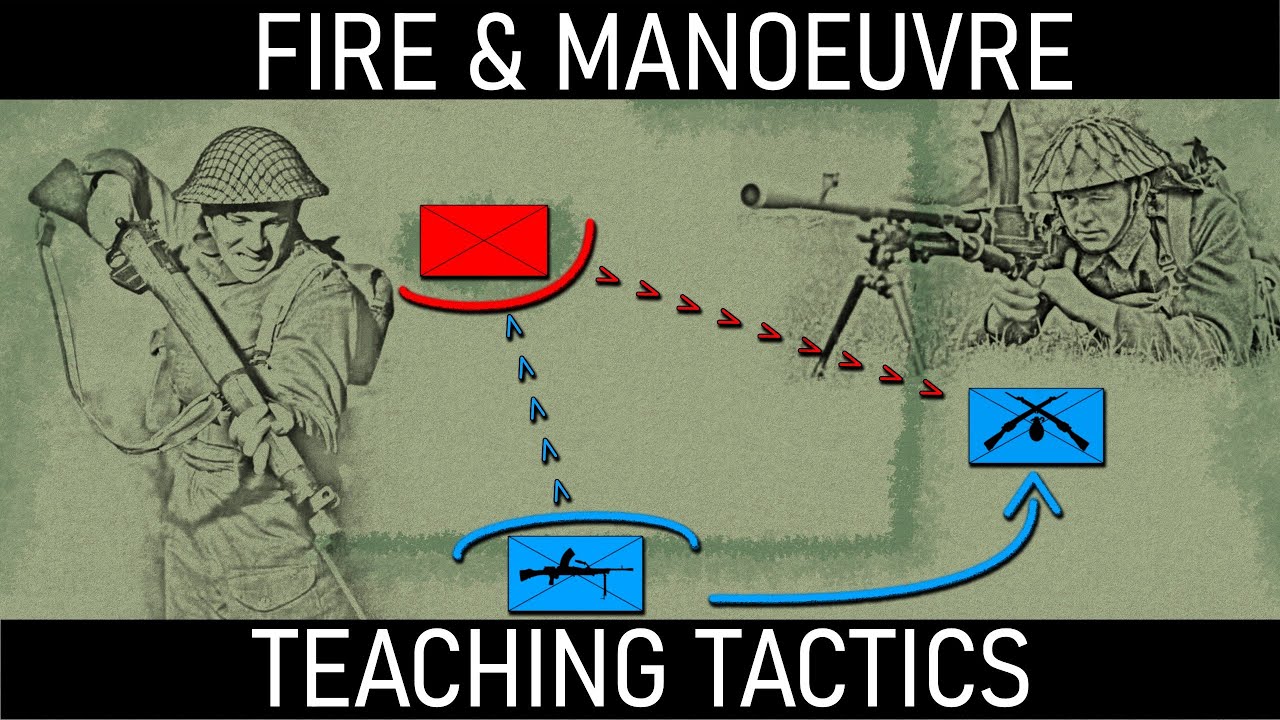
With that in mind: In combat, the squad's usual method of advance was "fire and movement," which was also known at the time as "fire and maneuver. " Both of these terms were used interchangeably, and they were both simply defined in TM 20-205 as a" A basic procedure was to split the squad in two, as written about in a 1944 'Army Life' article about The Infantry School: FM 7-10 notes that: And that: So, fire and maneuver within the squad could be conducted with one-half of the squad supporting the other. A Silver Star citation for a sergeant Bobby G.
Mays serving in the 80th Infantry Division shows this method in use: The 'Infantry Journal' article "Battle Drll for Squads and Platoon" says of the scouts: An accompanying illustration shows the "Able" bubble merging with the "Baker" bubble during a squad attack. But the training material points out that a twelve-man squad could be divided into two six-man teams, three four-man teams, four three-man teams, or six two-man teams. So fire and maneuver could be carried out by pairs as illustrated in this account of an attack in France: In its simplest form, it could be done by two men covering each other, as described by Michael Bilder in his book 'Foot Soldier for Patton": Stalwart enemy resistance may have required more men to cover the advance of fewer men: Fire and movement is a simple procedure on its face but it required a lot of training to be carried out effectively.
According to the rather redundantly titled 'Leadership for American Army Leaders': In an environment of constant grinding attrition, and an endless stream of fresh replacements, this otherwise simple idea could be difficult to properly execute. A 1944 article in the monthly 'Infantry Journal' reminded small unit leaders that: Fire and movement was one of the more hazardous phases of the attack due to fire going in both directions, from in front and from behind a moving soldier. An 'Infantry School Mailing List' article from July of 1944, detailing the Patrol Close Combat Course, which was run with a team of four in two buddy pairs, states that a soldier: Once members of the squad were close enough to the enemy, the final phase of the attack could be launched: the "assault," where ground had to physically be taken from the enemy.
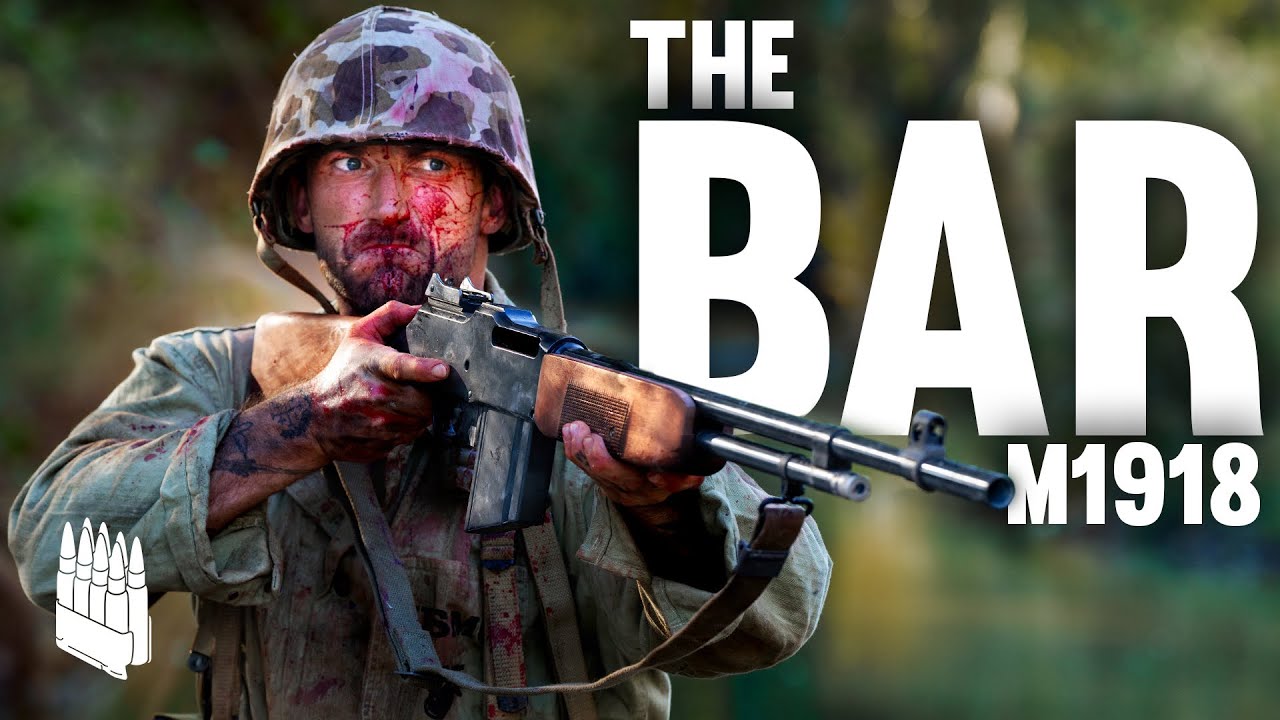
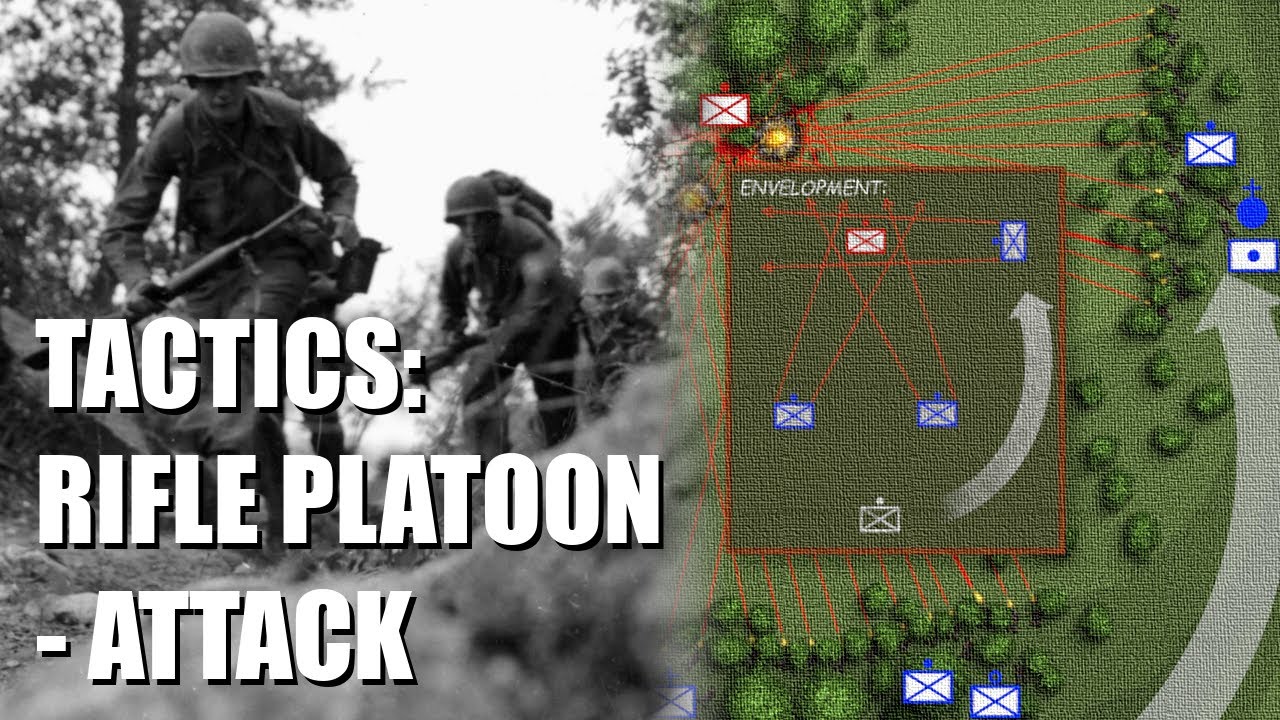
The classic textbook squad attack always had some sort of covered or concealed approach where the maneuvering element could outflank the enemy, This was obviously not always the case, but the "single envelopment," the old, "We'll keep 'em busy from the front while you go around and hit 'em on the side" was the goal in a perfect world. Training film narration: "One man with the BAR has the firepower equal to five men with the M1 and can pin the enemy down just as effectively, the five riflemen are now free to maneuver. They can come around and try to hit him on the flank.
" If the base of fire element could occupy its firing position and the maneuver element could occupy its assault position stealthily, without alerting the enemy, then that was obviously preferred. Under favorable conditions, if the squad could close with the enemy undetected, the swift employment of the BAR team may be all that was required to neutralize them. An automatic rifleman, who served in the 103rd Division, recounted this action near the German border at the end of November of 1944: But, sometimes the attack needed to be carried straight in, a frontal assault, with the squad continuing to fire and move as it pushed straight on through the objective the way it had come.
The various small arms field manuals illustrated yet another scheme, a pincer attack, in which the core of the BAR team remained in a position to provide fire support, while the remainder of the squad split in two and advanced to alternating firing positions on both flanks simultaneously, each covering the other's advance until either (or both) were in a position to conduct the final assault. Whichever way they arrived, the maneuver element occupied an "assault position," the last covered and concealed position short of the objective; the spot where the final assault would be launched. Now, a heavy hail of surprise rifle fire and grenades may just annihilate the enemy outright, but their positions still had to be taken underfoot.
The assault itself was the most precarious moment of the attack. With the interruption of the highest volume of fire being poured on them, the window was open for the enemy to re-man their defenses with purpose. For the safety of the assaulting troops, the base of fire element had to shift their fire.
This could occur when they saw their fire was about to be masked by the leading riflemen, or once those riflemen passed a predesignated spot on the ground. There were also several emergency means such as flares, colored smoke, tracers fired vertically, suggested as "shift fire" signals. At that moment, it was up to the assaulting riflemen themselves to generate enough fire to maintain fire superiority.
One of the ways to do this was "assault fire. " This was a bit of a barge-in guns a-blazin' approach, a task which was well suited for the semi-automatic M1. So, assault fire is both fire and movement provided by a soldier at the same time as he closed the final distance with the enemy.
It was not the recommended tactic for dislodging a determined foe, but it was used to rapidly gobble-up an objective once the enemy's will had been broken. The assault was also where most manuals of the time (from around the world) paid lip service to the so-called, "SPIRIT OF THE BAYONET. " As well as the need for defenders to stand their ground against it.
But unless you were a Japanese soldier, a bayonet charge was usually not in the cards. It certainly happened, and with a war as enormous as the Second World War there are plenty of examples to cite, but as a percentage of total assaults carried-out it was exceedingly rare. (Again, with certain exceptions depending on time and theater.
) For the most part, G. I. s in Europe thought a bayonet was a can opener that fit on a rifle.
But for the Japanese the Spirit of the Bayonet was more than a slogan. 'Tactical and Technical Trends' published a translation of a Japanese document titled, "Land Warfare Tactics to Use Against U. S.
and British Forces," which notes: So for their part, especially earlier in the war, the Japanese advocated sharpened blades and a whole lot of Banzai. They even put bayonets on their machine guns. G.
I. s spent many more hours on various rifle ranges than on the bayonet course. But sometimes the enemy forced the issue.
Once the assault had begun there were only so many possible outcomes: The assault was beaten back or the assault succeeded. It could succeed in a few ways: by wiping the enemy out, by forcing the enemy to withdraw, or compelling the enemy to surrender. Usually if there was enough time the enemy would withdraw, but if they were about to be overrun then they would surrender.
Or, in the wildest circumstances, a swirling bayonet melee, with the victor emerging when the dust settled. Again, this was generally avoided. While it was possible for even extended firefights to result in relatively few casualties (depending on how the day was going), bayonet duels could very quickly result in death.
You were suddenly down to 50/50 odds, and who is that confident with a bayonet? Most soldiers on the Western Front would rather live to fight another day than chance cold steel while grappling nose to nose. If the assault failed, or the squad could not gain or maintain fire superiority, they may have been required to withdraw (which was conducted in the same manner as normal fire and movement, only headed the "wrong" way).
Following a successful attack, the squad needed to reorganize. The rest of the squad moved up and the squad leader placed men in the best position to cover the reorganization. Pursuing the enemy by fire only, and if not immediately attacking another objective, preparing to defend against hostile counter-attack.
Soldiers were advised: The Army provided a handy mnemonic device to use when taking POWs: That's Search them for concealed weapons. Segregate them by rank (officers, NCOs, privates). Silence is self-explanatory; keep them from talking, unless answering a direct question about immediate concerns like local enemy disposition.
And Speed them safely to the rear. Get them off the battlefield and into the hands of trained interrogators as soon as possible. If at all possible, all of this post-assault business was to be carried out someplace other than on the objective that had just been taken.
As mentioned, the squad, if not immediately continuing the attack, needed to dig-in and prepare to defend the position. The Germans famously tried to retake lost ground like clockwork. Whether it was a good or bad idea, it was always expected they would make the attempt.
Mercifully, for all parties involved, defensive action is beyond the scope of this video. This has been the basic squad attack your old Uncle Frank was taught in training. And, with that, you have finally made it to The End.