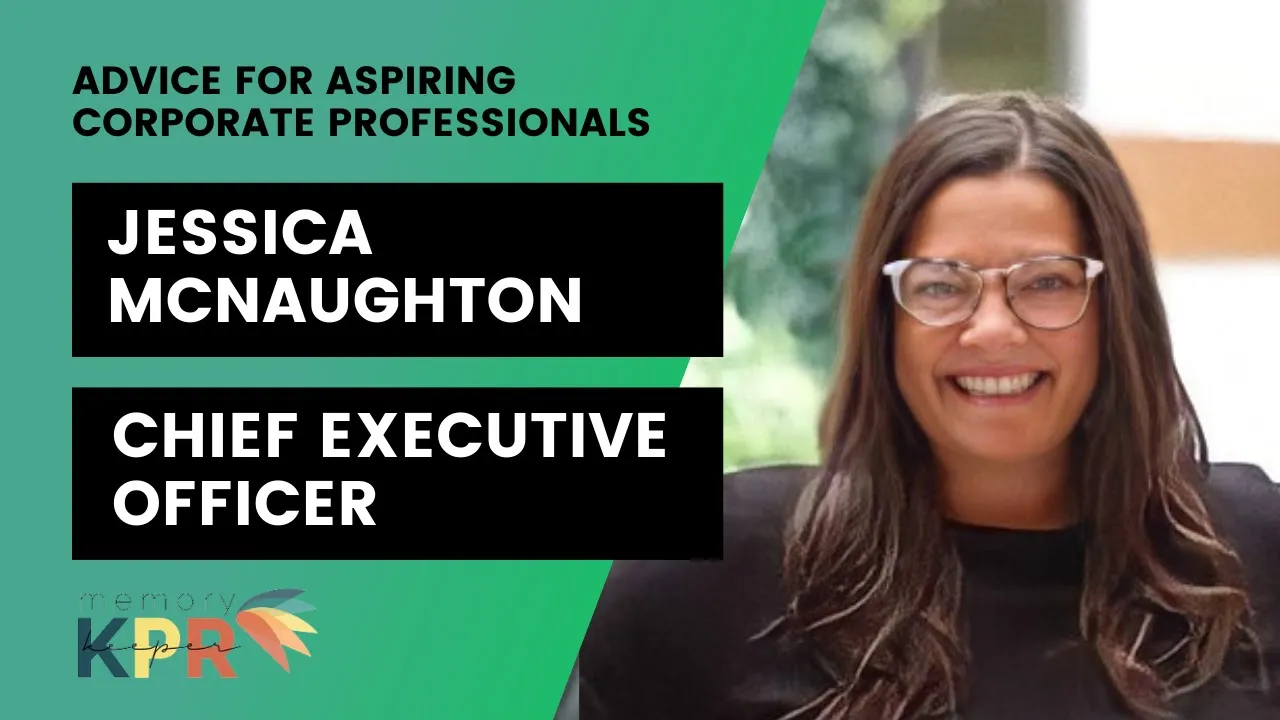
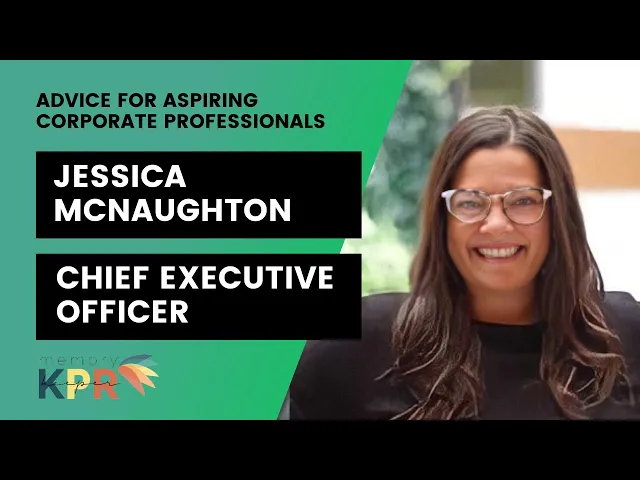
welcome to the second episode of elluminate podcast the cast get it the cast okay let's dive right in my name is leah and i'm a manager and national lead at illuminate universe my name is sarah i am also a manager and national lead so in this episode of eliminate universes podcast eliminate founder lena huang interviews jessica mcnaughton who's both an entrepreneur and an entrepreneur follow jessica on her inspiring and captivating journey from post-secondary working at westjet the university of calgary shell and finally creating her own consulting firm and startup memory keeper a digital time capsule i think our listeners will truly enjoy hearing jessica talk about her professional journey in hr and advice on how to find your true passion for aspiring corporate professionals jessica also discusses strategies to demonstrate high performance while leveraging emotional intelligence in any professional work environment so before further ado let's learn how to inject leadership into any role and design a life that gives you energy in our latest episode with business superwoman jessica mcnaughton hi jessica thank you for the interview opportunity um to give everyone some context jessica and i met back two years ago i think when jessica was this amazing keynote speaker for the national high school business competition that was held at deloitte canada ever since then i've always contacted jessica for all kinds of advice whether that be careers life or even boys and jessica's my go-to so today i'm so happy jessica that you're here and that more people can benefit from hearing your story so since a lot of my followers they're um young professionals and some are students i thought we'd maybe start from the beginning so jessica what did you study when you were in college or university and what did you want to be when you grew up i'm still trying to figure that one out so um thank you for having me here first of all i love being around you i always i always leave a little wiser and a little more energized as well so i appreciate it you know um in regards to what i studied i actually i did not take a traditional path so i studied some general uh science classes focused on anthropology and took a couple years and then i actually didn't finish my degree right out of high school so i took a different path i left home and then i left canada and i went and worked abroad teaching english i worked on cruise ships for a while i worked in a resort town in banff alberta um and really focused on i would say i would say i was still focusing on education just non-traditional education um so i actually took a longer path to get there as i just recently completed my executive masters of business administration from the levine school of business last year so wow congratulations thank you um and in regards to what i wanted to be when i grew up i have to say i never i still don't know for sure um and i take that as you know i think some of us are born with this really clear insight as to what we want to do and how we want to live and what we want to be and some of us are searching and i think embracing that searching is important um because i think early on i realized i had some friends who knew exactly what they wanted to do and i was like i'm never going to be that person i don't think i want to try everything and so what i did was i learned to a inject passion into mundane things because i knew i wanted to live a passionate life and a passionate you know day so trying to find take the ordinary make it a little bit more special um and and i think just chasing joy um in the absence of knowing this is exactly what i want to do um being able to wake up and say that i have to really listen to myself where i found the joy where i was you know energized and chase that instead so i love that jessica i i feel like even me sometimes um just coming out of graduation i felt like there were certain goals that were already set for for for me um you know for my peers who were studying business and we weren't so i really like what you talked about in terms of you know following what you're passionate about and finding joy because those two things will eventually bring you to a place that you know that belongs to you that that you're you're the maker of your life yes and i love the lifelong learning piece it's that's what i feel like keeps us growing and discovering all facets of life yeah and this animal learner was it it um you appreciated it in a completely different way oh cool tell me more about that i mean you just i went with a curiosity that i think i didn't have when i was right out of high school and then started taking classes where i was just like i have to do this paper and i have to finish it and i have to get to this next thing because i have to get this done whereas this experience was a little bit more about like eight i can see how it applies or how it doesn't i'm confident enough myself to challenge a professor to say i don't actually think that works in the real world where i wouldn't have been 20 years earlier um and and it was just a little bit more like i almost liken it to like playing a board game like you kind of went for stuff because you're like what do i have to lose i know i'm gonna i know i'm gonna complete this and i'm gonna get as much out of it as i could so wow i love that attitude where you're just not afraid of failure or your perception of failure it's very it's very i don't want to say joyful but but it gives you a lot more courage in that sense where you can explore the things you love so i really love that so um so i noticed that in the beginning of your career actually the majority of your career when i was talking your linkedin um is you focused on focus on hr so tell us about the transition into hr yeah i i would say i never and i mean my last role i was a chief people officer i clearly was an hr person but i am i never saw myself as an hr person i always saw myself as a business person in human resources and i think that started from a fairly young age just seeing in order to extract value and um make any sort of business venture successful it was how well you could extract potential from people and how well you could keep them motivated and engaged and committed and so i think um i have a fairly business-minded you know focus but would always get irritated at well wow you just disenfranchised this whole department or this whole group or you're not going to get value out of them because you just made them feel like so i think early on when i worked on the business side i noticed the people things that could be better to make the business better and so that led me to um just kind of naturally falling into hr like i i started at hr and recruiting i spent a lot of time in recruiting recruited at westjet when it was like the glory days we doubled in size two and a half times in two and a half years um wow it was really and it was the it was the best time there everyone wanted to work there and it really was a matter of like picking the best and the brightest and the most driven and it really was a time where they wanted people to make their own good decisions so we were picking people who we were entrusting with a lot um they could wave fees still they could you know give away things like it was it was a different world and so being able to just see and extract the best potential from people was something that just came pretty naturally pretty early um and i got really lucky like i i can say i look fondly on every single job i had but i had some really incredible mentors there and really wise entrepreneurs and entrepreneurs interesting so tell us i think um tell us your perception of the difference between an entrepreneur and an entrepreneur how do you differentiate them yeah so i think um and i don't just think i actually i did my thesis paper for my emba on this topic itself and how to leverage wow in an organization and so i think the difference really like partially um entrepreneurs are a little bit more patient they're typically working in a larger organization and they know how to impact change and make change in larger bodies with bigger decision-making um protocols and authorities and so they can navigate through the politics of things a little bit more patiently a little bit more eloquently entrepreneurs typically want to break the rules like get out of my way and let me just do it the way i need to do it because i know what's right um they're both very driven they're both very innovative um entrepreneur probably wants to move a little bit faster but an entrepreneur can probably um you know you you can make a lot bigger things happen when you have the power of a whole organization behind you if you can find a way to get people to follow you and so but i think the difference is a little bit patience a little bit um entrepreneurs have to be able to be comfortable having less control and trying to get with where they need to get to through influence of larger groups whereas an entrepreneur can say i'm rolling up my sleeves i'm doing it myself um they're both equally innovative i think though it's just the the approach and how they execute to get to their end goal is different and their entrepreneurs a lot more through policy and people and structure wow that is that is fascinating i i learned something new today this is amazing so jessica would you consider yourself an entrepreneur or an entrepreneur um i think i lean more to the entrepreneur to be honest but i mean i've i'm 25 years entrepreneur one year entrepreneur so i still as an entrepreneur look to think oh there's probably some structure there or i look to a team like i want to engage a large group of people to get passionate about it and we figure it out together which is more common in an entrepreneur than an entrepreneur an entrepreneur a lot of times is a solo or a small you know small team and so i think i still lean more this way um but i'm getting there i think that roots like the soul of both of them are the same in that they want to challenge the status quo they want to make things work better faster they know there's a better idea they want to you know cut the bureaucracy and get to it there's a lot of similarities so yeah yeah and if you can leverage you know the traits of both sides then you can almost plug and play and create your own story or your own career based on your goals and your objectives yeah i love that so jessica if there's one piece of advice that you can give aspiring corporate professionals or entrepreneurs as we talked about in terms of landing their dream job and standing out especially during this you know time when we're recording this podcast you know copen19 what would that be i mean i have 10 pieces of advice but if i really stuck to one um it'd probably be about balancing being bold and being humble um you you're not going to get your dream job right away you might have to take the job you want at the place you don't want or you might have to take the you might have to go to the place you want to be at but not get the job you want right away and prove yourself so i think being a combination of being bold and saying i'm going for it i'm putting it all out there i'm i'm showcasing myself the best i can so i stand out and being humble to say i'm not entitled to too much i'm going to work so hard that you're going to want to give me my dream job because you're going to know i'm best for it so i think a balance between those two um standing out like i think you have to find out what's comfortable for you and your personal brand but i think of some of the people like i said back in the day at westchester we had people do things like send a platter of sushi and say see my raw talent and with a resume attached or when lots of people would send like a shoe with their resume and inside it and say like now that my foot's in the door and like oh look it's fun and yeah and it was you know it was unique to the kinds of roles they were applying for so it has to feel like it's you like if that makes you terribly uncomfortable that's not what you do but find something that's going to make you stand out and maybe one organization thinks it's weird but when you find the right organization for you they're going to love it's going to match yes yes and having the right advocates um there's a term for this i mean incorporate i remember what's that term it's like when you oh a sponsor a corporate sponsor yeah right who can help you navigate through the ups and downs of corporate and give you some existing resources that would be really really helpful and i completely agree when you talked about it it's almost it's this fine balance that you have to keep i think our perception or our education traditional education has taught us that it's like it's one it's one way to success right it's like in elementary in high school we're already talking about leadership and leadership is very very attractive module in the curriculum but when we talk about leadership in the real world when you're starting off you're not you're not acting like a senior manager or you're not actually putting these leadership skills that you know um john f kennedy is was using right which they teach you in the title book so it takes a lot of bread it takes a lot of proving yourself and doing the little things well with precision and that way showing respect to those who have been in your exact shoes and back in the days they had to work ten times harder on on the jobs that you know that were not automated and they had to work their way up like that so i love that piece of advice i think a lot of people would benefit yeah and i do think you can inject leadership into any role you know taking an enterprise approach looking for the people around you and how you can help taking ownership of what your task is to the next level not waiting for someone to tell you you know it still demonstrates yes yes leadership at every level i love that so okay um i see that um you you you made a couple of different career moves um you know going from westjet to um to shell to you know i think you started off in rbc even so you're obviously an expert um when it comes to you know navigating corporate and being an entrepreneur as you said can you share some specific maybe one specific strategy with us in terms of how you can demonstrate high performance and leverage emotional intelligence to your advantage yes um yeah i made a lot of changes and and shifts i mean i agree every position and every company i've been at like i'm going to be there for a lifetime you know i i do take i emotionally connect to things and want them to be better because i've been there and i think that shows but um at the same time i think always kind of thinking about what's next paying very close attention like what i said at first about um understanding where your joy came from and where you're really demonstrating the best skills um paying attention to that helped me make some of the moves i made i made some mistakes too like especially i think i went from westjet and we were super entrepreneurial at the time you know very um yeah it was a very fast pace figured out as you go sort of environment to ufc and i did that i made that shift partially there was some leadership changes here there was some um i had some family situation my my mom was sick at the time and i was working like a dog so this allowed me to have more time to go to treatments with her and things like that so it was a good move but at the same time culturally you have to recognize where you fit in and in this really kind of slow bureaucratic um academic space i didn't fit as well and so i i that didn't mean i abandoned who i was i mixed things up a lot i had a great experience there i have an incredible team that i still keep in touch with and who you know we changed a lot of stuff very quickly in that environment and it was it was a rush for all of us but um but it was probably a mistake to make that which is why i went back to corporate because i'm just i'm driven by performance and results and it's what energizes me and keeps me moving so um yeah and and i think paying attention to yourself knowing the difference between which just takes some practice and some making sure you have quiet time for reflection um is telling the difference between being low energy because you're scared and you need to learn a bunch of new stuff and it's you know it's intimidating versus being low energy because you're just not doing the right work for who you are and how you're built is really important in the early years because i think i got those mixed up a couple times and i probably shied away from experiences that had i really dug in were probably going to be perfect for me because i mistake them for them not being the right work whereas really it was probably that i was scared that i had so much to learn i didn't know where to start and i was too um i don't know what what i was too much of that was maybe i was too scared to ask for help um and i mistake those for oh this isn't the right work for me well she probably would have been one like we made some changes in in leadership i i was up against some new um barriers and i would have plowed through them like looking back i know that and i took an easy way out oh here's a job that's gonna pay me more give me more time off i knew it wasn't the right job for me but it fit a couple things in my life at the time and so yeah the sooner in your life and i think um younger students actually have a ton more self-awareness than we were encouraged to have so i think you're already you know you have a step ahead but paying attention to what's the difference between i'm resisting this because it's hard and it'll be worth it and i'm resisting this because it's not right for me oh i love how you laid out the difference because i think going into going into your first job for example that could be very confusing you're trying to figure out you know what you want to do while on the other end you have all these different hobbies and passions and you're trying to fit into it and there are so many levels of expectations maybe from yourself maybe from your bosses and when all of those opinions come together you yeah you're right it does i this is from personal opinion when i was in corporate it did make me shy away from opportunities because you're almost doubting yourself right um because there's so many options those options became um confusion in in a way yeah and it's okay to say it's not right for me but make sure you're saying it's not right because it's not right not because you know there's some intimidating new things in your path yes yes i agree um so you know i think this leads into my next question so um you so you went from the industry westjet to director of hr at ufc which is university of calgary for those of you don't know and then you make that switch back into industry and shell so tell us about you know the the mindset and the process that you went through to make to those decisions yeah um you know by at that point i i knew that culturally i was struggling and i had i had an amazing group of people that we developed a really close-knit team so at ufc it was hard i think westjet to ufc was been a leadership change i probably should have just dug in and it would have worked out even better because i loved it there culturally i fit really well i felt at home um went to ufc partially because of family experience too and being able to it freed up a lot of time um i thought at the time that i thought that's what i needed was somewhere that had less demands on me but then i realized i'm actually wired to just put demands on myself so it doesn't matter where i work that's the kind of so so you know spending some time there did some good work but knew it wasn't my forever and actually shell reached out to me about this program they had and i had resisted going into oil and gas which is funny because a lot of my career was in calgary um but i had resisted the industry in general and and the way they sold this role to me the ability to impact the leaders the ethics the just the experience um and the business in that region just sold me for getting back to um yeah i meant to be in businesses that pay attention to things that probably public sector companies don't pay as much attention to i'm meant for a higher base performance culture i'm just wired that way yes yes and and i believe you know for individuals who are like you jessica who are wired you know for this high performance go go go kind of culture wow you you know not only whoever whoever your employer is they could definitely better benefit from that but you're also like a magnet for those around you um you know to to motivate others and to inspire others set the great role model example so that's amazing so you know what jessica oh i was just gonna say and there's a bit of a balance there though because when i when i got to shell i loved the work i was doing but um but ethics that there was a different uh approach there that yeah i s that i i had to learn from as well like it was a bit different um for me i'm high performance but i value the people in my life my my values and my family and they were very like people moved around a lot there's a lot of people who weren't with their families because their work was in a different city and so you know it's really important to find the company that matches right a company that um sets you up for success for high performance at the same time understand that everyone's got personal personal matters and people who are important you know that maybe maybe they say nine to five but i feel like in these high performing cultures it's more like nine to ten or nine to eleven if your investment banking is probably like maybe like six a. m to two a. m yeah it really is yeah i love it that's a great piece of advice so now for the exciting stuff entrepreneurship jessica tell us about how you decided to found your own coaching business or your consulting firm let me correct that and memory keeper yes so um i found myself at a crossroads about a year and a half ago i guess yeah about a year and a half ago now um and was really trying to take the opportunity to take some time to say what is that i really want like i've turned all these opportunities into great experiences but i haven't designed them you know i i put my play on them and so i took some time trying to decide whether i really mostly whether i had the guts to go out on my own or if i was looking for another j.
o. b and i really um i just hope that is not what i was going for this time i've had a ton of great jobs had a ton of great mentors really good experiences and ready for something new um and a lot of the excuses that were in front of me in the past were removed you know uh my house is paid for my kids education is saved for like some of those barriers that honestly looking back now if you're putting those in front of you don't like they're they're made of barriers just to buy yourself some time and comfort like they're not so but i think they were removed and i had no more excuses i had to go for it um and so i was torn between you know i had a couple concepts memory keeper being one that was really close to my heart and was a passion project um but completely in a different space i was not a technical person you know i don't know how to do software development it is a software-based program um digital time capsule um and marketing and storytelling which i also don't have a ton of background and experience in um i just but it was in my heart like i i knew it when i talked about it when i dreamt about it when i designed it um i went from here to here you know i just and i knew it was right every time i talk to people people who i think would be really honest with me saying no this is we need this this is brilliant so you know the more i started talking about it um the more i knew i had to do something with it at least try you know um but at the same time there was this all brand new all scary it's kind of exhausting like to spend your whole day every hour doing things that are brand new to you or that you take longer at because it's the first time you've done it um and so i decided partnering it with something i ate was comfortable with which is coaching and consulting innovation and really people um extracting potential from people in leadership um so working on that that allowed me to work with teams of people it allowed me to keep to be honest my confidence up because this is something i knew really well and i'm good at i know i'm good at where's this i'm like i could be i could it could be a disaster so yeah and it also allowed me to fund because i because i had the experience and i was credible and was able to get work here easily and add value quickly it allowed me to fund this other passion that i wasn't gonna no investor was gonna say oh you have no experience in this and yeah we'd love to invest in in you developing a product that we could develop ourselves you know i had to be logical about it and so doing both at the same time and that was also while i was finishing my emba um was a little crazy but also i needed both of them to i needed i needed the one i was comfortable with that i knew i could do well to probably keep myself going financially as well as um validate me and my you know sense of no no i can still do this hard thing um and i needed this because i just it's like it was planted in my heart and i know my whole life i've needed to do something and now i finally you know 40 years into thinking god i wish i just knew what it was now i feel like i know what it is and so having that and being able to apply myself to it they balanced really well the the clear vision that just came to you how you know that was it a moment people say you know clarity came at a moment a moment of clarity what was that like for you tell us about it you know i can't i i've heard that and again i'm envious of those people that it was just a moment um for me it was it was a bit slow i'm i needed to i needed to validate i guess with other people and with myself which i don't encourage that's not a great process little by little you know i mine was a little bit more of a staircase than it was just a moment like every step i took it got a little stronger and i knew i was i was the gravitational pull was getting stronger and pulling me in um and some of that was my own experience and the things i was doing and some of it was the external validation to say this is great or you're on the right track um and then i got far enough in that even when i hit walls it was still there's a gravitational pull that's just getting stronger and stronger every day yeah and just last week we actually launched so that you can log on and you can create a keeper and you have we have a product and i did have a couple moments where i was like this was an idea a year ago and now i have you know technology and a team and a product and people want to buy it and it's um there was a couple moments last week where i was like it was just an awe like it's a different experience to feel pride for yourself right there was no external validation it was just like i actually pulled it off yeah that's amazing that's amazing and i've and i've been following your journey i'm always on linkedin and i i just remember the time when you were doing your we had a call i think it was in 2019 and you were telling me how you were finishing up your emba you were starting up your consulting firm or you were you're already doing it um and at the same time you were telling me about this startup which at the time was baby memory keeper which now is like a full right it's an idea now it's like a full-grown product that's ready to launch you have a fantastic team and i just remember just being so so excited because for me i felt like i i had a role model a role model who um who because back in back last year i was in corporate and i just felt they were like there was an entrepreneurial there was a more passionate side and and don't get me wrong i loved corporate it taught me a lot and i'm for thankful but just seeing you set that example it really motivated me to do the things i'm passionate about and i remember you telling me um or telling me you know you asked me elena what are you passionate about and i said marketing and things was to do with communications and you advised me to to hop on a few calls with these specific people um to to make sure that i'm on the right path and and i just i think that's so important so thank you so much for being my role model and thank you thank you so much for setting the example of lifting lifting each other up mentoring young women which is which is something i will always remember to do um when there's younger woman who comes to me and asks for advice so um in terms of memory keeper before before we were recording the session you were telling me about all these cool innovative parts about it would you mind sharing them again they're so exciting no i'd love to i love talking about this so um are a digital time capsule essentially so um currently we have the ability for you to log on and create what we call a keeper in the memory keeper or many and it's your ability to tell a story with still photos still photos with voice tags video print maps it's it's really the way to tell a journey or a story but it's not just you telling the story you can invite people to collaborate so they're co-authors on the story and you can invite you can crowd um people to contribute to the story so uh so it it you know reflects a lot of different elements of the story and then it creates this keeper that's this end product story we have the ability for you to do things like take a qr code and put it up at a wedding and have all those funny uh maybe videos or pictures or what have you that you don't want to put on instagram but you want to share with the bride and groom so that they see everything that happened we have the ability for you to send a video you can't make it to the wedding in advance um send a video to play at the wedding as opposed to having you know uncle sam read a speech at the podium from you um sending your best wish wishes to the bride and groom um and it goes through a whole story so we we are in the process so right now we're fairly elementary it is the digital time capsule the ability to create the keeper to invite collaborators to co-author it with you and to invite contributors to contribute to the story but our next stages on our product are first that we we are developing um chapters so that you can put chapters so example for a wedding it could be the dating the engagement the pre-wedding parties the rehearsal dinner the wedding and everyone can contribute to these experiences and then you as the creator or the collaborator get to decide what the narrative is so you you get to be the author of your own story but you crowdsource all the things that happened um and so chapters will be next and then next we'll be working on integrating social media we have a lot of customer testimonials of people who've had people's stories captured only on social media and then all of a sudden their facebook wall is sunglass ads and all their pictures and stories and the comments from the grandmas on the birthday party or whatever are gone so the ability to integrate those and import them protected into a keeper as opposed to the opposite is something we're working on as well and long term we have big long goals like we really think that we have the ability to tell stories and in so many dimensions that we're not used to telling it and we can have voice we can have video um you know the only thing we say we can't do with our stories right now is have scent come through them so all the other senses can be true right so um the ability for someone who's not born yet to see the video of their great grandma making bread and hearing her voice explain how she makes it we have the ability we all have we have the technology to create this but we don't have good mechanisms and tools and systems in place for us to capture those keep them and pass them on and that's really what we want to do we want to be able to have you know elena your great grandchildren go to your tombstone and click on a qr code or scan a qr code to see the story of your life and to hear your voice and you know to hear what other people thought of you and what lessons they learned from you and and maybe go to ancestry.

![Hands-On Power BI Tutorial 📊Beginner to Pro [Full Course] ⚡](https://img.youtube.com/vi/5X5LWcLtkzg/maxresdefault.jpg)
![Data Modeling for Power BI [Full Course] 📊](https://img.youtube.com/vi/MrLnibFTtbA/maxresdefault.jpg)
![Hands-On Power BI Tutorial 📊 Beginner to Pro [Full Course] 2023 Edition⚡](https://img.youtube.com/vi/77jIzgvCIYY/maxresdefault.jpg)