Welcome everyone thank you so much for coming out on this beautiful afternoon especially since it is so beautiful you could be out there walking on the promenade the eastern prom or something but thank you for coming here to join us this afternoon for the University of New England's annual PD marrow lecture in business business ethics this is the 11th year of this program and it encourages us to reflect on best Practices in business and ethics in particular but broadly determined I didn't personally have the pleasure of knowing PD Merrill but I certainly have heard many
many stories many wonderful things about him since coming to you Andy and it has been my pleasure to meet sandy and and then today just today I got to know Ethan a little bit and learning about all the things he's doing with the the new sale bot which I want to hear more about and other things and So I just want to let you guys know that Petey's legacy lives on and his spirit lives on through this program and I very much appreciate your support for allowing us to continue with this program I'd like to
welcome everyone in attendance including our students our uni students and students from elsewhere as well as our friends from other academic institutions my friend Glenn Cummings is here from the University of Southern Maine and others and I just Appreciate everybody coming out to to join us this evening and students in particular I hope that you will take this today's talk in the context of our tagline our motto here at uni innovation for a healthier planet and I think those few words really encapsulate all that we try to do in our various clinical and research and
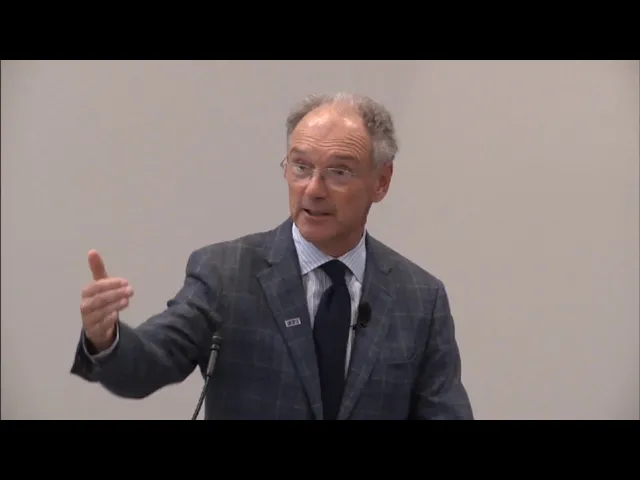
academic programs here and I hope that you take the time to reflect on people like PD Merrill and people like mr. Rou who tell you a little bit About shortly and and the lessons that they can impart not just in the specific content but in the broader themes of what you're gonna hear today so it's my great honor to introduce David rhew so David is that for those of you that don't know I suspect many people in the room already know who he is and he needs no introduction but he is the chairman of some
labs and chairman of the board of Jackson labs which of course is the America's leading biomedical research laboratory and one of the leading laboratories in the world of its kind earlier in his career he was a pioneer in the tech industry in fact I think if you had to count on your hand you know the one hand the five people who really led to the digital revolution he would be on that list he his first company his first venture was starting the very first cd-rom library and when he sold that business and moved on he
did a Number of other things he worked as an executive at a number of different places including Lotus and Oracle and other well-known companies he then in 1999 started Silver Lake and Silver Lake is the global leader in capital for digital projects and digital innovations and he's invested in countless companies and has directed those and he likes building things he likes building that that's where really his passion is and he's very very innovative and being able To to figure out good ideas and to really leverage them and build something special he has deep main roots
Dave is from Lewiston originally and still has a home in Harpswell so here in Maine and he comes up frequently and so he's very well-connected to Maine and I'm also happy to say that his niece Sierra is a uni freshman who plays on our basketball team so he even has a direct und connection in that regard after growing up in Maine in the 60s and 70s He went to Harvard College he then went to Kings College at Cambridge and then eventually went back got his MBA at in at Harvard again and it's been my pleasure
to get to know him a little bit in his wife Barb and I'm just absolutely fascinated by his insights he was gracious enough this afternoon to spend time with a number of our students in our business program and just answering their questions and and sharing his wisdom and it was it was really I Learned a lot just by listening to that and not to mention other conversations I've had them so this afternoon dave is going to present a talk that should be very interesting based on the title alone which is social trauma technology tsunamis and
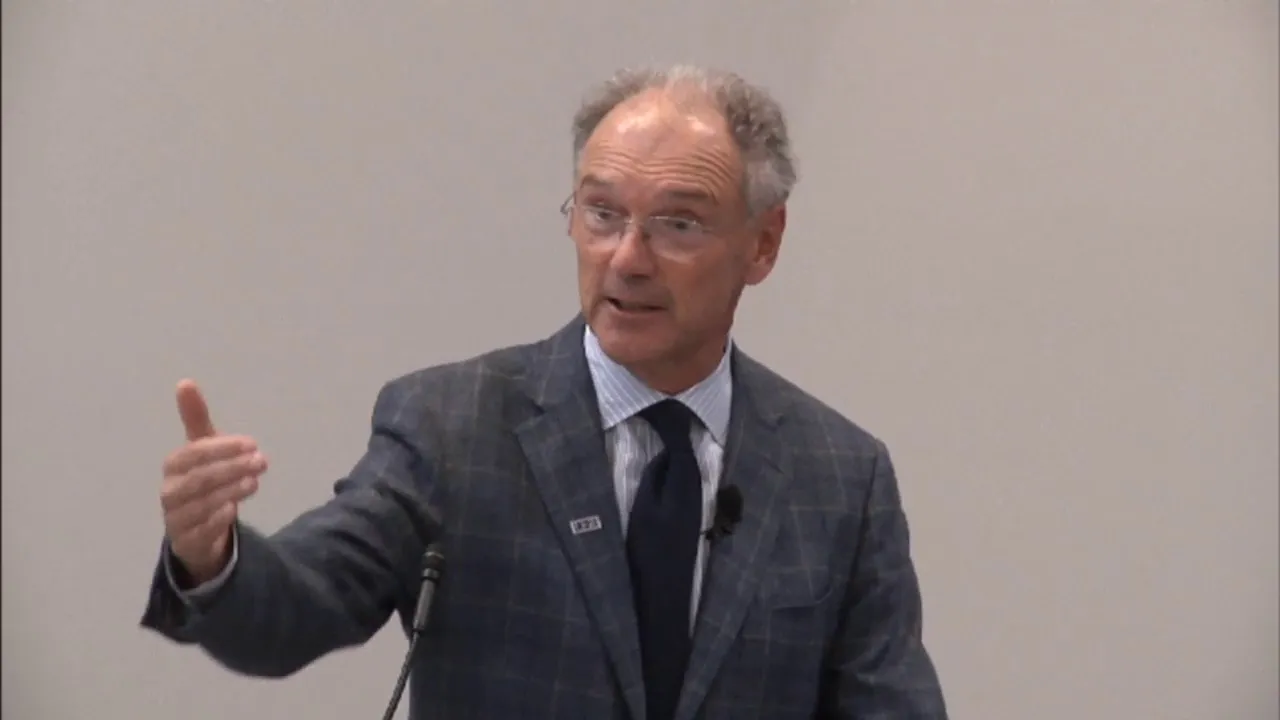
other dangerous consequences of higher education so I think we're all going to learn a lot so without further ado thank you very much President Herbert thank you very much For that very kind overly generous introduction it's always great to be back in Maine as Jim pointed out I grew up in Lewiston went to Lewiston high school is did all five of my siblings I'm on the board at Bowdoin chairman of Jackson Bar Harbor I'm an investor in crystal sea foods which are fish company down on the Portland waterfront run very ably by my son-in-law Peter
Andy and perhaps most importantly my wife and I my wife was here tonight Barbara has we have three grandchildren our daughter living up in Yarmouth so we have lots and lots of main connectivity and we love being up here now Jim has asked me to speak about major new technology trends and how those trends affect us and our society kind of a lofty maybe even overly grand notion as befits a college president and in thinking about it I thought how could I just be a little bit provocative which is why I'm calling the talk social
Trauma and particularly emphasizing the dangers and the social consequences of these big trends we have a tendency to focus on all the positives and there are many of those there are also some very important issues to manage that always come with important new introduction important new technology trends none more so than we're living with today let me start if I could with three things you may find surprised and I am Gonna submit that they apply to all major new technology trends first them is is that all-important new technology trends are not new there has never
been an important new technology that took less than 20 or 30 years to show up it may have been it may have seemed new to you when you read about it or you bought the first product but I guarantee you anything truly important has been around for 20 or 30 years and very often it takes 50 60 or 70 years for a really Important trend to make its way through into the market and then to reach its full market potential we'll talk a little bit more about that the second thing as a businessperson slightly embarrassing
to admit all major new technologies have been accompanied by an embarrassing assembly of crooks and financial misadventures by investors all of whom should know better hundred percent of the time the third thing is that historically his partner Jim is has To cover his ears historically all the most important entrepreneurs and inventors have been almost completely uneducated none of whom really had degrees most none of them had advanced degrees and more incredibly still most of them were completely inexperienced and totally unqualified for this Oh jobs they ended up holding at the companies for which they became
famous Michigan question for us which I'm going to return to at the end of the talk About how important this higher education thing really is the story has a happy ending so you don't have to be on the edge of your seat but suffice to say it hasn't been so important up until now now it's tempting to think of technology as this sort of disembodied waves of innovation that come rolling in from out west you know crashing in from California crashing in from China and all of a sudden left behind on the beach are all
these Wonderful new products and capabilities right we get fancy new iPhones we get electric cars we get solar panels we get Wonder drugs all of which seemed to be arriving like a cargo cult right just sort of dropped down upon us and that would be your sort of sense that it's it's some natural phenomenon that has brought these all to us and yeah it's important to unpack that because that couldn't be further from the truth in reality the innovation process is Incredibly organic and in particular what's important to remember is is that those products are
the results of inventions by people just like you and me they were built by regular companies and those companies delivered those products with employees employed in our normal economy in other words the products are special but how we gut them isn't really that different regular folks regular companies normal economy and so it begs the question why is it That some of these inventions become these platform technologies that are so incredibly transformative and others are boring fads they come and go how do we know the difference and can we tell him and particularly can we tell
in advance either because we're investors and that would be really handy if you're an investor to know something's gonna be a part in advance or because you're a young person looking to build a career Or because you're a regulator or a politician looking to tax that future industry or kind of keep a handle on it all right any of those might be reasonable reasons to have a point of view about what's coming next it turns out that the introduction of these new technologies follow a very predictable pattern and what's interesting is is that the the
first thing I always tell people is is that really important products always make You either happy or healthy people tend to get distracted investors pundants commentators by talking about the whiz-bang technology particularly true out in the valley or on Wall Street they get all wrapped up in the excitement of the finances how fast it's growing how profitable it is how wonderful the margins are going to be how transformative and how huge the marketplace could be and those are things that tend to take you away from The true story which is answering the question is the
answering the few days the question who really loves this shiny new thing that just showed out because the heart the beating heart of any truly transformative technology is demand somebody needs or wants that thing more than any other thing that's out there right so demand is the kind of key driver otherwise all you end up with is a fat so when you think about somebody buying Something what you have is not it's it's because when you buy something you do it with money and because money is easy to track it it tends to fall into
a financial transaction that's how people keep score but really the introduction and diffusion of new technology is primarily a psychological and social thing the money is a little bit of a sideshow right investors keep track but really it's a little bit of a such what is important if you think about it Is how do you get new technology out there and make its Ted well first of all real people need to know about it real people need to buy one real people need to service it real people need to tell their friends about it real
people need to make accommodations in how they work or how they live to use the technology and then finally real people need to like it enough that they keep using it they form a habit around it and then enough people need to have that Experience that there's scale which is the thing that makes the new technology and the trend large and important and durable so I said before that it's not really financial but what really makes these big transformations unique is the fact that they come with these large highly visible social phenomena and in particular
there is always a biblical scale plague of charlatans scammers and crooks right think of Bitcoin today right think of all those crypto Currencies every single one of the crooks and charlatans and people stealing money right and by the way it has been true for every major technology trend that that just happened think today I'm just think last one about Mark Zuckerberg testifying before Congress Congress about a complete and total privacy breakdown and the hacking of our 2016 presidential election right technology even good technology even I mean it's got two billion people using That product worldwide
it's a gigantic business its enormous ly successful and it's almost entirely out of control right and so the benefits and the effects are not always benign in fact I will go further than that I'll say that if you look back 300 years go back three centuries every single new major technology trend has been accompanied by a stock market mania Investor scams dizzying market crash investor losses bankruptcies Unemployment labor dislocation and regret even even or especially for the most successful technologies I know you're all sitting there saying come on you know can't possibly be true but
let's just look at a few I'll just take you through a few examples and I'm gonna give you three they're all three different centuries three different scientific underpinnings three different physical technologies but remarkable similarities in the 18th century think About it right beginning of the Industrial Revolution in England textile industry is totally rockin what is the number one most advanced technology the most highly engineered product in the world at that time canals think about how you move products right there were no highways there were no railroads so the way you would move raw materials and
finished goods to market is on a path hollowed on a horse well it turns out when you when you put A canal in the canal is depending on what you're hauling and for how far you're hauling it it will be 10 to 20 or 20 to 30 times more efficient dramatic improvement 1763 a guy named Bridgewater built the first major successful canal to haul coal into the centre of Manchester to power these mills he spent a fortune on it and it was super highly engineered it was like a Musha right they had to dig the
canals remember there's no power right they're Not doing this where they're not blasting power blah blah blah Andrew you have to dig the canals they've got the hydraulics associated with that they have the locks they have the bridges and they have the aqueducts because I have to take it over all kinds of things to get it to get it there okay huge complicated super expensive to get it there and the result of which is 1763 that he have the cost of coal coming into Manchester while at the same time Dramatically increasing his own profitability which
tells you that transportation was the biggest cost to running that business totally transformed the mills and Manchester made them much more competitive and guess what people did people looked around and said wow wow how about that and do you think the next year that people built a lot of canals no people thought about it no if that's gonna work what do you think maybe you got lucky 60's go buying 70s go buy not a whole lot going on until he's making so much money there are few other random canals they start people start going to
Parliament to ask four more canals you have to get a charter from the from the government do it by 1790 there's a Friends of Canal building 20 new canals and what do we have formation of 20 new companies to build canals stock market boom dizzying Increase in the price of these canals and in 1793 what happened stock market crash boom it all came down no one built any more canals but during that period of time during the during the frenzy right the price of the main canal company went from a hundred pounds to four hundred
and seventy-three pounds in the space of a year right huge run-up like the Tesla of its day and then boom crash back down a lot and so what's interesting is is that during this Period of time they built during this one three-year period 79 is 1793 during the boom when all the investors lost money when all these scams were going on they built 4,000 miles of canals all of which are still there and all of which were really the underpinning for the transportation logistics infrastructure through the Industrial Revolution and it all went fine so that's
it kept going after the crash for another almost 40 years all through the 1790s early 1800s And by the way there was that a canal boom in the United States took a little while to get over cross the ocean guess what happened here can you guess exactly the same thing which is they built the Erie Canal which was the first one Erie to the Hudson and everyone said fantastic and guess what we did same thing within three years we built 3,300 miles of canals we had a boom we Had a crash - many companies form
fester losses whole thing exactly the same thing that happened and if you take it from the beginning if you go back to that point where Bridgewater built the first canal - when the kind of canal boom finally add reached its market potential people stopped building they stopped grinning new canals 70-plus years and that you would say well you know that was you know because it was 300 years ago of course they were Unofficial they didn't know how to get technology out and around well why do people stop building canals people thought building canals because the
railroads exactly because the railroad came along and while the canals were 10 to 30 times better than hauling something on a horse a railroad was more than 10 times better in some cases up to a hundred times better depending on the distance and the load and what you had to do medikit out Canals were devastated right and along they came now in the UK I got the first you got the first stuff coming in the 1820s and it really came around and this is often the case we have three not so obviously related things come
together and it clicks and those those things were flanged Wheels locomotives and steel trap right those things came together to make the powered regularly-scheduled highly reliable steam locomotive I think that Had cog railway is there other kind of small-scale real stuff before in fact that had rails where you haul it along with horse right kind of on coke path just like you would a canal first line was Liverpool and Manchester started carrying freight 1830 momentum built through that period and guess what happened 1844 the 1846 two years several hundred railway companies were formed they applied
for 10,000 miles of track they Actually built 6,200 miles of track which by the way today if you think about it 1844 to 1846 in two years they built 6,200 miles of track which is over half of all the track that exists in the United Kingdom today got built in that one little window which was the middle of a crazy mania where prices exploded too many companies huge scam in fact the guy who was mr. railway they come the railway King George Hudson when the market crash had to flee the country They flee the country
because of investment fraud turned out what he had been doing was paying new investors with money paying old investors with money raised from new investors he was Ponzi before there was a Ponzi right but the guy built a lot of track okay so combined you say really it's the same pattern you have this precursor innovation you have a first commercial application public enthusiasm a burst of unsustainable new company formation Financial mania eventual stock market collapse horrific losses unemployment dislocation blah blah blah but that happened about 20 years in and then guess what happened 50 more
years of slow build out of the rail system in the UK US and around and around the world my third example is the electrification of our own country and although the bulk of the activity took place around the turn of the century in the early years the 20th century it Really started with Edison Thomas Edison demonstrating the first long-lasting working light bulb on New Year's Eve in 1879 people were amazed and what he said when he did that all right you think about it he has an electric light bulb but there's no electricity so how
useful is that not very useful at all right and he said when he introduced it because he was one of the great salesmen and huxter's of the period think of him as the Elon Musk of the late 19th century Right what he said was we are gonna make electricity because people said hey mr. Edison the light bulb was great but I don't have any electricity in my house in fact there's no electricity in my city in fact there's no electricity in our country how do I use your your invention he says don't worry I am
gonna make electricity so cheap that only rich people will have candles that was the famous quote from from Edison and the next year he started an electricity Company right he built the first power plant and it was it was in New York City and what happened is that all kinds of trouble ensued right even though we know the story turns out ok because we all have electricity what initially happened is a giant standards war fights with the gas company because they said oh my gosh this is way better than gas we need to sit on
this guy's head there was no shortage of crooked politicians and there was competition from Westinghouse And then the company that eventually became General Electric Tirzah had done on DC direct current the other team had alternating current and what do you all have in your house today ac you all have alternating current so Edison who thought this invention out who pioneered and built the first power station who spent millions of dollars of his own money was eventually fired from his own company run out the DC thing lost as a standard and what happened was Is that
alternating current became the whole story right that's what one and does anyone have an idea about what happened what happened is is that there was another confluence of activity right so it took a little while for that battle to play out and around the turn of the century first in the arts and then in the teens weep in the roaring 20s you had not just electricity but that ushered in the availability of railroads you also had at the same time Steel and you had automobiles all of these things happening at the same time and we
had the mother of all market manias all happening at the same time we had four five big technology trends all kind of collapse on themselves we have this huge run-up and by the way made worse by easy credit a financial innovation unwelcome financial innovation all right and then of course we have the Great Depression and it was horrifically bad but it is exactly the Same thing that we saw with railroads it is exactly the same thing that we saw with canals now as wonderful as it was it's instructive to think it took four decades to
mid 1920s before half of America had electricity now when do you think it was obvious this electricity thing was going to be useful I think it was obvious in 1890 1900 1910 1915 1920 all of those times less than half of America had electricity do you think it was a big insight to say hey I Think this electricity thinks here's day it's good work right doesn't burn my house down it's not stinky like gas cheaper than candles my point to you is that it was obvious for a very long time that this was the winning
technology was going to be here for a long time by the way it took another decade to get to 70% was until 1930 that you've got 70 percent of the population with with with electricity and so you have the same story as railroads the same story as Canals and remarkably you know each of those trends took about 20 years to develop into a mania 20 to 25 from the first commercial offering to the mania and then it took another 50 to 60 years after that for the technology to reach full diffusion full level of market
potential now what ended up happening the end is you get you end up with a few dominant companies they have a working technology you have reliable products superior business models You've got compelling value proposition for customers and you know the simple way to say it is as the few people got rich most people lost money through this whole mania because they figured out what was the best thing for the most people by the way not always playing fair or being wholly legal along the way right these are not these these battles are not always won
by the most upstanding citizens so just like with canals just like with railroads just Like with for electricity I would submit to you that in all those cases the three biggest things that happen in terms of Technology during those periods you could see it coming miles away decades before you know the the flood crested and it's the great irony really of all technology industries that everything that is really important has always been dead obvious in hindsight dead-on not a confusion at all You don't say right you never say that you never said that and so
it makes the question right it says why is it why does that happen and the answer is I think that ideas and insights travel much faster than actual products right products are kind of messy they're complicated they don't always work right the first time you got a ship owned you have to install them you have to service them you got to move them around you learn how to use them right where is the Idea that can move pretty quickly and so out in Silicon Valley they have a way of saying it they say electrons which
you use today to you know share share ideas move much faster than atoms which used to make products right and because atoms physical things have inertia they take up space they need to be moved around and that is really the core of the issue about why it takes so long and so in the end you would say well then the IDS must be really valuable I would say Ah unfortunately not ideas were valuable professors would be paid more philosophers would be rich right but that's not true that's not what happens at all in any society
that never happens what happens what happens is is that the rewards tend to go to people who do something with the ideas turns out ideas are a dime a dozen there's lots of good ideas out there we are not short ideas we're not even short discoveries and insights you would say oh well of course There's a lot of bad ideas I'm telling you there's a lot of good ideas what we're short on is implementation execution somebody will never put their hand up and say ah good idea I'm gonna go do that wanna go hire the
people I'm gonna build an institution I'm gonna go create a building I'm gonna go build a business whatever it is I'm gonna go do it that turns out to be the hard an incredibly valuable part and in Medicine you would call it translation you would say okay somebody wrote a paper about a molecule that in a mouse here's the mouse's cancer and could you take that paper to the hospital and port and and and cure granny no you couldn't right so if you want to cure granny right you've got to take that idea test to
find a drug create a therapy that you can test in humans that demonstrates that yeah that's how we cure granny of cancer or Alzheimer's or any of these Other debilitating diseases that might be out there you have to translate the inside of the discovery into an actual therapy so that's one in academic world you talk about it as engineering or applied science but okay it's not just a paper it's not just a talk we're actually gonna go build something that does this where there's some hole that either a student or a professor or a company
might want to actually make one of these things and and sell it to People now it's also the ribs okay it's the reason why online learning as good as it is and as important a step forward in complementing what we do is never going to be the whole story as long as we all continue to live and work in the physical world because you can't just live online gonna have to relate to people so I think the the six the most successful future strategies will will have an important hybrid so let's let's kind of move
forward we kind of had a Little look back to give ourselves a frame of reference let's talk about what what's really affecting us now let's start with modern computing digital sciences are really the story of the 20th century there has been no innovation as big as important as and and that just had as breathtaking an impact on all our lives the the basic precursor dates from I mean there's lots of I mean they had programmable lose by the way where they used paper tapes they Have lots of kept mechanical calculating machines but the real modern
computing starts in World War two where they built machines for really weapons design and cryptography breaking codes those are that that was really the hard and the first commercial computer was introduced in the UK although very small volume first mass-produced machines were introduced in the United States in the early 1950s and by mass-produced I mean they sold dozens the machines cost Lucy's was univac and IBM and the machines cost in today's dollars five to ten million dollars a pop so the only people who bought them with big research institutes the government right and the Defense
Department that those are the people who would buy you know those those big machines and so in the early 1960s though there was a very very important innovation which was the semiconductor and the semiconductor there are two guys it's got Kirby at Texas Instruments and Robert Noyce at Fairchild Semiconductor both working on integrated circuits came to call microchips the big difference is is that noise used silicon as his substrate whereas T I used germanium suffice to say silicon one the rest is history and and by the way highly relevant here for for the state of
Maine Betty noise was Robert noises wife and generously set up and endowed the Liebherr foundation make worse than Wells is here tonight where's Owen somewhere tonight and so people have made a benefit from from this innovation for a long time but this is what a lot of the creation of super computers and mainframes in the 1960s this was the big breakthrough right because you have much much higher density now you're building hundreds thousands of machines machines are now one to five million a pop now you've got something now you've really got something going and without
getting Too nerdy it's just useful to think about what's happened from here because if we just pay attention for a minute I guarantee you that even if you haven't been paying attention up till now you can tell what's gonna happen next right this is just like the canals just like the railroads just like electrification it's dead obvious what's happening now all right so first machines you did a whole room cost 10 million bucks Next machines size of a car alright those are the many computers those cost under a million bucks and people sold tens of
thousands of us next machines 1990s personal computers those cost two to five thousand dollars they were the size of a box we sold tens of millions of those ok so a pattern emerging yes there's a pattern emerging and the patterns are merging because the price of semiconductors continues to go down down down the size of memory the Processing units and all the communications Hardware continues to get smaller and smaller and more capable more capable and so what happens is that it gets cheaper it's more pervasive and it gets into more things all right so by
1990 all right think about 1990 we now have pcs everywhere is it obvious what's gonna happen next if you had something that was the size of her room then it was the size of a car then it was the size of a box is the next thing going to Be bigger or smaller smaller is the next thing gonna be more expensive or less expensive less expensive is the next didn't give you more capable or less capable more capable and so we get laptops tablets so on and so forth right was that a was that a
big insight that that was coming next no it's not a big big insight at all and so once we get to that's 2,000 once we get to 2010 what do we get we get this ok I'll get this guy when was the iPhone introduced anyone Now remember you bought your first iPhone it was announced in 2007 that the app store didn't really open till 2008 classic Steve Jobs right wasn't really ready but we can start marketing on it so 2008 that makes the iPhone 10 years now can you really imagine living your life without a
smartphone right so what has happened in that 10 years photography industry camera industry gone music industry totally turned upside down book industry totally turned Upside down phone industry collapsed right what happened to Motorola who would that what happened to Nokia where that yeah right giant billion-dollar companies poof disappeared and so you know you think about it you think about what was the difference between this and the iPhone 7 last year a little bit better camera right nobody jail right so in one year hardly anything changes but in 10 years everything changes and that's the Important
thing to think about as you look at these big technology trends which is if you look if you take too small a slice you can't see what's really going on but if you take a 10 year slice right in ten years everything can change and by the way everything will just as it has between 1950 and 1960 1960 1970 1970 1980 1980 1990 2000 to 2010 alright and so here we are we're in 2010 and we've got these machines that are significantly more Capable than the supercomputers in the mainframes of the 1960s better communication cheaper
smaller blah blah blah what's coming up do you think in 2020 that the next generation of devices is going to be bigger smaller smaller for sure right for sure it's going to be smaller and instead of costing these cause you know 200 2000 bucks what is it gonna cost it's gonna cost a few dollars just take it down alright Ten million becomes 1 million 1 million becomes 10,000 10,000 becomes 1,000 thousand becomes 200 right the next generation of devices aren't actually going to be devices next generation devices are going to be completely embedded right and
we're gonna sell instead of hundreds of millions how many of these do you think there are out there billions exactly billions there are more phones in India than toilets I don't say that to be Pejorative I say that to say to just understand how pervasive the new technology it's not like toilets aren't aren't a good invention they're a good invention try to have a lot of right but BAM this came along it's so important we have a ton of them and so the next generation is gonna be I guarantee you 100% take it to the
bank it's gonna be smaller it's gonna be cheaper and it's gonna be more capable but there is nothing smaller than this there is no Smaller device all right so what happens is is the next generation of computing is everything's a computer your cars are computer how many semiconductor gene you have in your car to that and any guesses yeah a typical a typical car today I'll have 300 semiconductors on it more than your computer right so your washing machine your clothes obviously what else everything you have to pick anything everything is going to have a
semiconductor enough absolutely Everything right everything will be instrumented everything will communicate all the medical devices no one would think about selling a medical device that doesn't report back to the doctor that would be crazy it'll be a form of malpractice right lawyers are gonna sue people who don't put semiconductor some things be responsible you could do that why wouldn't you do that that works much better right planes planes trains cars Absolutely everything you see your seats limit so don't know how many people are in the seat why would you have to guess can tell you
right baby bongos why not why guess whether your kids sleeping not sleep you want to know that right all of those things are going to be instrumented and so if you think that we're at the end of the digital Sciences age you are wrong wrong wrong because not only are we not at the end we are right on the precipice of the most Important part of what's going on because we are right now standing looking at because once things become super cheap another sense think about it this way processing memory and networking are now essentially
free on the margin right when you walk into a Starbucks you expect there to be Wi-Fi right walking to an airport you expect there to be Wi-Fi of course of course you have there all right so what that means is is that going forward we are Just about we're right on the cusp right on the precipice of an automation and artificial intelligence age where there is going to be automation everywhere and it is going to be super disruptive way more disruptive than the technology to today and sort of here's here's a little bit of a
way to think about it which is McKinsey when they did this McKinsey was a big strategy and solving firms they believe that by 2030 that's not far away right less than 12 years away 20 30 50 Percent of jobs worldwide can be affected by automation in the United States relatively more advanced than on average 23% of all job content is gonna be affected by automation some jobs much more than others there's probably 10 or 15% that are in you know immediate jeopardy some much much less but just think for a minute right if you think
about some categories 2 million long-haul truckers there will be no long-haul truckers in our kids Generation there's a million we House workers picking up any kind of predictable physical labor is gonna be at risk stocking shelves anything look like that 400,000 welders and solder --is-- 300,000 taxi drivers and chauffeur I mean the list goes on and on but you kind of get get the better and by the way it's not just blue-collar workers right let's take radiology it is already the case that artificial intelligence does a better job more Accurate job and a faster job
reading scans than most radiologists it's just a matter of time before radiologists will be in a quality control mode as opposed to taking primary responsibility for for doing scams financial advisors right as people start moving more of your portfolios to ETFs and things like that those are all gonna that's all gonna be done think about monitoring portfolio rebalancing risk assessment that's all done today better by computers than by People credit analysis way better by the computer right so there's lots of cases on the white-collar side where that's where that's also going to happen and the
good news is is that most observers think that the new technology will create more new jobs than we're gonna lose but those jobs are going to have much higher average education requirement and it won't necessarily be the case that the people who lose their jobs are going to be in the right place Or have the right skill set to get the new job which puts I think a big onus on society to figure out how to manage through that transition because the dislocation is going to be large it's going to be real and it's going
to exacerbate an existing set of problems that we have socially in terms of inequality of income distribution but let me just tell you once were just just it's always better to have a real example so thirty years ago there was a Big wave of ATM installations fact my wife barb was in charge of ATMs Shawmut and then bank at Boston and what do you think happen when we put a lot about ATM so where do they happen to tell us you need it less tellers in the bank when you put the ATM ah but there's
a secondary effect it turns out if you put in ATMs in a bank it's much cheaper to run the bank branch and so what banks did is they opened many more branches and so While each Bank branch needed fewer tellers the fact that there were so many more branches actually increased the demand for tellers but what happened in the old days the teller largely clerical function where you're counting money inbound and dispensing it out right now the function is more of a sales marketing function and so again it's a very good example of what I'm
talking about with automation where you still have tellers still the banks but what They do the job content automation force a dramatic change and what the job content was for those television and that's going to happen in occupation and occupation and I and occupation now we can despair about you know all these things coming but I would just point out a few things one is that we've been through this before 1850s sixty percent of America worked on farms turn of the century is a little under forty percent today how many People how many people work
in agriculture to anyone now percent is from climate yes between one and two percent its 1.8 percent currently okay under two percent population works in agriculture and of course it is the result not that we're producing less food all right so not though we have less land under cultivation it's that we are massively automated and dramatically more productive than when people were walking Behind plows well accident just a way better way better way to do it but it meant all those people got displaced initially to manufacturing trade and services but in our own but more
recently we've gone from having in 1970 we had 26% of America worked in manufacturing what's the number today less than 10 now not unrelated ly in China okay for forget 1850 right you go it's 1850 forget that 1990 to 2015 China took a Third of its population out of agriculture into manufacturing and trade a third of the population standard motion you know movement well we're gonna have to do a version of that if you think about 23% of all job content being affected by automation in the next 10 to 20 years so we're gonna have
some similar adjusting to do now I didn't discovery one and it's not as if you know cloud computing AI you know galloping automation aren't enough it Turns out that's not all plugins are nice oh my god there's other things right so the digital economy is really big it's an incredibly important part of our economy is it the biggest part of our economy no it's not it's the second thing what is the biggest sector of the US economy any takers health care that's right health care is the largest sector economy 14% of people are employed there
and it's about 18% of GDP because the Things they do they're a little pricey but think of it 14 percent total employment and is it growing fast not only is it the largest sector of the economy does the fastest growing sector of the economy over the last ten years driving faster than any other sector and guess what it is also projected in the next ten years to be the fastest growing sector so how important is healthcare super important all right when was the last major technology revolution in Healthcare many people believe that the last big
thing in healthcare took place in 1850 Louis Pasteur germ theory and motivation the whole idea that when you get sick it's little bugs that are causing the problem right it's not the miasma in the air which was one of which was the leading theory at the time right and that got prutte and that got proven this is a pasture of pasteurization phase now To be fair I'm kind of overstating to make a point you know vaccines have been pretty helpful anesthesia pretty helpful [Music] antibiotics fantastic birth control pills I mean there's a whole bunch of
things that have come along that have been terrific but they are not I would not describe them as platform technologies on which great waves of innovation than happened well we're at that stage now and the fuse it was a Long fuse got lit in 1953 when Watson and Crick discovered the double helix of DNA they discovered that aha here is the software that controls who we are how we grow and how we replicate up until that point no one knew no one knew that but it took quite a while for us to figure out they
said oh we have this little thing and it turns out that the DNA is quite complicated turns out that there are you get six thousand six billion strands of this DNA kind of things so It's really three billion pairs 3.2 billion pairs of DNA strands well takes a while to figure out what's going on there right so go forward a few decades chickety chickety chickety and finally in 2003 we sequenced the genome genome simply being all of your genes and all the underlying DNA right you've got three billion of these base pairs you've got about
20,000 genes that code for proteins and we finally sequenced the whole thing so That we had a complete map of all the genes now we didn't know what they all did that we didn't know what most of them did but we for the first time had a map showing everything the budget for that was three billion dollars to sequence the first genome now let's assume it was the US government so the three billion really only cost a billion we spent three but we really only needed to spend a billion all right well amazingly amazingly here's
what's Going on again four years later 2007 you could sequence an entire genome for ten million dollars chickety chickety chickety last year you can see you can sequence a genome for $1,000 and what is happening for the first time in medicine is the same thing that revolutionized computing which is our understanding of the human body has now computational we understand digitally what is going on and our understanding is now moving forward at The rate we can kind of compute that understanding and I don't want overstand it because there's tons of real research and science and
stuff to go around it but the actual substrate the semiconductor which is sort of the sequencing that kind of key driver is dropping next year right next year the price of a sequence will be the same as an x-ray in the hospital in 2020 a sequence is going to cost about a hundred dollars and then go forward Right it becomes just like the semiconductor it's free it's approximately free cost as much as a band-aid Koch as much as an injection cost as much as saline it's just cheap and so everyone is sequenced everyone understands it
and to give you a frame of reference for this the whole big driver on semiconductors was Moore's law where the price of a semiconductor dropped in half every two years the Price of sequencing is dropping in half every six months it's going three to four times faster than the thing that revolutionized computing and I would argue that's not the biggest change right and because what that helps us do it helps us understand what's in there but it doesn't necessarily I was to fix it in 2012 we had a really really fundamental it may be the
most profound scientific certainly it's the most profound scientific breakthrough of the 21st century but certainly in my lifetime which is crisper the ability to edit genes forget what the what the individual what it all stands for what it means is that for the first time scientists can go in look at all the DNA pick out a gene that may work may not be working and take it out or move it or insert it or insert a gene that you're missing or change the order so pasta think about what that means think about it what it
means for Diagnostics right you can go in now molecular should say all right well I understand what's working and what's not working I think what it means for drug discovery right in terms of what you're building you can build something that works exactly for the person has this particular genetic profile and no this particular molecule to this exact thing for this exact gene because you have that level of understanding but there are big ethical issues right so think About what that means right so now we can gene it and you'd say well okay it would
be obvious that if you were born and you had a dangerous gene you had a test they would say you would say hey please take that out I don't want that bad gene good let's let's get it out of there why would I risk Alzheimer's apoE why would I risk cystic fibrosis why would I risk blindness why would I risk any of these things that today are already known they already Know what caused them because it's simple it's one you know it's one g up so that's our heart now by the way most things are
called polygenic right which is there are multiple genes interacting they don't really have any idea that processes and pathways and you know we're far away from understanding but there are some including a bunch of rare diseases where we can do that and by the way they have done in plants and animals tons of things right they've got a Mosquito that doesn't carry malaria they have a tomato with no seeds so that you don't need to pollinate they've got a goat that grows extra long hair for cashmere they've got a pig that's super muscular like Arnold
Schwarzenegger so that you get more meat all of these things have been done today a whole bunch of plants that are more insect proved that grow fast or need less water or blah blah blah all that stuff done so the really interesting thing is what are You going to do with humans and on the human side you say well alright we can take out the bad gene that's not so hard okay done so now you say the question well alright check out the bad gene but while I'm here maybe I'd like to get a little
touch-up and how about you know we're thinking about having a baby I'd like to have a little bit taller maybe a little more athletic smarter a little stronger how do we feel about that mmm people are kind of curling their I'm not Sure about that I don't know about that now here's the really big issue this I think by the way is going to be the big ethical question of our time I think this will be the abortion debate times 10 which is we now have with gene-editing the ability not just to fix you or
me or my kid but you have the ability to shape the human germ line you can actually affect evolution we no longer have to rely on random mutations and the normal Variation that you get in reproduction to run a breeding program either for plants or animals or or for people right in other words instead of doing that gene therapy on mid we do that gene therapy on sperms and eggs and now we can change permanently who we are as humankind that was such a scary notion America this was only invented in 2012 by the way
bacteria been doing it for a long time well we just figured out in 2012 and people slapped themselves on The forehead and scientists did had a big conference as scientists do and decided you know what we need to have a moratorium on this and so right now there's a moratorium but I would simply observe that no fundamental technology breakthrough has ever sat on the shelf for long and it's only a matter of time before someone blinks because it's not that difficult to do much easier than making an atomic bomb at work right right I mean
a good grad student can do This and so it is entirely based on self-restraint that we're here all right so oh my god we got this wave of automation we have all this gene editing we've got you know sequencing does it feel like today is a little different than 30 years ago yes it does yeah I would argue that we're in a very different place today than we were 30 or 50 or a hundred years ago because things are moving much more quickly there two things that are different three things Thing one I would describe
it as the technology River has overflown its banks we're at flood stage right we've got sequencing we've got functional genomics we have got complex genetics we've got capitation Allah Allah gee we've got gene editing we've got Automation we've got artificial intelligence I mean it's just absolutely everywhere and it's coming like a freight train the second thing that's going on is as the innovation is Happening faster and the innovation is happening faster because the point we made earlier right in the old days most of the innovation he had to build it Essen needed to Edison register
make his light bulb need to try a thousand different filaments but if you're running the sequencer you just fire it up and a lot of rip if you're running a computer right you can operate virtually you know as you're moving electrons around right so the innovation can Happen faster right just you're just um it's a much faster thing and maybe a way to think about it is I did a little chart I was gonna show you a chart I just I'll just to tell you which is sometimes it's easier to talk about abstractly how long
does it take to get a hundred million households telephone how long did it take for the telephone anyone oh it took 75 years to get 75 million households how long did it take for personal computer anyone know 20 Years personal computer to get to 75 million households how long did it take for the cell phone 16 years sort of early slow start because they're super expensive how long did it take for Facebook to get to 100 million households four years and change how long to take for Instagram to get to 100 million households 24 months
how long did it take for Pokemon go which is an augmented reality game your kids were probably all playing last year How long did that - 28 days less than a month and by the way that wasn't something they gave away free pokeyman go makes 10 million dollars a day that's a three and a half billion dollar a year run rate so it's a very very important economic activity alright so because of one much more technology everywhere just pervasiveness and because of - it's coming much faster finally Jim can breathe a sigh of relief because
now rapid higher educated Learning is now really really important proof right in a way that it wasn't back in the day you know if you think back to Dell Mike tell never went to college Bill Gates went for a year and left Larry Ellison didn't go to college right Mark Zuckerberg didn't go to college terrible but they've all suffered a cute right Steve Jobs didn't go to college didn't finish college today who's the richest guy in the world maybe Jeff Bezos and Jeff Bezos did go to college He went to a good college and he
studied computer science and electrical engineering and I would tell you that I think based on how fast things are going how complex the new technologies are that we're done seeing the kid in the garage in fact if you think about on the life science side I don't know a single person in a position of authority in the life sciences that does not have an advanced degree in their field of study right No MD PhD all right because it's that complicated right it's that complicated so the good news is we need more bigger better faster learning
now but there's a rope there's a rope we don't need the kind that you're selling right now no no no no no nope nope nope nope and so you know maybe college matters after all but I would say that there's an issue because that college has the same way that employees and the same way consumers have to keep pace with that Acceleration so too does higher education right higher education does many things well move quickly is not one of them right that is not the kind of key feature of universities but that's going to be
one of the things that distinguishes successful universities from nine but there's one other they're a couple of other things one is I think the big problem of our time in addition to all the tech stuff is access and I don't think that there's fair access to The coursework that matters most for most people's future I was fortunate my family was fortunate most of you have been fortunate to do that but if you look across society most people don't have access to the kind of education that's available and I am arguing will be necessary to lead
a successful life when the twins drivers of our economy our digital sciences and modern life sciences just not we're dramatically under invested as a nation and Particularly as a state in those two in those two areas and so to oversimplify going forward let me cite five things that I think universities that will distinguish universities who do well it doesn't mean they're all going to go away because of their enduring institutions but here are the five things that I think will matter one is to improve access for all kinds of students and the way I would
say it is is that I Think ability is randomly distributed and broadly distributed but access is not and if you look across America the only institutions that welcome more people today I would argue are churches military and prisons and that's I just think is completely unacceptable and university should be one of those should be one of those places so I think we need to do more their second thing I think you have to increase the curriculum focus on digital and life Sciences and most good schools do some of that but they don't do nearly enough
and particularly they don't do enough for what's coming over the horizon right it's all backward looking and so kids get out and they're really not ready for the best new jobs right so we can get to do more now it's a hard problem for universities because they can't stop doing anything they can only add to it right so it's hard to stop things decrease size of departments stop doing Things entirely and yet if you think about what's going on with employment right huge sectors of the economy changing employment occupation requirements that's what we'll need to
do we have to be able to do that you have to think about what are things that technology is going to obsolete what are things that are best done online etc the third is is that we need to integrate leadership training and the ability to work as a team there is a myth going Around that in the technical world that it's these sort of geniuses and clauses right the antisocial Brainiac and nothing could be further from the truth right all big problems every product that you know and love was built by a team of people
even Edison brilliant inventor had his whole team of muckers as he called them who with him and built the light bulb built the phone phonograph built the batteries both the electrical system all of those Things were done as a team right and so we need to be teaching people how to work as a team cuz once they get out in the marketplace they're not sitting by themselves you're working as part of a team why wouldn't we teach them leadership military teaches people leadership right seminaries DP people leadership why don't you diversities teach people leadership it
should be a standard part of what we do the fourth thing is we Need to embrace what I call a continuous flow learning most universities most colleges have a spring semester and a fall semester and people are on campus 13 weeks or so and the rest of the time the place is largely empty right is there any factor you know of that operates half time not successfully now right but here's the system that is set up right but learning factor only works half the time right it's completely ludicrous that that that should be the Case
right in other words it's not like a prison where you go surf for years you do your time then you get out right it should be more like a restaurant where you go have a satisfying intellectual meal and when you're done you can leave that's the way it should work right you should measure what you're learning and be done and get out of it right the last thing is is it just seems so obvious is the universities need to double down and make an honest-to-god commitment to Technology in support of the pedagogy's that they're employing
and that's not saying that the technology is more important than the professor's it's not it's saying that it's it's malpractice for the universities not to provide the level of support that exists in every other industry there's more technology in a Walmart than there isn't a typical University classroom there's more technology in the fryer machine at McDonald's which runs on air artificial Intelligence than there is in a classroom there's difficulty more technology in the kids backpack that they turn off during class to have their kind of medieval moment in the 19th century with their class with
their with their professor right and that's crazy right and that's something that we need and and and we'll have to rectify so finally it strikes me that these changes I think they're more than good ideas I think they're more than Useful improvements I think about them as moral imperatives because this next generation of students needs that and the old system can't deliver it so you're gonna have to have some version of the new system deliver this from people and I would tell you that when you get a chance you got to fight for that I'd
also tell you that it's not going to happen overnight won't happen in the year but just like with the cell phone get started because well not much Can happen in one year a lot can happen in ten so I think it's time to get started thank you very much appreciate you having [Applause] you're calling yep so I think what we're going to do is just take a couple of questions dave has kindly agreed to take a couple questions so please anyone who wants to go first well it's a that's a complicated thing the question was
if health care is so Important why is it poorly - why is it so expensive and why is it poorly delivered and it's a fair point that says that what what's the real story in America is is that is health care is delivered quite well in most places but in places where it's not its third world and so the average is lower than it should be but if you're in a you know if you go to if you get to a major Medical Center you're gonna get have good health care almost any place in the
United States on pricing the biggest issue on pricing in the United States excuse me on on something it's not defensive medicine it's not that's a factor it's not lawyers that's a factor the biggest thing is we pay our doctors dramatically more than anywhere else in the world one and two we pay way more for drugs and three we pay more for medical devices that's the simple answer and if we can live with less of that then we can get the price down and molecular medicine Which is gonna be way better and way more efficient so
if you had an eighteen year old daughter what would you counsel her to go into and I don't mean the field but I mean the function should she be a scientist a code or a marketer a leader something else an engineer what would you advise well I I don't think that you're necessarily choosing between each of those things so I would first say whatever field she choose she should feel like a leader one two I would steer People who had the proclivity in other words I wouldn't try to turn a poet into a physicist but
if I had somebody who liked science like technical fields I would for sure try to steal them steer them to some form of digital Sciences or life sciences in the same way as if I had a kid who enjoyed music I'd encourage them to take piano lessons right now there it's definitely sampled and that I be I'd be much less focused on career Because that feels like this horrible life commitment right that's like picking the husband right I wouldn't talk like that at all I would talk about you know you should really do some dating
that would be good and to try some try some things and she's try to match it up I mean I it's very unlikely that any one job will be the same right she's likely to have ten jobs and have that evolved dramatically over the course of of her adult life we filmed The English teachers you know we still need writers we still need philosophers don't don't don't take the wrong message here I'm just saying that you know this is where the this is where the growth is could you talk a little bit more about how
the cost of sequencing the genome will change medicine and perhaps changes of our lives well it's it's hard to say exactly how and and the fair qualification I should make to all of my grand pronouncements about being able to See a technology trend is you can see the trend quite clearly what's hard to do is to Patek is to predict the particular little vortices and which companies and the exact timing things will go but I mean I think that the way to think about it is the the first two things that will be dramatically affected
are drug discovery in Diagnostics those will be the two big areas that will change because it's just like the introducing adduction of the Microscope is all of a sudden you say we now know where to look we can figure out what's probably causing this so that those will be the two big things that go on immediately but eventually I mean let me say this I think that we built the last hospital bed in America be insane to build another hospital bed we have way too many beds and that in the same way that with surgery
people have discovered you know it's much cheaper to do most Surgery anywhere except in a hospital so if you're gonna have it's gonna have transplant surgery something big and complicated sure go to the hospital but if you're gonna have you know a mole removed you can go to a dermatologist [Music] you're not you don't need to be in the hospital from any of those things get a question on Facebook what can a khadeem 'ya drop to make these new modalities possible for our students what can you Adopt what can academia drop to make these new
modalities possible for our student let me refer that to my colleague [Laughter] I mean that's gonna be her that's the hard call right which is what is it that you stopped doing but the essence of strategy is not deciding what to do that's almost always obvious the essence of strategy is making the hard decision about what you stopped doing right That's the hard call that's what the big decision is that's where the consensus needs to be built now oftentimes it won't be stopping entirely but resizing to get it to get the right size right I
mean right now mit has more Nobel laureates and it's economics departments and students good for the students but maybe not so good for MIT so thank you very much for your talk I really I really enjoyed it and you certainly highlighted for us how how much man has Embraced science in our scientific capacity and I want to reflect a little bit on that this lecture series which also looks at the ethics of business and when you were speaking about the advances with genetics and genomics you've commented that we've taken a pause now and that the
scientists have agreed we need to stop and think and I'm sitting here thinking about just because we have the capacity or the knowledge to do Something does that mean we should do it and to me that's a perfect marriage with the title of this which is the business ethics lecture so although you haven't spoken much about philosophy and right and wrong and good and evil I'm just wondering if you have any thoughts to share with us about that well first of all I think that in the case of gene editing on the germ line the
scientist stopped not just to contemplate but because they were rightly terrified Right I mean I I would say it's like all of a sudden realize that we have all atomic bombs and that we could radically change not just society but humankind I mean who we are and I can't think of a larger or more fraught ethical issue than that and so the future of genomic medicine will need to hand-in-hand go forward with a set of ethical decisions and we're gonna have to make it up because we don't there is no Infrastructure or framework for how
to think about it we didn't know we could do it do these things it's all brand-new so great news if you're a philosophy major there's an opportunity here to really make a contribution okay you can hear me um so I have a question as it relates to the idea of a limiting factor perhaps so as trends proceed maybe with respect to canals or railroad or electricity eventually there's a limiting factor that slows it down might Inhibit the development as it relates to that trend and so we're entering a time where I'm a young parent I
have a three-year-old I'm looking at there are trends existing right now that may have limiting factors that we haven't identified and so how do we look to the future with an attention towards the limiting factors that might arise within that trends lifespan whether its electricity or or energy access whatever that limiting factor might be at some Point we have to be cognizant as trend develops is there a death you know trap along the way as it relates to resource to continue that trend so how do you explore the identification of those kind of traps well
first I would say the the place where I would be most worried about it is when I think about the geosphere and kind of environmental sciences which is not my area of expertise because there is a certain amount of water certain Amount of carbon dioxide certain amount of oxygen you know so forth that's a that's a that's a finite system what I would say is is that in almost all of the economic spheres people who have bet on limitations have bet and lost and that if there's one thing that humankind is really good at is
figuring out problems and getting around and so you know if you take the idea for instance of Moore's Law people have been saying we're about to reach the end of Moore's Law for my entire adult career right when I first when I first got out of school in the late 70s they said you know party's almost over because we can't keep going down every two years can't happen they said that in 2000 they said it in 2010 they're saying it now and I would bet against that every single time and so I think when you
I would just caution you not I would just caution people not to bet against creativity and ingenuity because it's The thing that has made the society as great as it is that's not a reason to ignore the problems that also exist we should go solve those but the idea that the whole that these that these powerful trends are going to come to grinding halts hasn't happened yet it's usually some other new thing that's better like railroads to canals rather than running out of place to dig canals so on that I think we want to wind
it up I want to thank David Roose so much for Coming and for all of the comments thank you very much this is a crystal lighthouse so because you know just something to remind you when you're and you're not here and please join us for a reception everyone look forward to continuing the conversation cocktails I does the reception include cocktails Holly it does include cocktails yes it does so the information I have so good thank you thank you very much [Applause]