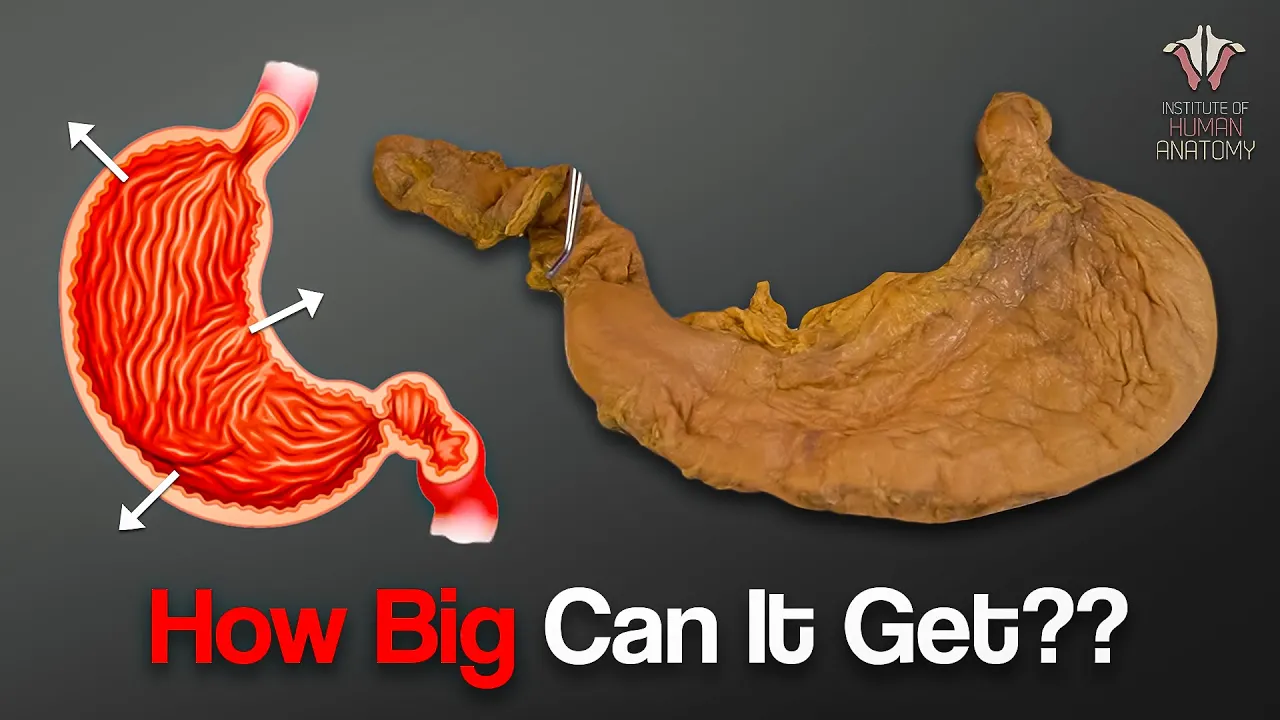
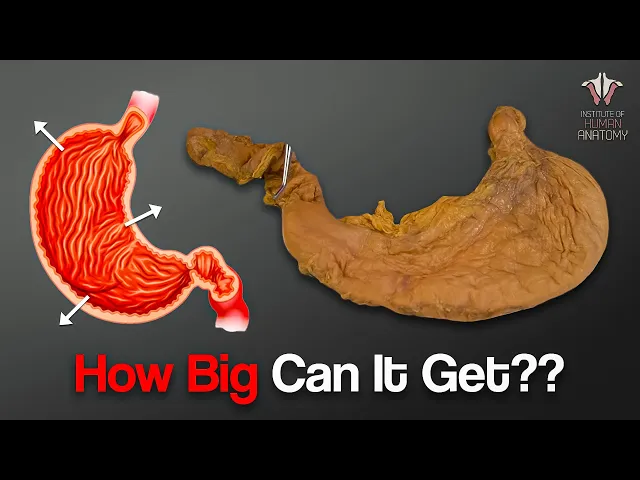
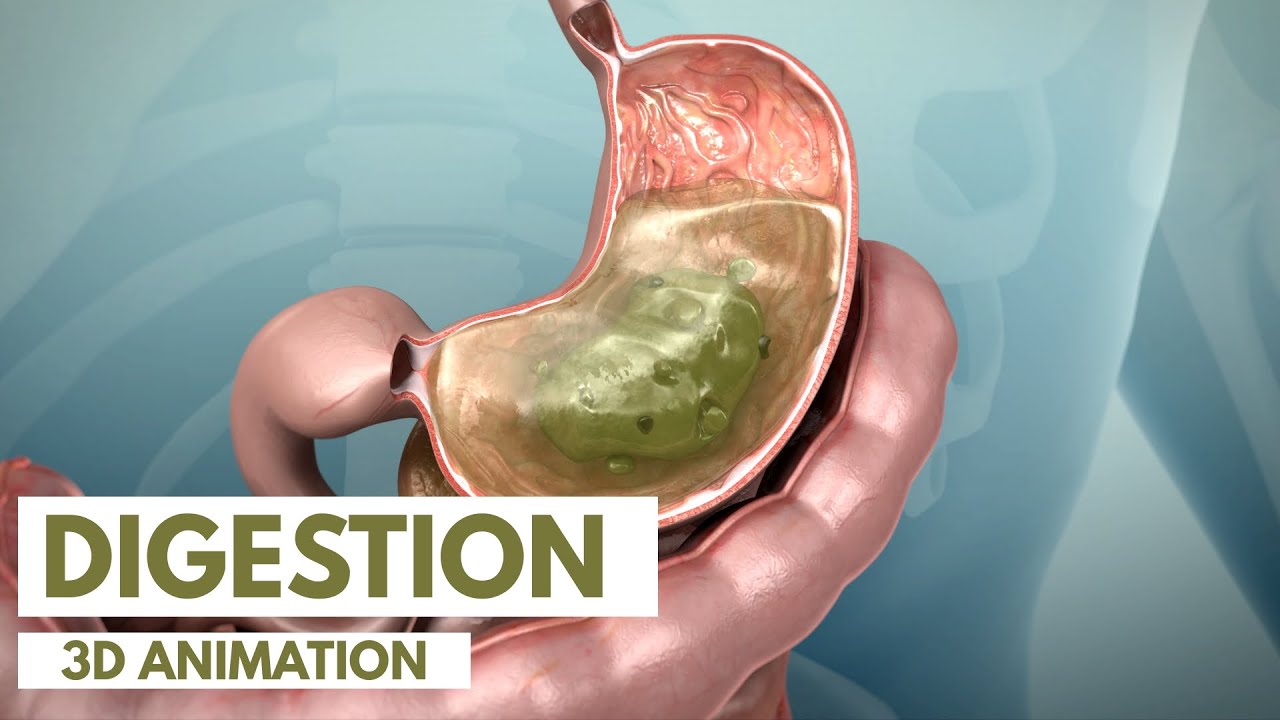
i don't think i could even get two of these into this stomach right here but we're gonna try because i have two bottles each with about 500 milliliters in it and we're going to try to actually put this in the cadaver stomach here welcome back to the anatomy lab everyone thanksgiving is upon us so in today's video we're going to talk about the challenges we put our poor little stomachs through like how much food can these organs accommodate and once the food's in there what does the stomach do with it also we need to talk about the deception that all children have given to us with their tummy aches for many many years so we'll address that as well as why does our stomach not eat itself alive with all the acid it produces that and more coming up [Music] so let's start with some of the stomach basics and the external anatomy of the stomach and how it sits in the human body that is going to help us understand how the kids have been deceiving us for years so let's take a look at the dissection here you can see the stomach down on the tray here it's often referred to as this j shaped organ kind of like a j and you can see a curve here and a curve there the larger of the two curves is referred to as the greater curvature of the stomach great name the smaller curve the lesser curvature of the stomach the stomach can also be segmented into three regions which again will help us with location and future topics in this discussion so let me put the probes down here and you can kind of see how the stomach would be divided into three sections here this first section here is referred to as the fundus of the stomach the central larger portion is referred to as the body of the stomach and the last portion the pyloric region or the pylorus here now there's a really important sphincter in the pylorus region or the pyloric region and that's right here called the pyloric sphincter you can see that with the naked eye because the smooth muscle gets so robust there really strong sphincter that only allows a little bit of material to pass through at any given moment which we'll talk about later but first we've got to talk about the location here the stomach is located in the left upper quadrant of the abdomen if you take a look at jeffrey here you could see that it would actually sit a little bit underneath the rib cage here the left side of the rib cage and that would be about from here over the swooping of the stomach where the pyloric region or the pylorus would be more exposed outside of the rib cage so this region right here so you have some of it under the rib cage some of it's swooping to the midline if you take a look at the cadaver dissection over here you can see again here's the stomach there now here are the ribs that i'm tapping so you can kind of see on that left side here and then there's the greater curvature of the stomach and it's swooping towards the midline now do you feel a little bit deceived by children i do i mean how many of them ever come and say mommy daddy my tummy hurts no they're never holding right here they're always holding right here and we fall for it they're lying to us their stomach's not hurting because it's over here and all of us we feel bad for them so we let them stay home from school and when they go up into their room to rest some of you let them go watch tv because you're more soft he's a little bit of a sucker so they go watch tv to rest and as soon as you turn their back they're sitting there my parents are so gullible little did they know i was touching my small bowel what we hope would happen or at least one of my hopes desires and dreams is that if i ever have a little kid and they come up to me and they say daddy my jejunum hurts i'm like i'm not sure if you're telling me the truth or not but i don't care you can stay home from school because you know your anatomy and that's the most important topic of all time agreed all deception aside it's good to know stomach left upper quadrant small intestine occupies more of the central abdomen there small intestines we'll save for a different video because we've got to talk about the function of the stomach once food gets down in there yes we're going to talk about when we over stuff the stomach but let's start with just regular old mills like regular sized mills how the stomach will handle that so if you go back to this dissection here what you can see here is the very bottom of the esophagus sometimes people nickname it the food tube as we swallow the food goes down the esophagus down into the stomach once it gets into the stomach we're gonna have some of the cells stimulate the release of certain compounds or chemicals now let's use another dissection here so just to compare this is about two-thirds of a stomach and it is a little bit larger in size especially the fundus this is about where the esophagus would come into this stomach so you can definitely see the fundus is larger than the other stomach which again teaser we'll talk about stomach stretching in size at the end of the video here but one of the things that's really awesome is if you look at the inside lining of the stomach here now this inside lining is referred to as the tunica mucosa tunica just refers to a layer mucosa because it's going to secrete some mucus now these gastric folds are called gastric ruby rugi just literally means folds this will be important again later in our video when we talk about stretching of the stomach but i want to pretend we're going to zoom in and zoom in and zoom in like the magic school bus and see what the tunica mucosa has to offer for us so if we were to look at this tuna mucosa at the microscopic level we would see some really important cell types that secrete certain substances we're going to talk about three cell types we're going to talk about chief cells parietal cells and mucous cells so the chief cells secrete two very important substances one is pepsinogen the other one is called gastric lipase pepsinogen gets converted to pepsin by the acid in the stomach and then it helps break down peptide bonds which essentially we're breaking down proteins here the gastric lipase helps break down fats so we've got those secretions released by the chief cells but i also mentioned another cell type called parietal cells those also secrete two very important substances the parietal cells secrete intrinsic factor and the hydrochloric acid intrinsic factor is necessary to absorb vitamin b12 really important vitamin that we can do a whole other video on hydrochloric acid has other functions hydrochloric acid helps denature proteins so it's again helping in aiding with helping and aiding with digestion we can also see that it's going to kill pathogens bacteria and certain viruses don't like a ph of 2 and it'll just destroy those things so we kind of have to think about this other idea though how does the hydrochloric acid not eat away our own stomach lining that tunica mucosa that i mentioned well that was the third cell type the mucous cells those mucous cells secrete mucus and it coats the whole lining of the stomach so if we go to this whole area here the whole inside lining of the stomach gets coated in mucus so you could kind of think the lining of the stomach coated with mucus with acid on top and that helps to stop the acid from eroding the stomach or causing problems if you take any medications that lower the mucous production which ibuprofen and advil contribute to you can make that mucus a little bit thinner and therefore the acid can irritate the stomach a little bit more so now we can see that the stomach coats the food in substances like hydrochloric acid and enzymes which helps aid in the breakdown of the food but the stomach doesn't stop there it continues to mix the food which also aids in digestion it often gets referred to as a muscular blunder so if you take a look at the dissection here again imagine the wall of the stomach has smooth muscle in there and that smooth muscle is going to contract and mix the food in a certain way now the fancy pants phrase for the digestive system moving food downstream is called peristalsis and the stomach kind of does it with this propulsion and retropropulsion type of wave action that we're going to show here so if you imagine right here here's the beginning of the stomach where we come in here and then there's the end going to the small bowel the stomach tends to propel the food this direction and remember we had a really tight pyloric sphincter here and that pyloric sphincter is so tight that it typically only lets about three milliliters through that's not very much so really only small substances so anything that gets pushed this direction and isn't small enough gets pushed back and so you get this wave of back and forth with the stomach until any substance that gets pushed this direction if it's small enough it'll sneak through if it's not it gets pushed back for further mixing and further breakdown one question we often get from students is how long does that wave back and forth happen in the stomach well it depends a little bit one it depends on how much food you ate which again we're going to talk about in a second here and two the type of food carbohydrates tend to be broken down the quickest so if you have a carbohydrate-rich meal it will be digestive quicker proteins kind of next in line and then fats the slowest so carbs proteins and fats and the majority of the time we eat a mixture of all those but it kind of leans one towards the other depending on the type of foods you're eating so it can be anywhere from two to four hours before you empty the stomach with this process of peristalsis or those waves of contractions going through the stomach so finally we can talk about how much food we can pack into the stomach during thanksgiving dinner or during whatever food binge we want to go on yes need to mention we changed locations in the lab i had to set up a little experiment that we're going to conduct with this cadaver stomach in just one second however i want to mention if you were to do some research on how much you could pack into the stomach you'd get a wide range of data there's some literature that will say the stomach can hold up to six liters that would be all of this these are all 500 milliliters so two of these bottles would be one liter all of this going like just look at my body how am i gonna get that in there that's pretty remarkable to think about six liters but then you look at some other research and they're saying maybe it's more like two to four liters okay so here's two liters just these four bottles if i get a little adventurous and go up to four liters that's what i'm talking about here that would be a lot of food or stuff going into the stomach now if you look at medical physiology books a lot of them will actually mention the stomach in its relaxed state could get about 0. 8 to 1. 5 liters of food in there so if we compared that to the bottles here's just one liter and you know 1.
5 liters would be three of those bottles again that still seems like a lot i don't think i could even get two of these into this stomach right here but we're gonna try because i have two bottles each with about 500 milliliters in it and we're going to try to actually put this in the cadaver stomach here okay so let's start with the first 500 milliliters here so i'm going to go into the what's left of the esophagus here now you guys can see that i've put like this black band over here this is the pyloric sphincter again now we'll let a little fluid through so i wanted to clinch that down so we could actually get a better idea of how much fluid will stay in the stomach now as i push the fluid in here there's a couple of things that would happen in a living body as food was pushed in like i've pushed some of this water in here the stomach would sense that through some of the sensory neurons and it would send this reflex arc back through the vagus nerve to the brain and the brain would quickly send a signal back down to the smooth muscle of the stomach to actually tell it to relax a little bit so that the stomach can accommodate some more food as i'm pushing more and more and more interiors you can see it start to expand here i got to get some of the air bubbles out of the bottle here let's do some more there we go see the stomach expanding and stretching here there's 500 milliliters right here so you see the stomach stretched here kind of cool can we get more in there i don't know but we're going to try so here's the next 500 milliliters and i'm a little nervous i'm a little nervous yeah stretching i don't want the stomach to burst and for those of you that are hoping that it might burst for an epic youtube video i'm not going to do that because i really want this stomach to stay intact but let's just look at this here we've kind of distended the stomach here this is only about 600 milliliters that we got into the stomach here now again let's talk about the limitations of this little experiment here one is we didn't get that reflex that would normally happen in the human body for when food initially came in send that reflex signal back to the brain to kind of relax the smooth muscle to allow for food to come in now again on an average human that's about when it relaxes volume about 0. 8 to 1. 5 liters before you really start to push on the walls and start to stretch the stomach which is the next topic we have to address here what if you're one of those people that constantly eats past capacity let's say in that figure of 1.




![Lithium Orotate & Lithium Carbonate | Joy Lab Podcast [ep. 127]](https://img.youtube.com/vi/NbD0XhvMs_Y/maxresdefault.jpg)