Welcome to the Stanford Health Library. Thank you for coming here tonight. My name is Michele Jehenson and I work at the orofacial pain clinic at the Stanford Pain Center in Redwood City. So today's topic is TMJ disorders. TMD, I'm going to speak about the nature of the disorder. What a TMJ disorder really is. I'm going to also talk about who is at risk for TMD. And finally, I will touch on the common treatments that are recognized as evidence-based treatment for TMJ disorders. So, I guess it's customary to talk about disclosures as to if I'm affiliated
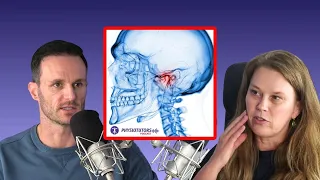
with any kind of pharmaceutical company or anything like that. I have no disclosures to be done. So, I wanted to first show you the anatomy of a TMJ. It's a joint that is very unique in the body. It's one of a kind. There is a one disc, and you can picture it as a donut. So, it's a circular, biconcave, just a donut, just doesn't have the actual hole in the middle. So it's kind of like a donut shape, and it separates the jawbone, which you see as the rounded bone in the picture, from the skull.
And particularly, the fossa, the articular fossa, and the eminence that you see to the right of the fossa. So the disc is flexible. It's fiber cartilage, and it offers a perfect interface between the skull and the jaw. It allows for smoother motion. The joint is also particular in a sense that not only it allows rotation of the joint, but it allows for forward motion of the jaw. So, if you put your hand like slightly over your, in front of your ear and you open your jaw wide and slow, you can see that initially, it just
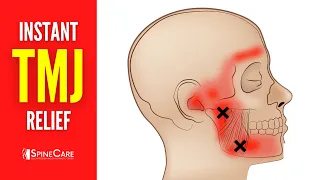
starts rotating and then you can feel it actually advance forward. And for some people, you can actually feel it coming out slightly, because even though the jaw is seemingly fixed, the suture that is in the front, it allows for certain flexibility in and out of the joint itself. So, what is a TMJ disorder? So, a TMJ disorder is defined by pain, either at rest or upon function. It is defined by something that is a painful noise. It can also be just a dysfunction, like a limited range of motion, or a jaw deviation such as this,
like when you open you go to one side or you are unable to go from one side to the other. Or a sudden unexplained bite change, like you wake up and your jaw is to the front, or to the side. Those are considered TMJ disorders. They can be associated with headaches, and ear aches, or ear pain. So, the prevalence is 5 to 12%. Vast majority of them women. And the age group is between puberty and menopause. And there's some research suggest that there's a link with hormones as the cartilage and the TMJ has estrogen receptors.
So that would make sense since the age group is, you know, puberty to menopause. So that leaves us to, what is not a TMJ disorder? And it's pretty obvious. If there's no pain, no dysfunction. Dysfunction is if you're able to open your mouth wide, if you're able to chew without pain, you don't have a TMJ disorder. You may have noises, you may have joint noises, but you do not have, by definition, a TMJ disorder. You can have abnormal findings in an MRI or an X-ray without having a TMJ disorder. There are a lot of people,
and certainly, most of us over 40 will have some type of changes on an X-ray, even though we are still completely asymptomatic, and we can chew, and we can open our mouth without any restrictions. So, that's kind of something that comes up a lot. I mean, I get patients who come in because they have joint noises. Because they have been told by their dentist that they had a TMJ disorder. Or because the dentist saw on the X-ray that there was something abnormal. So, of course, we can determine it. But by, as a rule of thumb,
if you don't have any pain or dysfunction, you don't have a TMJ disorder. You don't have to worry, 'kay? 60% of people pop and click, so it's a very common incidence. They don't really consider it a disorder because it's a variation of normal, at this point. I will come back later about the popping, the mechanism for popping and clicking. But I wanna touch on remodeling of the TMJ, which sometimes occurs in, you see on an X-ray. So if you look at this X-ray, the TMJ's right, this is one TMJ, this is the other TMJ, right?
Right and left. So it should be kind of rounded and it should have a continuous white line around it. And you see here, it is a little bit flatter on the top but it has a white line around it so. When it has a white line around the perimeter of the condyle, it's considered remodeling, and remodeling is a process of bone changes. And the bone is a dynamic structure, it's not like there to stay. Like for example, if you've ever had braces, what allows the teeth to move is actually the bone remodeling. On one part,
you have some bone destruction that allows it to move, and then the bone rebuilds on the other side of the tooth, so it's a completely normal and natural phenomenon to a certain extent. So, if it's a slow process, and if it's an adaptation process, it's normal and it doesn't give people any trouble whatsoever. So this is considered a very normal cone beam CT scan of the jaw. Which doesn't mean the patient is asymptomatic, they can have pain with a normal X-ray. That's the thing. That's the other thing. You can have absolutely no pain with a
terrible looking X-ray, and we can have pain with a normal X-ray. So, what types of TMJ disorder are there? Well, we classify them as TMJ disorders involving the muscles of mastication, involving the joint itself or part of a systemic disease. So the muscle disorders are for the TMJ, and the muscles of mastication are just exactly the same as for any muscles in your body. There is muscle ache, restriction of range of motion, fibrosis, tendinitis. You know, you've had. Some people with tennis elbow, you can have tendonitis of the jaw as well. So, the muscles of
mastication, and you can feel those as well, are usually for the most part. The masseter and the temporalis muscles. Those are the ones that give people the most trouble. So if you feel here, and you put your teeth together, and then you clench really hard, you will actually feel a bulge, and that is your masseter muscle. If you put your hands up here by your temples, and do the same motion. You can also feel a muscle bulge, and that's the temporalis muscle. It's a fairly thin muscle, but very, very wide. Both of these muscles help
to bring the jaw closed. So, a lot of patients who come to our practice have myalgia or myofascial pain in the temporalis muscle, I mean temporalis muscle, sorry or the masseter muscle. And that translates into very often, limitation of their range of motion. They cannot open their mouth really wide or they develop pain. So that's a very common TMJ disorder. Medial pterygoid is the one that is the mate, if you wish, of the masseter muscle, but on the inside of the jaw. And the lateral pterygoid is the muscle that allows you to bring your jaw
from side-to-side, and bring your jaw forward. So, it's a tiny little muscle. We can't palpate it, but occasionally, it causes problem, even though it's pretty rare. Then moving on to joint disorders. We can have a joint disorder that is directly associated with a disc dysfunction. Remember that little donut that I was showing you? It's held by ligaments and it goes forward and backwards. So there's a lot of possibilities for things to go wrong as far as this little disc. There are, there's trauma of course, I mean fractures and so on as well as systemic diseases
such as arthritis, rheumatoid arthritis, lupus, and the likes. As well as, of course I didn't mention this, I have some slides on tumors of the jaw. So again this is the same slide. I'm never really quite sure how you pronounce this. I usually say ginglymoid-arthodial joint, which is the type of joint that the TMJ is. So it just means it rotates and it slides. So the rotation, lower part of the joints or the disc with the condyle, so the condylar rotates in relation to the disc and the translation is the whole disc, and condyle move
forward. I tried to find a video, but I could only go through YouTube and they were mostly dissection videos [LAUGH] so I didn't think that it was a good idea. This is an MRI picture of the disk. If you see a little hourglass, darker. Can you see a little darker shadow in the shape of an hourglass? Well, this is what a normal disk looks. And it is held by ligaments on this side, ligaments and muscles on this side. So, here, it is the same disc, but in a more, in a mouth that is wider open,
and you can see that the disc is moved forward in relation to this eminence. So again, this is a closed mouth, and this is an open mouth. And this is a normal position of the disc and normal position of the condyle. So, what kind of dysfunctions are there? So we'll start with probably the most common, and it is when the disc. Which you can see here in the picture or here in the model is completely interior to the condyle. If you look back at this one, the back of the disc is located as 12 'o'
clock in relationship to the condyle. On the anterior disc displace, it's actually way, way, way forward. And it's impossible for the condyle to get into the middle of this disc. It's kinda stuck behind it. And so, usually, it's something that happens very suddenly either while you're eating or sometimes when you're yawning or pretty abrupt motion. And, all of the sudden, you won't be able to open your mouth. It's a very sudden event. And, sometimes it will last for several hours. And, also, it will suddenly get better. Or, you'll have to go to a dentist, and
help put it back in place. So this is is the unfortunately, this is in an opening motion. So this is closed jaw and this is a little bit further open. But you get the idea. It usually is painful, but not necessarily. But, if you try to open, it will be like you're hitting a brick wall. I mean, it, there's just no give whatsoever. And, this is where I come back to the benign clicking that I was talking to you about. The benign clicking. Oh, there's a spelling mistake there. Sorry about that. No? >> No. >>
No, no. There is no scent, oh, good, good. Okay, good. So, the benign clicking, the clicking that 60% of people have and don't have any problem with it, actually, one of our camera people showed that to me earlier today. How many of you have clicking? Do you have any symptoms associated with it or do you just have benign clicking? No pain. No dysfunction. Like most people have that situation. So what it is, is in here as you can see in figure a, the disc is also anteriorly displaced. But, during the opening motion the condyle is
actually able to go past the posterior part of the disc, which is slightly thicker to get and fall into the middle of the disc. And this is the passing through and over the back of the disc that creates the noise. So it's just a functional noise, I consider it a nuisance. There's nothing you want to do about it, there's nothing you should be doing about it, no surgeries, no treatment whatsoever. During the course of your lifetime it might change, it might become a little bit later in the motion. Let's say when you're 18, it might
be really early because the disk is just a little bit anteriorly displaced. And then as you get older it might be, you only have a click when you open your mouth really wide. I only have a click now when I yawn, but I used to have a click all the time. And it was very convenient because I could demonstrate it to my patients, you know. So, this is not necessarily going to evolve to a lock. For the vast majority of people clicking will never evolve to a lock, but it's not, nobody's able to predict it.
This is another one that people have probably heard of. It is an open lock, and it's actually a subluxation of the entire joint in front of the articular eminence. And the joint is basically not able to come back over this bump here and it's being stuck because the pull of the muscle's actually maintaining it in that fascia. So the more people try to close their mouth, the least they're likely to because the pull of the muscle does not allow the jaw to go back. So this is fairly rare but it is an emergency because you
cannot eat, you can hardly swallow, you cannot talk and it is something that necessitates medical attention to reduce. And usually I don't see those patients because those patients go to an emergency room right away. I do see quite a bit of close lock, and unfortunately, I don't see them as early as I should, and by the time I see them, the treatments are more limited. But the open locks, they go to the emergency room, and rightfully so. This is a posterior disc displacement with the disc instead of going forward, goes backwards. This is very rare.
I've actually never seen a single one and I was unable to find a single picture online [LAUGH]. But it does happen and in those situations, extremely painful. It's a very, very painful condition. Also, rather suddenly, and it translate the symptoms is that you are no longer able to bite down completely and it's very, very painful to try to put your teeth together. Then we come to arthritis, a systemic disease, and all of them will kinda like this on an X-ray, a lot of degeneration of the bone. It's only further testing that will show what kind
of disorder it is. Of course, osteoarthritis being the most common. The great news in terms of the osteoarthritis of the TMJ is that it is unlike osteoarthritis of the knee, which is a situation where you have the knee that degrades to the point where you're gonna have to have a joint replacement. Arthritis in the TMJ is self limiting and will eventually burn out. And the reason for that, is that, as opposed to the knee, that has high line cartilage, which is a type of cartilage, where it doesn't have any kind of blood supply in it,
the TMJ is covered with fiber cartilage, and so the fiber cartilage will regenerate. The joint will never look normal because the bone is gone but the layer of cartilage will reform over the joint. And eventually people with osteoarthritis of the joint will be able to function without pain and fully like before. So that's a great thing to tell patients who are pretty scared when they see their X-ray. And believe it or not, a really terrible X-ray can be seen in 16 year olds. And when you have a 16 year old that come in and with
their parents, usually, and they're told that they had arthritis, it's kind of a, it's not a good thing. But if you tell them that eventually they'll be okay, it's a lot easier to have a conversation. So this is another one of those X-rays, and the difference between this one and the one that we saw before, where there was just remodeling, is that if you look, instead of having the line that goes all the way around, just like on this view. For example, on this view, it's the way we want it. But on some of the
views, you could see there's a little bit of shadow. There's not quite a line here. Same thing here. We lose the line at this point in the image and that's the sign that there's an active process happening. That's the difference between the remodeling and the active joint degeneration. So this is a terrific image, it's totally underused. It's called a Cone Beam CT Scan. It's available in some of the dental offices, and ENTs use it as well, because you have a pretty good view of the sinuses, and oral surgeons use it, but it's a lot less
radiation than a regular medical CT, and it gives us such a better image of the joints. This is another picture of the degeneration. This is a 23 year old. I mean, this 23 year old has lost so much anatomy. You see it's really flat and it's really flat here as opposed to the rounded curves on both the eminence and the condyle. I mean, for a 23 year old, that's pretty dramatic. I have a couple slides of tumors. This is an osteoblastoma of the jaw. It's pretty obvious on the X-ray as well. Usually, very slow-growing. These
are more, this is from the condyle, you see that bulge here and over here, you have a cyst. So, all these are benign, the first one was not but these two are benign. And usually, unless they interfere with function, if the patient can open and close, we leave them alone and watch them. But that determination has to be done on a case-by-case basis. And the one thing you wanna do is eliminate the malignancy. You wanna make sure the tumor is not malignant, other than that, you know, you just watch it. So it comes to the
really, really interesting and controversial question of what causes a TMJ disorder. And there's a lot of debate about it, because in the, even within dental professionals, I mean, when I was in school, I graduated in 1988, they were teaching us that TMJ disorder was due to a bad bite. And that the treatments for TMJ disorder was to make the bite a perfect bite or improve the bite. I mean that was 30 years ago, you know. So it definitely has changed since then. And in the dental community, some people are still adhering to principles that are
no longer based on evidence. And certainly, that assumption that is not, I mean, the fact that it's not caused by a malocclusion or bad bite has been studied. It has been studied and the results are very clear and very consistent because they have studied people, a group of people, who had perfect bites and no TMJ disorder. They created some interference. So they changed their bites so that they didn't have a bad bite anymore, and they left them like that for six months. And they came back and they still didn't have more TMJ disorder than the
general population. Conversely, they took people with TMJ disorders and a bad bite, and they corrected their bite, and they followed them up, and so there's no relationship with. So people who say that you need orthodontics to cure TMJ, it's just not based on evidence. And unfortunately, that is done pretty commonly in certain circles. And of course, in academics we don't do that. But that's something I want my patients to be aware of, because that's a very costly proposition, of course, you know, if you have to have braces. Or another thing that we know is that,
of course blunt trauma fractures, motor vehicle accidents, they can cause a TMJ disorder, right? However, I have seen patients with fractured condyles at a 90 degree angle who came to my office, sent and referred by their dentist, who had seen the x-ray. And the same patients had no dysfunction, no pain. So, it's very variable, as far as presentation, but definitely you can say macrotrauma, blunt trauma, can cause a TMJ disorder. Microtrauma or load is what we always traditionally thought caused the TMJ disorder. Microtrauma or load would be grinding, clenching, going to the dentist, having surgery,
long openings, yawning, chewing hard foods. Traditionally, especially grinding and clenching were associated with TMJ disorders. And I'm going to come back to that particular item in a little while. Persistent pain is also an etiology and persistent pain is more, there is no finding on an x-ray, patients just have pain. And those types of patients are more in the spectrum of fibromyalgia, IBS, chronic migraines, and TMJ disorders fall in that same spectrum. So there is a pain issue that is central, that is brain-driven, that is definitely not due to peripheral components such as the bite or
even grinding or clenching. And disease process, that's pretty obvious. That's the arthritis and the lupus and so on and so forth, and that's pretty documented. Now if you look at microtrauma or load, now the question now is, what kind of importance does a load have for patients who have a TMJ disorder, or have a propensity or are at risk for TMJ disorder? Is it more like an aggravating factor, for some people who are just already susceptible? Is it a perpetuating factor, once you have it, you don't heal? It's, there's a lot of research, and there's
a lot we don't know about the origins or why some people develop TMJ disorders and why others don't. 60% of the people, or 50% of people clench and grind in the population at night. That's something we humans do. It's controlled by our brain. It's no longer believed to be brought about by stress. It can fluctuate. Like daytime clenching and bruxing, and grinding, yes, stress may be involved in it. But night time bruxism and clenching are no longer believed to be associated with stress. That's something 50% of people do and in the population, 50% of people
don't develop TMJ disorders. So there's not a direct correlation with load and TMJ disorder. And so, we're looking at other things that could potentially differentiate the people who develop TMJ disorders and the people who don't develop TMJ disorders, given that both of them grind and clench, okay? So, what are we looking for? Okay? So we're looking at symptomatic and asymptomatic patients, patients with pain, patients without pain. And we look at patients who have the same anatomy. Maybe we look at a population of people with a displaced disc and pain, or people with myalgia. And we
look at their genetics, we look at the grinding and clenching they do, their anatomy. And we try to find something that differentiate both groups of people, and it is very difficult, because there are so many variables. But the one thing that has been studied right now is adaptability and resilience. And so adaptability is kind of the ability, it's genetically determined, but it's the ability of our body to heal themselves. So you can have, for example, somebody that will lean more towards what we saw there as, you know where the x-ray was remodeling but no evidence
of disease. Well, for some people, they will respond to load with adaptation. And other people will respond to load with degenerative joint disease. Okay? So there's something that's genetic, and it's a risk factor that we can't really control. There is some evidence that there is a relationship between arthritis and displacement of the disc. Now, is the person who has arthritis at risk for disc displacement or is the person that has disc displacement more at risk for arthritis? So, we haven't figured that one out yet. So, basically, when the patient comes in, we treat the symptoms.
We can't really treat the cause. So, adaptability is a big one, and it's that we can observe. We can observe that some people, because of the x-ray, for example, we can observe that some people do not degenerate. Some people's joint do not degenerate. But then, you know, we look at, so this is what we're talking about, you have the anatomy and the load. When it's not really great, you have pain. Adaptability is the factor that can be the difference between the people with symptomatic, not symptomatic. But, then we also have situation where we have seemingly
the same adaptation. There's nothing on the x-ray that's particular. Nothing out of the ordinary in terms of load, no seemingly trauma, no dysfunction, particularly, and the patient is in pain. So, we thought, okay, maybe their load is bigger. You know, that's a possibility. Maybe they grind more, maybe they clench more. Who knows, right? But we also looked at something that's called resilience. And resilience is an ability that is sometimes innate that we have to cope with certain dysfunctions and pain that makes it that we experience less pain and dysfunction. So we started looking at the
resilience, and that's studies that are done mostly by pain psychologists on pain patients, on chronic pain patients. So usually people who have good adaptation and resilience, when they have a certain amount of disease, they seem to respond better to treatment. The treatment that we do, it works. And, then sometimes we do the same treatment on seemingly the same type of patient, and it doesn't work. And, that's puzzling and frustrating for us providers, of course. And, so we wanna have more research. So, this research on reliance and adaptability. A resilience in adaptability has led to this
kind of schematic. You know, where you have you know, the TMJ pain or dysfunction, and you have several areas that can influence, positively or negatively, on the outcomes. So the load is obvious. The anatomy is obvious. Genetics and adaptability, we can't do anything about, so we have to look at sometimes, this was the old way we looked at TMJ disorders. It had to be the load, it just had to be the load. They did not consider these two factors. So once we started opening our mind, a little bit out of the box, then we bring
in these two conditions, other pain conditions because it's well known that if you other pains in your body, you have chronic pain in your leg, chronic pain in your back, chronic migraines and then you develop TMJ disorder, you will perceive that as worse. I mean that's just the way the brain works. Once you have pain, the brain signals can just free flow a lot more than if you don't have any other pain condition. So we can think that there are other pain conditions. We can think that the resilience is less. We can think that maybe
it's a combination of other pain conditions being interfering, and a lack of resilience. So there's a lot more treatment options and treatment possibilities that open up. This is how we all would like to be able to treat, right? You have the symptoms, you take a test. You figure out what it is caused by and then you get a treatment that works. I mean that is the simple equation that we sometimes can do with some disease but with TMJ disorders, it's just not like that and that is the hard part for patients and providers alike es
that there are people who come in with exactly the same symptoms. You give them the same treatment, and they have different outcomes. So that is very difficult. So adaptability seems to have more to do with the body's ability to cope, and the resilience with the mind's ability to cope. A friend of mine, psychologist, had a very simple equation. She would say, pain is, and it's actually based on the definition of pain. If you go to the dictionary and you look at pain, it's not only a body perception but it's also an emotional component and so
the emotional component is just as big as the actual perception of the physical pain. So if you can reduce either the emotional portion or the physical portion of the pain, you can actually decrease the overall experience of pain that the patient receives and that's a really big new approach for chronic pain that we've been practicing at the Stanford Pain Clinic, is that we don't just think that pain is a bodily perception. We also feel that the emotional distress associated with both the pain, the disability, the dysfunction is just as important and it's the sum of
these two that can make the patient more or less miserable. So if you think about it that way, you get better outcomes. Unfortunately, dentists just by our training, we are used to doing things, right. You see a cavity, you drill a hole, you fill it, problem solved. So dentists tend to need to do something, they don't usually just there are situation where it's better to do nothing, you know. So dentists are by training, they're used to actually do procedures, make appliances. They have a drill, they want to use it. So it was an actual different
frame of mind that I had when I went to my residency, it was totally a different frame of mind to come back more to a medical model. So this is the way we used to treat TMJ disorders, okay? First line, we have the first line treatments. Anti-inflamatories, corticosteroids, physical therapy for the muscles. You know, trigger point injection, if necessary. Joint injections, if necessary. Joint manipulations you know, to reduce the joints. I mean not chiropractic manipulation but if the joint was locked we manipulated them open and as an adjunct, we used to have moist heat, meditation,
muscle relaxant, pain psychology. Rarely, surgery. Even though, 20 years ago, it was very very in vogue and a lot of people used to have joint replacement surgery that has really totally, totally been discredited. Joint replacement surgery is very, very rarely indicated. Maybe in case of trauma or cancer, yes. But the results were so disastrous that they're done really, really, very rarely. Open joint surgery, again, I mean, some people had surgery for clicking, benign clicking, and ended up crippled. You know, not being able to open their mouth, so its very, very sad, but I still see
them. You know, so some reason some people still have surgery, and never orthodontics bite adjustment, and opioids. We don't really use opioids. It's not a disorder that necessitates opioid treatment. The chronic disorders don't really do anyway but even acutely, it's not usually the type of pain that necessitates opioids. So now that we know all this about adaptability and resilience, we are moving this whole category into a first line treatment. So we have pain psychologists that will work on patients and give them better resilience. Resilience is something that some patients have on their own. They have
those coping mechanisms. They were born with them or they acquired them along the way but you can teach them. You can teach them to people, and that's what the paid psychologists do. They teach patients coping mechanisms, they increase their resilience, they decrease their focusing, their catastrophizing. Catastrophizing is a feeling that you have that your disorder actually is very, very bad. It's not benign, it's going to deteriorate, so it's like a doom and gloom approach to disorders and certainly, in the TMJ world, there is really no need for doom and gloom. So they do lifestyle modification,
relaxation,. Meditation also works quite well even though you have to practice that and there is more recently, there's more emphasis on sleep and sleep quality than there was before. There's some research that show that if you have poor sleep, you will tend to brux grind your teeth more. Because you never get to the very deep sleep. For some people who wake up a lot, they never really go into the deep sleep where the muscles are completely paralyzed. And so, that might affect their adaptability or their resilience. So anyways, the resilience definitely because people who don't
sleep well. You can ask universally, if a patient has chronic pain, if they're more stressed, the pain will feel more. If they don't sleep well, the pain will appear more worse. So it's not that necessarily stress is inducing the pain. It's more that, when you have stress, your pain highways or your pain processes are different. And so that's where working with a pain psychologist is, for us, invaluable. And that's why going to a pain center, like Stanford, that has the pain psychologist available is a real bonus. And I've worked both with and without a pain
psychologists and I cannot tell you the difference that it makes for the outcomes. So I will finish my talk here to leave some room for questions and answers. Because it's such a difficult subject in terms of, if you have been affected by the disorder, you probably go to some physician or a dentist and get five different options. Or you look online and you have these multiple opinions of what you should be doing. The one thing that I have to say and this is really pretty important, is that all of the treatments that are done for
TMJ disorder, all the treatments are reversible. So things like full time wear of splints. It seems really benign, but a full time wearer of splints can change your bite in a permanent way. So if you wear a splint, day in and day out, for several months. Your bite will most likely change. And what you do at that point that you need braces. And some people actually have a phase one, phase two process. Where they change the bite on purpose with the use of a full-time appliance. And then afterwards they restore the bite to a better
position. So, stay away, if I can give you one recommendation, is stay away from treatments that cause, that are not reversible. So in the non reversible one you have orthodontics, full time wear splint, bio-adjustments, and everything else, you know, there are a lot of things that work. I mean, acupuncture might be a wonderful treatment for some people. Other people will respond to muscle relaxants. Other people don't wanna hear, I mean, there are a lot of options of treatment. It's not like everybody that gets a TMJ disorder gets exactly the same treatment. We discuss with patients
what their preference is in terms of treatment philosophy. And if they want to see a pain psychologist and work on meditation relaxation first, it's fine with me. And depending on what they have, things like antidepressants, topical or oral, work really well for things like inflammation, just like in other joints of the body. But please, reversible is what I would like you to bring home from this lecture. So I would welcome questions on any part of the speech or on other things you may have read online. Yes. >> I'm sorry, I came in a little bit
late, but did I understand correctly, do you feel that splint are overused? >> Can you repeat that? >> Yes. The question, do you feel like splint are overused, okay. [COUGH] [NOISE] In general, I really believe so. And the reason being that there is in dental school, we get no training. We have no training in TMJ disorders. So most of what dentists pick up to treat patients is over the course of, you know, here and there continuing education, they learn how to make a splint. So dentists basically, the only thing that they know what to do,
is to make splints. So, that's usually the first thing they try. They say okay, we'll make you a splint and If it works, great. If it doesn't work, well I'll send you somewhere else. So probably, 70% of people who come to my practice have gotten the splint from their dentists. I would say that most probably, realistically, only 20% of people with TMJ disorders would need a splint or would benefit from a splint. It's a very difficult question because they have tried to do a lot of research on splints. And there wasn't really a particular type
of patient that is ideal for splints. Like some people respond all over the place, like 50% of people would respond 45 will not, 5% will get worse, and we can not pinpoint which ones are the ones that get better. Overall, for me an my practice, if I have a patient whose pain is worse in the morning, when they get up, I will try a splint. If they are worse in the afternoon and they have no pain in the morning. I'm just assuming that they're not doing anything at night that aggravate their disorder. So I don't
really believe that the splint will do anything. I will use a splint if they grind their teeth to protect their teeth. Cuz that we know the splint does but what the splint actually does for patients in pain is unknown. And there certainly [COUGH] people out there [COUGH] and with good backgrounds, very reputable people who believe that part of the benefits of the splint is placebo. Which you know placebo is not all bad. Placebo I mean 20% of any treatment that I do patients including medications that have research backing it is placebo. Yes. >> Can you
explain what the splint does? >> A splint and, I should have taken a picture of a splint. It's basically a night guard. Do you know what a night guard is? A night guard is a piece of plastic that is molded to your teeth and that is acting as an interface. It goes either on the bottom teeth or the top teeth and it's basically a plastic interface between the top teeth and the bottom teeth. >> And it's called a splint? >> It's called a splint, it's called a night guard. It's called an orthotic. It's got various
names. Splints, you know, to me it's in a category of, it's pretty benign as long as you don't use them full time. And certainly for some people they do work. So in some patients I think it's worth trying. I like them to be full arch. I do not like the one that only are in the front teeth. They were marketing, they're called NTIs, and they fit just in the front teeth. And they were marketing. Than for grinding, because they said that if you clench on your front teeth, you don't clench as hard, which is kind
of true, but you clench enough to get bite changes. And so the research on those has been pretty bad in terms of reversibility so I don't use those. I use the full arch one which covers all the teeth, more like a retainer, like an invisalign retainer except thicker. And again, people do thick splints, thin splints, hard splints, soft splints, and a lot of people swear by the splints they make but if you look at the research, there's really no type of splints that works better than the next. So whatever your dentist wants to make, if
they are into hard splints, by all means hard splints is fine. If they want to do soft splint, it's fine too. It's just more like is it comfortable for the patient. Does the patient like it better? Yes? >> Well, you said that really, no treatment is good for everybody. >> Yes. >> Why would you even bother with a splint? It costs money. >> Right. >> You have to live with it. Why would you even do it? >> Well, yeah it's not really so much as it, I put it there in the adjunct, okay? So adjunct
is not really a first line. I will try other things. But if the patient continues to have morning pain, it's something that is not a medication, it's benign, and some people find benefits. So it's still in the range of treatments that are worth exploring. What else that you say. >> Okay, is it the type of thing that can get worse. >> Mm-hm. >> It's reversible. >> Yes, as long as you don't use it full-time, and by worse, it's pain. Just some people develop pain, and then you just have to give it away. Yeah. >> By
full time do you mean night and day, 24 hours? >> Yeah. >> No. >> It won't change the bite or change the jaw line? >> If you wear them full time, yes. >> How about just nights? >> Nighttime it can, but it usually doesn't. And as long as you check it everyday when you wake up. Make sure that your bite hasn't changed, and it's usually fine. We have time for a couple more questions. Yeah. Yes? >> You mentioned in TMJ that you get ear pain. >> Yes. >> Where the pain located, is it outside, or
it's inside? >> Well, what it is is if you look. >> Question? >> Yes. I mentioned that the TMJ pain is also sometimes associated or felt as an ear pain. It's more because of the proximity of the TMJ with the ear. So if you look in an anatomy textbook, there's just the very thin piece of bone that separates the TMJ from the ear. And so because the pain sometimes, if it's really intense it expands, it kind of gets perceived in this area. That's why a lot of people see an EMT doctor first before they see
me because they perceive it as ear pain. But it's not because it is affecting the ear directly. >> So would the pain around the ear or inside it? >> Well it's more on the inside. I mean most people think it feels like an ear infection. >> So if a night. >> Yeah. >> Sorry. >> Go ahead. >> If a night guard is prescribed. >> Mm-hm. >> And it fits your mouth. How does that affect your bite? >> The bite changes, not because the teeth change, but because the position of the condyle inside the fauca will
change. So because of the, see when you look at the. Let me put the picture of the actual joint. Okay, almost there. Okay so this is the condyle and this is the fauca. Okay, when you have a night guard in your mouth, you are going to have a different position of this disk and this condyle because the jaw will be slightly more open, so the disk will be a little bit more anterior and the condyle will be a little bit more anterior because of the position of the jaw. And if you keep it there 24/7,
the soft tissue within the capsule will adapt to that position, and it will be difficult to go back to the old position. >> But if it's just used as a night guard? >> Yes if it's just used as a night guard at night, in the morning when you take it out. I wear one because I wear one as a retainer basically because I had braces, so for me a night guard is the right thing. I don't wear it for pain or a TMJ disorder, but when I take it out in the morning, even though it's
very thin, my bite is a little bit different because of the muscle position. But that's okay because within five minutes it's back to normal. >> Yeah, never noticed anything. >> Yeah. Yes? >> I used to wear one and it was a hard one. I have to go every month, or every three months, to be adjusted. So they have to grind. >> It shouldn't need to. Once it's adjusted to comfort and it's symmetrical and it's the same amount of force and you feel like you're biting on both sides in the same way, it shouldn't need to
get any adjustments. I mean you will continue to wear it down, but you wear it down because of function. And so you continue wearing it down until there's a hole in it and you need to have it replaced, that's all. >> Huh. >> Yeah. >> And what is the bite adjustment aside from braces? >> Oh that's when they actually grind your teeth. You know, when you don't have a perfect bite, you may have a tooth that's a little crooked, right? Or that is a little bit tilted and when you go side to side you hit
that tooth first. And so they shave that part of the tooth away, so that you can translate from side to side. And I'd say, if a perfect bite was the solution, putting a night guard on everyone should heal everyone because once you have a night guard you have no interferences. You actually have a pretty perfect bite, because the night guard is adjusted perfectly. So the theory that a bite is a determining factor, is pretty much obviously not right. And during the day you're never touching your teeth together anyways. So you function, except for when you
swallow, that you briefly put your teeth together even when you bite on food, because food is the interface. Your teeth are not actually contacting that much. And I have seen people with incredibly horrible bites and no symptoms. The only time that I would say bite has an issue, is of importance is you have people who lose all posterior support. Like they lose their premolars and their molars and they don't have a stable bite. So whenever they bite, their jaw does this. Cuz they have nothing to bite on one side. In that instance, I understand that
the bite should be restored to a stable occlusion. But as long as you have a stable occlusion, which means you bite on both sides on your back teeth, it should be fine. Yes? >> Well, I never heard of that kind of bite change. That's interesting. That when you go to an orthodontist- >> Yes. >> And specifically by chance to have your teeth fixed. Then it would- >> Sure. >> That would neither hurt nor help the TMJ. Is that [INAUDIBLE]. [CROSSTALK]. >> That is correct. >> Okay. >> That is correct. And, actually, orthodontists get a really
bad reputation because very often, TMJ disorders start, at the same time as orthodontic treatment. But it's mostly because the onset is usually around puberty which is also the same time as people get braces. But some treatments done by the orthodontist can aggravate the TMJ disorders like elastics that bring the jaw back. If you already have a TMJ disorder, it's probably not recommended. But the bite thing, not so much. One more? >> Yes. >> One more. One more question. Who hasn't? No, you haven't said anything yet, so? >> I have two questions if I can sneak
them in. One is, can you explain what bode means? And then the second one is, sometimes for sleep apnea they will prescribe a dental procedure. >> A dental procedure or an appliance? >> Or an appliance. >> Yes. >> And I'm just wondering if you see that [INAUDIBLE]. >> Okay. Yeah, I am very familiar with the appliance, cuz I make them for my patients with sleep apnea. An appliance for sleep apnea is basically an appliance, if you're familiar with CPR. Are you familiar with CPR? Well, you know how you do a jaw thrust for unconscious patients
to open their airway? Well, basically an appliance brings the jaw forward into a thrusted position to open the airway. And have patients breath better at night. So, it's an appliance with which the jaw is maintained in a forward position through the night, which is pretty dramatic, you know? And it's done in a very progressive way, you know, one-tenth of a millimeter time, maybe over several months. And certainly, in those situation, you get more chances of having bite changes than with a regular night guard. But, even in those patients, you don't find a lot of bite
changes. You see some bite change but usually they don't notice it, in terms of TMJ disorder, bringing the jaw forward slightly. If they have a joint disease, might not be a bad thing for their symptoms because there will be more space in the joint when the jaw is brought forward. But if they have a myofascial issue, it will be very difficult to tolerate, because the muscles are trying all night long to bring the jaw backwards. And so even patients who don't have TMJ disorders or myalgia, sometimes get myofascial pain, and pain in the muscle, initially,
when they start the appliance. But it's a very, very well-tolerated appliance, and it's an alternative to see path for patients with mild and moderate sleep apnea. Well, your second question, the load is considered any kind of movement that puts undo forces in loading on the joint. So, grinding, bruxing, crunching part foods, chewy foods. Incidentally, salad, it's very difficult to chew. People think oh, no problem, I don't have to eat hard foods, I'll eat salads, well salads, I have bad news, salads with TMJ disorder patients are just the hardest thing to chew. >> [INAUDIBLE] Thank you
so much. >> You're welcome. [APPLAUSE]. >> I hope this was useful. I hope that you learned something and that you are now more able to look at the literature online and see the good from the bad, and the evidence based from the coocoo out there. [LAUGH]. >> Just one more about the department. This is a new department? >> Well it's not a new department per se. It's part of the Stanford Pain Clinic and so it's in the same building. And it was the same faculty of the pain clinic, but it's an orofacial pain focus. So,
we have a group of neurologists, anesthesiologist, dentists, physical therapists, psychologists that specifically tend to orofacial pain problems. But, if you call- >> It's more gentle. >> No dental work, no. No. I haven't touched a drill in 20 years. [LAUGH] Except to adjust the appliances. >> One thing is Medicare doesn't pay for any TMJ. >> That's not true. That's not correct. I do take Medicare in my private practice. It will not pay for the appliance, for the night guard. But it sometimes does. I mean if you appeal, it might. But they certainly pay for the appointments,
because I bill medical codes. So I bill a regular medical visit. This is not considered dental. Because that's the thing, insurance wise, that's really difficult because they kinda throw the ball at each other. The dental insurance says it's a medical issue, the medical insurance says it's a dental issue. But it's actually a medical issue. It's a joint, it's not a dental pathology. >> Well, thank you very much. >> You're welcome.