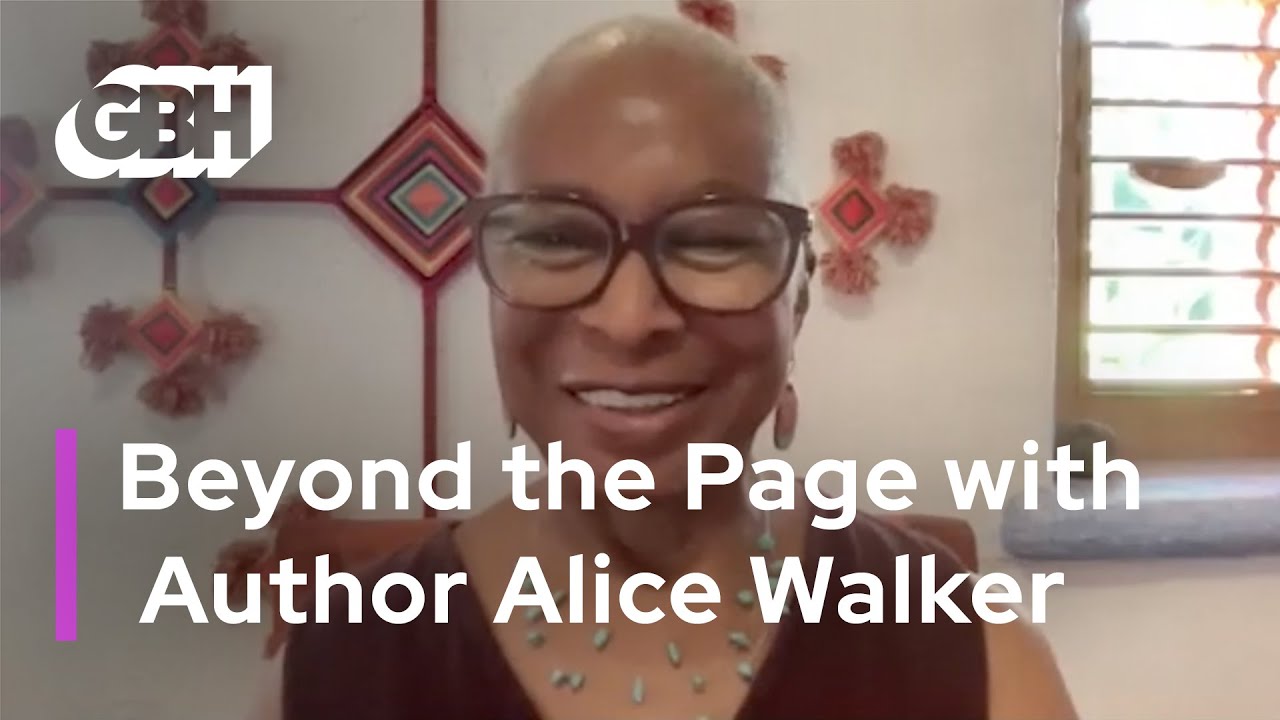
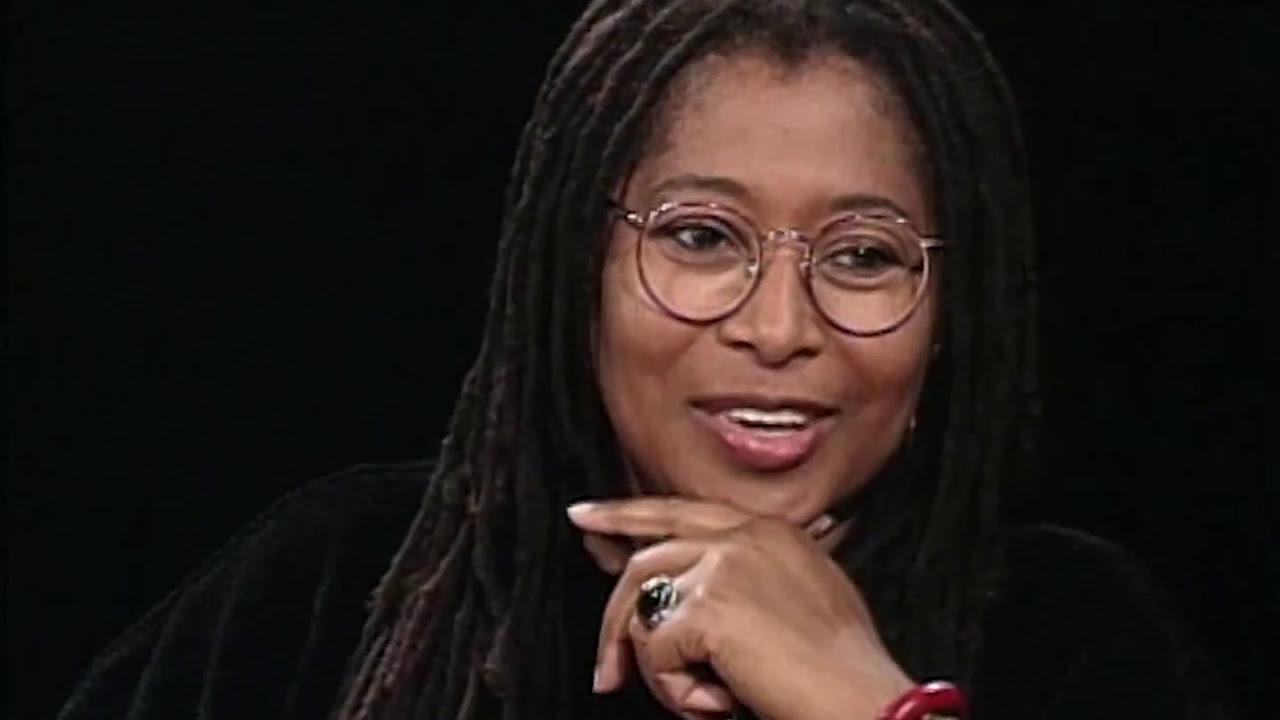
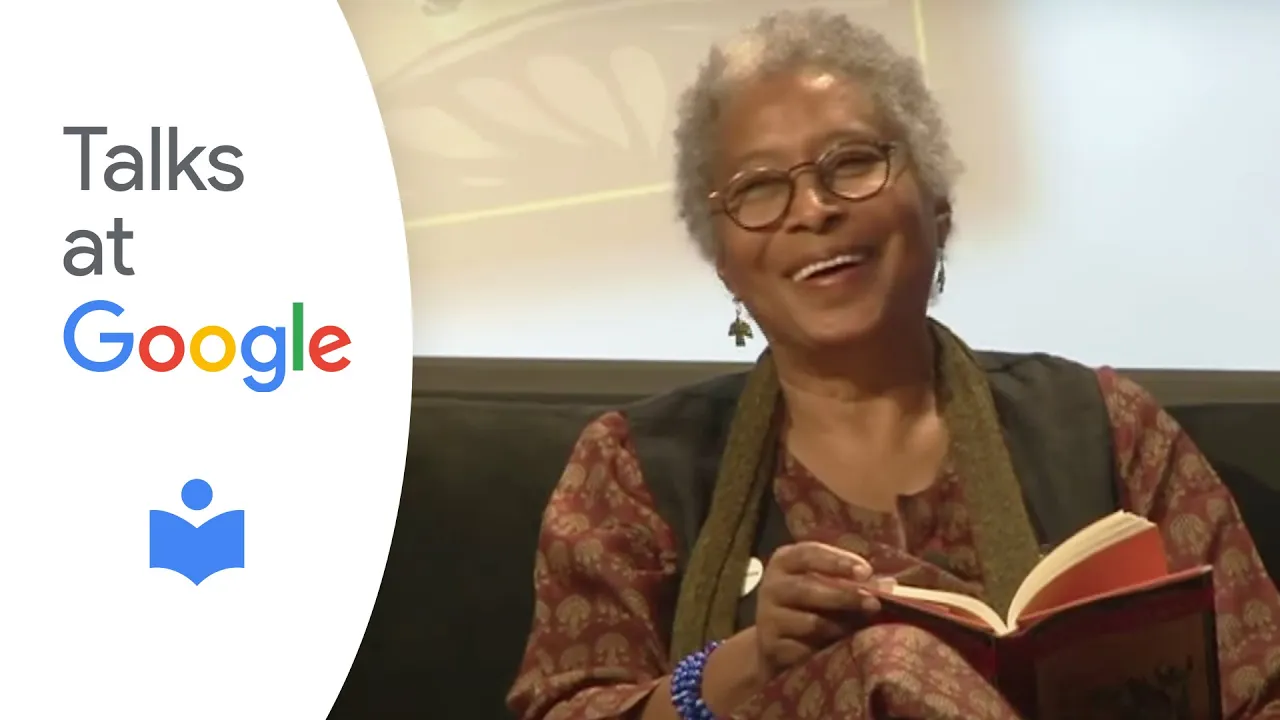
>>Female presenter: Welcome. I'm delighted to be here with Alice Walker. I've spent the last couple of hours with her already and I promise you, this will be a delightful session. Pulitzer Prize winning author, poet, activist. She grew up in Eatonton, Georgia, where, during a time of great struggle for the black community and lots of racism. So, I think it is no secret that a lot of her inspiration has come from that time in the world around her. We've been talking about how she spent two years at Spellman College, where she became very active in the
Civil Rights Movement and had the pleasure and the fortune to meet Dr. Martin Luther King, Jr. and hear the "I Have a Dream" speech in person. Ms. Walker went later to Sarah Lawrence, where she graduated and really honed her writing skills, and more importantly, it was at this time or during this time where a lot of her writing became not just about the world around her, but also about her personal experiences. We're just delighted to have her here today and those of you who got here early enough, got a copy of her new book, "Hard
Times Require Furious Dancing," which really, I think, is a catalog, I think, the way they described it of her life, her challenges and some of her struggles. And we're just delighted to have her here to talk about some of that, her book and her influences around her. So, welcome. >>Walker: Thank you. [applause] >>presenter: I have two housekeeping items. First is technology related and that is cell phones on silent or vibrate, please, and laptops down. Anyone who works in my group also knows when I have meetings, laptops are also down, so it shouldn't be unfamiliar to
you. Second is also technology related. For those who are on VC, video conference, you can submit questions on the Dory page, which is up here, goto Alice Walker, and then we have Belinda here, in the audience, who will help go ahead and ask some of those questions for you. For those who are here in the room, in Tunis, you can obviously queue up here in line where the mic is when we get to go to Q&A. So, I know there's lots of burning questions in the room, but I have some of my own-- >>Walker: Good.
>>presenter: so I'm gonna start there. And then we can move to the questions from the group. So, Ms. Walker, you have your own blog through Blogger. You also have your own YouTube channel, Alice Walker Videos, so thank you for being an avid Google user. We all thank you for that. [Walker laughs] [clapping] But, you've used that medium in a really powerful way and I've heard you refer to it as "the people's medium." So, can you talk a little bit about how you've seen new media, or the Internet, really change the way people can use writing
as a literary tool? >>Walker: Well, I started, first of all, I'm really happy to see you and it's really amazing to be here. I work on a computer all the time. I use Google all the time and I never think of where it comes from. [audience laughter] So it's lovely to see all of your faces. I started on a website on the day that Barack Obama won the election and I'm not sure exactly why I did it that way, but in case, I did and so part of the reason was that I wasn't permitted to
use some of my poetry, my previously published poetry, on the Internet. And I was so annoyed that I decided to write new poetry and to put it on the Internet first because I wanted to go directly to people. You know when you publish a book; it takes a whole year, usually, for it to see the light of day. You write it, you send it in, they keep it and they do various things with it and there's a whole program, but it takes a year for it to come out. And by the end of the year,
you've forgotten why you wrote it, [chuckles] where you were, who you were, everything. And so, a lot of the joy is lost and it just seemed to me to be a wonderful thing, a great idea, to publish directly on the Internet so that people could see the poems. Because, I don't know poets there are in the room, apparently a lot, but when you write a poem, the feeling is of instant of wanting to share it because you, automatically I think, think of poetry as medicine. And this is the medicine that comes to you in that
moment and you just want somebody else to have it. So, in that sense, the Internet is really wonderful and I haven't missed the old way, although, as I was mentioning earlier, what has happened is that as soon as I put my work on the Internet, then there appear these publishers who wanted to publish it anyway. >>presenter: Hmm. >>Walker: So, it hasn't been a difficulty of any sort. It's just been a pleasure. >>presenter: It's helped. That's great. >>Walker: Mmm-hmm. >>presenter: Last year, you went to Gaza for International Women's Day and you later wrote "Overcoming Speechlessness," which
was a book not just about your time over there, but in other places you've been around the world. And in this book, you drew a lot of analogies between slavery and the Civil Rights Movement and what's happening today. Can you talk a little bit about some of those analogies and tell us a little more, what have we learned? What haven't we learned as a society? >>Walker: Well, the thing that struck me going into Gaza, first of all, crossing through the Rafah Gate in Egypt was interesting because the Israelis were still bombing along the border and
it gave me a moment to really consider my life. And I think that this is one of the reasons we go to scary places. They help us hone in on how we're living. So, when I got into, going into Gaza on the bus, what struck me was how much it reminded me of going into segregated Georgia. So, it was actually like going into my past and just being in that situation where the, it was basically apartheid where there's an apartheid system and the Gazan's don't have rights; they can't even leave their, that little strip. It
was so much like going back into the past and it not only, our past in Georgia, Mississippi, Alabama, Louisiana and Texas, but the past of South Africa. And it just, it had a double effect. Part of it was great horror and distress, but it also felt comforting because I understood that. Because I had grown up in an apartheid system that people in those horrible situations can also pull together and they can actually be quite strong and they can develop some layers of feeling that many people miss. And for instance, we went to visit the women
because it was International Women's Day and we're sitting in a little, little library room that they had there, that hadn't been bombed, and they were telling me about the children and parents and uncles and everybody that they had lost. And there was just such grief. And one woman, she was mourning the death of her daughter and she was holding a picture of her daughter and she couldn't speak. She just got close to my chair and I put my hand on her arm. So, as we were telling these, I was listening to these stories and feeling
this grief, at some point it just got so intense that we realized, almost like in a body, that there wasn't much we could do to help each other. And somebody said, one of the women said, "Let's go next door." And we put on some music and we just started to dance and we danced through tears and wailing and grief and incredible loss and that was our response to somehow be together to express all of that that was really so awful, but in a way that was not violent and a way that was revivifying of the
spirit. >>presenter: That's very powerful. One of the, when I watched you interview on Democracy Now, you talked about the way to bring awareness is really about just coming and going to see for yourself. And that's possible for some people, but not possible for everyone. So, what are some of the other ways that you're doing now just to bring awareness to some of the global issues around human rights that you care personally about? >>Walker: Well, first of all, I think that all travel is not physical. I feel that I have spent many a day in the
18th century, and many a week in the 12th century. I mean, you can, I have a niece who was telling me that she couldn't imagine what we had been through and I was struck by that because, to me, imagination is what takes us into all the places that we can't otherwise visit. So, I think that, when I was 13 years old, my favorite book was Jane Eyre. And I read Jane Eyre for, every year for I don't know how long. I love it. I love Charlotte Bronte. I love all, I love Thomas Hardy, and all
those writers who basically take your imagination and you and you go there where they lead you and you experience what is happening to the people. And then, on the basis of what you learn about what is happening to the people, you act where you are. So, that's my understanding of how there's no excuse ever for not some kind of- [clears throat] some kind of movement because you can always visit people. I think, even before I went to Gaza, I mean, it's true; I like to personally go and be there embodied as somebody that the people
can hug and I can hug them and we can share a meal or try to find food- [clears throat] because sometimes there isn't any. But I also, when I cannot do that, I try to keep an awareness by reading, or by the Internet or by some way because it's important for people not to feel alone. The junta in Burma, Myanmar, their program is to keep us from having contact with Aung San Suu Kyi, so that when you're in Burma, even to say her name is punishable for the local people. But, as people who care about
democracy and who care about injustice, we visit, we mentally we visit and we stand with her. And there are all kinds of ways of letting that be known and letting her feel that actually, even if they don't let her get her mail, and even if she can't have a laptop. And that, it seems to me, is our duty as human beings; not to let any other human being that we know of suffer in silence behind walls and darkness, like the man who just won the Nobel Prize in China. I think that's so wonderful, Liu Xiaobo
is his, I don't, maybe that's not the right pronunciation, but you know who I mean. It's so wonderful that he is acknowledged by other people outside of China, who may never, like me, ever get the pronunciation entirely right-- [presenter laughs] but in some sense it doesn't matter because what matters is that he know that he is not alone as he tries to address the inequities of China, as we do here, in this country. >>presenter: I think that's really powerful, particularly around acting where you are and reading and finding out things about how to be inspired.
What are some of your sources of inspirations? I think I read somewhere that Zora Neale Hurston was your literary foremother. How would you describe that? >>Walker: Well, she's a literary foremother of all of us and it was unbearable, really, that she had given all of this beautiful work to the world and nobody knew where she was buried and nobody cared. And who are we if we're like that? I just, I just am appalled. I think that, it's interesting though, because she actually was the kind of person who didn't care where she was buried; she was
really that free. But aside from what she was like, there is what we are like and what it means to receive a gift and to say nothing; to have no thank you for the person, no awareness of how they lived or died. But my greatest wisdom teacher was my mother and this was because she was someone who was deeply rooted in nature. She was, like most African Americans, very indoctrinated into Christianity and was the mother of the church. So, she had a very strong role in keeping our church going, but beyond that, she had a
very strong Pagan streak, which she inherited from her Cherokee ancestors and her African ancestors, and probably even her Irish and Scottish ancestors. So, she was this woman who just radiated this faith in the natural world and I loved that. And in a way it has made me someone who cares deeply about the Earth and who has written more about the Earth, actually I think, than about probably anything else. >>presenter: Mm-hmm. >>Walker: I think people get distracted when you write fiction because they're so focused on the humans and their story, but there's always this story of
nature and what the Earth is saying and what the Earth is doing. So. >>presenter: So, I wanna invite the audience to come up and start to ask some questions. As you queue up, just, there's a mic here in the middle. Why don't we start with the first, maybe Dory question so that the people watching on video conference can get the benefit of the first question and then maybe people can line up behind Belinda. >>Belinda: The first question, Ms. Walker, from the Dory page is, "Alice, with a long history of involvement with struggles for liberation in
the US, you have unique perspective on our current moment. What is your frank assessment of the Obama Administration and the current political climate in the United States?" >>Walker: I think that Barack Obama is the best that we could do now in terms of leadership, but I think he is completely hobbled, maybe not completely hobbled, but quite hobbled by our recalcitrant Republican opposition. And also, on the Democratic side, not nearly enough boldness and courage and just standing for what you believe in and not worrying so much about your job. I think-- [applause] Thank you. I think,
I think the planet is in for such a, well actually, the planet will be fine because she will just sail along forever, but we, as humans, are in the direst situation humans have ever been in. We, we're losing the planet. We're losing a place and we may well become extinct and actually, would not be a bad thing seen from the perspective of the planet. And I, more and more, see life from that perspective because I think we have not acted in a way that shows we love the Earth or that we deserve it. So, and
also, I know we care about our country, but in a sense, the whole idea of separate countries is obsolete and we should really only be thinking constantly of the whole thing so that if you have a huge flood somewhere, say in for instance, Pakistan, you don't just shut it out of your mind because it's way over there. Because it's not way over there, it's in your house. This is a, this is a collective house and we should be thinking more and more like that. And whatever gets in the way of the survival of the planet,
itself, we have to get rid of it. It's our lives and I know we're not used to thinking so much in this fashion, but it will come to that because people will see that in order for us to survive, we have to change almost everything. We, we're losing our top soil, we're losing our water and in the cities the air is pretty much gone. So, it calls for some very different responses and this is going to mean a lot of rebalancing within each of us. Those of us who are deeply nonviolent, for instance, how is
it, how, what is our way in getting through this period? Will we be able to actually save not just our country, but the whole, the whole system, the whole world system? And by that, I don't mean political system, I mean rivers and oceans and forests. [pause] [small laughter] >>Belinda: Does anyone have a question? >>Female member #1: I saw you speak in Oakland last year, and after you returned from Gaza and you inspired me to go to Gaza later that year, so thank you for that. But that day the moderator mentioned something you had said about
being taught, about the importance of keeping records, and if you keep records then no one can ever tell you that something didn't happen. So, are the tools that we have now, like Blogger and the Internet, keeping enough records about things like Burma, like Palestine? Can we do more? What, what do you feel like that's still an issue today-- the issue of keeping records? >>Walker: I feel the biggest danger is too much information. TMJ, or is it TM-- >>presenter: TMI >>Walker: TMI. [presenter laughs] [laughter] Well, TMJ would be "too much junk." But yeah, I think, I
think that there is so much information that people don't know which records are worth keeping, or where to keep them or how to keep them. And that's a real problem. I don't think, I don't, I think the mind was not meant to have so much stuff stuffed into it so that you just, it's like you're always ingesting, but nothing is ever leaving and that's not exactly healthy and it's not really saving anything because you don't, often you don't even know what you're saving. And, in, on a personal level, I'm concerned about how I will continue
to save my own records because until a couple of years ago, maybe three or four years ago, I saved everything on paper and then I gave all of that to Emory University in Atlanta and so now it's in an archive. And it's there and I like that. I like to go there and I actually see these old notebooks that I wrote in for decades; they're there. But when I look at my computer, I have saved emails, saved files and I'm not sure how you save those things ultimately. I mean, the computer itself seems to be
about to crash-- [laughter] and when it crashes, what happens to all of that? What do I do with that? Do I send it somewhere? Do I try to copy it? And I'm also wondering whether, this is something I've noticed from television watchers, which may creep in to laptop users and I'm, of course, one of those. But actually seeing something or experiencing something on a screen is really not the same thing as actually getting it. It's more like just looking at something and the information it just clicks in there. But what changes us is the more
visceral, the more visceral connection to reality. And that is what keeps us human, is the actual ability to feel. In the film that I mentioned earlier, that I was watching last night, The Most Dangerous Man in America about Daniel Ellsberg. Part of what's so chilling is that Nixon and Kissinger and all these people showed no feeling. They had no feeling. Nixon was saying to Kissinger about Vietnam, "Well, I think we should just nuke it." And Kissinger says, "Well, no, you don't wanna do that because then the world would think of you as a butcher." But
not about the people that you're nuking. So, the, it seems to me the real struggle right now is to retain the humanity that develops out of real passion, out of real solidarity, out of real love. I've been to places where I've seen the people up against such a lot and they're still clinging to being human beings. They're still clinging to being people who share, people who care, people who can dance, people who will give you a recipe for something. This is this is the crux because otherwise, you run the risk of just having more and
more people who have no feeling whatsoever. And the, there's a study by Martha Stout, who went to Harvard. I don't think she's there, but she's a psychologist and she has written this wonderful book called The Sociopath Next Door. And it talks about how 4 % of people are actually sociopathic; they're born without a conscious. Now, this is really something to think about because we tend to think that everybody has Buddha nature, however your Buddha nature is, like Christ consciousness, a love in your heart somewhere, but that's not necessarily true. And then if that's not necessarily
true then what do you do with that 4%? And then, do you start to augment it by all the other people who are just resisting any kind of feeling? So, it's really crucial that the record-keeping that happens has passion, it has integrity, it has roots, it has real meaning. Its record keeping that you can also start another world with because we're losing this one. We need to have, we will have to start a new one and so for that you really do need all those things; courage, passion, a lot of love. >>presenter: I think you
had a question. >>Male member #2: Hi. Thank you for coming here. I was wondering if you could pick a poem in your book and maybe walk us through it and talk to us about the inspiration behind it. >>Walker: Oh, dear. [laughter] >>presenter: You knew that was-- >>member #2: I could bring the book up if you want. >>Walker: Well, why don't you pick a poem and tell me what page it's on and I'll see what I can do. >>member #2: Ok. >>Walker: It's interesting, I find, I've been writing now for decades and people who have just
read something, not not this book, cause I did just finish this, but people who've just read something will say, "Oh, well what about Josie who went off and did something with Samuel and blah, blah, blah, blah, blah," and I'll think, "Who?" [laughter] But, ok, where are you? >>member #2: Ok, I just opened it randomly. Page 56, there's a poem called Love is That Giant Bag. >>Walker: Oh, yeah. Ok. All right. Well, this one actually. [reads] "Love is that giant bag of everything Into which we might disappear Without a trace and still be found again. Even
the parent you thought was lost Father, gone to Spirit, before you reach my age. I am your dream of me and more And I will carry us, plucked From love's abyss." Ok. The thing about love is that it really is indestructible, but you can think that it's gone and so I'm saying, "Love is that giant bag of everything into which we might disappear without a trace and be found again. Even the parent you thought was lost." And where this connects with my life, is that my father and I battled constantly when I was growing up.
Because, even though he understood racism and fought against it his whole life, he didn't have a clue about sexism, which was so annoying. [laughter] I cannot tell you. So, we battled constantly and deeply and it really harmed our relationship. And yet, now I think of him with such tenderness, such love and such emotion and so, in a sense, it went into this big bag, lost for a long time, but found again. "And so I will carry us, plucked from love's abyss." Yes? Now, how about this one, though. [presenter laughs] [Walker laughs] >>presenter: Keep going! >>Walker:
Now, this is about hatred. This is about hatred and, hatred is something you really have to work with because it is so poisonous to you. It's not the other person. One of the things you learn as you get older and you have more experiences with hatred and stuff, is that while you are suffering with it and really, any kind of hatred is suffering, you may notice that the person you're hating is just having the best time. [laughter] They are just having a wonderful time. They are happy. So, so, that's to teach you something really important,
which is that hatred is totally not necessary. You must learn to get rid of it because it basically hurts you. So, this is called "Watching You Hold Your Hatred." [reads] "Watching you hold your hatred for such a long time I wonder, isn't it slippery? Might you not someday drop it on yourself? I wonder, where does it sleep, if ever? And where do you deposit it While you feed your children Or sit in the lap of the one who cherishes you? There is no graceful way To carry hatred. While hidden, it is everywhere." [pause] >>female member
#3: Hi. >>Walker: Hi. >>member #3: Thank you very much for coming. >>Walker: Mm-hmm. >>member #3: You mentioned before that instead of spending that year publishing your book, you can just publish it right online and have people read it right away. And it made me think about how many times we tweet or we post something on Facebook, and we have this direct response. And I was just wondering how you think that that changes us as creators of art and also just as humans who are becoming digital narcissists who constantly need this feedback? >>Walker: I don't accept
feedback. >>member #3: Ok. [laughter] >>presenter: Very good. >>Walker: I, I don't see that it's, it's necessary, really. >>member #3: That works. [laughter] And I tell you, it's part of it, I write on the Internet the same way I wrote when I was not writing on the Internet. When you write a book of poetry, you don't get feedback. You just write the book and send it to your agent and your agent sends it to the publisher. You don't get any feedback for a year. And I think that works for me. [laughter] But you know something, excuse
me. I am curious about how people deal with that because I don't think it's good for you. >>member #3: That's sort of my idea [inaudible >>Walker: It's not. >>member #3: [inaudible] >>Walker: No, no, no, no. >>member #3: [inaudible] >>Walker: Exactly. So, let me, let me affirm what you're feeling. [laughter] And, and really to tell all of you who are writing, whatever you're writing, and you have that little thing. They have that little thing where you can get comments, just shut that off-- [laughter] because, because you, you are on a journey and you're trying to grow
and six months later, you can turn the thing on and see what they thought, but you don't need to know the minute you have finished something because you're not finished with it. You're actually still, you notice how many times you go back sometimes to change something, or correct something and editing something? So, trust more that you will get it right just the way it needs to be without the outside commentary. And wait. Learn to really wait, like six months is not that long, or even three months, but don't right away feel that you have to
know what some stranger in God knows where is going to say. I mean, what do they know about what you're doing in your essence? Yes. >>female member #4: Thank you so much for coming. I recently joined a women's writing circle and I was wondering if you could give some advice on. I'm not a great writer, I'm not a good writer at all, actually, but I just would love to get some advice. What type of writing exercises would you recommend or ways to go about writing? I mean, I think you're what you just said about feedback
is really, really important, but anything more to that would be great. >>Walker: Well, feedback from me is different. [laughter] Because I want you to just grow perfectly as yourself. Period. End of story. I think you should just do your, do your reading. Writing, actually, is more about reading. It's not about exercises. It's about reading, reading, reading, reading everything and everybody starting in, I dunno, the whichever century catches your fancy. And just fall completely in love with how words sound and how sentences make you feel and how paragraphs ring, you know? I mean, get one of
those two page long sentences of Faulkner, for instance. [laughter] And just go all over the country with it. And, and just fall in love with what it is you're doing. I think that's the best way. >>member #4: Thank you. >>Walker: Mm-hmm. >>Male member #5: Hi. So, I had a question about the MFA programs and the number of [inaudible] we have today. So, what do you see the increasing number of MFA programs, the number of writers who go and study, would that result in us having more appreciation for character driven literary fiction in the age where
there's a lot more fiction that's produced? >>Walker: I didn't really understand what you said. >>member #5: So there is most of these MFA programs kind of encourage character driven literary fiction and writers who pass out of MFA programs write literary fiction. >>Walker: Yes. >>member #5: So, would you think that a lot of writers doing that would create more of an appreciation for character driven literary fiction? >>Walker: I don't know. I, what comes to mind is though, is this wonderful little tale from Flannery O'Connor, who said, someone said to her, "Well, do you think more writers
should, let's see, do you think universities, academic life kills writers?" And she said, "Unfortunately, not enough of them." [laughter] So, I don't know how that fits in, but, but I've always loved it. Which is to say that if you really want to write passionate living words, its better, I think, just to pay attention to what you're trying to express rather than any group thing. That's what I mean. I love, I was always someone who loved school and I loved being in college, but at the moment when I could've gotten a grant to go on to
graduate school and study literature in this way, in writing courses and writing courses that have long names and everything. My poetry teacher, who I went to to get a recommendation to get this grant, just refused. She said, "Oh, no. I'm not going to sign you away to graduate school because it will hurt you." And I have to say, I was so annoyed and angry with her, but she was right. So, this may or may not be anywhere near the answer that you need, but it's basically to say stay close to the story itself that you
want to write. Don't let it bleed away into a course or some organized fiction thing. Don't do that. And, for some reason, I keep thinking of Arundhati Roy's The God of Small Things, which is such a brilliant book. And I just met her last, a few, some months ago, I was in India and hanging out with her and seeing that this spirit, this spirit that wrote this book stayed deliberately close to, in this case, Kerala, in India and the sights and the sounds and the languages of the people and the stories and the other encouragement
that she needed to write this would've come from her own solitary study of literature, not from any kind of conglomerate. >>member #5: Thank you. [pause] >>presenter: So, while Dolores is queuing up I had a, I did have a question. So we've talked about the Internet and how people are using it to get information and probably, Google is responsible for giving us so much information, but the other thing that's happening is that people are really using it to advance causes. >>Walker: Mm-hmm. >>presenter: So, there isn't anyone in this room who probably hasn't supported a cause on
Facebook or supported a cause and followed something on Twitter. And as an activist, do you really see this as a great medium to really advance different causes, or is it a distraction? Is it really helping, or is it not helping? >>Walker: Oh, I think it's helping a lot. I like it. I use AVAAZ the, I don't know what you call it, but it's an organization that can send a million signatures to representatives of wherever they're doing something awful-- [presenter laughs] which is like, everywhere, but they can do this in a concerted way, quickly. We can
also, through them, send money to Haiti, to Pakistan, to wherever people need help. I love this function of the Internet and I actually love, very much, being able to Google anything. I mean, that's, that's fabulous. >>presenter: Great. We're glad to hear that. >>Walker: Oh, no. I'm not saying that it's a bad thing, I'm just saying that like everything, you have to learn how to use it because if you just use it in a way that is just the information without the heart, you can disfigure yourself. You can become people who just know facts and figures,
but you basically, emotionally you don't grow. You just know a lot of facts and figures. And we see where that leads. >>Female member #6: Hi. I loved your story of when you were in Gaza and you, you just danced with the women there and I imagine that took a lot of courage, but there was a naturalness to it and in the preface, you talk about how you learned how to dance through the slings and arrows of life and became an optimist. And I guess I'm curious about what advice you have for the rest of us
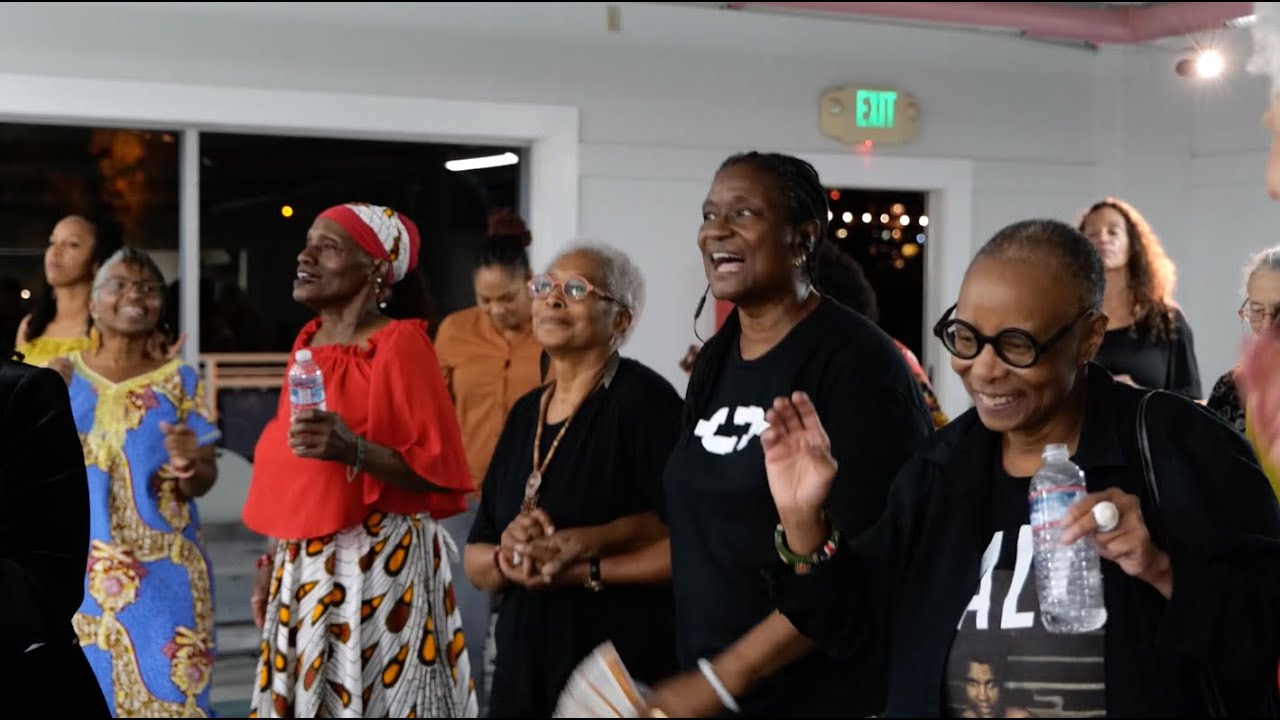
who are also going through the slings and arrows and addressing human nature to have that same attitude. And I, actually, I'm curious about the actual dancing part, too. [laughter] >>Walker: Yeah, well, we launched this book Hard Times Require Furious Dancing a couple weekends ago at Busboys & Poets in D.C. and the man who owns it, Andy Shallal, emptied the restaurant/bookstore of all the furniture and tables and everything and people did, and just had a DJ, actually, who played a lot of Al Green and James Brown and Bob Marley and people just danced until they felt
a lot better about themselves and everything is happening. I've, I think that I was in South Africa last month and part of the medicine of that trip was to talk about how they now have a president who's just very disturbing for them and a very big step backward in terms of leadership and vision. And the people are feeling a lot of despair, especially the women. And I was saying that part of what we can do is start to circle in each other's homes and let, call up seven or eight of your friends and just have
a circle without an agenda, but something that expresses your deepest concerns about the state of your country, the state of your world and the world, and that this might be a way for the concentric circles to finally join and it would be a very organic way of transforming the planet. This is not like trying to do it by doing it with Internet. It's similar, but where the Internet is like this wonderful, I'm an Aquarian, so the Internet is perfect for me. I mean, this circling is, too, but the idea of thoughts just going through the
air and transforming things, that's just fabulous. It's what I've been waiting for, but also grounding so that you don't become just, as Aquarians can often be, in the air. You need to be in the ground, you need to be really solid. And this way of circling with other people can help that a lot and also helps us to feel more at home with our ideas and with our fears if we can do that with other people. >>presenter: Belinda, do you want to ask another question from the Dory page? >>Belinda: Question, "For Colored Girls Who Considered
Suicide When the Rainbow is Enuf" has been adapted for screen by Tyler Perry. Do you see a tension between the benefits of bringing works to a larger, mainstream audience in the loss of artistic control and/or message?" And I think we can make parallels to The Color Purple, too, I imagine, with this question. >>Walker: There's always a danger in creativity and sharing it with people because the level of understanding differs. People often just have no idea what you're trying to do. But I think it's worth the risk if you are intent on transforming society. And I
think that in Ntozake Shange's play, which she wrote I think 30-something years ago, was very much about transforming society and having people really look at what was happening to these seven women of color. So, I hope that the movie is well done and I've seen some of Tyler Perry's movies and some I like a lot; some, not so much. But some, I think, are really very wonderful and warm and thoughtful. And I'm hoping that he can bring all of that to this classic work by Shange. >>presenter: Yeah, sure. >>Female member #7: Hello. Thank you for
coming. I, as you talk about the different places where you've travelled to as an activist, I was wondering, how do you balance the desire to change the world and transform the world and bring healing to different places, but also being culturally sensitive to what's going on in that particular place and not imposing something that may not necessarily be welcomed where you travel? >>Walker: Mm-hmm. Well, I'm very small, so-- [laughter] I doubt that I could impose very much. My intent, also, is just to be there as a witness and as a witness to report what it
is that I witnessed. The transformation of the world, I understand, is a group effort. I don't see myself doing it by myself. I think that as a writer, and as someone whose parents and grandparents suffered a great deal so that I could be educated, is part of my duty, really, to use that education to see that other people are more happy. I mean that rather is more like for me, I would like people to be free and I want them to really enjoy life. There will always be people in cultures who don't believe that and
who don't want to hear it and who would rather say that you were there to destroy them. And I don't know what you can do about those people. They do exist. Now, for instance, with the work that I did with female genital mutilation, which took, I worked on that issue for about a decade and often, African men and a lot of it was in Africa, but this is not something that just happens in Africa, but the men would say things like, "Oh, no. This doesn't happen at all. You're delusional." And a lot of the women
couldn't say anything because it was a taboo in their culture and they could be killed. So, what do you do? If you have a feeling of love and concern for 130 million women who've been mutilated, what do you do? You're having people who can't even talk about it in their own culture. What is our responsibility? And then I think about my own life and the lives of my ancestors in Georgia, Mississippi, Alabama, Louisiana, when they were enslaved and they had no rights. They could not speak about their own enslavement. They, so they really, their lives
depended on people coming from other parts of the country to help them. And, in fact, we would not have been un-enslaved if we had not had a lot of help from people from the North. So, I factor that in that often, when people cannot speak for themselves, they depend on us to speak for them and then that leads us to the higher understanding that we're not separate. If I speak for you, it's because I'm speaking for me. I, it's what Gandhi said. Someone said to Gandhi, "Well why do you do all this stuff you do
for other people?" And he drew himself up, he was a short man, but he drew himself up and he said, "Madam, I don't do it for anyone else. I do it for myself." And that's what you do it for. The idea that people are separate is really our greatest delusion. We're not. I mean, it's just, when you, when you begin to see that you're not separate the idea that people think they're separate is so amusing. It's like, for instance, if you tell, if I tell you a story, I won't do it because it would be
very gruesome and I don't wanna do that to the people here, but I could tell you a story that would be really gruesome and you would feel it in your body. That's how much we are the same. You're one, but we just, we get to running around, separately, we think. But we're really one expression. >>member #7: Thank you. >>Walker: You're welcome. [laughter] >>presenter: So, we maybe have time for one more question, either from the audience or from the Dory page before we have to wrap up. Go ahead. >>Belinda: I have my personal-- >>presenter: Sure, you
can ask own Belinda. >>Belinda: Ms. Walker, we talked before this session. I shared with you that I grew up in Mississippi, especially during the height of the Civil Rights Movement as a child and I witnessed all the things that, that, that are chronicled in history books now. And one thing that I wanted to bring up is that we talk about the heavyweights, Martin Luther King, Medgar Evers, just a list of names, but one of my heroes is Fannie, Fannie Lou Hamer and she was a woman that just came from a sharecropper background and she had
no formal education, but she was really powerful when she really stood up to the Democratic National Committee in 1964. And so, and I think about her and I think about my grandmother and different women who really had no voice to a certain degree; that lack of formal education and confidence. But yet, it's like they're the unsung heroes. Like, when Rosa Parks was out there, when Martin Luther King led the Birmingham Boycott, it was the maids who, did not go to work and sacrifice and then I think about the times we live in now and where
are those unsung heroes? I know I see the Tea Party Movement and I see like moveon.org, even though that's an online space, but sometimes it worries me that where are those unsung heroes who really make a difference? Do they, do they still exist today? Do you see that in your travels? Am I just jaded and cynical? Thank you. >>Walker: Well, I was gonna say, who do you think is getting all these other people out of bed? Those are the unsung heroes; the mothers, fathers, whoever is doing the work of getting the rest of the world
moving, but you don't see them and you don't acknowledge them. Those are the unsung heroes. Me, for instance, cause I was saying to you my mother was such a heroic woman, but I'm the only person who wrote about her. But that doesn't mean that she didn't exist and she's not existing now. They're all the people in the world who make it their business to see that the rest of us are sitting in this room. We're all sitting here and somewhere, behind each of us, there are these unsung people who made it possible for us to
be here. That's who gets it done. >>Belinda: Right. And I also think that it's reflective in many of your works. I talked to you about the book you wrote, Meridian, and that main character and a lot of the things that I saw with her, reminded me of people that I observed when I was a child or grew up with. So, I appreciate you and other artists who think about just regular, everyday people, just getting up doing what they have to do and no one ever acknowledges or thanks them. >>Walker: Yes. Well, lemme just say a
few things. One is that the reason I wrote Meridian was because I understood that revolutionaries are often flawed; they're badly flawed. But that is not the reason you should not follow them. I mean, you should follow them precisely because they are flawed. And so, this book is actually looking at the ways in which all of these revolutionaries in the 60s in Mississippi had had something really awry and they kept going. And this is the reality of people. We make the changes in society, whether we call ourselves revolutionaries or radicals or just irritants, but we make
the changes that transform society. And a few of us will then be sung. And that's, we accept that. We have to. I was gonna try an adopt an African child and then I realized that I probably would not be the best parent at this point, so I adopted an orphanage-- [laughter] and there are 87 children in this orphanage and the woman who runs it and I were looking at pictures of the children, and she just said matter of factly, she said, "You know, only one in two of these children will actually develop into what we
are imagining." Only one in two of them, and the rest? Who knows what will become of them? But that's it. I mean, the rest of them will go on into their lives; they will do whatever it is. One or two will become Mandela or Obama or [inaudible] or somebody that we envision, or Wangari Maathai, or [inaudible]. They will become what, that's not what happens to most of us and yet, I think part of what we do have to do in our literature and our life is to affirm the person who causes the growth of the
other person. There's a Cherokee poet, Marilou Awiakta, who says something like, "Every flower has two parts of it. One is the flower that you see and then there's the root where the mother is often the root that you don't see." That's the root; the father that you don't see and you just see the flower. >>Belinda: Thank you very much. >>Walker: Mm-hmm. >>presenter: Thank you. I think I speak for everyone when I say that that last comment was very powerful and will give us all something to think about as we think about our roles, whether we're
sung or whether we're unsung, and which one matters to us. I've heard you say once or twice, that you don't have expectations and you prefer to live in the moment. >>Walker: Mm-hmm. >>presenter: I can say that I hope you enjoyed this moment and I hope that you all enjoyed this moment with Ms. Walker, so thank you for coming. >>Walker: Mm-hmm. Thank you. Thank you. Thank you. [applause]