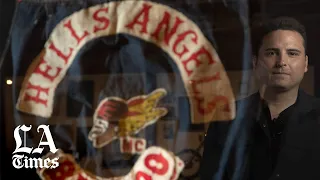
The Hells Angels Motorcycle Club has a rough reputation, and while many of their members have been convicted of serious crimes, they also have a strict code of conduct they must follow. Here are some of the rules that members of the Hells Angels can't break. The Hells Angels Motorcycle Club has been given a lot of bad labels over the years — outlaws, criminals, drug dealers, and so on.
Those are not necessarily inaccurate descriptions for many of their members who have been convicted of serious, sometimes violent crimes. But while these terms do not define all of them, the vast majority can truly be viewed in another way too: as warriors. In 1948, World War II veterans created the Hells Angels Motorcycle Club when they were growing restless in peacetime, and surplus bikes from the military were dirt cheap.
"Hell's Angels" also originally came from the popular nickname for bomber squadrons, so the organization has a strong military foundation. And like them or not, warriors are known to live by a code. There are few who know the Hells Angels better than former president of the Oakland, California, chapter, Ralph "Sonny" Barger.
And in his book, Hells Angel: The Life and Times of Sonny Barger, he says the motorcycle club tries to live by as few rules as it can. But the rules they do have are vital to the survival of the club. This means that if a member breaks the most important parts of the code, there are severe consequences.
Some are simply expelled and forced to abandon everything they know. Others are not so lucky and lose their lives. There are a lot of wannabe tough guys in the world who would want to join the Hells Angels.
Ultimately, few make the cut, so the club can take as long as it needs to determine if someone has the necessary commitment and loyalty to become a member. According to the Vancouver Sun, prospective members have to go through a lengthy process before they can even be considered, one which could last for as long as several years. Though long before the vote, it can take a prospective member several years to become associated with the club, even before the official process can begin.
In his book, Hell to Pay: Hells Angels vs. the Million-Dollar Rat, crime journalist Neal Hall says a candidate must have already been personally acquainted with a full member for no less than five years, before they will even be considered for membership. Acquaintances who qualify can then try to become what is called an "official friend," if they have a sponsor and win unanimous approval in their first chapter vote.
The next stages can still take years, as candidates move up to what is known as "hangarounds" and then "prospects," before the final vote takes place for full membership. Like the warriors of old, the Hells Angels rush into battle displaying their fine heraldry and insignia. However, there is certainly a modern twist to the bikers' iconic imagery, meaning that the founders of the club had the sense to fully trademark the now classic symbols called patches and protect them with copyright law.
This way, the bikers do always need to protect their IP with violence or intimidation. The gang strictly forbids anyone else from wearing their insignia, and most obey the rules, whether it is out of fear from legal repercussions, or simply just not wanting to get beat up. As Sonny Barger says in his book, members are willing to fight for their club and the symbols that represent it as well.
So, if someone is caught wearing a patch without being a member, he will certainly get his butt kicked. The members of the club proudly display the Hells Angel logo and Death Heads winged skull insignia on their vests and jackets almost anywhere they go. In fact, they have to.
According to the Duluth News Tribune, the club mandates its members to wear their patches and vests whenever they are together, to show their commitment to the club. Just as soldiers depend on their comrades in battle, the Hells Angels know that other members will always be there for them when they’re in trouble. Hells Angels president, George Christie, who talked about his experience in a HISTORY Channel docuseries, said the main rule is to always back other members.
The support is there even if it could lead to violent, bloody encounters. "The number one rule of the Hells Angel code is always back your brothers. " Christie learned the importance of this rule in 1976, before he was even a Hells Angel.
When he was a prospect for the Los Angeles chapter, an outsider with a bad attitude angered the club president, known as "Old Man John. " So, John hit him several times and threatened to cut the man's throat with a knife, watching Christie as he did to gauge his reaction. "John was testing me as much if not more than he was testing the individual.
" After seeing in his eyes that Christie was willing to back whatever action John took, the president was satisfied with the recruit. John then cut off the imposter's jacket and kicked him out of the bar. Club meetings are a vital part of the Hells Angels, and are a forum to discuss all sorts of important business.
But what is not talked about is any sort of illegal activity. The club's security is of utmost importance, so these subjects are completely avoided in official discussions. Christie said that even though the Hells Angels do not consider themselves a criminal organization, they still acknowledge that some of their members may be involved in activities outside the law.
Because of this, no members are allowed to discuss these outside activities at the club, or in any other way that would tarnish the group’s reputation. George Christie claims that the reason law enforcement agencies categorize the club as criminal is because it is easier for them to target the organization as a whole, rather than specific individuals within the club. If this is the case, it would be easy to see why it is so difficult for the police to infiltrate the Hells Angels.
Strict rules, the years-long membership process, the restrictions on speech and behavior, and the structured hierarchy of the club have created highly effective barriers to law enforcement. As a motorcycle club, the Hells Angels spend a considerable amount of time on their bikes and often travel together as a group. "What are some of the qualifications for joining the Hells Angels?
" "Uuuh, basically the first one is to ride a motorcycle. " With a chain of command similar to a paramilitary organization, the established hierarchy is respected at all times, which is clearly seen when they ride. As the fearless leader, the chapter president always rides in the front even if that places him at the most risk for possible collisions.
Tradition usually has the vice president traveling next, followed by the road captain and the sergeant of arms. However, after the chapter officers, the situation is much more chaotic. Barger wrote in his autobiography, "From that point back, it's a [.
. . ] free-for-all drag race, jockeying for position.
[. . .
] After the first ten spots are taken, the rest fall back in from there. " And obviously, prospects are always at the back of the pack. To keep order while on the road, the bikers tend to stick with a formation once it has been established.
And since the Hells Angels never leave a brother behind, they often pull over together, especially if a member has been stopped by a cop. Before someone can even try to become a member, there are certain things that instantly disqualify a person. Hall wrote in Hell to Pay that child molesters and rapists can never join the Hells Angels.
The club also does not want their members to have any connection to law enforcement. This means that if someone took any steps to become a police officer or prison guard, there is no chance he can ever join the club. Even if it is found out that someone only applied for a law enforcement job, that still makes them unworthy to wear the patch.
In Hall’s estimation, it seems likely that this rule is in place to make it easier for the bikers to continue certain criminal activities without getting caught. Furthermore, Loyalty means everything to the Hells Angels, so there is no way they would ever accept someone who has taken an oath for any other group or cause, even if it is to uphold the law. There are few types of people that the Hells Angels despise more than the ones who leak the private business of the club or its members to law enforcement.
Hall wrote in Hell to Pay that the club also forbids snitches and rats from ever becoming members, another obvious way to protect the club. Sonny Barger does not mince words when describing these types in his book. He wrote, "Most rats are loud-talking bullies who like to push people around and talk tough when the club surrounds them.
They thump their chests and yell about how much they love the club and how they're going to be with us for the rest of their lives. " He goes on to note that when and if they do get in trouble, "They rat on their brothers to save their own skins. " Barger says that because brotherhood and loyalty is so important to the club, "A rat is the true enemy.
" The initiation process of the Hells Angels is so long and thorough because it is meant to attract the most loyal members possible. So, the Hells Angels do not officially recognize any retirement from the club and expect members to stay for life. A chapter becomes a member's new family, and his brothers gather to honor his memory when he dies.
Sonny Barger points out in his book that, early on, the cops would mock the bikers for their mile-long processions during the funerals of deceased members, but now that is common practice almost everywhere. However, the club acknowledges that some members have been forced to disassociate themselves due to problems with the law. Other members have been expelled for breaking the club's code.
For some of these men, getting kicked out is not enough of a punishment — The Duluth News Tribune reported that some have had their Hells Angels-themed tattoos burned off. There are also members who have resigned and were forced to return anything with the Hells Angels name or "Death Head" insignia. One of the most famous examples of this is the retirement of George Christie.
According to the former member, he explained his reasonings for quitting and thought he left on good terms with the club. However, Christie told Vice that he was shocked weeks later to discover that he was not in good standing. The result was the end of all contact with men that used to consider him a brother.
The Hells Angels do not want their private business to be known publicly, so as a precaution, members are not allowed to talk to the media. This is just another one of the many steps the club takes to retain their secrecy and security. It is important for them to keep personal information about members safe from reporters, but Sonny Barger admits that there are other rules and parts of the Hells Angels code that will never be released to the public.
In 2009, evidence of the biker club's stance towards the media was on full display at their annual summer rally in Carlton, Minnesota. According to the Duluth News Tribune, reporters went to the event but noticed that the Hells Angels would consistently stop talking or turn their backs whenever reporters were present. "Please respect our privacy.
" Women aren't completely excluded from the club. Barger wrote that they are more than welcome to hang out at the clubhouse, especially if they are the wives and girlfriends of members. As an essential part of the lifestyle, these women spend much time with their partners, often on the road as well.
And in the early days, the women even wore the treasured patches to increase the exposure of the insignia. But even partners of members can only attend meetings on special occasions because women are not allowed to ever become official members. The Hells Angels also rely upon women in key positions to gather intelligence on law enforcement agencies and rival gangs, according to the Vancouver Sun.
The information obtained is vital to the organization, and the club has had these female spies as air traffic controllers and even in the military. The Hells Angels have been very open about their use of drugs like weed and booze for quite some time. However, members are supposed to follow guidelines in order to limit some of the chaos that comes with drug use.
The club forbids the use of heroin and needles, mostly because it damages the reputation of the club. Other rules are more specific for certain circumstances. Sonny Barger wrote that smoking weed, or even cigarettes, is prohibited during meetings.
And especially if some members are under parole, probation, or might get drug-tested, no one should spike the booze because nobody wants to get messed up unexpectedly. For a time, the club also banned stealing from drug dealers during transactions, operations known as drug burns, because stealing damages the reputation of the club. However, the former chapter president claims this is no longer a rule because the cops have used it against them too many times to make criminal charges against the organization.
Check out one of our newest videos right here! Plus, even more Grunge videos about your favorite stuff are coming soon. Subscribe to our YouTube channel and hit the bell so you don't miss a single one.