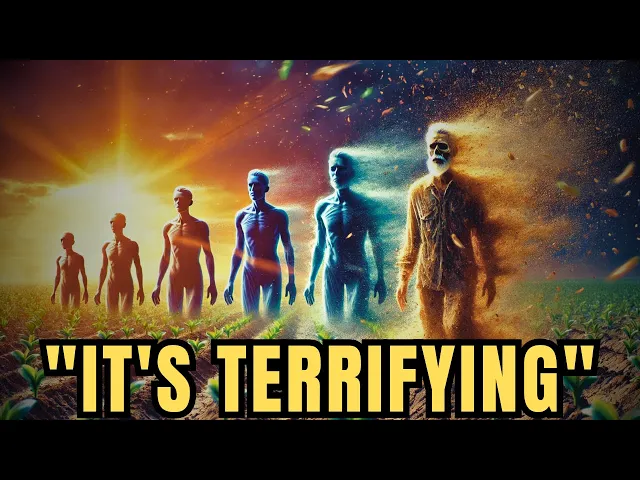
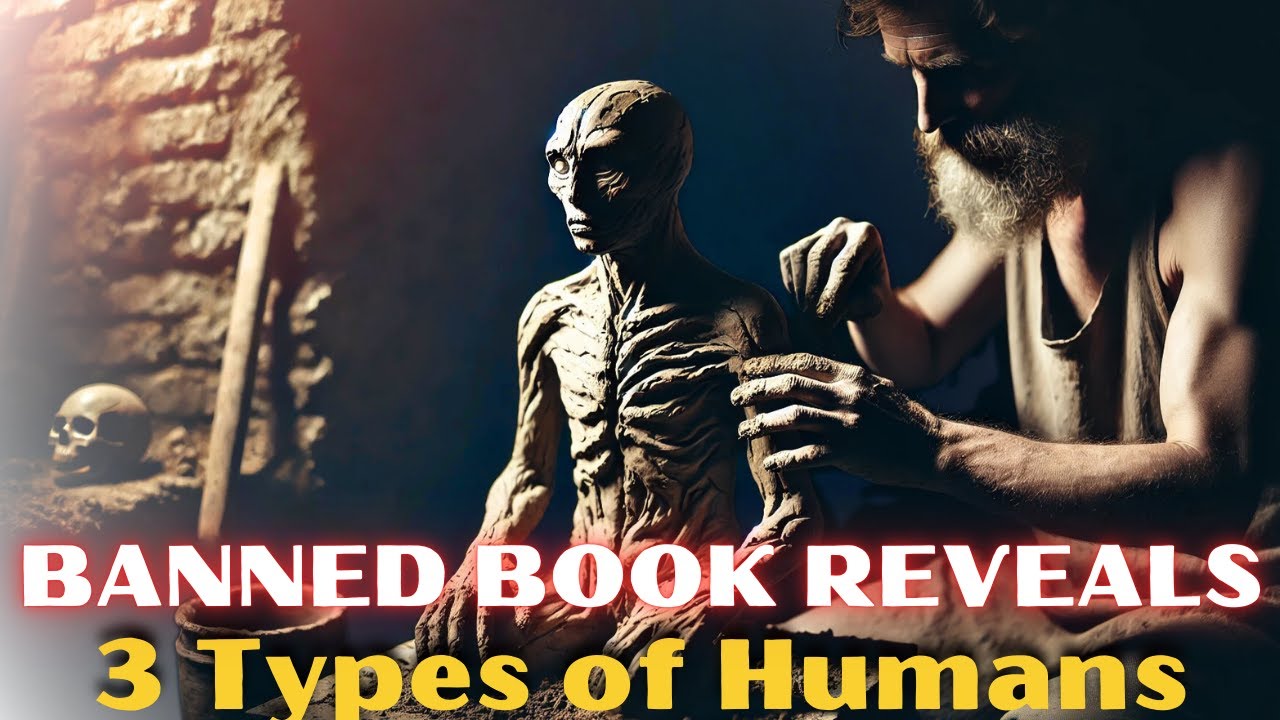
hey in the Book of Genesis Humanity's creation is described in two fascinating steps we are made from dust of the ground and brought to life by the Breath of God this isn't just poetic language it's an essential piece of a much bigger picture think about that for a second humans created from dust something so ordinary and lifeless and yet it's this very dust that with a Divine spark turns into a living soul in other words human beings are made from both the most B basic and the most Divine ingredients there's an intentionality to that and
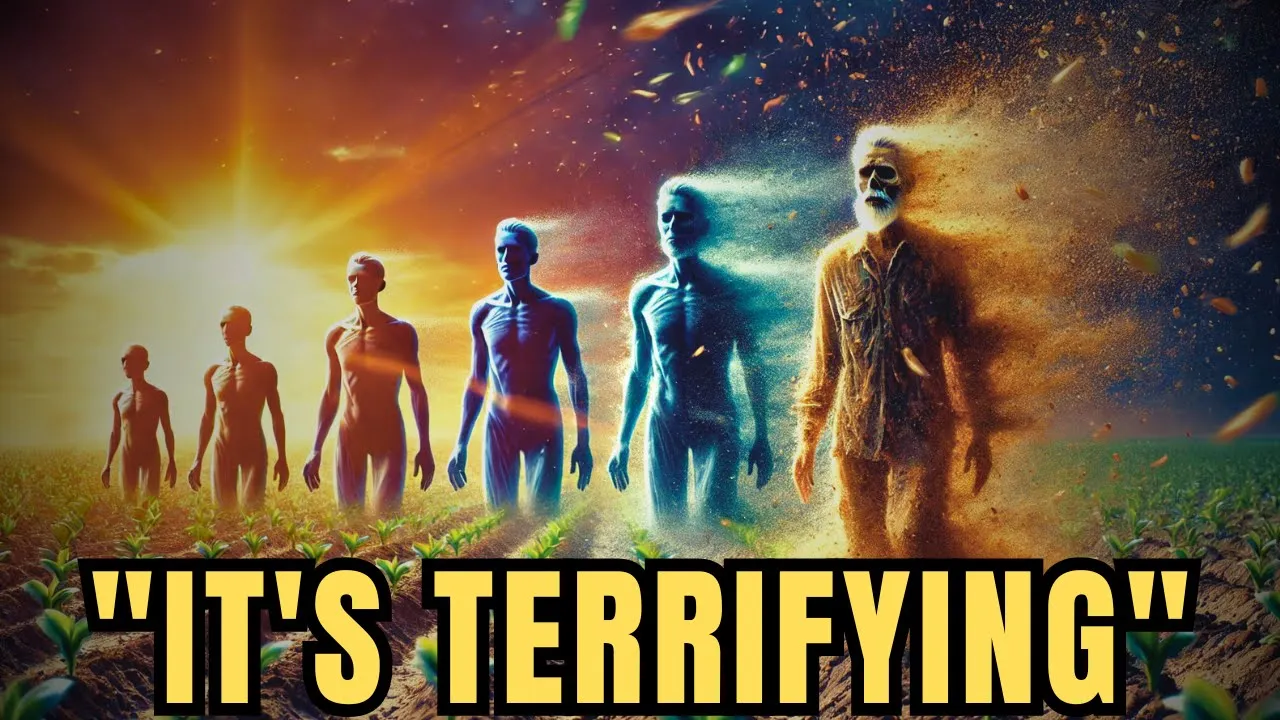
when we look closer there are layers upon layers here hinting that we are more than mere mortals we are designed to be a paradox both Earthly and Transcendent the symbolism here has been widely debated for centuries and what stands out is the notion of cyclical existence Genesis tells us that we come from dust and will return to dust suggesting that Humanity exists in a loop an endless cycle of life and death this isn't just a poetic idea it's a profound insight into our existence to some early theologians and even ancient philosophers this suggested a sense
of limitation almost as if humans were programmed to exist within certain boundaries unable to break free from this cycle for some this might sound Grim Our Fate sealed in the cycle of birth and death but it raises a serious question about the purpose of our existence is Humanity meant to transcend this cycle or is it our fate to exist within it forever let's add another layer the ancient near East had many creation myths and Genesis shares some similarities with these in the Epic of Gilgamesh for instance humans are also made from the earth crafted by
gods who sought to keep them in check these stories aren't just folklore they're reflections of how ancient civilization saw Humanity's role in the cosmos they hint that Humanity's existence wasn't always about achieving Divine greatness but about accepting a role as part of a larger divine plan a plan that limits our freedom and our destiny so why is this significant because it confronts the belief held by many for centuries that humans were created to rule over the Earth in an absolute sense this idea of dominion is popular in religious teachings but the original Hebrew text in
Genesis doesn't suggest control in a dominating way it's more about stewardship responsibility even subordination humans were to keep and work the Garden of Eden not to bend it to their will this paints an entirely different picture of Humanity's role we are not rulers in the sense of absolute power we are caretakers bound to the Earth our existence always tied to the ground from which we came ancient Hebrew texts describe the concept of nephesh a word often translated as soul but it's much more complex than that it implies a life force the essence of being alive
which includes not only humans but animals Genesis doesn't distinguish humans as the only beings with nephesh this directly challenges the assumption that humans are uniquely special or fundamentally different from all other life we're all part of the same created order all part of the cycle in a way this ancient text subtly suggests that Humanity's perception of being set apart unique in creation might be somewhat inflated let's take all of this in humanity according to the oldest parts of the Bible is not a creature of ultimate Freedom nor are we meant to be we're dust we're
bound to this earth and our very essence the nephesh is shared with other living creatures far from being the ultimate rulers we're participants deeply woven into the fabric of life and death the 3,000 year old Bible the book that's been the Cornerstone of faith for billions holds a message not about human greatness but about human connection humility and a shared existence with every living thing let's delve deeper into Genesis where hidden within its verses is a fascinating symbolism often overlooked the Dual creation of humanity according to the text humanity is crafted in the image of
God but also from dust this juxtaposition Divine image and Earthly matter is a deliberate contrast carrying profound implications it suggests we're not only physical beings but also carry something Transcendent within us we're a bridge between the Earthly and the Divine in this setup there's a fundamental message about the human struggle humans are both grounded and elevated existing in tension between material limitations and spiritual potential it's a concept that runs parallel to ancient philosophies across cultures in many Eastern traditions for example the physical body is seen as a temporary vessel while the soul or Spirit embod
something infinite this ancient idea in Genesis aligns remarkably with these philosophies humans are at once bound to the Earth but also equipped with a spark of the Divine this Duality has fueled debates for centuries some Scholars argue that being made in the image of God refers not to a physical likeness but to qualities like morality creativity and intellect faculties that allow humans to act as stewards of the earth so while we may be dust we're also endowed with the capacity to make choices to innovate and to shape our surroundings here's where Genesis gets provocative by
Framing Humanity as both Earthly and divine it implies a responsibility an inherent Duty we're not just here to survive we are here to create to preserve and perhaps even to uplift then there's the symbolism of the Garden of Eden a paradise in which humans are placed to work and keep it Eden wasn't merely a paradise to enjoy passively from the beginning Humanity's role was active humans were given purpose to nurture to protect and to ensure the garden sustainability this isn't Dominion as domination it's Dominion as stewardship and in ancient Hebrew the word Force keep even
has connotations of protection far from being passive inhabitants humans were set as Guardians of the natural world assigned to protect and serve it Genesis doesn't position humans as passive recipients of a Divine gift but as active participants with a serious responsibility this role of stewardship isn't just a privilege it's a duty it suggests a view of humanity that is holistic and interconnected an acknowledgement that every action taken by Humanity affects the balance of the world around us now we're diving into a lesser known realm of biblical texts the Apocrypha and other ancient writings like The
Book of Enoch and the Gospel of Judas these texts didn't make it into the Bible we know today but they hold perspectiv so radical that they challenge our understanding of Humanity's place in the universe these ancient writings reveal ideas that completely shift The Narrative views on life existence and the Very nature of divinity itself take the Book of Enoch this text describes a whole world beyond our own a Celestial realm inhabited by Watchers powerful beings who descend to Earth and interact with humans but it's not just about other worldly visitors these Watchers are said to
have shared Forbidden Knowledge with Humanity knowledge of the stars of the earth of creation itself in Enoch's Vision humanity is not simply passive or ignorant humanity is being taught shaped and even transformed by Celestial beings this paints a provocative picture humans weren't meant to exist in isolation from Divine knowledge according to Enoch we were meant to have access to profound Secrets knowledge that could Empower Enlighten and potentially free us then there's the Gospel of Judas an absolutely explosive text unlike the conventional narrative where Judas is a traitor here his portrayed as the closest disciple the
one chosen by Jesus to reveal deeper truths Jesus tells Judas that this world is not as it appears that there is a higher hidden reality Beyond Earthly existence judas's role according to this gospel isn't betrayal it's sacrifice Guided by a cosmic plan that goes beyond Earthly understanding this flips the traditional story upside down it suggests that betrayal suffering and sacrifice might serve a Divine Purpose unknown to most and it hints that the true reality the true purpose is often hidden behind layers of Illusion a powerful insight for those who question the visible world the implications
of these texts are mindboggling they suggest that Humanity's quest for knowledge and understanding was never a deviation from Divine will it was in fact the very path intended these forbidden teachings don't paint humans as inherently sinful or flawed instead they portray us as beings of potential capable of reaching Beyond of transcending of accessing Realms of knowledge typically reserved for the Divine these lost texts give us a provocative radically different view of humanity we aren't just passive Creations we are meant to seek to understand to question in the ancient apocryphal Stories the Divine isn't something Out
Of Reach it's something we are meant to pursue to uncover even if the path is complex and filled with trials let's get into one of the most controversial aspects of the Bible the complex relationship between God and Satan especially as depicted in the Book of Job this is a part of the Bible that doesn't get enough attention probably because it raises uncomfortable questions about the nature of God the role of Satan and ultimately the nature of Good and Evil what we see in job is a God who not only permits Satan to test a loyal
follower but seemingly Works alongside him to do it this isn't your typical good versus evil scenario in the Book of Job Satan isn't portrayed as a rogue agent acting in defiance of God he shown as a member of God's Divine Council referred to as the accuser or the adversary Satan doesn't take action on his own instead he appears before God with other Heavenly beings and it's God who initiates the conversation pointing out job's loyalty and righteousness then God grants Satan permission to test job to take away everything job has to ruin him even to inflict
him with physical suffering this isn't a story where Satan acts independently it's a coordinated act that raises massive implications why would have just God allow such a thing this narrative challenges traditional views on good and evil in the Book of Job we see a dynamic where God and Satan work in a strange form of partnership it suggests that the adversary isn't a total enemy but rather an agent allowed to test Challenge and even strengthen Humanity Satan's role here is not to bring chaos without purpose but to act as a tool to reveal the depth of
human faith and resilience this is a challenging idea that suffering hardship and struggle might actually be allowed even orchestrated by Divine forces for purposes Beyond human understanding this perspective aligns with certain ancient interpretations and mystical philosophies that see good and evil as intertwined forces each necessary for the development of the soul and the evolution of Consciousness in some Gnostic traditions for instance the physical world filled with suffering and hardship isn't seen as a mistake or a punishment but as a necessary part of spiritual growth The Book of Job appears to hint at something similar that
trials and challenges aren't just unfortunate accidents but part of a larger Cosmic design when God grants Satan the freedom to test job the story implies that Humanity suffering has purpose a purpose hidden within the design of creation itself this concept forces us to reconsider what we think we know about Divinity and malevolence the idea that the adversary or Satan plays a role Allowed by God to push Humanity to its limits and Beyond raises powerful questions about our own lives are our struggles purely random or are they necessary steps in a Divine process of growth and
understanding from the earliest chapters of Genesis to texts beyond the traditional Cannon there's a powerful idea threaded throughout the human soul isn't just a static element it's a living Dynamic force with a purpose Bound by neither time nor space ancient Hebrew texts call it nephesh a term that encompasses far more than just a soul in the western sense it refers to the Breath of Life the very essence of being alive and it's not exclusive to humans in Genesis this nephesh is shared by all living creatures suggesting a profound Unity between all forms of life in
the ancient world world view the soul wasn't just an invisible part of us that floated up to heaven upon death it was a force a living Essence That animated the body and connected us to a vast interconnected Cosmos for early Jewish and Christian Mystics the soul was the link between the human and the Divine a spark from the Divine source that carried the potential for enlightenment Transcendence and Cosmic connection it didn't just exist in the afterlife it was active in this world shaping our perceptions emotions and even our moral choices the nature of the soul
is explored further in texts like The Book of Enoch and even certain Gnostic writings which offer a revolutionary perspective here the soul isn't a prisoner of the body but rather an Explorer navigating the Realms of matter and spirit Gathering experiences knowledge and insight the Soul's journey is seen as a transformative process a continuous Evolution this aligns surprisingly well with modern ideas of Consciousness as something far more complex and interconnected than science has yet fully explained researchers today are uncovering evidence that Consciousness might be non-local that it could exist beyond the brain hinting at an interconnectedness
that ancient texts seemed to recognize long ago but this doesn't just affect the way we think about life after death the soul in these ancient teachings is on a mission it's here for growth for Learning and for remembering its connection to something larger this makes human exist far more than a simple matter of survival our challenges emotions and experiences are all part of a Divine journey toward knowledge and unity in some mystical Traditions the Soul's purpose is to transcend the material world's Illusions and return to the Divine a theme we see across various cultures and
eras this brings us to a profound takeaway if the soul is eternal intoon connected and on a path of constant growth then our lives are not isolated events we're not not just individuals cut off from each other we're part of an intricate web of existence that transcends physical limitations ancient texts long dismissed as myth or Superstition seem to reveal a truth about the human soul that modern science is only beginning to explore the truth that suggests we are bound to each other and the universe in ways we can barely imagine when it comes to the
idea of free will the Bible presents something far more complex than simply choose good or choose evil from the beginning humans are given choices but those choices are rarely without influence in Genesis Adam and evea told they can eat from any tree or except one they're given the freedom to choose yet there's a boundary a limit set by God this isn't total freedom it's a freedom with constraints and these constraints reveal a deeper often overlooked message about the nature of human Choice throughout biblical texts God's influence is everywhere guiding testing sometimes even hardening the hearts
of those he wishes to influence like Pharaoh in the story of Exodus this suggests a Le approach to Free Will where human choices unfold within a Divine framework the Bible repeatedly portrays human decisions as part of a larger plan one that transcends individual desires this raises a powerful idea Free Will may not be about having unlimited choices but about navigating within a divinely designed framework that guides Humanity toward a specific purpose consider the role of prophets in the bible they're chosen often reluctant and their lives are essentially directed by Divine command Jonah for instance tries
to flee from God's will but is ultimately pulled back directed to follow a path he did not choose here the notion of Free Will isn't straightforward it's shaped influenced even overridden to fulfill a greater purpose in these stories it's almost as if Freedom isn't about what you want it's about whether you align with a purpose Beyond yourself in ancient Hebrew the word for sin hotter means to miss the mark this isn't about failing morally it's about straying from a purpose failing to fulfill one's intended role in The Cosmic order this changes everything if sin isn't
about punishment but about missing the target then Free Will might be less about unrestricted choice and more about aligning with our true path staying within the boundaries set by Divine wisdom this perspective reshapes our understanding of Freedom instead of seeing Humanity as beings with absolute Choice the Bible presents us as beings with a guided Choice directed influenced and at times restrained to fulfill a purpose that's far larger than individual will this doesn't imply that humans are puppets but rather that they're given a role to play within an interconnected design we choose yes but we choose
within a context a tapestry of existence that holds meaning beyond our own lives in our final dive into the secrets of ancient scripture let's confront what may be the most groundbreaking idea Humanity's true role not as mere subjects under Divine rule but as active participants in a cosmic narrative hidden in the ancient texts especially those often left out of traditional teachings is a subtle yet profound message about human potential these texts some 3,000 years old ofer clues that our existence holds a far deeper meaning than blind obedience or passive worship instead they suggest that Humanity
has the power to transcend to question and ultimately to co-create with the Divine starting from Genesis humanity is given an active role not just in stewardship but in the act of naming categorizing and shaping the world the act of Adam naming the animals is no trivial task it's an act of power of establishing identity and relationship in the ancient world names held significance Beyond mere labels naming something meant defining its Essence its place in the world Adam's role here is one of co-creator a partner in creation itself this isn't a passive role it's a responsibility
that gives Humanity Authority and purpose Beyond mere existence Beyond Genesis other texts reinforce this concept of humanity as an active force in the apocryphal texts and Gnostic writings humanity is often portrayed not as helpless in the face of divine power but as bare as of hidden knowledge Seekers of Truth and guardians of wisdom the Gnostic Gospel of Thomas for example teaches that the kingdom of God is within you this isn't about an external Paradise to wait for but a powerful state of being a potential within every human it hints that the Divine is something accessible
something that Humanity can uncover within themselves if they are willing to seek it out the Book of Enoch another ancient text that delves deep into the celestial realm presents Humanity as being capable of learning from the Divine Enoch himself becomes a bridge between the human and the Heavenly gaining knowledge of the cosmos and the secrets of creation his journey signifies more than just a Divine favor it shows a model for human potential a pathway for Humanity to understand and connect with the universe this is no simple doctrine of obedience but a call for active engagement
for Humanity to strive for greater understanding in a broader sense these texts suggest that humanity is is not a passive creation beholden to forces beyond their understanding instead we are participants in the fabric of Creation with the power to shape to influence and to make choices that resonate far beyond our own lives the ancient scriptures in their subtleties and hidden meanings imply that Humanity has a unique role to question to seek and ultimately to realize the Divine potential within this is a view that breaks traditional boundaries one that encourages a dynamic interaction action between humanity
and the Divine this brings us to a compelling realization if the texts are taken not just as a set of rules but as a map to understanding our own nature then Humanity's role is one of active exploration of pushing boundaries and of striving toward an understanding that goes beyond Doctrine these ancient scriptures particularly when combined with the apocryphal and Gnostic texts present a vision of humanity as beings capable of transformation capable of reaching into the Divine itself our purpose is not merely to exist but to evolve to search for meaning to confront the unknown and
to contribute to the unfolding mystery of creation and this isn't just an ancient idea modern science philosophy and spirituality have all begun exploring Concepts that mirror what these ancient texts hinted at thousands of years ago quantum physics for instance has shown us that the universe is interconnected in ways we're only beginning to understand that our actions and our consciousness May influence the reality around us Neuroscience is delving Into The Mysteries of Consciousness suggesting that human potential may be far greater than we once believed these discoveries don't contradict the ancient texts in many ways they validate
the idea that humanity is deeply intertwined with the universe that our existence has meaning and that our choices matter on a cosmic scale so what do these ancient scriptures ultimately reveal about Humanity's place in the cosmos the they show us that we're not just living in a world created for us but in a world we are meant to engage with a reality we are meant to explore the texts invite us to look beyond the obvious to seek knowledge to question and to grow we are not just products of divine creation we are participants in it
with the potential to transcend to co-create and to discover the mysteries of existence thank you to each of you who has stayed with us through this exploration your curiosity your willingness to question and your drive to understand are what make discussions like this possible thank you for watching for seeking and for being a part of this journey