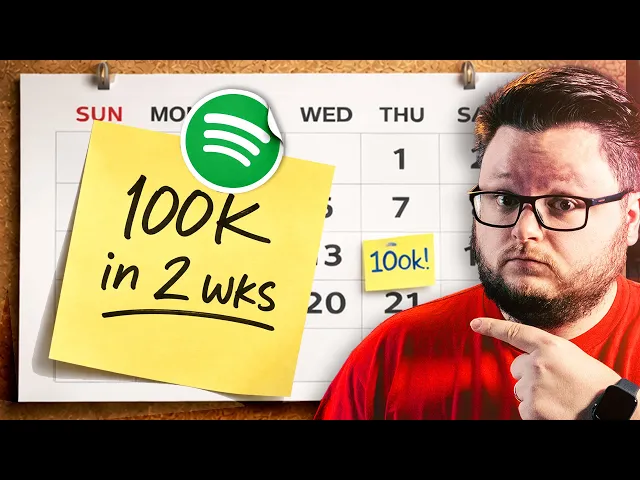
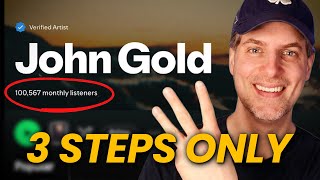
So, this might be my craziest case study yet, but we managed to get this artist over a 100,000 monthly listeners on Spotify with their first release using nothing other than meta ads. So, there's no playlisting. There's no influencer marketing strategy.
There's not really even a social media strategy. It's just an EP that was released by an artist as their first release. We ran some meta ads on Instagram only, I think.
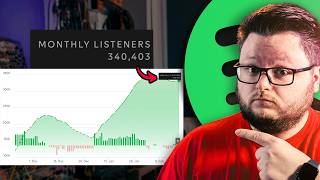
And we have over 100,000 monthly listeners, not in the first month, but in like 2 weeks. So, first let me walk you through the Spotify for artists. I read about 120,000 monthly listeners.
The project came out on I think it was October 31st. And you might be wondering like how is this broken up? So, what I like to do is go to the profile level of the release and then go down to the segmentation source of streams because this allows you to see where the streams are coming from.
So, I go to source of streams. We're going to go to active because I want to see how much our ad campaigns are actually driving. I want to see um radio and autoplay, which is a form of algorithmic traction.
and then algorithmic playlist and mixes which obviously is another form of algorithmic traction. And then I'll also pull up other listeners playlist and other just so you can see what's going on there. And I'll throw an editorial just so you can kind of see.
Let me just put on everything so you can see everything first. Right? So if we go down to this everything graph, we have no editorial.
We have no personalized editorial. We have no charts. We have essentially no other listeners playlist.
This is just individual uh people that like the song adding it to their playlist. Right? So I'm going to go clean this up.
Now, if I go to source of streams, we can remove the charts and the other other listeners, personaliz, and editorial. So, now we're left with active, algorithmic, and radio. And these are the three that I want to focus on.
Anytime I run a campaign, we're trying to like really blow up a song. This is a graph that I look at periodically through the release because this this is this is kind of the game. When you start off promoting something, you're essentially 100% active.
And let me switch to streams. Right now we're in listeners, but I'll switch to streams just because um it kind of tells a different story. At first, you're you're pretty much just active.
Your ads are doing a 100% of the work, meaning you're essentially paying for every single stream you're getting because you have to get a person and take them from social media and throw them over Spotify. And that that can get you pretty far, but it only gets you so far. Eventually, the Spotify algorithms start getting wind of these kind of people like the song, these kind of people don't like the song.
this is who we can recommend it to. And that's when you see a little bit of the algorithmic starting to happen, but mostly radio just popping off. And this is way more significant than happens most of the time.
You can see pretty immediately the radio overtook the active line. That that purple line here, whatever call that is overtaken the blue line pretty quickly, like within a week of the song or the EP being out, rather. And that trend kind of keeps happening.
It it's hovering above the active. So, we're getting more from Spotify's algorithm than we're actually driving. And then at some point, the algorithmic line starts becoming more significant.
And that's like Discover Weekly and Release Radar and I think a couple other playlist. But radio is still the the king of the castle here until we get a big bigger discover weekly push. And so some of these stream counts like it I've showed this in the past on a smaller scale.
These ones are kind of crazy because like on this day 15,000 active streams, 14,000 algorithmic streams, 12,000 radio streams. Like this is a significant number of streams from each of these sources here. But you can see how volatile they are, right?
Like radio goes up and down by like it might be a a difference of like a couple thousand streams. It's going up and down. So very volatile.
Same with algorithmic. It just shoots up from 2,000 streams a day to 12,000 streams or 14,000 streams a day. then it falls back down to seven.
So the the nice thing with algorithmic playlist is they're free. They're Spotify throwing your music out to new people for free. The downside is they're they're kind of volatile and they're not as controlled, right?
This these blue line here. If I filter out just the blue, it's a lot smoother because this is directly proportional to the marketing. Like this is what I can control.
I can ramp up the ad spend. I can pull back the ad spend and and I can test to see if I can get better results. So this is what we control.
But this is what we're trying to get. And this particular case, we we got it good. Uh we drove 150,000 active streams.
Spotify's given us 200,000 streams from the algorithm. If we go to listeners, it's even more dramatic because active sources have a very high stream rate. And if I go to stream per listener, you can see the the active the blue compared to the radio purple and the the pink algorithmic.
The stream per listener difference is crazy. Like active sources, eight streams per listener and then algorithmic and radio 1. 7 1.
9. Um that's because algorithmic and radio stuff is is new people. Well, not only new people, but they're hearing it passively in a playlist.
Whereas the active people, they're they're hearing an ad on Instagram. They're clicking on it, landing a landing page, and then jumping over to streaming platform. So, they're much more invested.
And also, we're sending them to an EP with five songs on it. So, they a lot of them apparently listening to the whole EP, in fact, multiple times on average, whereas the radio and algorithm people, they're getting served one song in a playlist. So, it's just much less streaming activity.
And that's why when we look at streams, the the radio and active is pretty much equal. But when you look at listeners, radio dominates. So on a listener basis, the algorithm has given us a 100,000 listeners, 100,000 monthly listeners essentially.
And we've only driven 18. So we've gotten 80% of the monthly listeners on this project for free from Spotify's algorithm. And when you hear me and other marketing people talk about why why do people focus on Spotify, it's because of their algorithm and their their exposure bucks, right?
They they push your music out to new people. Um they don't pay the most per stream. There's a lot of there's a lot of bad things about Spotify, too.
I'm sure you've heard about them. But the good thing is they have the most people and they push your music out. But you have to get the ball started, the ball rolling.
You have to get things going. If you don't get things going, you're going to get nothing. And so the people that say like Spotify never pushed my music, it's because they never pushed their music.
Now, I do want to give a big caveat here because what I what I don't want to have happen here is is a bunch of people coming to me and saying like, "Hey, if I give you this money, can you I want you to get me 100,000 monthly listeners. " It's not like that. Um, I wish it was because, you know, then I could predictably get anyone 100,000 monthly listeners and I'd be rolling in the dough, right?
But the reality is you you can't guarantee something like this happening. If it was, you'd see a case study like this every single week in my channel. So, in this case, and actually, if we pull up the metad budget, what did it cost to make this happen?
You might be wondering and furiously typing in your keyboard in the comments. The answer is to get the the 120,000 monthly listeners, it only took $2300 USD. So, quite a small budget for something like this.
And I know for some of you, you're thinking like, that's a huge amount of money. I could never do it. But like in the world of marketing, this is actually like a tiny budget.
In the past, I made a video of showing two different $1,500 budgets looking at a campaign a year in the future. And I'll link to it here actually, so you can check it out if you're interested. But we ran two $1,500 campaigns.
They ended. We waited a year and looked at the stats. The worst end of the results had 15,000 streams for $1,500.
The better end of the results had 1. 1 million streams. Same budget, run by the same people.
And that shows the big spread here, right? This campaign had a 16 cent cost per conversion, which is very good if you've ever seen me run these campaigns. So, it had a phenomenal cost per result on Facebook.
Secondly, the engagement was quite good, right? We see a very pretty high stream per listener considering how new this is. It's only been a couple weeks.
Um, and there's only one five song EP out. And then really good save rate out of 120,000 people. 32,000 saves, 16,000 playlist ads, and,200 followers.
like people are interacting with the music in a positive way. Thirdly, algorithm pushing it out. And those three things are what give you a huge big case study.
Like I'll link to another video I hear for Oscar Medk's Rain. That song got him from zero up to a half a million monthly listeners in like four months. Now granted, we spent like $20,000 in that.
Um, but he actually ended up profiting off that campaign. And then now if you look him up, he has like 10 million monthly listeners. So he he kept going and kept doing great things.
But that song was like it had all three of those elements. Great cross conversion, great engagement, great Spotify algorithmic push. So you don't need that to have a successful song.
But if you're trying to get a huge song, you need all three of those things. And you can't manufacture those things. You can test and try to get as good a result as possible, but different songs are going to perform differently.
So I do have an ad agency, and if you're interested in hiring us to run your ads, you can click below and and we'll we'll do our best. What I don't want to have happen is people saying, "I have $2,300. Get me 100,000 monthly listeners.
" Because the reality is this is an exceptional case. And I want to bring that up just so that people don't accuse me of uh trying to get people in for false hopes. Now, with that being said, and what that kind of reality situation framed, let me show you what happened here.
So, very simple campaign. We have a medic ad conversion campaign driving people to a feature FM landing page. And we have three audiences.
This is an R&B song. So I tried R&B artists, pop music, and then I tried just a contemporary R&B adset. The contemporary R&B one took all of the budget.
This happens from time to time in meta. Um I'm actually using something called dynamic creative here. This is something I've been playing with more and more over time.
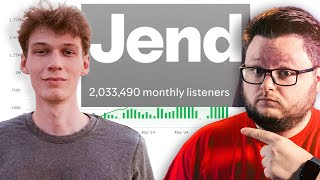
It allows you to very easily upload a bunch of videos without having to spend all the time and putting them in different ads. Interestingly enough, like you're watching this channel, you may have seen some of Jen's videos, and I've even had them on my channel, which if I remember to, I'll link this here along with all the other stuff I got to link up there. He does things very differently.
He puts like one ad per adset, and he makes this hyperorganized, super granular campaign. And I found that overall having like bigger broader audiences and having the dynamic creative stuff and just dumping a bunch of ads in there and just letting Meta handle it has actually been pretty good approach. It's almost the opposite of what he does in terms of um campaign setup.
It I'm kind of just letting Meta run with it and it it's worked great. Now I can't show you the ads because this artist wants to stay anonymous. What I can show you is the some of the breakdown data here.
So, we go to breakdowns and by country, we can see what countries are converting. So, we get about 14 and a half thousand conversions. Let's just call it 15.
About a quarter of which came from Brazil. No surprise there. Brazil is typically cheap to advertise to.
But actually, another quarter, actually more than Brazil, came from the United States at 15 cents a conversion. So, honestly, in this campaign, I might actually consider doing a USA only audience because even if we get 20 cents a conversion in the US, the US pays like three times more per stream than Brazil does. So, if it's if it's only like a little bit more expensive, it actually would be more financially viable to to to do it that way.
And like actually on the financial viability of this, um, people bring this up in every campaign that I show a case study for, like, oh, you spent $2,300, but you only got a third of a million streams. You only made back a,000. You spent two, therefore, this is a waste of money, and you're a horrible businessman.
Blah, blah, blah. This is a this is an example of a song that will 100% without a doubt profit. If I just turned everything off now and waited, this would guaranteed get a million streams and then therefore be profitable, but it would probably actually get several million.
In fact, and we're probably going to spend like five grand if it keeps going like this. And you know, maybe I'll show this song in a year and show what the financials ended up being. Um, so if you see this video year out and I haven't made a video like that, drop a comment below.
And if I have, maybe I'll reply with the link. But if I haven't, that'll remind me to go talk about it for better or for worse. Like maybe I'll be wrong, but in every case I've seen for songs that have made money, this is exactly what they look like.
They had those three things that I talked about before. Now, Brazil and US are about roughly tied for the results. Um, whoops, I clicked the wrong button.
Roughly tied in terms of number of conversions, but if we look over at the country distribution or location here, United States is dominating and that's because of the algorithmic push. I've s show this in a lot of videos, but if you run your ads to Brazil and Mexico and trigger a bunch of like get a bunch of cheaper stats, it can trigger algorithmic activity in expensive countries. Uh, and very commonly you run the United States.
And I think it's just because there's so many people in the United States. So, you know, there's 350 million like there's there's almost as many people in the United States as all of Europe, right? So, it just makes sense why the US ends up being so high here.
4,000 4,000. But here they're they have four times more streams or listeners actually than than Brazil. Um which which is crazy, but this is actually a pretty common thing.
Demographically, it's mostly 25 to 34 and it's actually mostly women, but it's pretty close to 50/50. Spotify recently added these cool stats at the top here. 49% of your streams came from your monthly active listeners.
So before we looked and saw that the active listeners were only about 20,000 out of these 120,000 monthly listeners, but they represent 50% of the streams because of how much they listen. And they listen to 8. 8 songs on average, which we saw earlier when we look at stream for listener.
So this is the difference between active and passive. And this is why I I've been saying for years that like building your audience with with ads is so much better than building it with playlisting. Like when you playlisting has it its purposes.
In fact, we're probably going to end up doing some playlisting on this project now that it has this awesome momentum. That's when you use it. You don't use it to build your audience.
You want to build your audience with with active listeners because those people stick around long term. And this is why, right? The radio and stuff is 1.
8, 1. 9, 1. 7 stream per listener.
The active is 8. 8 and the save rates high and the playlist rate's high and the follower rates much higher. Third party playlisting has the same kind of engagement as a radio or discover weekly in terms of how people interact with the music.
Now, the next thing I want to show you is how was the money spent, right? I have it set the last 28 days here, and I'm going to pull up some columns. So, I have results, cost per result, and amount spent.
And this is this is a topic that a lot of people are wondering about because it's kind of complicated and there's not always a clear answer. How do you how do you spend your money? Like the the agenda approach is basically start crazy high, like 500 a day for the first three days, pull it down, and spend half your budget in the first like week or weekend.
My approach has always been kind of start smaller, see if you get a good result, have the campaign learn a bit, and then start scaling up, which is what we did here. Um, and honestly, both approaches work. I think there's pros and cons of both.
Um, from Spotify's perspective, you do want results quickly, fast, early. From Meta's result, you have the worst cost per conversion early on. Like, we look at the cost per result.
The worst it ever was was those first three days. So, if our biggest spend was here, we'd be burning a lot of money. That's why I do this ramping strategy and that's why there's pros and cons.
Now, what you also notice here is we get up to the point we're spending $200 a day. I pulled it back since, but I think I'm going to pull it back up. I'm kind of riding the algorithm.
I'm trying to look like what's the algorithm doing? If I push it up, is it giving me more? If I pull it down, am I getting the same?
And I'm trying to kind of almost gamble if is it worth spending more money is it not right? Right. And so the next thing I'm probably going to do is go up to 300 a day and see what happens.
And then do it for like maybe a couple days and then back off and then look at the results for a few days and then go back, you know, kind of you're kind of just guessing and testing to see what happens because you don't want to spend money unnecessarily. But at the same time, you don't want to stop spending money when you could have pushed things a lot further. And this is when it gets into almost a gambling situation.
It's like a game of poker. You're trying to like almost bluff Spotify. Yeah.
Push the song harder. We'll push it harder if you push it harder. I don't know behind the scenes what's happening in Spotify's algorithm.
That's what it feels like when you're when you're doing it. But you will also notice that this cost per conversion is climbing. And so there's also the game of trying to manage this.
We were getting down to 10 cents a conversion, but we started scaling up the budget and now we're getting up to like 16 cents a conversion average. In fact, the lifetime is now 16. So as you're pushing it up, you don't want it to get so high where it's not worth spending more anymore.
So again, there's this push and pull of between meta and Spotify. Like you want more results faster, but you don't want to be like burning money unnecessarily. And this is when a lot of like human strategy comes into play.
And this is where like automated ad tools kind of fail because they can't look at these two things and try to guess and reason and gamble um make bets. You know, this is kind of the raw human part of it [music] that is is is something you kind of learn as an art form. But anyways, I hope you found this interesting as a case study.
If you want to see how to set up campaigns like this, check out this video right here to see the entire process start to finish. And make sure you subscribe so that you never miss another upload. You can learn more from my videos.
But anyways, thanks for watching. Let me know in the comments what you think. And I'll see you next video.
Bye.