As we’re talking about sales techniques in the sales process that we practice everyday, that salespeople practice is there a particular method that you use and has this method been applied in all countries? Listen, at one point in my career, I was Pricing Manager, the pricing manager, clearly will look at the macroeconomic component. the macroeconomic component is like there are lots of demands, few demands, so we can or cannot raise the prices Then, there was the marketing component, the offering, the value of the products.
The greater the value of the product, the aesthetics, the design or the technology of the product, the higher likelihood to raise the price. in the pricing list, in the rate So we played emphasized the value. And for that, we had to do some marketing research, It's about the customer's value perception And then, we arrived at stage 3, which was the sales stage, the stage of the deal.
And we understood that if the seller goes straight to the point, what he is going to talk about. He’s going to adapt himself. He'll raise the price in relation to the competition.
Maybe try to please his customer by giving the price his customer wants, but it's obvious that it isn't it's not going to work, especially not at Legrand. So, about the deal, how do you get through the deal part without talking about the price, other than by a lot of selling techniques and a lot of trainings on the offerings or products? I'd say with a responsible attitude.
So in terms of selling techniques, Quite frankly, I think it's very basic, we're not there to persuade. We're there to listen. So I have one piece of advice for everyone in sales.
Do the opposite of what I'm doing now, which is not to talk. You have a sales call You should not talk. You should talk for one-third of the time and for the two-thirds of the time, your contact, your customer should be speaking.
Afterwards, when you talk, you, as the salesperson, you should talk for just one third of time with confirmation, but two thirds of time with questions. first, you don't talk, but when you talk, you ask questions. When you ask questions, one last thing: two-thirds of the time with questions, they should be open questions to get the customer talking.
If you get the customer talking, you'll listen and you'll understand. And what will you understand? You'll understand what they are looking for, what they really want.
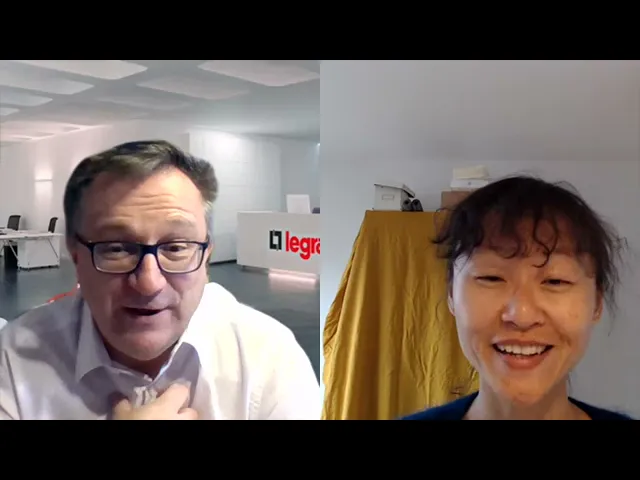
When I say really want, it's because at the beginning of the sales call, there are always barriers. I don't know what Christine really wants, but if we dig deeper, if we talk a lot, I will eventually understand that what Christine wants is for me to stop talking (joking) So, we will make the customers talk to understand their real areas of interest. Once we know the areas of interest, then we can understand what our customers want then it's about the salesperson's competence to propose a solution to his customers.
There are solutions, they can be product-based, service-based , or the attention. Perhaps the customer expects nothing more than to have a salesperson for a long time. they don't like to change their salesperson.
And why don't they like changes? Because customers need to be reassured, they need to know that someone will be there, when they have a problem. So, the Legrand salesperson is a problem solver, a solution provider.
And there, you have secured your customer for the long term. So that's really basic. Listen rather than talk and ask questions.
Find out the real area of interest and you’ll have the secret of the sale. you can use the techniques like "silence" You don't say anything and you'll see that it's so awkward that the customer will talk and you'll learn things.