English Leap Podcast from Speak English with Class. Hey there, English learners. Welcome back to another episode of the English Leap Podcast, your go-to podcast for learning English, where we grow your language skills and your confidence side by side.
I'm Aaron and I'm Evan. Whether you're learning English, setting big goals, or just wondering why you haven't started that New Year resolution you made three months ago, this episode's for you. Because today, we're diving into a topic we know will hit home.
Okay, Evan, be honest. Have you ever made a huge to-do list, felt super motivated, and then rewarded yourself with a nap before doing anything? Oh, 100%.
I once spent 2 hours organizing my planner and then took the rest of the day off. I had a vision board, motivational quotes, everything except energy. Yep, that's the spirit of today's episode.
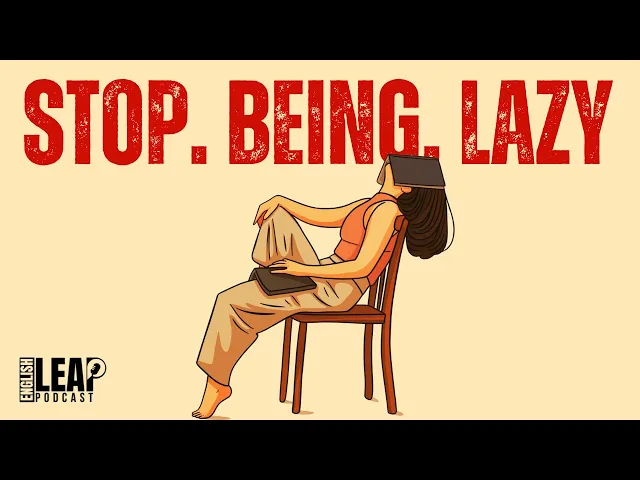
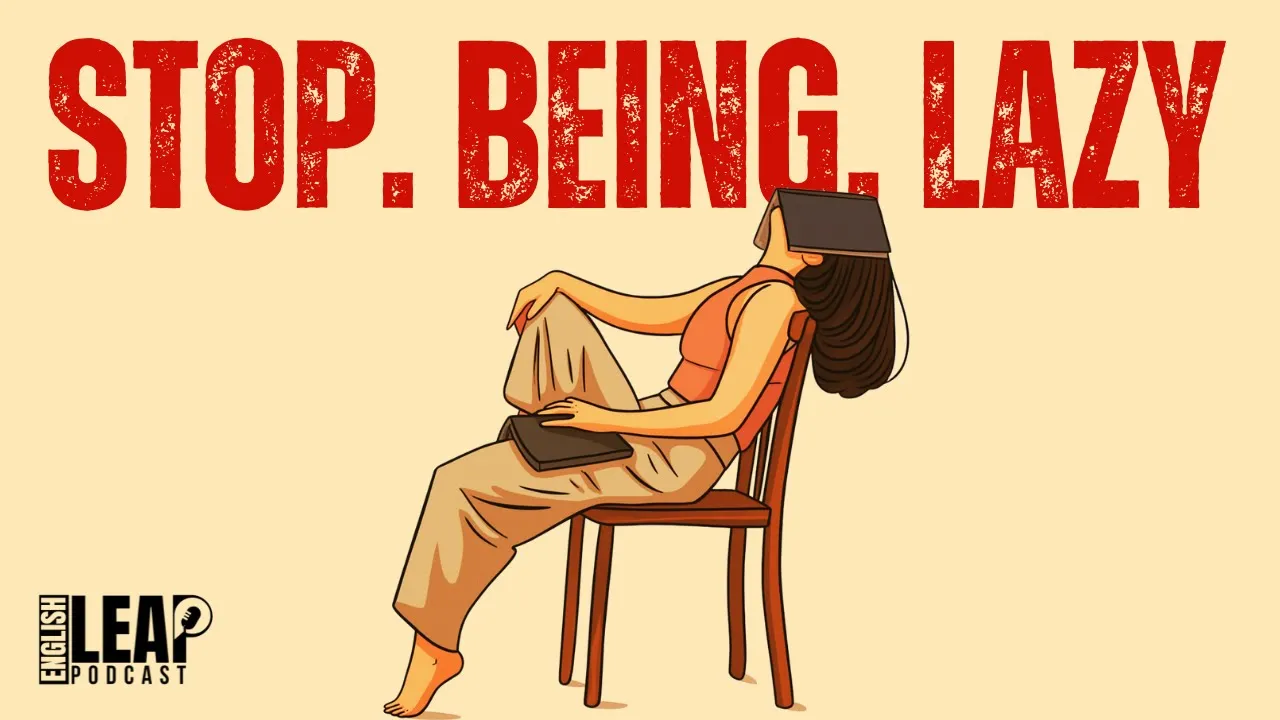
We're talking about a feeling a lot of people relate to but don't often admit. Being ambitious but kind of lazy. You've got the dreams, the vision, the potential, but somehow you still end up binge watching videos with a snack in each hand.
Exactly. We want the glow up without the get up. Sound familiar?
That's what we're unpacking today. Why ambition alone isn't enough and how to bridge that gap between what you want and what you actually do. And if that sounds like you, or even just a little like you, you're in the right place.
We've created a free PDF guide for today's episode. It's got all the key takeaways, comprehension questions, and grammar practice to help you turn this episode into real growth. Mhm.
You'll find the link in the description. Download it, use it, and hey, maybe don't let it sit in your downloads folder for 3 weeks. Haha.
Seriously. And of course, as always, we'll be introducing some useful intermediate level words and phrases throughout the episode. Exactly.
And later on, our friend Charlotte will break them down in Charlotte's vocabulary section where she'll explain their meanings and show you how to use them like a pro. So, now that we've set the stage and maybe exposed a few of our own habits, let's get into the heart of it. Yeah.
Because being ambitious but lazy isn't just a personality quirk. It's a pattern, one that can quietly hold you back if you don't recognize it. Mhm.
We're going to break it down point by point and talk about why this happens, how to shift it, and what English learners like you can do to take small, real steps forward. Okay, let's unpack the first big trap that holds so many ambitious people back, even when their dreams are skyhigh. Right, this one's sneaky.
We all say we're waiting for motivation, but honestly, it's like chasing a mirage in the desert. You feel a burst of energy after watching a motivational reel, and 5 minutes later, you're deep into YouTube shorts, completely off track. Guilty.
Last month, I watched a video that told me I could become unstoppable. So, I made a to-do list, lit a candle, and took a nap. It's wild how we confuse feeling inspired with actually doing something.
Exactly. That's the mirage. It feels like we're moving forward, but we're just stuck in place.
Because, let's face it, motivation is fleeting. It shows up all dramatic like fireworks, then disappears just as fast. Yeah.
What really gets things going is momentum, not inspiration. I've learned that if I just start, write one sentence, read one paragraph, my brain wakes up and joins the party. And the same goes for English learners.
Don't wait for the perfect moment or perfect mindset to practice. Just set a 10-minute timer. Speak out loud.
Write down five new words. Just do something. Progress starts with a decision, not a mood.
And speaking of progress, there's one thing that loves to stand in its way. It wears a cape and pretends to be helpful, but it's really just fear with good branding. O, perfectionism.
I used to think it was a badge of honor. Like, look how high my standards are. But in reality, it left me stuck.
I once took 3 weeks to post a 2-minute video because I couldn't decide if my tone sounded smart enough. I feel this deeply. I used to rehearse my English so much in my head, it was like I had a whole TED talk ready until someone asked, "Hey, how are you?
" And I froze. Perfectionism is counterproductive. It convinces you to polish something that doesn't even exist yet.
It's like trying to bake the perfect cake without cracking a single egg. You're stuck at step zero just thinking about the masterpiece. And for English learners, don't let perfection stop you from speaking.
Don't wait to sound like a native. Speak now. Stumble, learn.
That's the real formula. Yes. Swap out perfect for progress.
That one shift total game changer. So once you stop waiting for perfection and finally take that first step, you'd think things would flow, right? You'd think.
But then comes the overwhelm. Suddenly it's not one step. It's 15 directions at once.
And boom, you're stuck again. You know this one. You set 15 goals, color code your planner, buy new pens, and then binge watch productivity hacks on YouTube for 3 hours.
I once had 12 goals for the month. Want to guess how many I achieved? Zero.
But my desk was spotless. That illusion of being productive was really just mental clutter. Yep.
We call this goal bloating. You're carrying so many goals. None of them move.
Like trying to juggle water balloons. You can't catch anything because you're holding everything. That's where you have to streamline.
Pick one focus, not five, just one. That's how momentum builds. And English learners, this is huge.
Don't try to master pronunciation, grammar, vocabulary, and writing all at once. Choose one. For this week, maybe it's speaking.
That laser focus makes your progress compound over time. The secret isn't more goals, it's less noise and more doing. One step, one target, one win at a time.
And just when you think you've narrowed it down and you're ready to move, there's another sneaky trap waiting for you. Oh yeah, this one wears a suit and calls itself productivity. But really, it's just procrastination in disguise.
I've fallen into it so many times. I'll say I'm researching the best method or planning the perfect strategy, but I'm really just avoiding the uncomfortable part, getting started. It's like rearranging your tools all day instead of building the thing.
You feel busy, but nothing's actually moving forward. And English learners do this, too. I'm just looking for the right app.
I'm organizing my study folder. All helpful, but only if it leads to real action. If not, it's just another form of delay.
Here's a tip. Ask yourself, am I preparing to do the work or postponing it? Big difference.
Don't let the preparation phase become your permanent residence. Mhm. Start messy.
Speak that one sentence. Watch the video and repeat what you hear. Do one tiny thing that's real, not just something that feels like progress.
And sometimes, even when we're not organizing or researching, we're still stuck. Not in action, but in our own heads. Yes.
It's like you're mentally rehearsing the task a 100 times instead of actually doing it. Overthinking can be more exhausting than real work. Mhm.
I remember lying awake one night planning how I was going to reply to a single email. Just one. I rewrote it in my head 10 different ways.
And by morning I was drained and still hadn't replied. Been there. Overthinking creates this invisible fatigue.
You burn through your mental bandwidth before the task even begins. And for English learners, it sounds like this. What if I make a mistake?
Will they understand me? What if I forget the word? By the time you've thought of everything that could go wrong, you've talked yourself out of even trying.
Here's a mindset shift. Thinking is helpful up to a point. After that, it's analysis paralysis.
Do a brain dump. Write down your thoughts, then take one micro action that resets the cycle. Say the sentence out loud.
Record yourself. Make the mistake. Then move.
Overthinking never teaches as much as doing does. And you know what, Aaron? That brings us to something people rarely talk about.
What looks like laziness is often just fear in a clever disguise. Absolutely. I remember staring at a blank screen for hours, telling myself I was just tired.
But deep down, I was terrified the work wouldn't be good enough. Fear can be paralyzing. It convinces you that not trying is safer than failing.
And that fear wears many masks. Procrastination, overthinking, avoidance. For English learners, this might sound like, "I'll practice when I'm better or what if I sound silly?
" But here's the truth. Fear is normal and the only way out is through. Mhm.
Start small. Speak up once. Ask a question.
Make a tiny mistake. Then keep going. That's not weakness.
That's bravery in motion. And once you stop letting fear lead the way, here's the next move. Set yourself up for success by making the first step ridiculously easy.
Yes. The trick isn't to push harder. It's to lower the barrier.
Imagine trying to climb a mountain in slippers. Of course, you'll hesitate, but what if the first step was just putting on your shoes? That's the secret.
Reduce the effort it takes to start. For me, I wanted to read more, but I was always too busy, so I put a book on my nightstand. No searching, no setup, just reach over and read one page.
And it works the same way for English learners. Instead of saying, "I'll study grammar for an hour," start with, "I'll learn one new phrase today. " Keep your English notebook open on your desk, keep a language app on your home screen.
The easier it is to begin, the more often you'll begin. And those tiny actions, they compound. Before you know it, you've built a habit.
Not by willpower, but by design. And there it is. Sometimes it's not about working harder.
It's about starting smaller. Make it easy, make it obvious, and let the momentum do the heavy lifting. Yep.
And now that we've unpacked all seven points, we hope you're walking away not just motivated, but ready to take that first small step, whether it's for your goals, your English, or both. And of course, we know we dropped quite a few powerful words and phrases along the way. So, it's time to hand things over to Charlotte for your vocabulary breakdown.
Charlotte's got you covered with simple meanings and fresh examples to help you use these words in real life. Take it away, Charlotte. Hi friends, I'm Charlotte and here are some intermediate words and phrases from today's episode to boost your English.
Let's jump in. Quirk meaning a unique or unusual habit or behavior. Example, one of his quirks is talking to his plants every morning before work.
Mirage meaning something that appears real or promising but isn't. Example, the idea of overnight success is often just a mirage. True growth takes time.
Momentum meaning a force that keeps something moving or progressing. Example, after cleaning one drawer, I got into the momentum and ended up organizing the whole room. Perfectionism, meaning the desire to be perfect, often leading to delay or fear of failure.
Example, his perfectionism kept him from finishing the painting. He was never satisfied with it. Stumble, meaning to make a mistake or lose balance temporarily.
Example, she stumbled over her words during the interview but recovered gracefully. Streamline meaning to make something simpler and more efficient. Example, we need to streamline our morning routine so we're not always late.
Mental clutter, meaning excess thoughts or distractions that affect focus. Example, I couldn't study with so much mental clutter, so I wrote everything down to clear my head. Disguise, meaning to hide something's real appearance or truth.
Example, his confidence was actually a disguise for how nervous he felt inside. Overwhelm, meaning to feel stressed or unable to manage due to too much happening. Example, I was overwhelmed by the number of messages waiting for me after my trip.
Frustration, meaning the feeling of being upset or annoyed because things aren't going as expected. Example, she felt deep frustration when the website kept crashing during her test. Friction, meaning resistance or obstacles that make progress harder.
Example, the app's complicated sign up process created too much friction, so I gave up. That's your vocabulary boost for today. Try using a couple of these words when you write or speak English this week.
The more you use them, the more natural they'll become. See you next time. Thank you, Charlotte.
That was super helpful. Those words are going straight into my daily conversations. And for all of you listening, if today's episode resonated with you, take one action today.
Just one. Don't wait for perfect conditions. Don't wait to feel ready.
Start messy. Start small. Just start.
All right, friends. We'll see you in the next episode with more real talk, more laughs, and more ways to level up your English and your life. Stay curious, stay kind, and most importantly, keep going.
Bye for now. Your progress doesn't end here. To continue advancing your English skills, click on the next video or explore the additional videos we've thoughtfully selected for you.