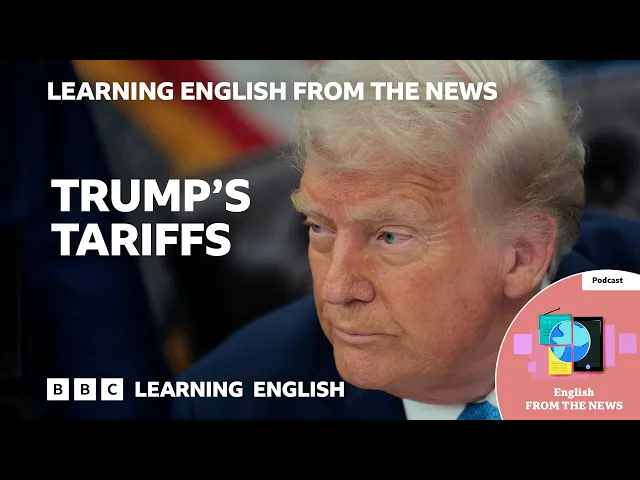
From BBC Learning English, this is Learning English from the News - our podcast about the news headlines. In this programme - Trump's tariffs. Hello, I'm Beth.
And I'm Neil. In this programme, we look at one big news story and the vocabulary in the headlines that will help you understand it. You can find all the vocabulary and headlines from this episode as well as a worksheet on our website, bbclearningenglish.
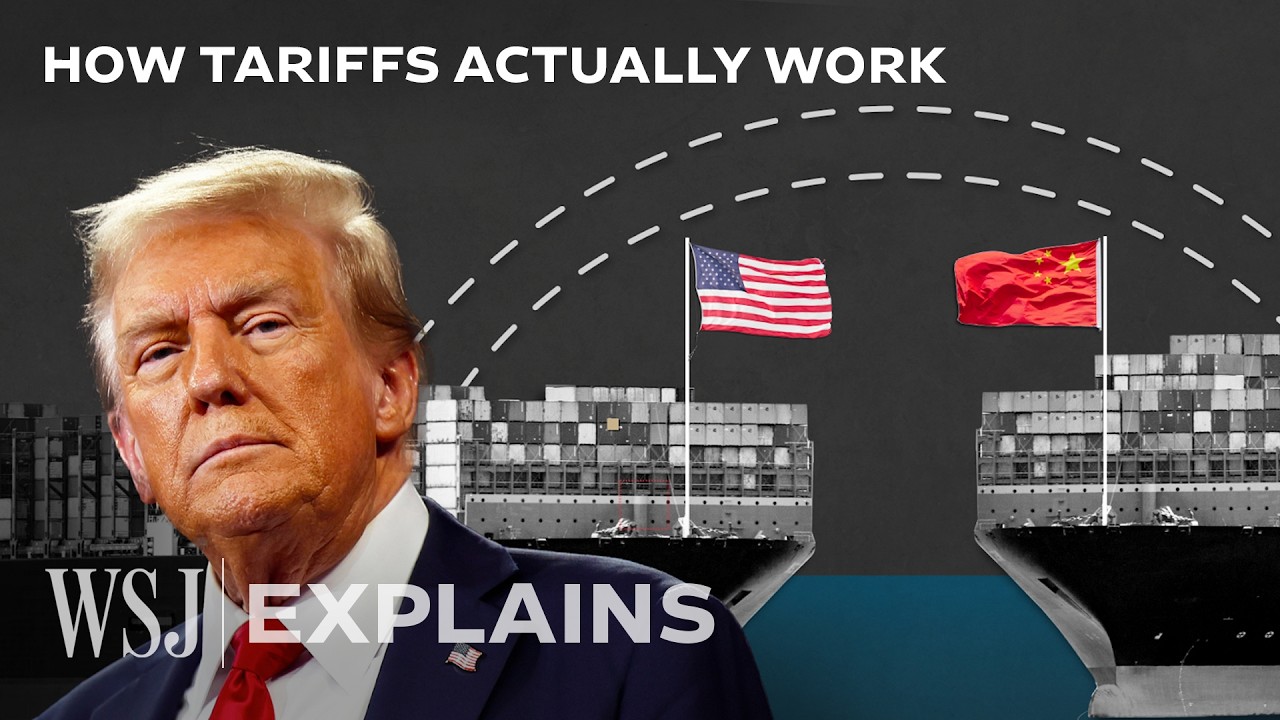
com So let's hear all about this story. US President Donald Trump has started imposing tariffs on imports into the USA. Tariffs make imports more expensive - a cost which is often passed on to consumers who have to pay more for imported products.
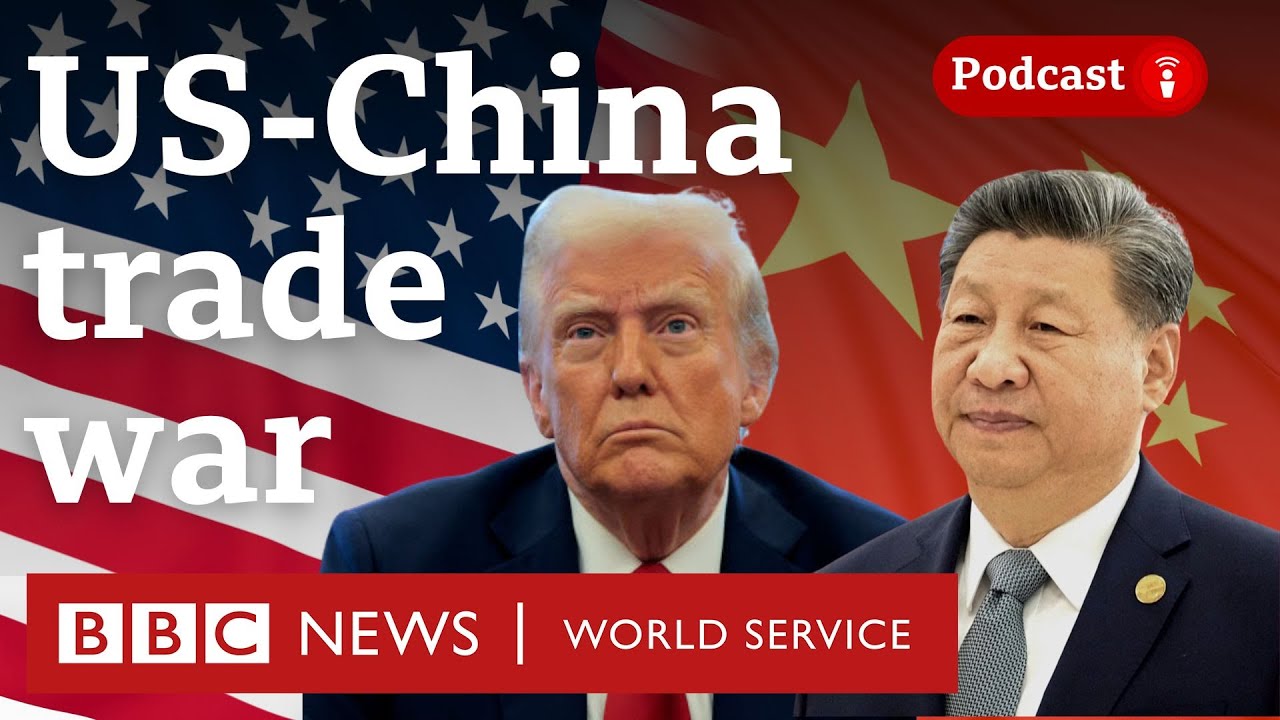
Now, Donald Trump has imposed 10% tariffs on all Chinese imports into the US. He says the Chinese tariffs are a response to the economic situation between the two countries and to help stop drugs coming into the US, which he partly blames on China. Now, China has said that in response, they will add tariffs onto some American goods.
Trump has also threatened to impose 25% tariffs on Canada and Mexico, but these have been suspended, that means delayed, for 30 days. So let's have our first headline. This is from MSN: China announces tit-for-tat tariffs as US levies come into effect.
That headline again from MSN: China announces tit-for-tat tariffs as US levies come into effect. So this headline says China has announced its own tariffs as the US tariffs come into effect, that means start, in China. And we're interested in this expression tit for tat.
It's a funny little phrase, Beth, but what does it mean? Tit for tat. OK, so this expression describes the following situation: Someone does something bad to someone else, so that person then does something bad in response.
It's retaliation. Yes. So it's something done intentionally to punish others because they've done something unpleasant to you.
So it's used in this headline to mean that China has imposed tariffs on US goods, simply because Trump has imposed tariffs on Chinese goods. They've announced their own tariffs in retaliation. It's tit for tat.
Now this expression reminds me of being a child, Beth. If my sister pushed me around, I pushed her back. It was tit for tat.
And, Neil, I noticed that you didn't make me a coffee this morning like you normally do. I think it's tit for tat because I forgot to make you one yesterday. Absolutely.
We've had tit for tat, which describes an action done as retaliation. For example, you ate the last biscuit, so I'm going to eat your piece of cake. That's tit for tat.
This is Learning English from The News, our podcast about the news headlines. Today we're talking about the tariffs imposed by Donald Trump. Donald Trump first talked about imposing tariffs on other countries in his election campaign.
And our next headline is about that. And this is from CNN: As Trump's tariff pledge comes due, he vows to follow through on key campaign promise And that headline again from CNN: As Trump's tariff pledge comes due, he vows to follow through on key campaign promise This headline is talking about Trump's election campaign promise to impose tariffs. He said he's going to do it, and now he is doing it.
He's following through on his promise. And follow through on is what we're looking at. Neil, what can you tell us?
Now, if you follow through on something, you do something until it's completed. For example, if you promise to help someone and you follow through on your promise, then you help until your help isn't needed anymore. Now, follow through on is most commonly used with promises or things you say you're going to do.
For example, my manager has said I might get a pay rise soon and I hope she follows through on it. Good luck with that. It's also possible to change 'on' for 'with', or to drop the preposition completely if it's obvious what you are following through on.
So you promise to make me a cake and I hope you follow through. Now, Neil, this is a serious story about economic tariffs, and you're talking about cake. Imposing tariffs and making cake are quite different things.
They are. But it demonstrates how we can use follow through for everyday things as well as serious topics like tariffs. We've had follow through on - fulfil a promise.
For example he said he'll give me his prawn curry recipe. I hope he follows through on it because it's so tasty. This is Learning English from the News, our podcast about the news headlines.
Today, we're talking about Trump's tariffs. Now, according to some, the threat of tariffs has actually worked. Trump has threatened governments like Canada and Mexico into doing what he wants.
Since Mexico and Canada were threatened with tariffs, both have agreed to stricter border security and are taking bigger steps to address drug trafficking, specifically the drug fentanyl. And this is exactly what Trump wanted. So our next headline comes from The Telegraph in the UK, and it is: Trump's tariffs are already bearing fruit And that headline again: Trump's tariffs are already bearing fruit and that is from the Telegraph in the UK.
Now this headline says Trump's tariffs are bearing fruit, and that's the expression we're going to look at. What do tariffs have to do with apples, bananas and other fruit, Beth? Well, literally, if a tree bears fruit, meaning produces fruit, then that's a good thing.
But in this headline, the expression is used metaphorically. If something bears fruit, then it produces successful results. Yes.
So, according to the headline, Trump's tariffs are already producing successful results for Trump. That's because since the tariffs, Mexico and Canada have agreed to what Donald Trump wanted. So his tariffs are bearing fruit.
Now, we can use bear fruit in other situations. If you study hard, you want that effort to bear fruit - you want good results. Yes.
Now a note on this verb bear - it is irregular. So the past simple form is bore and the past participle is borne. For example, practicing for interviews bore fruit - she got the job.
Now, a similar expression to bear fruit is pay off. And at the moment we can see lots of headlines saying that Trump's tariffs are paying off for him - they've achieved what he wanted in Canada and Mexico. They're bearing fruit.
We looked at bearing fruit, getting a positive result. For example, Finally, my hard work at university is bearing fruit and I've got a job. That's it for this episode of Learning English from the News.
We'll be back next week with another news story. You've just learned some English from the news, but have you ever thought about learning English from music? We have a new series, My Song, My Home, where you can listen to people's songs and learn about the places they come from.
Find it in your podcast app or visit our website: bbclearningenglish. com That's right, just search for Learning English Conversations. And don't forget to follow us on social media as well.
Find us at BBC Learning English. Bye for now. Bye.