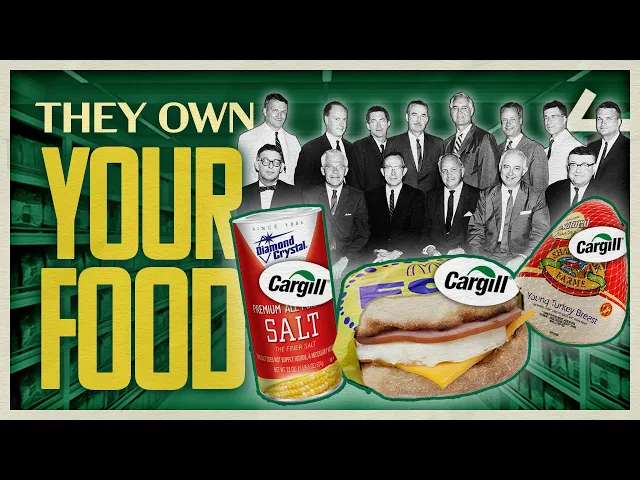
there's blood on the hands of the packers and leaders in washington and no one seems to care i know we live in a country where capitalism reigns supreme and it's every man for himself but packers take capitalism to a whole new level they've been called the worst company in the world they once had an intelligence operation bigger than the cia and they have near complete control over how and what you eat cargill incorporated is the biggest privately owned company in america by a huge margin they bring in more money than the third fourth and fifth
largest companies combined pretty much any food you buy they make a little bit of money off of this is a result of over a century of consolidation absorbing buying up and merging with other companies to try to control a chunk of every aspect of the food economy cargill's all burger brand salts plant proteins asphalt rejuvenator partially hydrogenated products a very very special treat their power and breadth have kept wages down squashed worker power and pushed family farms to the brink of non-existence while manipulating prices for the consumer that's you and that ubiquity is about to
get even worse cargill has plans to absorb a chicken empire it's all made one family very very rich the cargill mcmillans own 88 of the company 14 of them are billionaires the family is worth a total of 40 billion dollars how does so much wealth get concentrated into so few hands to answer that we have to go back 127 years to the beginnings of cargill's history this is the classroom by more perfect union and today we're going to look at how the cargills got rich cargill began in 1865 right as the civil war ended with
the purchase of a single grain storage warehouse as the then new railroad expanded along the american west cargill facilities followed at the time the cargills didn't really own farms or actually produce anything they just weaseled themselves into grain profits by controlling infrastructure and storage then as one of the first clues the family treats real life like game of thrones one flesh one heart one soul now and forever w w cargill married off his daughter edna to john h mcmillan whose family owned even more grain warehouses the companies merged they became the cargill mcmillins the family
we know today by the early 1900s cargill controlled so much different industry that if a grain farmer in the midwest didn't do business with cargill they couldn't do business at all world war one breaks out and cargill makes a profit they started expanding out of the midwest building out what they internally called the endless belt picture a giant nation-spanning conveyor belt hauling wheat from a farm in western iowa it stops at a mill facility in chicago to become flour the flower goes to a bakery in pittsburgh where it's turned into a kaiser roll and then
it lands at a new york city deli to become a delicious reuben cargill's plan was to make money at each step of the way selling seed and supplies to the farmer storing the grain selling tools to the mill sourcing sesame seeds for the bakery and selling curing salt to the deli oh and they own the transportation systems too the further it goes the more they make in 1924 they acquired the taylor and bournique company a competitor who had a unique technology a private wire system back then this was the equivalent of having your own internet
now that i've gotten on the internet i'd rather be on my computer than doing just about anything the tech was so good it remained in operation till 1996 well into the internet age getting good information quickly was important because cargill was beginning to work in commodities futures trading that's gambling on the future prices of necessities like wheat corn and meat a lot of this business is done at the chicago board of trade which was basically a real version of how you pictured the stock market as a kid a bunch of guys yelling in a room
about the price of a bushel of wheat novelist frank norris wrote in his the epic of the wheat think of it the food of hundreds and hundreds of thousands of people just at the mercy of a few men down there at the board of trade they make the price they say just how much the peasant shall pay for his loaf of bread if he can't pay the price he simply starves cargill established information superiority if they got information about something that could affect wheat prices at one location they could instantly blast that information to other
locations and change how they invest this is one of the ways consolidation helps because cargill had so many business arms they got all the best information all of the time sounds a lot like insider trading right in commodities trading that's basically legal in contrast to stocks commodities trading is the only major u.s market where companies are allowed to act on inside information to manage risks others might not know about in fact that is how futures markets were designed this is how cargill managed to profit off the great depression and the dust bowl of the 1930s
the dust bowl was caused in large part by the too quick expansion of agriculture into the american prairie by companies like cargill farmers changed the landscape of the area too quickly and the ecosystem couldn't handle it the great depression was caused in large part by speculation again a cargill practice cargill of course had a different idea of whose fault the depression was ceo john mcmillan senior blamed the labor movement they got entirely out of hand and demanded to reduce the number of hours worked to 40 hours a week it is making the cost of everything
so great that neither the farmer nor anyone else can live the depression sent grain prices down and the dust bowl sent them up cargill profited both times their intelligence network had predicted the corn shortage and stockpiled it and people noticed for the first time there were attempts to regulate the cargill model of business the chicago board of trade banned cargill new deal programs attempted to slow consolidation and regulate speculation but cargill executives argued against those programs to the public and fdr administration officials saying the government should be cutting costs on labor instead their lobbying worked
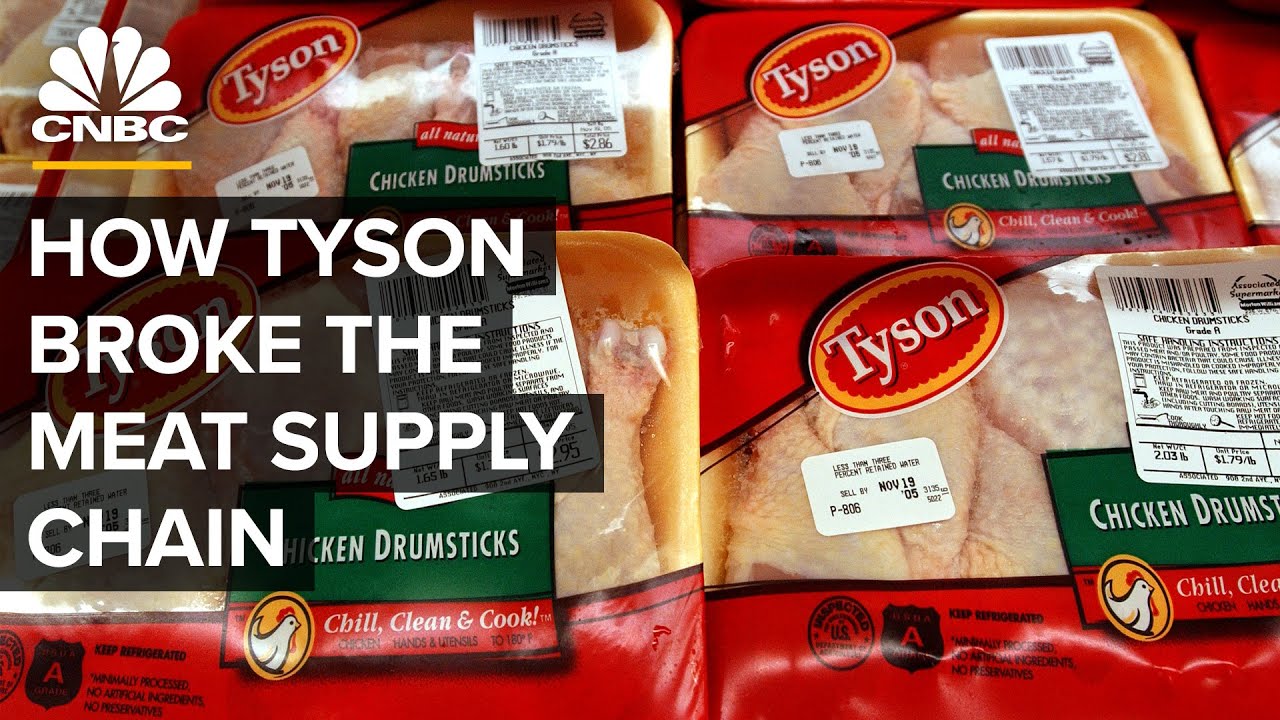
and the department of agriculture agreed to a plan that gave the grain trading industry almost complete control over regulating themselves in the following decades they bought more and more companies from other agriculture businesses to seemingly random endeavors like las vegas casinos and tokyo love hotels significantly they've also taken over much of the meat industry there are four big meat companies tyson jbs national beef and cargill which collectively control 85 of the world's meat they decide the prices they decide the supply they decide what we eat and how much we pay for it and despite these
companies using the illusion of inflation to raise prices they think they're helping you can't have a bunch of small players delivering such an important food source to the nation's consumers you have to have larger companies that can do it cheaply and can keep costs down all of that consolidation has made a massive corporation that's still privately owned 88 by the cargill mcmillan family and doesn't have to report anything to the public these days the family isn't as involved in the direct management of the company as they used to be they still dominate the board but
the executives are outsiders but they still make an income off the company dividends are payments corporations meet out to shareholders periodically the cargills got paid 1.13 billion in dividends in 2020. that's 44 000 times what the average american family farm made the same year cargill inc and the cargill macmillan family aren't one in the same but the fiduciary responsibility of the company is to make money for the family and they're only getting more powerful the family and the company are major beneficiaries of a pro-corporate government when cargill was accused of having child slaves in the
ivory coast the supreme court dropped the case because the statute that allowed foreigners to sue in american court couldn't be used to sue corporations the commodity futures modernization act of 2000 took away what limited regulations over speculative commodities we had which led to cargill opening up hedge funds that invested in commodity futures they were selling people investments in a market they controlled and they want to get even bigger cargill recently completed a merger with sanderson chicken the third largest chicken producer in america our customers and also consumers they want to eat more chicken a coalition
of senators had implored the department of justice to investigate and stop it this mega-merger in a sector already plagued with consolidation and illegal behaviors that harm farmers and consumers alike represents a new threat to building a competitive agricultural industry but the doj allowed the deal to go through with one caveat the combined companies would stop using the tournament system where top performing workers got bonuses taken from the paychecks of lower performers a practice enabled by consolidation just two days after this announcement i was handed a paypal in this take it or leave it relationship with
sanderson they told me that they were going to reduce my income by one-third and whether or not i signed this pay contract that all sanderson growers only within the state of mississippi would receive this pay cut it's easier to treat your employees poorly when the guy across town does too the companies also had to pay a fine 85 million dollars total that's almost nothing to the vast wealth of the cargills that wealth was hoarded at the expense of small farmers working people people who eat food and people who simply live on earth cargill is one
of the worst polluters in the world at least a portion of the cargill's 40 billion dollars was taken from you the rise of the cargill corporation and the wealth hoarding of the few dozen family members benefiting from it shows that aggressive consolidation in any industry is bad for working people and needs to be regulated thank you for watching and don't forget to like and subscribe we'll be covering the stories of other billionaires and multi-millionaires to examine the policy failures that made them rich as well as the worker empowering stories and explainers you're used to this
has been the classroom by more perfect union