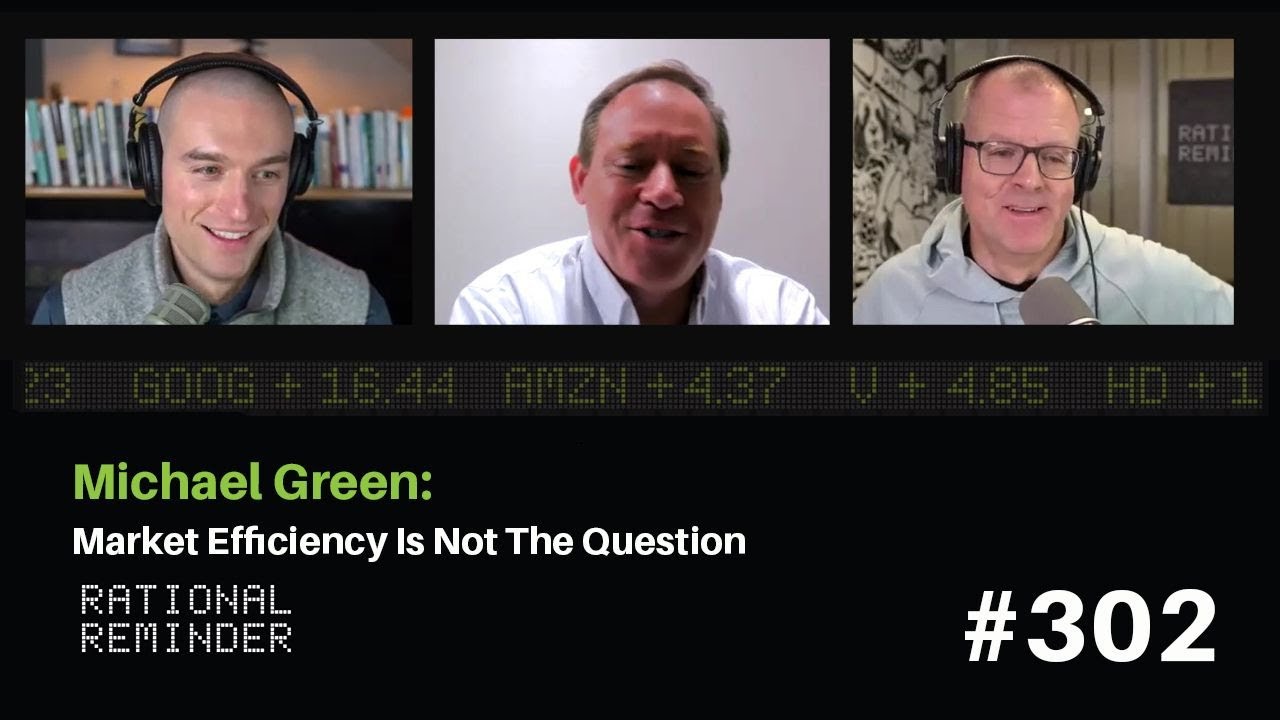
Welcome to excess returns where we focus on what works over the long term in the markets join us as we talk about the strategies and tactics that can help you become a better long-term investor Justin carbonneau and Jack forhand are principals at the Lydia Capital Management the opinions expressed in this podcast do not necessarily reflect the opinions of Olivia Capital no information on this podcast should be Construed as investment advice Securities discussed in the podcast may be Holdings of clients of Olivia Capital hey guys this is Justin in this episode of excess returns Jack and
I sit down with simplify's Mike Green to discuss his personal portfolio and the macro strategy that he deploys that sits at the heart of one of simplify's new ETFs Mike's macro strategy combines equities with positive convexity managed Futures that are diversifying and inflation Sensitive and a suite of fixed income sources with low sensitivity to duration Mike walks through the investing rationale for each of these and explains how they work in the context of the overall portfolio and why he believes these exposures will be important return sources in the future as always thank you for listening
please enjoy this show us your portfolio episode with simplifies Mike Green hi Mike thank you very much for joining us today Hey Johnson it's great to be here with you uh we're going to talk about your personal investment strategy so a little bit different than the last conversation we had but we like to bring on professionals like yourself and talk about how you think about managing your personal portfolio and your Investments and the neat thing with you and this is also with some of the other folks we've had on but is A lot of your
portfolio or a big way that you manage your portfolio is through an actual strategy that you will run within an ETF wrapper so this conversation will give us an opportunity to talk about your views of the world and how that manifests itself in an actual strategy that you run for your own capital and also uh many other clients so so this is going to be a fun and interesting conversation I certainly hope so it sounds uh it's It's an interesting opportunity I love the opportunity to chat about you know where opportunities exist and kind of
what I see as the overall story but you know the funny the funny part is is that we're going to skip straight ahead and talk largely about the fact that we're being given an extraordinary opportunity to pick up excess return in the form of U.S treasuries um so that's gonna be the Lion's Share of our conversation around debating Those points but I'm looking forward to it we always like to start out at sort of a high level with people that we have on for this type of episode which is when you think about your personal
Investments what you're trying to achieve and accomplish with your portfolio how would you explain that to someone well so I'm in an interesting situation in which the single largest asset that I own is actually the equity In simplify and various other Investments that I am either directly involved in the management of or that have significant exposure to in terms of the success of those Ventures right so combination of simplified tier one alpha and I've done things like that in the past running my own hedge fund Etc now that naturally changes your profile from a risk
standpoint um you know and it puts you into a Situation where you're already deeply exposed to risk ass risk assets and so in most situations ironically I find myself probably under exposed to risk assets because so much of my income stream and the value of the assets that I invest in are tied to markets in one form or another now with that said um the portfolios that I'm constructing also you know represent kind of my personal Philosophy which is that you really want to manage a portfolio based on the payout structures embedded in the portfolio
rather than the quote-unquote asset classes and so when you think about exposures you know I try to emphasize for people that equities remember what you're really doing you're going long a call you're going long a put you have the upside and you have the downside basically to the bankruptcy point right in fixed income You have limited upside and all the exposure to the downside in exchange for giving up that that upside you're receiving an income stream right so like when you start thinking about portfolios and that construct you start thinking about well under what conditions
do I actually expect to get paid what payoff structure is going to work under this cycle and that is largely how I try to construct my portfolios if you look at The strategies that I run which are publicly available they reflect a lot of those fears that right now there's much less upside than there is downside in terms of overall exposure in terms of the markets and interestingly enough you can now actually obtain fairly significant compensation for simply giving up that upside at the same time that you don't have to participate in the downside what
we call risk-less bonds or risk-free Bonds the U.S treasuries but offer a really attractive return relative to at least what I see as the inflationary conditions that are in place right now and we'll we'll get into a lot more detail on those exposures and what those asset classes are but one of the interesting things for you personally um that we learned in preparing for this podcast was you either are selling your house or you recently sold your house and I think You're going to take the opportunity to get in an RV with um uh with
your family and travel across the country so maybe just can you talk to that a little bit like what drove that um decision well so this is one of the things that I always emphasize for people we you know we live in a very financialized world where we tend to think about oh you know all my behaviors are determined in some form or another by whether the Federal Reserve hikes interest rates or not but the simple reality is is that we actually have to live our lives as well and that's part of the frustration I
think that you feel from people they shouldn't have to focus on markets nearly as much as they do I do it because I love it and because I would do it like I would do this no matter what but um you hit life sages and different things happen right so um in the simplest form we're all born Short housing and over time we accumulate uh a shelter exposure that if you live your life reasonably well and you're fairly Lucky in terms of raising your kids and I seem to have been so you find yourself over
provisioned for housing so suddenly instead of being short housing I'm now long a couple of acres of land and over 4 000 square feet in Marin County which I have absolutely no need for because my children are never coming back at least if I have Anything to say about it right um and so it's basically me my wife and my two dogs that are suddenly saying why in the world are we wandering around this place no as a testament to my market timing and my wife's Superior ability to do that like she desperately wanted to
sell last year I looked at it and I said look you know we probably are going to take a bath on this but we've got kids that are finishing out high school we don't want To disrupt them in this process that's going to prove to be a very costly mistake by the way but um the kids probably would have forgiven us at least after many millions of dollars worth of therapy but um the uh so we're actually going you know we're now just at that live stage where we're empty nesters we have no reason to
own a big home and my wife and I really just want to go explore for a little bit and so we're gonna hop in an RV we're Going to drive cross country see if we can tolerate each other in very close quarters for a couple of weeks and then from there we've got a series of short-term rentals all over the United States and um I think one of the fun things will actually be you know seeing if I can get uh you know Twitter meetups and and uh go out and have drinks with people in
places that I don't normally get to hang out but really just kind of wander for a Little bit and I'm very I'm incredibly fortunate that my career gives me the ability to be relatively flexible as long as I can get a decent Wi-Fi signal yeah and you know the idea of doing that now I mean some people would wait until retirement they'd say you know I can't I gotta I gotta be working um I gotta gotta either be in the office or be at my home office or you know wouldn't have the mindset to sort
of be able to think they could do that I mean We're lucky like you said we're in jobs that you can pretty much work from anywhere but I think oftentimes people wait too long to do things like that and then by the time they're 70 or 75 health issues come up and it becomes much harder well I I also would toss out a second component though right which is the benefit and I've had the flexibility of this I've encouraged people on other podcasts if you have the ability to do This like you know take semi-sabbaticals
right so I've taken breaks from my work career where I've been you know basically thinking and writing for a year or so that is that has positioned me to have some of the best breakthroughs of my career in terms of you know what's actually going on how do I think about the world all my work around passive actually emerged during that type of sabbatical In 2016 where I stumbled across law say Peterson's paper sharpening the arithmetic of active management and it was literally like a you know it was like a lightning bolt struck I'm like
oh my gosh wait a second he's not going nearly far enough in this for those who aren't familiar with the paper or loss A challenges Bill Sharp's uh seminal paper the arithmetic of active management in which Bill Sharp makes the often cited observation that all active Together has to equal passive and therefore the only difference is going to be fees on average and as a result passive outperforms over time laissez recognized that there were periods of time during index reconstitution in which the passive players had to transact right and so I'm reading this paper and
I'm like wait a second passive players receive flows they're constantly transacting therefore they Can't meet their own definition there has to be another mechanism at play here that's where a lot of my work emerged from it I'm hoping for something very similar you know where I'm taking basically the next year away from being tied to a particular location being tied to a particular setting and you know continuing to stay active in markets continuing to stay active managing the portfolios but just doing a sabbatical from normal life is kind of The easiest way to think about
it hopefully that's going to Spur a lot of interesting thoughts and it'll give me some of the same opportunities that I have we were talking earlier about jumping into Twitter spaces right it gives you an opportunity to see the world from somebody else's perspective yeah that's something I found in life too is like I have this tendency to think if I'm not like with my head's not down I'm not grinding like I'm not Working and so like a lot of times when you get away from things and you kind of give yourself some time to
think you end up doing some of the better things coming up with some of your better ideas or doing some of the better things you do in your career so I totally agree with that like and at the flaw of mine that I always tend to think I have to have my head down working all the time I I don't think that's a flaw of yours I mean I I I I yes I agree by the way that That can work to your disadvantage but I think most of us that have gotten to this point
in our careers recognize that hard work is a big you know big component of the relative success that we've had I tend to emphasize for people you know particularly tied to the work that I've done with you know guys that goalie Peters Etc the role that luck plays right if I had not been born in the United States at the time that I was and had the experiences and exposures That I did probably wouldn't be anywhere um you know remotely close to doing what I'm doing today but it is really important to give yourself that
flexibility to step out of your life to step off of the desk to step away from the trading floor and say wait a second what are we really doing here right um in in 2018 2017 um I gave a presentation stealing David Foster Wallace's you know incredible Speech this is water right you know where the analogy is drawn between the story is drawn of you know two young fish swimming by an old fish the old fish says you know hey boys how's the water they kind of look at them weird and they swim all over
the one of the fish turns the other you're like what's water right well we're all swimming in this medium that if you don't step outside it's really hard to see All right and I just think that that change in perspective and candidly I've done almost everything in my career to give me the opportunity to look at things from a different perspective um you know unless you do that you you can't truly understand the system in which you're participating I was gonna ask you about the 60 40 portfolio and the Outlook going forward but I want
to do it from this concept through this concept of the idea of Simple versus complex because you know we've had one of the best 40-year periods probably ever for the 60 40 portfolio and it's led to a lot of us thinking like the simplest portfolio is better you know I get my broad stock market exposure I get my broad Bond exposure I put it away and I'm done and I'm wondering like how much of that is what's going on over the last 40 years and how much of that is like simple portfolios are better and
then how do You think about that idea because I know you're as we start talking about your portfolio you're introducing some more complex things here in in search of getting a better return so how do you think about that simple versus complex in constructing a portfolio so I think the irony is is that the 60 40 portfolio is actually remarkably complex but it seems to be very simple right and so again put yourself back into the Context of what has actually transpired in that 60 40 portfolio over the last 50 years basically since Paul volcker
right so it's one of the reasons why as we were talking earlier you know I emphasize the Dynamics of treasuries my read on Paul volcker is is that he made a terrible miscalculation right did not understand what he was doing in terms of fighting inflation got sucked into the monetarist theories he didn't hike interest rates for the Purpose of hiking interest rates he hiked interest rates as a byproduct of trying to achieve a stable growth of monetary Aggregates in a period of high inflation right so if the demand for cash is rising significantly which increases
the velocity of money in turn you actually want to try to respond to that by restricting the availability of it theoretically that's by hiking interest rates right that set up conditions under which interest rates Were hiked to completely inappropriate levels they actually were driving their own inflationary characteristics because of mismeasurement tied to the construction of CPI at the time and so we were given this Incredible Gift of the US government basically saying hey we'll pay you 20 a year not quite but you know we'll pay you 19 a year for doing absolutely nothing for the
next 20 years right like sign me up right that sounds fantastic You know what a fantastic possible outcome that in turn set the stage for at least the 40 portion of that portfolio to nearly constantly appreciate over time as we slowly recognize that we had done something that that at least in in my view was completely inappropriate um but if you move beyond that error and by the way I think Jerome Powell has repeated that error except under more adverse conditions and as a result we're Likely to see an extended period of very positive returns
for fixed income going forward assuming we don't blow ourselves up in the process and that's by the way a big assumption um not to be overly dramatic on it but it is actually something that you have to consider you know what you're doing with the 64-day portfolio is exactly what I was talking about in terms of the payoff characteristics Right so you're buying a portion of the portfolio and that 40 percent that is directly tied to risk-free bonds you're then buying a credit component of it that effectively consists of selling puts you're then buying the
equity component of it that consists of sell of buying calls right and so you've built this payoff structure that actually is remarkably complex in its construction but in its core had a number of factors Behind it that I think are going to be very difficult to replicate ranging from volcker's initial error to the growth of passive investing the general facilitation and ease with which people can buy equities all of those things have changed the underlying structure and in my opinion at least represented a Tailwind that may very much be becoming a headwind as we move
forward before we dig into the individual components I want to get back to this Idea of asset allocation because you know most people when we talk to them at this point we'll say all right let's talk about the high level components in your portfolio and they'll talk about their stocks and their bonds and they might say I have some commodities for inflation and you're thinking about this completely differently going back to the idea you talked about before with payoff structures so how do you think before we dig into all the individual components How do you
think about this idea what components exist in your portfolio so let's take exactly that example right because if you look at the current strategy of the the simple macro strategy and you look at the exposure that we have there you'll notice that there's two really critical things one is is that I've got a fairly significant executive fairly similar I got a huge exposure to fixed income everything ranging from Leverage exposures through Simplified products that give me increased exposure to the front end to synthetic structures that I've created through various simplified products that give me exposure
to yield curve steepening and as I'm sure you've discovered in everyone else's notice like the levels of yield curve inversion that have been created by what I think is very clearly Jerome Powell's mistake um are setting up conditions under which it's almost impossible to imagine the Yield curve not steepening right um now I do think that there's very particular components around the Dynamics of the debt ceiling that may momentarily cause this to get even more extreme but like you kind of have to play the steepener in one form or another right but if I'm if
I'm thinking about those underlying exposures and what I'm really trying to accomplish there I want to get a lot of exposure to the idea that I'm going to be delivered dollars in the Future right with 100 certainty that's what a risk-free fixed income instrument is I give you fewer dollars today you give me a guaranteed more dollars in the future and what I'm articulating is in terms of the option value the flexibility Etc a strategy that delivers me cash at some point in the reasonably near future is going to be of tremendous value right if
I'm wrong about that how am I going to be wrong and what are the Instruments that are going to benefit most well instruments that are priced directly in the US dollar relative to their usage I.E Commodities are highly likely to appreciate significantly if I'm wrong about the future value of those dollars so what I've actually done is now let's go back to it I've constructed a straddle that pays me dollars in the future and if those dollars do not actually have the value that I expect Them to have then I've got the commodity exposure that
pays me more but I've done so again by utilizing a structure within the simplify Universe where I'm long a product that incorporates Trend following Dynamics to the commodity structure Etc and that I I would not do it any other way right simply holding Commodities is basically a recipe to get rats in your house how much of your portfolio is a reflection of your macro View and how Much of it is something you would consider a core allocation like are there are there parts of this that would always be in there in all circumstances or is
this a pretty flexible thing that could change dramatically so um within the macro strategies that I run and also within my overall portfolio I try to approach it with a degree of you know both humility in terms of like my macro forecasting tools are only as good as as you know my actual ability to Do so and candidly these are incredibly complex systems in which the misinterpretation or the ignorance of a single variable can radically change things right it's proverbial butterfly flaps of swings you know halfway across the world and the hurricane hits somewhere else
right um so I try to be relatively thoughtful in my construction and think about things in terms of overweight and underweight if you look at my current Exposures I'm accessing almost all of my Equity exposure through a relatively near the money call option on the S P 500 right so and it's actually in the money so when I say near the money I'm I'm not necessarily referring to out you know and and true paying for the option value of it I tend to find that you do much better using options particularly for things like the
S P 500 to express effectively A levered bed which is what an in the money call option is against a possible outcome right so if you look at the construction of that portfolio I've got a relatively levered exposure that fairly closely matches my 60 Target allocation but at the same time does so in a way in which I'm very protected against a move outside of the current range should we move significantly lower and by the way I just actually increased the weightings In that portfolio or the structure in the portfolio to reflect the fact that
I think the range that we've been moving in we're rapidly heading towards a break of that my bias is towards the downside and and that's part of my portfolio construction but candidly I can't know that right I just think that that the odds of breaking that range are increasingly High um the the weightings in terms of the fixed Incomes faces where I would say that I'm actually taking out size risk right now and that reflects my general view that there seems to be this overwhelming perspective that the you know us that the FED is still
being ridiculously accommodative because trailing inflation is running you know roughly six percent and yet bond yields are only give or take five right or or more accurately Bill yields right the front end of the curve is only around five percent That to me is such a deep fundamental misunderstanding of what you're doing with both of those metrics that I think it's almost impossible for there not to be incredible opportunity there when people talk about inflation remember what you're citing is what happened to prices last year right when you talk about interest rates you're talking about
what's the return on your money for the next year right or the next period or the next 30 Years for example right I don't see any reason why people should think those two are the same right I just I I genuinely don't there is a tiny component of autocorrelation in other words self-referential nature to things like inflation but when you see the sorts of extreme moves that the FED has taken and you see the unfail you know the the foreseeable breakage that is emerging as a byproduct of those extreme moves I just I can't look
Beyond you know at the next 12 months and see anything other than a significant deflation or at minimum disinflation in terms of the underlying characteristics of the economy can you talk a little bit about leverage because that's something when people hear people talk about leverage it immediately brings Panic to their mind you know like you're using leverage or to explode and you know you really have a prudent way you're using leverage But can you just talk about how you use leverage in your portfolio and how you think about that and sort of the proper amount
to use that type of thing well it's it's almost exactly like the Dynamics of you know buying a home right so what are you actually doing in the U.S Marketplace and Bill gross and others have talked very eloquently about this right when you have rules around leverage in which I have the ability to basically cancel it or I have a limited Exposure to it you know I can mail in the keys on the house that I bought with relatively limited adverse consequences for me on a personal basis it can limit my access to credit for
a period of time going forward right like Leverage isn't nearly as scary in that context right Leverage is incredibly scary if you go back to the 19th century and I get thrown into debtors prison if I fail to make good on my obligations it becomes significantly Less scary when we introduce you know Dynamics like personal bankruptcy or limited liability Corporation exposures and that's really what I'm tackling when I talk about leverage within my portfolio I tend to use structures like in the money call options which give me control over a large notional or nominal quantity
of something even as I'm limited to the premium that I've spent on that underlying contract right so the most I Can lose in a call option is what I've put out into the contract in return I get to control for a period of time or benefit from potentially a large nominal appreciation and candidly I think the right way to think about the current structure on the market is it's not definitive or decisive in either direction right now I can make very cogent cases for markets going much higher under a continued stimulus and fiscal stimulus framework
and the Powell Ultimately being forced to bend in one form or another similar not totally dissimilar to the stance that I took in April of 2020 saying look I know you guys think the world is going to end but they're flooding the system with stimulus this is hugely beneficial to the markets we could easily see something like that emerge again right so if that's right you want to construct the portfolio it's a straddle you want to be long extreme moves in either Direction and that's just a simplest you know description of how I've tried to
build my portfolio right now digging into your uh your bond Holdings a little bit you you have an interesting approach where you get exposure to high yield but you also kind of couple that with a hedge against Rising uh into credit spreads and I wonder if you could just talk a little bit about that strategy and how it works yeah so so um the simplify high yield with credit Enhancement or or credit overlay um is the product that you're referring to the ticker is um uh you know very similar to a very famous big short
ticker right uh we'll we'll just leave it at that so so the problem with trying to hedge out credit exposure is that it's incredibly expensive if you're using options whether those are options on hyg for example or if those are true credit default swabs you have to remember what You're effectively doing is neutralizing your exposure and just giving you a risk-free bond right that has some additional um counterparty risk associated with it um if you time that perfectly it can be brilliant right Bill Ackman famously bought CDs on high yield directly in front of the
coronavirus of ads absolutely fantastic trade return you know probably a hundred to one in terms of his payout structures if we look at Those same structures today it's far more difficult to get that type of return profile unless you have immediate forecastability about an event not dissimilar to coronavirus right so like the debt ceiling may qualify but that does not seem like the right way to really play the debt ceiling for a variety of reasons um what we do within that strategy is we instead tackle a slightly different angle on it which is I've built
a equity Long short overlay that is designed to mimic what can be easily thought of as effectively the Market's desperation to tap into refinancing all right so I go long high quality stocks stable earnings low leverage very little need to either issue stock or to borrow on a continuous basis to obtain funds to allow them to continue to operate it's what I call a quality component right so it's slightly different than other metrics of quality But not totally dissimilar then going short a basket of Securities from the Russell 1000 that have the greatest need to
tap into Capital Market financing right they either have debt that is relatively high in relatively High proportion of their capital structure with relatively short duration to it so they need to the tenor on that debt is relatively short in terms of its construction or they have poor operations or a Combination of the two is kind of the ideal right where these are companies that are serial issuers I'll just give a really simple example um Carnival Cruise Lines right which as a company is both facing difficult operating conditions and it also needs to continually refinance debt
to the point that you know in the last year they issued debt when nobody else was issuing debt they issued an incredibly onerous terms because they needed that Capital right um so if I'm long the stocks that don't need to tap Capital markets and I'm short stocks that do need to tap Capital markets it should behave almost exactly like credit spreads but at the same time I pick up a positive carry associated with it because I don't in my long portion of the portfolio I don't have the dilution aspects I don't have the continual need
to to tap Capital markets and be subject to that effectively Experiencing volatility drag and we see this it behaves like credit spreads not perfect but it behaves like credit spreads and yet offers a positive carry component to it that I can then marry up against my high yield exposure to allow me to access Credit in a hedged format and that is actually the largest portion of the portfolio right now I really like the underlying exposure of being long that quality basket short the junk basket that in my view Has broadly been inflated for a variety
of reasons inflation being certainly one of those and then also giving me access to additional you know risk-free exposure which is really the reason why we see credit spreads compressed right Powell has hiked so aggressively that we see credit spreads as compressed even as the absolute yields that companies are paying are super attractive another thing investors struggle with sometimes Is they want to manage interest rate risk but they really don't know how to go about doing it and I know you have an interesting product in your portfolio as well that looks to kind of hedge
interest rate risk and I wonder if you could sort of talk about how you go about that well so I'll be honest with you um that product that strategy is is the brainchild of my partner Harley Bassman who's going to be infinitely better in The risk-free space than I'll ever be um the only difference between the two of us is I still have more hair but um beyond beyond beyond that he's he's far more talented in that space so the the simplify um uh interest rate hedge product is one that most people are going to
be somewhat aware of the easiest way to think about it is it's simply a call option on interest rates now it references a particular portion of the Career that Harley identified as being cheap to carry both in terms of relatively low levels of implied volatility and attractive in terms of the structure of the forward curve meaning that you know those rates are actually more Under Pressure than elsewhere um that product has some really unique characteristics the most obvious one being that even though it's just an Interest rate hedge and so it's exposed in the same
way that a call option would be to the S P 500 going higher this is very well exposed to the level of interest rates going higher because it's constructed in that forward curve space it has been punished even though it's done extraordinarily well it has been punished by the yield curve inversion my primary interest in owning it at this point is not so much to protect against much higher interest rates But really to protect against that Dynamic of yield curve steepening into participate in yield curve steepening I I love that overall exposure right now I
I think we're going to find that the debt ceiling turns to be the event that causes the the the curve to start deepening to an extraordinary degree I want to shift to equity easy when we originally had you on the podcast we talked all about your work on passive investing and I'll refer people back to That we won't go through all that again but I'm wondering like the implications of that work like how that translates into how you're building your personal portfolio like how does that change the way you construct your portfolio in that world
well part of it is that it encourages me to actually do things like long relatively long dated call options right because the simple reality is is that if my theories are on passive are correct Then markets have an underlying curvature to them the more passive share gain that there is the higher you actually mathematically end up in terms of valuations and you can just you can think about this intuitively in that a passive vehicle going back to our earlier conversations operates under the world's simplest algorithm did you give me cash if so then buy did
you ask for cash if so then sell right a active Equity Manager has an entirely different set of considerations right do I think the stocks are a good value do I think that the return profile or the economy is going to do particularly well right so it's there's this whole filtration process that you go through with active managers that I would make that I would describe them as effectively you know nervous buyers if you dispense with the nervousness and instead you operate under a super simple mode that says well He gave me cash therefore you
want me to buy right mechanically that's going to push things higher right um it's just that straightforward right and so it it puts me in a situation in which I'd much rather have exposure to equities in the form of call options recognizing that those call options can't properly price through that increasingly aggressive buyer base it also has a secondary benefit that if for some reason that changes and I would Highlight that the biggest driver of passive growth is actually new employees entering the market 100 of them are effectively being pushed it's like 95 percent of
them are being pushed into passive vehicles that again just take their paychecks and plow them to work right and does so in a in a manner that exhibits zero fear right um so if that's the underlying case and if that's going to continue then markets Will be propelled higher in valuation call options should benefit from it on the flip side of that if anything causes that to change for example a relatively deep recession that hits employment or hits the retirement benefits of white-collar workers in the form of 401ks and other resources then that portfolio the
markets can fall far more rapidly than anyone has forecast similar to the Dynamics around XIV Collapsing right um as we saw in the volmageddon events and under that framework I want to have a risk limited exposure right so again it drives me right back into the call option framework in that world would you ever care about evaluations for equities like we had we had that favor on the podcast and he did this thought experiment on Twitter where he kind of started raising the cape ratio over and over and doing polls like Would you own stocks
like I think the K they kept like 45 I believe in the.com but like what if it got to 100 I mean is there any framework or any any part of that world where you would care about valuations or is it something that doesn't really impact your Equity allocation so um I mean this is the great irony right like I deeply care about valuations because I fully appreciate that among Other things that influences exactly the components that I was highlighting before quality versus junk companies that don't need to tap the capital markets are technically at
a disadvantage in that type of inflation right because tapping the capital markets and raising cash and selling securities into that market as we saw with any number of specs and nonsense stocks in 2020 and 2021 is like the super winning strategy right it sounds Insane but if you actually enter into a world in which people don't care about valuations then men sell them as much as they Poss as you possibly can right what a winning strategy um I can't break entirely with my past right I was a value investor I came through the small cap
value ranks I went to you know I gotta have a degree in finance I understand the Dynamics of discounted cash flows and that future expected returns should be lower when Valuations are lower but mechanically that's just not how the markets work right now and it causes any number of endless fights with guys like cliff asness and to a lesser extent Med Faber you know who who will correctly point out well like valuation does matter I'll say you're 100 right except nobody at Vanguard cares right and nobody who's buying through Vanguard cares and in fact it
actually works in Reverse because what we have right now is a system where smart talented thoughtful managers like Cliff asness are being fired and replaced by people who don't care actually who have a negative value signal because it's all momentum based as long as that's happening I can't get myself too worked up about valuations yeah it's hard being an investor like trained in valuing companies it's hard to separate yourself from that it's hard To say like these structural issues are going on you know it's been hard for me too but it is certainly true and
you see some of the great investors like I forget which uh someone was on Patrick o'shaughnessy's Podcast recently David that's right yeah um and he was talking about this he's accepted this fact now and he's you know he's still investing in companies but he's really looking at like things like how much you know BuyBacks are so huge you know relative To the company that he's he knows he's going to get his money back he doesn't he's not betting on revaluations returning to normal anymore like that's not part of his strategy and I thought that was
really interesting yeah so Dave and I are good friends and when when I walked so David was among the many people that I uh you went to in 2017-2018 to basically say am I crazy like this is the math of what I'm seeing here do you Know am I totally crazy and um David was one of the most thoughtful in terms of his reaction and and um you know Behavior around it one he very deeply considered it and came back and said okay unfortunately I think you're right which is you know been a source of
the Genesis of him now you know focusing on that How we've chosen to treat it I think reflects to a certain extent our underlying um exposures right so David is a billionaire and I am not right let's just lay that out there in just the simplest form I'm focused on acquisition to Capital so David is largely focused around preservation and continuation of his his status and is seeing this correctly as an opportunity to pick up assets from Forced sellers like other Value managers right so he doesn't manage nearly as much outside Capital if at any
if any um that you know relative to what he used to and it gives him tremendous flexibility to say okay I have a different strategy and how I'm going to handle this than Mike does even as I completely agree with his underlying philosophy and by the way I think that's an enviable position to be in right now the problem is is that David has David Is largely insulated from the day-to-day ramifications of that and so he can build a claim on future cash flows which is what he's really describing in a manner that is super
super valuable without having to worry about the daily visitudes of you know do I make money do I lose money do people fire me do they replace me Etc et cetera et cetera right um it's a it's a luxury but David is brilliant and I consider myself fortunate to have him as a sounding Board um of you know one of the people that I talked to about this on a very regular basis yeah you know career risk is definitely a big thing you know not for him for a lot of other people so obviously depending
on the degree of your career risk you have to manage your portfolios a little bit differently I think for all of us yeah I know I and that's one of the points that I try to make clear in these underlying Discussions around this stuff is like you know understand it's not that I disagree with cliffhousness that value matters it's not that I disagree in that favor that value matters right it just like it means something different when the machines have taken over and we've failed to program them properly and that's that's what's happened one more
thing on Equity exposure I just wanted to ask you what do you think about International exposure you know You have different camps you have like the Jack Vogel camp that says you know you're getting everything you need here in the U.S and then you've got other people who use maybe more advanced models with correlation and stuff and say you are getting a lot of benefit from investing internationally like how do you think about that um so I think that there's a uh so first like I I'm always in favor of diversification I think that there
are Very clear benefits associated with putting a claim against assets that are earning income um both not in your native currency and not in your native uh you know I would describe as uh you know um meet space legislative you know capture right so if you're in Syria for example we wouldn't even be having this conversation be like okay how do you access the S P 500 how do you get out of your country right it's just a Ridiculous luxury that we sit in the United States and say you know what do you think about
International exposure and and we can debate it right um so the the obvious answer is is that you should invest but just like the value Factor the idea behind the value Factor the idea of accumulating claims on future cash flows there's unfortunately a wrinkle to it that's created by the underlying characteristics of markets today Um if I look going back to those same Dynamics you know 90 plus percent of the marginal capital is now coming in through vehicles that attempt to buy Equity is both domestically and internationally not based on their underlying characteristics of cash
flows or are they growing more rapidly or do they offer excess return in the form of dividend yields or stock BuyBacks Etc instead it's simply a function of you know well based on some historical Return profile and and correlation characteristics we're going to put 15 of the portfolio into those right so what that means is that within the U.S framework if I'm thinking about this of each incremental dollar that goes into equities most of these Target date funds and structures will put something like 80 percent into U.S assets and 20 into International assets and take
down the international assets more rapidly U.S equities only make about 50 percent Of global market cap that's after significant appreciation um and on the flip side of it you know you you have this uh this relatively low allocation that's going out to the international assets the international assets to go back to the Quality junk framework we were talking about they're huge Capital issuers why because it's growing more rapidly they need more Capital they need US dollars to put to work etc you see This in terms of share issuance so there's dilution the opposite of what
David's looking for for example at the same time less money relative to market cap is flowing into those Spaces by virtue of these fixed investment structures and so we end up with this Perpetual underperformance that from my perspective is going to be very hard to break under the structural and systematic Frameworks that we're Currently operating under and I just want to be really clear not only has anything to do with fundamentals right I don't think has anything to do with diversification benefits I just think it has to do if I mechanically say put 20 of
my money into International and 80 of it into the US and the U.S companies are largely shrinking their capital well the international companies are tapping the capital markets it's like an extreme version of my quality junk and It's been one of the highest sharp ratio trades of the past 15 years is the bet against Emerging Markets right or or rest the world there's just one more component of your portfolio I would ask you out before I hand it back to Justin I want to ask you about managed features because that's something that people weren't talking
about for a long time and now they are talking about it because they've done a lot better but how do you think about Incorporating managed features into your portfolio and sort of the return profile you're looking for when you bring them in so in general managed features means Trend following right and so you know what you what you're really doing with managed features is you're trying to cap into effectively movements that are increasingly self-reinforcing which is the easiest way to think about um uh to think about Trend following or Momentum um again that for me
is part of building an option like payoff in my portfolio things that have that positive trend following characteristic means that I get more long as it gets reinforcing flow action it means I get more short as it gets reinforcing negative flow action that gives me a payout that you know managed Futures basically looks like a straddle and yet I don't have to pay the Volatility premium to to obtain that straddle right um and so it is a low Vega to use the the official term for for the option Greek on on volatility it is a
low Vega approach to gain access to that straight that straddle payoff again something I desperately want because we don't know what's going to happen next you have two other positions in the portfolio that are meaningful one is gold Um and that's not a huge position but it's still represented in the portfolio and then you also have a strategy that harvests uh the volatility premium so can you just talk to both of those and what benefits you see as those being Holdings in the strategy I I love that you guys have done your homework so well
on this stuff by the way it's fantastic um so the wall harvesting strategy is the Exact opposite of what I just described it's a short straddle position that allows me to in a very defined way because of the way we've built that structure we buy back some of the exposure on the extreme moves it becomes much more fixed income like right and so that actually is really just a way of tapping into an alternate form of that fixed income exposure that we were talking about before where I've Diversified away from the high yield Component and
I'm focused in the S P 500 which is actually functionally investment grade exposure right um so it gives me a payoff that's very similar to credit it gives me a payoff that is risk Limited in its overall exposure but allows me to capture income with which I can fund all the other stuff that I think is interesting gold is effectively insurance against this idea that I can you know quote Unquote trust Central bankers and yes I used air quotes for those who are not watching because nobody should trust Central Bankers you know much less as
far as you can you know certainly not as far as you can throw them that was easier with Janet Yellen than Jerome Powell but the the the the simple reality is is that what I love about the the idea of using gold is Jim Grant's Timeless expression which is the price of gold is One over n where n is Faith in central bankers right um it is the diversifying asset away from similar to the commodity uh Trend stuff that I was referring to it's the diversifying asset away from how valuable is that dollar I'm going
to receive in the future and it has some interesting characteristics now as you point out it's relatively small I'm not a gold bug I think the gold is actually Deeply flawed in many ways I'm more sympathetic to bitcoiners in terms of we'll move to Something in the future but I can't deny that it does have those payoff characteristics and so as a portion of my portfolio it's something that I hold by the way that's something that I hold on a personal basis as well for exactly the same reason right I want to have something that
physically I can throw at zombies if they're going to attack me how do you think about Um rebalancing or making changes to this I mean one of the nice things about the ETF is that you know you can do it very tax efficiently um and so the changes that are being made but how sort of often are you in there tweaking these positions re-waiting these positions taking gains taking losses and sort of how does that sort of work in the real world yeah so it's it's a great question it's Exactly why I moved to the
ETF space By the way with um the introduction of What's called the derivative rule in September of 2020 that allowed efficient inclusion of derivatives within ETFs in my view that fundamentally changed the game right so anyone who's offering a derivative head of e strategy outside of ETFs in my view is only doing so because they want to capture the excess return associated with the hedge fund structure right where I get paid more to manage And I get to capture a significant fraction of the upside um from a high net worth individual standpoint hedge funds are
incredibly inefficient particularly if they incorporate derivative Dynamics you're paying short-term gains on basically everything and by being able to replicate that within the ETF I get rid of that right so it is it is the quote-unquote right structure for the investor it's a Structure that is less advantageous to the manager unless you're able to slowly grow the asset base over time and and then obviously anything can work out well if you do well um so in terms of how actively I'm managing it one again remember that most of what I'm trying to do within these
strategies is to invest in the other simplified strategies that we've developed to fill Out this portfolio and so part of the reason we didn't launch the macro strategy earlier is because we just didn't have many of the exposures that we needed you've also seen us use the macro strategy to introduce strategies that we think are particularly attractive I would highlight our levered to your bonds to a lesser extent our levered five-year bonds the introduction of our commodity strategy the introduction of our commodity of our Managed future strategy Etc have all been facilitated by inclusion within
the macro strategy portfolio um that frees me up to spend much more time on kind of the fun stuff right the individual derivative exposures that I'll have how to pick exposures within is say for example the S P 500 where I think I want to capture a particular expression and you know my latest trade actually did exactly that fortunately ahead of Today's move I you know took my options exposures which were relatively deep you know fairly deep in the money and therefore offered relatively low leverage to a move I was comfortable with the framework that
we were operating under in terms of the low Vol regime and I I got to be honest with you I looked at the underlying dynamics of the extreme low levels of volatility and chose to change that in the past day or so so I took about a bill a million and A half dollars um Out of My Equity exposure managed to keep that in a higher Vol framework moving to a further out of the money slightly longer duration option exposure and if I were to do that within a hedge fund I would have incurred significant
tax penalties because it happened in an ETF I was able to largely avoid that and so that's the only I mean like look nothing that I'm doing is rocket science or Um necessarily you know and to to steal from the John Bogle framework right worth 75 basis points right you you can recreate much of what I'm doing through relatively low cost simplify exposures or through individual exposures to the s p in a three basis point Vanguard ETF right but by combining them together Under the Umbrella of a single unified ETF I'm able to Shield some
of those tax consequences and in my view make it a Much more valuable portfolio overall as you look over the long term are there things that you can't do right now with ETFs do you think you might be able to do in a portfolio like this over long term like I I was listening to an interview you did and you asked yourself two questions of your portfolio what would I like to do and can we do it current and so I'm wondering is there anything that is yes to the first question that's no to the
second Question right now that you think might change in the future uh FX I I desperately want to get an fx product out there um it's it is for me the glaring hole right now um and it is the one area that I would broadly highlight has not seen the dramatic increase in volatility pricing that has occurred elsewhere I find that to be tremendously ironic Um given what looks to me like a uh what could very well be a currency crisis much less around the US dollar actually and much more around effectively the fracturing of
a monetary system you know where it's turning into the allies of China versus the allies of the United States right um that type of shift really only happens once every 100 you know once every 50 years or so the last time it occurred was 1990 and Man did that work well for currency Traders right I mean that's where George Soros broke the British pound that's where trades around the Russian Ruble just became extraordinary like all sorts of really interesting stuff occurs during those transitions and you know I'm fearful that we won't get there but I
think we will I think we've got a little bit more time before this really begins to hit towards the end of these interviews we kind of like To kind of step out of the strategy a little bit and ask you um some things about maybe some other Investments um that you have or don't have and just some other other things um but do you you mentioned you have obviously the stake in simplify you have some other uh private company Investments do you do anything else in private Equity you anything else in real estate or what
is the other I guess Investments look like outside of Your portfolios right yeah so I got really lucky in in real estate Investments I managed to buy um apartment units and and uh uh multi-family residential in the aftermath of the global financial crisis um we sold all those in our the last of them actually we sold in 2021 so while I did not do great on my personal house uh well I'm going to do fine you know because like every other old person I'm indexed in a way that that young people Are are correctly envious
of um by the way for those who are younger and listening I desperately wish that we would fix you know permitting and allow you guys to to buy houses but part of the Great irony is is that there's this there's this narrative out there right now it says we need to get home prices down so young people can buy them like guys that's not the way this is going to work right if if home prices go down to the degree that makes them affordable With interest rates at this level you're going to lose your job
so um you're not you're not going to buy that house under that framework it turns into corporate ownership and everything we've seen in terrible fashion since the global financial crisis just put on steroids um so I was fortunate in terms of the relative timing of of the multi-family residential real estate I actually don't have any exposure to private equity Which is somewhat interesting but part of that other than a lot of friends who have made more money than I have who do private Equity um and part of that for me is is that I like
private equities just levered Equity right so I can replicate the return profile through you know owning in the money call options on the S P 500 this has been documented over and over and over again the private Equity is just a way of paying somebody for owning Effectively levered s p exposure or more accurately really levered Russell 2000 exposure without Mark to Market characteristics to it so I'm not sure why I would choose to do that whereas Venture is an asset class or true private in terms of Enterprises that I can directly influence in terms
of my individual contributions whether that's through assisting a young management team and identifying strategic issues or or Problems or whether that is through by direct contribution and things like simplify or tier one alpha those seem like much better invest you know ways to invest my time than than private equity by the way I've been wrong about that for 30 years right so you take take it for what it's worth do you do anything with uh in the crypto space or no uh um so the the quick answer is Yes and no at simplified we have
strategies that have exposure I've gone on record and said I I you know do not necessarily support these but I understand why people do it and so in particular we have a we have a strategy um you know which offers s p exposure with Bitcoin um overlay to it that product was introduced directly as an output from a debate I had in Bitcoin Space where I was asked the question you know well what's wrong with a one percent allocation to bitcoin and the answer to that actually lies with financial advisors like yourselves right if I
ask you to manage a one percent allocation to an asset as volatile as Bitcoin the reality is is that you're going to distract the hell out of yourself in the process of trying to maintain that exposure right it's just mentally not good for you for me for Anyone else to do that and so in the same way I've talked about the Dynamics of exposure within my macro ETF that gives me a tax efficient way to tackle that we have that embedded within that strategy where we rebalance the Bitcoin exposure so that it's constantly five to
fifteen percent within this underlying exposure to the s p that makes it very easy for a financial advisor to offer a one percent exposure to their clients um and to me was kind of an opportunity That should be reflected in there with that said I think that the entire theory behind crypto is both super valid in its observation that we need to move away from paper-based and truly analog systems like stock certificates and and debt perspectives to tokenized Securities where everything is available to me to instantly search and understand what all the characteristics Of this
this security are moving away from the record keeping the the um the onerous characteristics of you know truly paper-based systems which is what we still have but the the nonsense that accompanies most of the crypto space you know every good fraud has a degree of truth to it or you wouldn't believe it if I came out and told you you know um you know you should be investing in Unicorns no not billion dollar startups you know things with horns and magical fairy tales right you'd be like ah this is you know completely ridiculous who is
this idiot if I tell you something that has a degree of truth to it that the current system is not particularly functioning that the current system needs to move to this new world in which it is natively digital then I can defraud you of anything I want right um you know and that's largely what it's Been used for so far there is a great and glorious World on the other side of this where we do have digital security is we do have native tokenization we do have increased ability to create Innovative new products that tap
into all sorts of things allow me to create my own Structured Products if I want to I'm very excited about that world but as it exists right now I'm not doing anything in it you've had a successful uh career as a investor but I'm Wondering when you think back uh to your experience and when you think back to maybe a a key mistake or the biggest mistake that you learn from um what would you say that would be not investing in private Equity no yeah probably um no I mean so look I I consider myself
really fortunate right and so I'm not as you know I've done very well I'm not as Rich as some people I know I'm certainly not as rich as as many people out there but I consider myself to actually be extraordinarily rich in life experiences and the life that I've lived around it and so I don't spend a lot of time thinking or regretting the choices that I've made right um my favorite uh you know kind of sappy Sacrament movie is one that I share with my daughter in terms of of our favorite It's a movie
called about time in which the individual has the ability to travel backwards in time and change decisions that he makes and one of the key realizations in this story is actually that once you have kids once you've actually set yourself down a life path you actually can't change those things and that for me was probably the single greatest realization that I wouldn't change anything right I mean within Within the investment world it's super easy to be like man I really wish I'd bought Apple at you know slightly negative Enterprise Value in 2005 right or 2003.
um would you have the opportunity to do by the way right um you know I wish I'd put everything into Bitcoin in 2010 you know like what pick the nonsense fantasy that you want to live those are incredibly available to us Because we can recreate it through the history that's that's available to us today and the knowledge of what exists today but why like that's almost a waste of time right that type of back testing that type of fantasy is totally you know specious now I've made any number of investment mistakes and I've tried to
learn from those by saying what did I do wrong given the information at the time but for me the worst criteria for did I make a mistake was has something worked Better than I thought it was going to right all I'm going to do is spend my time going back and saying what were the foreseeable errors that I could have avoided in that process and I've talked about those like you know terrible investment that I made in 2006 into a copper minor in Colorado in which just the chemistry was wrong right and I relied on
Experts to produce the reports that led me to make the investment and it was ultimately me just Doing Simple Math looking at it going oh my gosh they screwed this up how could I have missed this right um how could I have missed the chemical composition of the Rock in which they were doing the extraction it was a talc based rock that you know just sucked up acid right made it super high cost those are mistakes you can learn from like man I should have invested in private Equity or apple 30 years ago or Bitcoin
in 2010 like who the hell cares It doesn't matter again I got lucky things worked out well and now I get to sit here and and watch my children hopefully do the same thing yeah on the on the apple and Amazon point also it's like it's hard to put yourself back into what the world looked like then like you know if you think about investing in Amazon and all I could have had this amazing return like at the point you would have had to buy to get that amazing return I mean people Are not saying
positive things about Amazon you know people were not thinking anything about AWS AWS didn't even exist so it's like so easy to look back but it's so hard to put yourself in that situation and say with what I knew at the time like what would the world have looked like well I mean those are there are some examples like that that I can actually look back and say that was eminent that was eminently foreseeable right um and there's a great Conversation that I was privy to between Bill Miller um of Lake Mason value trust and
Warren Buffett um specifically about Amazon where Bill Miller went out and tried to get Warren Buffett to buy Amazon and he highlighted the preferreds that existed at Amazon at that point he's like he's like Warren like do you understand how bad things have to be for these prefs to lose money and Warren said I've already Bought them bill all right okay well like there you go that's kind of everything you needed to know about some of those situations like those are very real situations that exist there were real reasons to buy Amazon at the time
it was trading on a price to sales basis below that of Walmart despite radically different growth expectations but just remember the discuss like most people are going to be too young to remember this now It's one of the downsides of getting older but if you went back and you listened to the discussions around Amazon in 1999 and 2000 the outrage was not that Amazon would emerge as a competitor to to Walmart it was can you believe that Amazon is more richly valued than Barnes and Noble right that was the discussion right so all this nonsense
around like it's the world's most valuable retailer Etc or AWS like man that was just optionality that Existed from a path that Jeff Bezos pursued to his credit picking up on your idea that uh life is a lot more than money we'd like to ask a question when we close these out about something that you spend money on that may not be the greatest investment gives you a lot of value in your life like I always use the example I'm a big sailboat racer so I have a sailboat which is obviously not a very good
investment in terms of the upkeep and the money you have to put Into it but I can go out on Wednesday night with my friends and I can have a beer and we can race around a course and like it's just a great life experience for me so I'm wondering do you have anything like that in your life that maybe is not the great greatest Financial investment but you consider a great investment oh good good quality cooking stuff I love the book I genuinely love to cook drives my wife completely in saying that That my
kitchen can basically be described and it's funny because most of it's packed away right now and so I'm in a short you know relatively short-term rental um as as you know our house is empty to be you know efficiently sold on the market and um you know I'm operating basically with a couple of cast iron pans and a instapot and a few other things and I Got to tell you I'm having a blast you know simplifying all this sort of stuff not using a you know blowtorch for searing steak instead using you know a pan
and butter and everything else like oh that's kind of fun right um so I I actually it's funny because like I I fully invested in basically every kitchen utensil that you know mankind can buy and now I'm like yeah you know maybe I kind of want to simplify that too so yeah so you're not Just simplifying in the ETF world you're simplifying world as well it's one of the great ironies is that we're not simplifying the UTF World despite the name we're complicating the ETF world through some interesting products but uh but yes maybe I'll
maybe I'll start simplifying my kitchen you got to go social with uh you know as you're traveling in this RV how you're able to make great food but with you know just a few pots and pans I You know I legitimately have thought about it and um it was funny I was I was sending so my youngest or my oldest son I'm sorry uh is just about to enter the corporate world he's got his first job just outside of DC um and ironically working on indexes um and um as I was helping him think through
his budget Etc he you know he wants like a meal prep plan right so you know food delivered to him that he can Very easily prepare and I'm like oh Brian like how can you miss out on the opportunity to cook right you know like let me send you some recipes that you know you can like prepare you know five servings in advance and just freeze them and easily prepare them it's gonna be ten times better than the meal prep but somebody's like Dad I don't have any interest in that totally failed you know but
um but I will actually I do look forward to doing Exactly that being on the road sending people pictures of you know really good Friday egg sandwiches uh you know cooked up over a campfire and everything else so in closing we like to ask our guests one standard closing question that is if you could impart one lesson you've learned from building your personal portfolio to the average investor what would that be oh just remember the portfolio is secondary to your life like that that I honestly think we often Really lose perspective around that and I
just continually emphasize part of why you hear me railing against the behavior of the Federal Reserve Etc you know we behave as if everything is about financial outcomes as if the market tells us truth there is no truth to be found in financial markets there is no truth to be found in financial assets there is no truth to be found in your relative success in terms of your wealth or anything else truth is to be Found in the smile of your child the the greeting that your wife gives you when you come home Etc enjoy
life and and and try to be a better person every single day in that context thank you for that Mike we really appreciate your time good luck on the trip and if you find yourself up here uh in Connecticut let us know Jack and I'll get together with you I would love that thank you very much guys thank you this is Justin again thanks so much for Tuning in to this episode of XS returns you can follow Jack on Twitter at practicalquat and follow me on Twitter at JJ carbonneau if you found this discussion interesting
and valuable Please Subscribe in either iTunes or on YouTube or leave a review or a comment we appreciate