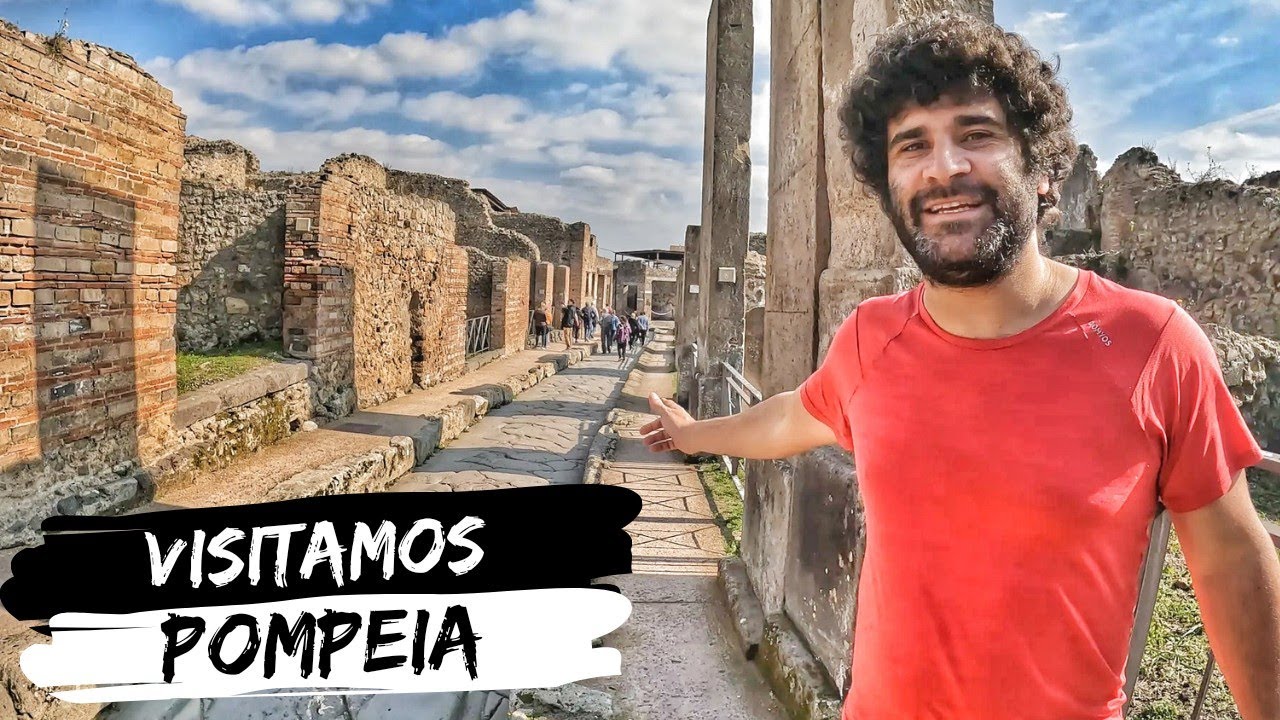
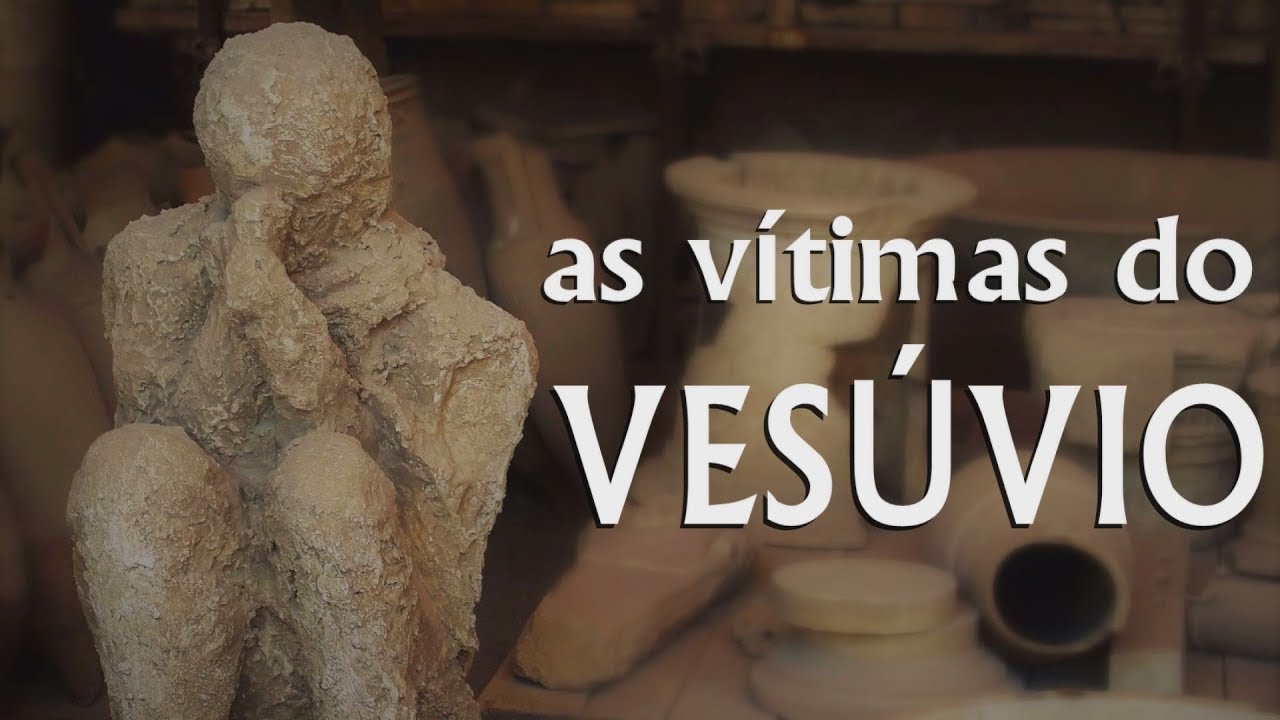
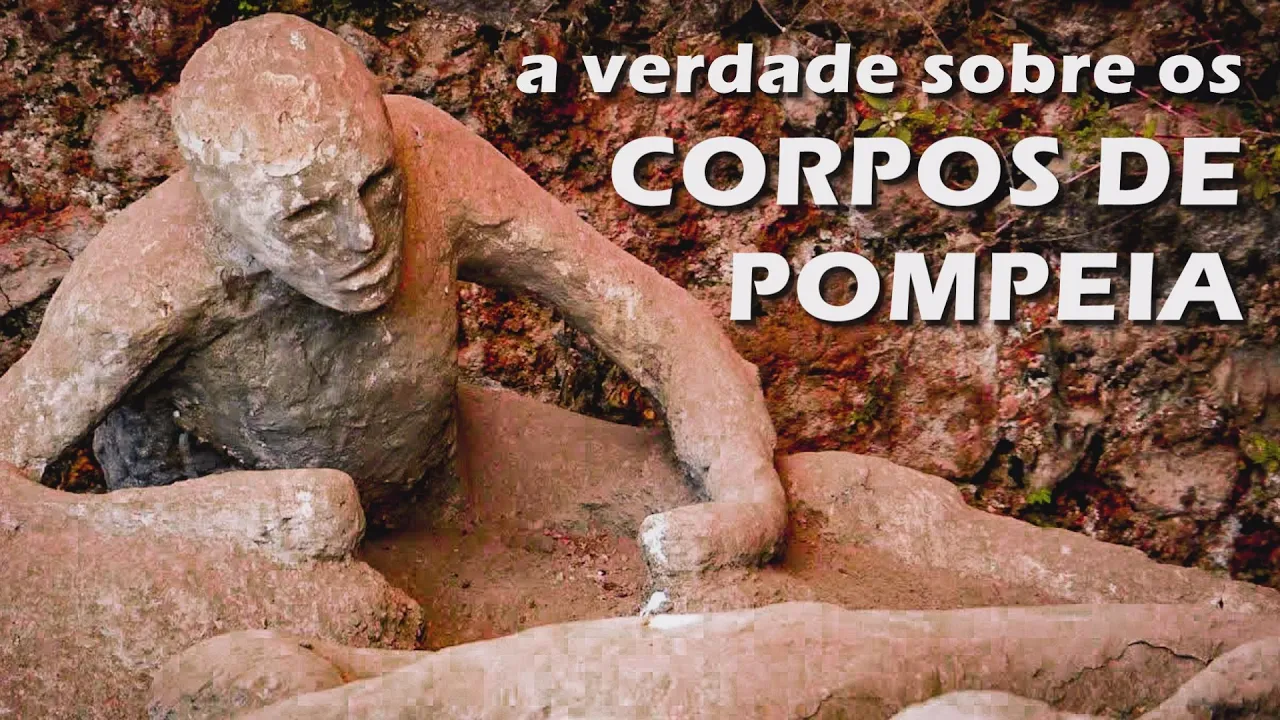
Many people say that the bodies in Pompeii are actually molds made of plaster. This is not true. It's very impressive to see all these bodies in very different positions.
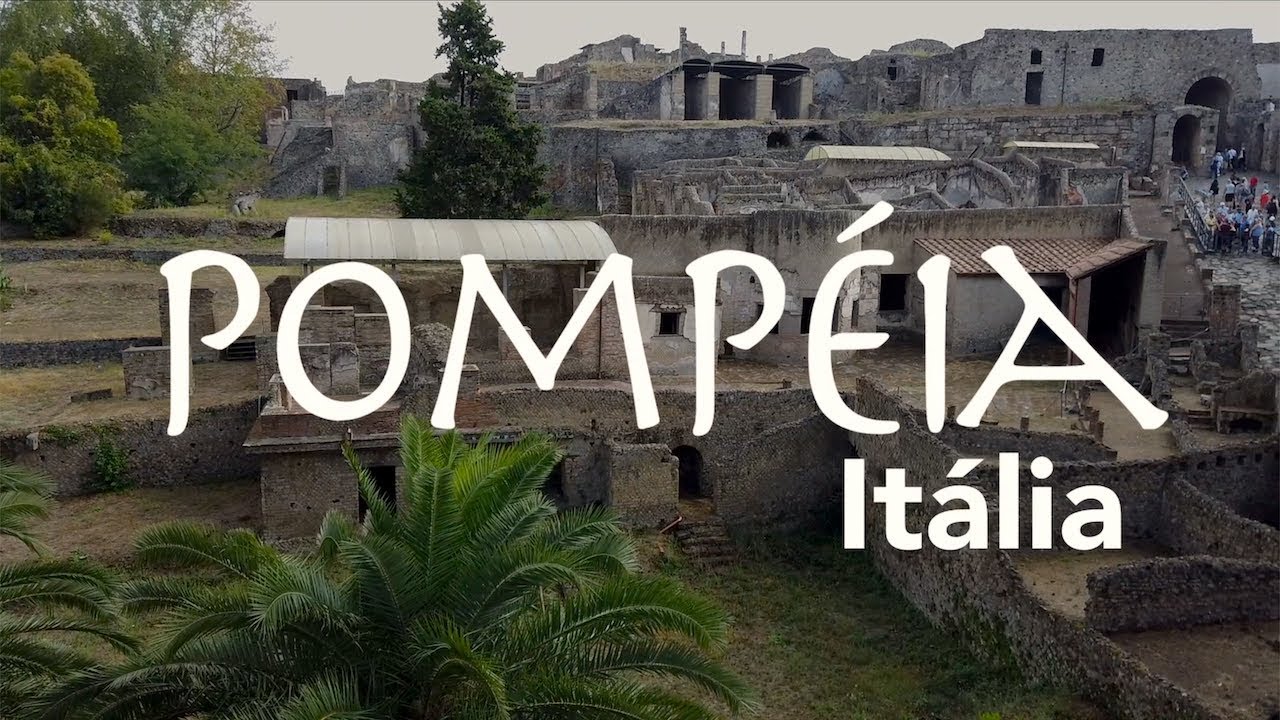
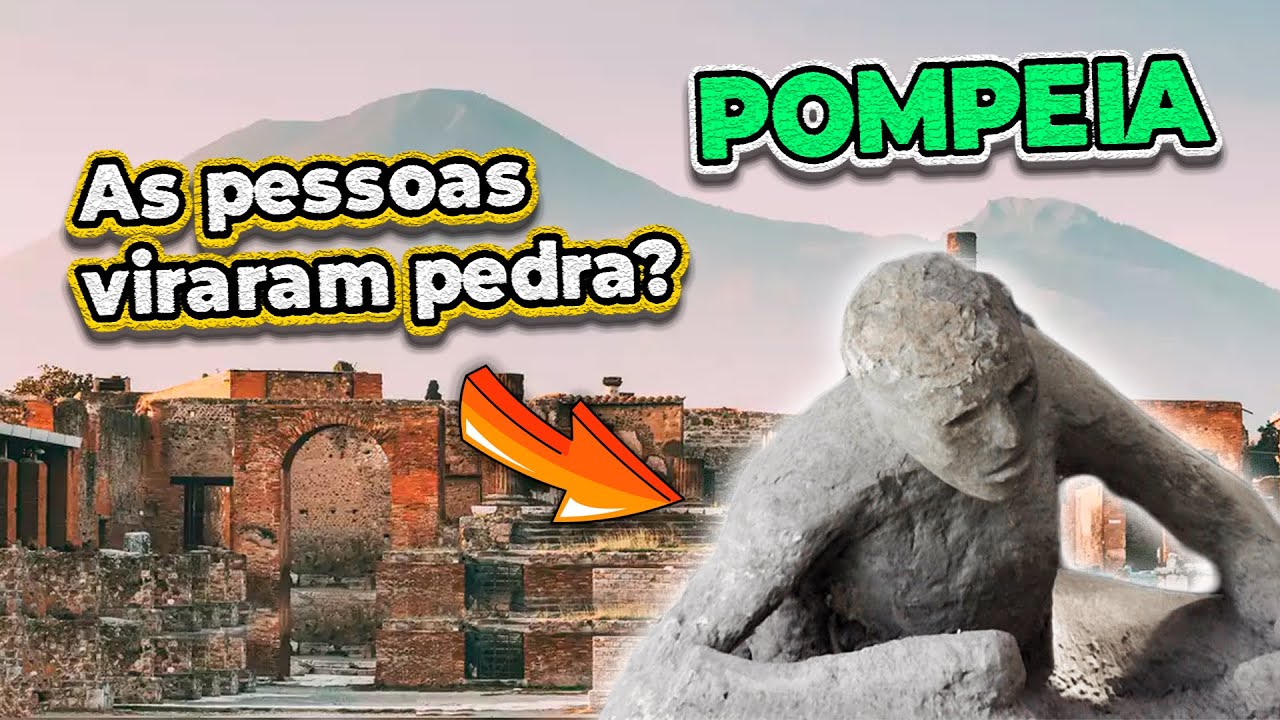
From the train window, a huge formation dominates the landscape. We are in southern Italy, in the Campania region, about twenty kilometers from Naples. Along the journey, a 1,281 high wall accompanies us.
But this is a different wall, incredibly scary when seen from above. There is a reason for that! Vesuvius is the only volcano in continental Europe that has erupted in the last 100 years.
The last time was in 1944. But these scenes here, were produced long before that. People and animals were turned into stones.
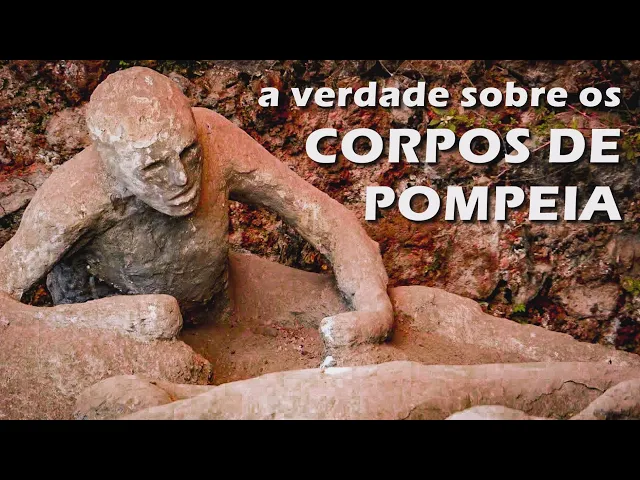
Unfortunately, this is exactly what it looks like, a petrified body that has been found. They say that this one belongs to a woman. The way she is lying on the floor, with her belly down, and there you can see a belt.
This means that she was a slave. The history of Pompeii is impressive, and you've seen it here at Viaje Por Conta. However, to celebrate our vlog number 150, we invite you to revisit Pompeii, to see unpublished images and understand, in detail, how the city remained lost for more than 1600 years.
Leave your like in this video, subscribe to the channel and share it with friends. Now, let’s learn more about the Vesuvius Victims. Southern Italy, near the coast, next to a port used by sailors is Pompeii.
The city developed rapdly over the centuries. But one detail sealed the fate of the people who lived there: in the year 79, a neighbor, the volcano Vesuvius, had one of the most catastrophic eruptions of all times. It spreaded a cloud of rocks, ash and smoke for more than 30 kilometers high, and released thermal energy equivalent to one hundred thousand atomic bombs.
The heat and toxic gases led to the instant death of thousands of people. Pompeii was buried under thick layers of sediment, and was forgotten in time. Only in 1748 excavations began to reveal the buildings and victims that Vesuvius froze for centuries.
One interesting piece of information is that the lava from Vesuvius went to the other side of the volcano, and the sediments, rocks and sand were thrown over Pompeii. So, in fact, this powder that covered the city was responsible for all the preservation. During four days, lava, dust, sediment and stones fell over the city.
It’s estimated that 13,000 people lived here in Pompeii at the time of the eruption, about 10,000 managed to escape, but between 3 and 4 thousand were killed by Vesuvius. It's very impressive to see all these bodies in very different positions. That’s because the gas was very toxic and killed in a few seconds.
They believe that in just 12 seconds people were dead. This is a picture of a man who was trying to protect his nose when the smoke and the toxic gas started to come. He obviously didn't have time to do anything.
There, it is a petrified dog. The position is because it was in chains. On the neck you can see the mark of a chain.
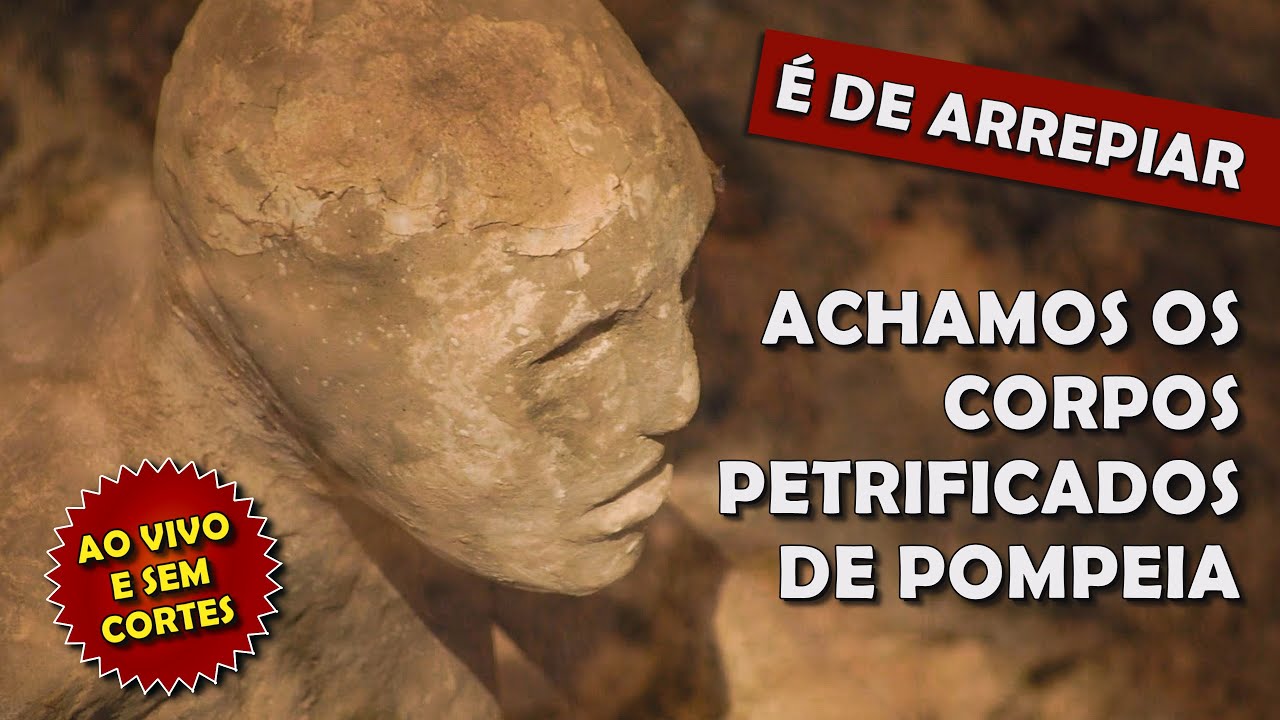
So, this position of the dog is because he was tied up and could not escape. This one is even more impressive, because it is the body of a baby, of a child. Also perfect, you can even see the expression.
There is a lot of reflex because the body is behind a glass. Here there is an example of the part that was not excavated. This is exactly how Pompeii was.
This mixture of stones, dust, rocks, sediments. . .
Here you see that they are still excavating. But imagine all of this covering everything. It may seem contradictory, but this toxic sediment that destroyed Pompeii was exactly what kept everything preserved for so long.
Underneath the ashes, colored walls and paintings were found almost intact. The sediment also adhered to the skin and clothes of those who died, which is why even the victims' expressions were frozen. Many people say that the corps in Pompeii and in the Archaeological Museum of Naples are plaster casts.
It is not true. Plaster was used, but in an ingenious preservation technique, responsible for eternizing the city's memory. See how it was.
During the excavations, the researchers identified several voids, empty spaces, under the layers of ash. They realized that these holes were the spaces left by the bodies that had already been decomposed. As the ashes stuck to people's clothes and skin, they created a shell, almost a cocoon.
Inside, there were just the mortal remains of the victims. If the surrounding sediment was removed, the shape would be lost. Then, the archaeologists decided to inject plaster into these voids and preserve the shape of the bodies.
As a result, we can see the victims' panic expressions very clearly. There are men, women, children, animals. .
. you can even identify who was tied up at the time of death. She was a slave.
And even knowing that what is inside that shell is not a whole body, all of this is far from being a simple mold. The bones and the dental arch, for example, are still there, and the exterior is the exact reflection of the suffering humans and animals went through when they died. Excavations in Pompeii are still going on.
From there down, everything is still buried. All you see here, still exists over there. Everything buried.
In the end of 2018, archaeologists found 3 horses. As there were also saddles, the researchers believe they were ready to leave the city when they were fatally hit by the volcano. What else can still be hidden in the city's ruins?
Well, about that, only the time can tell. . .
precisely the time, which destroyed and preserved Pompeii, will tell us!