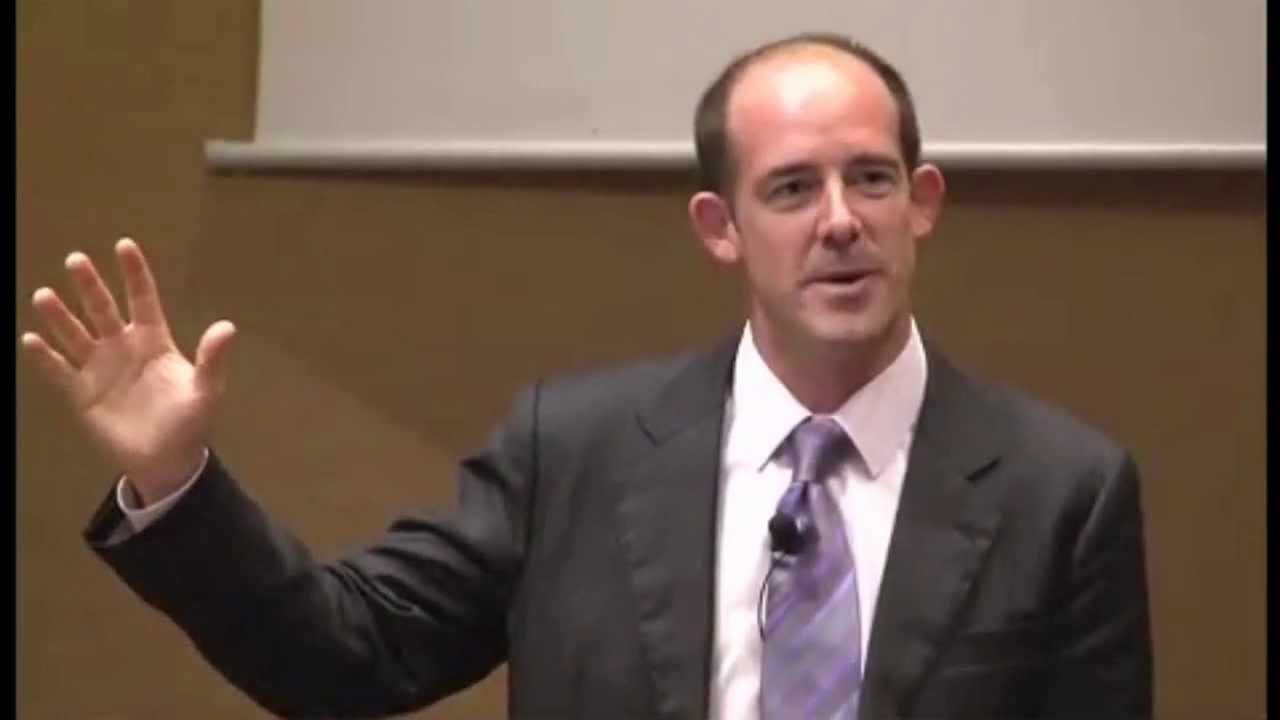
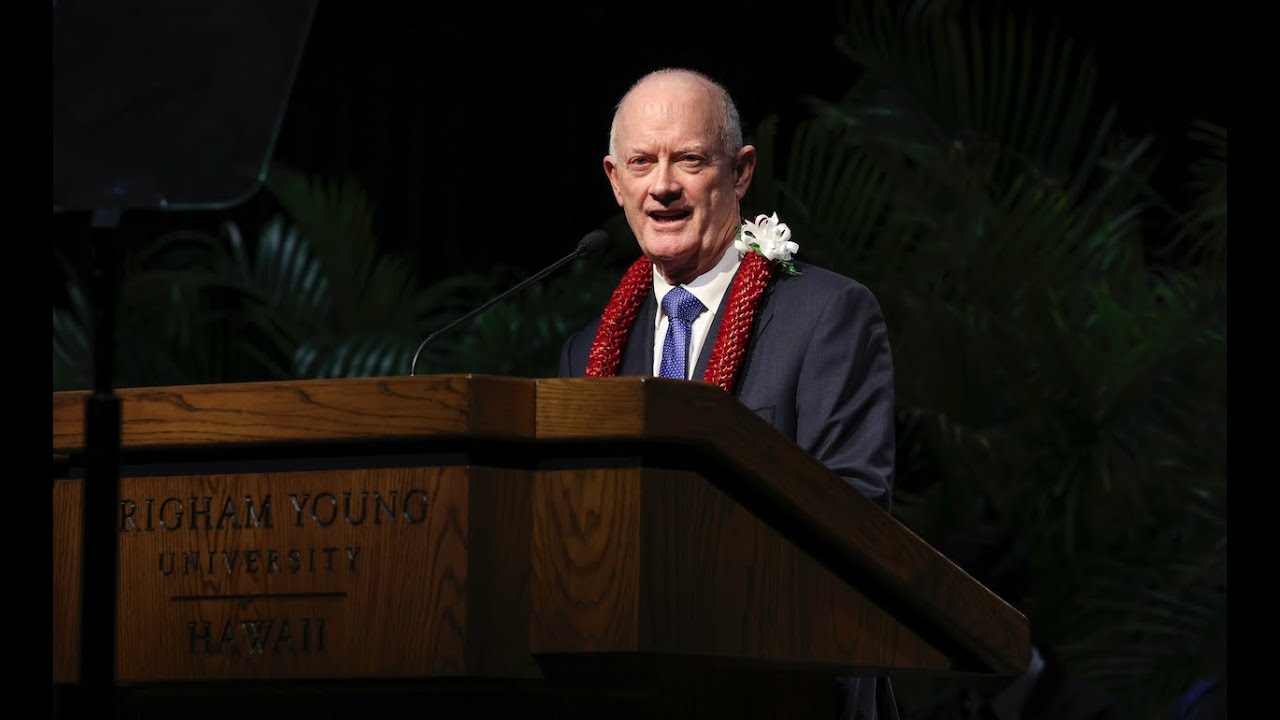
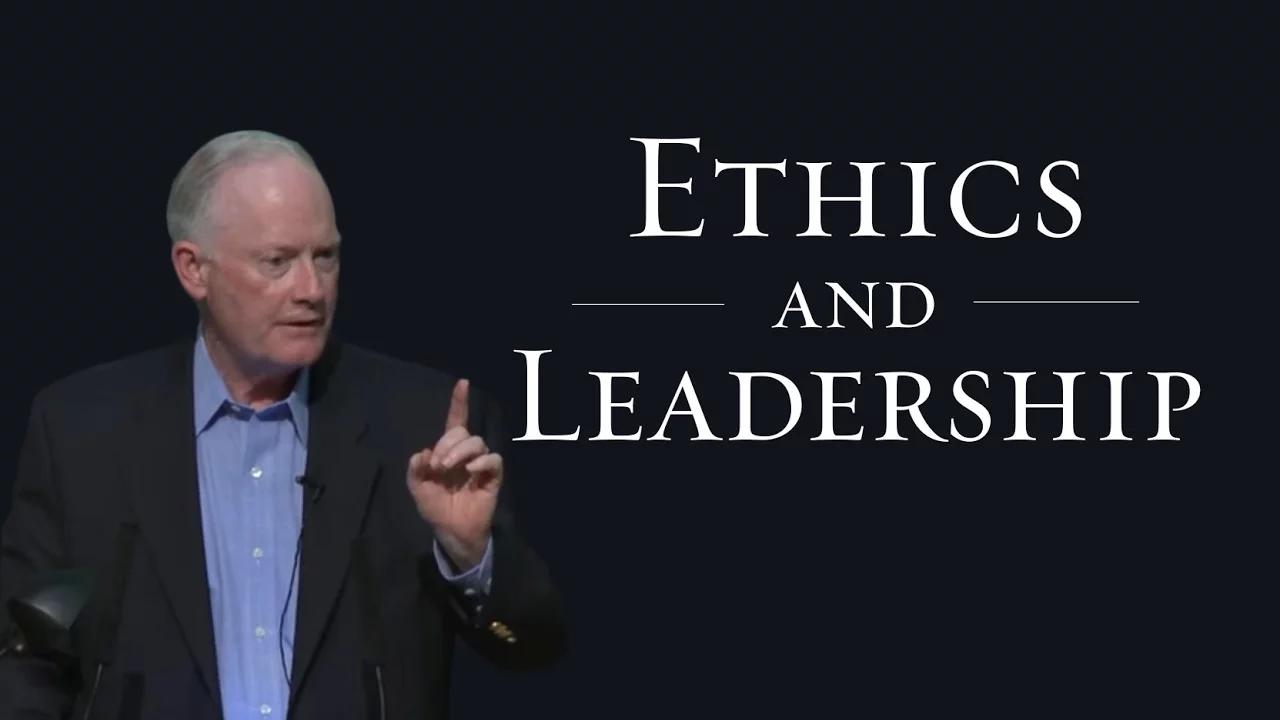
thank you it's uh it's really an honor to be here um I uh as Peter said we worked together for a long time I uh I think very highly of him so it was uh a double honor to be recognized uh in the university and also to have Peter uh want to uh do this so I'm grateful for that for that honor I do have a few things I'd like to say about responsible leadership but I find that most of them have been said by the people who' spoken before me um so we've had we've
been we've been really wellfed uh got great ideas uh I do have a couple things I would like to emphasize um the first one is that I think it's important for all of us who uh have any kind of responsibility to be a leader um and that includes uh pretty much everybody uh because I believe in leadership with a small all L that is leadership that exists and is important at every single level of society all the way down into individuals and families but also in organizations in Project teams and divisions in any kind of
group all the way to CEOs and even people who lead large uh parts of societies in every position of leadership leadership is always and everywhere a moral act always and everywhere a moral act because every leader takes the lives of other people in her or his hands and takes action in various ways that affect other people and it is either for their well-being to improve their lives and help them become more effective and more uh better off or it hurts them so it's always a moral act so that's the first observation the second observation is
that all of us whether you're in a school or not will teach other people about responsible leadership so all of you no it doesn't matter what you do all of you will teach responsible leadership whether you intend to or not this is what we came to at HBS we thought hard about what what should we do as an institution to develop leaders who go out and really make the world a better place not not rhetorically but actually make the world a better place what should we do as a school and we had to come to
grips with the issues that have been raised today about can you do that will have you can talk about it will have any effect and we decided that whether you choose to or not you will teach people about responsibility if you choose not to do it with intent you will do it inadvertently and you'll do it haphazardly and they will learn about responsibility from you but it won't be a happy lesson you will teach them that you do not care about it that it is not important part of being a leader and they will take
that and it will it will get into their hearts because responsibility is always about the heart and the mind now we've talked a lot about the heart today it's very important and you can I'm I'm a firm believer that people can change actually if you think about it for a little while you'll realize that people change all the time the issue is in what direction will people change how will people change in their lives I mean you think about soon and I were talking about this the other night we have several friends that we knew
long for long years and we've watched them over time and many of them today are very different than they were when we knew them very different and they didn't change immediately after we knew them they changed many years later they became different now we talked about it because many of them have been very very unhappy in their lives precisely because they changed in ways that fostered unhappiness they became selfish they became more interested in material things to the detriment of their families they became more consumed by power than by doing the responsible thing so we
watch this happen the evidence is clear people change the issue is how are they going to change in what direction and schools have a significant influence on how people think about themselves their especially Business Schools about their professional identity who are you what do you stand for as a human being and as a leader and so we chose at HBS to educate for responsibility and it's not easy it's kind of challenging I want you to because actually is full of paradoxes it's full of paradoxes and I mean we heard some of them tonight when Charles
was talking about Patagonia talking about uh an organization that seeks to that that that wasn't even founded in order to maximize any you know any kind of economic value and yet has created tremendous value it's kind of a paradox so how do you teach that well one way you do it is you try to help the faculty understand something about about these principles which actually Kim talked about them trying to teach the the principles in fact this goes back to Clay's Theory the theory that underlies what Kim talked about is not easy so I want
you to picture in your mind the Harvard Business School faculty okay so keep keep your like I don't know what your image of Harvard Business School is but your image probably understates the issue okay think of the Harvard Business School faculty all right AR raay in a room there's like 200 and something of them the most prestigious business school in the world populated by faculty of great International Renown okay all right so I'm in there I'm down in the bottom and I'm talking to these people all of whom got where they are by single-minded pursuit
of their own interest do you have the picture now and this is what I told them it's a paradox about responsibility this is what I told them I said all right this is what I believe if we together work in such a way that we are willing to invest in each other even if it causes us individually to sacrifice our own interest we will end up creating an organization that is so powerful in its influence and in its culture that individually we will end up better off than if we selfishly pursue our own interests it's
a paradox it's a paradox because you have to believe that if I take time you know if Peter shows up in my office and I'm working on a paper and I'm I'm trying to write and Peter appears in my office door and wants to talk to me I have to set that aside I have to believe that by setting this aside and spending time with Peter rather than my own work it will eventually create a culture that's very powerful and I will be better off someday only not this day right I mean that's exactly what
you do but believe that I believed it very strongly at uh at HBS and I believe it strongly now we saw it begin to happen one of the sweetest things that happened to me in my time at HBS was a letter I got uh it was a letter from one of my colleagues who is a absolutely brilliant Economist internationally renowned uh brilliant person uh who grew up in a country different from either this one or the one we were in where he saw uh people pursuing their own interests to the Max and he saw the
consequences of it and he learned that only the cynics survive only people who are ruthless and cynical survive so when I started talking about you know inves other people I'll be better off he just thought that was complete nonsense you're just kind of like you got to be kidding I have a Dean who is a complete naif you know just doesn't understand the real world at all but I got this very sweet letter from him at the when I left and he and he wrote me this long letter and he said you know when you
first talked about all this stuff I thought this is nonsense you this is crazy but as time went on he said I decided that I would experiment with it and so I began to behave the way you taught us and he said I have to tell you I I am a convert he said I now believe what you believe because I've practiced it and I've watched the change it's made in my life so it it it it's hard but it's very powerful responsibility the way we're talking about here is very powerful for exactly the reasons
that Kim talked about now I do have a couple of things I want to conclude with because responsibility while it's powerful is not easy to do it's not only about the heart I mean it's very much about the heart about what what do you stand for about who are you about your identity about your uh principles but it's also about the mind because you cannot be a responsible leader if you are ineffective if you don't know how to take action that's powerful and effective or you don't know how to Marshall others and organize and motivate
people so that they do the things that bring about responsibility I if you think about what Charles talked about today think about what it would take in a company to get a company to actually do the things he talked about I mean produce produce products that people like comp appealing to a particular segment of a market and yet build processes in that organization that effectively address those issues what does it take to get 300 companies to sign up to play a game that's not in their interest what what is that take it's more than heart
it's skill it's knowledge it's it's expertise it's it's the kinds of things we teach about in fact I think you can argue that the real the real um I was going to use the word magic I don't like that word uh it's not a good word for Magic the real I don't know power in this is to get people who have responsible hearts and very powerful minds William James I think developed the concept which has been deeply ingrained at HBS for a long time which is he he taught that what you want in leaders is
someone who's tough-minded but not hard-hearted so you want responsible hearts and you want strong powerful minds and you can see it um but there's there's another there's another um issue that I just like to share with you if you I'm use Charles's example um if you look at what he described you have a situation in which a company's actions its private actions have social consequences that are not that are not incorporated into the markets that it serves they're not they don't show up in market prices and therefore if they just behave in their private interest
they they'll ignore all of the consequences of their behavior but Patagonia chose not to do that they chose to recognize where they have influence that extends beyond the boundaries of the firm and then attempt to try to address that consequence that they have socially in a way that makes the people affected better off I think it's fair okay and that's that's we see that all the time I mean if you find firms that are trying to do this kind of stuff that's what they're doing but I would like to suggest there is a a way
to take that logic one step further it doesn't happen it doesn't work all the time but it's there's enough evidence that it works some of the time that it's worth making it part of a Leader's uh I would call it um consideration set if you will what do leaders think about it it ought to be in there so here's an here's I'll give you one example uh a leader that I uh have a lot of uh a lot of respect for is a man named Paul O'neal He was the CEO of Alcoa big Aluminum Company
uh oh you guys call it aluminium I think um is that right Dave yeah either either way it works anyway metal very nasty business to to make that metal a lot of mining a lot of smelting a lot of metal working it's very very dangerous when Paul o Neil became CE of Alcoa Alcoa regularly killed its own people and injured them on a regular basis but their safety record and their health record was superior to the industry they were in so given aluminum is dangerous they were less dangerous than most aluminum guys okay but they
still kill people a lot this had con consquences beyond the boundaries of the firm when you think about it you know you kill this worker what does that do to his family to the community to it's it's devastating and you injure people all the time they were injuring people now it was I don't want you get the feeling like there was you know in every plant every day somebody dies it's not though it did but you know occasionally during the year someone would die at Alcoa and that's that was standard accepted practice in the industry
well Paul came in he said I don't think that's right the only standard that is has any standing is zero so we are going to we are going to seek to have Zero fatalities and zero injuries incredibly difficult to do but the the the idea about taking it a little further than patagon is taking it is to say can we by searching in this space so this is a space in which there is failure in which there is destruction of value outside the firm by searching in that space can we find not only ways to
ameliorate the situation but can we find ways to increase value actually in both SE segments for the firm and for society cuz what happened in the O'Neal case is that they went after zero and he was dogged and he got a bunch of people convinced if you I mean he said how can you accept anything other than zero how can you say to a family come work for us and your probability of dying is only 04 today so it's unacceptable and he taught that and taught it and taught it what happened though was as they
pursued zero they began to discover things about their processes and about their systems and their information and communication and all sorts of things and over time it got lower and lower and lower and lower the safety record fewer and fewer people died less people were injured significantly fewer and alcoa's processes got better because they began to discover things about their processes they didn't know now someone could argue someone trained like Peter in economics which actually what was I was trained in would say well they should have discovered that already anyway these people who say that
they never ran a company they never played that game it's not that easy in fact what what I think happens is when you see failure in that way you see destruction of value in society it's a signal to the firm here is a potential zone of opportunity for us to explore and see can we find things that will add value in society but also add value in The Firm it's not going to happen all the time but it will be I think a powerful thing one last thought this is about Peter's systems there's a recent
paper by uh uh by Rebecca Henderson and uh one of her colleagues uh his name is kti r who argue that leaders who who are embedded in the kind of economic system we're all embedded in where you have private Enterprise and you have governments and you have uh kind of this mixed system that we have leaders in that world have a responsibility for the system that is there are times when it is Justified for private individuals to take action to preserve the the integrity and therefore the legitimacy of the system even if it causes some
short-term cost to their companies the example they use is accounting standards if accounting standards are manipulated by the participants and the participants actually are involved in setting the standards and then they use and then they because of their knowledge of the standards they can manipulate them to their advantage that will cause eventually the system to collapse because no one will have any faith in it and therefore what will happen is there'll be regulation and you know what happens when you get regulation you get corruption you get costs on the system and eventually it just starts
collapsing on itself now there's there's some by the way I I don't have time to explain this you this is actually what happened in Hitler's Germany I'll leave that with you you can reflect on okay so the the point I want to use an example that's not currently a huge problem it's a it's a mediumsized problem but it's going to get a lot bigger so to do that I want to describe to you a um a an episode that happened at a university unnamed not mine uh not Peter's not Clayton not Kims and not Charles
okay um student comes into a teacher teacher has in front of of her it's a woman in this case it's a professor she has a a paper this student wrote and the paper is covered with blue highlights because the professor has run the paper through a software program that searches the internet for PL the paper is littered with whole paragraphs lifted from sources on the internet the teacher shows the paper to the student and says what do you have to say and the student looks at her and he says I know says that is he
said I tried to get that blue ink out of the thing I couldn't figure out how to do it I know isn't that tough you know look I don't know what to do and she said no no you're missing the point said why she all this stuff is taken from other places it's not your work he looked at her with a blank stare and said so what so what and she said well it's pleasure he said so so what said you gave me an assignment I give you a paper what do you need what else
do you want what this and the student was serious okay students about 18 or 19 years old turned in a a paper basically lifted from the internet and thought thought that was fine the student had a moral code that basically said what's right for me is right I want you to think about that for a few minutes what's right for me so whatever makes my life better as according to me is Right morally right okay there's a whole generation of young people out there who have this code whole generation they're flooded with information their view
is you know well you have requirements think but they're sort of your thing and I have to meet them but I'm going to meet him however is best for me and all your rules I don't really care about your rules because they don't really apply to me so that's how I'm going to be now you think about what that would be like if that moral code that is in a lot of what I would call the rising generation in the world you take that moral code and imagine that's the code that is in the population
and that's the code that starts getting into the people who run organizations well I guarantee you if that happens the economy that you saw recently in the 20078 n period will feel like a cakewalk compared to what will happen if that code takes over okay so that's my prediction now that means everybody every leader every person with any interest in a healthy functioning growing economy hope that's all of us has a responsibility to counteract that moral code in whatever way you can whether you're a teacher a leader in a firm in a home wherever you
are in families in organizations wherever you need to you need to recognize when it pops up and you need to teach and it won't help you to start by teaching them about the Old Testament this will not be the most effective way to start okay you might get to the Old Testament at some point but it's not the most effective way to start you can start by helping them see that by having that point of view and that moral code they are headed to Sure personal disaster because they are because no one will trust them
no one will believe anything they say including the people they want to believe it think about it that code destroys Human Relationships destroys organizations destroys families it's a sure recipe for disaster because it's very shortsighted and uh you can start there by teaching them it's in their interest to learn to tell the truth it's in their interest to care about how other people feel it's in their interest to think about the consequences two or three steps down of their behavior to all of us have that responsibility it's a good example of being a responsible leader
is to teach the paradoxes so that people understand well I've gone on long enough it's grateful to be with you look forward to questions and hope we'll get some thank you