What if the thing your cat loves the most is something you've never done even once? Because here's the surprising truth. 98% of cat owners believe love is all about toys and treats.
Yet only 2% actually give their cats what matters the most. Let's uncover the 18 hidden things your cat secretly craves. And number 10, it's so unexpected your cat might love it more than anything you've ever given.
Let's begin. Number one, the name calling mistake. That's training them to ignore you.
Every time you call your cat's name, you're accidentally teaching them to run away, and you have no idea why. Here's the pattern most owners fall into. You call fluffy when it's vet time.
Fluffy when it's nail trimming time. Fluffy when you need to put them in the carrier. Their name becomes a warning signal for bad things.
So eventually their brain makes a simple connection. My name equals something I hate. And they stop coming.
They're not being stubborn. They're being smart. Here's how to fix this starting today.
Only call their name for positive associations, treats, play, gentle pets. That's it. For negative things like vet visits, use a different sound or phrase they don't recognize yet.
And here's the pro move. Practice name calling when you don't need anything. Just say their name.
When they look or come, give them something amazing, a treat, a quick play session, then walk away. You're rewiring their brain. My name equals good surprises.
Do this 20 times this week and watch what happens. Suddenly, they'll come running when you call because they actually want to, not because they have to. Number two, you're accidentally teaching them to fail.
Every single day, you're telling your cat they're not good enough, and you don't even know it. Watch what happens during playtime. You dangle the toy, they chase it, they stalk it with those laser focused eyes, and right when they're about to catch it, you pull it away again and again and again.
You think you're playing, but to your cat, you're teaching them a brutal lesson. No matter how hard you try, you'll never succeed. Now imagine living that way.
Where every hunt, every instinct, every attempt ends in failure. That's not play. That's torture.
Here's the fix. And it's so simple it'll make you mad you didn't know it sooner. Let them win.
Not every time, but at least three, four times per session. Let them catch it, bite it, kick it with those back legs. Give them a treat right after.
Close the loop. Hunt, catch, eat, rest. Because when you do this, something magical happens.
That frustrated, bityy 3:00 a. m. Zooie cat, they transform.
They become calm, confident, complete. Number three, the one choice you're stealing from them every single day. How many sleeping spots does your cat have?
If you said one, we need to talk. Because here's what's really happening. Your cat doesn't just sleep.
They regulate their emotions through where they choose to rest. A sunny spot means confidence. A hidden cave means vulnerability.
A high perch means control. A spot near you means trust. But when you only give them one bed, no matter how expensive or cozy, you're forcing them into one emotional state all day long.
Imagine if someone told you you can only feel one emotion today. Choose now. That's what you're doing to your cat.
Here's the game changer. Create at least three distinct sleeping zones. A cave bed for safety, a window perch for observation, a soft blanket near where you sit for connection.
Let them choose based on how they feel and watch what happens. They'll start moving between them throughout the day. And with each move, they're telling you exactly what they need in that moment.
You just have to pay attention. Number four, the shirt trick that stops separation anxiety. What if I told you your cat has been searching for you every single time you leave?
And there's been a way to comfort them this entire time. Here's what blew my mind. Cats don't just recognize your face.
They memorize your scent on a molecular level. Your smell is their safety net, their anchor, their proof that you're real. So, when you leave for work, for errands, for hours at a time, your cat doesn't just miss you.
They lose their emotional GPS. But there's a simple hack that completely changed this for thousands of cats. Take a shirt you've worn, not washed, the one that smells like your skin, your deodorant, your body.
Place it in their favorite sleeping spot. What happens next is almost supernatural. Their stress hormones drop.
Their breathing slows. They curl up on it like it's you because in their mind it is. This works especially for rescue cats, anxious cats, or any cat that seems distant.
You're giving them permission to love you even when you're gone. Number five, the petting technique that finally makes sense to your cat. You've been petting your cat wrong your entire life, and they've been too polite to tell you.
Here's what most people do. They see a cute cat and immediately go for the head with full palm pressure, fast strokes, thinking, "I'm showing love. " But your cat is thinking, "Why is this human attacking me?
" Because cats don't pet each other. They groom with their tongues on small, specific areas with controlled pressure. Here's the game changer.
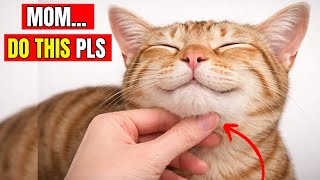
Use just two fingers, your pointer and middle finger. Start at the base of their ears where the jaw meets the skull with tiny circular motions, slow and deliberate, like a massage. Watch their reaction closely.
If they push into your fingers, you found the gold. Then move to their cheeks where those scent glands are. Same technique.
Never go straight for the belly unless they're fully offering it. And even then, test with one finger first. The secret petting isn't about what you want to touch.
It's about what they want touched. Once you make this shift, that grumpy cat who swats everyone will suddenly become the cat who can't get enough of you. Number six, the morning ritual that shapes their entire day.
Skip breakfast once, you're hungry. Your cat skips their morning routine with you. Their whole world tilts.
Here's what most people don't realize. Cats aren't just creatures of habit. They're emotional architects.
The first five minutes of their day sets their nervous system for the next 24 hours. So, when you usually greet them, feed them, give them that little forehead scratch, and then one random Tuesday, you don't. They don't think, "Oh, they're busy.
" They think, "Something's wrong. Am I still safe? " This isn't dramatic.
This is how their brains are wired. Here's the move. Pick one small morning gesture and make it sacred.
A soft, "Good morning, buddy. " A slow blink, a gentle chin scratch. It takes 5 seconds, but to your cat, it's a promise.
Nothing's changed. You're still mine. I'm still yours.
Number seven, the strange ritual that unlocks your cat's deepest memory. All right, here it is. The one thing almost nobody does.
The thing your cat has been craving since the day they were born. You need a clean, soft bristled toothbrush and a little room temperature water. I know, sounds insane, but stay with me.
When you gently brush your cat's forehead, their cheeks behind their ears with a damp toothbrush, you're doing something profound. You're mimicking the exact feeling of their mother grooming them as a kitten. The shape of the bristles, the dampness, the rhythm.
It sends a signal straight to their nervous system. You're safe. You're loved.
You're home. For rescue cats, for anxious cats, for any cat that seems emotionally distant, this is the key that unlocks them. Here's how to do it.
Use slow, gentle strokes. Watch their reaction. If they start closing their eyes, purring, leaning into the brush, you've just accessed a memory they didn't even know they still had.
This isn't just grooming. This is emotional time travel. You're taking them back to the safest moment of their entire life.
Try this tonight and watch your cat transform in front of your eyes. Number eight, the secret conversation happening right in front of you. Your cat is talking to you right now, but you keep ignoring them.
Every time your cat locks eyes with you from across the room and gives you a slow, lazy blink, they're saying three words. I trust you. But here's the devastating part.
When you don't blink back, when you just stare or look away quickly, your cat hears silence. And silence to a cat feels like rejection. This is the most intimate form of cat communication.
It's how mothers calm their kittens. It's how bonded cats show affection. It's their version of I love you.
So, here's what you do. And I promise this will change your relationship overnight. When your cat slow blinks at you, stop everything.
Look at them. Close your eyes slowly. Hold for a second.
Then open them slowly. Then look away calmly. Do this once and you'll probably see their ears perk up.
Maybe another blink back. Do this consistently and your cat will start seeking you out more. Sitting closer, trusting deeper because you finally learned how to say, "I love you," in their language.
Number nine, the privacy you're violating every single day. Let me ask you something personal. How would you feel if every time you went to the bathroom, someone stood there and watched you?
That's your cat's reality. Cats are ambush predators, but they're also prey animals. And in the wild, elimination is the most vulnerable moment of their entire day.
That's when predators attack. That's when they die. So, when you hover near the litter box, talk to them while they're in there, or clean it the second they step out, you're triggering ancient survival panic.
And that panic, it doesn't just disappear. It builds. and eventually it explodes in the form of accidents, a refusal to use the box, or stress peeing on your bed.
Here's the rule. When they're in the box, pretend they don't exist. Give them space.
Keep the box clean, but don't make a show of it every single time. Let their scent linger a little. It tells them, "This is my space.
I'm safe here. " Place the box somewhere private, quiet, away from foot traffic or loud appliances. Because when your cat feels safe doing their business, they feel safe being themselves around you.
Number 10, the food ritual. Your cat is begging you to understand. Your cat isn't picky.
You're just feeding them like they're a dog, and it's breaking their natural instinct. Here's what changed everything for me. In the wild, cats don't eat twice a day from a giant bowl.
They hunt 10 to 20 small prey throughout the day. A mouse here, a bird there, tiny meals constantly. So when you dump a huge portion twice daily and walk away, their brain screams, "This isn't right.
" That's why they pick at food, walk away, come back, meow for more, even when the bowl is full. They're not being dramatic. They're being cats.
Here's the fix. Split their daily food into four to six tiny portions throughout the day. Use puzzle feeders to mimic hunting.
Hide small amounts in different spots. Make them work just a little for each meal. And here's the kicker.
Feed them at different times, not a rigid schedule because prey doesn't show up on a timer. When you do this, something incredible happens. Their anxiety drops.
their weight stabilizes and that food obsessed behavior, it vanishes. You're not just feeding them anymore. You're honoring their biology.
Number 11, the window access that's destroying their mental health. Right now, your cat is living in sensory deprivation and you don't even see it. Here's what most owners miss.
Cats are visual hunters. Their entire world revolves around watching, tracking, predicting movement. But when you keep your blinds closed all day, cover windows with furniture, or have zero viewing access, you're literally blinding them to the only TV channel they care about: nature.
That squirrel running by, that bird landing on a branch, that leaf blowing across the yard. These aren't just entertainment. They're mental stimulation.
their brain desperately needs. Without it, they become what vets call environmentally under stimulated, which shows up as depression, aggression, or destructive behavior. Here's what to do.
Give them at least one window with a clear view and a comfortable perch right at sill level. Leave the blinds cracked during the day. Add a bird feeder outside if possible.
Instant Cat TV. And here's the magic part. Within days, you'll notice them spending hours just watching.
They're not bored. They're engaged. Their pupils dilate.
Their tail twitches. They're hunting with their eyes. That's a happy, mentally healthy cat.
Number 12, the play timing that's sabotaging their sleep cycle. You're playing with your cat at the worst possible time and it's destroying both your sleep and theirs. Most owners play whenever it's convenient.
Maybe mid-afternoon, maybe after dinner. But here's what science shows. Cats are kpuscular, meaning they're biologically wired to hunt at dawn and dusk.
That's when their prey is most active. That's when their energy peaks. So, when you play with them at random times and then wonder why they're doing parkour on your face at 3:00 a.
m. , it's because you never satisfied their hunting instinct when it actually mattered. Here's the breakthrough.
Play with them hard. I mean, really hard. Right before your bedtime.
15 to 20 minutes of intense hunting play. Let them catch the toy multiple times. Immediately after, give them a small meal or treat.
This mimics the natural cycle. Hunt, catch, eat, groom, sleep. Their body knows this rhythm on a cellular level.
Do this consistently for one week, and I promise you those 3:00 a. m. Zooies disappear.
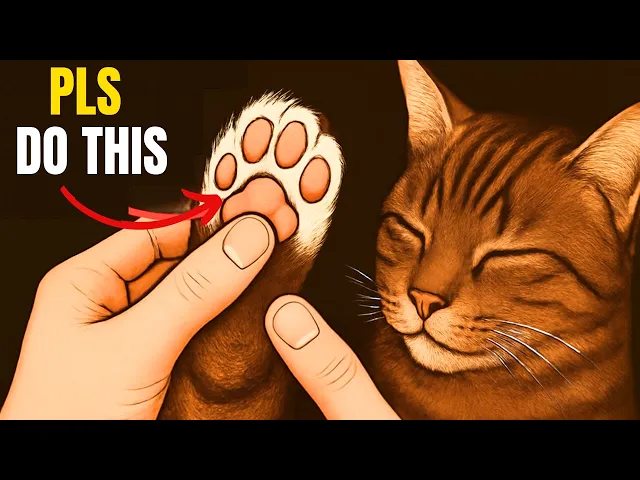
They'll sleep when you sleep because you finally aligned with their biology instead of fighting it. Number 13, the paw touch that unlocks ultimate trust. Your cat's paws hold a secret that 99% of owners never discover, and it's the fastest way to their heart.
Here's what's happening. A cat's paws are their most vulnerable body part, packed with sensitive nerve endings they use to hunt, climb, and survive. In the wild, exposing their paws means exposing their ability to escape predators.
So, when your cat lets you touch their paws, they're not just being cute. They're showing you the deepest level of trust possible. But here's where most people fail.
They grab the paws too quickly, squeeze too hard, or don't read the signals that the cat is ready. And once you violate that trust, it can take months to earn it back. Here's the technique that creates magic.
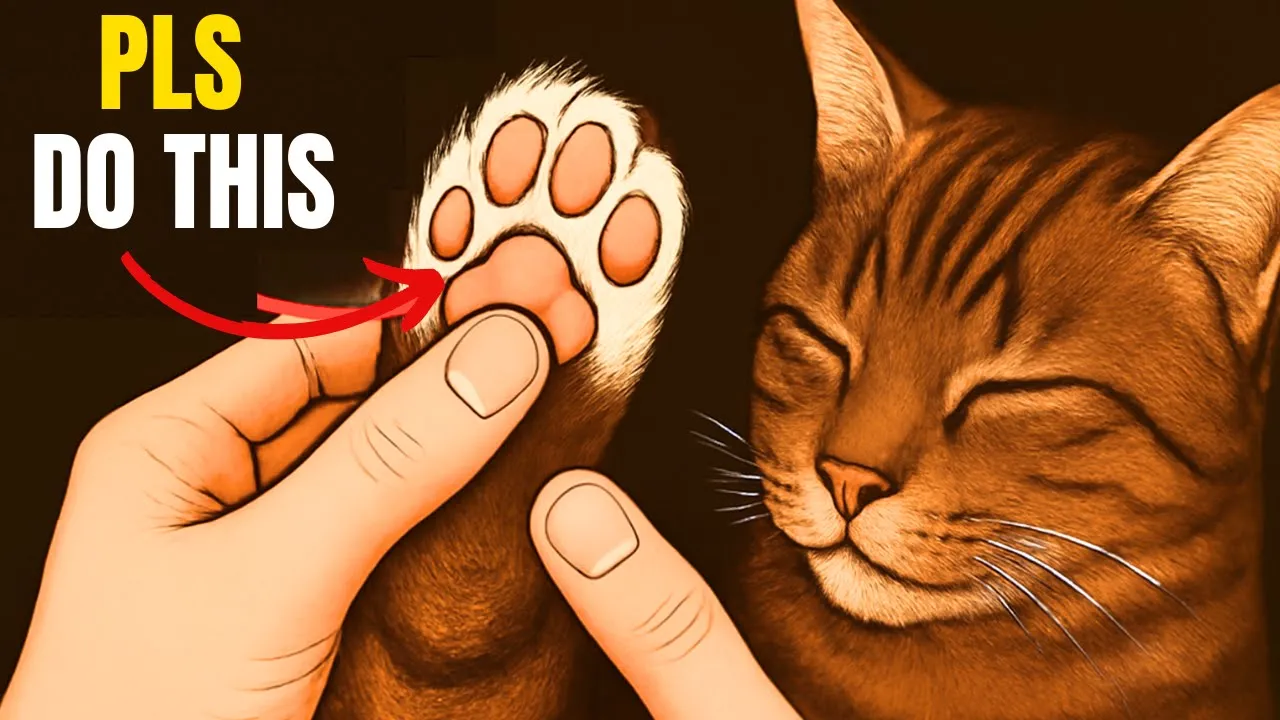
Start by gently touching the top of their paw while they're relaxed. Not the pads yet, just the fur on top. Use one finger with feather-like pressure.
If they don't pull away, slowly graduate to soft circular rubs on the top. Watch their face closely. If their eyes close or they start purring, you're in.
Only then, and I mean only then, can you try a gentle pad massage with your thumb, tiny circles like you're giving them a spa treatment. What happens next is remarkable. Their entire body relaxes.
Some cats will extend their claws in and out in pure bliss. That's called making biscuits, and it means they feel as safe as they did nursing as a kitten. Do this for 30 seconds a day, and your bond will deepen faster than any other technique.
You're not just touching their paws. You're telling them, "I'll protect your most vulnerable part. You're completely safe with me.
" Number 14, the sound environment that's triggering them. daily. Your home sounds normal to you, but to your cat, it's a war zone, and they're living in constant low-level panic.
Here's what you need to understand. Cats hear frequencies up to $64,000 hertz, while humans only hear up to 20,000 hertz. That means your TV, your phone notifications, your appliances, they're all creating high-pitched sounds you can't even detect.
But your cat hears as piercing, uncomfortable noise. That ceiling fan has a hum. Your refrigerator has a frequency.
Your Wi-Fi router emits a sound. And your cat, they can't escape it. This is called acoustic stress.
And it's why some cats seem jumpy, hide often, or have unexplained anxiety. Here's what to do. Identify the noisiest areas of your home and keep food, water, and sleeping spots far away from them.
Never put their litter box near the washing machine or furnace. Give them access to the quietest room in your house, usually a bedroom or closet. And here's the surprising part.
Playing soft classical music or cat specific calming music actually helps because it masks those high frequency sounds. Within days of reducing their acoustic stress, you'll see them relax in places they use to avoid. Number 15, the water mistake.
That's quietly dehydrating them. Your cat is chronically dehydrated right now and your water bowl is the reason why. Here's what nobody tells you.
Cats evolved from desert ancestors who got most of their moisture from prey. They have a naturally low thirst drive, meaning by the time they feel thirsty, they're already dehydrated. And here's where it gets worse.
Most cats hate drinking from a bowl right next to their food because in the wild, water near a kill site is often contaminated. So, that convenient food and water station you set up, it's actually working against their instincts. Here's the fix, and it's weirdly simple.
Place multiple water sources throughout your home, far away from food. Use wide, shallow bowls so their whiskers don't touch the sides. That's called whisker fatigue, and it's genuinely uncomfortable for them.
Better yet, get a cat water fountain because moving water signals fresh and safe to their brain. And here's the magic trick. Add a tiny bit of tuna water or bone broth to one of the bowls, just enough to make it interesting.
When you do this, their water intake can double or triple. You're preventing kidney disease, urinary issues, and a host of problems that most vets say start with simple dehydration. Number 16, the scent layering your cat desperately needs.
Your home smells fine to you, but to your cat, it's an identity crisis, and it's causing silent anxiety. Here's the truth. Cats navigate their world through scent, and they need their smell mixed with yours in shared spaces to feel secure.
When you deep clean everything, wash all their blankets, scrub their favorite sleeping spots with strong detergents, you're erasing their scent markers and telling them you don't belong here anymore. That's why cats often act weird right after cleaning day. They're frantically trying to remark everything.
Here's what changed the game for me. Stop washing their bedding so frequently. Once a month is plenty, unless it's actually dirty.
When you do wash it, put one unwashed piece of their fabric in with the clean stuff so their scent transfers back. Use unscented detergent only. And here's the pro move.
Rub a clean sock on their cheeks where those scent glands are. Then wipe that sock on corners of furniture at cat height throughout your home. You're helping them scent mark without them having to stress about it.
When your home smells like a blend of you and them, their cortisol levels drop and they finally feel like they're home, not just visiting. Number 17, the alone time training that saves your relationship. You're accidentally creating separation anxiety by loving your cat too much, and it's going to break both your hearts.
Here's what happens. You adopt a cat. You're excited.
You give them constant attention every moment you're home. They learn human home equals non-stop interaction. Then reality hits.
You go back to work. You get busy. You have a life.
Suddenly, you're gone 8 hours a day and your cat's world collapses. They didn't learn how to be alone because you never taught them. This shows up as destructive behavior, excessive meowing or depression.
Here's the fix. And it sounds counterintuitive. Even when you're home, create scheduled alone time.
Go into another room. Close the door for 15 minutes. Let them experience your absence in small, safe doses while you're still in the house.
Gradually increase it. Leave treats or puzzle feeders for them to find when you're gone. You're teaching them that your absence is temporary, predictable, and not scary.
And here's what shocked me. Cats trained this way are actually more affectionate when you're together because they're not constantly anxious about when you'll disappear next. You're not neglecting them.
You're building their emotional resilience. Number 18. They don't want your attention.
They want your permission. Here's what nobody tells you. When your cat rubs against your legs, they're not begging for attention.
They're performing a ceremony, a sacred ritual that goes back thousands of years. They're literally asking, "Can I belong to you? " But here's where it gets heartbreaking.
Every time you walk away too quickly, check your phone or just give them a quick pat without acknowledging what they're really doing. You're telling them, "No, you don't belong. " And cats, they remember rejection.
They just stop trying. So, here's what changed everything for me. Next time your cat rubs on you, stop everything.
Lean down. Offer your forehead to them. Let them complete the ritual.
Because in that moment, you're not just being nice. You're accepting them into your family in the only language they understand. And trust me, once you start doing this, you'll notice something shift in their eyes, like they finally believe you when you say you love them.
So, there it is. 18 things your cat has been trying to tell you, and you finally have the translation guide. These aren't just tips.
They're the language your cat speaks. And you've been misharing it your whole life. Here's my challenge to you.
Pick three of these, just three, and commit to them for one week. Watch what happens. Watch how your cat looks at you differently.
How they seek you out more. how they finally seem comfortable in their own skin. Because the truth is, your cat doesn't need you to be perfect.
They just need you to try to understand them. And if this video helped you see your cat in a completely new way, do me a favor. Share it with one person who's struggling with their cat, someone who thinks their cat doesn't love them, because after watching this, they'll finally understand.
Their cat has been loving them all along. They just didn't know how to see it. I'll catch you in the next one.