whatever the language of your choice may be if you have ever studied the biblical text you may have noticed that God has multiple names in it contextually we could say that he is an entity defined by a plurality of words however epistemologically speaking not all his names are equal and each name holds information which can only be retrieved by accessing the words presented as they are without any modification today we will achieve this through a systematic semantic analysis including language rendition criteria within all transl ation Spectra hello Noble ones welcome back to my channel this
is the Metatron speaking on this series we explore translate and discuss the Bible as an ancient text trying to seek the most respectful literal and coherent translation of the original Hebrew word without any filters attached methodologically speaking we will apply an empirical translation formula namely we will try to correlate with the ancient authors we build a tether as we we present and examine the raw data through the principles in Paradigm of Western theory and practice of translation while aiming at a high level of semantic Precision after showing you the literal words we then apply period
cultural contextualization hopefully reaching the best translation outcome possible I am not here to change what you think but to build upon it to what I offer you add whatever you feel is right based on your own knowledge and or faith and to everyone out there let me remind you that atheists and theists are all welcome here why is it important to present the words as they are well primarily this is a secular video therefore I only talk about language coherence so from a secular standpoint this is a matter of intellectual honesty transparency and translation Integrity
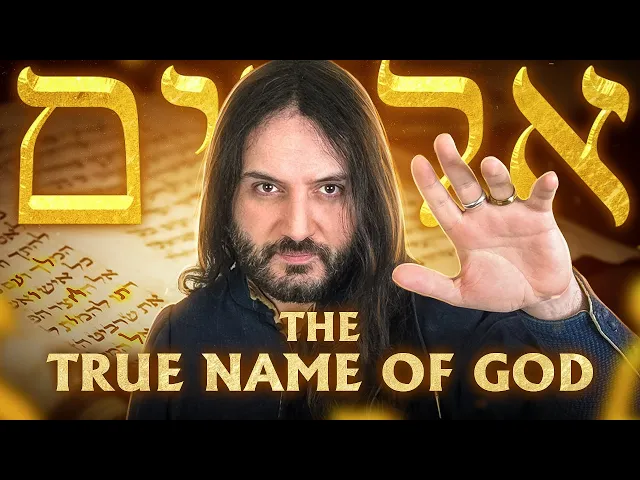
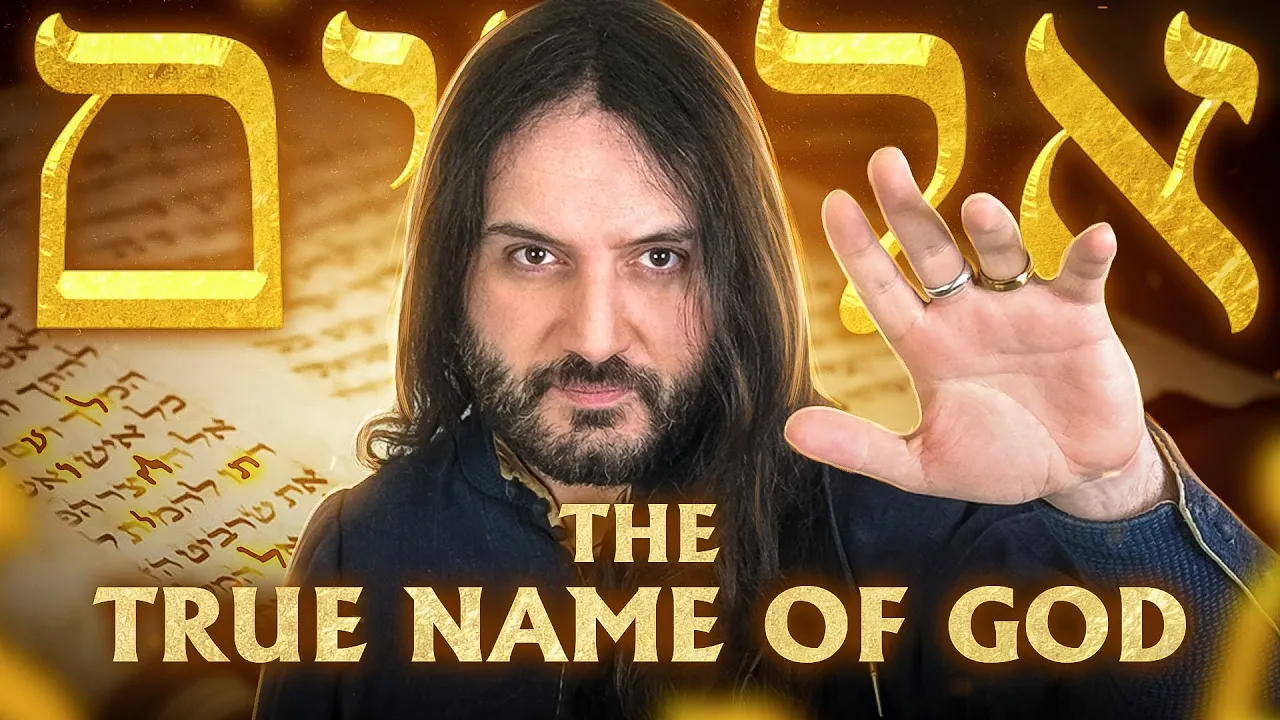
in other words if you change anything from a translated text or work you have to justify each change now from a religious standpoint specifically for Christians check out these passages with all that being established let's prepare to Deep [Music] dive appearing over 2,500 times in the Bible and mostly found in narrative passages Elohim is not only the very first name for God we are given but it's also Central core word within the ancient text it first appears in Genesis 1 verse1 in the beginning God created the Heaven and the Earth Elohim even though it's translated
as God the original word Elohim is grammatically a plural and is often preceded by the article which disappears in Translation let me demonstrate jumping into Interlinear so the Elohim or the gods will be a grammatically accurate literal translation taking into consideration the numerical plurality of the word ending which usually defines masculine plural to make that even more complex take into consideration the fact that the word Elohim is normally followed by both verbs in singular form and verbs in plural form etymologically speaking so when it comes to the origins and evolution of this word semantic field
through time there is a very likely connection between the plural Elohim and the singulars L and elah however the etimology of the word Elohim is believed to be prehistoric as a result the Gathering of information is limited at best but completely out of reach more often than not the word eloha appears more than 70 times in the Old Testament mostly in Poetic passages it could originate from a root with the meaning of terrify or to be afraid the word L which may structurally function as a stem is the one that can be more consistently translated
as God singular we use the word L many times in our daily lives without even realizing it see for example the ending of angelic inspired names such as Michael Mikel Raphael Gabriel uel Etc moreover you may be surprised that we also find it in the entertainment industry and it has been there for decades see Superman's name call L shouldn't surprise us that they being with Incredible Supernatural Powers coming from the sky has l in his name considering the fact that the writers and creators of Superman are in fact Jews so is Elohim plural or singular
well I'll address this section in details on its own part on Section six but let me say this linguistically speaking it is rather complex so get ready for it all in all contextual usage gives us access to valuable data for qualitative assessment of translation in all available able corpora professional rendering of language synthesis includes poetic balance suitability to genre arrangement of sections poetic sequence text analysis literary devices thus the criteria to choose designations and to Interchange them for Elohim must be cultural and social linguistic before being doctrinal on this word appears more than 6,800 times
in the Bible it is referred to as the Tet grammaton a Greek term meaning the four letters now the reason why that number may seem surprising and you don't feel like You' have seen it that many times in the Bible is because usually it's rendered in Translation as God or the Lord and when it comes to the Italian translation God or the Eternal now the Jewish version of the Bible has it of course but the Jews don't read it and substitute it with Adonai a plural term which means Lords I'll get to that in a
minute now just like we did with the word Elohim after knowing the number of times that it appears in the Bible we want to know when is the first time that this word ever appeared in the biblical text well to answer that you'll have to get ready to some real investigative work probably the best part of this video you're going to love it but before I can show you that I need to tell you a thing or two about the four letters themselves and give you a little background on Semitic languages the Hebrew language is
like all Semitic languages in its original form was written without vowel pointing so only consonants and you would fill in the vowels when reading this is true of all Western languages before the Greeks developed an alphabet that included vowels hence the entirety of the Old Testament was initially not vocalized now there are some letters within the Hebrew alphabet that do function as vowel indicators or mat leonis but for all intents and purposes no explicit vocalization the Bible is an enigma As Time progressed naturally there were difficulties maintaining the proper pronunciation of this which eventually was
obscured by this use particularly after the Babylonian exile in the 6th Century BC and even more so after the 3dr century BC when the Jews stopped using the name no one at any time save the priest in the Holy Temple of Jerusalem could pronounce this word traditionally he would read it in the temple once a day during the Priestly benediction that is found on chapter 6 of number then on the day of the atonement the most solemn of the Jewish religious holidays the high priest would pronounce the Teta grammaton 10 times after the Imperial Roman
legion leio deima fretensis led by the Roman general tius destroyed Jerusalem one of the last strongholds of the rebellion in The Siege in 70 AD the second temple was destroyed and the exact vocalization became an item of debate see section four on this video for further details if you go Google that question you'll be told that the first time that this word or this name appears in the Bible is in Exodus 143 this is when God speaks to Moses still is this really the first time that this word appeared in the biblical text and no
one knew it or even used it before well the answer to this question may be found in the four letters themselves check this out the Tet Graton is made of four Hebrew letters yod he VAV hey in Jewish gatria a numerological system by which Hebrew letters correspond to numbers the numerical values of the letters of the T grammaton are indicated as 105 65 when added together their sum equals 26 now stay with me let's apply these numbers 4 and 26 to the Bible as we ask the question when was the first time that appears in
the text well what's the first book in the Bible the Book of Genesis so Genesis 4: 26 well it so happens that chapter 4 of Genesis does have 26 verses so let's read verse 26 and as for Seth also to him was born a son and he named him Enos then began to call on the name of there it is the first time then the tag Graton was ever used and the very first time that it appears in the text so according to this investigation Adam and Eve didn't use it neither did Cain and Abel
it was at the time of Enos that men started to invoke the name or the epithet and it's the very letters and the numeric meaning that tell us that fascinating the information being embedded within the name this word was written down probably 400 years after being pronounced for the first time it was then vocalized possibly a, 600 years after being pronounced in a language we don't know and considering the fact that Moses is traditionally placed between the 14th and 15th century BC whatever language this was it was not Biblical Hebrew was it uttered in protos
or perhaps in a dialect of lentine Northwest Semitic what we do know is that the word is a lot more ancient which if we were to believe the Genesis 4:26 account it would fit the word is prehistoric regardless Yahweh is considered the most probable and coherent vocalization of this it contains the sound yah which is known to be the shortened version of Yahweh you say it every single time you sing or say all Allelujah praise yah an alternative vocalization would be yehovah which would be the basis for the English word or name Jehovah yehova is
a vocalization based on the application of the vowels of the word Adonai into the Tet Graton even though less praised by linguistic consensus when compared to Yahweh it does have its points of strength for instance the fact that in Hebrew the letter he when it's found at the end of a word can be read a such as in the word for love a moreover yehovah is tabic which could be consistent which how the taton was intended to be read with that being said you can also achieve a tabic pronunciation by pronouncing yahu given the English
pronunciation Jehovah is the result of a corruption due to a Latin transliteration which basically rendered in English pronunciation as a j with that being said was so is the word Jesus a anglicized pronunciation and version of the name yahushua Yeshua yeshu therefore when speaking English Jehovah is acceptable but apart from the biblical Genesis account how do we know that the word Y is in fact that ancient the thing is that the word is found in several surrounding cultures and mythologies for example in the Phoenician tradition there is a God called L and L tells us
he has a son named y these letters identified as the god of the heavens are also found in the academ religion and Royal ideology similarly y appears here and there historically often connected with the concept of the god most high developed in religious systems of Syria Canan in the first millennium BC furthermore among ancient egyp Ian designations for type of foreign peoples in the New Kingdom Period the term shasu which normally is associated with Nomads is connected to the name and there are two significant hieroglyphic inscriptions that refer to a land mass called the land
of the shasu of Yahweh in the presence of the ever shifting perception of a deity which appears to be trans Regional Yahweh appears to be dynamic in a way and his shadow as a sky God is found in many different cultures throughout time time delineating him as an ancient warrior God and talking about war third in frequency among Divine names the name Shai appears 48 times in the Bible seven times as El Shai whenever we find the word omnipotent or all powerful in the original text we have Shai or El Shai this is for example
how God introduces himself to AB AB before he became Abraham well let's begin by saying that we don't have a precise and identifiable translation of the actual meaning of Shai but what we do know for sure is that it does not mean omnipotent or all powerful note of course that I'm not saying that God isn't all powerful I'm just saying that the word Shai does not mean it in this specific texts therefore the translation being incoherent so what does el Shai mean even to this day the meaning is uncertain I am God Shai but the
word Shai is no name it's an epithet meaning an adjective or phrase expressing a quality or attribute regarded as characteristic of the person or thing mentioned so since we're looking at a descriptive quality let's have a look at possible root meanings of this sound well some linguists have proposed god of the mountain god of the step but there is a possible verbal root within this word which would Express the meaning of destructive violence lay waste death it annihilate destroy so it could mean powerful in the sense of strong but only in a destructive sense and
even though this may seem strange to us let's remember that the god of the Old Testament is the Lord of hosts interestingly enough some see a possible double root to it a contrasting element of Destruction and life nurturing to put it in context for anomatic people a good physical representation of this would be the power and a of the sandstorm moreover the usage of this word may not be just descriptive but it may have some functions within the text itself when it comes to the translation proper Elohim is traditionally translated as God always in singular
form in the text whenever it refers to the god of the Israelites this is a functional decision not a literal nor a contextual translation since the word in Hebrew is once again a plural any trans ation can be defied by its level of equivalence any shift in consistency must be justified by a lack of structural equivalence in the receiving language given all text when moved from the source language to the receiving language under goes a process of adaptation however such transformation should occur through processes such as functional consistency if any translation requires morphological transformation of
a more radical kind whether for linguistic consistency or aesthetic quality any sistic or semantic changes should be indicated in the text or avoided altogether the philological Crux implied with the plurality of the name of God in one of the greatest monotheistic religions doctrinally speaking has already been addressed of course some say it's a superlative indefinite a PR of abstraction a pluralis matis a plural of sovereignity a pluralis excellen an honorific plural and so forth and among trinitarian Christian is seen as a proof of the doctrine of Trinity specifically within the plurality in the godhead now
not here to discuss nor dispute any of these because it would transcend the work of the translator they are doctrinal hence they regard the field of theology I will however address attack and dispute a more structural explanation of the plurality of Elohim which is normally presented as an excuse or a system to understand when Elohim is a plural noun and when it's singular the reason being is that this is in fact linguistic in nature so it does pertain to my field of expertise [Music] if the name Elohim is followed by a singular verb it's the
god of the Israelites on the other hand if the name Elohim is followed by a verb in plural form then it's talking about heathen deities on top of that you'll hear that another explanation for Elohim being followed by verbs in plural forms is because it's actually meaning angels or judges so Elohim with singular verb that's the god of Israel but Elohim with plural verbs Angels judges Heathen deities now of course if you read this I mean it makes logical sense so if you don't have access to the Bible you may be inclined to believe it
but there's only one problem with this explanation it's false let me prove it to you this translation mechanism has been in used for a long time in a few cases in the Greek sepag we have the Hebrew word Elohim with plural verb translated indeed as Angelo even though we know exactly what the word for angalo meaning angels in the Hebrew text is being Mal mahim if you want to know more and have a deep dive about the malim check out this video of mine Link in the description however with my opinion and interest in the
world of translation and my personal professional experience I reject this rendition Elohim is something else much more powerful than the malakim or the Angels so changing it into Angels is intellectually lacking rigor from a secular standpoint and from a religious standpoint it is Blasphemous these passages then enter the Latin Vulgate the rest is history so let me prove to you with the Bible why this system is wrong and how it collapses the moment you put it to test Genesis 2013 and it came to pass when God caused me to wander from my father's house I
can already stop this little passage proves the system wrong Abraham is speaking here this entire story that follows comes from the idea that God so Elohim caused him to wander from his land we have the beginning of the story of salvation the paack or alliance with God the promised land Miracle children everything is ignited from this verse well in this case the verb is in plural form with Elohim so if we were to apply this system the god of Miracles the god of Abraham the god of Isaac and Jacob the god that did the promised
land that brought everything to pass is either a heathen God or a judge or an angel didn't think so now even though Elohim as a term is generic I believe the Elon and L Elon are instead specific it is another case of an epithet and it's describing another quality specific to the L that is being described a leon is in the comparative form and it means the upper one or the one higher than the rest this is sometimes translated in English and in Italian as the highest although that's a superlative so it's not really a
great translation the one above love all others in comparative is the best translation Aon also carries the idea of a commander and he is the one Distributing the inheritance of Nations a critical analysis can also strengthen this idea of this term not being a name but an epithet with an adjectival Nature by reading the text since we find it both in masculine form when it's referred to God and in feminine form so Elona when're talking about for example buildings as in Ezekiel the one above even though the possibility of connecting comparative and superlative degree all
in one as a merged form is also possible the elative as one last interesting aspect we often find other epithets to describe God for example Eternal Everlasting still the majority of these are not in fact present in the text the original word when you find these still being Yahweh as we continue to seek High Fidelity in the usage rendition and equivalence within any given translation in a broad sense and in the interpretation of the Biblical word we must always strive for honesty in presentation and this video of course is nothing but a first step into
the fascinating world of biblical translation and in general biblical semantic sphere if you like this sort of video make sure to check out the other episodes of this series you will find all of them Linked In the description and as always if you're not yet a member of this community become a noble one subscribe to my channel for more content from the Metatron may your journey lead to light knowledge and truth and remember the Metatron has spread his wings [Music] goodbye