(soft music) - [Jerren] These days, when something good happens, the birth of a child, walking away from a potentially fatal accident, or things lining up allowing you to meet your soulmate, it's so common today to hear people thank the universe for that. You've heard it. Perhaps someone learned a life lesson, and they will say, "The universe was teaching me this.
" Basically, these days, the word universe is used instead of the word God. And so many ask, "Is the universe God? " And does the Bible have anything to say about that?
Well, let's look at the book of Psalms. So it says that the heavens declare the glory of God and the skies proclaim the work of his hands. Interestingly, when you look up the Hebrew word here for heavens, it is the word shamayim, and as you can see, the word for heavens here refers to the visible sky, the atmosphere, and what we know as the universe.
And so here, the Bible says that God wanted to create something to declare his glory, and so what did he create? The heavens or the universe. Okay, let's look at another verse.
1 Timothy, it says, "God is invisible. " And in Romans 1, it says, "For since the creation of the world, "God's invisible qualities, "his eternal power and divine nature, "have been clearly seen from what has been made. " So when you put the puzzle together, according to the Bible, we see that God, who is invisible, wanted to make his glory visible to us, and so how did he do that?
By creating the universe. This is deep. So is God the universe?
Well, according to the Bible, no, but you could say the universe is like God's portrait of himself. You see, God is invisible, he is spirit, and so he wanted to create something visible for us to see his nature, majesty and glory. And so here's the thing.
If the nature of God is eternal, and if his glory is never ending, he would have to create something so massive, something so beautiful, powerful and seemingly without end, to capture even one fraction of his magnitude. And so if the universe is supposed to be a visual representation of God for us, we see why it had to be enormous, seemingly without end, going billions and billions of light years, it had to capture God. If you painted a picture of me, you only need one sheet of paper to do it, but to paint a picture of the infinite God, you need a universe-sized canvas.
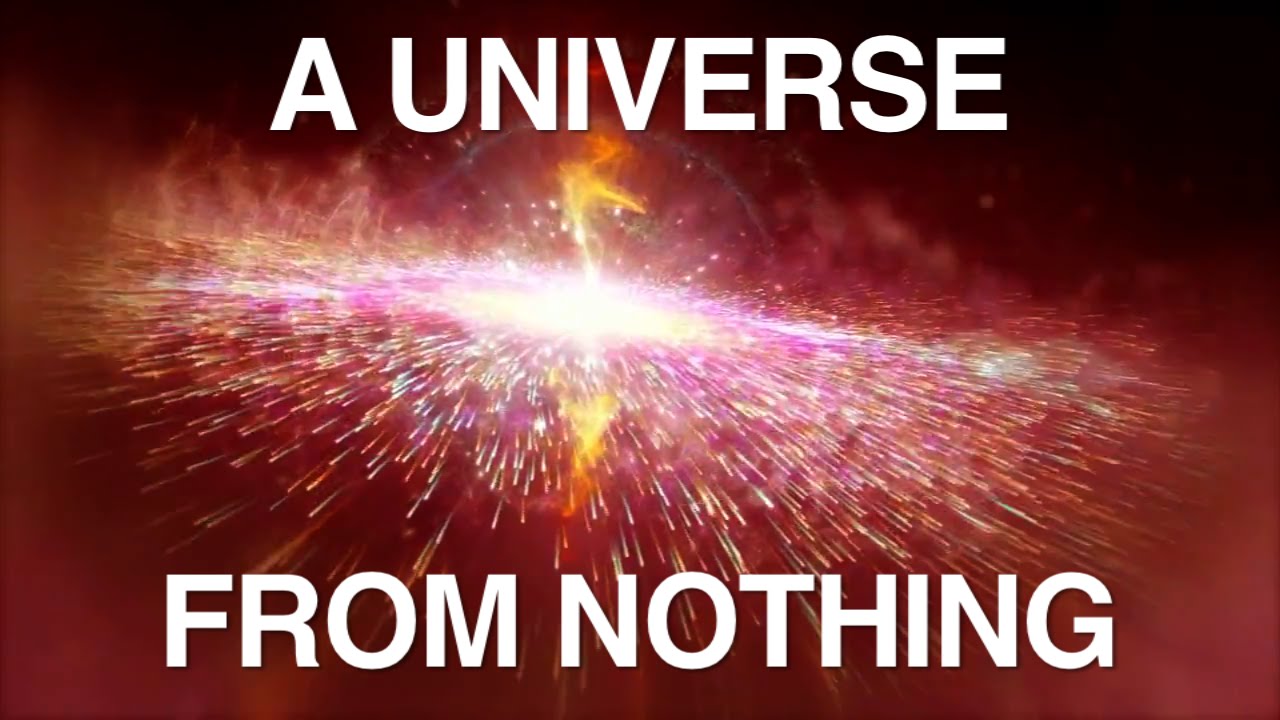
And if the universe was created by God, it would also need to have a beginning. Well, amazingly, science shows us that this is the case. You see, when you study the movement of stars, it's clear that the universe is expanding.
And so if you were to reverse time, you would actually see the universe contracting to a single point, and then after that, at some point, it exploded and expanded into this never-ending expanse that we see today. And so biblically, that moment when the universe was an atom-sized point and exploded into this gargantuan cosmos we now see, that was the moment the eternal, invisible God decided to paint himself for us. And so when I see someone thanking the universe or praising the universe for something good that happened, I appreciate that this person is humble enough to see that there is a greater force out there than themselves, absolutely, but biblically, to thank the universe and not God, is almost like thanking the portrait of someone, rather than the person themselves.
And so, I appreciate the stars. I appreciate the galaxies, the beauty of it, because it's basically God's painting of himself. And so the point here is, appreciate the portrait, admire its beauty, but by all means, by all means, get to know the person.
And according to the Bible the same God who painted the universe as an image of his majesty also came to us in human form so we could experience him personally.