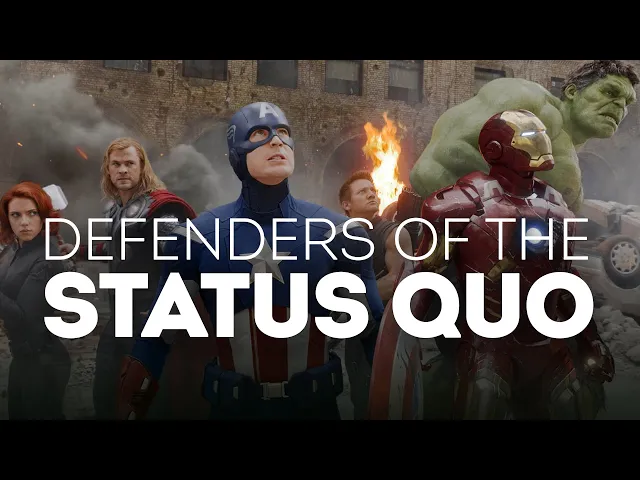
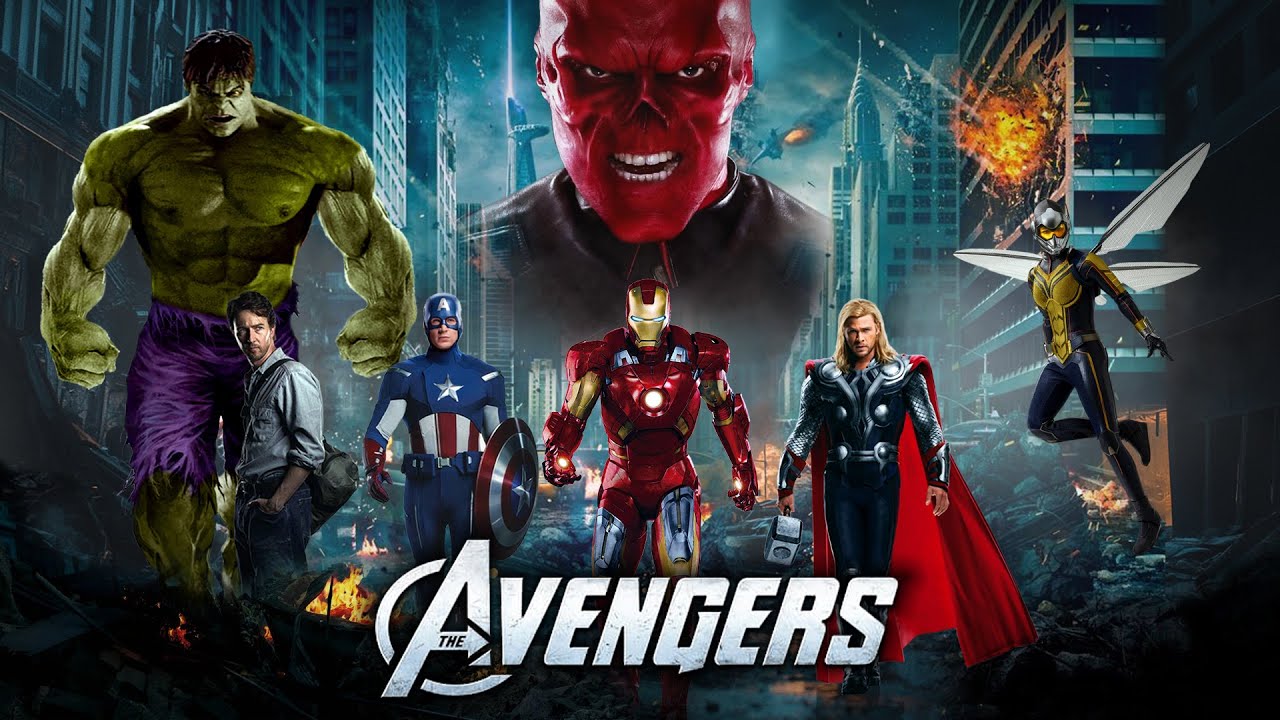
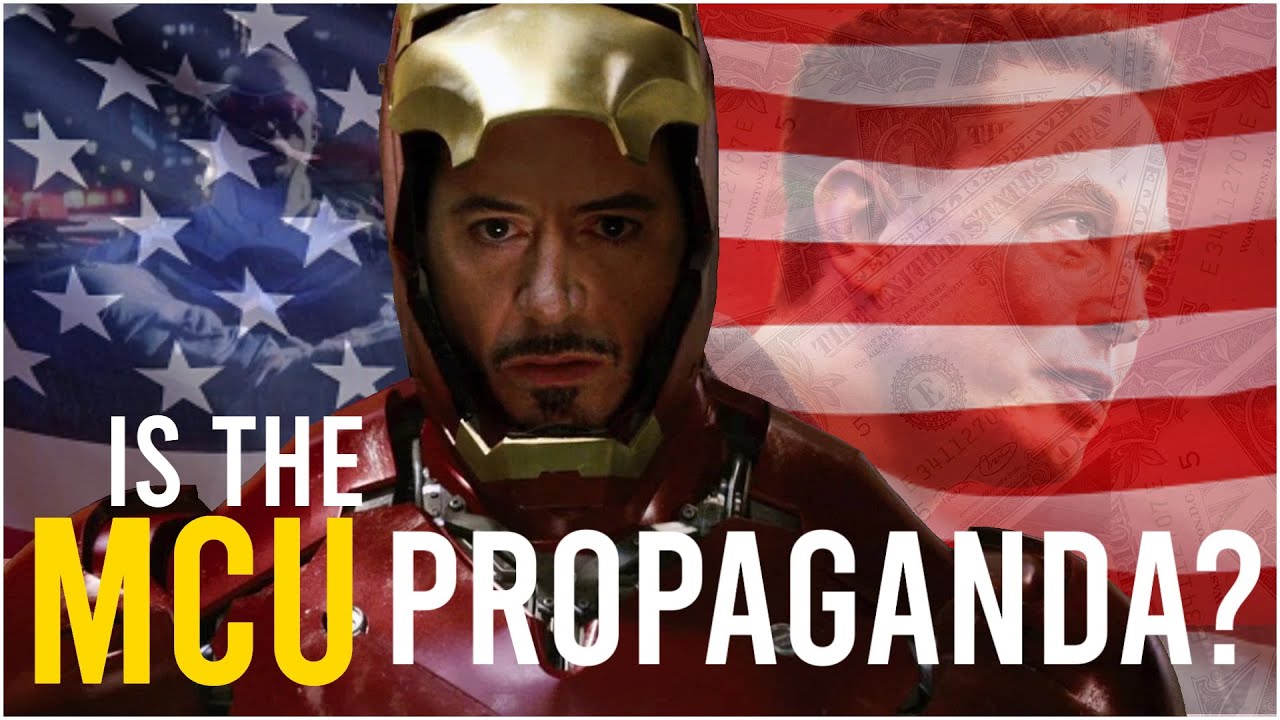
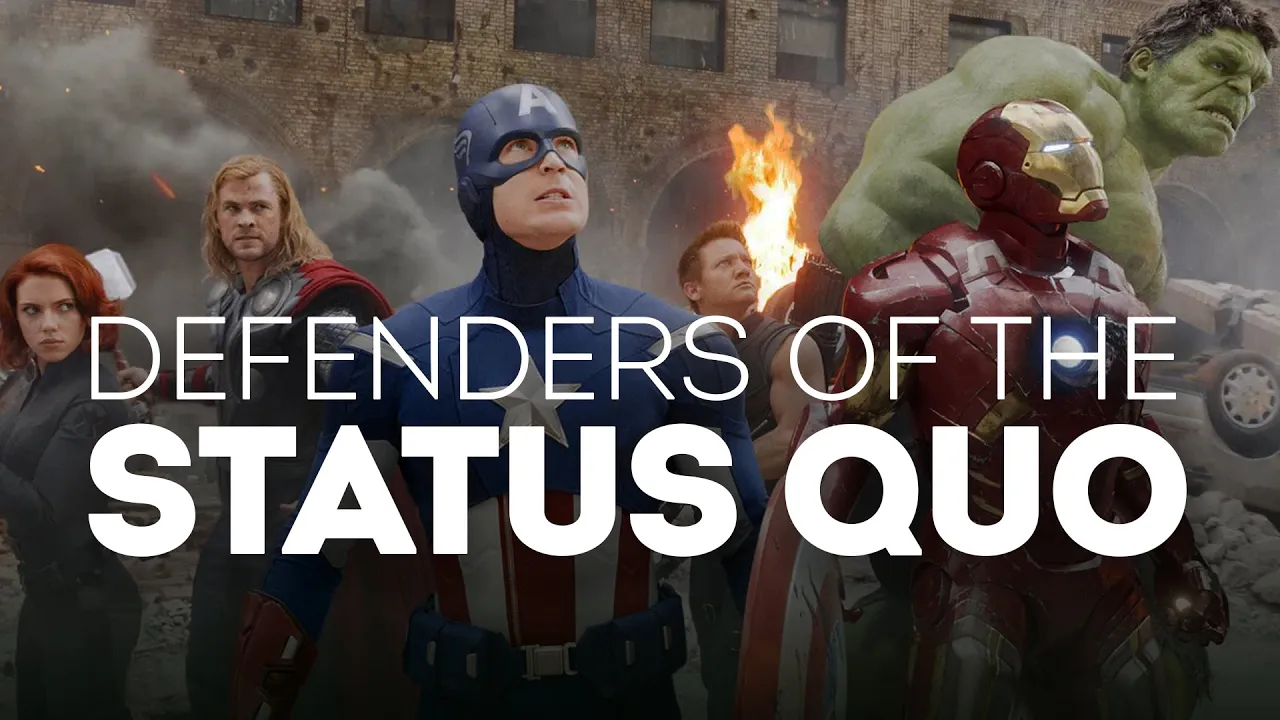
Life in the Marvel Cinematic Universe would be an absolute nightmare for the average person living on planet Earth. "This is a nightmare. " "I've had better nightmares.
" And not just because of the super-beings flying around, causing near-extinction level events practically every other week. This is a universe where very little social progress can ever really be made. While the heroes do usually manage to roll back the various apocalypses, they don't use their superpowers to help build a better world.
They instead spend all of their time defending the status quo. "You want to protect the world, but you don't want it to change. " The villains are the ones who are constantly dreaming up audacious schemes to reshape established institutions or transform the entire universe.
I want to stress two things up front. First, this video is not a blanket condemnation of all Marvel movies. Many of them are fun, entertaining spectacles.
And some of the more recent entries have made great strides in terms of representation. Secondly, this is not some kind of galaxy-brained hot take claiming all the bad guys are actually right. Although it must be said that a few of them do have legitimate political grievances.
"How do you think your ancestors got these? You think they paid a fair price? Or did they take it like they took everything else?
" On the whole, MCU villains are written to be ruthless and brutal-- sometimes to a genocidal degree. What we are going to be examining are the underlying ideological implications baked into the superhero formula. "A great many people see you as heroes.
There are some who would prefer the word 'vigilantes'. " One of the inspirations for this video is an essay by the late anthropologist David Graeber, entitled "Super Position", a longer version of which can be found in the back of his book "The Utopia of Rules". His article deconstructing the politics embedded in superhero narratives was originally written back in 2012 as a response to Christopher Nolan's "The Dark Knight Rises".
But since Marvel media has now become the dominant cultural paradigm in Hollywood, I thought it would be an interesting experiment to apply Graeber's core thesis to the Marvel Cinematic Universe. Graeber observes that: "The heroes are purely reactionary. In the literal sense: they simply react to things; they have no projects of their own, other than to design more high-tech weaponry and indulge in the occasional act of charity.
In fact, superheroes seem almost utterly lacking in imagination. The villains, in contrast, are relentlessly creative. They are full of plans and projects and ideas.
It's important to note that Graeber is talking about the good guys acting in their superhero personas. So while we may see Bruce Banner or Matt Murdock pursuing their own personal projects. .
. "How did you just do that? " "I'm a really good lawyer.
" It's extremely rare to see our favorite superheroes engaging in any larger sociopolitical projects that push society forward. There are a few heroes, like billionaire Tony Stark, whose entire characterization revolves around building and inventing new technology. But notice that nearly everything he invents is related to high-tech weaponry -- weaponry that he and his friends then use in their vigilante policing initiatives.
While stopping something bad might be necessary, it is very different from building something good. Although in modern politics, these two things are often conflated. "Yep, We're the Agents of Status Quo.
" "I am Groot! " So rather than focusing on innovative ways to transform society for the better, we mostly just see superheroes reacting whenever the status quo is threatened. In 'Age of Ultron', Tony and Bruce's plan to use AI technology to bring about peace in our time -- "Peace in our time.
" -- is framed as the height of hubris and something that endangers all of humanity. "If you believe in peace, then let us keep it. " "I think you're confusing 'peace' with 'quiet'.
" Ultimately, the Avengers learn that it's a mistake to try to reshape the world. They must, instead, wait around for external threats to materialize, and then, and only then, leap into action. There have, at this point, been 29 feature films and 20 television shows in and around the MCU.
But depending on when you're watching this, those numbers might be significantly higher. Suffice to say, there's a staggering number of characters and stories. But if we take a step back, we can identify an overarching pattern within the superhero formula.
As David Graeber points out, "The basic plot takes the following form: a bad guy embarks on a project of world conquest, destruction, theft, extortion, or revenge. The hero is alerted to the danger and figures out what's happening. After trials and dilemmas, the hero foils the villain's plans.
The world is returned to normal until the next episode when the exact same thing happens once again. " This looping story structure remains consistent across most Marvel studio productions. "There are certain things that are supposed to happen in a superhero story.
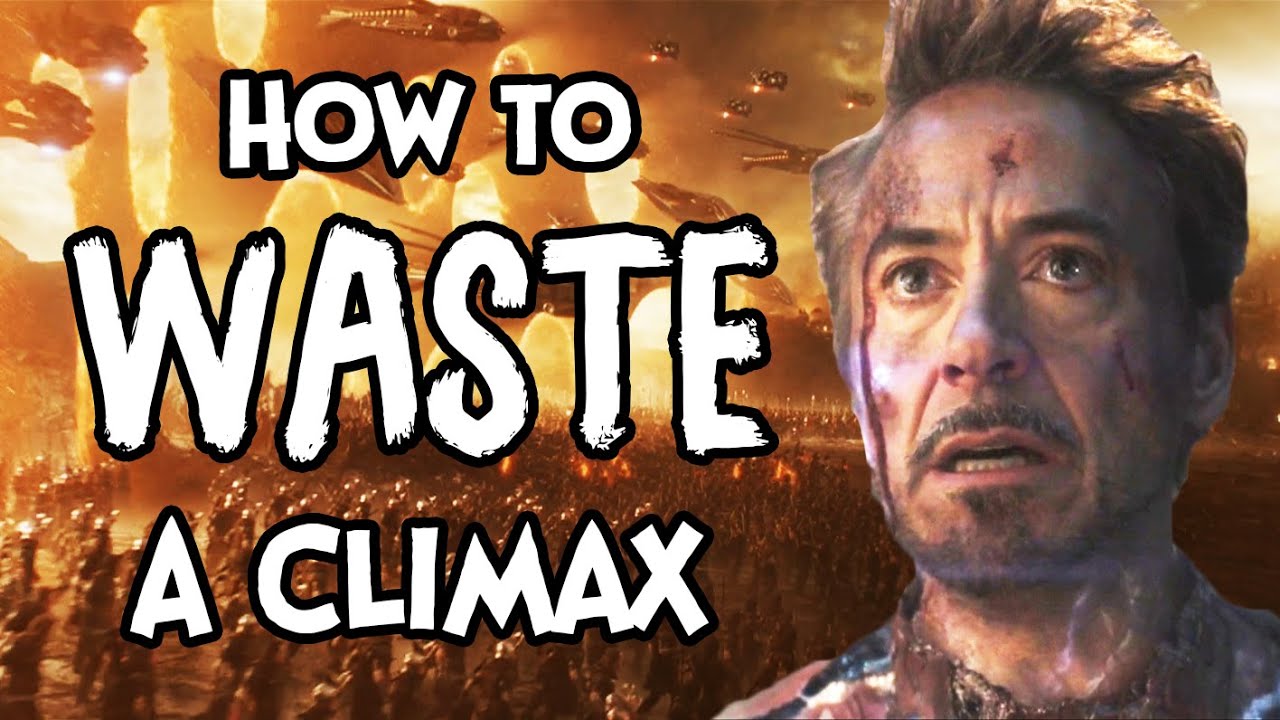
" The pattern of resetting the world to the status quo at the end of each storyline is partially a function of the serialized nature of the superhero genre. But t's also an explicit principle unto itself within the MCU meta-narrative. Recall that in 'Endgame', the Avengers build a quantum time machine and use it to undo the Snap.
But after re-materializing all the people who had been dusted, the heroes don't employ that incredible technology or the Infinity Stones to address any of the other systemic problems that plague planet Earth. In fact, the rules of this fictional universe prohibit them from doing so. "Our world would be overrun.
Millions will suffer. " In a similar way, Doctor Strange uses the Time Stone to undo the invasion of the Dark Universe and return the world to normal. Yet he is expressly forbidden from using that power to change the status quo in any other way.
"We do not tamper with natural law. We defend it. " In fact, it's made quite clear that if a superhero ever did try to fundamentally transform the way the universe operates, they run the risk of turning into a supervillain themselves.
At this point, it might be useful to define what the status quo means. In a sociological sense, the status quo refers to the current social, political, and economic structures under which we all live. For most societies today, those structures include things like militarized nation-states, neoliberal governments, privatized industry, and some version of corporate capitalism.
The fact that the primary responsibility of superheroes is to maintain the status quo wouldn't be much of a problem if the world as it exists were a wonderful paradise. But, as we all know, it very much isn't. Our world is rife with injustice, exploitation, and oppression, not to mention impending ecological collapse.
"Climate change is now widespread, rapid, and intensifying. . .
" Our current reality is at least as scary as anything a supervillain could conjure up. Now, the MCU is, of course, fictional. But it's also designed as a mirror of the real world, complete with all of our problems-- except with super-beings, and aliens, and wizards all thrown in the mix.
"Androids, aliens, and wizards. " "That's not a thing. " "That's definitely a thing.
" "No, it's not! " Just imagine what these super-beings could accomplish if they applied their immense power to creating a better universe. They could work to end the systems that cause exploited labor and inequality.
They could devote their energy to stopping pollutive industry or reversing climate change. They could redistribute the wealth and resources of billionaires, Robin Hood style. But our heroes don't do any of that.
Instead, the superheroes engage in random acts of benevolence. A billionaire gifts the world with some fancy new proprietary technology. "Stark Tower is about to become a beacon of self-sustaining clean energy.
" A soldier asks nicely that corrupt bureaucrats just "do better". "You've gotta do better, Senator. " In the best case scenario, a wealthy monarch builds an international network of community centers.
"This will be the first Wakandan International Outreach Center. " These band-aid approaches may help a few disenfranchised individuals here and there, but they're also designed to keep the current economic and political structures firmly in place. The uncomfortable truth is, charitable or philanthropic endeavors rarely, if ever, threaten the entrenched positions of the rich and powerful in any meaningful way.
Seen in that light, the fact that our superheroes could use their incredible powers to change the world for the better but choose not to starts to feel downright dystopian. "Come on in. " So it's curious that the only characters who voice any kind of systemic critique are the bad guys.
"Those people, Pete, those people up there, the rich and the powerful, they do whatever they want. Guys like us? We build their roads and we fight all their wars and everything, they don't care about us.
We have to pick up after them, we have to eat their table scraps. " When we take a look through the pantheon of Marvel supervillains and evil masterminds, we immediately notice that nearly all of them strive to disrupt or destroy the status quo in some way. In short, they seek structural change.
Now, granted, it's mostly bad, authoritarian change, but they are the only ones who seem to show any interest in fundamentally transforming the way the world works. "This will change the world. " "My technology could change the world.
" "They wanted to change the world. " The villains' motivations can range from personal revenge to righting social wrongs to good old-fashioned greed. But for our purposes here, we're more concerned with their nefarious plans and schemes, which vary in scope and scale depending on the power level of the villain.
The lower-tier baddies may only want to revolutionize one institution, like the military industrial complex. Others may want to take down the biggest corporation on the planet and its billionaire CEO. The more visionary villains, meanwhile, might aim to remake a whole city.
"I wanted to make this city something better than it is. " Or the whole world. Or the entire universe.
In general, the bigger the villain, the bigger the transformational change they're seeking to implement. "The Expansion. It is my purpose.
" The drive to rebel against, or tear down, the current world order is one of the reasons why audiences find supervillains so compelling-- at least initially. "To build a really better world, sometimes means having to tear the old one down. " Graeber cites Russian anarchist Michail Bakunin who, in 1842, wrote that "the passion for destruction is a creative passion too".
By which he meant that the urge to destroy an unjust order necessarily involves a process of trying to imagine alternatives to the status quo. Viewers are especially drawn to what I call "pseudo social justice villains". "Titan was like most planets.
Too many mouths, not enough to go around. " These are antagonists whose stated goals revolve around trying to end some kind of social problem, injustice, or illegitimate form of power. In the MCU, gods walk among us.
Literally. And they wield tremendous amounts of unchecked power. "Suffering for your gods is your only purpose.
" But they are also cruel, or at best, indifferent to the suffering of the people they reign over. "We announce the winner of the most human souls sacrificed in the name of a god. " "Okay, maybe he's not that great.
" "Oh, no, not good. " This is the tyrannical status quo that Gorr the God-Butcher challenges and attempts to overthrow in 'Thor: Love and Thunder'. "The only ones who gods care about is themselves.
" The goal of the Flag-Smashers in 'Falcon and the Winter Soldier' is to redistribute food and medicine to refugees, prevent the reestablishment of national borders, and stop mass deportations after the Blip. "How many times do we have to pay with our lives just to be citizens of this goddamn planet? " In 'Black Panther', Killmonger hopes to use Wakanda's vibranium technology to free African people from colonial oppression all across the globe.
"When Black folks started revolutions, they never had the firepower or the resources to fight their oppressors. All that ends today. " As a viewer, you may have even caught yourself nodding along to the villain's big monologue.
But just before you're won over to their cause, they suddenly decide to murder a whole bunch of people. Even when it makes no sense for that character. "There's still people in there!
" "This is the only language these people understand. " Having the villain's methods always involve indiscriminate killing is a deliberate decision by the writers. "You said.
. . we would destroy the Avengers.
Make a better world! " "It will be better. " "When everyone is dead?
" "That is not--! " One that's designed to make extra-sure the audience doesn't end up identifying with the bad guys or their revolution. "They impose struggle and hardship on us.
They label us as criminals for pushing back. But the struggle is what brings us all together. People who have nothing in common.
For we are, after all, simply one world and one people. " The underlying message that emerges from this pattern is as inescapable as it is pernicious. We are being told that any attempt to fundamentally transform society is not only dangerous but downright evil.
The equating of social justice causes with outright villainy is one of the reasons why the superhero genre is often accused of leaning conservative, ideologically. "How is humanity saved if it's not allowed to. .
. evolve? " As Graeber notes of superheroes, "they remain defenders of a legal and political order which, however faulty or degraded, must be defended, because the only alternative is so much worse.
" "Trust me, every time something gets better for one group, it gets worse for another. " According to the ideology of Marvel, then, the status quo is the best we could hope for. The world may not be perfect, but trying to change it will only lead to catastrophe.
Legendary comics writer Alan Moore has criticized the rise of superhero blockbusters saying the trend speaks to "a denial of reality and an urge for simplistic and sensational solutions". And he's right. Most of the pressing issues facing our society today cannot be solved by finding a few bad individuals and punching them in the face-- as cathartic as that fantasy might be.
So let's pause for a moment and talk about how social change is actually accomplished here in the real world. "We shall boldly challenge the status quo. " Social change is made when people proactively organize themselves into mass movements that then agitate and disrupt the status quo.
"We don't want to fight anymore, but if we have to fight again it'll be to take these steps. " These movements apply pressure and raise social costs until the powers-that-be have no choice but to give in to the public's demands or be replaced. This is how transformational social progress has always been made.
As Frederick Douglass famously remarked, "Power concedes nothing without a demand. " That fact presents something of a problem for the MCU, because there is no "public" to speak of. There are only innocent victims, unruly mobs, and of course, godlike super-beings who monopolize power.
And if the public does not exist, then what Graeber calls "constituent power" also cannot exist. We're then left with a situation where a small group of powerful, unelected supermen (and a few superwomen) hold all the cards. "Hi, would you mind taking a picture with us?
" The only role left for the citizens of the MCU is in deciding which powerful super-being to worship. "I am your biggest fan. " In this way, the public is stripped of any power, and reduced to passive fandom.
And that means there's simply no way to achieve the kind of fundamental transformation that's necessary to turn the planet into an equitable or sustainable place to live. "Food's free in most universes, actually. It's weird you guys have to pay for it.
" Again, I'm not suggesting the Avengers are wrong to stop megalomaniacal conquerors or roll back the apocalypse. Obviously, that's the moral thing to do within the narrow context of these stories as they were written. What I am arguing is that the looping story formula underpinning Marvel's billion-dollar media empire leaves us with a bleak, oligarchic worldview.
"I have successfully privatized world peace! " Where might makes right. Well, it's a bleak worldview unless you happen to be a member of the ruling class, like those who own or control media conglomerates.
For them, a worldview promoting the status quo is probably quite comforting. But for the rest of us, when we walk into this movies, we are transported to a universe where the mere idea of challenging systems of power, or working to change the world, automatically makes you a villain. I hope you enjoyed that deep dive into the meaning and messages in the MCU.
Now, if you like these kind of long-form, critical video essays, please consider going over to Patreon to help fund the project there. I've also left a link to PayPal and a wishlist below, if you prefer. Now, everything on this channel is 100% funded by viewers like you.
There are no ads, no sponsorships, and no paywall. So anything you can give is very much appreciated. I will see you all again very soon for another video essay, this one on colonialism in modern board games.
Thanks so much for watching.