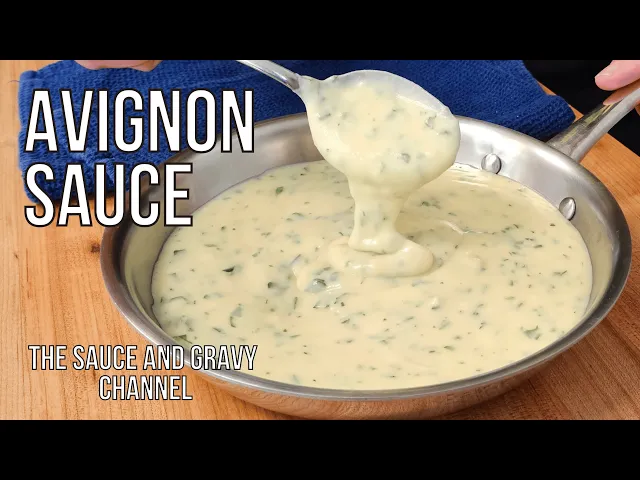
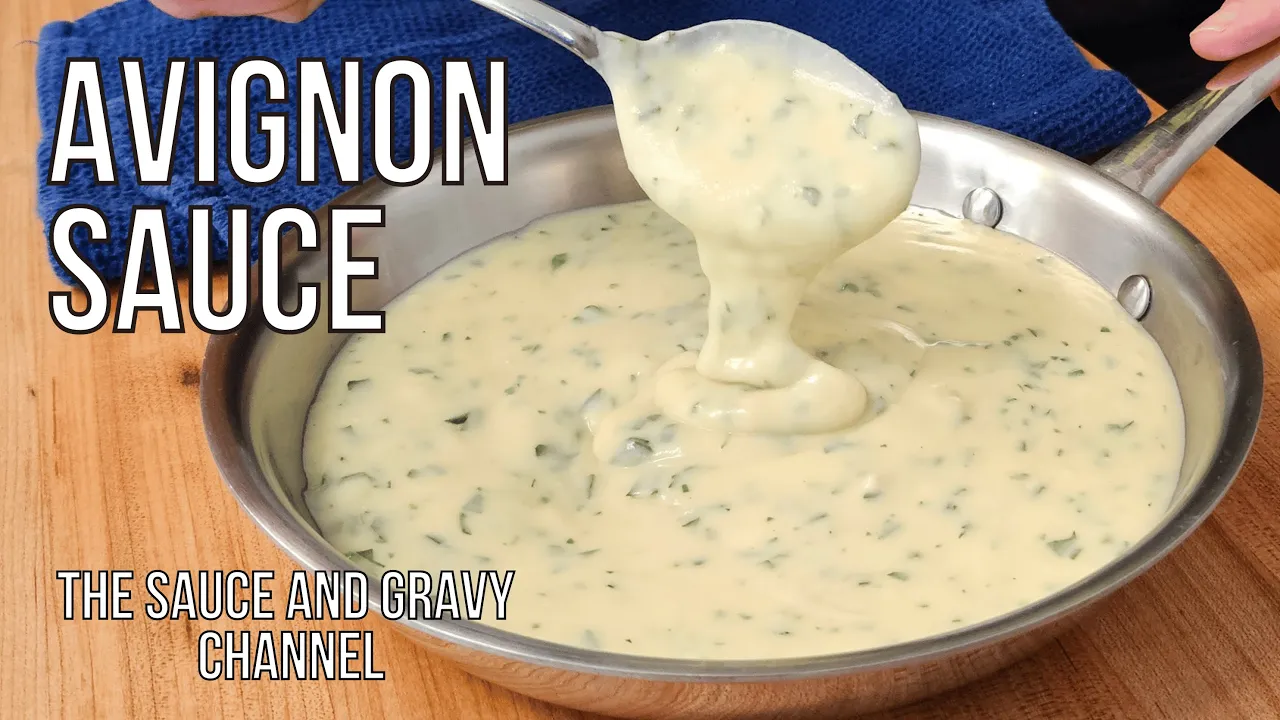
Welcome Sauce and Gravy Community. This is Johnny Mac, and we're gonna dive into another great sauce. It's a white sauce, a béchamel derivative.
I'm gonna show you how to make an avignon sauce. Start off with some light prep work. Well, it might not be that light, especially if you're using a block of parmesan.
If you buy the store bought parmesan, it might be easier, but it might not taste as good. So after a quick kitchen workout- three sets, 100 reps. Your biceps are burning, and you should have half of a cup or 30 grams of finely grated parmesan.
Next, whip out some flat leaf parsley onto the board. Break out your razor sharp trusty blade and get a little choppy choppy. In the end, you'll need at least two tablespoons for this sauce recipe.
You've almost completed the prep work. This is the last step. We need one egg yolk, so grab an egg.
We're going to separate the egg yolk from the white. Probably eight times out of ten, whenever you break that shell, it's going to disintegrate. So it makes it darn near impossible to use to separate the egg white and yolk.
This guy tried his best to break apart, but I was still able to use it. But if it does break into a million pieces, don't be scared to use your hands. They work perfectly to delicately remove that egg yolk from the whites.
And who cares if you're not wearing gloves? Wash your hands. You should wash your hands anyways.
So there you go. Prep works complete. And now's a perfect time to smash that subscribe button.
If you haven't already, be a part of The Sauce and Gravy Community so you can stay informed with the latest sauce and gravy making tips and techniques. Now that you have everything ready, let's make this avignon sauce. Drp three tablespoons or 42 grams of unsalted butter to a saucepan over medium heat.
Now's the time whenever you're going to dramatically mince one clove of garlic. He shoots, he scores. Whip out a fancy stirring device and incorporate that garlic into the butter.
Let it cook for about 30 seconds, or until you smell a garlicky type smell. Just make sure you don't burn the garlic. Round up that flour, three tablespoons, 24 grams.
Dump it in. Cook it over medium to low heat for two to three minutes. But watch the heat.
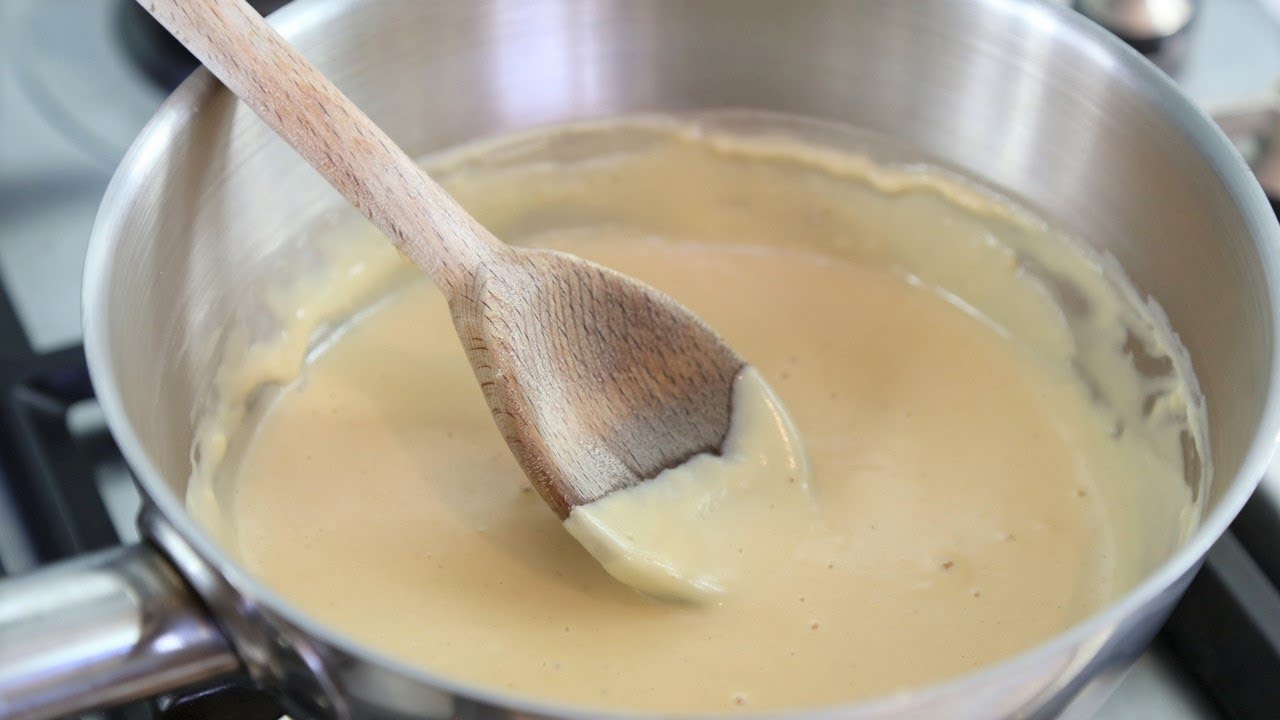
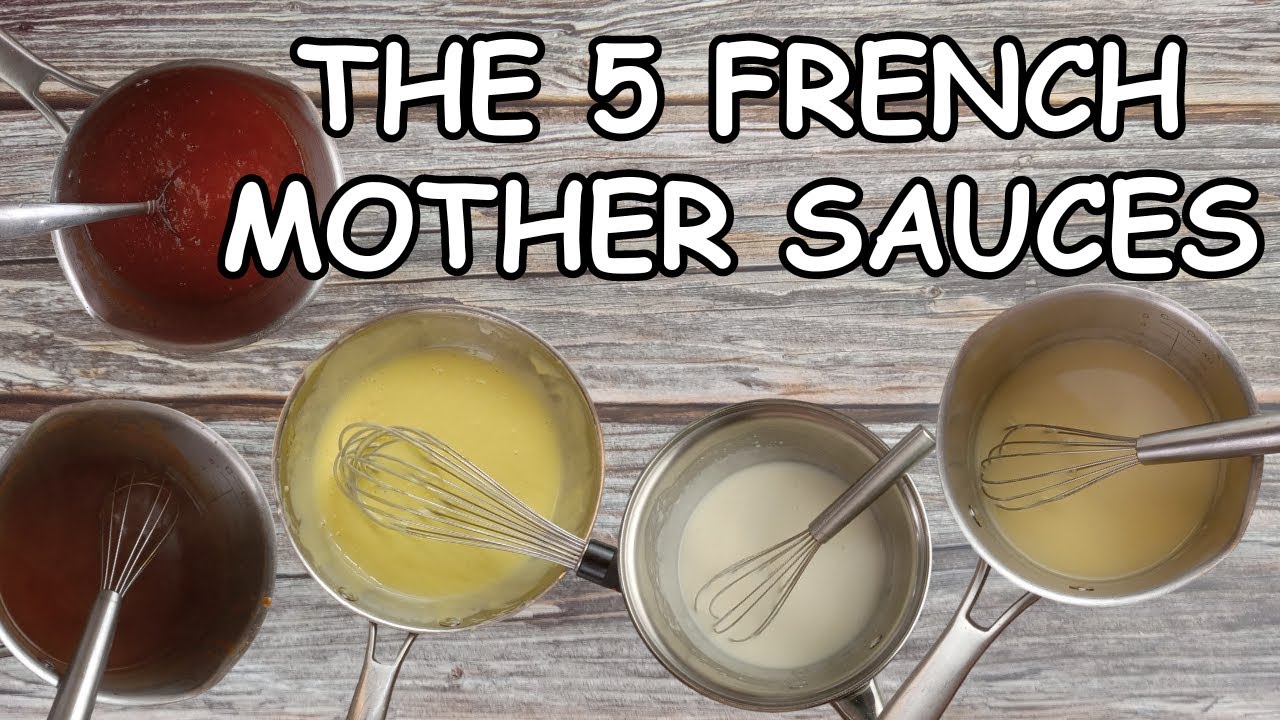
If it gets a little bit too hot, you can always turn the heat down. You don't want to burn your roux, so here you go. You're about to make a béchamel sauce, a French Mother Sauce flavored with garlic.
Add two cups or 500ml milk pour it in, and you don't have to worry about making lumps. If you pour a cool liquid into a hot roux, it'll be lump free every time. Give it a stir, making sure to scrape the bottom and the sides of the pan to incorporate that roux into the sauce.
Whip out that silicon spatula, if you have one. They do a great job of getting that roux off the sides and bottom of the pan, the burner. It's still over medium heat.
Bring the sauce to a simmer. Once it starts to simmer, that roux will activate thickening up the sauce. Don't walk away because everything happens fairly quickly.
And it's also a good idea to frequently stir the sauce and watch the heat. Once it starts to thicken up, you can turn it down to low. Whip out a handy dandy spoon to give it a once over stir and to do the line test to check to see if the sauce is as thick as you like.
You'll be ready to move on to the next step once the sauce coats the back of the spoon, and whenever you do the line test and the line stays, you're ready to roll. For this step, you can either turn the heat down to low or you can just completely turn it off. But grab your Parmesan cheese that gave you a kitchen workout and buffed those biceps.
30 grams, half of a cup, drop it in. And, you know, here I am making fun of this fresh block of Parmesan cheese. But it's actually better to use.
It's less grainy, and it tastes a whole lot better than that store bought stuff. It's a good idea to also break out that whisk on it. It just helps incorporate it into the sauce a whole lot better.
After the cheese is well incorporated, it's time to move on to our egg yolk liaison. This will add to the thickness of the sauce, the richness, and it'll give it a glossy type look. The first thing that you're going to want to do is whisk that egg yolk.
Next, you're going to temper that egg yolk. What that means is you're going to bring it up to the temperature of the sauce so it doesn't curdle or create lumps. Add a small portion of the hot sauce to the egg yolk.
If you can whisk and do it at the same time, it's even better. Whenever it's completely mixed in. Add another spoonful in.
And my burner, Just so you know, it's over low, low heat right now. So what you're doing right here is you're slowly but surely bringing that temperature of the egg yolk up to the sauce's temperature without it curdling. So the temperature is pretty high now.
So I'm going to add two large spoonfuls, give it a whisk, and then I'm ready to skilfully. Drp it into the sauce. Slowly drizzle your warm liaison into that sauce whisking all at the same time.
And you're probably wondering why I said "skillfully" Pour the liaison into the sauce. As you can see, whenever I'm pouring in the liaison and I'm whisking that pan, it is trying to fly off the burner. So I'm juggling a pan, whisking and pouring all at the same time.
At home, you're probably having a whole lot easier of a time on a flat burner. Just whisking it in slowly into the sauce, continuing to stir over low heat. So there you go.
That's how you temper the egg yolk and you add it to the sauce. If you were just to try to putting that egg yolk directly into the sauce, it probably would have lumped up and curdled. Stir the sauce over low heat for a few minutes and check it out.
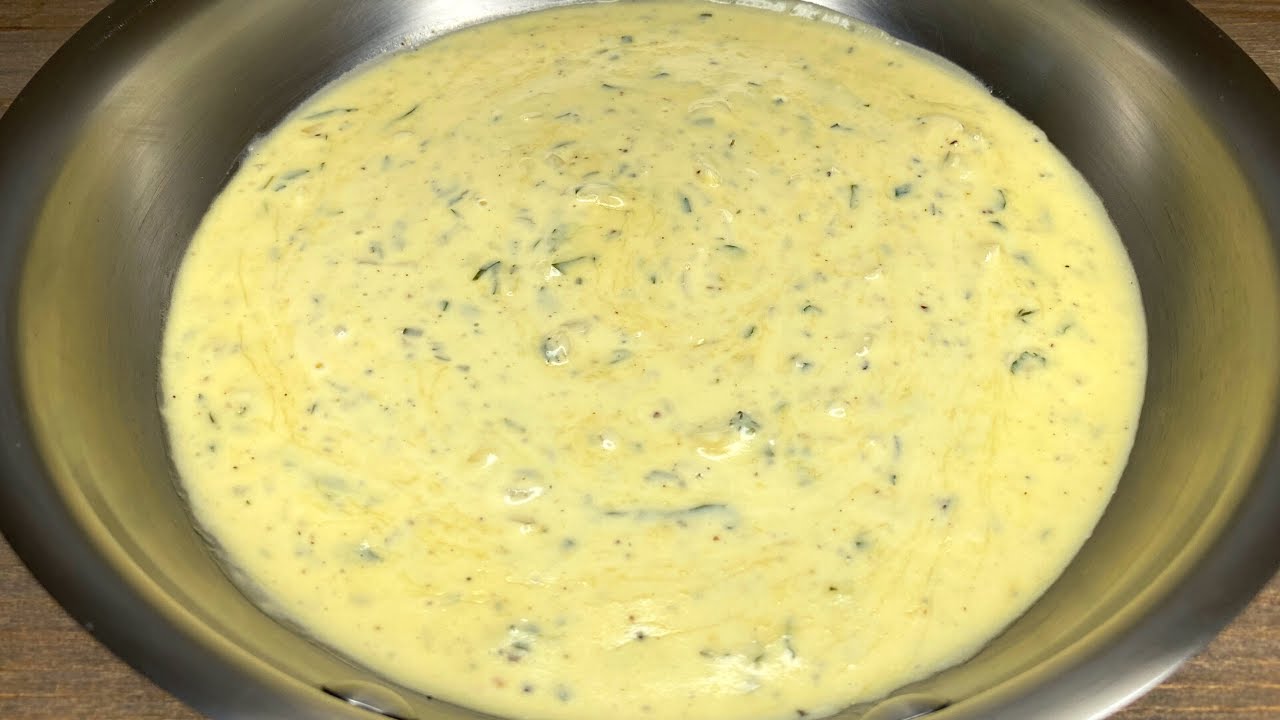
After you added that liaison, the sauce looks smooth, rich, and has a nice shine to it. So hang in there. You're almost done.
Turn that burner off - so no heat, and add two tablespoons or big pinches of flat leaf parsley. But wow, look at this sauce coming together. And you're probably wondering, what is it good with?
Well, it's great with game birds, it's good with chicken. Put it on veal, put it on pork. It's absolutely delicious.
Heck, I even like to just put it over pasta. And as always, taste the sauce at the end. You might need to adjust the seasoning.
Add some salt, add some white pepper. If you don't have any white pepper, use black pepper. I won't tell anybody.
So there you go, Sauce and Gravy Nation. You have just converted a béchamel sauce to one of its derivative sauces, an avignon sauce. Well, thanks for watching and all of your kind support.
If you found this recipe helpful, then smash that like button. And remember to keep whiskin' y'all.