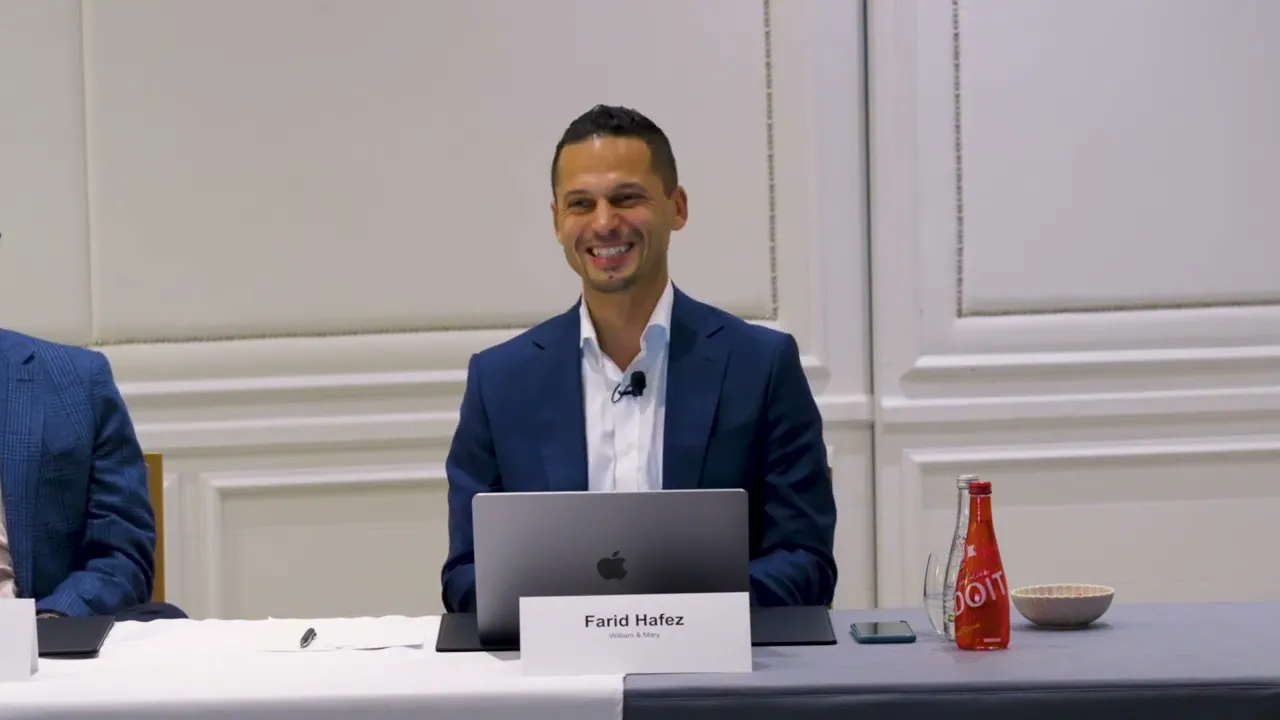
All right well good morning everyone I think we have a quorum uh this next session Islam secularism and the rise of Europe's far right um aims to look at the relationship between religion uh and the far right we understand I think Katherine benold is writing a book on this subject uh in in part right now uh which has I think come up a couple of times in in Gatherings here uh comments I know from shatty from Matt Goodwin From Eric Kaufman from Matia and others who have have written on these these these themes so eager
to get into it how do how do we talk about uh the role of religious faith and religious memory and religion uh when it comes to the far right we have a pair of Scholars uh this morning who uh can do so without the unhelpful sweeping generalizations um but at the same time I think hopefully uh calling out some some helpful nuanced truths uh how does National populism and Immigration impact the way that Muslims are are seen in particular in places like Holland and France and Germany and the UK and Spain and elsewhere uh does
religion Christianity Judaism Islam but also the non- monotheistic Traditions uh ever act as a check uh to farri momentum uh to more totalizing uh Visions um I remember Shady's comment in this room of a few years ago when he talked about uh Muslim Envy um and this idea that um uh people in declining Traditions uh would Observe uh faithfulness and and want it uh uh sometimes particularly in different parts of of Europe it has some sticking power and uh a couple people wrote about that afterwards um both this morning's speakers have also written on on
grievance um and on societal on public impact of religious decline on ways that growing expression of nationalism uh sometimes makes room for outright racism uh whether it's laicite or the right to wear hijab in public uh Gaza or a series of recent elections Marine Le Pen National rally afd in Germany a Spate of national populist elections more broadly this uh conversation is hopefully going to touch on uh immigration on anti-Semitism on Christianity the far right and on the Frameworks that can be helpful um with these uh controversial issues contentious issues so fared HZ is going
to start us off um he uh has just become a professor at the College of William And Mary after having been at Williams as a professor of international uh relations since 2021 he has published uh over 150 essays in peer reviewed or other International journals he was previously a researcher and a lecturer at Saltsburg um prior to that Fullbright visiting professor at Berkeley uh in 2017 um and and uh he is the founding editor of islamophobia studies yearbook uh since 2010 uh and co-editor of the annual European islamophobia report Since 2015 which draws on input
from 40 Scholars uh at 30 plus uh covering 30 plus different European countries um rcoa Dio is a French journalist and a writer and an award-winning filmmaker um she is widely recognized for her work uh advancing equality and racial Justice piece in the New York Times uh called her her activism uh she described her as one of France's most prominent anti-racism activists uh she's directed several documentaries including the Award-winning uh steps to Liberty a film following Young Americans who come to France uh from to examine issues of race diversity and human rights um her 2020
documentary uh acting while black uh raises challenging questions about the roles that are given to black actors uh and actresses on French screens and she's written several books and won the France tf1 uh women in digital Communications award so uh far right and religion uh fared over to you all right Thank you so much first of all thank you for having me here it's a great honor uh to share this room with you for a couple of days and um have interesting discussions um all right let's get straight to it um first of all a
few words in terms of you know the work as I was introduced um I've been working on primarily on islamophobia anti-muslim racism was not my initial interest to be honest as a political scientist uh back in the days but it felt like you know The rise of the far right was so strong in Austria which as you know uh with York Haida back in 2000 was one of the most successful and uh first far right parties in then the European Union that um participated in a government so there was a real reason um when there
was a lot of islamophobia starting in 2005 on the in the political landscape in the political rhetoric that somebody should address that and I felt like a lot of my white political science Scholars Colleagues would not do it and that's why I just started this work and that's how you know one one thing leads to the other um my initial interest was actually something very different state Church relationship but in a way it is you know it comes together right so which is also something that that I will talk a little bit about today um
the thing that I might disappoint you with is that I'm not going to necessarily speak about faith um because my idea of When I talk about islamophobia or anti-muslim racism I use those terminologies synonymously is basically um similar to any other form of racism um that we're not talking about those who are racialized but we're actually talking about those who do the racialization uh which means and I usually draw on people like Jean Paul satra and others you know in his essay 1948 the Jew and and the anti-semite he said if the Jew would not
exist the Anti-semite would have invented him so basically it's not um who the Muslim is what Islam is it's really about the projection of the racist right this is what we're talking about and this is also my theoretical approach to understanding what is going on with anti-muslim racism so in in many ways like um and you know that's what probably most of the European folks here are familiar with when we talk about the so-called Jewish Question uh 120 years back um what we uh what we understood back then was that was a real question for
the people right like the people assumed uh White dominant societies assumed that we really have an issue with those Jews not fitting in right um but as some some critical uh Jewish Scholars back back in the days already said this is really not a Jewish question it's depending on which country they're from it's a German question it's a French question so they Are posing those questions to us right and in similar way we are now in a phase I feel or I think I know um where we really have the so-called Muslim question that is
very real to the white dominant societies um and it's very difficult sometimes to have these discussions because for the white dominant Society these questions are real questions about religion well I I don't see the religion pod there right so this Is kind of my approach to the whole topic um there is another challenge in the European space and whenever I talk about Europe I basically mean everything except of the UK because the UK is culturally speaking part of the Anglo-Saxon world where things work very differently but I primarily speak about Continental Europe primarily the western
part including also the Scandinavian countries so one of the issues we have Is whenever we speak about race in that context we assume that we living in a post-racial society where race is not an issue and people having hard times even to conceptualize and bring together the question of race and Islam um and with the lack of understanding of what race is and how race works as a social construct it is even more difficult to have these conversations apart from the UK Again um because the assumption is not only that we're living in a post-racial
Society but also that actually after 1945 uh there is no racism problem anymore so we have overcome the Holocaust anti-Semitism and actually the the real racists are not the Muslim immigrants right so we're projecting that on on on the new uh folks who have come in um Now let me make a huge jump here um when it comes to Islam and the role of Muslims in Europe um there has been a paradigm shift in the in terms of how the state and so to say the power centers have been dealing with that issue because right
up to the late 1990s um early 2000s there was a perspective um dominating the discourse which is some Scholars have called it Embassy Islam which basically means European Governments did not necessarily care about Muslims and their faith and their religious traditions and they basically argued well it's going to be the embassies of the countries where they came from they're going to take care of that so in France the Algerian Moroccan governments in Germany Austria the Turkish governments and so on and so forth so in a way it was like saying there is a Labor division
here whenever it comes to religious aspects let the Let the countries of origin take care of them um and that was obviously imp implied in a basic assumption the Assumption being that those people won't stay here forever right which also has a very heavily political implication that I believe is very often underestimated which is that democracy the way it was built post 1944 45 is actually democracy for white people from white people and never envisioned to include people of color People of the global South including Muslims now that is an important aspect I believe because
also the question of religious liberty and civil liberties is very much connected to that uh to to to this aspect now the change occurred in the late 1990s when the the conviction grew um and the understanding grew that these people will stay we going to have family re reunification these people won't go back to the countries of their Origin and that was also the beginning of a new era of the governmentality of Muslim religion specifically and why I say Muslim religion specifically is because in all those de different regulations of how State church was organized
in various different European countries um and we know that there are many differences here there is one important um similarity that is common to a lot of them which is that the Dominant Christian Church is treated in a different way compared to most of the other religious institutions and organizations that might also include that for instance let's say in my country where I'm originally from in Austria the Protestants have been discriminated against Vis the Catholic which is the dominant church but even more so um especially in legal ways when it comes to the Muslim uh
Denominations now after 9/11 in around 2006 and7 there grew this understanding within the circles of power that it's actually the Ministry of interior that should take care of that issue which is an interesting take in the first place because it reveals something about you know how through which lens you look at that religious minority it's not necessarily the religion lens it's the security lens but it's the security lens that should include also the relig the Governmentality of religion um and that is an important um change that happen happened in 20067 which I think we're still
witnessing until these days I'll get a little bit more into detail here now I think there is one important aspect when we speak about Europe which is something that is really at stake um which is the future of how we envision European societies to be and the demographic change that is Very real now whatever European country from you will see that there are National academies of Sciences who do these projections on how many Muslims will live in our country until 2050 right and then you have all these projections like five scenarios zero immigration maximum immigration
uh fertility rate this and that and you know in most Western European countries apart from France and Austria where we Have about 9 to 10% of the whole population being Muslim the vast uh majority of other countries we're speaking about roughly 5% in Western Europe and the projection until 2045 um um as most of these academies have have done research on is between 15 to 25 30% which is a huge amount of the whole population so that is something that is very real and the question is like you know how do we address that what
sorts Of AC accommodation of Muslim religion in the public space do we want to have um now I'm just looking at the time not to um to exceed my 20 minutes so part of the story is obviously that since the late 1990s at least right-wing populism has grown as a sort of a political family part of it is also that anti-muslim racism has become an an official platform of many of these Right-wing populist parties and they have an answer but that's only one of the answers of a couple of answers and I would say there
are two and a half approaches to to the that question of the demographic change and the presence of Muslims in Europe in regards to how do we envision the future now the far right basically argues kick them all out in a very simple way right I don't know if You followed the news um there was an Afterparty after a far right rally by the identitarian movement month or a couple of weeks ago where one of the um there was like an investigative journalist who was who participated in that Afterparty and there was a lady from
the afd the alternative for Germany who said well we really need um sanit 20 for the Muslims in Germany right um clearly these things are not articulated publicly but that's What the people think like to be very very open with all of you here right that this is what what is on the minds of the people now clearly if we speak about the organized far right that is represented represented in Parliament there a different story because the way they approach the issue is we know we can't kick them just out half of them probably in
most countries are citizens right uh how can we kick them out so there was Another Super investigative story uh also this time taking place in Germany in the fall of last year where um a closed Workshop was held the guy who did the keynote was an Austrian from the identitarian movement um and during that keynote he gave a proposition of what shall we do and he coined this terminology of remigration I'm sure some of you have heard about that read in the news has became quite a popular notion within the Far right within far right
circles the idea basically being well we have to remigrate those immigrants to go back because we can't do that in a legal way the proposition was we're going to make life unbearable for them so that's why how we're going to indirectly create such a pressure that they basically going to go back out of their own will all right so that's proposition number one okay that's the far right idea of how we handle this Muslim isue the second approach is a much more um mainstream approach I would say and it's not a one-way Street and that's
the approach that is primarily championed by the center right in some cases also the center left like Denmark like Sweden we have seen examples of that um the idea is assimilate the vast majority by working with the Muslims themselves identifying those Muslims who Are on the same page with us um create institutions that will reform and create some sort of domesticated Islam uh that was also the the initial proposition in 20067 by all these ministries of interior the idea the proclam proclamate idea was we're going to have an Islam France a Dutch Islam and German
Islam and whatever Islam um so there are two ways of how to Achieve that first of all you build institutions to reform the Muslims you have collaborators who do that work with you from with within the Muslim Community and the other strategy that simultaneously has to work is you criminalize all of the opposition you get griid of the few who are really a pain for you all right basically those who have their own political agency who do not want to be um includ um uh coopted by the state and who think and Act freely on
their own um and this is what we see we see that in France like macron one of the very first things he said when he came to power just I think two months after uh he became uh president was we have to restructure the relationship of Islam and France right 3 years later he did the separatism law the anti-partisan a massive Crackdown surveillance program on on on organized Muslim associations and anti-racist Organizations who fought back against uh those racist policies so that's like the second approach and then there is a half approach the reason why
I say not a full approach is because people are not very clear about what they really want and it's a sort of a blurred position that we primarily find within the left and that is it is O oscillating between the second approach of the center right and on the other side Um grappling with the problem of actually the left does not want religion that's why they having troubles with dealing with Muslims but at the very same time there is some ideological impedance to argue that well actually we are anti-racist or we are pro minorities and
we we need to protect them in the name of Human Rights and there is a tension here but there is not a clear-cut strategy within the left uh including the green parties Of how to deal with that and I would say when in power most of them are actually doing what the center right has proposed and we seeing that across the board all right um now the interesting thing I believe um in terms of the observation is that what we are seeing here is that the way of how religion or Muslim religion is governed is
very aen to the authoritarian postcolonial state of in Muslim majority countries now once um becoming independent from Colonialism what what happened in most of the Muslim majority countries is they fully co-opted religion for their own gain using it as a sort of a soft power to convince their citizens of different policies using it um in a way to also minimize opposition that came from the islamist camp um and trying to use religion as a sort of a um a tool for their for ex exercising power um so it is a resource to govern a potential
security threat and That feeling has especially grown after the Arab Spring and have even made conversations between lots of leaders of the Arab and Muslim world with European leaders much more relevant and interesting and there is an there is an interesting Dynamic that has grown out of that um part of is it is obviously also since religion politics in regards to Islam is seen through the lens of security that the global war on terror With all of its infrastructure that was built within the last 25 years or 23 years has led not only to the
securitization of the Muslim subject per se but it has also expanded the authoritarian state which is something that I feel is the the the whole Muslim question is only part of a larger tendency which is the growing authoritarianism that we see in Europe like the most explicit form of articulating that would be Victor Orban's illiberal democracy but the other version of it is obviously that we see the reduction of civil liberties of religious freedom and civil liberties specifically the freedom um of speech um the freedom of assembly and other basic freedoms that are very much
intertwined with with public religious um public religious organizations and I would say this is how we have to analyze the whole Muslim Question because clearly in again the UK is very different but in most of the other European countries in Western Europe what we see is that Muslims represent the economically and politically and socially speaking the weakest part of the society maybe the weakest after the Roma so their resources to fight back are hardly existing solidarity with them on the side of other Civic organizations is In even including some of the anti-racist organizations are hardly
there so they are a very easy uh Target and based on the policies that are being implemented against the Muslims we see also the expansion of these authoritarian um tools being adapted for other groups just to give you a couple of examples like we see how the counterterrorism state has been used against animal activists against climate Activists against other groups who in One Way or Another pose a challenge politically speaking to the uh hegemonic forces all right I see I have already exceeded two minutes great all right um that's very kind of you um 2025
you're good I I'm I'm basically coming to the conclusion so because the question is like what does the future look like and what shall we do about that I'm very Pessimistic um I'm every everything else but optimistic which does not mean that there is nothing to do but um there is clearly a lack of understanding I believe in the broader society that this is a problem in the first place um I think there is hardly any conscious and understanding in regards to what anti-muslim racism does not only to the Muslim minorities but to the overall
societies and the inability to see that In a broader picture and to connect the dots of what we are seeing here being a symptom of a larger trend is hardly existing just very marginal groups of a couple of academics couple of very leftwing folks who understand that because out of their critical stance towards the state in the first place um now there are obviously immediate uh tools of Defense to bring back Justice to people who have been Suffering you know fighting in the court but in the long term I think there would be a necessity
to abolish the counterterrorism state at in itself right a lot of the tools have been legalized and what a lot of what I've been talking about here in terms of anti-muslim racism is State institutionalized anti-muslim racism it's not about like we have opinions and talk and this is far right populism on on the level of of of policy talk no This is this is laws we're talking about here so there has to be a huge effort to fight back against a long time developed sort of legalization of many of these policies and finally um anti-muslim
racism is a part of a is a symptom of a larger picture of social injustice that we have to address I don't want to go into details here but I think that is also one of the main main things to to consider a slight hope that I have is Only on behalf of the the capital as long as money talks and the demographic change which is real also have to consider the needs um of those people that might be the only exit strategy but again it's it's not a real solution to the problem it's only
addressing some of the symptoms in terms of the ability of European societies to include Muslims because at the end of the day um they're going to have their Nikes and Adidas With the hijab and all the stuff as well as all the others right okay thank you thank [Applause] you H good morning uh I'm really happy to be here thank you so much for inviting me and it's a pleasure to speak just after FID um so I'm not a scholar uh I have been an activist anti racist activist in France and also a journalist and
a filmmaker um and my focus would be France and the very specific expression of islamophobia in France through out the use of uh certain principles uh from the French Republic so this year Paris has been at the center of global attention with uh the the Olympics uh the ceremony as well as the as the canes uh gave a very positive image of France uh of the diversity of how we do coexist as a very diverse and Multicultural country but there were some people who were not invited to be part of the Olympics French women uh
French Muslim athletes were not allowed to compete with a hijab which was a new rule that was decided by the minister of sports and which was very interesting because as uh French women couldn't compete with the hijabs all the athletes from the rest of the world were allowed to do so in the name of a principle that is called L that embodies the idea of secularism in France those women who are not representative from the states were Uh dismissed their law to express their reg religious Z representing them their countries at the same time so
uh the principle of laicity um so which is the principle of secularism in France has been created in a law that was uh voted in 1905 that doesn't include the word liity in itself but that really establish uh that principle so um it was first established um uh it was about guaranteeing Freedom uh and it in it Insti uh the separation of the churches and the state uh and it includ included the free exercise of religion by a French citizens by people who live in France and respect for all citizens before the law uh regardless
regardless of belief so the state is also supposed to guarantee your freedom of speech or freedom of of belief so secularism imposed neutrality on the French State and on public institutions but did not require Personal neutrality from uh the citizens um in 1989 two uh female students in high school decided to go I think it was in Middle Middle School maybe so they decided to go to school with the hijabs uh they were Muslims and it really uh started National controversy on whether they should be allowed or not to go to school with the hijabs
at that time um the the political landscape was divided and on the left the option was rather to Support them in their right to go to school uh with a hijab the social the then socialist minister of Education uh uh considered that uh they should be allowed to do so and the Supreme Court the cons decided that as long as they were not promoting Islam it was okay for them to go to school with their um their head cours because um they were not part of the state they are uh being served by the state
so they should not be um uh um Forced to be neutral then 15 years later the political climate is totally different it's 2004 it's post 911 and the debate is again provoked by two uh students from high school uh who decided to go with to school with the hijab but the major the majority of the political landscape is in support of the ban of the hijab so to me uh it's a significant a significant shift in the understanding of the secularism principle because it requires Users of state school to be neutral about religion or at
least discret because um a law is framed as a band of all consp conspicuous signs so what is Con conspicuous is interpreted by the heads of school so it includes head scars large large large crosses so I've never seen anyone going to school with a giant Cross but I think that then you need to make the low sound kind Echo and um but the debate all the debate was focused on Islam and it was was all About you know the freedom of um like the the the possibility for for Muslim to be visible and what's
interesting is that it stroke very differently women and men so having the same belief men were not questioned and boys were not questioned on their rights to go to school but women were targeted and were they were actually watched in the way they were dressed so um I was part of a feminist movement at that time and at that time in 2004 most of the mainstream Feminist mov M white feminist I would say supported um that law and that's really what started my anti-racist activism because I as a feminist I couldn't I couldn't accept to
support a law that would uh disproportionately uh strike uh young girls and women and um to me that uh desire to track markers of uh religiousity reflects an intolerance of Muslim that goes beyond targeting uh of women um and it's also something that is Rooted into the colonial history uh in the late 50s uh in Algeria that was colonized by France public ceremonies uh were organized it was public unveiling ceremonies that were col that were organized in the streets to um unveil colonized Algerian women uh it was organized by uh the the the the the
wives of the generals so the militaries who were uh representing France in Nigeria and it was uh organized to promote assimilation and it's very Interesting to see that a very similar patronizing way of telling Muslim women how they should behave in order to look free and to be assimilated is also promoted in by uh the same kind of white feminism that sees frenchness and assimilation in a very narrow way um so that um with with those law uh there has been a very very important Evolution and the last development of those interdictions were was the
the a new a new measure That was voted uh that was it was not a low but a decree um that was uh implemented last year uh by the Ministry of Education is the it was the ban of what we call the abayas so the abayas are uh long sleeves dresses that come from the Middle East and uh the minister of Education banned them based on um an extension of the 2004 law that says that anything that is not in itself religious but that can be seen as religious should be banned so that me that
Really that really um include many things so what is an Abaya it's just a long a long sleeve dress any dress could be seen as an ABA and so as a consequence is if a student if a female student is seen as being Muslim and has a long dress that even she has bought in Zara on or HM she's been seen as as wearing a religious sign and it's very interesting I just read um I was telling you yesterday about the news I read last week so there was a very uh there was a Conflict
in a in a class in a classroom last uh last week between a teacher and uh a student so the the student really behaved very badly the they slapped their teacher and they SL um so the they beat the teacher over the teacher asking them to um to um not to wear their religious their their Islamic jacket and I was like what's an Islamic jacket like is it Islamic because the person is Muslim or is it green or is it like what what does it mean so I think that the Fact that we interpret anything
that is worn by a Muslim as Islamic and that it's up to the heads of school or the teacher to interpret it is also generates conflict it generates conflict and it also singles singles out um Muslim Students so those values lity universalism the idea that French the French Republic is um is is uh relies on the idea of universalism so we are all the same we're not supposed to look Different in the public sphere is a tool to me to assimilate and to erase all the differences and to present a very narrow idea of who
is French and who is not and how being French should look like and also it erases from the public sphere uh the visibility of certain types of Muslims um it's um and those trols that are mostly claimed by the left are not used by the far right which pretends to defend the French Republic its principle the French identity in the name of Laicity and and universalism and it's very interesting because the far Rights was created by people who were against the French Republic and now they're just using all that ideology that vocabulary that comes from
the left to present themselves as the Guardians of the French Republic against the the the the Muslims was supposed uh to be the ones challenging the Republic in its foundations um and uh and and and it's interesting to to to to I'd like to to Go back to what you were saying about the the security me measures and the fact that we've had in France uh a state of e emergency after uh the terrible attacks that happened in 2015 against Charo and then in the B Paris but also in sanon every everybody forgets always the
fact that it also happened out of Paris in the in the Bon so the state of emergency was created during the colonial time during the revolution uh the Algerian Revolution it was in the Law supposed to to last 12 days and to allow uh the the the police and the state to um to to implement uh special measures without having the approval of the parliament so that state of emergency that was supposed to to last only 12 day was expanded from 2015 to 2017 and in the meantime many people were Stroke by exceptional measures so
Muslims mostly but also environmental environment environmental activist as you said and it's and some of that very Special law was um included in a law that was voted uh under Macon under under under Emanuel Macon in in 2017 and in addition to that law two security laws were voted including uh the law against separatism that became the law uh promoting the values of the Republic uh which uh allowed the state to um basically um uh make the main uh organizations uh who were in charge of uh fighting islamophobia disappear and Um the decree that uh
allowed the dismantlement of those organization is very interesting because uh one um one of the aspect of the decree like you really should if if we read if you read French uh it' be very interesting for you to read it so one of the grounds including um uh that the including the fact that those organizations fight against islamophobia was I quote cultivating the suspicion of islamophobia C within the French society So like on that ground an an organization that was that was founded to fight islamophobia was dismantled because it was cultivating the idea that there
was islamophobia in the French society so even as a Muslim organization uh working to point out the fact that there is systemic racism and islamophobia is a problem and can make the government um uh explain why the the they wouldn't allow you to exist and another organization was also accused of Not properly managing the comment section of their social media so it was also dissolved and um they and it's it's uh I'm also it's also interesting that you said that one of the very first move of Emanuel macron was to um make sure that he
would organize the Muslim faith with to with which is to me in opposition with the principle of liity because the French is the government is supposed not to be involved in the faith is supposed to guarantee the equality of The religions before the law but not to be involved in how the faith is organized and how the Muslims uh the the religious leaders organize themselves so in they the government pushed the French Council of the Muslim faith to draft a charter to oversee the activities of the imams and the document released uh uh three years
ago uh is to me an incredible offense to the freedom of expression and Association one of it act its articles says that the den the Denunciation of the so-called State sponsor racism is defamatory but as citizen were supposed to be allowed to say that there is state sponsored racism in France it's not something that is illegal but they want the imams to be those official Muslim who carry the ideology of the government against Muslim who would be uh protesting uh against systemic racism so that uh Charter would prevent any Imam from criticizing institutional uh Islamophobia
um I think that um uh it's what is also interesting is the fact that France is not only in Europe but also all across the world it's the only country to be present of uh on the on Fourth continents so it's um it's not because we're open-minded it's because of colonialism of course so it's a result of um the fact that former colonies have been made into departments and one of those former colonies is very interesting to me regarding the Principle of laicity it's mayot so I don't know if you're familiar with mayot it's in
the Indian Ocean it was part of the karos and now it's a French department just you know close to um maias and it's 95% Muslim and in mayot there is um uh a tolerance in the application of the Sharia and as mayot is one of the territory which the largest movement of migration coming from the karos the the influence of the fire Right is very high the in each election they vote for the fire right at on the first uh the first turn and so the discourse of the fire right there is very different when
Marine Leen goes to mayot she says that the hijab is fine it doesn't have the same meaning in myot than it does in France and it's very interesting to see that we tolerate the fact that uh the people from myot has the that they can use uh Comm like um religious courts to To manage some conflicts and that the far right there is not that much islamophobic because it's very successful so I think that to understand um how the principle of lity is flexible we should also look France as a whole not only in its
European part but also in the exception that they apply uh to the formerly colonized uh territories um I I um I also think that uh the responsibility of the normalization of Islamophobia um really comes from uh an idea that is uh very much puted in to the left that people should be freed from religion instead uh like the religion is seen very negatively so the idea that we should be freed from from from religion is so deeply rooted into the life that the discourse uh um tends to confuse lity and Atheism like neutrality is seen
as uh like no religion not having a religion is some somehow sometimes seen as uh an Expression of lity and secular secularism which is not the case I've seen many people for example saying that one should not express any any religion you know in the public sphere which is not the principle of secularism you are allowed to express your religion any any at any place as long as you don't don't uh disturb the public order so your personal sphere is yourself and you carry it wherever you goes so wherever you go so the conf confusion
that there Can be between atheism and and liity and secularism is also one of the reasons why islamophobia is so um so normalized and so connected with uh the discourse and the misunderstanding that there is uh on un liity so um I think I'm going to stop here and maybe I'm sure that you have many questions so thank you very much for listening thank you all right how about Marine Khan times you know what we have a roaming Mic that's a backup just in case so all right uh it's GNA get good friends got some
people with strong strong insights on these W thank you so much thank you so much that was that was um super important I think I'll do a maybe a comment maybe on the Brits given that we haven't been part of this to maybe a short history of where we're at because we had some riots over the summer so the idea that we're doing this well with is is I think is quite jarring to that Image and then I've got a question as well so so where is the UK at so this is not comprehensive but
where I see the state of our islamophobia is that it's evolved into what is looks like a punching up kind of islamophobia so Muslims haven't been subject they have been subject to the same kind of post 911 securitization But ultimately maybe through force of numbers and generationally where very established Community often from the subcontinent um Muslims have managed to become middle class in the UK um we have evolved from um construction workers and taxi drivers to lawyers accountants doctors politicians most clearly and and notably and now we're kind of attracting the kind of existential dread
from a workingclass predominantly white male um uh population that sees Muslims as a threat now because of our V visibility and our relative levels of success and that's a different more evolved form of Racism I guess the bad news is is that if integration or whatever it looks like success in Europe means that doesn't mean Islam go islamophobia goes away it just evolves into this other kind of uh broader threat and this is the threat that I guess the Jewish communities in Europe have faced a lot of this anti-Semitism is about the so-called punching up
they're doing well we're not doing so well um so that and there's other elements to it but that's sort of Where I see where the UK is at and I don't really take that much pride in the fact that our racism has evolved that people are islamophobic because we're doing so well because because basically the counternarratives and the allyship and other parts of the political Spectrum have been completely complacent about this issue for a long time which is why you end up with riots so that's sort of where we are I think in the UK
and then just maybe a question about the European level to this now often when a lot of these things are happening domestically in countries I think the reflex of lots of Europeans anti-racism groups or european um to in Germany or Austria and France is to see the European Union as a kind of recourse against this nasty domestic securitization of Muslims so they say that the European Union should be a bull walk it should be a way to protect us as minorities and I want to raise the Abject failure of that as a expectation and in
reality how that works now something I'm really preoccupied is with is this idea of europeanness which has been gradually expanded from Western Europe to southern Europe from Protestant and and Catholic Europe to Orthodox Christian can the concept of europeanist ever be expanded enough to include Muslims Muslims born in Europe Muslims who only know Europe and if you it's interesting Because I think the first popular use of the terminology Europe to describe white people in the continent is with an interaction with Muslims so this is the Battle of puer where sh Martel holds back the umad
forces stops the colonization of Northern Europe by the Muslims and that's the first time that these people start referring to themselves not as carolingians or whatever but as Europeans that's where that word is born and I think it's Really special and important to understand that this is how Europeans first started identifying as Europeans when they fac the Hun in this case the Muslims and so my question to you guys is that because I think the concepts of neutrality spill over from what happens in France they are now basically constitutionalized in the European Union through the
through decisions made by the European court of justice primarily because of the hijab issue so we're now Actually developing a legal definition of Neutrality which for me is actually exclusionary to Muslims to signs of muslimness and to the lived experiences of Muslims and and so I guess I I want you guys maybe to be can you be more optimistic than me about the role that the European Union can play and how we can legally start challenging this idea because I think once you set these things in stone and Muslims are always the other and the
litus test for being European is not being Muslim I think it raises huge problems about what to do in all of these countries about their growing Muslim populations who are now no longer scared to show their muslimness and if anything in defiance are doing it more and so so I guess that's sort of where I'm at all right a very short comment in regards to the British situation I think yeah you know why I I usually make this division Is obviously not the National Security State because as you rightly pointed out this is very much
the same um and the UK was probably one of the most like most eager ones to join the global war on terror which had ramifications also on a National Domestic level but what you what you said in terms of like who the Muslims are in the UK determines a lot what spaces they have to fight back and this is one of The one of the most important differences to the rest of Europe because Muslims are so heavily represented primarily as a Working Class People in the majority they lack the resources and they I always said
you know when when Trump was inaugurated I was at Berkeley back then people were saying oh I have to leave America it's such a bad place and thinking about Europe I said look the thing is when Trump is gonna is is is elected what Happens is people get on the streets people organize we have so many trumps who might speak in much more clever way and do not present themselves as such but in terms of the policies are as harsh as he is but there is no response there is silence and those who are victimized
by these policies they just they they're just excluded they are marginalized and I think this is really what uh what makes the the the British situation so Different um in regards to the European issue um obviously when it comes to religion State relationships um um the European Union has a very clear policy which is we leave it to the nation state so they don't really have any sort of impact when it comes to the overall organization of State Church relations which obviously has an effect on the a direct effect on how Muslims can organize as
in in a religious manner in Terms of their denominations I think what has to be pointed out and some of what what I talked about here in terms of these attempts to the the hawkish side of the attempts which is to criminalize Islam I think we have to be aware that this is coming out of a very specific kind of people primarily Conservative Christian Democratic uh uh political camp and there are institutional efforts To make this The New Normal in Europe um I had to search it up because it had such a weird German name
but then there is an institution that was established in 2020 when Sebastian quz was in power in Austria called the Vienna Forum on countering segregation and extremism in the context of integration only Germans can mix something like that up obviously um the important thing is it started off with three countries Germany Austria uh sorry France Austria and Denmark in the meantime it has 10 nation states of the European Union participating each and every year now I don't want to overestimate this institution but what they do is they bring a hundred of pundits experts people from
po policy makers not only ministers who talk the talk but also bureaucracy who walk the talk and who Implement uh these policies they bring them together to exchange how is the Ghetto law doing in Denmark oh great and what about the anti-partisan act in Austria and so on and so forth they having all of these discussion there it's highly secretive it's not an open public in uh uh Forum um people usually don't publish about it uh but this is the this is coming from the origins of Christian Democratic primarily CSU Bavaria based folks uh of
the Christian social Union together with the austri friends who started off this Sort of thinking about a new version of how we can cope with the Muslim issue um and I think this is one of the most extreme forms the friends are very much part of that from the beginning on and what I fear is that what we're going to see in the in the near future is because there is also participation from the Liberals participation from the social Democrats that they are trying to push that agenda I don't see any other effort that is
countering that and that is Pushing for a more open European identity um and pushing against these sorts of of of of policies and the other thing of of my observation is that France is playing a big huge role in trying to mainstream a lot of what they are doing on a national level also when it comes to the European Council and uh to the European commission we have seen where there are so many examples where they have interfered in any sort of attempts to do some anti-racist work Right and there is obviously like competing institutions
here if we take the fundamental rights agency right uh that has just like two weeks ago published this great report of Muslims in Europe um but what what do European institutions do after we have these results we've been seeing these results since 20 uh plus years but what has been the response I um I don't see something that makes me Really highly optimistic just quickly um regarding the appre appreciation of the bills uh that are targeting Muslims by in um you know International institutions like the Council of Europe uh descri described the bill um on
separatism as problematic in many respects targeting and stigmatizing Muslims and indirectly suggesting link between this group and forign ter threats that didn't have any effect so they do their work and uh in The same way as um you know police brutality has been pointed out by those institutions locally uh the states doesn't really recognize the fact that one group is singled out and targeted by um bills that really uh threaten their U human rights so but I I'm not that pessimistic I think that um there is a way to to try to um expose that
at a European level but we need to find it shatty amid who is a Washington Post Columnist wisdom of crowds host Faith angle adviser trt partner we got to get a mic to him I'm [Laughter] just a great guy okay good oh thank you for the kind of words um yeah well first of all um you know fed I do I do appreciate your pessimism I mean not all problems have Solutions so I guess there's that um I'm also reminded whenever we have a Conversation about Europe um you know as Americans I think it's important
for us to remember that we think about our European friends as democracies that are somewhat similar to us they are not in important ways and basic rights and freedoms are not protected Constitutions are not strong in the way that ours ours is and I I don't mean to say this as some kind of like American triumphalism or or that we're better although I think we are Putting that but you know I I just think there is a pretty stark contrast and even though I've worked on these issues for quite some time I'm always struck by
how certain things can happen in in European countries which I would associate more with countries like Egypt Jordan Morocco they sound more like authoritarian States in some of these regards but but going to my what I wanted to sort of raise um to you for read and and and maybe push you on a Little bit and you're probably aware that I come at this from a little bit of a different perspect perspective you said earlier at your remarks that um it's not about what Islam is and that you don't see the religion part as as
being Central you see this as being about racism uh primarily um you know I I think that if you look at other minorities in the European context who are other um from The global South but you know I'm thinking here how the far right talks about the Vietnamese for example as kind of model minorities it's it seems clear that different minorities are treated differently so then that raises the question of why is it that Muslims in particular are seen as more of a threat than other minority populations that are different in other ways and this
is where I think it's Inevitable just to sort of um recognize that that what makes Muslims different is that their religiosity is visible there's obvious markers of faith I mean we brought up hijab obviously but that's the that's only the most obvious example um you know whether it's um uh you know not eating pork which might not seem like a big deal but in France you know that is a big deal in in um in schools because of school lunches and that sort of thing um but also the fact That prayer is visible that fasting
is something that is obvious and visible so on and so forth and so then if you look at it from that perspective then it it's not a problem of racism as much as it's a problem of secularism and I think it's more useful to look at it as a problem of secularism because then there is a solution to the problem MH racism doesn't really a solution because people are racist they Look at people who are differently than them and they have a particular view but if we see it as a problem of secularism then there's
actually policy changes that are possible you can say well um maybe countries like Germany Austria and France should broaden their conception of secularism to be less narrowly secularist and embrace more a public religiosity and that public religiosity being more comfortable with that can allow Muslims more space in these Societies now obviously it's difficult for a country like France to accept public religiosity but it's theoretically possible over time um so I'm just curious how you would respond to that if we can you know is there something here where we can reframe the problem um because ultimately
I think part of the issue with Islam and I actually see this as a positive about Islam other people see it as a problem But one of the reasons I think Islam is such a vibrant religion is precisely because it is resistant to secularization and I you know I've written before about how I think that's at the very core of Islam there is a kind of um it's secularism resistant and we as Muslims take pride in that because obviously we don't want our religion to be diluted we don't want secularism to overtake our religion and
just make it like all the other Religions and so forth so if you take my premise or if other people take my premise that Islam is secularism resistant then again it takes us back to secularism as being the main variable here so I just be curious what your thoughts are well thank you um very important question um probably the way why or one of the reasons why I don't necessarily see through the lens of secularism is um well F first of all I mean let me speak About the Austrian case which I'm very much familiar
with coming from Austria originally it's a Catholic country religion is very visible everywhere it's institutionalized in terms of holidays every courtroom you enter every school uh public building has a cross like religion is part and parcel of everyday life the way we speak the way we talk the remembrance of God is part of our vernacular language so it's like Christianity is everywhere Right um the way how you coin the question of secularism if I understand you right is very much about the visibility of in in everyday life right um so yeah we are obviously having
and German is probably very Sim similar especially the southern part of Bavaria we have a separation of state and church which does not go hand inand with a separation of religion and Society because in religion and Society it's a very strong entanglement that we can See so the French case is a very uh anormal case for the for the overall uh um European landscape in that regard so there even though there is a strong divide between the Protestant and the and the the Catholic experience I would say secularism like if if I go into details
of of how State church are structured even the relationship between that probably a lot of Americans would say this is not secularism the way of How religion is privileged how churches are privileged how the state funds So Many religious Services Etc so then the question is if it's not about that and and if it's about the uh having some visibility in the public space there would be two options for the Catholics um or any other religious denomination be Christian and and majoritarian which is one approach could be well that's cool they're actually strengthening our religiosity
and we Should jump on the same same bandwagon and and use that for our own religion and I have heard that explicitly from clergy like people who are pro- dialogue they talk like that right so they see in the religiosity the public visibility of religion of Muslims something that strengthens their own churches right and then there is I would say the fundamentalist nationalist version that really believes that they are in a crusade And very I mean I I just wrote this one book in German um where I I I went aside from from my political
science analysis and went into more of like stories telling of who those people even are who who who do all of these policies they are like Opus day folks they are like super hardcore fundamentalist Catholics on the margin of of of Austrian Society So I don't see necessarily and they see Islam as a threat right they are the ones who are Behind These policies this is this does not come out of the blue it's like there is an ideological core um that determines uh these sorts of problems that I've been describing here and I feel
like this is this is not the issue of secularism because even if you look at them in terms of the way how they then practice religion not necessarily very public it's a it's in a Very hidden way um and I feel the way how they they understand the Crusade that they are in um this is something that that has a lot to do with the racialization of religion and you know I didn't go into historical details here but obviously I think that is one of the an important determent of how Europe and European white Christian
male identity sees itself is at the backdrop of the exclusion of Jews and Muslims who were until like for a long time the Racialized other which and in you know I I this the strong distinction between race and religion is something that conceptually I think is not necessarily always helpful I mean I understand religion is something different than race but the racialization of the religious other is the origin of the notion of race in its Spanish uh version as it occured the first time in the 14th century in itself race meant blood and religion that
was the literal meaning in The Spanish original and then transformed to what we now conceive of as race in a very uh coupled uh um in an understanding that is very coup decoupled from our understanding of uh of what religion is so that is how I you know how I bring that discourse together so for me the question because even the question you know of like what is secularism um and can Muslims be secular right and and is are the Muslims actually more pro- secularism or against It um I think that's not uh you don't
have a um a clear-cut answer to that in regards to whether they would Champion more of a separation of church and state or not um we don't have any polls so I can give you like a very clear-cut answer to that but I doubt that Muslims are necessarily for Less secularism in regards to State Church relations and probably because many of them coming from authoritarian regimes they might Even opt for a much more stronger and stricter separation that allows them to live their religion free as a far from authoritarian um um um mingling of the
state right but isn't it isn't it different though if you define secularism more as the separation of religion from politics and less so the separation of church and state or mosque and state so if you use that distinction then it it looks a little bit different Right yeah absolutely y maybe easier to confront secularism public legally than than then racism per I heard you for okay we get one more um roaming mic uh our friends in the back to can we go to Nicholas pelum unless there's somebody in front of you in line which that
could be is the microphone working now okay great I don't know I don't think so I feel I'm under orders um um yeah thank you for two yeah excellent presentations I Thought there were there were kind of two perhaps three elephants in the room um well maybe there are more but there were two that struck me um one of which is kind of obvious but most kind of scouted over which is the kind of jihadist threat which if that did come out of the out of the mosques you know it's hard to dissociate that from
Islam and H Muslims are perceived so how should Western societies be dealing with that um the Other kind of obvious one is Israel um and the events of the past year and how that has shaped how Muslims are being viewed generally and kind of the polarization of politics along identity lines um and how sort Jewish communities generally have responded in different ways and how that affects you know are they seen as being on the same page because the experiences you know on the surface Similar or are they opposite in spectrum and the third you touched
on but I'd like to know a bit more about was the role of um Arab states that also take a kind of anti well certainly anti-islamist line and how that's affect to the debate in Europe yeah well good yeah all right that's big elephants um po well I mean you know the the way I like to talk about the Jihadi phenomenon Is what I usually do like you know in public debates Etc when when when people talk about that is I try to emphasize that we have to see that phenomenon as a phenomenon that is
not to be thought about and conceptualize outside of Europe not only I mean I'm not an expert in in this whole literature on jihadism radicalization Etc um and I and there's obviously a lot of different stories that can be told here um but I always find it quite Interesting that a lot of the Jihadi folks who are being recruited on European soil going to Syria and other places are very often people who have a no clue about Islam or b sometimes extremely young that has been especially the case in in in countries on the more
central European or more Eastern European side um Who coming from the Balkans or are descendants of immigrants from Chia and these places Um and a lot of them have very different motives of how to go how they got into that in the first place I mean I followed a couple of court cases a couple of of narratives here and there um and what I like to emphasize is yes you you have to talk obviously about the Islam part in that but I think equally important if not more important is like you know the whole story
and socialization where they come from the Grievances that informed them there's Clearly you know some part of them where they grew up as Muslim they have gone through a lot of racism Etc um then there is these stories of of people who come from a very different background um whatever it might be um what we tend to um is religionization certain political uh events which I try to push very hard against not to fully exclude religion out of the debate but really to put the emphasis in these political Issues on the politics um and I
think only if European countries see that as a problem they are themselves part of they can tackle that rather than excluding it and make and creating this kind of this is an Islam related issue it's not not our business we can't really do anything about it other than you know crack down on them and and reform Islam the way I've described it so that's just like a couple of thoughts here um in regards to Israel I think the the situation has deteriorated a lot um I mean look at Germany and what's going on there I
mean this is insane right in terms of freedom of expression freedom of assembly and all of that I I find it obvious there is an equation um that assumes that every Muslim who is publicly visible is automatically um inclined um to stand up against Israel and this is also the logic in terms of The money flow that has funded a lot of the the farri right anti-muslim movements uh the logic that is uh at the core of the argument that we have to do something about Muslims like originally especially if you look into the US
context that swapped over to Europe the European foundation for democracy and a lot of other think tanks that were funded by these right-wing folks in the states in DC um the Assumption was Muslims are a Threat because they are a threat in the long term to Israeli Security on the East Coast if they do politics right that was the logic and we can see that clearly playing out now um um after October 7th um although I I honestly I mean I did not do a comprehensive research on that but I have the feeling that at
the Forefront of these protests are not necessarily the Muslims especially not the organized Muslims uh I get rather the impression That they are very silent and probably part of that silence can be explained why the intimidation that is sent from on behalf of the state um and I was visiting Europe this summer and from the conversation that I had with a couple of people in different countries was that yeah um this is the message they got so behave well nothing will happen and that is also why we see probably more the Jews at the Forefront
of Protest for ceasefire rather than the Muslims in the first place in terms of organized people I mean sorry Justus yeah is is Israel kind of whipping up some some of the sentiment and to what extent in Europe yeah and that's a long debate now I mean you know when I always find it interesting now we had this Amsterdam event right this week or the week before um and you know it's I think it's interesting if You observe like who's Getting out there and who's the mouthpiece of of framing this in a way that this
is being seen primarily and only exclusively as an anti purely anti-semitic act um as a form of pogram as it was called um then you you'll see that there's a bunch of people out there who are um part of of the network that is clearly in favor of Israeli politics also the politics that is happening now So I'm sure they are doing their part in order to assure that there is an unwavering support for the state of Israel in these days um I find it always interesting you know coming from a German speaking environment originally
and residing in the states and looking at how what a huge difference is there is in terms of the media coverage and it's you know I think through an American lens it seems almost Absurd what you read in German news media in many German news media when it comes to that topic um so and that is clearly informed um I think not only by what people try to point out many times um by the whole commemoration of the Holocaust and and and the Legacy um um of the Nazi regime and the post-nazi era that Germany
and Austria have entered um but it's also I think a very Deliberate change of the politics um in the case of Austria and the continuation of a politics that was already entrenched in the early days of Conrad arau in the German case um in the Austrian case it's very much the opposite Austria was the first country to have the PLO as a quasi Embassy right um yeah so it has to do with the new leadership I think here in that case read very the contrast between the media coverage in the US and Europe you just
say Germany yeah yeah you just said just say a little bit more about what you like what's been striking to you about that look just like a one simple example like from day one on you had on CNN uh folks representing the Palestinian voice where you can you have to search hard to get a Palestinian voice in in in in German or Austrian TV like the amount of coverage from Palestinian voices throughout the whole catastrophe that we have been going Through the last 14 months um is much much more one-sided on the German speaking side
compared to the United States I mean I didn't quantify it but I'm I'm following news quite closely so yeah could I add to that um I'm feeling very strongly about that and I agree with you forit and I think maybe as a bit of context I mean Germany for obvious historical reasons has declared its support for Israel it's a reason of State it's a a Pillar of German postwar identity and it's become it's a word that Angela Merkel used for the first time in 2006 in the knesset in fact she used it one one year
before at the UN but nobody noticed but then she used it in the knesset in the first speech of a German chancellor in the knesset and it became a thing and then um I think a second step should probably be added which was the criminalization um of the BDS movement the the bundist voted to Declare that organization to be anti-semitic which means that everybody is now at risk of getting canceled in Germany and with culture and Academia being heavily dependent on Public Funding it really is a massive clampdown on freedom of speech and you get
almost perverted situations where Jewish Americans will um like Masa gesson my colleague at the New York Times I don't know if you saw but she she likened um she likened Gaza to um the situation In you know Nazi era Eastern European ghettos and whether you agree with that or not I mean I think we can all agree you should be able to say that um now Masha gesson was uh awarded a priz in Breman after she made that comparison publicly in the New Yorker um you know the PE the city of Breman withdrew and the
the location was canceled the people who gave her the price said no you're still getting the price but like in a tiny location and stuff you know people Called her anti-semitic she is the grandchild of a holocaust victim I mean this is the sort of situation we're in and non-jews are running these local organizations at a state level which uh anti-Semitism councils run by German non-jews who then decide what's anti-semitic and not I mean in other words Germany in some ways is so paranoid of forgetting the lessons of the Holocaust that it's forgetting the lessons
of the Holocaust you know what's PDS me oh the the how American do you want to we on this just uh your question on jihadism uh I think that um the goal of jihadist is to make to draw a clear line a clear separation between the Muslim so-call Muslim Community and the Western World so whatever the states do do that push um the Muslim communities on the margin is very helpful to the G is to me so because uh their interest is um that the Muslim don't feel included that they feel uh persecuted so the
more the states uh have exclusive measures the more the justice has an argument to say that we're not welcome there and that we should um have uh different spaces so I think that they have no interest in in Muslim being treated fairly and in Muslim asking for more inclusion so uh it's not really helpful to um create a suspicion against the whole Muslim Communities when a jihadis are promoting a separation between the Western World and their own idea of what the um should be can I suggest uh that we take a quick break uh we
have when we come back McKay cins Rachel denardio Matia fesi Christina Lamb John Rous C benold so we got lots more to do uh let's take it let's take a 10 minute break which really means 15 uh and then be better all right uh how about to McKay cins from the Atlantic I can you hear me okay uh thank you both for uh for your presentations I thought they were fascinating obviously since everybody has a question I'll try to keep mine brief um you both spoke a little about the tension on the left in Europe
between what's uh kind of an ostensible commitment to anti-racism and uh what you view as a secularism that kind of maybe veers toward hostility toward religion in general um and I'm curious if you see you know you Spoke for example about the kind of white feminist reaction to uh the job uh ban in the early 2000s have you seen any movement in the last 20 years in one direction or the other is anti-rac if there if there's kind of a tug of between anti-racism and uh and secularism uh has has the left kind of moved
one way or the other and then related to that um you know I'm wondering a little about the far right's um treat attitude toward Islam as it Relates to religion in general you know obviously from an American perspective the far-right movements are very overtly religious they're Evangelical Christian for the most part but um they have to contend with the fact that they're uh their so much of their movement is about religious freedom and while there's still plenty of islamophobia baked into their movement uh it's a it's a tension there but I'm wondering if the far-right
movements have the same kind of interest In religion or even a concept of religious freedom so thank you so yeah I was I was mentioning the fact that um in the early 2000 uh feminist movement were more into the idea of freeing uh Muslim women uh from Islam because the mainstream discourse was that the fact that they were supposedly affected by a very specific form of patriarchy and that they didn't make their way to be emancipated in the same way as Western Women which to me was not true but it was the mainstream you know
way of approaching them and kind of patronizing them in guiding them into freedom and I would say that it has changed uh with the renewal of the feminism in the 2010 and especially the post meu and younger generation of uh feminists they are more inclined into intersectionality and even uh in the public representations for example uh in posters that promote uh um protests or Marches they always try to include uh many different faces of women including Muslim visibly Muslim women so said that today there is a divide in the feminist movement over two many mostly
two topics like maybe three so the me movement was not really well welcome in in France at the beginning um and then there is uh I would say that the two main divides are um uh like Islam like Muslim women and sex work like like those are the two lines and uh the younger generation is More inclined to accept uh diversity in the movement and I'd say that U the younger generation of French people tend to think that uh secularism is um restrictive to freedom of expression and i' say that there is also an influence
of the public representation the international public representation many of the young people watch series on Netflix and they don't understand why people can go to high school with hijabs everywhere in the World but in France and um so that also shape a different different views on what is allowed or not and regarding the anti-racist movement there is something very specific to France that I was telling you about it's the fact that in the early uh 80s in France there was a March against equality Against Racism and for equality that was started by um an An
Occurrence of police violence and it was very successful but most of the people don't um really remember it but At that time the government just government decided to create an institutionalized um anti-racist organization which name is s racism that kind of became the face of official anti-racism be uh without having grounds with the grassroot movement and that organization has been supportive of all the institutional uh Banning of uh religious expression so you also have a divide between the anti-racist movement that Are uh funded by uh the state and the grassroot movements that are much most
um that have a different discourse and that tend to oppose the state and to consider that there is systemic racism but it's also generational i' say that like feminists who have my age or more are mostly like against um the that freedom of expression and the younger ones are you know have different views I'll keep it very short on the on the rather political level the tension for The center left is that on the one hand they are traditionally representing the blue color worker therefore tend to be anti-immigration because that's a threat and that's especially
the unions within the Social Democratic camps on the other hand um they are not necessarily anti-racist I think from my observation they're is like individuals who care about these issues deeply but it's not a strategy that is all encompassing for the whole party the more you go to the Left let's say a primary primary example would be Dinka in Germany they are probably those who have also included an anti-muslim racist agenda like pushing Against anti-muslim Racism right as to the far right the far right is historically traditionally anti clergy anti- religion anti- established church they
have embraced religion as part of a marker of their Christian racialized uh White identity and included the defend the Whole narrative about the defense of Christian Europe in their discourse at the same time as much as the far right has always been able to include a couple of Jews they have also been able to include a couple of Muslims and there is actually a very very new trend that we just see starting right now that farri populist parties try to include even the long established Muslim immigrant populations against the more Newcoming immigrant Muslim populations great
beautiful Rachel denardio with Atlantic New York Times now running a cool thing in Italy I yeah New York Times Atlantic I I'm actually I'm not running a cool thing in Italy I'm creating programs with the American library in Paris but anyway I I move I move fast Josh hard hard to keep up with um I I have a couple observ first of all thank you guys both very much for these really rich and thoughtful presentations Um I live in Paris and became French I'm an American Jew H as having become French I shouldn't introduce myself
as an American Jew but um I have a couple different observations here one I I think that um this principles of the Republic and the fight against secularism in in France this this bill that was passed is such a hugely complicated measure and it's clear that the intersection of national identity and National Security issues um Are are really complicated in France in a way that perhaps they're not in in other places and that this bill does in some ways overstep what traditionally the state has done I mean it's not supposed to police religion but that's
what it's doing on the other hand there's a much larger political context for this and practical questions which this French State and other states are facing which is you know how to push back against the influence of turkey and Funding the Muslim Brotherhood which is funding some imams who were preaching things so it's it's all it's all in this larger complicated um context one I have one other observation and then I do have a question um I think it's really interesting Raya what you're saying about generational split and how these questions of secularism are seen
um there are a lot of young hijab influencers on Instagram uh and I think that there's going to be movement in That way I actually think that one of the things that would push the debate about the headscarf most is maybe Emily and Paris should get a um a commission she she wants to take on a client who who wants to sell the hijab and and her boss has to explain why in France we we can't do that I think that I'm waiting for that maybe in the next season um but my question is really
I know but true so she has to can avoid uh the questions of of secularism But my question is is is really just a basic one there are issues it's clear as you've talked about that the far right has no problem in asserting a sense of national identity that's Christian identity that's a European Christian identity that the left has trouble competing in that ground it doesn't really want to engage in these questions of religion national identity and that is a is a problem I think a challenge facing the left and the center left Across Ross
the West my question is is a basic one where actually in in Europe do you think is the best place for Muslims to live and have the most inclusive you know just the to feel like they're most welcomed and able to leave the kind of lives that they want to live thank you you want to St C with Frank go ahead uh um just the part about uh the left not being able to draft a clear discourse on how uh um I think that um like the the the The far right yes really use uh
it's not like explicitly um using Christianity but mostly tradition and identity and also using the idea of the great replacement that racist theory that says that uh um Muslims uh are proposed proposedly coming from Africa replace the original indigenous um white population and it's uh just coded to say that you know the original identity of the of the continent is threatened by Muslim not only who are already there But also the ones who are coming and um and maybe the the the the fact that um the far right is so successful makes part of the
left uncomfortable in having a very explicit uh um discourse celebrating how we really are and the part of the left that does so um is labeled radical and uh also is seen as being as trying to gain votes but uh in an uninc way so that's also a problem like it's very difficult to have a public discourse just saying who we are Uh as a very diverse country um without being uh suspected of just trying to manipulate uh the Muslim voters and just um yes not not not really having the will to to unify the
the population and about uh your second your question I'm I I don't have an answer I I don't know where maybe maybe there's a place that would be interesting it's um The Reunion Island which is a French Department in the Indian Ocean um so it was uh built Uh out of uh slavery and um so after the slav was abolished uh twice so it was abolished first like in France it was abolished twice because we sometimes struggle to and for human rights um so after the abolition of slavery um PE uh immigrants migrants were came
from uh South Asia to uh populate uh the island so there is uh like the culture in theion island is um very diverse there was a strong population uh community and when the law Was proposed in 2004 to ban the religious sign they didn't want to uh enforce it they wanted to have an exception in The Reunion Island and I think it's also interesting because the Muslim Community is not a working class Community it's more similar to the UK so you have a strong because there were many of them were into trade into business so
you have a strong Muslim Community that is represented in all the in various places of the of the social Ladder so I think it's a very interesting place very small but uh that that's a nice place to live as a Muslim very quick we don't do rankings in our European islamophobia report but there's definitely one country where we have a hard time finding even authors uh working on islamophobia and that specific country which is Portugal which has been Portugal for a long time probably with the with the establishment of a typical farri populist party that
Might change in the in the in the upcoming time um as for the first question um I just want to push back against um your assumption that was more of a side note in terms of the Muslim Brotherhood and the Turkish State a I think European policy makers totally overestimate the impact of the Turkish State and the Turkish State's um role is part of what I described before as Embassy Islam which is you know a funny thing because as long as they were Secular staunch secularists they were fine with them and as soon as the
AKP got in power it's a problem nevertheless you know um totally overestimated in in my understanding but we might differ depending on on a detailed discussion as for the Muslim Brotherhood I mean according to APAC ilhan Omar is Muslim Brotherhood rash is Muslim Brotherhood every person who is politically engaged in the public sphere as a Muslim is is Muslim Brotherhood Muslim Brotherhood was the main argument in the anti-partisan governments to play the game or the good Muslims that I described before as being one strategy Visa the other strategy which is cracking down on the opposition
so Muslim Brotherhood is not a problem Muslim Brotherhood is a discursive strategy to catch all phrase to go against everybody who seems to be a problem that's how I see It receive from Domani I mean I'm typically a strict follower of the Nicholas pelum rule so I would defer to but if if you give me give me the the floor I I will go I'm sorry for that I'm just saying usually uh that's not what I do yeah no exactly culturally so I I do um being Italian speaking of which being Italian I am no
thank you for this first uh it's extremely interesting being Italian I'm keenly aware like um how religion shapes Society and civil Norms in both um subtle and obvious way so I'm I do I do understand a lot and it's part of like a general concern that I have that does not mean that I'm persuaded more by the sort of like hard secular model which is is still even less satisfying for me um having said that two different things one is about the uh aism of the 90s to yesterday I think it was brought up like
as a side note the example of Richard Dawkins I I do see that I I do see that Growing that position in which people advocating for like strong secularism and like sort of like pushing back against Christianity from a very rationalistic standpoint are moving in a different direction sort of becoming appreciative of a society that has been moldel by sort of like Christian values and stuff like that Al by not being not becoming Christian themselves but sort of moving in a different position as sort of like cultural Christian or like Uh appreciating Christianity from a
civilizational standpoint kind of like with some uh implied I think I think opposition of course to to other religious Traditions right uh I wonder if you see that happening or it just me that like from in the last 25 years is seeing those shifts among intellectuals and other people it's not I'm not talking about like a hugely popular movement it's more like a an intellectual kind of trend maybe I'm the Only one seeing that as a trend and not just small episodes completely different uh um so I wonder what you think about this completely different
and and this could be another elephant may maybe a baby elephant in the room but I'm not sure uh thinking about the rethoric of the far right or in general uh anti- immigration anti-muslim anti everything in in Europe um a common argument a recurring argument is about reciprocity And be invoke the IDE that um Muslim communities and communities in general of minorities are uh asking for rights and space in public lives that in Muslim majority countries are not granted in in in the same way to other to other other Fates uh it does not escapes
me the fact that this is uh can be weaponized and instrumentalized as a you know a a rhetorical Tool uh at the same time I'm I'm wondering can can we can we like being completely oblivious about that Can can we be like completely like say oh this is not this is not a problem it does not it does not imply anything or like the the sort of this idea of of of sort of being um yeah I I mean having reciprocity in mind is completely wrong and stupid or there is like a valid point in
in that very shortly to your second Point um I think it's not a valid point and the reason being is uh the Assumption um of a lot of I mean the first time I Encountered this argument of reciprocity was uh from more felish nationalist uh politicians and the the underlying assumption is obviously that Muslims are not really part of the European societies because they are being imagined as in one way or another members of a different nation state where you don't have religious freedom for instance right so in terms of how do we envision a
liberal democracy to work um it should give the same religious Freedom no matter what to any kind of religious minority that is in that country so that's how I would strongly argue against any sort of rep repres uh re reciprocity uh in the argument uh not which does not deny the the fact that there is a problem in other countries with religious freedom but to make one dependent on the other I think is just a wrong way of of of of approaching that question yeah on that on that point I I totally agree with that
like um asking Um to European Muslims to be responsible from you know what happens in other country from which that sometimes they don't even have any relationship with is also um participating in the fact of othering them like why would they be responsible from something they have nothing to do with and the idea that Muslim countries would be all the same is also uh very simplistic because what do you call a Muslim country is Sagal a Muslim country Sagal is 95% uh Muslim It's secular the first president was Christian so why wouldn't why would Sagal
be picked rather why would Saudi Arabia be picked rather than Sagal or any other country in which the population is in majority Muslims so I think it's um it's still uh like it's the same rhetoric when you you have like European Muslim women who wear hijab and people would say to them why would you wear that uh in the same time as you know Iranian women Afghan Afghan women Are trying to get rid of that of that the center is um you have to be able to decide whatever is good for you as a woman
whether it's to wear hijab to cover yourself or it's to just have no you know nothing nothing on your on your on your head you don't want to cover yourself so it's um yeah you the fact of seeing you and connecting you with other country is also diminishing your European citizenship great no I see sorry I see the validity of this point At the same time I think for it give us a great destion of how Austria is a Catholic country being a secular country so I think it's I think it's not it's not impossible
to describe something that is culturally informed by religion even in a secular setting in terms of like being Al State and stuff like that right so I I think your your descript the fre description of a how Austria is sort of like infused with like Christian ideas is is totally valid and I wouldn't Have a problem of like applying that to other countries right the same the same logic so so to respond to your point if do do you have any answer on my first question on the short question yes I see that and I
think Luke yesterday spoke a little bit about that from what I understood right you gave the Dawkins example def great okay great great because you you only mentioned that very briefly right okay a very good podcast series Which track tracks read it's it's V in America this country I'll details thanks sorry uh the the trend around uh people who kind of from coming out of the new atheist movement who are either becoming Christians actually converting um Russell Brand being a recent one U baptized in the temps uh um by Bear Grills um uh but but
then also Richard dog is being a case of those who are formerly members of the new atheist kind of identifying as cultural Christians often it's framed with an anti-islamic element to it and an anti- wokester element to it yes civilization what say sure she was and she was a very prominent member of the kind of new atheist sat on lots of platforms with Hitchins and talk but this is a right across the board and and kind of lots of Internet new atheist YouTubers now becoming Christians and Stuff it's a whole thing it's great let's go
next uh to Christino from France culture well first of all thank you to our speakers and congratulations to Roa in particular because you were very precise and very factual about very complex legal system which has been built in France so maybe just one additional remark and a question uh my additional remark is that historically and I think it's very Difficult for our American friends to understand that uh secularism in France in 1905 was the idea was and has been to protect the state from the Catholic church in the US as I understand it the Constitution
is to prot protect churches from the state and I think that that basic distinction makes it again culturally speaking a divide when it comes to using the same words to actually describe very Different phenomenons so I I have a question to our uh Austrian friend far uh I have a great admiration for a country which makes us Soul believe believe that Mozart is actually Austrian and Hitler a German I think it's an extraordinary masters of deception um when you say that uh it was a kind of division of labor um that our European uh governments
uh would have uh imams and preachers uh actually paid by uh Algeria Or Morocco in in the case of France uh don't you think it's always been a way for these very regimes to keep hold of their own constituencies in Europe and indeed exercise political control sure it's a win-win game sorry that's a win-win game for both States yeah that's an agreement do you think there's as much manipulation on both sides that was historically at least in France yeah the case and again I think That for us in Europe and not only in France the
the the basic difficulties that Islam and correct me if I'm wrong the Uma There's no distinction between faith and the state between religion and the state it's one and the same in our Traditions there's always been a distinction between Faith religion and the state and so hence any discussion having to do with the political and Social role of preachers in mosques uh when some of those uh are translated they they are political speeches more so than they are about religion and especially in countries scarred by terrorist attacks as indeed is the case of France you
cannot help but society as a whole Muslims included to be fearful of such politicized messages from people who are supposedly there to preach their faith So I think there too not stressing upon terrorist attacks and the scars in our societies is something which in my view was a little bit U missing MH if I may say so I mean probably because I I just don't see it that way um I mean first of all we have to go back to the Cold War era right and in which the United States as the main Contender uh
vis a uh the Soviet Union was basically following the agenda to support um an apolitical reading of Islam primarily through uh the the Kingdom of Saudi Arabia to spread around the globe right so um that's also why we see all of these Islamic centers around the globe and in European Capital Cities Etc um so this Embassy Islam as I said was a winwin situation obviously for both right um the Muslim majority countries were happy that they could control their their folks also through the religious uh sphere um I'm sure there's a lot of intelligence Community
Included in there um and the other way around uh the European governments were happy that they would take care of them now um having said that um I strongly disagree with this idea of the unification of State Faith um I think it's historically wrong to depict it as such um it's much much more um um yes I think the the tension like even when we speak about State the way we do it now in terms of the nation state is basically a West failan construct right Um it's a very new phenomenon a couple of hundred
years old um the idea of the political order and and its combination with uh with with religion if that is what you were talking about um I would say is also much more complicated um actually uh when you when you said that it has always been so that you know that the Imam basically serves this unification of the faith and the state then this is something that is very much intertwined with the postcolonial era in Which the nation state that was built on the basic of of uh of uh following the European European colonialism um
actually institutionalized the formally organized endowments to become a subsection of the state authorities and this new framework allowed the state to use religious institutions for its own sake so it's a very new phenomenon in that sense right um but sorry isn't it the the very Definition of Islam dating back to the prophet no I don't think so look I mean even if you look into Islamic Theology and I'm a lay person in that regard I think I say I'm saying def what you so so I think maybe the conflation is here between what is the
state and political power so I think what we've come to see as political power the unit of of measurement is the state and that is a strong big Post walian State so Islam's relationship With political power because the prophet was not only just Prophet but he was a leader of a Nation but often those nations were people he was ruling over were not even Muslim majority they eventually became peoples that were non-muslims so I think the exercise of power in Islam has not is not coterminous with how we see it in the west as it's
it's a form of exerting state power so the idea of having a Ministry for religion or a state Controlled Judiciary that these are things where the state has instruments Islam's historical evolution of power has been very different often very diffus far less yeah so I think I think that's where there's this often mising that Islam is Islam always means political Islam and that means using the state to promote or protect Islam promote Islam and that's just not I don't even think it's native to the Islamic tradition this is very much We're speaking about a EUR
we're on European terms when we're talking about how Islam works with this so and that's why I don't think that um Islam itself doesn't have the meaning of the umah it probably means submission if it means anything well the first um that existed was the um of Jews and Muslims right so it was not it was not a religious notion but this is the way how we usually refer to that so you know it's it's not a big mistake because that's the problem of of How we think about Islam and you know the the fact
that I'm not a theologian but the fact that Muhammad was kind of I don't want to say a Statesman but a political leader as well as a prophet does not necessarily give a clear answer to what that means was he a prophet a a States person because he was a prophet or although he was a prophet and there is a lot of theological debate about these issues right and what that means in terms of the political Institutionalization um of religion or or or not right and U but yeah that that's a totally different debate I'm
just saying I don't agree with these basic assumptions so that's why we can't talk about this in that way but in terms of the reality of the postc colonial Muslim majority nation state and its cooperation with the European State coming out of the Cold War coming out of this history after colonialism it's a win-win situation but this is a question Of power first and foremost Christina Lamb from the Sunday Times thanks I've waited so long most of my questions have been answered but um thank you for that presentation uh it's a very important issue both
of you spoke from the point of view of what state are doing and the majority population I wanted to ask you about the role of Muslim leaders themselves uh you kind of I was like Nick surprised that you didn't mention The Jihadi issue because I don't think you can talk about islamophobia without that sh you said why Muslims regard it as a threat in a way that other communities AR well you know unfortunately since 911 we have had a series of major attacks which people have carried out supposedly in the name of Islam so I
don't think that it's a surprise that there is a fear in communities because of that and I also obviously the way that that's been Handled with the war on terror that use of securitization programs like prevent in the UK has made things much worse and and created this sort of islamophobia but it struck me right from the Star the 911 happened because I had mostly been reporting in Muslim countries and living in Muslim countries with living in Pakistan before that I found it really difficult as a journalist at that time to get any Moderate Muslim
leaders to speak out so the people that ended up speaking out on our TV screens in the UK but I think in Europe and in the US tended to be extremists radicals who didn't actually represent what most Muslims thought and their country and I think that's a huge problem that Muslim Community doesn't have the kind of people speaking out for them that should be and so I wanted to ask you about that the sort of that side what they should be Doing uh you mean speaking out against uh islamophobia or to just gener I mean
we still the people that speak out most about Islam tend to be people who are representing more extreme form of isect if it's about the terror attacks uh ever since there has been an attack in France and France has been really badly um hit all the all the um Muslim organization that that I can think of have issued statements so I I'm not sure about what they should do More than what they can do like I I haven't seen any any religious figure being silent on that very specific issue so I I I I don't
really know what they should do more than you know just publishing official statements and whenever they're you know in the public sphere saying that they they condemn the attacks I did just mean about Terror attacks I do think that's a problem because I do you know I personally found it I had so many Friends who were um in the Muslim Community who were in leading positions who would not speak out after 9/11 because they didn't want to be attacked by others so uh but I'm talking about generally you are both coming at this from the
point of view of what the state's doing what the majority community and I'm asking you isn't that where is the ownership from the Muslim Community and that's what should Faith leaders be Doing uh i' said I to my point of view it's very difficult to speak like I I I I I can't think about any Muslim figure who's been vocal uh especially on islamophobia who hasn't faced backlash like it's very even myself if I if I take my own example I'm constantly accused of being supportive of you know the the worst radical form of Islam
so I can think in front of any Muslim person who is still in the public arm why and who is vocal against islamophobia you Face much backlash so I think it's also a message that is sent to you know the majority that if you speak up you will be um labeled in very negative ways and um and also the fact that the government has tried to control the imams and what they should be able to do and the fact of you know being vocal against systemic racism is defamation to France is also putting uh you
know um the Muslim people in the position of always uh showing gratitude to the Country that is has supposedly welcomed them even if they were born there there even if their parents were born there for example uh yeah so it's um yes to me it's um it's very very difficult I've been in three different trials this year for various reason but most of of it has to do with the fact that I'm I'm Muslim and I speak about about islamophobia and like there was I just can share about that that case a very famous philosopher
I was on TV on a TV Set with him and I've been very critic against Char though before the attacks and I signed um an open letter against them years before and after the attacks happened I you know I was one of the people who were accused of you know having built that climate that ended up to to the to the attacks and that philosopher said to my face that I provoked the death of the 12 of shal Abdu and that I armed the terrorists so I yes he said that like it's you can Google
the clip and I sued him uh and I lost so it's um like my reputation is like is damaged by that statement but there is nothing I can do take another lawyer oh my law I had like my lawyer is very good it's William Bon so I don't know like I no I think it's uh and like the the trial was also very interesting because it it really lasted four hours and it the purpose was to to to to to demonstrate that it was credible to think that my writings could Have influenced the terrorists and
we know that you know they wouldn't listen a woman so like it doesn't make it doesn't even make sense very shortly the reason why I I think I can and I should speak about islamophobia Islam in Europe without speaking about jihadism as one we can speak about whiteness without speaking about white supremacism and you know the reason I'm very State focused I'm a political scientist that's what Interests me not to deny the agency of Grassroots levels activism but when in Norway Bri killed 51 people the reaction of the political Elite was let's hold our hands
together all the faith leaders all the political parties and stand for peace great great answer great response when some Muslim Jihadi guy does something expand the security uh anti counterterrorist State increase law enforcement and so on and so forth so there is a different reaction to Different things right and when we think about white supremacism and white supremacism violence we don't think that we have to speak about the problematization of whiteness at large we do think that when we speak about Islam and jihadism and this is an inability to be to separate these things and
I think that that is a problem in its core and the the reason for that is because one sort of violence is racialized and the Other not the other is just simple violence of a crazy dude Lone Wolf whatever story that we we have in the narrative the other one is well that's jihadism these people are carrying out those attacks saying it's in the name of Islam so yeah whatever they do I mean so what wanted to to defend white Christian European identity calling it 2063 I just add very quickly I I have a general
policy of not condemning Terrorist attacks done by Muslims for like the last 10 12 years because it should go without saying that I'm against terrorism the idea that Muslims are expected to condemn terrorist attacks you're confusing my question I it's because I said about 911 and the fact I couldn't get people to speak out I gave that as an example my point is a general Point not about people coming out and condemning terrorist attacks I'm asking isn't there some rle for Muslim Leaders in this we're not we're looking at this issue just from the other
side but and I I want to address that as well because I think that's a valid point and again I you know we had a a conversation yesterday on the dinner table like who and and and you know probably more than anyone of else of us here in this room what that means in term of the Afghan and Pakistani Muslim leadership that you have covered so well throughout uh more than a decade or so so the The you know the one thing that we shortly mentioned was like where were the the textbooks for the Taliban
created at the University of Nevada right all of this has to be seen in a larger context of the Cold War and the and the the deliberate support of a very apolitical but super conservative religious reading of Islam that was spread throughout the globe and that's where we are when MBS was visiting the United States he was asked like what do you do about wahhabi Islam and he said well you guys you the US wanted us to do that that's what we did it now you don't want we don't we're not going to follow up
and it's very honest his response because it was a it was a collaboration between the KSA and the USA in that regard and here we are now they are now complaining that all this salafy um interpretation of Islam that is spread Around the globe that was not there before is now creating troubles in in in in marrying with other ideologies to become the Jihadi version which is true it that's how it is I I definitely do not deny that and maybe some people would would push back and say okay but you know we can always
go into history we have we have to recognize all of that what happened to understand where we are even if I don't have the solution how to do something else and and and get out of The problem all right very good we've got uh Katherine benold Emma Goldberg John Decker Bruno uh Marine con see how many we can get to uh Ben from New York Times Europe so Nicholas brought up two elephants in the room and I want to add a third and I want to preface this by saying that I'm already scared of saying
something wrong and being accused of bigotry I have safe space hear me out um it's cap forat there we are exactly the Liberal Elite in capat um so we we've been talking about Muslims as a threat a Jihadi threat or whatever perceived as a threat by various groups in society and I want to add one layer to the you you you actually touched on this u m when you when you brought up feminism and the sort of concern that perhaps you know the hijab was anti- feminist anti- women and that that was one reason why
the left um you know was against it and so on I want to talk about something Broader that I noticed in my reporting mainly in Germany but also in France and other countries where in very diverse towns and there's now several of our towns in in our European countries that are turning majority minority um so they're no longer white majority towns but with recent memories of being white majority towns the white minority feels threatened not necessarily in a security sense but actually in a sort of cultural sense they feel well and maybe Understandably that their
way of life is changing their streets are changing what's in the grocery store is changing and what their children are being told by their peers in school might be changing perhaps it's no longer okay to um have sex sex education at least you have some some parents lobbying against that with girls and boys in the same classroom the question of swimming lessons together all these issues now of course as a liberal democracy um you are Committed in a way to be pluralistic and include illiberal views and liberals don't like that very much and so we're
sort of at this paradoxical moment where people I think are grappling with it but I think if and and you know it's easy easy enough to say well tough you know this is a liberal democracy this is the way it's going and the majority wants this and we we obviously protect the right of the minority but there's a kind of dominant culture evolving that this Minority that is the native and the longest you know the one that's been here longest doesn't like very much It's just tough but I think we would be making a mistake
to just not to sweep it under the carbon not talk about it which is why I think it's sort of an elephant in the room these days so yeah what do we do with this cultural peace the cultural threat piece to what extent um is the freedom of maybe a conser more conservative religious group that um Hasn't been native to that culture for you know forever even though maybe for one or two generations um is actually changing social social norms to what extent is their freedom to do that Superior within a liberal democracy to perhaps
the freedom of what was a cultural majority to not have to even ask the question I mean of course we do PE together and of course we have sexual education and and and it's not even a question it wasn't a question in 1980s Germany um so when white girls are bullied and I'm not saying this is and I would love to see data actually because it's of course being instrumentalized and blown out of proportion presumably by the far right but I also know it is actually happening that lgbtq people that women are bullied more in
in in majority minority contexts where perhaps more conservative religious groups and they tend to be Muslim in Germany um uh now dominate the the local culture what Do we do with that where does the freedom of one stop and the where where does how does liberal democracy accommodate this I would point out that shatty introduced some of us to to his friend Eric Coffman eight years ago I think John you were there at your house you know and he spoke here on this very topic I don't know if you've seen that one or not but
that's a that's a right in the sweet Bob it's 800 page book Yeah um I I heard most of it um let me try to give a very brief answer um one observation and we have data on something which is slightly related to that I just published a book this April politicizing Islam in Austria um on the r of the far right in the 21st century where we on the one hand analyzed a couple of policy fields and the last chapter was um uh huge data on the question of how Muslims uh how the whole
the the overall population relates To Mo these all of these politicized questions in regards to Islam over the time um and the good thing is we had such a long period of time that we could look at in which um these policies were implemented and how that had also had an effect on you know the overall discussion so the interesting thing is because you obviously when you speak about Urban spaces in which you have larger populations of color including Muslims One of the things that we see is that the younger generation is actually the the
least biased least prejudiced one which is interesting because in as you know in a lot of German French Belgian whatever Metropolis you go to you will find that the classrooms are if not the majority is Muslim or or people of color then at least a huge chunk of 30 40% so what does that say right what does that tell us in terms of the uh what you referred to yesterday you Introduced this idea of conviviality um of this living together in shared spaces and you know seeing differences but you know having a way of of
of of living with each other right um the more you go on the countryside the least uh the more prejudiced people are and that's obviously the places where you have least contact um so we tested basically that contact theory in regards to does that Make any change and we the evidence is clear the younger the more urban uh not necessarily the more educated um is more open which brings me to an interesting uh question because you you you you you talked about something that is highly politicized these days uh which is the the school space
right we have all these reports by white teachers saying I'm being harrass uh they don't accept my authority as a woman and and all of these discourses Are floating around in in in German speaking media all across since years um and um I I don't necessarily always know what I should think about that you know I'll give you just one example there is a guy in Austria that has written a famous book he was a former principal of middle school or something like that speaking about the huge problem of Islam and this is the biggest
challenge and he speaks About his own Memoirs his own uh giving examples of what he has been through I I I I'm not sure if if it's factually true I mean what I see is that this guy is connected to Washington DC based think tanks of the far right he's presented to the public as a random guy who is just like a principal of a school but it's more than that I don't buy these stories honestly also because you know I have been to school um my wife is a teacher She has been teaching in
public school stories that I get are totally different and the question is not that I don't deny the very experience of of teachers even even his own experience but I very much question the way how he interprets them because if you are if you have a racial bias the way you see reality is a different one like look I've been out there in this German speaking crazy world for two decades Public speaking blah blah blah I have people come across me with the weirdest allegations that I was a Jew that I was mosad that I
was CIA that I was Muslim Brotherhood that I was Al-Qaeda and E even journalists I come on I mean some of these stories are real though for yeah I don't deny my my own son and I think I told the story a couple years ago here um when he was in in kindergarten in this um you know middle class District In Berlin um he his two best friends and is very ethnically mixed and and wonderful in that way I mean we loved it and he had his two best friends were Muhammad and Ali and he
came home one day and he said Mama can two women get married and I said yeah yeah of course two women can get married and he said Muhammad says they can't and I said well Muhammad is wrong and he said well Ali says Muhammad is right and so then you're like okay I'm outnumbered here I Mean he was six and we're okay but um my point is these I don't think you can just dismiss the I mean I think it's dangerous to just say well he's probably like a CIA agent or like a farite that
I think you're not doing Justice to the at the very least the very real perception of a culturally insecure if you will shrinking European you know minority majority I mean yeah I mean besid the fact that probably a lot of white societies especially on the Countryside are super homophobic super anti-semitic and and what whatever um which you know makes the Muslims not necessarily the outlier but rather the very mainstream besides that putting that aside and you know trying to see it from the critical perspective I don't deny that that exists but I think the way
how it is been discussed in European countries how it is heavily racialized and Pro and problematized as a Muslim problem that's yeah Bland racism yeah There is also the opposite story of when went to school and celebrated in class that he had two mommies and and the teachers celebrated that he had two mommies but then he had to tell them that's because Daddy's got three wives and he's got two mommies and then he was told actually that's not the kind of behavior that we celebrate you're only allowed to have different types of two mummies so
it works on both sides about the mutual misunderstanding yeah it's It's it's nice to complicate the mar can we just get uh Emma and John the any any question you had or a closing comment I don't know if it's one of one of the both just um yeah first of all this is really fascinating thank you so much um I was wondering first of all as a compliment to kin's great question about the cultural aspect if you could reflect a little bit on ways that this issue has been turbocharged by economic grievance um and then
also Ry we were Talking at dinner the other night about your extraordinary activist work and I was wondering if you could share a little bit about the experience of sort of forming solidarity between in the fight against islamophobia and the broader sort of anti-racist fight so I was thinking about the parallel to in the US like there's a a deep kind of division around is anti-Semitism thought as this like Lonely Island battle against the oldest hate or is it part And parcel of the broader fight against white supremacy and I think that has real implications
of kind of the strategy of how you counter these forms of hate and so I was wondering if you could reflect a little on like the solidarity and the activist work you've done I mean I wonder if if if you want if you can get on their table at lunch today you're going to hear something uh Pro provocative and compelling and a probably a pretty thick narrative we're Probably G to need to do it at at the tables if it's okay I was just hoping to just grab one can you say as well John yeah
I I'll I'll be quick um thank you very much really appreciate and I've enjoyed uh speaking with you throughout the past few days as well as well for um one name maybe you've noticed that has not been mentioned mention during our entire conversation is the name of the person who will be the next president of the United [Laughter] States sorry and that's Donald Trump and the reason I bring him up is because there are those uh who say that his election will embolden uh the far right whether it's in Austria whether it's in France whether
it's in other European countries what is your view on that um how what have you noticed uh in in the countries that you've studied for read yeah thank you so maybe we can just get a closing Comment from each of our friends and then we have lunch that's served in laap which is the same restaurant that we had dinner in the last night um the rain we'll just change that a little bit but we'll be Someplace Special tonight so uh closing comment activism very quick the rebranding of the Republican Party once the te party took
over and don't enabled somebody like Donald Trump created a new international environment in which Far-right political parties started cooperating across not only their own nation state but across the Atlantic across different um continents yes yorida was not admitted into Israel when the farite was in power 10 years later you see the Israeli Republican farride European post fascist uh post-nazi political parties entering Israel as an official delegation emboldened by the far right rise as well in Israel so there is a huge impact that Has in terms of the global phenomenon of of strengthening farite populism in
the sense of these this political family very shortly in regards to um your question iCal science literature at least does not support the claim that it's that economic grievances necessarily IM Bolden far populism and are at the uh um are the the basic motives just quickly regarding the far I would say that in France um it was very Supportive of during the first mandate but now they don't know how to react because they are in quest of respectability so um and so they want to embody the Republic the the values of the French Republic and
to to to to look mainstream so I was just interviewing a leader from the far right uh just a couple of days ago last last week uh the debate was about like is there can there be a French Trump and they were not Really comfortable because of how Donald Trump behaves and speak so I don't know like it may have an influence on their ideology but um I don't think that they want to explicitly connect U because it can also damage their image uh thank you to you both for an outstanding session today [Applause]