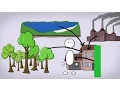
this environmental valuation method tries to quantify the value of ecosystem Services by examining housing prices if people value Parks Lakes nice views if they dislike pollution then presumably the value of these things will be reflected in houses that are closer to or have these characteristics so the idea is if the price of a house is influenced by the characteristics of the house we can collect information on prices and house characteristics like the number of rooms and the distance to amenities and then use regression and analysis to build a function that can predict how the value
would change in the absence of the environmental service so this method is best for estimating ecosystem services that are captured in housing prices like the value of being close to a Wilderness Area or Park Scenic fuse and the negative effects of pollution this method is nice because it directly observes people's behavior housing prices are competitive efficient and the information is generally available and reliable it should be relatively easy to collect the information although more skill would be needed to do the analysis we'll have to take some care of the relationship between Environmental Quality and the
value of property may not be linear also the method only captures the willingness to pay for perceived differences in housing attributes so for example if people are unaware that air pollution is bad for them or that that property is at risk of air pollution the environmental service may not be captured in home prices a group of researchers from the research School of Pacific and Asian studies in the Australian National University investigated this for air pollution they found policy makers would often make excuses for why they weren't addressing air pollution in developing countries sometimes suggesting that
people just didn't care so the researchers wanted to help quantify it they chose the province of Jakarta in Indonesia because data was available and air pollution had become a problem there they used the Indonesian Family Life survey to find data on house prices as well as information on house size number of rooms the materials used for walls roofs and Floors water source availability employment rate in the area and whether people had University education the accessibility of public transport and distance to the province Center were used as ways to try to measure accessibility of employment these
are factors that affect property value they analyze these as the explanatory variables and the price as the dependent variable to find information on air pollution they looked at an Asian development Bank study that was conducted about the same time as the Family Life survey air quality was measured by the concentration of six different pollutants the data was only reported by subdistrict so instead of taking the blocky boundaries as literal they sort of averaged the reported levels between subdistricts in the end they found that five out of the six pollutants negatively correlated with housing prices suggesting
that people cared about air pollution even if they weren't very rich which should come as a surprise to nobody they could also quantify it for example they found that every micro of sulfur dioxide per meter cubed had a negative impact on housing prices of $28 1997 this is the last of the observational or revealed preference valuation methods we're going to look at the next few methods will be stated preferences methods where through surveys we estimate the Environmental Services value