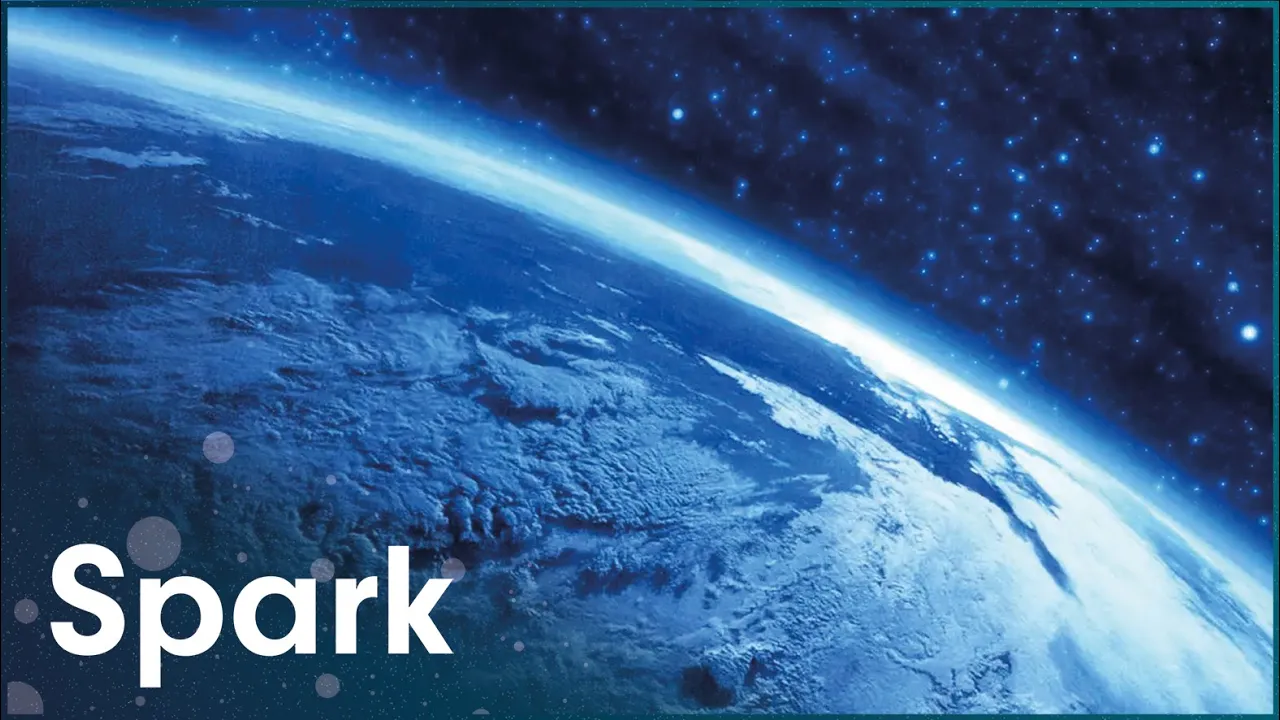
in the empty Blackness of space surrounded by hostile planets and freezing vacuum planet Earth is an oasis of life and all because of our protective Cocoon of gas this blanket of air shapes everything we see on Earth it protects insulin and sustains us it carries water around the globe and shields us from cosmic impacts and killer radiation it's time to uncover the invisible wonder that is our [Music] atmosphere down here on the earth we rarely give much thought to our atmosphere because we can't see smell taste or hear it we take it for granted but
our air is all that stands between us and the vacuum of space we've got this canopy that provides us a lot more than just an atmosphere to breathe in it it definitely Shields us the atmosphere is divided into five distinctive layers the troposphere Strat spere mesosphere thermosphere and exosphere each layer is less dense than the one below stretching miles above our heads how far out it goes depending on which scientists you talk to some say it ends at 300 miles some say it extends out to Mars we live in the layer closest to the ground
here in the troposphere the air is thickest and the pressure greatest our bodies are perfectly matched to these conditions our chemistry our very nature our metabolism is uh is completely shaped by the atmosphere to appreciate our atmosphere we'll rise through its layers traveling from the planet's surface miles up above the mountains and the clouds to the very edge of space August 16th 1960 one man is preparing for a record break journey into the mysterious skies above to a lethal world above 99% of the earth's air where an unprotected human would die in seconds where the
temperatures plunge to 67 below and the air pressure is a h hundredth of that at the surface Colonel Joseph kittinger will travel almost 20 M high and then he he will jump this is a key military mission one of the first steps in the Space Race kittinger will be testing the human body's resistance to high altitude low pressure and Rapid freef fall he will be triing new technology he hopes will protect him it had never been done before but we were not there to set a record we were there to gather information that we needed
for our space program and for our half flying aviators ground crew prepares his vehicle a helium balloon and a rudimentary open-sided Gondola just an open Gondola it was designed just to carry me up there it was a space platform an elevator I called it at 5:30 kittinger's preparations are over he boards the gondola my crew chief said uh are you ready I said I'm ready let's go it was a very smooth takeoff and I started ascending up up up 30 minutes after takeoff kider reaches 29,000 ft the middle of the troposphere at this altitude the
air is so thin that each breath contains only a third of the oxygen found at sea level kinger breathes from gas bottles connected to his sealed helmet he's still barely a third of the way to the jump point there are another 14 miles to go and the air pressure is dropping rapidly so at about 40,000 ft suddenly the pressure suit starts inflating and and that's when you start checking it to make certain that it's working properly but there is a crucial fault in the suit the glove covering his right hand is not sealed I had
an option to tell the ground that I had the problem and I knew if I did they'd probably make me abort the flight and I was concerned that if if we if we had to abort that flight that we would have been turned down to try to do it again so I didn't tell him kinger prays that this is an isolated fault and continues to climb at 1,000 ft per minute after 89 minutes he approaches his Target altitude the balloon climb slows and then stalls kinger is in the mid Stratosphere a record 102,800 ft high
and it is now time to make the long Swift Journey down when it came time for me to jump I was I was ready to jump because I was heading back toward a more friendly environment a friendly planet that we're used to I had made this jump a thousand times in my mind I'd gone through every step a thousand times well just before I jumped I said a silent prayer I reached over and hit a button that started the cameras going and then I just did a little hop off the step of the [Music] gondola
you can't tell that you're going fast you can't tell anything and I looked up at the balloon and the balloon was firing into space and I said gosh that's amazing and then I realized it was me that was going down at a fantastic rate and the balloon was standing still he falls for 16 miles the thin air offers almost no resistance he reaches 614 mph approaching the speed of sound after a record-breaking 4 minutes and 36 seconds seconds of freef fall kinger opens the main parachute he drifts down to the desert floor and lands we
were just elated because we had accomplished what we set out to do there was a lot of people said we couldn't do it and we proved that we could do it the mission has been a stunning success kinger skydiving record stands to this day he takes his first deep breath of air with a newfound appreciation for our atmosphere it was relief to be back on on the planet Earth that we love so much a planet that has an atmosphere that we can live daily kinger forged a dizzying path through the atmosphere Our Journey Begins just
a few feet off the ground with the air we breathe we take for granted Earth's blend of gases the perfect mix for heat and energy and astronomer David grinspoon believes we'd be hardpressed to find its equal anywhere the more we learn about planets the more we learn that they're they're all individuals they're they're like people in that sense so as far as what we know now Earth's atmosphere is completely unique in the past Century telescopes and space probes have uncovered the extreme atmospheres of our neighboring planets a journey across our solar system reveals exactly how
unusual Earth is clouds of near Frozen gas flow over the icy surfaces of Uranus and Neptune while the sun has blasted away the atmospheres of Mars and Mercury to me uh it seems as though Mercury doesn't have an atmosphere at all in fact if you were on the surface of mercury it would look to you as if you were out and outer space in contrast Jupiter and Saturn are all atmosphere unlike Earth Jupiter doesn't really have a solid surface that you could stand on and then have your head up in the atmosphere looking at the
clouds it's it's just a giant giant gas ball only one other planet shares the Earth's thick atmosphere in Rocky surface our near neighbor Venus but even here there are striking differences Dr David crisp has spent 20 years studying Venus's acurate air imagine you're at the surface of the planet Venus you're at pressures that are high enough to crush a nuclear submarine the pressures there are about 90 times the pressure of the Earth's surface this pressure is combined with extreme heat 9 900° F hot enough to melt lead clouds drift over the baked surface but they
are not water vapor Venus's clouds are made of concentrated sulfuric acid Venus is a stark example of how extreme an atmosphere can be but the real mystery isn't why Venus is so hostile but why Earth hasn't followed the same path as as planets go Earth and Venus are essentially twins they're almost exactly the same size they're also very close together in the solar system in spite of that their environments evolved in dramatically different ways to discover why these twin planets followed separate paths and to explore what gave us our precious atmosphere we have to travel
back back 4 and2 billion years to the birth of the solar system itself the birth of the Solar System created Earth's earliest atmosphere huge quantities of material orbiting the Sun fused together into Proto [Music] planets Jupiter and Saturn formed into gassy spheres but on Earth most of the material condensed into a molten core the remaining gases bubble forth from the liquid rock forming the first atmosphere our planet's gravity stopped these gases from drifting off into space but Earth now had to face the ravages of the solar wind a stream of charged particles thrown out by
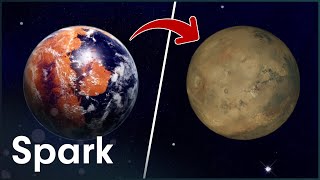
the sun this same wind had a catastrophic effect on Mars it has stripped the air from the planet's surface blasting it deep into space the red planet planet's atmosphere is now only a hundredth as thick as [Music] Earth's our planet was spared this fate the magnetic field generated by the Earth's core blocked the solar wind preventing it from blasting away the fragile air but the Earth's atmosphere was still very different from the one we breathe today it contained high levels of carbon dioxide a gas with a key ability to absorb and hold on to heat
carbon dioxide still makes up 95% of Venus's atmosphere it superheated our twin planet to the point where its water boiled away into space and yet this didn't happen on Earth David crisp believes that was down to a chance event if Earth kept all of its initial atmosphere it probably would have turned turned out a lot more like Venus but that didn't happen we were the victims of a very lucky accident Earth's Big Break came 4 and2 billion years ago back then the solar system wasn't limited to the eight planets it has today instead a swarm
of protoplanets or planetesimals orbited the sun like bees around a Honeypot one Mars siiz body was heading straight for Earth in a colossal Cosmic Collision it slammed into our planet creating our moon and according to crisp removing the atmosphere that still blights Venus this ancient event was the defining moment for our atmosphere with the original deadly gas mix blasted away our planet's air could slowly evolve into what it is today we were left with this an atmosphere made of molten rock and and vaporous rock uh it took millions of years for that atmosphere to fall
out uh and to be replaced by an atmosphere made up of nitrogen and uh carbon dioxide and water vapor I think that's an interesting thing this one piece will make 52 layers watch on mobile devices or the big screen all for free no subscription or fire these new gases came from above and below volcanic eruptions spewed out fresh stocks of nitrogen and carbon dioxide from within the planet's molten core while the vital element of water may have been delivered by Icy comets each impact bringing a new Supply of Frozen liquid but the air still lacked
one of its key ingredients one of the things that was missing is free oxygen molecular oxygen O2 the stuff we [Music] breathe Dr Janet Seafort of Rice University in Texas searches for the event that produced the atmosphere's final element we know from The Rock record that for the first half of Earth's life there was no oxygen in the atmosphere whatsoever there were greenhouse gases like methane and CO2 but there was no oxygen but the rock record shows a sudden change dated to around 2.5 billion years ago evidence of the first oxygen in the atmosphere the
gas was released by by a humble microscopic living organism called cyanobacteria well what turns out cyanobacteria are the only things that can actually produce oxygen so we know that at some point cyano bacteria colonized enough of the planet in order to produce enough oxygen that it became resident in the atmosphere as the microbes multiplied and spread the gas built up in the air transforming the planet in a process known as the great oxy ation event oxygen is very powerful the world gets turned upside down everything has to begin to adapt to now a completely new
atmosphere where oxygen is dominating first the oxygen reacted with the oceans causing iron within them to form Rusty deposits on the sea floor then its effects reached dry land it reacted with soil and rock giving them a reddish Rusty tinge and once these minerals had absorbed their fill of oxygen the gas began to gather in the atmosphere with dramatic consequences for Life complex animals could have much higher metabolisms because of the the sheer potential that oxygen provided for them and a whole different kind of evolution was able to take place powered by oxygen life evolved
from single celled organisms to complex animals and plants also began releasing oxygen thanks to an ancient adoption of photosynthesis a very ancestral primitive plant cell either engulfed or tried to digest or surrounded a cyanobacterium and instead of digesting it it actually became an organ within the plant so every bit of the oxygen even if it's coming from a plant that you see in your yard is coming from an ancestor of a cyano bacteria resident inside the plant with the rise of oxygen the Air's unique blend of gases was complete this air we breathe has changed
planet Earth molding its terrain and habitats and as we continue our upward Journey we run into another vital substance water the turbulent movement of our atmosphere carries water vapor around the globe powerful winds and violent storms smash our buildings and drown our Fields but without them the land would be bone dry our atmosphere is in constant motion the moving air that causes our weather circulates between the ground and 50,000 ft it is the Sun that drives this movement when solar energy reaches Earth it heats the surface and atmosphere but it does so unevenly this temperature
difference causes the air to move hot air near the equator expands and Rises cold air at the poles becomes denser and sinks Noah's Marty Ralph can track its movement over the globe on the Revolutionary science on a sphere [Music] simulator what we're seeing here is a portrayal of the Earth surface temperature and red and warm colors are warm temperatures like we see in the tropics here up in the poles you see the blues and the greens those are the colder surface temperatures so we can watch this and actually see the warm air moving northward the
cold air moving Southward and we can see the changes in the seasons if the atmosphere didn't move the poles would be 45° cooler and the equator 25° warmer the great deserts of the Sahara atakama and Mojave would expand dramatically Northerly cities like London or Boston would be locked in an icy winter it is only the atmosphere circulation that prevents this it regulates the temperature moving the air to create the weather that covers our globe the planet's rotation twists the air as it flows helping form the Hurricanes that lash the coasts as moist air Wells upwards
clouds become electrically charged and send lightning bolts Crashing Down to Earth superheating the air to 18,000 de and as the air cools water vapor condenses into clouds and rain this water evaporates from the world's oceans at any moment 1,000th of a percent of the world's water is being carried in the air but that tiny percentage adds up to almost 3,000 cubic miles of liquid if the air didn't carry water the land would be bone dry storms do a really important job for the atmosphere they help reduce the difference in temperature between the poles and the
equators and in the process they actually create the rain and snow that we depend on one of the most powerful weather systems is a newly discovered set of water channels running through the air Ralph's current research focuses on these mysterious rivers in the sky one of the phenomena that really influences where the water is available for us are these regions where water vapor transport is focused we've come to recognize that phenomena as a atmospheric River atmospheric rivers are narrow channels of hurricane force winds that can stretch for thousands of miles a single River can carry
three times as much water as the entire Mississippi they provide almost half the annual rainfall for parts of the American Pacific Coast but when they remain over one area for a day or more they can produce violent flooding heavy winds lots of water vapor a storm track that's not moving fast adds up to a big flood event the rivers were only recently discovered because they form over the world's oceans we still don't have enough data to forecast their floods an example of the challenges we face in weather prediction is that while this model can actually
produce an atmospheric River like we're seeing right here a week ago today we looked at the forecast for today and it said there should be a strong atmospheric River creating heavy rain in Northern California well instead it's hit in Canada that's a huge difference to fill the Gap in data Ralph explores the rivers on Research flights the rivers form in front of banks of cold air they create channels of wind that carry huge quantities of water vapor from the ocean to the coast at up to 100 miles an hour these are like conveyor belts for
water vapor they're very narrow and yet they do 90% of the water vapor transport for the global atmosphere at those latitudes when the air flow hits a mountain it Rises up shedding its water as rain and snow Ralph has tracked how the rivers move with a changing season but to fully forecast the floods he needs a lot more atmospheric [Music] data he believes robotic drone aircraft developed for the military could continually measure the air over the oceans charting its temperature winds and humidity and the flights could also track how the rivers are changing we're starting
to see evidence that they the more intense atmospheric Rivers might become more frequent in certain parts of the world and that that will contribute to increasing the frequency of flooding the changes Ralph has identified are part of a wholesale shift in our climate and atmosphere desert are expanding while rainforests are drying out all due to a change in the chemical makeup of the air this blend has always been in flux we alter the proportions with each breath we take but our factories and homes planes and cars amplify the process for over two centuries we have
been dramatically increasing the amount of warming carbon dioxide in the atmosphere so far the planet's natural air filters have ped pulled nearly 55% of it out of the air the North Atlantic has absorbed a tremendous amount of carbon dioxide but at the moment it's almost completely saturated by carbon dioxide so it's not absorbing very much more uh it's almost like a bottle of of some kind of soda pop it if you uh warm it up a little bit it'll actually Fizz and release CO2 as these natural safety valves close we will face an even more
dramatic rise in temperatures the glob global average could be up 7° F by the end of the century wreaking havoc with weather patterns and habitats we can prevent climate change by preserving the Air's delicate blend of gases the unique mix that sets Earth apart and our planet is also marked by how this blend sits above the surface in a distinct layered structure as we ride rise above the clouds and Winds of lower altitudes we enter a completely new Zone a world of extreme temperatures and ever thinning air air that would kill us in seconds but
which Shields us from deadly radiation we live in a tiny sliver of Earth's atmosphere called the troposphere winds and clouds s rain and snow dominate this turbulent Zone but above it lie miles of freezing dry air the conditions there would kill a human in seconds but we desperately need the high atmosphere's weight and protection engineer John Powell's balloon team has spent 27 years exploring its layers pushing further and further into this remote dangerous World sometimes we just run into a phenomenon that we have no no idea what that was we just have this moment of
data in it that we need to go back and explore but it really is like a completely alien foreign World up there the team has made over 90 launches each one edges them closer to their ultimate goal of reaching [Music] space you can use balloons not just to go to the edge of space like we do now but go all the way over the line and actually use balloons or airships to go all the way in into space space travel without the rocket officially the atmosphere ends and space begins 62 m up this sounds high
but on a tabletop globe that would only be as thick as the coat of varnish and in reality the air extends out much farther the atmosphere's lowest layer the troposphere we live in ends 40,000 ft up the cruising altitude of airliners above are another four distinct layers they're all separated by their temperature it gets colder and colder and colder then it warms up to a nice toasty zero and then it starts to get colder again so whenever the temperature changes directions you know you've made it into another layer first comes the stratosphere a stable layer
without strong winds then temperatures in the mesosphere plunge to minus 150° f above that is the thermosphere where solar radiation can push the thermometer back up to 4,500 de and finally there is the exosphere an endless Zone where air molecules slowly thin out into the pure vacuum of space now the exosphere is really high they actually detected particles of the Earth's atmosphere on The Far Side of the Moon during the Apollo program as Powell's balloons rise towards space they leave the world we know far behind the air Thins and they begin to lose the protective
weight of the miles of air above them the pressure is dropping when you finally get to the stratosphere to the the altitude we' like to work at it's only one/ 100th that of it is on the ground it is a whole different world than down here the weight of the miles of air above us creates air pressure we often think of air as weightless but all those gas molecules add up Grand Central station's main Concourse contains over 200 tons of air as gravity pulls the air down it compresses the layers below making them denser this
dense air is what we are used to dealing with on the ground just a pint of it contains more than 8 and2 billion trillion gas molecules but higher up around the balloon there is less atmosphere pressing down from above the air up here is thinner it's like being under a thousand blankets and each blanket is a layer of the atmosphere and we're being pushed under all of these blankets now as you go higher you're going up through the blankets so it's pushing on you less until you're at the top and above most of the blankets
where you don't feel it at all that thing air seems alien to us because our bodies and Technology are so perfectly adapted to thicker air we even need it to hear the gas carries sound through air as pulsing waves of pressure sound is just a wave like a water wave in a pond but if you take away the water there's nothing for the wave to go across and as the atmosphere gets thinner and thinner it supports that wave less and less and less finally in the vacuum of space there is nothing to carry the wave
and even the largest explosion is [Music] silent school science experiments on board the Airship study the dramatic pressure change and we call it a pat for pingpong ball satellite and it's real simple the first thing they do is they have to cut the pingpong ball in half then your experiment goes inside and the simplest of my favorite is where you take like a little mini marshmallow and they just drop it in the ping-pong ball this is satellite construction at its best and then we take them to the edge of space in the thin air of
the stratosphere the marshmallow is no longer held together by high air pressure air bubbles inside it expand causing the spongy candy to bloat outwards and burst open the pong set just as the Thin Air is dangerous for marshmallows it can also affect Flesh and Blood contrary to popular belief your blood won't boil it's held in by your blood vessels but any exposed flesh will swell out like the marshmallow and at around 26,000 ft the air is too thin to breathe there just aren't enough molecules in every lung full of air and starved of oxygen your
brain will begin to shut down you know the extreme cold would get you but the lack of pressure would get you [Music] first as the balloons rise higher still they face attack by an invisible bombardment radiation every day the sun radiates a Titanic amount of energy some of it in the form of high energy ultraviolet rays these Rays pack a powerful punch and in the high atmosphere they attack the structure of Powell's balloons the UV literally damages the material and you start getting microscopic cracks in the material which makes it brittle you eventually it just
fails and the balloon pops the rays are potential Killers both for balloon and human they bombard our cells and DNA triggering cancers but around 7 m up a layer in our atmosphere Shields us from 99% of these Rays it is made up of ozone a rare molecule of three bonded oxygen atoms this can absorb and block high energy UV rays the ozone layer it's not like this Saran WRA thick layer or boundry that you pass through it's actually Miles and Miles thick so it's a slow diminishment man-made chemicals used in refrigerators and aerosols have been
eating away at this delicate protective layer every winter holes in the shield appear over the poles the harmful chemicals are now banned and the layer is beginning to recover and above it the fragile air of the mesosphere is shielding us from another deadly barrage from space in East Texas Jeff notkin and Steve Arnold are searching for the remains of cosmic missiles that have been Shattered by our atmosphere fragments rarer than diamonds and worth their weight and gold meteorites these two professional Hunters seek out space rocks buried in the fields and prairies this search for meteorites
allows me the chance to touch a little bit of what's from out there bits of the cosmos that have found their way to us the hunt has taken Steve and Jeff from Siberia clear down to Chile and some of their finds have been spectacular the largest metor I found was a430 lb it was a large Stony Iron meteorite from up in Kansas we didn't realize was that big of a deal the the media kind of picked it up and ran with it he's very modest it's not only Steve's greatest find it's one of the greatest
finds ever made in in in meteorites the massive Space Rock has been valued at up to a cool million dollars but this is a rare find because most meteorites simply don't survive a brush with Earth's atmosphere most of them don't make it to the surface the atmosphere is is our friend in the sense that it it protects us from these rocks from space but for meteorite Hunters it's also not our greatest Ally because it burns up a lot of what we're looking for Steve and Jeff search for remaining fragments using a custombuilt metal detector rig
meteorites will have iron in them and it's Ferris and so not only will a magnet attract to it but also a metal detector will be able to pick it up every year over 18,000 meteorites lock onto a collision course with Earth when meteorites encounter our our atmosphere they're traveling at the speed that they that they acquired while moving through the vacuum of space and typically they're traveling it many thousands of miles per hour as they head down to earth they cut through the outer reaches of our atmosphere but once the meteorites enter the mesosphere the
air starts pushing back we can't can't see the air around us and we can only feel it on really windy days like this but a meteorite encountering our atmosphere definitely feels the air and that is because it's traveling so quickly when it encounters our atmosphere the air in front of the meteorite cannot get out of the way in time it's almost like the meteorite hitting a solid wall like a block of concrete as the air in front of the meteor compresses it also heats up to more than 30,000 de F eventually it burns bursts into
flame lighting up the sky when you see a falling meteorite or shooting star it's actually the protective shield of air that you see burning not the meteorite itself but the friction and heat wears away at the Space Rock the hot air actually melts the metal surface and often the collision with the atmosphere can have a shattering effect splitting the meteor ites along Fishers this is an actual meteorite and if this were to encounter the atmosphere at high speed in its current condition and that's the result only fragments of the original asteroids surviv the fall to
Earth their speed has dropped from 17,000 to 300 M an hour rocks as big as station wagons have shrunk to the size of golf balls they impact on the surface forming holes a few inches deep the chances of finding one are remote there we go I'll get the shovel right about there [Music] mro it looks promising but this time the guys are out of luck so yeah we found a plow and um basically uh a lot of different types of trash can be in these fields and so anything that's Ferris our detector is going to
pick up meteor wrongs as we call it um as opposed to a meteor right on average they uncover 75 meteor wrongs for every meteor right this is a genuine iron meteorite this is believed to have once been part of the core of a long dead planet or asteroid and this was found right here in this stre field these remarkable little shapes indentations on the surface are called thumb prints or scientifically regmaglypts and that's a feature that's unique to meteorites and these little markings are caused by the surface actually melting as it flew through the atmosphere
we don't find regmaglypts on Earth rocks the air is constantly at work making meteorites rare and valuable the chances of meteorites surviving their Journey through the atmosphere and being found are minuscule if it wasn't for our atmosphere we would have little particles raining down on us all the time and some of them not so little the mesospheres barrier of thin air is the final gift from our atmosphere adding to the oxygen we breathe water we drink and pressure we feel but as we cross into the layers above we leave life far behind John Powell's airships
have only reached the upper Stratosphere kittinger's jump point is below that in the middle of the stratosphere the only people who travel through the superheated thermosphere and distant exosphere are astronauts heading for space one day these manned space missions May reach out even further to distant planets with alien atmospheres atmospheres that may support their own life forms elsewhere in our universe on distant planets alien air May support extraterrestrial life Joel Hagen has spent 20 years imagining how those atmospheres could have affected their inhabitants that's where some of the real creative Joy comes from is trying
to think about everything that has happened here and then take yourself one notch Beyond it and imagine what haven't I seen yet and then try to visualize that one of the possibilities that intrigues Hagen is life on a gas giant planet this is an environment so completely alien to what we're used to even a planet like Jupiter for instance has no solid surface just a a gradual transition of densities of gases and I think we might imagine creatures in an atmosphere like that that sort of relied on buoyancy perhaps being able to generate hydrogen for
example uh somehow with uh within their bodies these creatures would be like hydrogen filled blimps lighter than the air able to float amongst the gas clouds the concept that I have here is to have perhaps colonies of microbes in these sort of tentacle like uh structures here and these microbes generate the hydrogen which in turn sort of inflates the gas bag here creature like this then could sort of float freely uh at certain levels in the atmosphere on other planets with denser atmospheres larger more complex creatures could take to the skies the thicker air would
support them Aloft allowing bulky reptiles to Glide and fly this creature probably wouldn't be able to fly very well on our planet but even on a planet like Titan for instance that has a surface gravity only about 15% of Earth's but an atmospheric density at ground level about one and a half times even a person with wings strapped to their arms could fly in an atmosphere like this so we we could have we could have creatures like this Hagen bases his ideas on known planets and the evolutionary history of Earth but it's all pure speculation
until we find life in Alien atmospheres I would be pretty thrilled just to find microbes under rocks on Mars for instance I they don't they don't have have to walk up and shake hands with me to to get my blood up I I would be pretty happy to just to know that life has happened twice at present we are alone life may have happened just this once and if it did then it's only because of our planet's unique atmosphere as we have soared for miles above the ground we have journeyed through this ocean of air
the air which Shields us supports us and sustains us with every [Music] breath