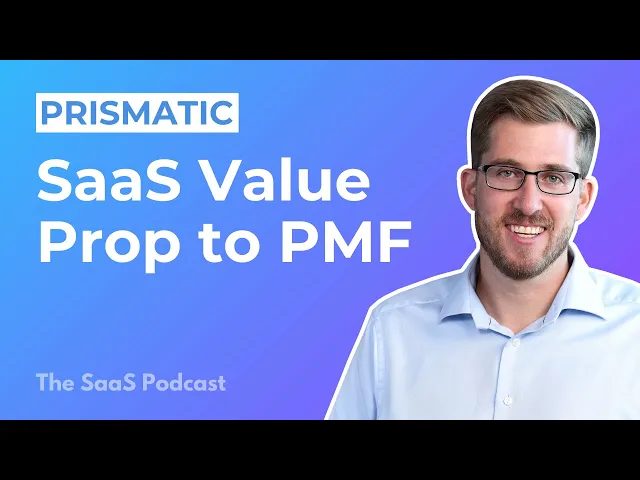
Michael welcome to the show thank you for having me my pleasure do you have a favorite quote something that inspires or motivates you that you can share with us so I almost hesitate to say this because it comes from an ad of all things but uh back in the day AWS used to use in their ad copy of a quote that is stuck with me which is well talkers talk Builders build and uh I I don't know I just I I loved that yeah yeah me too um so tell us about Prismatic what does the
business do what product do who's it for and what's the main problem helping to solve yeah so Prismatic is a is an embedded uh platform that helps SAS companies connect their products to the other products that their customers use so you know if you're a SAS company almost certainly as part of your value proposition you need to connect your product to something else it's different in different Industries and different use cases but usually there's some part of the value prop that requires that uh there are a lot of ways to to handle that but but
most of them are pretty complex and pretty uh timec consuming expensive Etc and so Prismatic is a a new way and an easier way to kind of make those connections manage it at scale Etc Great and give us a sense of the size of the business where are you in terms of Revenue customers size of Team yeah so team's about 60 people um you know from our ARR perspective we are well into seven figures at this point and um well on our way to eight great um and customers uh north of a couple hundred okay
perfect so let's I mean the business was founded in 2019 but I think the the story starts probably back in 2003 when you were running a previous business and you started to experience some of these these integration pains firsthand so why don't we start there tell us about your F the first business you built and and how that led you to you know eventually identifying this this pain point that you were going to go and solve yeah so my first business goes all the way back to 2003 which seems forever go in software land uh
you know it was it was not a SAS business it was kind of pre- SAS in a lot of ways or I guess at the very very beginning of that probably um and so we were a we were a software comp software product that was used by Public Safety so that's law enforcement police fire departments 911 centers in North America or emergency response centers uh and and so we were kind of the we were kind of the like Erp and the CRM and some other things of of those agencies and it was this like really
weird niche market that's actually a pretty good sized Market it's uh more than a billion a year in Revenue uh just in the United States so decent Siz Market okay great so you you you you built that business I think you for what like 12 13 years before you ended up selling it I think I was maybe actually there for 15 years total um the first few years was very slow growing uh I was actually in college at that time and so kind of did both and wasn't fully focused on on the business but uh
you know at some point we we kind of turned the corner and really got got rolling and uh over that 15 years we got to about 50 million in revenue or so uh and had I don't even recall 2500 or 3,000 customers something like that did you bootstrap the business did you raise money at any point yeah we bootstrapped that business uh to about 10 million and then we um sold a a chunk of it to to growth Equity or private Equity um and that would have been in 20 that would have been in 2015
um and then obviously had the capital to accelerate growth for that next few years got it so I know that the the pain that uh Prismatic solves is something that you experienced firsthand while you were bu building that first business give us a sense of like some of the challenges you you were dealing with and why you felt that you know even after all these years of of that pain and suffering firsthand you decided that you wanted to you know spend even more time and you start up to solve that problem yeah so I mean
that's an interesting space because in the United States law enforcement is more different from state to state than most people realize uh you know it's a every state has their own government law enforcement is largely at the state level in the United States and so you have fundamentally different ways that those agencies operate well what that means is the product has to be pretty different from state to state and so as we grew to a national company and ended up in 40 some states uh we had to support all of the different ways that business
was done in different states in law enforcement um well a big part of that was a set of Integrations in each state so if we were going to suddenly start working in Florida there were 15 or 20 or whatever Integrations to other solutions that we had to have that Florida used and nobody else used or maybe it was a regional thing or whatever so just the nature of that market meant that by the time we were kind of full National coverage and a decent scale we had built 600 Integrations as part of our product and
that was painful in all the ways that you would expect that to be painful um and I think when I left we had something like a hundred people in our engineering organization and half of our R&D effort was building and maintaining Integrations so unsurprisingly every quarter or every year or every time we had any kind of strategic conversation one of the things always on the Whiteboard was what can we do to make Integrations more effective what can we do to move it faster what can we do to because I mean it just affects so many
things and um and so we beat our head against that wall for years um and you know when I I left that business in 2018 after uh you know after B capital acquired it and in that in that process I felt like Integrations was kind of one of the unsolved pieces like it worked we just threw threw money at it basically and and built them and it worked it was the right answer at the time but we always wanted to buy some kind of platform to make it easier and we even tried we looked at
Players out there and it's just nobody was really solving the problem that we had and so I think um you know I knew I was going to go do something else I was too young to too young to hang it up and so um I got the opportunity to work with a couple of really key people from my previous business and so the the three of us started this company as co-founders um Justin and Beth and um we were just pretty stuck on like well it's something we hated but we sure know it well and
uh you know and it felt like an unsolved thing it was maybe a little cathartic to go do something about it um but you're exactly right like it was not fun thing that we thought back on fondly uh and in some ways in some ways was kind of throwing ourselves back into the pain yeah yeah and and I think there an interesting perspective there you know we we often hear this advice that if you're going to go and build something you know you should do something that you're passionate about and you're going to get excited
to work on every day but I think equally as important is just a problem that you almost are just so determined to solve that you just can't stop thinking about it is equally you know as as as a sort of a driving force yeah I think fixation on a problem is a huge part of making the early stage work there's there's no I don't know of another way uh to succeed other than just be so drilled into something you can't think about anything else and um that doesn't always mean that you have to enjoy every
bit of it in my view that's maybe a little bit dark but like I mean you can be pretty fixated on something that's driving you crazy instead of fixated on something where like every minute of it is great fun uh any anybody who says that every minute of something is fun hasn't done it long enough would be my argument I agree all right so you you've you worked with with Justin and Beth for for some time you you guys decide that you're going to go and start Prismatic in 2019 was it just the three of
you in in kind of in the first year yeah in the first it would have been like the first eight months or something I think was just the three of us and um we we were just spending our time I mean honestly trying to figure out what we would even call this thing uh the category which is now called embedded iPass or embedded embedded uh integration platform as a service that that name didn't really exist back then um so you know we spent a bunch of time vetting the idea trying to understand how we think
about it standing up some of the things that you stand up really early on like a really early teaser website and all that kind of stuff and and and and did some we did some building as well uh you know Justin is a very technical uh co-founder and and was the head of engineering here till pretty recently and so he did a lot of building I did a tiny bit of building um and we got it got convicted enough I guess to hire a team and I think that was pretty important to us was like
let's let's spend some of our own time here getting really convicted that this is the right thing and sure then we'll hire a team uh you know and start accelerating so in those 8 months or so when you you were trying to get to that point where you you felt convicted what did you do yeah so uh we we did as much conversation with I would even say prospects because we didn't have a product but just like people that could eventually be the ICP uh the ideal customer profile we we had a bunch of those
conversations um I had some connections just due to my previous uh you know previous business that allowed us to have some conversations with I guess kind of leaders in Tech businesses uh related to this space that gave us advice even though a lot of it we ended up ignoring but gave us advice about you know whether there was a place for this segment um because obviously integration platforms have existed essentially forever uh you know all the way back at least to the 70s probably before um and so you know it's it's kind of a kind
of a scary thing to say this thing that we really think needs to exist doesn't exist until now if it doesn't exist until now you have to ask yourself does it does it really need to exist or is this like a is this a solution in C of a problem and so we had a lot of those kinds of conversations I think that was one of my big worries was sure we experienced this but we were we're a sample size of one uh you know when we were in a pretty weird Niche industry and maybe
this isn't as universal as we thought and so we spent a lot of time I think trying to get comfortable with that what were some of the big take takeaways by the end of that that that eight or nine months like you obviously got to the point where you felt that you weren't the only ones who experienced this pain that there were other companies out there who had similar pains what else did you learn about your like who your potential ICP or Target Market was during that time yeah so to be honest I don't remember
exactly when we figured all these things out but I think in the that first eight months we almost certainly identified that you know we were really building a product and a sales process for two pretty distinct personas um you had kind of product leaders or product minded people and then you had engineers and those overlap and there's a lot of blurry lines and it gets cut different ways in different companies but but there's a difference between thinking about something from a product perspective versus that I'm going to build it perspective and and we needed to
we needed to speak to both we needed to serve both we needed to uh you know really have a have an offering for both and I think it's always a challenge when you're trying to build something that kind of equally serves two personas like that so we did a lot of work early on in the like how would you how would you build something that was compelling to both of those personas uh especially when you have limited resources like I almost I don't care how much you rais in the early days you've got limited resources
somehow or another and um how can you build something really compelling to it's hard enough to build something compelling for one Persona how do you do it for two and I think we spent a lot of time thinking about that and trying to kind of navigate that and that's a that's a problem we think about to this day yeah I I'm curious like why why did you end up with two personas would like it kind of feels like the easier thing thing to to have done would be to say we'll just pick one of them
and figure the other one out later but there was something that you guys saw that felt you felt that that wasn't the right way to go yeah you know I think we identified partially probably due to our own experience but I think we identified that they were they were both necessary but not sufficient Alone um where you know if you're going to make a so prismatics an embedded platform you embed us in your SAS product right if you're going to make a bet like that and you're going to you're going to make your dependent upon
a third party like Prismatic or off zero or AWS for that matter um that's a that's a big decision right like that's a big product or strategy or in early stage startups like founder level CEO level decision and so like you have to have the product mind you have to have the the product persona but then at the same time it's the engineers who are going to do the embedding and you know if they if they hate using it you're not going to get very far and so I think we identified that like neither one
of those alone was going to was GNA actually get us the traction we were going to need neither one of them was going to get us to a million of AR and that was not the simple path because you're 100% right I it would have been much easier to carve that down um in hindsight I think what we did was probably the right thing but it was definitely a scary thing at the time okay the other thing that strikes me about a a platform like Prismatic is this doesn't seem like the kind of thing that
you build an MVP over the weekend and then go and show somebody on Monday say this sounds like something that takes a long time to to build something that's credible that you can go and take to show these customers so how long did it take to build that that you know that sort of that first version of the product that you could get in front of customers yeah I mean that's a that's a great question and your intuition is exactly right this is not something where you spend a couple of months and suddenly have a
thing and and it only does one really small part of the value prop but you prove it I mean like if it does a small part of the value prop they're not going to use it and uh and so we we did everything we could to build the product in those early days we always talked about it as a prop it was a prop for conversations like this isn't something anybody is going to put into production anytime soon because like if you're gonna if you're product and therefore your customers are going to depend on it
MVP is not what those people are going to depend on but what we needed was something to to show the vision well enough to get people kind of aligned with us and on the journey with us so that we can go build a real V1 a real version one that you could put into production and so you know that that process did take the first uh you know we probably had a prop after I don't know nine months or a year or something like that that was like fairly compelling but it was it was more
than a year before we had our first customer in production and you know we got a lot of question I I get questions to this day about that like how did you do the MVP thing you know did you follow the four epiphanies of or the four stages of the Epiphany or whatever book that is um we kind of ignored some of that advice because I I just I don't know how we could have applied it to this space and maybe that's my own small minded this but we kind of knew what we needed to
build uh and and we we went and built a V1 and then shipped a V1 and kind of did it the oldfashioned way in some some ways isn't to say we didn't have feedback along the way we of course didn't do it in a vacuum um but you're right we had to get a long way before anybody was very interested okay and then so the other challenge you've got is you're basically know creating a new category as you said you know iPass didn't exist back then or people didn't know what to call it embedded iPass
didn't exist yeah embedded I yeah yeah so what did you discover when you started you know sort of go to market you're trying to sell this thing and how big of a problem was this in terms of articulating what the platform did and why people needed it yeah so you know I spent a lot of those early days feeling really dumb and feeling like a really bad Communicator because you know we would get on the phone with people who should be in our profile um you know you get on a call with them you're talking
them through what they're doing maybe they're an industry expert or maybe they're a a SAS company themselves or whatever and it was really hard for me to find the words to to to to convince people that this was like this was different than traditional iPass this was was different than the integration platforms like zappier and moft and everything in between it was different than those in some way that was important um but it was also like a repeatable enough problem across companies that it isn't something that should just be built by those companies every time
like you're kind of walking a fine line there where you're saying well it's not like moft but it's also not something you should build as part of a software company it's this like other thing in between and as dumb as it sounds it took us a long time to discover the phrase like help help our customers connect their products to the other products their customers use because people always think of of traditional eyp passes like moft they always think of that as like sure I mean if I need to connect net Suite to Salesforce I
buy mu soft I wire them together and everything's great or I use zappier or like choose your tool in that in that in that whole Spectrum right but the problem is when you're a SAS company and you're doing that not for yourself but for your customers into your customers ecosystem that is a different set of problems and it took us a long time to figure out how to you know I think just like enunciate well how that's a different enough problem that is just a completely different thing and it made total sense to us we
had experienced it but man it took me a long time to figure out how to explain it and um that's one of my you know honestly like I I think I wish that had gone faster in the really early days um and I I don't know that I have any particular Lessons Learned but like I've very much feel like I should have been faster at finding that how long did it take like roughly I mean probably we spent a lot of that first year I think doing that and then as we started selling the product
into into kind of the second year you know you'd have some large percentage of the people that you'd get on a call with where like you could just you could see there just wasn't that like spark in their eye um where they just got it um and I think it was probably actually around a million AR point when like the way I described it at the time I just remember feeling this I was doing all the sales myself at the time and I just uh with one uh other person who was doing sales engineering uh
with me we uh we just like suddenly the conversation just got easier like it was just this the Molasses that we had been waiting through got thinner or something and it was it's it's hard to put your finger on but like it just felt different people people would just you'd see it in their eye faster and more often and at that point that's actually when that's when I felt like we had you know what I always call like really early product Market fit where like we we found an ICP that will pay money for this
and is interesting there's always the advice that like you can get to around a million AR you've kind of proven maybe that there's enough of a market that you could go think about doing something interesting in it that was part of it for us but honestly another part of it was I just I just felt it change I felt the tone change and I think some of that's the product got better I think some of it's that we got better at explaining it and everything else but I remember that really really bcer really yeah I
mean I I I guess there's the let's let's go away and and have a you know a strategy offsite or something and figure out how to you know get our messaging right or there's banging your head against the wall repeatedly customer after customer who keep asking you these questions eventually like once you've been asked the question so many times you you figure out that answer right it's like yeah that that's exactly right like you say the wrong thing enough times that you eventually iterate to the right thing um you know we talk a lot about
you know training training AI models I to some extent felt like I got trained for that year uh by just like getting negative and positive reinforcement over and over and and navigating toward what worked and um as a result I'm a huge believer that Founders some some member of the founding team needs to be the one out there doing the early sales uh because that is just the front lines of where you're going to get Fe back on message and whether there's fit and all of those things I don't I don't know how else to
do that and once you know what you're doing of course you have to systematize the sales process but that have been a disaster for us if we'd have done it very early now one side of the the the equation is articulating what the product does so people can easily understand it and so on I think the other possible side of the equation here is convincing them that they actually need it and especially if you're talking to engineering folks who are like we can build this ourselves did you did you was that was that a common
objection you you'd hear when you were talking to customers absolutely um and and I think probably forever will be for anybody selling tools to Engineers right um and we went in kind of assuming that that would be our that our biggest competitor would always be chose to build in house um and and I think that will probably continue to be true for a long time um I think that we we as the product has gotten bigger and more sophisticated I think it is it is easier for people to understand the breadth of what they'd be
taking on to try to build some of it it's one of those problems like so many problems in software land where from any distance at all it seems really simple but then as you get up close to it there's like 10x the complexity that you saw from any distance and um and I think we've gotten better at explaining that and I think we've gotten better at demonstrating that and that that has eased eased the build versus bu scale a fair amount you focused on B2B SAS your target market when you started out I mean we
talked a little bit about you know the ICP and target market like how what what was some of the other kind of areas that you were looking at and then how did you get to a point where you felt that this is where we need to focus so we said from the beginning that we we saw our Market as software companies period and we were very focused from almost day one maybe actually day one that we we couldn't let that market get much more narrow or you ended up with a small enough total addressable Market
that it didn't end up being like even in success it wouldn't end up being as interesting as we wanted it to be and so um we we were really cautious in those early days not to narrow our Market to for example SAS companies that are selling sales and marketing software or SAS companies that are selling manufacturing software that would have been a really obvious way to narrow down the ICP the problem with that is you end up building a product that serves that vertical market and and make a bunch of decisions accidentally along the way
that don't end up then transferring to the broader software market and and we've seen some other companies that that are in kind of neighboring spaces to us or or or in our same space where that's exactly what they do they start with you know CRM or they start with something like that and they get pretty good at that and then and then they suddenly step back and say okay well now we're going to do it for for 17 different vertical markets inside software well you know you you spent so much time getting really good at
the one that it doesn't always translate and that and that's a real Challenge and so we always kind of said our ICP needs to stay broadly across software like software is already narrow enough and so you know then we narrowed it but you can't go sell to 30,000 SAS companies all at the same time obviously and so then we narrowed it down we said we're looking for companies that are that are big enough to have these problems for real like they've gotten to enough scale that it's not like you know well we're we're a two-person
company that's going to stand up our first integration and and there just isn't enough complexity to really see a lot of value in a platform like Prismatic but then small enough big enough for that but small enough that they can they can actually do something about it you get to some size of company and it's pretty hard to steer the ship it's pretty hard to talk about bringing in a tool like Prismatic and so we focused on that Middle Market uh pretty early on and and that was the way that we kind of narrowed our
our reble Market down to an ICP was you know small to midsize companies kind of leaning on the midsize a little bit that are you know that are in complex enough vertical markets across all the verticals are in complex enough vertical markets that they have real integration challenges and um and that ended up that ended up working fairly well okay one other thing that just hit me was like you know we talked about the the the the the messaging convincing them that they need this thing and I'm guessing it's not so much of a challenge
today but when you're trying to land that first or second customer there and it's this embedded you know solution they're taking a pretty big risk a pretty big gamble on on an unknown startup basically what were you doing or how were you able to build credibility with with these customers I am still eternally grateful to our first I mean probably 50 customers or something who took a bet on us you know in those in those early days when to your point like we didn't really have any credibility we didn't have longevity we didn't have you
know huge resources Etc um I think we built a fair amount of credibility by thinking really hard for a long time about this problem both before starting this company and after and being able to being able to go tell people what they like being able to go and to people what they maybe were thinking internally but couldn't put words to like I think we pretty quickly got to where we could get on calls with people and and just say things that like just made sense to them and we had a couple of pretty early very
early customers first you know within that first 10 uh that were decent sized companies one was a a um Fortune 500 company one was a couple thousand person private Equity backed company and in in both those cases plus some others you know what they what they told us was basically like you just you told us things that made sense to us about where this should go and maybe the product isn't like as mature as we would like it to be and maybe the company's a little scary uh but but you've got you've got a vision
that resonates really well and and I think I think that plus you know the truth is as a second time founder I probably got a little bit of you know a little bit of a of of a credibility Advantage with that as well that like you know people take I think a little bit of faith in the fact that you've done this before and you're not likely to do something completely insane in in the early days just because you've seen some stuff yeah I I think the fact I agree with you I think the fact
that you're you're a second time founder definitely you know gives you more credibility but it also underscores the point you made earlier about Founders doing some of that initial selling because you in many ways are the Ambassador the ad you know the you represent the company and if you can build credit ability with your buyers even though the startup may be very early on I think you you you can just just by you know you as an individual I think you can build a ton of credibility that that you know people are willing to make
a bet like I trust this guy yeah I think that's right um and you know we always talk about thought leadership as a kind of like top of funnel activity with content marketing and all of those things there's a place for like I don't know what you should call it but basically one-on-one thought leadership as well like you get somebody into the funnel in those very early days and you don't have enough success stories for them to just believe but if you can like convince them that you're the one who has thought really hard about
this problem and has a really like interesting Vision that goes a really long way and I I don't know what to call it other than thought leadership like you know and and I and I think I think that was really important and I'm not saying that was just me it was the company as at large but I was often the one you know delivering that message of course as the one doing the early sales so earlier I asked you before we started recording like how did you get to the first million in ARR and and
you told me you know SEO and paid ads were the two main channels that that helped you get to the first seven figures now when you're dealing with category creation I'm guessing there weren't a lot of people searching for embedded iPass out there right so how are you how are you getting in front of your Target customers what were you doing with SEO and in PID ODS so I think you know we identified at some point in that first year or two we identified that people people were looking for a solution like this but they
didn't they didn't know what to to your point they didn't know what to search for they didn't know what to call it um they didn't know they they just they didn't know how to go find it and so what we identified was like well but if I was looking for something like this and this is literally true of me at my last company um Justin my co-founder at pris and my head of engineering at at my last company um he and I went and we searched for integration platforms and we found moft and we found
boomi and we found you know whatever else I don't remember anymore but we found a bunch of those and we evaluated them and and like I said we eventually realized they were solving a different problem than the one we had but we did go find them and so we found ways to kind of piggyback on some of that search activity and some of that you know th those Search terms and names and things like that and I'm not going to say we found a silver bullet anywhere in there but I think we were able to
kind of like start the flywheel in the really early days by picking off the people who were clearly you know trying to find a thing like this but didn't know what to call it and that was really lossy huge signal to noise problem because some of them actually or many of them were actually looking for moft uh or you know and and I don't want to spend a bunch of time on the phone with somebody who really should go by moft zappier or somebody in between and so that was a pretty lossy process at the
time but it was kind of the only thing we had in those early days yeah I'm I'm trying to like you know you describe these conversations that you having and and explaining to people where we're like this but not like this and and and that's a one-on-one conversation and then it's like how do you translate that to a web page where somebody's just done some random search for integration platforms and then now you're trying to tell them in text that we're like this but not like this and and whatever right is that is that the
kind of challenge you having to deal with yeah absolutely yeah yeah yeah absolutely and the number of times that I heard from from both like from everybody from investors to Industry insiders to actual prospects the number of times that I heard like I just don't understand how you're different than moft um yeah I I mean that I heard that infinity times and we hear it basically not at all anymore because well for one thing the category is evolved and for another thing we've just gotten much better at explaining ourselves but um but like that that
was a very big problem is like how do we say well we're mu s but but like but kind of to solve this other part of the problem oh so you're like M soft embedded and then they get all kinds of weird ideas about what that would be and um it was a it was a it was a journey it's so hard and I think some people listening to this might not really appreciate how difficult it is but you know I've been in similar situations where you you know exactly what the difference is but for
some reason the right words don't come out of your mouth and it's just this constant frustration in terms of what is it that is in these people's heads that I need to kind of almost reprogram by what are those magic words I need to tell them and you know you I think you got to a point where you you were pretty crisp about it or I think you're pretty crisp about it now but just discovering those words was was a you know it was so frustrating and uh you like I said I I'd come from
a previous industry that was very established and we could say well we're like these other guys but modern in this particular way or whatever uh modern or cheaper or faster whatever right you can't do that in a new category and I I had I had dramatically underestimated how complex it was to be part of creating a category um and I guess hindsight's 2020 but um oh man that was oh man that was a pain how long did it take to get to that first million in ARR I believe it would have been like two years
two two or two and a half got it and so it it it was I it was kind of like it sounds like an iterative process where you're getting some SEO traffic you're getting some clicks through paid ads maybe it's not converting as well as you would like then you're having more conversations and your messaging is getting a little clearer and and then you know clicks clicks turn into more you know conversions and so on so it wasn't like you just woke up one day and and it was like you know these campaigns were just
all dialed up and oh God no nothing was nothing just happened you know it was a it was uh it was kind of pulling teeth the whole way uh or at least that's what it feels like looking back on it but um yeah I think it was it was very iterative we had a number of those first kind of 10 or 20 customers that kind of half evaluated us for a year almost um you know because they would find us and they would believe the vision and they would probably get to where they liked what
we were doing and liked us or whatever but to your point they're not ready to pull the trigger and just say like well I guess we're going to depend on these guys uh and so you know it was it was it wasn't really a sales process that whole time because like there's nothing it's not like we were advancing it along the way but we had a bunch of these deals that were just kind of stuck in this in this waiting room that we would just keep showing new things as it came along and fortunately we
had paying customers along the way as well but some of those bigger customers just kind of hung out and and when they started falling or you know or like coming on board um obviously that was a big part of the acceleration let's talk a little bit about um outbound cold email so you you you you eventually got SEO paid ads working get to Seven figures and then you started doing cold email and it's worked to some degree but it sounds like that was uh an even longer process in terms of you know making that work
so what what was the the biggest challenge there I mean you've got to a point now where you're at seven figures you know who your ICP is you probably had a bunch of conversations already so you know what their pains and problems are it kind of feels like you're in a good place to be able to send those emails that are relevant and resonate and all that stuff right but what happened you know I think outbound is I'm definitely not an outbound expert although I've learned a fair amount about it in the last few years
um I think outbound is one of those it's one of those things that just it changes so fast that as soon as you get something that works two months later or four months later or whatever it will be different all over again and you know any anybody who's done a lot of outbound in the last couple years will say basically the same thing that like it's just evolving so rapidly everything from the way the email providers detect spam and do all of that everything from that to obviously we all got just completely overwhelmed with our
inboxes and that changed the way that you have to message and get noticed and I just think all of that has been moving so fast that you there almost isn't such a thing as like finding what works for outbound and then doing it for a while uh you know you do your best for that but you're constantly you're constantly looking for something that is is uh trickling off in some way where you need to Pivot or you need to change and so I I I almost feel like we're just constantly Reinventing outbound and I've talked
to a lot of people who do outbound really well in completely out you know other companies and completely different spaces and they all basically say that same thing that it's just a it's just such a moving landscape um so I think we experienced that uh I think we still experienced that to this day I think it also took us a little while to figure out um you know exactly what verse you're going to send those emails into you you you can only email so many people in a day so how do you you know how
do you decide who the you know who the best the best prospects are or the best possible accounts or or whatever and I think we've gotten a lot more uh dialed in with that and um it's just a it's a complex environment to an outbound yeah I mean I you know these days on LinkedIn I see people who are just posting every day about cold email and and dos and don'ts and stuff like that and one thing I agree with you like it just it feels like it keeps changing all the time but also I
didn't know there was so much to tell people about cold email that there people are able to create so much content about it right yeah well you have to remember that these are these are outbound email people who are creating content like they're they're pretty good at spewing out content so okay so SEO paid ads uh cold email eventually what else did you do that didn't work um you know we tried various ad channels um like for example we've had basically no success with Google display ads I I I think a lot of people would
probably say the same thing but you know we've experimented with just about everything you can think of the ones that work we lean into the ones that don't we lean out of um there's there's been a lot of that um you know LinkedIn is another example where we've had some success on LinkedIn but like it it wasn't a silver bullet for us and I think I think it's it's probably another Forum that has kind of gotten noisy enough that it's pretty hard to get a message through in any way that reaches anybody in a significant
way um at least in our personas and so um yeah that was another thing that we've kind of you know haven't haven't leaned a lot into um we've kind of tried everything uh and we continue to so are you still doing so SEO and and paid ads absolutely it makes sense because at least in those you're you're dealing with kind of more inbound people actually searching for problems and solutions as a opposed to you know finding somebody on Linkin who's just you know drinking coffee and passing the time or something yeah exactly it's you know
to some extent a solution like ours isn't something where you like you see it on LinkedIn and think oh I'll give that a try right like it's it's it's not that kind of decision um and so like you're right you have to find people at the part of their product Journey when when it's a big enough pain to actually think about a solution like Prismatic it's not it's not a I mean I I hate to say it but it's it's not something you just like Implement in four hours and move on with your day it's
a you know it's a it's a product decision you're making and so um I think that makes some things like LinkedIn probably less attractive we should we should wrap up uh we're get into to the lightning round in a second I just had one quick question for you was that from what I recall when you guys basically got to the point where you you know you you in that first year of getting to the point where you felt that yeah this is something we want to do you start to hire a team and sort of
get going it sounds like I mean that was like a few months before the pandemic hit right yeah so we I think we hired our first team gosh I I lose timeline here but it was less than six months before the pandemic um and so yeah we were we were kind of just getting going and just getting a team jelled and everything and then of course everybody everybody went home we had an office here where I live in in South Dakota um and I don't think everybody was here at that point but most of us
were and suddenly that wasn't the thing anymore and then are you guys still a fully remote team yeah so we are fully remote at this point uh and have really leaned into it I think um in my view I don't know I have no idea how to make hybrid work uh I think I think in person can work really well I think we're proving that remote can work really well and that's something Prismatic has spent a lot of time and energy on I have no idea how you make hybrid work without just having two cultures
with two sets of people basically and so when we when it became clear that we weren't going to be just in person we just partially do the pandemic and partially because that was just the right way to go attract the right talent for this business um I think we would end up remote even without the pandemic probably but um but that was the accelerator at that point we said okay we're all in we're going to do this remote thing we're going to get the best at it uh you know we're going to put real energy
into it um and that I think has proven to be a very good decision and on that note we'll uh let's wrap up let's get on to the lightning round and I've got seven quick fire questions for you what's one of the best pieces of business advice you've received it was it was demonstrated to me rather than said to me in words uh but I I worked with a CEO who was very very good at letting just letting fire smolder where he needed to and that allowed him to focus on the three things that were
actually the most important that was really hard for me earlier in my career and I've gotten much better at that and that's been really good selected firefighting yes like you can't fix everything and sometimes you're going to let fires burn that are uncomfortable but it is what it is and you just as well acknowledge that and make explicit decisions that's a good one I haven't heard that one before uh what book would you recommend to our audience and why so I tried to pick one that's uh that's different than normal there's a book called the
strategy and tactics of pricing it's almost a textbook and it's in like its third or sixth or something Edition but um uh it is a very very good book on the theory of pricing and that's a really really deep subject and this is just a very great Trea on it okay great that's uh what's one attribute or characteristic in your mind of a successful founder monomaniacal monom maniacal um what's your favorite personal productivity tool or habit I'm a big believer in what Paul Graham wrote a decade or so ago about maker time versus manager time
and and so you know obviously I spend almost all of my time in manager time at this point but blocking off time to do maker things whether it's whether it's right or whatever uh you know I think just blocking time to think being a different mindset is really important to me what's a new or crazy business idea you'd have to pursue if you had the time I am fascinated by what um artificial intelligence is going to do to manufacturing and how that gives the Western World obviously I think a lot about the United States living
here but like give the United States uh a chance to bring manufacturing back to some extent in whatever form that ends up looking like um I think we're going to see a huge transformation there I think we're already seeing it I would love to work on that problem in any of the bajillion ways you could work on it uh but obviously I'm monom manically focused on Prismatic right now so that's that's very interesting actually I never thought about the kind of the pendulum swinging back with with AI and Manufacturing and yeah who knows cheap labor
may not matter anymore and that's a really interesting that's a really interesting thing what's uh an interesting or fun fact about you that most people don't know uh so I'm a I'm a pilot and I have almost 3,000 hours flying airplanes which is uh which is you know a year and a half of work or you like a work year and a half or something if you did it 40 hours a week so I've done a lot of flying that's like a little mortgage just for the plane yeah it was almost all for work so
that makes it easier and um finally what's one of your most important passions outside of your work uh so I have a I have a family I have a wife and three little kids and uh you know that obviously occupies whatever time I uh you know I I have that isn't isn't focused on the business right now so that's uh definitely where a lot of my mind is when I'm not here love great well Michael thank you so much for joining me it's been a pleasure um thanks for uh un unpacking the the story and
the journey with Prismatic so far if people want to learn more uh about Prismatic they can go to Prismatic doio doio yep Prismatic doio great and if folks want to get in touch with you what's the best way for them to do that yes so you can find either Prismatic or me on LinkedIn um or like you said our website at Prismatic doio great we'll include all the links in the show notes so uh make it easier for people to to say hello uh great well thank you so much it's been an absolute pleasure uh
congratulations on everything that uh you you've done so far and I wish you and the team the best of success thanks it's been a pleasure pleasure being on your show I I appreciate it very much my pleasure cheers