hello anatomy colleagues this is Dr. Alsup and in this video we have quite a bit to discuss a lot of really interesting things and and you can see there's quite a few learning objectives here i want to talk big picture regarding bone formation as well as bone growth and a little bit about bone remodeling as always please make sure that you are taking the time to answer these learning objectives in your own words after viewing this is such an excellent way to make sure you're on track keep in mind these learning objectives can't really be
answered in one word so take that time it is really the best way to study okay so all bone formation is going to begin with what's referred to as the formation of an embryonic skeleton and this is going to be composed of mesenchyme so it's not a true skeleton it's going to be composed of mesenchyme which is that embryonic tissue that almost all connective tissues are derived from and since bone is a type of connective tissue that makes sense that we're starting with mesenchyme generally this formation of this mesenchymal skeleton begins around the sixth week
in utero and from there bone formation follows one or one of two patterns and these types of ossification patterns are referred to as intramembranous and endochondral but before we get into the description of these i want to distinguish between the terms ossification and calcification because they're often used interchangeably albeit that's incorrect so ossification is the process by which bone forms so that's what we're talking about here this is how bone will form and this happens in four specific situations ossification will occur with that initial formation of bone which is what we're focusing on right here
ossification also is growth of a bone during the juvenile and adolescent period it's also remodeling a bone and lastly it's repair of bone which sometimes remodeling and repair are often discussed together now as part of bone formation and ossification osteoblasts will lay down the organic materials of that extracellular matrix which will initiate calcification and calcification is really just tissue hardening so calcification is a process within ossification but it's not the same thing as ossification so calcification is hardening ossification is bone formation so don't use those terms interchangeably and i'll try not to do it myself
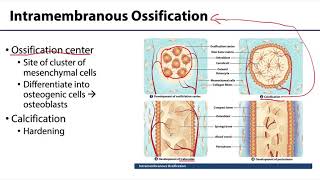
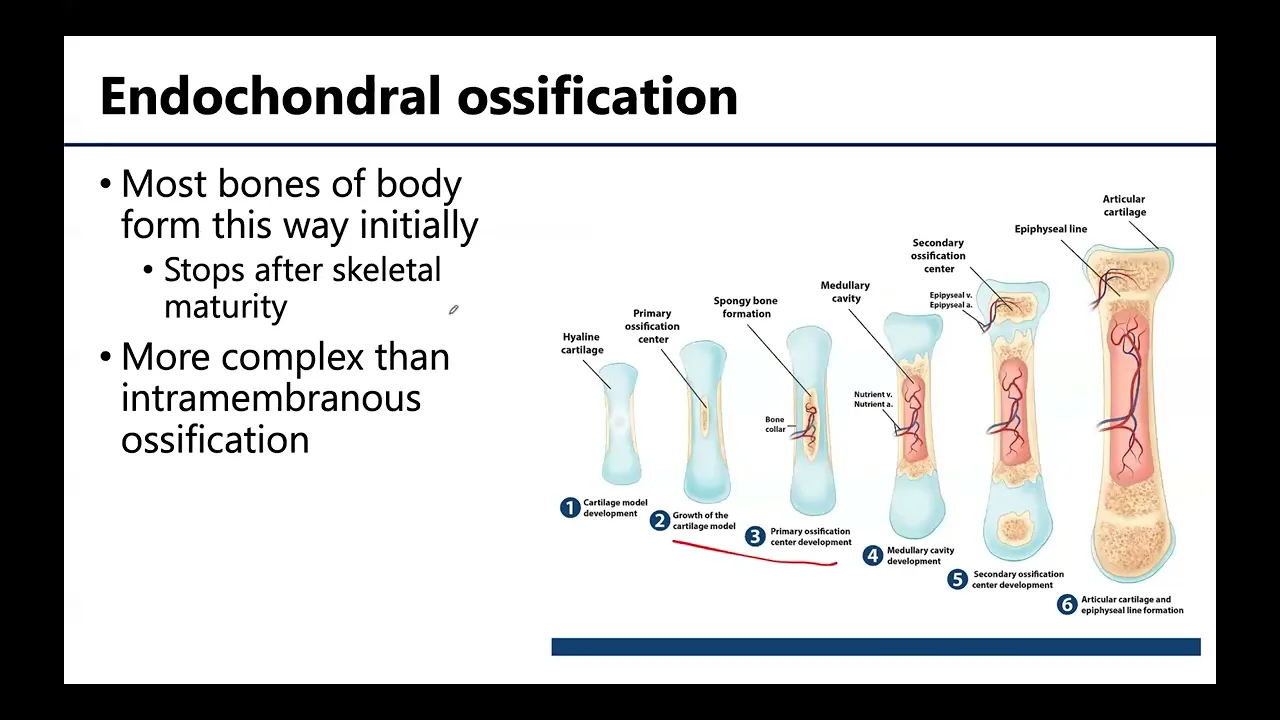
okay so let's return to these two main types of ossification the first one we're going to discuss is intramembranous and we're starting with this one because it's the simpler of the two and in this process bone is going to directly replace that mesenchymal skeleton all right so bone directly replaces that mesenchymal skeleton whereas in endochondral ossification that mesenchymal skeleton is going to be actually replaced by a cartilage model first so this hyaline cartilage model grows first and then eventually it will be replaced by bone so there's that extra step in endochondral in comparison to intramembranous
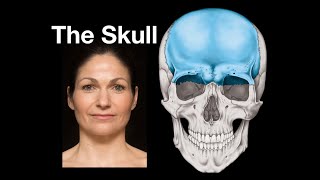
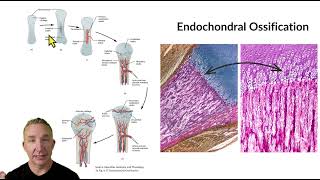
now i don't want you to memorize these specific steps so this is intramembranous here and this is endochondral here and it gives you kind of these big picture steps by which this occurs but i do want you to at least understand these basics in terms of intramembranous is through the mesenchymal skeleton and endochondral has that extra step of the cartilage model a minority of bones form through intramembranous ossification initially and these include many flat bones of the skull so you can see we're looking at a juvenile skull here you can see the frontal bone parietal
bones here occipital back here see these are all forming through intramembranous ossification and between these bones of the skull you will have what's referred to as fontanels you can see a few here fontanels are often colloquially referred to as soft spots these are super important in allowing that large skull to exit the relatively small birth canal so allowing some flexibility here and after birth these areas will undergo intramembranous ossification these fontanelles and harden and be replaced entirely by bone so same kind of process as what you have the actual bones here other bones are going
to form through intra- membranous ossification they include the face many of the facial bones the mandible so that lower jaw and the medial part of the clavicle often you hear the clavicle referred to as the collarbone so a relatively few bones form initially through intramembranous ossification but i want you to focus in on this box right here likely intramembranous ossification's more important role is lifelong thickening, strengthening, and remodeling of bones so it is the method for depositing new tissue on the bony surface even past the age where bones can no longer grow in length so
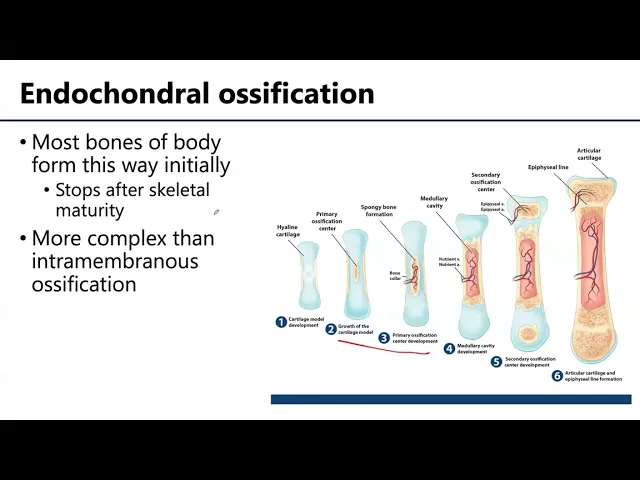
this is a really important function here of intramembranous ossification now as we mentioned earlier endochondral ossification is more complex than intramembranous and this is because of that these middle steps here where you have the cartilage model and not only do you have a cartilage model but that cartilage model actually grows so it's going to grow both in length as well as width and most bones of the body initially form through endochondral ossification but this type of ossification process stops after skeletal maturity so any other type of bone formation say that occurs during adulthood on the
in terms of bone width that's going to occur through intramembranous rather than endochondral ossification a few notes regarding the cartilage model in this region where the bone so in the region say where the bone is going to form chemical messages will actually cause those mesenchymal cells to crowd together and form this general shape of the future bone and this is where you have that cartilage model development these cells will differentiate into chondroblasts and so if you have -blast in a term you know it's building something so specifically it's secreting cartilage extracellular matrix matrix components so
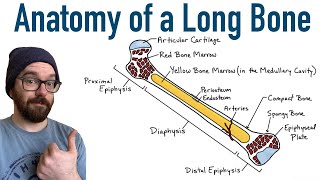
producing this cartilage model chondro- you need to be thinking cartilage specifically here we're talking about hyaline cartilage and this cartilage model will grow both through interstitial or growth from within which will result in the cartilage model actually growing in length as well as appositional growth which is going to be growth on the outer surface so the cartilage model will actually grow in width as well you can see through these steps bone will eventually begin to replace the cartilage model first this will occur in the diaphyseal region and then it will begin to occur in the
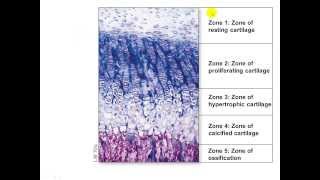
epiphyseal region and you can see that you will have this plate of cartilage that will persist and allow for bone length growth to occur so this is that epiphyseal plate right here so in that metaphysis region eventually the hyaline cartilage model will be completely replaced with bone except on the very ends of bone where you will have articular cartilage persist into adulthood articular cartilage is extremely important in terms of joints and we'll talk about that in much greater detail when we get to those lectures I do want to return to the terms interstitial and appositional
growth and make sure we clearly define those interstitial growth is growth from within and here i want us to be thinking of those epiphyseal plates you can see generally where that would be located here on this radiograph that region is that transition from cartilage to bone it is here that you can have increases in bone length because of the elongation really occurring as a result of cartilage growth so the cartilage will grow and be replaced by bone the cartilage will grow be replaced by bone so it's really cartilage that's playing or it's going to to
grow in terms of interstitial growth eventually we'll have the complete replacement of cartilage with bone and bone will not be capable of bone length growth however with appositional growth or growth or deposition of new tissue to the outer surface this can occur with both cartilage and bone so cartilage can enlarge by both interstitial and appositional growth but in bone osteocytes are embedded within that calcified extracellular matrix so it really has little room to deposit matrix internally so bone growth can really only be appositional bony appositional growth occurs by intramembranous ossification at the bone surface so
those osteoblasts and the internal layer of the periosteum they're going to deposit tissue on the bone surface that will calcify or harden and become trapped as an osteocyte and eventually this will form those circumferential lamellae that surround the entirety of the bone lastly bone remodeling is a natural process that is vital in repairing micro fractures, reshaping bone in response to use or disuse, and also in releasing minerals into the blood when necessary healthy typical bone remodeling is built upon the collaborative actions of the osteoblasts as well as the osteoclast so remember osteoblasts are the bone
builders osteoclasts are the bone resorp resorbers or bone resorption if one of these cells outpaces the other this can have implications in bone health and mass and we will talk about an example of one of these disorders or osteoporosis in an upcoming video but i do want to note that typically remodeling is healthy it's a necessary life process it's just when you have an imbalance here that things can start to go wrong all right excellent thanks for sticking with me through a denser topic here let's do a quick question review before moving on so the
question here the parietal bone of the skull so it's one of those flat bones if you put your hands on the top of your head you're touching or the parietal bones are underneath the skin there so those probable bones initially form through which type of ossification process is it endochondral or intramembranous pause the video if needed and when ready what did you think what was your answer well the parietal bone is one of the few bones that is going to form through intramembranous ossification recall the flat bones of the skull most of the facial bones
the mandible or the lower jaw and a portion of the clavicle or the collarbone is going to form via intramembranous ossification all other bones of the body initially form via endochondral ossification with that cartilage model first all right excellent thank you so much for your time and attention here and i will see you in the next video