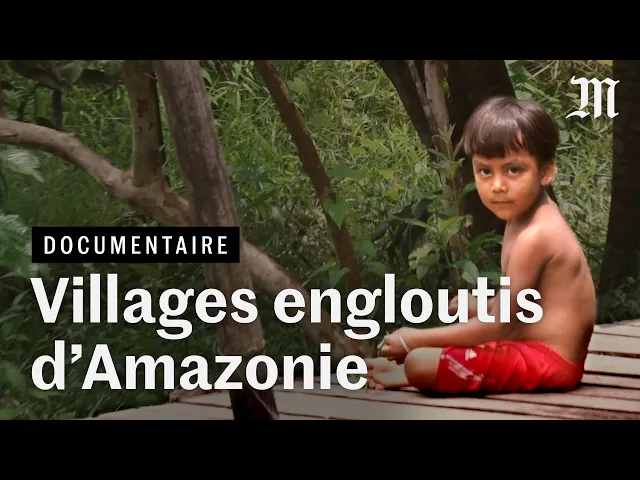
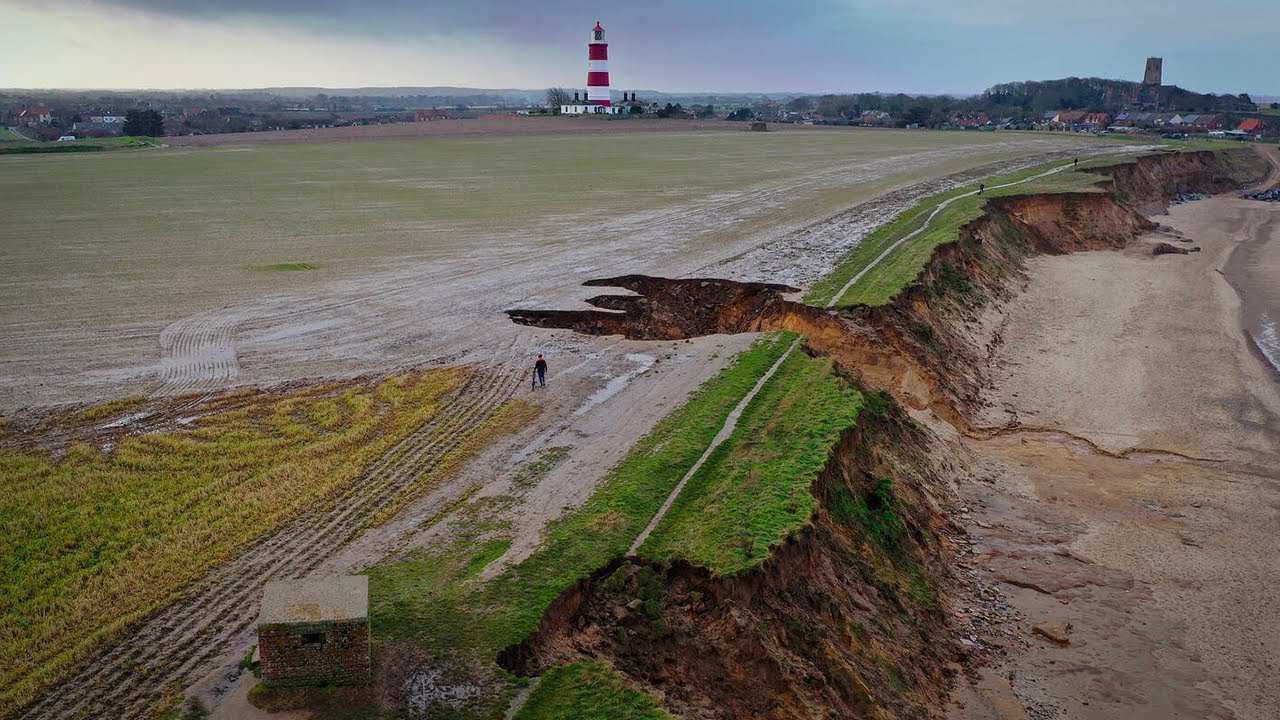
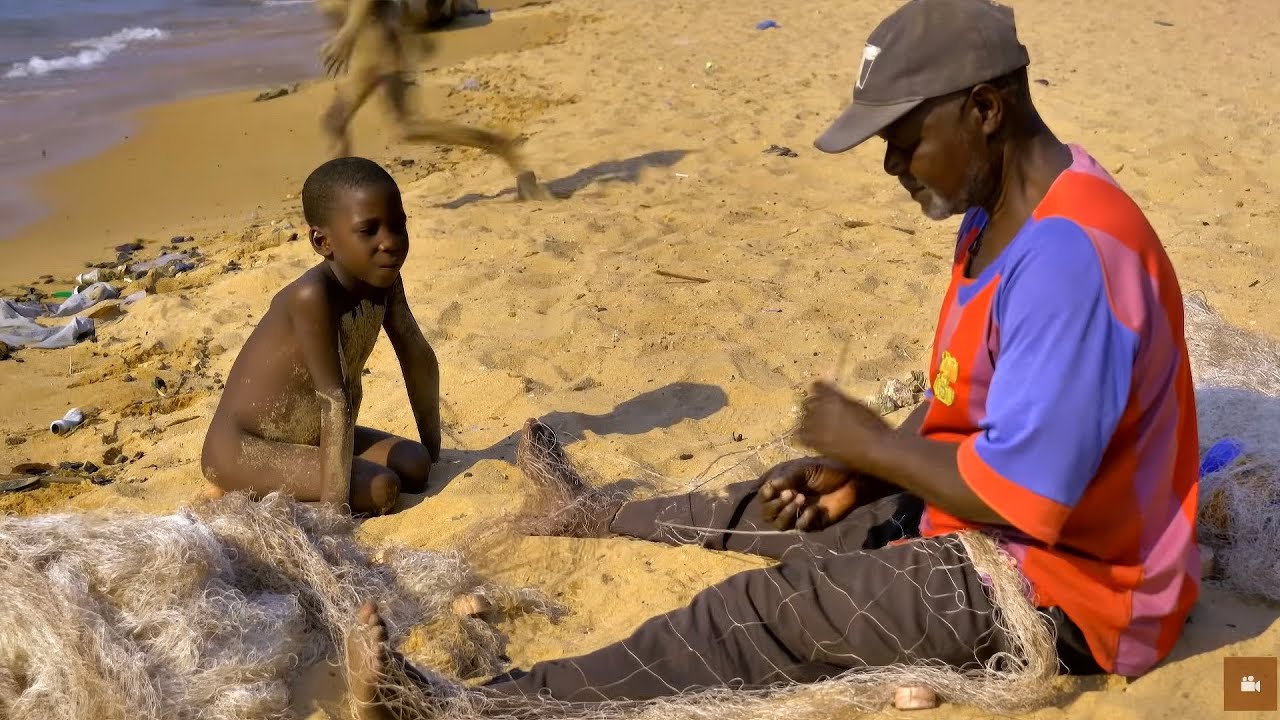
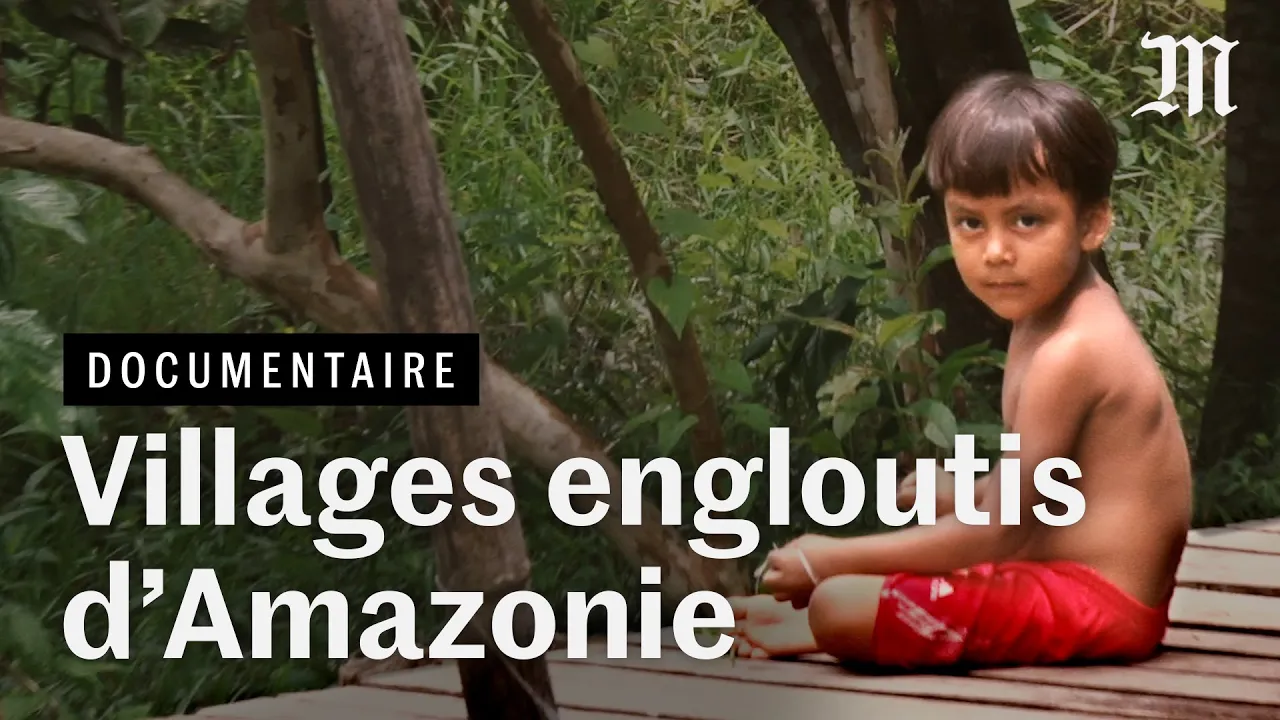
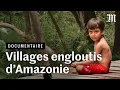
This is Macedônia in the north of Brazil. This village is disappearing. Erosion takes away all your dreams, it takes away everything.
Only ruins remain of the school. A desolate landscape. Macedônia is crumbling.
A whole archipelago is sinking into the Amazon delta. Here, for thousands of years, a titanic battle has played out. On one side, the Amazon, the largest river in the world.
A fifth of the world's fresh water volume flows into the sea. On the other, the Atlantic Ocean and its intense tides. Those who live here have learned to live alongside these natural forces.
But over the last 10 years, this balance has become endangered. We're going to pay a high price. We're the ones who will suffer.
These islands are sinking, and not everything is down to the rise in sea level. A few kilometers inland, recent policies have precipitated the disaster. What happened?
Why did everything go wrong? And how long will humans be able to live here? Our team went to film here, in Bailique , a group of small islands in the centre of the mouth of the Amazon River.
To get there, you have to travel to Macapá by plane. Then, at least 12 hours by ferry, then a small boat, and finally on foot. In Bailique, there are no roads, cars or motorcycles.
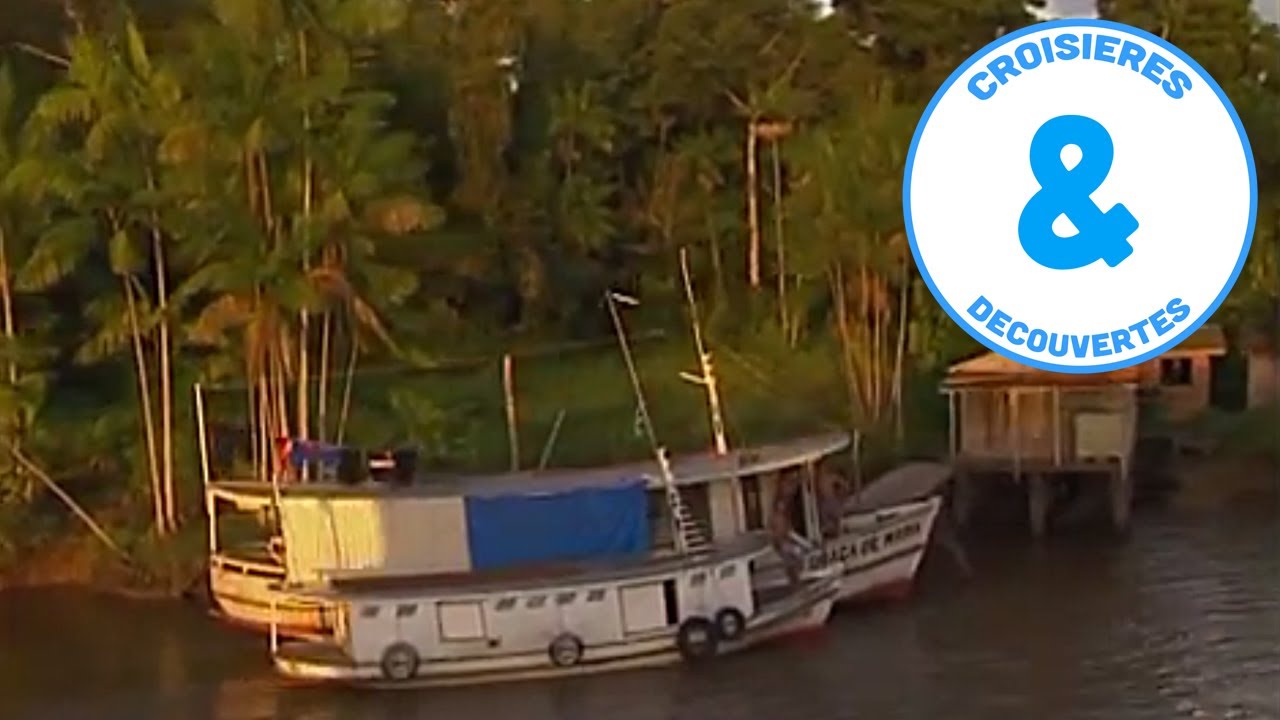
The inhabitants of the 50 communities travel by boat. They live in houses on stilts. Here, the rhythm of life is the water cycle.
The meeting of the Amazon and the Atlantic is a tug of war between two giants: on one side, the ocean and its tides, on the other, billions of cubic meters of water loaded with sediment that travel more than 7000 km from the Andes Mountains to mix with the ocean. The flow of the Amazon here is more than 600 times that of the Seine, under the bridges of Paris. The 15,000 inhabitants of the archipelago have long learned to live with these titanic forces.
But in the last 10 years, the balance has dramatically tipped. The front part of the building has completely fallen down. The neighbours are dismantling everything before erosion takes what's left.
This is my storeroom that fell into the river, full of goods. There are fans, ovens. Everything sank.
I lost everything. Pedro and his wife run a grocery store in Vila Progresso, the largest city in the archipelago. Since 2015, erosion has devoured more than 100 m of their land.
Three of his businesses have already fallen into the water. Pedro is still rebuilding. This time, it's his last chance.
This is my last piece of land. After this, I have no more land. If I move, I have nowhere to go, nowhere.
God will show me where to go. But I don't know. I remember how it was here before.
It was very beautiful. You start to forget what it was like in Vila Progresso before all this. Life before was when there was fresh water, a thriving river.
Today, half of the year, the river water is undrinkable. With the tides, the salt of the ocean goes deeper and deeper into the land. On the biggest river in the world, the fishermen's boats are filled with bottled water.
10 packs of water per family. Enough to last a few days. Michel made a trip of 2.
5 hours by boat to stock up. In a week or two, we will have finished the bottled water, and then we'll see. And after that, we'll use the river water or the rain water that we collect.
Drnking the water from the river is risky. More than half of the patients examined by Dr Karlene Lemberg suffer from high blood pressure. They have no electricity or just for 6 hours a day, so they preserve food with salt.
And then they drink the river water. They take baths in it. To understand what happened, you have to look up.
A little more. A little more. Here.
15 years ago, there was a river with a huge flow: the Araguari. It was the Amazon's neighbour and flowed into the Atlantic Ocean. Today, it has simply disappeared, wiped off the map.
Ataides earned a living from his fishing with his sons. He had a front row seat when it happened. After the dams were built, the riverbed dried up completely.
It was instantaneous. At the time, everyone was scared. We went there and we couldn't believe our eyes.
A river so big, so powerful, that had disappeared. From one year to the next, the riverbed, dead. In 50 years, 3 hydroelectric dams have been built on the Araguari River, here, here and here.
By holding back the water and reducing the flow, they have weakened the course of the river. We don't even benefit from the electricity that's produced. Is it sold elsewhere in other countries?
We don't know. Another human activity has greatly aggravated the situation. To capture it, you have to sail on the Urucurituba channel.
Hundreds of water buffalo making their way up the channel. The state of Amapá is the second-biggest buffalo producing region in Brazil, with 300,000 head. When the buffalo goes in and out of the water, it tramples, it digs trenches.
Then the rain carries the mud into the river. This is how the channels are formed. According to local researchers, these thousands of water buffalo are one of the main causes of the submergence.
On satellite images, here is what it looks like: channels that grow before your eyes. The result? In only 15 years, a natural barrier has been broken, the one between the Araguari River and the Amazon.
The Araguari has almost disappeared. The Amazon has only become more powerful. In the future, we'll pay a high price.
My grandchildren will suffer most. For the villages of the archipelago, time is running out. Its inhabitants have given a name to the disaster: 'la terra caída', falling land.
And no one here still expects anything from the Brazilian state. When the state of natural disaster was declared, the federal government quickly released funds, but nothing reached the affected families. Where did the money go?
Good question. Questions? Ediane has stopped asking.
Today, she's just angry. Erosion takes everything away. It takes away your dreams, your house.
It's like a tsunami that takes everything away. That's how I feel about it. The earth is falling and it's not going to stop.
From his old house, only the top of a tree can be seen. His neighbour, Benedito, also has to keep rebuilding further away, without any help from the state. We didn't just lose the reservoir.
We also lost the police station, the health centre. The school was also destroyed, and they haven't built another one. Today, it's collapsing from the front, from the back.
We're caught in a vice of erosion. However, 15 km to the north, one community is resisting. Arraial.
Here, the bridges are in good condition. A generator provides electricity 6 hours a day. The majority of the houses have solar panels.
The way of life of this hundred or so inhabitants is community-based. Tonight, they meet to discuss the location of the tanks to collect rainwater. Here in Arraial, when we really need something and the public authorities don't respond, we don't wait.
We move. We get organised and we do things. José is one of the açai producers who have obtained organic certification, a first in Brazil for this fruit.
The pickers climb the palm trees and harvest this berry by hand. Here, we call it black gold. It's the black gold of the Amazon.
The people share the same goal of working in harmony with nature. For the moment, erosion has spared Arraial. But the water, evermore salty, is a threat.
It changes the taste of the fruit, it's sometimes inedible. Salt water is our biggest concern today. After the harvest, the berries are picked and sorted by José's daughter, Diana.
Our islands are known as 'the dancing islands'. I think we have to raise our heads, hold on and rebuild in the best way possible. They're called 'ribeirinhos', those who live by the river.
This powerful, transformative river with which they have learned to live. But the acceleration of natural change, the rise in ocean levels, the construction of dams and the explosion of the cattle industry have upset the balance of the archipelago. Nearly a third of the population have chosen to leave and settle on the mainland.
A few hundred people are still fighting to stay here. But for thousands of inhabitants of the archipelago, it's already too late.